

Table of contents
Part 1 - What Time Does the Forex Market Open on Sunday in India?
Part 2 - Sunday Opening Time Explained
Part 3 - Global vs. Indian Market Hours
Part 4 - Which Currency Pairs Are Best to Trade on Sunday Night?
Part 5 - Forex Session Impact on Sunday Trades
Part 6 - Should You Start Trading Right After the Market Opens?
Most new forex traders in India start off asking the same burning question: “Which time Sunday open forex market India?” It sounds simple, but the answer opens the door to serious opportunity—or costly mistakes. Picture this: It’s Sunday night, you're sipping chai, charts are up, but the market’s still asleep. Or is it? Missing that exact opening moment can mean entering trades with wide spreads or stale signals.

The forex market follows the sun, kicking off in Sydney and rolling through Tokyo, London, and New York. As per Bajaj Finserv and Religare Online, the global market reopens around 2:30 AM IST Monday, but most Indian brokers begin operations from 9 AM IST. That time gap? It can cost or reward you, big time.
As the saying goes, "Timing isn’t everything—it's the only thing.” This guide breaks it down for you—best entry times, currency pairs, trading tools, and desi-friendly brokers—all designed to help you hit the ground running when the bell rings.
Knowing the Sunday forex open time in IST can give Indian traders a jumpstart while others are still snoozing. Let’s break it down.

The currency market reopens globally on Sunday at 5:00 PM EST, which is around 2:30 AM Monday IST. But here’s the catch—Indian brokers usually go live at 9:00 AM IST, missing the early Sydney session. This delay means retail traders in India can’t catch the week’s first market moves, especially the volatility from the New Zealand session. Still, knowing the technical market open time helps plan entries better.
Most Indian brokers delay their trading platforms until 9:00 AM IST, well after the global market kicks off. Why?
Regulatory compliance with SEBI
System maintenance over the weekend close
Alignment with local time operations
As per a senior manager at a Mumbai-based forex firm:
“India follows stricter synchronization rules to avoid price manipulation during thin liquidity hours.”
So yeah, we open later—but it’s safer for retail players.
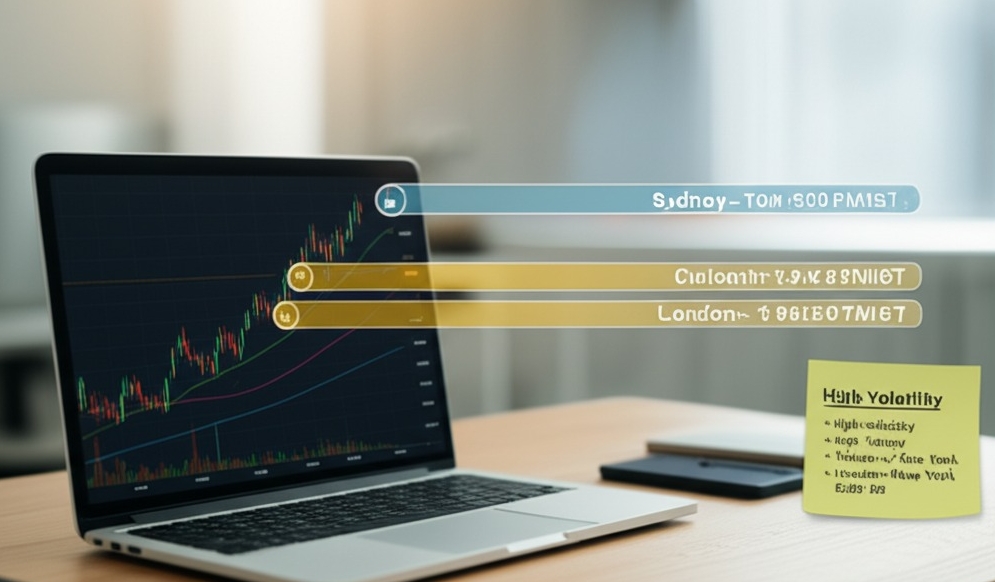
The Forex time overlaps are where things get spicy for Indian traders. During these windows, volatility spikes and liquidity is high.
Sydney-Tokyo Overlap: Early hours (not accessible via most Indian brokers).
London Session: Kicks in during India’s afternoon—perfect for active trading.
London-New York Overlap: Around 6:30 PM IST—prime time for volume and trend setups.
| Trading Overlap | IST Timing | Key Advantage |
|---|---|---|
| Sydney–Tokyo | 5:30 AM–7:30 AM | Early movement |
| London–New York | 6:30 PM–10:30 PM | High volatility |
| Tokyo–London | 12:30 PM–2:30 PM | Market shift timing |
Timing your trades around these overlaps? That’s how you stay ahead of the pack.

“The Sydney market kicks off the action—no bells, no whistles, just price charts moving,” says Amit Desai, a senior currency analyst at ForexEdge India with over a decade of hands-on experience. “It is not magic. It is time zone math. Sydney opens at 2:30 AM IST on Monday, and that is the unofficial Sunday open for Indian traders.”
Unlike equities, the forex market Sunday open does not follow a single clock. It starts when the Sydney forex market becomes active—typically 5:00 PM GMT, which is 2:30 AM IST. This makes Sydney the first market of the week, setting the tone for liquidity and spreads.
Yet, most Indian retail traders cannot place orders right away. “Our brokers often follow RBI-regulated hours—9 AM to 5 PM IST,” explains Desai. The gap creates the infamous weekend gap trading phenomenon, where traders speculate on price jumps between Friday’s close and Monday’s open.
Time zone conversion (GMT/IST) tools
Risks of low Sunday forex liquidity
Adjusting trading strategies Sunday open
Pro traders use platforms like OANDA’s Forex Market Hours Tool and TradingView sessions overlays to plan ahead. For Indians, aligning with Indian Standard Time and understanding factors influencing open time is key to avoiding surprise entries.
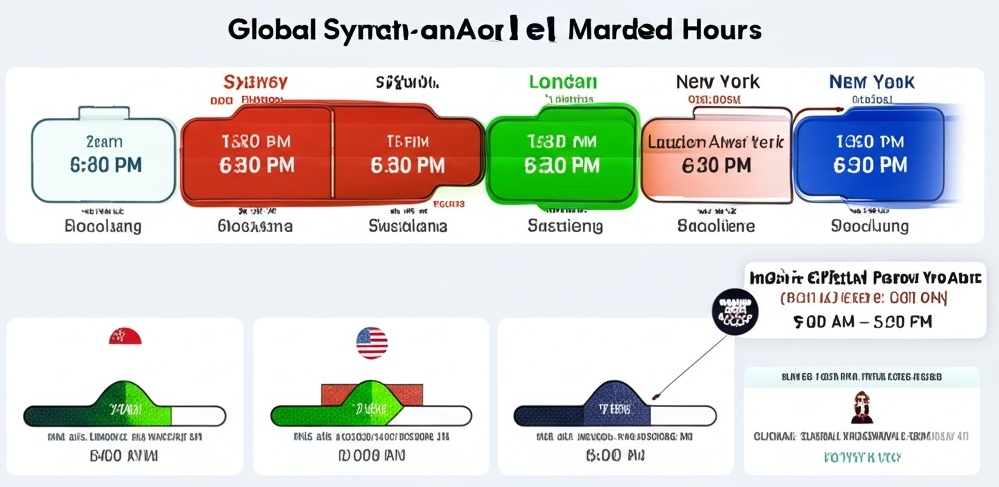
Understanding how global forex markets sync with India helps you trade smarter—not harder.
Sydney kicks off the global forex party. The market usually opens at 5:00 PM EST, which is 2:30 AM IST (Monday) in India. This marks the start of the trading week, even if Indian platforms don’t show much action yet.
The Sydney session, operating on AEST or AEDT depending on daylight saving, often sees low liquidity. But it’s crucial for early signals, especially for AUD and NZD pairs.
Now this is where the real action happens. When London and New York sessions overlap, usually from 1:30 PM to 6:30 PM IST, the forex market gets a serious energy boost.
Liquidity spikes
Major price moves occur
Best for trading pairs like EUR/USD, GBP/USD, and USD/JPY
“If you want momentum and tight spreads, trade during the overlap,” says Ankit Jain, ex-currency analyst at ICICI Direct.
India's official forex market—mainly through NSE and BSE—runs from 9:00 AM to 5:00 PM IST. However, this is limited to INR-based pairs (like USD/INR).
For cross-currency pairs, trading continues till 7:30 PM. But even then, it's still a trimmed version of the global action.
In short: India's forex trading hours = regulated + segmented. You get a taste, not the full buffet.
Global holidays? Oh yes, they mess things up.
US holidays: Low volatility, thin volumes
UK banking holidays: Sudden dips in GBP liquidity
Asian holidays: Quiet Sydney/Tokyo sessions
| Holiday Type | Affects Region | Typical Impact |
|---|---|---|
| US Federal Holiday | New York | Slower USD pairs |
| Golden Week (Japan) | Tokyo | Weak JPY volatility |
| Christmas | Global | Market-wide low action |
Always check the forex holiday calendar. You don’t want to show up for a party that’s been canceled.
Sunday nights bring unique forex opportunities, but not all pairs are created equal. Knowing where the liquidity is—and what to avoid—can save your trading week.

Liquidity matters most when trading during quiet Sunday market hours. The early Sydney session means limited volume, but major currency pairs like:
EUR/USD
USD/JPY
GBP/USD
…see relatively better spread stability and order execution than others. Crypto pairs like BTC/USD also show decent liquidity thanks to 24/7 crypto trading activity.
“Stick to majors until Tokyo kicks in—everything else feels like trying to drive in fog,” says Sandeep Rana, FX strategist at QuantX Global.

Honestly, trading exotic pairs right after market open? That’s like walking into a storm with no umbrella. These pairs (think USD/TRY, EUR/ZAR) get hit with:
Wider spreads – sometimes 4–5x wider than normal.
Heavy slippage – you place a trade, and bam! It executes miles off.
Extreme volatility – early Sunday liquidity is too thin to handle sharp moves.
Stick to major pairs or at most crosses until volume returns. Exotic temptations? Avoid them till markets warm up.

"Most beginners think Sunday opening is calm. It is not. It is unpredictable," said Rajiv Mehta, a veteran forex analyst at Delhi-based FXPulse Research. "Liquidity is low, spreads are wide, and price action can look like a seesaw."
Forex trading reopens globally with the Sydney session, which starts around 2:30 AM IST Monday. Many Indian traders assume this is just a warm-up. That thinking can lead to sharp losses. This session sets the tone after the weekend gap—a period when news events pile up while markets stay shut. As Rajiv puts it, “That opening candle? It is pure volatility. A sleeping market wakes up with a kick.”
Liquidity is thin, which means fewer buyers and sellers. This leads to higher spreads, especially on major pairs like EUR/USD.
Price action is noisy, often reacting to weekend headlines or geopolitical events.
Trading sessions overlap less, reducing volume until Tokyo joins in.
According to OANDA, market hours reopen globally at 5 PM EST Sunday, and for Indian traders, timing entries before Tokyo adds volume can lead to unpredictable movement.
This phase may tempt quick trades, but real experts like Rajiv wait. His advice? “Skip the first hour. Let the market speak. The Sydney session whispers, but Tokyo shouts.”
Jumping into trades the moment the market opens on Sunday might feel thrilling, but let’s break down the numbers, risks, and real-time conditions before you pull the trigger.
Spreads tend to balloon right after the Sunday market opens due to thin liquidity. Some forex brokers widen the spread on currency pairs by 5–15 pips during these early trading hours, especially on minor and exotic pairs.
| Currency Pair | Average Spread (Normal) | Spread at Sunday Open |
|---|---|---|
| EUR/USD | 1.2 pips | 5.8 pips |
| GBP/JPY | 2.5 pips | 9.7 pips |
| USD/CHF | 1.8 pips | 6.4 pips |
Pro tip: Avoid opening positions unless spreads settle post market open gap.

The order book right after Sunday open? Pretty thin.
Liquidity providers aren’t all online yet, leading to slippage or unfilled orders.
Trading volume is low, price moves are jittery, and market depth is shallow.
Think of it like entering a half-empty cricket stadium—it just doesn’t have the energy or predictability you expect. Hang back and wait for liquidity to pick up in the initial hours of the trading session.
Wide spreads mean you're instantly in the red
Slippage can throw off your whole strategy
News that broke over the weekend creates gaps and wild price swings
Your stop loss? Might get hit just from low market depth
“Weekend gaps are a silent killer,” says Ravi Menon, currency analyst at FXIndia. “Retail traders often underestimate the overnight risk baked into early Sunday positions.”
Avoid being the first one in—smart traders wait for stability.
Knowing when the forex market opens on Sunday is half the game. Here are tools that make sure you never miss the bell.
These online tools convert global Forex market hours into IST, factoring in GMT, UTC, and even daylight saving changes.
Time.is – for precise real-time clocks
Market24hClock – forex-specific session visualization
ForexTimeZoneConverter.com – a no-fuss tool used by many pros
Using these can help avoid confusion around market open and session times — especially useful on Sunday nights.
Most modern broker apps offer real-time alerts on trading session openings, perfect for Sunday trading starts.
Check your app’s settings for notifications tied to global markets.
Enable alerts for Sydney, Tokyo, and London session starts.
Some apps like IC Markets, Zerodha Kite, or MetaTrader mobile now support mobile push notifications for session tracking.
You’ll never be caught snoozing on a Sunday night again.
Web tools with live open/close status are a game-changer. They help track Forex market status, including real-time updates for session shifts.
| Web Tool Name | Status Displayed | Data Refresh Speed |
|---|---|---|
| Investing.com | Market open/close | Real-time |
| ForexFactory | Session status bars | Every 1 min |
| MyFXBook | Regional sessions | Auto-refresh |
Easy to bookmark, hard to trade without.
Here’s where TradingView becomes your forex buddy.
“Customize alerts, use indicators, and sync with your timezone” – says Aman Verma, a forex strategist with 8+ years of TradingView experience.
Add session overlays to your charts
Use indicators like "Session Time Range"
Set alerts before market open or session crossovers
TradingView’s flexible platform makes Sunday open tracking a breeze for any level of trader.
Looking to hit the charts early on a Sunday night? Here’s a quick guide to Indian brokers with 24x5 trading and the low-spread champs to back your first moves.

If you want to get a head start before Monday chaos hits, choosing Indian brokers offering 24x5 trading is a game-changer. Not every firm plays ball on Sunday night, but a few reliable platforms give you access to major currency pairs even when others snooze.
Zerodha Kite: Fast, but forex access is limited.
ICICI Direct: Good for derivatives trading, SEBI-regulated.
HDFC Sky: Offers global market access with early-hour support.
These brokerage firms in India comply with SEBI regulations, but always double-check if weekend trades reflect live liquidity or just placeholder prices.
“Indian retail traders are waking up to the importance of early forex entries. Access to Sunday markets gives an edge if you know how to use it.” – Kunal Desai, Market Analyst
Sunday night spreads can be nasty—like shopping at 1 AM and paying triple! That’s why picking low-spread brokers is crucial if you're active right after the market opens.
Check Sunday liquidity levels on your platform.
Choose brokers that offer tight pips even in low-volume zones.
Compare trading platforms for live vs. delayed execution.
| Broker Name | Avg Spread (EUR/USD) | Supports Sunday Trading |
|---|---|---|
| Pepperstone | 0.16 pips | Yes |
| FXTM | 0.30 pips | Yes |
| IC Markets | 0.10 pips | Yes |
Tip: Go for forex brokers with lower brokerage fees and real-time data during Sunday night for better execution.
So now you know the answer to “Which time Sunday open forex market India?”—the global action starts around 2:30 AM IST, but most Indian platforms go live from 9:00 AM IST. That gap? It’s not just time—it’s a strategy window.
Jumping in too early is like trying to eat biryani before it’s done—half-cooked and full of regret. Give the market a little breathing space, let the noise settle, and then act smart.
As one seasoned trader put it, “Timing the entry is half the profit earned.” Ready your tools, choose your broker, and trade like a pro.
Yes, technically the global forex market runs 24 hours a day, five days a week—from Monday morning in Sydney to Friday evening in New York. But that doesn’t mean your broker in India lets you jump in right from the start. Access depends on your broker’s operational hours, and most Indian platforms start around 9:00 AM IST.
The global forex market reopens at 2:30 AM IST on Monday (which is 9:00 PM UTC on Sunday), starting with the Sydney session.
So yes, the market’s open globally—but not always to you.
9:00 AM IST, Monday for USD/INR, EUR/INR etc.
9:00 AM – 7:30 PM IST, for cross-currency pairs.
Depends on your strategy and timing. Many prefer the London–New York overlap, which hits around 5:30 PM to 8:30 PM IST—that’s when volume peaks and spreads tighten.
Great question. On Sunday night, the market:
This is why many traders prefer to wait until liquidity returns during the Tokyo–London overlap.
Just reopens, so liquidity is low
Has fewer participants (especially banks and institutions)
Faces wider spreads due to pricing uncertainty
Can experience sudden price gaps from weekend news
Mostly, no. Indian brokers like Zerodha, HDFC Securities, or ICICI Direct don’t support live trading on Sunday night. Their forex modules open only during RBI-regulated weekday hours.
If you want to trade on Sunday, you’ll need an international broker with 24/5 access and INR deposit options.