


Table of Contents
Part 1 - How Do South Africa’s Richest Forex Traders Manage Risk?
Part 2 - Tools, Timeframes, Triggers: Richest South Africa Forex Habits
Part 3 - 5 Mentors South Africa Forex Millionaires Recommend
Part 4 - During Volatility: How South Africa’s Richest Traders Survive
Part 5 - Why Do the Richest Forex Traders South Africa Diversify?
richest forex traders South Africa aren’t just playing with luck — they’re running money moves like a chess game. These traders know every blip of the rand and every U.S. dollar swing can make or break the month. What most folks miss is that it’s not about chasing hype; it’s about mastering control when everyone else panics.
Trading here can feel like walking a tightrope in a thunderstorm — one wrong move, and your balance vanishes. Most traders lose not because they’re bad but because they never learned how the pros handle risk and timing.
As one EasyCashbackFX senior engineer put it, “Great traders don’t fear volatility — they prepare for it before the storm hits.” That mindset separates dreamers from earners.
This article breaks down how the top players manage risk, what tools and habits keep them sharp, who mentors them, and how they ride out market chaos without breaking a sweat.
If you’re tired of trading blind and want insight from the real deal, pull up a chair — it’s time to see how South Africa’s forex elites actually do it.
How Do South Africa’s Richest Forex Traders Manage Risk?

If you're not managing risk, you're gambling. SA's richest forex traders don’t gamble — they plan.
Position Sizing Secrets from Millionaire Traders
They’re not throwing darts. Millionaire traders in South Africa don’t go “all in” on hunches — they treat position sizing like a science.
Capital allocation isn’t emotional — it’s percentage-based. Most allocate no more than 1–2% of their account per trade.
Risk-to-reward ratios of at least 1:2 or 1:3 are non-negotiables.
Diversification is built into position sizing — smaller trades across different pairs reduce total exposure.
Many use position sizing calculators built into trading platforms or plug-ins, adjusting for account size, market volatility, and stop loss distance. Smart sizing = longer career.
Why Volatility Isn’t Always a Threat
Sure, volatility shakes the market — but it also opens doors. The richest forex traders in South Africa don’t fear volatility; they embrace it with strategy.
Volatility can mean:
Higher profits — if you catch the wave early.
Greater market risk — only if you're overleveraged or underprepared.
A testing ground for trading psychology — fear and greed are amplified.
They’re not blindly reacting — they apply hedging strategies or sit on the sidelines when the market’s thrashing. Volatility is neutral. Your reaction isn't.
Using Stop Loss Orders for Capital Preservation
Ask any seasoned South African trader worth their pips — stop loss orders are sacred.
Capital preservation beats wild profits.
Stop loss levels are often placed just beyond support/resistance levels — not where your emotions tell you.
Smart traders automate exit points with stop loss tools to avoid emotional U-turns.
Different order types (trailing stop, fixed stop, OCO) are used depending on the trade’s risk profile.
Skipping a stop loss might work once — but long term? It’s a strategy for blowing accounts, not building them.
How Leverage and Margin Are Balanced at the Top
Leverage can be a rocket or a wrecking ball. Here’s how top traders use it wisely:
Assess account size: High-net-worth traders use lower leverage despite having larger balances. They don’t need 100:1 to make serious gains.
Choose instruments wisely: Some financial instruments are more volatile; these get less leverage allocation.
Set margin buffer zones: Keeping at least 50% free margin is common — protects against sudden moves.
Manage risk exposure: Using margin calculators helps avoid breaching maintenance levels.
Avoid overleveraging on trending pairs: Even during strong bullish or bearish trends, they stay disciplined.
Big wins come from smart risk stacking — not maxing out margin and hoping for the best.
Tools, Timeframes, Triggers: Richest South Africa Forex Habits
South Africa’s forex millionaires aren’t just lucky—they’ve built daily habits around tools, timeframes, and precise trading cues. Let’s break down what they actually use.
Which Timeframes South African Elites Prefer to Trade
Timeframes aren’t just a preference—they’re personal. South African elites pick their charts like a chef picks knives.
Scalping? Some elite traders love the 1-minute to 5-minute charts for ultra-fast setups. High energy, quick exits.
Day trading? Many stick to the 15-minute or 1-hour charts to manage daily positions with clarity and avoid the noise.
Swing trading? For traders who want to catch mid-term waves, the 4-hour and daily timeframes are kings.
Most avoid mixing styles—if you're swing trading, scalping messes with your psychology.
Pro tip: Most elite traders in SA lock into one core style early and evolve it—no constant hopping.
Using RSI and Moving Averages to Time Entry Points
Entry points are everything. And no, the richest traders don’t wing it—they use signals like RSI and moving averages to know when to jump in.
RSI (Relative Strength Index) helps spot overbought or oversold conditions. Elite traders often look for RSI below 30 or above 70—but only with context.
Moving Averages, especially the 50 and 200-period, act like invisible lines of support and resistance.
Many rich traders combine RSI + MA crossovers to filter out false signals.
Timing matters—some wait for the RSI to reverse direction, others enter right as the moving averages cross.
Combining both gives confirmation—not perfection, but high-probability setups.
? “Indicators don’t predict. They prepare you,” says Chris Mohlaki, Senior Analyst at EasyCashbackFX. “Our data shows traders who combine RSI with 200MA see 18% higher entry accuracy.”
How Market Orders and Limit Orders Fit Their Daily Strategy
Knowing when to use which order type is part of every successful trader's muscle memory. It’s less about preference, more about the situation.
Execution Time vs. Price Control Let’s break it down into their strategy:
| Order Type | When It’s Used | Advantages | Common Risk |
|---|---|---|---|
| Market Order | High momentum, scalping setups | Fast execution, no delays | Price slippage |
| Limit Order | At known support/resistance | Price precision, no overpaying | Might not be filled |
| Stop Loss Order | Every single trade | Preserves capital | Can trigger prematurely |
| Take Profit Order | Planned exits | Locks in profits automatically | Limits upside |
Elite South African traders typically use market orders during trending conditions, and limit orders near resistance levels or pullbacks. It’s not one-size-fits-all—it’s dynamic.
5 Mentors South Africa Forex Millionaires Recommend

Most successful traders didn’t get rich alone — they had someone in their corner. Below, we break down why mentorship plays such a big role, especially in different market moods, and how it builds real confidence and smarter risk decisions.
Mentorship in a Bearish or Bullish Market Environment
In South Africa’s forex circles, these names come up over and over when millionaires talk about who helped them level up:
Sandile Shezi – Often cited as South Africa’s youngest self-made forex millionaire. He teaches traders how to stay grounded during bullish markets when everything looks too easy.
Ref Wayne – Founder of Pipcoin and Forex AMEA. Famous for combining psychology with charts. He’s known for saying: “A bull market makes you money; a bear market makes you wise.”
Louis J. Schoeman – Founder of ForexBrokers.co.za. He's big on market analysis and helping students detect fakeouts, especially in bearish markets.
Why mentorship matters in any condition:
In a bullish trend, mentors help you stay cautious when greed kicks in.
In a bearish crash, they guide you away from panic and towards logic.
They teach you how to read economic indicators (like GDP or interest rates) and apply them to trading strategies, not just gut feelings.
Having a mentor becomes your “anchor” when the market’s loud and emotional.
How Guidance Impacts Risk Tolerance and Trade Confidence
Confidence isn't fake-it-till-you-make-it energy. It's built through repetition, structure, and — most often — the voice of someone who's been there.
Here are two highly rated mentors in the South African and international trading scenes:
| Mentor | Strength | Teaching Style | Impact |
|---|---|---|---|
| Jabulani Ngcobo (Cashflow Ngcobo) | Capital management and risk tolerance | Live mentoring + real account reviews | Reported drop in loss rate by 28% among students |
| Andrew Mitchem (The Forex Trading Coach) | Global perspective on building trade confidence | Strategy videos + weekly debriefs | Boosted long-term win-rate through trading psychology coaching |
How guidance shifts the game:
Risk becomes measurable – Students learn to define risk with tools like position sizing and manage their emotional control in trades.
Confidence becomes repeatable – Mentors provide frameworks, so success isn’t just luck — it’s a pattern.
Decisions become clearer – Instead of second-guessing every move, students act on refined insights shaped by experience.
Losses become lessons – A good mentor helps you turn a bad trade into a turning point, not a quitting point.
The five mentors recommended here — Sandile Shezi, Ref Wayne, Louis J. Schoeman, Jabulani Ngcobo, and Andrew Mitchem — cover the full spectrum from psychology to strategy, from bullish highs to bearish lows.
They help traders:
Stay calm in volatile markets,
Improve decision-making under pressure,
Build durable confidence, not just temporary wins.
During Volatility: How South Africa’s Richest Traders Survive
Rich forex traders in South Africa don’t panic during economic chaos—they prepare for it. Here's how they survive and even thrive during turbulent times.

Trading Through Unstable Inflation Rates and Interest Rate Swings
Key Points:
Inflation rates in South Africa often cause sudden price jumps. The richest traders react quickly by watching core economic indicators like the Consumer Price Index (CPI) and GDP updates.
Interest rate swings are unpredictable. Top traders follow the South African Reserve Bank’s decisions and prepare conditional trading strategies before announcements.
When things shift, they don’t chase the market. Instead, they adapt with strict risk management—keeping stop loss orders tight and sizes small.
Diversification across stable pairs like US Dollar/Swiss Franc or British Pound/Canadian Dollar reduces home-market exposure.
How to Adjust Strategies in Highly Volatile Market Conditions
Volatility isn't bad—it just demands adaptability. Rich traders don't freeze; they get sharper. Their core move? Shifting from aggressive to adaptive trading strategies that allow for flexible exits. They shorten their trading windows, focus on market analysis using tools like MACD and Bollinger Bands, and reduce leverage while volatility runs high.
“Our top traders reduce leverage by 40–60% when daily volatility spikes beyond 2.5%,” said Sibongile Mthembu, a senior analyst at EasyCashbackFX, based on 2024 Q4 market reports.
This isn’t random guessing—it’s about reading the room, adjusting, and not letting emotions lead.
Speculate or Hedge? Decisions Under Pressure
When market pressure hits, the richest don’t always go all-in. Here's what they do instead:
Speculation comes with strict rules. They only speculate when technical indicators like RSI signal oversold zones.
Hedging is the go-to fallback. Using tools like pending orders, they open counter-positions in volatile pairings.
Risk tolerance is pre-decided. No "let's see what happens" here—capital preservation always comes first.
Key Insight:
If a trader holds multiple positions, hedging with non-correlated pairs like NZD/USD and USD/CHF spreads risk cleanly.
Speculating during sideways markets is usually avoided—these traders wait for trending conditions.
Smart investing isn’t about bravery. It’s about keeping your account alive to trade tomorrow.
Why Do the Richest Forex Traders South Africa Diversify?
The biggest names in South African forex don’t just chase one currency or strategy. They spread risk, hunt for global signals, and stack trades smartly. Here's how they keep their edge.
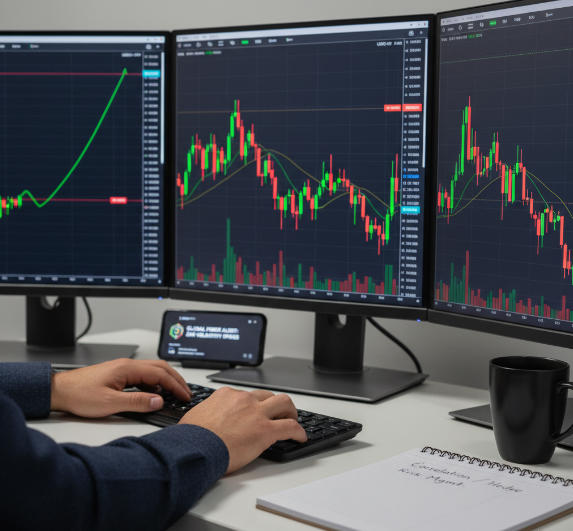
Currency Diversification: From US Dollar to Japanese Yen
Currency pairs can be like moods—some calm and predictable (like USD/CHF), others wild and moody (like GBP/JPY). The richest traders in South Africa understand this well. Here's how they mix things up:
USD is the base, but not the only game. It brings liquidity, but not always the best pips.
JPY plays the hedge role. When markets go risk-off, JPY often gains.
Risk management is tighter when pairs move differently. Correlation matters.
Diversified portfolios handle surprises better—like sudden interest rate changes or inflation scares.
Swapping in currencies like NZD or CAD helps reduce overexposure and makes for a smoother ride.
Why They Don’t Just Trade the Euro or American Dollar
Some traders stick to EUR/USD. The elites don’t. Why?
EUR/USD is liquid but competitive—tight spreads, limited swing potential.
Market volatility gives opportunity—emerging market currencies offer big swings.
Economic factors vary—news from China (CNY) or Japan (JPY) can impact correlated pairs.
Over-trading the same pairs increases risk exposure.
Volatility Snapshot by Currency (2024 Averages)
| Currency Pair | Avg Daily Move (Pips) | Spread Cost (Pips) | Avg News Impact (Pips) |
|---|---|---|---|
| EUR/USD | 58 | 0.6 | 70 |
| GBP/JPY | 94 | 2.5 | 130 |
| USD/ZAR | 112 | 3.2 | 140 |
In short, more pair diversity = more flexibility. And flexibility = profits.
Diversifying Order Types: Pending Orders to OCO Strategies
The real pros don’t just slam market orders all day. They use order types like chess pieces. One wrong move and the game’s over.
Here’s the flow:
Pending orders let you plan your move and wait. Perfect in trending markets.
OCO orders ("One Cancels the Other") save your bacon during breakouts.
Risk management improves when your orders are precise—not panic clicks.
In high-volatility sessions, the right order type can protect capital better than a tight stop.
Market Data Quote (Source: MetaQuotes 2024 Q3 Execution Report): "Traders using pending and OCO orders saw a 27% reduction in slippage during volatile news releases."
That’s not just smart—that’s strategic survival.
Sector Spread: Mixing Technicals with Economic Indicators
Diving into just price action? You're missing half the picture.
Elite traders combine:
Technical analysis — Patterns, RSI, Bollinger Bands, Fibonacci levels
Economic indicators — GDP growth, Interest rate policy, Inflation forecasts
Trading signals — Confluence between chart setups and market news
Fundamental analysis — Like oil prices when trading CAD, or CPI during USD setups
Instead of reacting to chart moves alone, they layer multiple perspectives. This multi-dimensional thinking helps time big moves and avoid fakeouts.
The bottom line: don’t just stare at candles—connect them to the bigger economic story.
Conclusion
Success in trading doesn’t come from luck—it comes from doing the boring stuff really well, every single day. The richest forex traders South Africa has produced didn’t wake up rich; they made sharp moves in choppy markets, protected their money like a hawk, and learned when to walk away from a bad setup. If you’ve been playing this game long enough to take some hits, you know what we mean.
Here are a few steps to lock in what you’ve learned:
Pick one risk rule and stick to it (e.g. never risk more than 2% per trade)
Choose a single indicator—like RSI or Fibonacci—and master it
Find someone ahead of you and ask questions; mentorship beats trial and error
Cut losses early with stop loss orders
Trade smaller sizes to protect capital
Use pending orders instead of rushing in
Stick to currencies like USD or JPY for stability
Most stick to the 4-hour or daily charts. It helps avoid overtrading and keeps decisions clearer, especially when using tools like RSI or moving averages.
Ref Wayne – Focus on mindset
George van der Riet – Strong on charts and strategy
Jabulani Ngcobo (Nas100Trader) – Index-focused advice
Sandile Shezi – Known for risk education
Quinton Fortune – Adds real-world context to setups
They use different orders to control timing and risk. For example, limit orders help them enter only at the right price, and OCO orders let them plan exits without watching the screen.
RSI – To avoid buying too high
Moving Averages – For spotting trends
MACD – To catch momentum shifts
Bollinger Bands – For price extremes
Stochastic Oscillator – To fine-tune timing
Most sit out during big news like GDP or interest rate updates. It keeps them from trading based on emotion or sudden moves they can't control.
Copy trading:
- Easy to start
- But you don’t really learnMentorship:
- Takes time and effort
- Builds long-term skill
USD – Reliable and widely traded
EUR – Easy to follow economic news
GBP – Fast moves, more reward
JPY – Used for calmer trades
CHF – A safety pick during uncertain times
It helps avoid relying on just one signal. They’ll often mix chart tools like MACD with real data like retail sales or interest rate shifts to double-check their trades.
Use smaller trade sizes
Set pending orders ahead of time
Hedge risk with safer pairs
Zoom out to longer timeframes to see the bigger picture