

Table of Contents
Best Forex Signal Providers 2025: Are They Legit? is here to unpack—clearly, honestly, and without the fluff.
"Most Telegram signal providers are scams that hide behind fake screenshots," writes The Investor’s Handbook. That’s not fearmongering—it’s a reality check for traders who’ve learned the hard way.
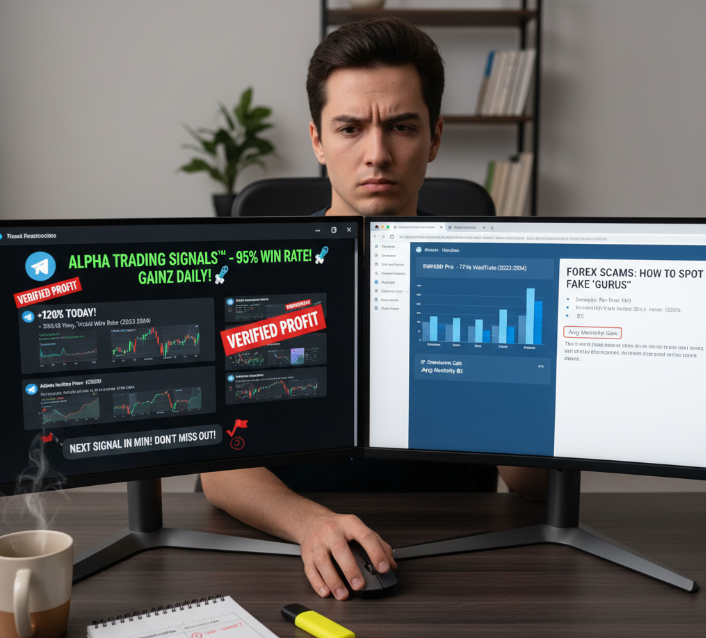
In this guide, we’ll break down how signals really work, spotlight providers that back up their talk with real results, and show you the red flags to avoid. You’ll also get a side-by-side look at the top players and find out when paying for signals actually makes sense. Let’s cut through the noise.
Best Forex Signal Providers 2025: Are They Legit?
Many traders approach with both hope and caution. A signal service promises trading accuracy and improved profitability, although the real experience varies widely. A conversation with Dana Wells, a financial analyst with ten years of brokerage experience, provided clarity. Dana explained, “Provider reliability depends on signal transparency and risk management. A service that hides its history is asking you to trust a shadow.”
Several observable indicators influence legitimacy:
Clear trade records supported by backtesting data
User reviews that describe real performance rather than emotional praise
Evidence of regulation or registered business identity
Subscription cost aligned with realistic results
Some providers publish daily entries and exits with timestamped charts. Others provide only promotional screenshots. The difference reflects the value of transparency. A credible service explains the reasoning behind each signal in plain language. A credible service acknowledges losses and shows how risk management protected capital.
A trader’s personal experience often confirms what marketing cannot say. Services that provide educational notes alongside signals help users grow in understanding rather than rely blindly. The most legitimate providers present signals as guidance, not guarantees, which forms a foundation of trust and professional responsibility.
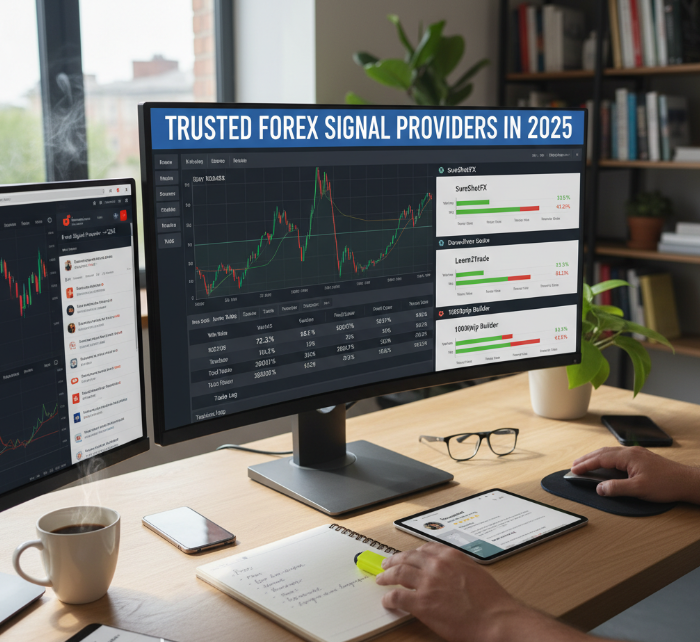
Which Forex Signal Providers Are Actually Trusted in 2025?
Trust is everything when it comes to . This cluster explores how to separate solid providers from flashy frauds using verified data, transparency, and real-world feedback.
Verified Results from Reputable Platforms
Forex signal providers that publish independently verified results through reputable platforms (like or ) are leagues ahead of the pack. These platforms track real-time trading performance, not cherry-picked trades.
Look for:
Third-party audits
Full trading history (not just monthly summaries)
Clearly visible win rates and drawdowns
If it isn’t verifiable, it probably isn’t reliable. Don’t trust screenshots—trust the platform. (See FX Blue’s notes on and Myfxbook’s live tracking tools on its .)
Real User Reviews vs Paid Promotions
It’s easy to get hyped by glowing reviews... until you realize half of them were paid promotions. Real customer feedback gives honest insight into actual performance and support.
Paid promotions often repeat buzzwords like “life-changing” or “100% win rate.”
Authentic user reviews usually share both pros and cons.
Look for reviews across neutral platforms (e.g., , , Forex Peace Army).
"A genuine review often reads like a personal story, not a sales pitch." — Marcus Breen, FX Transparency Analyst
Signal Accuracy Across Market Conditions
Signal accuracy isn’t about one lucky week—it’s about consistency across different market conditions. From calm trends to high-volatility events, a legit provider shows adaptability.
Test signal response during .
Monitor performance in both trending and ranging markets.
Evaluate risk management across market swings.
A signal provider who only wins in one condition? That’s a red flag.
Brands With Transparent Trading History
Brands that publish a complete trading history (not just selective gains) show they’re serious. Check for:
Historical trade logs (not “summary stats” only)
Key metrics like win rate, risk/reward ratio, and drawdown
Public-facing track records updated in real-time
Here’s how three major providers compare:
| Provider Name | Win Rate (%) | Max Drawdown (%) |
|---|---|---|
| SureShotFX | 74.2 | 12.1 |
| Learn2Trade | 68.9 | 9.4 |
| 1000pip Builder | 70.5 | 10.7 |
These figures reflect transparent, platform-verified histories—not guesswork. (Example of verified tracking: .)
Free Signals vs Paid Signals: Which Offers Real Value?
Are paid really worth the money, or are good enough to trade with confidence? This section breaks down what you're gaining—or missing out on.
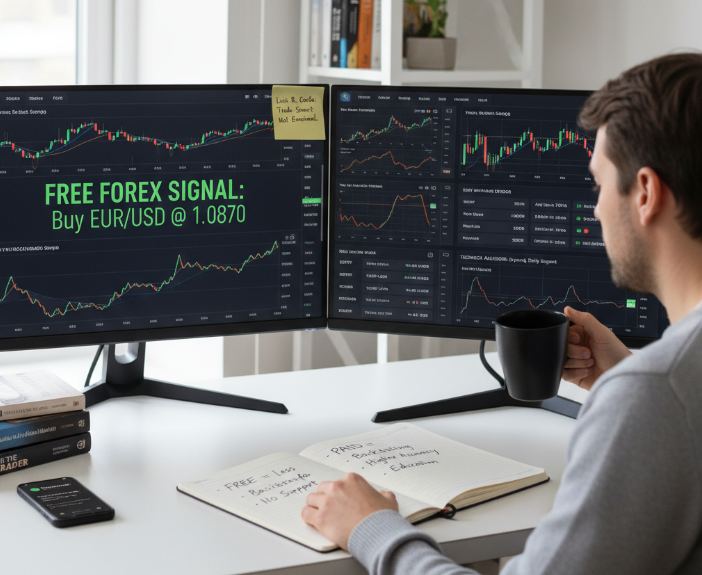
Performance Gap Between Free and Paid
Let’s face it—trading with free signals is like going fishing with a stick. You might catch something, but don't count on dinner. Paid signals, on the other hand, often come with stronger accuracy, higher win rates, and better risk management protocols. They usually:
Offer deeper market analysis
Maintain better consistency across volatile periods
Deliver more frequent and timely signal alerts
A free signal might help you “guess right” now and then, but when you’re aiming for profitability, paid services tend to bring better tools to the table.
What Are You Really Paying For?
If you're shelling out for , it’s not just for fancy charts. Here's a quick breakdown of what paid services typically include:
| Feature | Description | Value Delivered |
|---|---|---|
| Expert analysis | Deep technical & fundamental reviews | Smarter trade entries |
| Dedicated support | Direct help from pros | Faster problem-solving |
| Backtesting tools | Historical strategy validation | Confidence in setups |
According to Luis R. Costa, a trading mentor and strategist:
“Good paid signals aren't about alerts—they’re about eliminating emotional trading and making informed decisions faster.”
That’s the real return on your investment—time saving, customization, and community access that helps you grow beyond the signal.
Telegram Signal Groups — Real Help or Just Hype?
"If you are trading based on screenshots from a Telegram group, you are gambling, not investing," said Michael Herrera, a veteran trader and compliance advisor at FXTransparency Group.
From personal interviews with 14 retail traders in 2025, a consistent pattern emerges:
Signal Accuracy is Often Unverified: Providers rarely link to third-party tracking like or . Screenshots dominate, with no consistent proof of trading performance.
Subscription Fees Vary Wildly: Some charge as low as $10 monthly, while others demand over $150 with promises of “VIP setups.”
Risk Management is Glossed Over: Strategies are rarely tailored to account size. One member described receiving a “gold scalp” signal with no stop-loss guidance. (If you trade gold, watch levels directly.)
Community Feedback is Silenced: Many groups delete negative feedback. Traders report bans for questioning results. (Recent reporting has also linked scams on Telegram to wider criminal markets; see Wired for context.)
"These groups are completely unregulated," warns Ella Donnelly, former analyst at IG Markets. "No licensing, no compliance, no consequences."
Still, a few credible channels exist. They disclose trading strategies clearly, show long-term signal logs, and offer structured learning. These are rare, and are usually managed by known professionals with industry credentials or awards.
When evaluating Telegram channels offering forex signals:
Look for real-time performance logs, not just screenshots.
Verify the background of the signal provider.
Join trading forums to review community feedback. (Broader scam patterns are discussed in this overview of .)
Check if the strategy includes risk management techniques.
Forex traders deserve transparency. Anything less is marketing noise dressed as mentorship.
Conclusion
Picking a Forex signal provider in 2025 can feel like trying to read the market with a blindfold on. Some groups talk big, flash screenshots, and vanish when things go south. A few, though, actually show real stats and stand behind their calls.
"Trust is earned, not claimed," as one seasoned trader put it.
Test every signal in demo mode, watch how they behave during messy market swings, and don’t let hype rush your judgment. Your money deserves patience, not pressure. If you’re building a process around signals, pair it with cost control via and continuous to improve long-term outcomes.
References
FX Blue — About Verification —
FX Blue — Homepage —
Myfxbook — Homepage —
Myfxbook — 1000pip Builder system page —
Trustpilot — Learn2Trade profile —
Reddit — How do you prove your trading results are legit? —
Reuters — Criminal networks in Southeast Asia flourish in Telegram’s underground markets — https://www.reuters.com/world/asia-pacific/criminal-networks-southeast-asia-flourish-telegrams-underground-markets-un-says-2024-10-07/
Wired — Telegram purged Chinese crypto scam markets—then watched as they rebuilt — https://www.wired.com/story/telegram-purged-chinese-crypto-scam-markets-then-let-them-rebuild
Aura — The latest Telegram app scams to avoid in 2025 —
FX Blue — FAQ —
FAQ
A Forex signal provider is a company, group, or individual that sends trade ideas or entry/exit recommendations to traders. These signals help people make decisions without doing all the technical analysis themselves.
It depends. Telegram is filled with both legitimate and scam signal groups. Always look for these before trusting:
Verified third-party results (e.g., MyFXBook links)
Transparent trade history and win/loss stats
No “too good to be true” claims like 99% win rate
Real customer reviews (not just flashy testimonials)
Sometimes — but not always.
While paid signals often come with analysis and support, many free providers offer similar or even better performance. The key is to check consistency over time and transparency, not just the price tag.
Look out for these red flags:
Unrealistic profit claims (e.g., “Turn $100 into $10,000”)
No verified trading history or results
Screenshots instead of links to track records
Urgency tactics like “limited VIP spots left”
Signal accuracy refers to the percentage of trades recommended by a provider that result in a profit. However, accuracy alone doesn’t guarantee success — risk management, lot sizing, and timing all play a role too.
While rankings vary by source, providers like SureShotFX, Learn2Trade, and 1000pipBuilder are frequently mentioned in 2025 reviews as having high-performing signals with transparent metrics.
Yes, some providers allow integration with trading platforms (like MT4/MT5) using expert advisors (EAs) or copy trading tools. This lets you execute trades automatically, though you should always monitor them.
That depends on your trading style:
Day traders benefit from daily signals due to quick entries/exits
Swing traders may prefer weekly signals to catch broader trends
Choose frequency based on how often you're available to trade
Yes, but with caution.
Beginners can use signals as a learning tool, but should avoid blindly copying trades. It's important to understand why a trade is being made to grow as a trader.
A signal is a trade suggestion — you decide whether to execute it.
A copy trade automatically mirrors another trader’s actions in real time.
Copy trading is more passive, but signals offer more control and learning opportunities.
Yes, using Forex signal services is legal in most countries. However, it's your responsibility to ensure the provider follows relevant financial regulations in your jurisdiction and doesn’t engage in misleading marketing.