


Table of Contents
, , and those sneaky hidden fees, it can feel like you’re leaking money with every trade. That’s where Forex Cashback Bonuses: What They Are and How They Work comes in. This article breaks down how traders are flipping the script and getting a slice of those costs back—automatically.
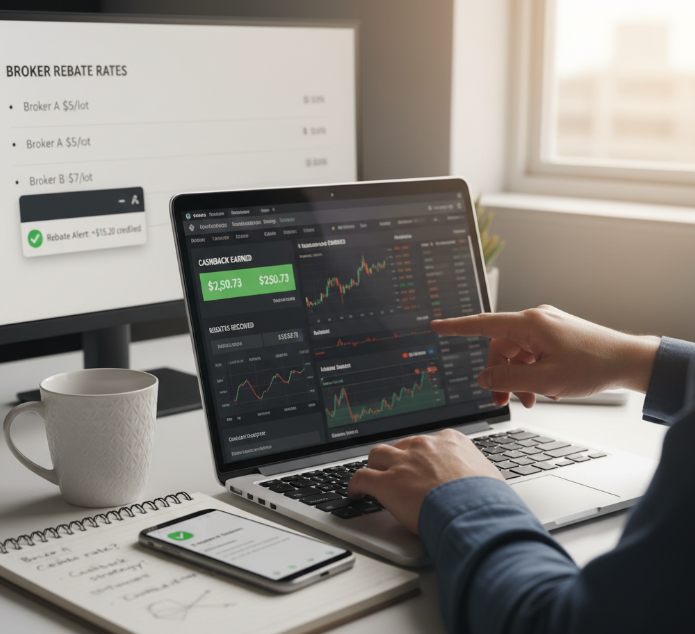
You’ll learn how cashback bonuses actually work, the types out there, and how they compare to flashy deposit promos. More importantly, we’ll show you how to pick a broker that pays you back without playing games.
What Is a Forex Cashback Bonus?
In a quiet office in Chicago, veteran currency trader Luis Moreno leaned forward during an interview. “You know,” he said, tapping the table, “I used to think a forex was just a marketing trick. Now, it is one of the few incentives I actually count on every month.”
A Forex Cashback Bonus is a financial reward issued to traders—often as a cash payment—based on the trading volume they generate through their brokerage account. It functions as a return of part of the or charged on each trade, making it one of the most practical forms of promotional offer in online trading. Unlike speculative trading bonuses that require specific conditions, cashback operates as a measurable refund mechanism.
This concept is often misunderstood by new traders. In essence, when a trader executes a trade, the broker earns revenue through fees. A portion of this fee is then returned to the trader as a forex rebate. This rebate acts as an incentive, encouraging consistent trading behavior while subtly reducing the overall transaction cost.
Key elements behind a forex cashback bonus:
Reward per trade, based on lot size or volume
Issued weekly or monthly depending on the platform
Applies to both wins and losses, increasing long-term value
Offered by brokers or third-party rebate services
Professional trader and author David Stendahl commented in a recent FXStreet webinar, “Cashback bonuses are not just perks. They are a cost-reduction strategy that, over time, help traders stay in the game longer.”
Many regulated brokers in the United States and Europe highlight their rebate programs publicly, sometimes showcasing awards for transparency in incentives. These cashback bonuses are not just gimmicks—they are fast becoming industry standards, especially for high-frequency traders seeking cost-efficient reward structures.
How Do Forex Cashback Rebates Work?
Cashback rebates in Forex aren’t just perks—they’re part of a smart trader’s strategy. Here's how the systems work behind the scenes and where your money really comes from.
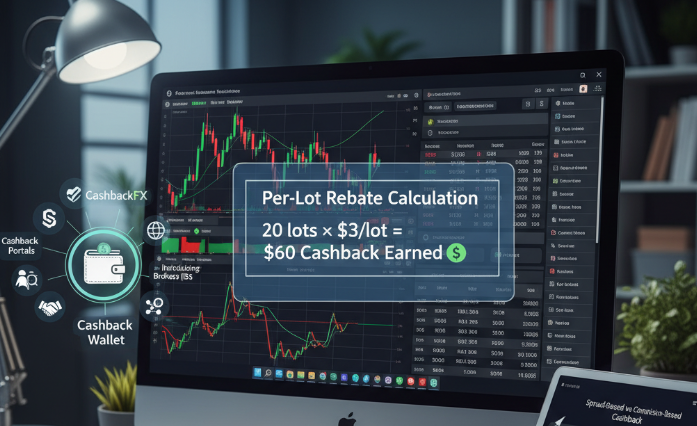
1. Per-Lot Rebate Calculation Explained
In the Forex world, cashback rebates are often calculated per-lot, meaning you earn a rebate based on your trading volume. For example, a broker may offer $5 cashback per standard lot traded on a major currency pair.
The formula looks like this:
Rebate = (Number of lots traded) × (Rebate per lot)
So if you trade 20 lots in a month and the rebate is $3 per lot, that’s $60 cashback. High-volume traders benefit the most.
Keep in mind: Some brokers offer different rates based on the currency pair or account type.
2. Spread-Based vs Commission-Based Cashback
When it comes to cashback, it usually ties back to two major cost models:
Spread-Based Cashback: Applies to brokers who charge the difference between the buy and sell price. Rebates are given from that margin.
Commission-Based Cashback: Comes from a fixed fee per trade. Rebates here are usually more transparent.
| Model Type | Cost Visibility | Typical Broker Type |
|---|---|---|
| Spread-Based | Low | |
| Commission-Based | High | /STP Brokers |
Forex traders focused on reducing trading costs should weigh both. Sometimes a low spread plus a cashback is cheaper than a tight spread without any rebate at all. For context on where broker costs come from (and why rebates exist), see how .
3. Role of IBs and Cashback Portals
So here’s the scoop: most retail traders don’t get cashback directly from brokers. They go through or cashback portals.
IBs are affiliates who refer you to a broker. In return, they get a slice of the fees you generate.
Some IBs pass a chunk of that back to you as cashback.
Cashback portals simplify this—no sketchy deals, just a platform where multiple brokers are listed with options.
These setups are win-win: trader saves, IB earns, and broker gains a new client. As one trader said in a forum, "My IB's rebate gives me back $400 a month. That’s basically a rent check."
4. How Brokers Fund Cashback Offers
Ever wonder how Forex brokers can afford to give cash back? Here’s how it works:
Marketing Budget Allocation: Cashback is just part of their ad spend to acquire active traders.
High Trading Volume: Brokers still profit off spreads or commissions, especially from frequent traders.
Customer Lifetime Value: A broker might lose $100 on cashback in month one but make $1,000 over the year.
In short, cashback offers are just a smart way for brokers to boost customer acquisition and improve profit margins over time.
And let’s be real—“free money” sounds better than “broker fee discount,” right?
Can Cashback Improve Trading Profits?
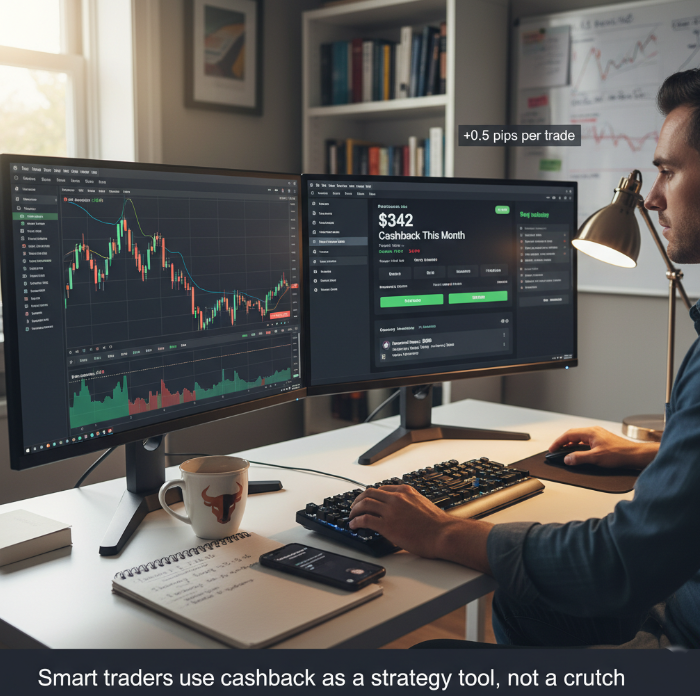
Can cashback really move the needle on your profits? Let’s break down when it helps — and when it might hurt your game.
Cashback Impact on Long-Term ROI
Even modest cashback earnings can stack up over time. By lowering transaction costs per trade, you increase your profitability — especially with a sound trading strategy.
Cashback boosts compounding returns by slightly improving win-to-loss margins.
Over a longer investment horizon, these micro-gains can become meaningful.
Traders aiming for long-term ROI should treat cashback as a tool, not a miracle.
“Cashback isn't the profit, it’s the padding,” says FX veteran Lars Jensen of GlobalEdge.
Scalping and High-Volume Cashback Gains
If you’re a scalper or high-frequency trader, cashback is your secret sauce. Here's why:
involves rapid-fire trades, and even 0.5 pips saved per trade matters.
High-volume trading compounds these savings — think thousands of trades monthly.
Reduced transaction costs directly affect profit margins, keeping your edge alive.
Real talk? If you're not claiming cashback and you're scalping... you're leaving money on the table, buddy.
Risks of Relying on Rebates
Relying too much on cashback can mess with your trading discipline. Here’s where it can backfire:
Market volatility may tempt you to overtrade just to earn rebates.
Not all brokers are transparent — rebate changes and broker reliability vary wildly.
Ignoring risk management in pursuit of rebate income can shrink your account fast.
Tip: Use cashback as an enhancer, not an excuse to trade poorly.
Conclusion
can feel like getting a small refund on every trade—like finding a few bucks in your pocket you didn’t expect. It won’t magically turn losses into wins, but it can cut down trading costs and take some pressure off your margins.
As one experienced trader said, "Small edges add up over time."
Still, the real game is choosing a solid broker, staying disciplined, and knowing your strategy. Cashback is just the boost, not the engine. Use it smartly, and it works in your favor.
References
FAQs: Forex Rebates –
How Is Spread Calculated in the Forex Market? –
Commission: Definition and Examples, Vs. Fees –
Understanding Bid-Ask Spreads in Forex and Their Impact –
Market Makers Vs. Electronic Communications Networks –
ECN Broker: How It Works, Benefits, and Drawbacks –
Introducing Broker (IB) Registration | NFA –
How Forex Brokers Make Money –
Forex Scalping –
FAQ
Not exactly. It might feel like free money because you get rebates on trades, but it’s technically a partial refund of the fees (like spreads or commissions) you already paid to your broker. Think of it as a loyalty reward rather than a giveaway.
Typically, cashback is calculated based on lots traded. For example, a broker might offer $3 per standard lot. If you trade 10 lots, you earn $30. Some brokers use spreads or commission percentages instead, depending on your account type.
No, not all brokers offer cashback rebates. Here’s why:
If cashback is a priority, always check the broker’s terms or partner with a trusted rebate provider.
Some brokers build cashback into spreads instead of as a separate rebate.
Regulated brokers may limit promotions in certain regions.
Others work only with affiliate platforms that distribute cashback.
Forex cashback is earned continually as you trade, while a welcome bonus is typically a one-time incentive for opening an account or depositing funds. Cashback is more consistent and depends on your trading activity, whereas bonuses may have withdrawal restrictions or expiry dates.
No. Cashback programs are only available on live trading accounts, because they’re based on real money trades. Demo accounts don’t involve real commissions or spreads, so there’s nothing to rebate.
It depends on your country's tax laws. In many jurisdictions, rebates and bonuses from trading are treated as additional income and must be declared. Always consult a tax professional familiar with Forex trading.
That varies by region and account type, but commonly mentioned brokers with strong cashback offerings include:
Make sure you compare rebate rates per lot, spread/commission structures, and the actual payout method before choosing.
IC Markets
RoboForex
Tickmill
Exness
Usually yes, but some brokers may exclude:
Always review the fine print of any cashback program.
Hedging strategies
Scalping under certain conditions
Trades held under 1 minute
Copy trades or trades opened via automated systems
Cashback portals act as introducing brokers (IBs). They partner with major brokers and share their commission with you:
You sign up through the portal’s referral link.
Your trades earn the portal a commission from the broker.
The portal gives you back a portion (e.g., 50–90%) of that commission as cashback.
Yes, it can — especially for high-volume or active traders. While it won’t change market conditions, consistent rebates can offset spreads and commissions, effectively reducing your cost per trade over time.
Most cashback platforms or brokers offer payouts through:
Payouts can be daily, weekly, or monthly depending on the provider.
PayPal or Skrill
Bank wire transfers
Cryptocurrency (Bitcoin or USDT)
Internal transfer to your trading account