

Table of contents
When I began trading Forex, it felt like trying to navigate a maze blindfolded. I quickly realized that 3 Things I Wish I Knew When I Started Trading Forex could’ve saved me a lot of stress and money. The road to success was way bumpier than I expected, but I eventually found my footing.
I made plenty of rookie mistakes—like jumping in without a clear strategy and ignoring risk. I learned the hard way, but I’m here to share the key lessons that’ll give you a head start. As Warren Buffett once said, "The more you learn, the more you earn." This couldn’t be truer in Forex.
Trading’s not just about charts and numbers; it’s about strategy, mindset, and consistency. Stick around, and I’ll walk you through the 3 things that changed my game forever.

Forex Trading Basics
What is Forex Trading?
Forex, short for foreign exchange, refers to the global market where currencies are traded. The goal of Forex trading is to exchange one currency for another with the aim of making a profit. This market is massive—averaging over $6 trillion in daily transactions—making it the largest financial market in the world. Currency pairs like EUR/USD (Euro/US Dollar) or GBP/JPY (British Pound/Japanese Yen) are the basis of Forex trades. The market offers high liquidity, meaning you can easily enter or exit positions. Forex trading is largely driven by speculation and the anticipation of price movements, which creates opportunities for both short-term and long-term traders. Brokers act as intermediaries, providing platforms for traders to execute their orders.
How Does Currency Trading Work?
Currency Pairs
In Forex, you don’t just buy or sell a single currency—you trade in pairs. This means you are simultaneously buying one currency and selling another. The first currency in the pair is called the base currency, and the second one is the quote currency. For example, if you’re trading EUR/USD, you are buying the Euro (EUR) and selling the U.S. Dollar (USD). The exchange rate tells you how much of the quote currency is needed to buy one unit of the base currency.Bid vs. Ask Price
The spread is the difference between the bid and ask prices and represents the broker’s profit or the cost of trading. The tighter the spread, the cheaper the trade is.Bid Price: This is the price at which buyers are willing to buy the base currency. It’s the "buy" price for traders.
Ask Price: This is the price at which sellers are willing to sell the base currency. It’s the "sell" price for traders.
Spread
The spread is a critical concept in Forex. It’s the difference between the bid price and the ask price, and it determines how much you’re paying to enter a trade. A narrow spread means it’s cheaper to trade, while a wide spread increases the cost of entering and exiting trades. The spread can change depending on the currency pair and market conditions.
Key Terms Every Trader Should Know
PIP (Percentage In Point): A PIP is the smallest unit of price movement in Forex. For most currency pairs, it is equal to 0.0001 of the exchange rate. For example, if EUR/USD moves from 1.1000 to 1.1001, that’s a one-pip move.
Leverage: Leverage allows you to control a larger position with a smaller amount of capital. For example, with 100:1 leverage, you can control $100,000 in currency with just $1,000 of margin. While leverage can increase profits, it also amplifies potential losses, so it’s important to use it cautiously.
Lot Size: Forex trades are measured in lots. A standard lot is 100,000 units of the base currency, a mini lot is 10,000 units, and a micro lot is 1,000 units. Lot sizes determine the value of each pip movement and your potential profit or loss.
Margin: Margin is the amount of money required to open and maintain a position. It acts as a deposit that guarantees your ability to trade. Margin is expressed as a percentage of the total trade value.
Stop Loss/Take Profit: These are risk management tools that automatically close a position once the price reaches a predefined level. A Stop Loss limits potential losses, while a Take Profit locks in profits once the target price is reached.
Why Strategy Matters

The Importance of a Trading Plan
A well-defined trading plan is the backbone of any successful trader’s journey. It acts as a blueprint, helping you stay disciplined and focused, avoiding emotional decisions that can lead to losses.
Define Your Objectives: What do you want to achieve? Are you focused on long-term growth or quick profits? Establish clear goals.
Establish Entry and Exit Points: Knowing when to enter and exit a trade is vital. This helps you capitalize on opportunities and avoid unnecessary losses.
Risk Management: Always plan how much you are willing to risk per trade. A common rule is not to risk more than 2% of your total capital on any one trade.
Discipline: Stick to the rules of your plan. It’s easy to get caught up in the excitement or fear, but your plan will guide you through the noise.
By maintaining a structured approach, you’ll be able to make decisions based on logic and analysis, not emotions. This will result in more consistent outcomes, whether the market is up or down.
Adapting to Market Conditions
Markets are unpredictable, and a rigid strategy can leave you vulnerable to sudden changes. Adapting to market conditions is essential to staying profitable.
Stay Updated with News: Financial news, economic reports, and geopolitical events can all impact the market. A trader needs to stay informed about the latest developments.
Monitor Market Sentiment: The mood of the market can swing quickly. Whether bullish or bearish, adjusting your strategy according to the prevailing sentiment is crucial.
Use Technical Indicators: Leverage indicators like moving averages, Relative Strength Index (RSI), and Bollinger Bands to help you make data-driven decisions during volatile times.
Adapt to Volatility: When the market becomes volatile, consider lowering your position size or utilizing stop-loss orders to minimize risk.
Example of Adapting to Market Conditions:
| Market Condition | Strategy Adjustment | Tools to Use |
|---|---|---|
| High Volatility | Reduce position size, use tight stop losses | RSI, Bollinger Bands |
| Trending Market | Follow the trend with breakout strategies | Moving Averages, MACD |
| Range-bound Market | Use support and resistance levels for entry/exit | Support/Resistance levels, Stochastic Oscillator |
Being flexible with your strategy ensures that you're not caught off guard when the market shifts. It allows you to adjust quickly and make informed decisions, keeping you on the right track.
How to Control Risk

Risk-to-Reward Ratio Explained
The risk-to-reward ratio is a vital tool for managing trades. It helps you understand if the potential reward of a trade justifies the risk you’re taking. For instance, if you’re risking $100 for a potential gain of $300, your risk-to-reward ratio is 1:3.
How to Calculate:
- Risk: The amount you're willing to lose (e.g., $100).
- Reward: The amount you expect to gain (e.g., $300).
- Formula: Risk ÷ Reward = Risk-to-Reward Ratio.
Why It’s Important:
Ensures you're taking trades with a positive expected return.
Helps you decide if a trade is worth taking based on the potential reward.
Protects you from making impulsive trades that might not be profitable.
Example:
Let’s say you plan to risk $200 on a trade, but you’re targeting a profit of $600. Your ratio would be 1:3, meaning your reward is three times your risk. This gives you a much higher chance of making money in the long run.
Setting Stop-Loss and Take-Profit Orders
Setting stop-loss and take-profit orders allows traders to automate their risk management. These orders help minimize losses and secure profits without constant monitoring, offering more control over your trades.
Stop-Loss:
A stop-loss is an order placed to sell a security when it reaches a certain price to prevent further losses. For example, if you buy EUR/USD at 1.2000, you could set a stop-loss at 1.1900 to limit your loss to 100 pips.
Take-Profit:
A take-profit order locks in profits once a trade reaches a predefined level. For example, if you’re trading the same EUR/USD pair and set a take-profit at 1.2200, the trade will close automatically when the price hits that level.
Benefits:
Protects your trades by locking in profits and limiting losses.
Saves time by automating exits from trades.
Provides emotional control, reducing the risk of reacting impulsively to price swings.
The Importance of Leverage Control
Leverage is a double-edged sword. While it allows traders to control larger positions with a small amount of capital, it also magnifies both gains and losses. For instance, with 50:1 leverage, you can control a $50,000 position with just $1,000 of your own capital.
Why Control Leverage?
- Risk of Overexposure: High leverage exposes you to larger market movements and can lead to huge losses if the market moves against you.
- Margin Calls: If your account drops below a certain level, you could face margin calls, forcing you to close positions at a loss.
Tips for Leverage Control:
Start Small: Begin with a lower leverage to manage risk, especially when you’re starting.
Only Use What You Need: Don’t use leverage to overexpose your account to risk.
Monitor Your Positions: Always be aware of your margin usage and account balance to avoid liquidation.
Example:
If you use high leverage of 100:1 on a $1,000 account, your margin requirement for a $100,000 trade is only $1,000. However, a small price movement could lead to a complete loss of your initial investment.
Diversification in Forex Trading
Diversification is key to managing risk in any investment strategy, including Forex. By spreading your capital across different currency pairs, you reduce the risk of a single pair negatively affecting your entire portfolio.
Why Diversify?
Spreading Risk: When you trade multiple currency pairs, you reduce the chances of losing your entire investment on one trade.
Correlation Management: Currency pairs often have a relationship with one another. Diversifying helps mitigate the effects of correlated pairs moving in the same direction.
Example Pairs for Diversification:
| Currency Pair | Risk Level | Correlation |
|---|---|---|
| EUR/USD | Medium | High with GBP/USD |
| USD/JPY | Low | Low with EUR/USD |
| GBP/USD | Medium | High with EUR/USD |
By diversifying across pairs like EUR/USD, USD/JPY, and GBP/USD, you lower the risk of significant losses if one currency pair moves against you.
Strategy Tips:
- Select currency pairs with low correlation to avoid overexposure to the same market movement.
- Don’t spread yourself too thin; choose a few pairs to manage effectively.
Best Platforms for Beginners
Choosing the Right Forex Broker
Selecting the right Forex broker can make or break your trading experience. Here’s what you need to pay attention to:
Regulation: Make sure the broker is regulated by authorities such as the FCA (UK), ASIC (Australia), or NFA (USA). This ensures they meet industry standards for security and fairness.
Spreads & Fees: Brokers charge spreads (the difference between buying and selling prices). Some brokers also charge commission or have hidden fees. Keep an eye on low-cost brokers like IG Group or OANDA.
Leverage & Account Types: Look for brokers that offer flexible leverage, but avoid excessive leverage, especially when starting. Platforms like TD Ameritrade provide demo accounts, which can help beginners get a feel for trading without risking real money.
Customer Support: Quick and reliable customer support can save you when technical problems or account issues arise. Look for brokers that offer 24/7 support.
Here’s a quick comparison of some well-known brokers:
| Broker | Regulation | Minimum Deposit | Spreads | Leverage |
|---|---|---|---|---|
| IG Group | FCA (UK) | $250 | From 0.6 pips | 1:30 |
| OANDA | NFA (USA) | $1 | From 1.0 pips | 1:50 |
| TD Ameritrade | NFA (USA) | $0 | From 1.2 pips | 1:50 |
| Forex.com | CFTC (USA) | $50 | From 0.8 pips | 1:50 |
These brokers offer different spreads, minimum deposits, and leverage options. Choose one based on your trading style and experience.
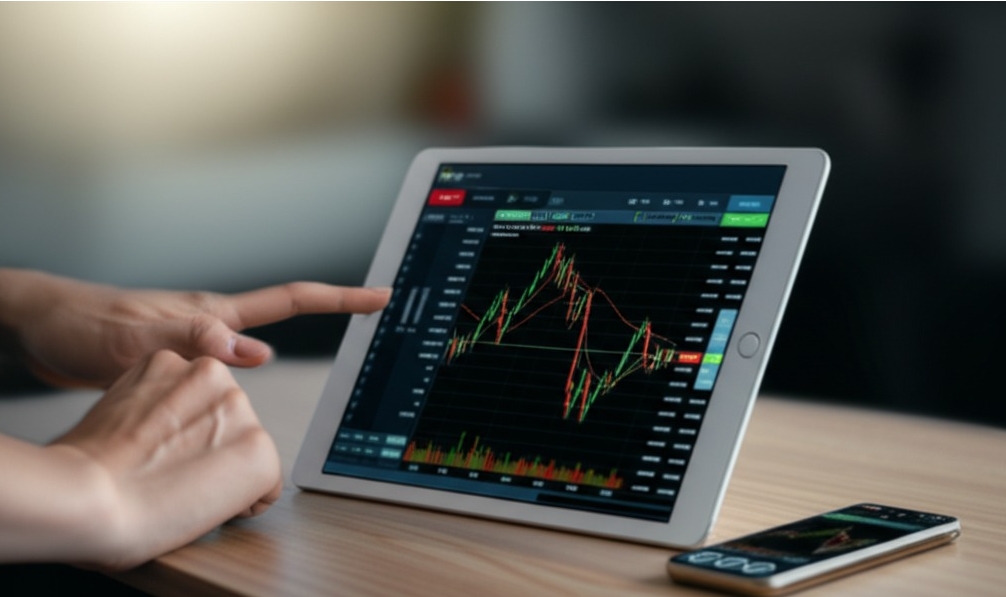
User-Friendly Trading Platforms
A trading platform’s user interface (UI) can make a big difference in your trading success. Look for platforms that make it easy to trade, analyze, and manage your portfolio. Here are some important features to consider:
Intuitive UI: A platform that’s easy to navigate helps you avoid confusion. For example, MetaTrader 4 (MT4) and MetaTrader 5 (MT5) are popular among beginners due to their user-friendly interface.
Mobile & Web Trading: Flexibility is key. Choose a platform that offers mobile and desktop trading options. eToro and Plus500 both offer great mobile trading apps for on-the-go access.
Charting Tools & Technical Indicators: These are essential for technical analysis. Good platforms like TradingView or NinjaTrader provide advanced charting and technical tools to analyze trends and price movements.
A great platform combines ease of use with powerful trading features. The right platform allows you to trade from anywhere, analyze the market with advanced tools, and manage your trades with ease.
Consistency Over Time
Discipline and Patience: The Pillars of Consistent Success
Discipline is the ability to stay committed to your trading plan, regardless of market fluctuations. It is about sticking to your predefined strategies and resisting the temptation to act impulsively. Many new traders face the challenge of chasing quick profits or reacting emotionally to market volatility. Successful traders know that their long-term profitability is not tied to chasing every opportunity but in following a consistent method.
Patience is another crucial aspect of consistency. In Forex, it is easy to get distracted by short-term price movements. A patient trader understands that not every market opportunity is worth pursuing and that the best trades often require waiting for ideal conditions. By exercising patience, traders allow their strategies to unfold naturally, letting the market provide the right conditions for success.
In essence, discipline and patience together create a solid foundation for consistent trading success.
Strategy Execution and Focusing on Long-Term Goals
A well-crafted trading strategy is the key to success. However, without consistent execution, even the best strategy will fail. Successful Forex traders know that long-term profitability is achieved not through chasing every opportunity, but by adhering to a tested strategy and executing it consistently.
Executing your strategy requires a commitment to the process, even when market conditions appear unfavorable. Sticking to your plan—whether or not you feel a trade is "right" in the moment—helps you avoid emotional decisions. Instead of focusing on immediate wins, your attention should be on achieving steady progress towards long-term goals.
By focusing on the long-term outcome, traders prevent themselves from falling into the trap of short-term thinking, which can often lead to losses.
Risk Management: Protecting Your Capital and Building Consistency
Managing risk is arguably the most vital skill any Forex trader can develop. Trading without proper risk management is like trying to cross a river without a boat. Eventually, a trader will be swept away by large, unprotected losses. Consistent risk management ensures that a trader can survive downturns and capitalize on opportunities when they arise.
Risk management includes setting stop-loss orders, calculating risk-to-reward ratios, and ensuring you never risk more than a small percentage of your capital on a single trade. These actions protect your portfolio from significant losses, allowing your account to recover and continue growing over time. The more consistently you practice effective risk management, the more stable and long-lasting your trading career will be.
Here is an example of how risk management could be applied in practice:
| Trade Setup | Trade Value | Stop-Loss (%) | Risk-to-Reward Ratio | Outcome |
|---|---|---|---|---|
| EUR/USD Buy | $10,000 | 1% | 2:1 | Win |
| GBP/USD Sell | $5,000 | 2% | 3:1 | Loss |
| USD/JPY Buy | $8,000 | 1.5% | 2.5:1 | Win |
By maintaining a balanced risk-to-reward ratio, traders can ensure they are setting themselves up for long-term gains, even if they face a few losses along the way.
Emotional Control: The Key to Staying Consistent
One of the biggest challenges in Forex trading is emotional control. Fear and greed are the emotional drivers that often lead traders into making hasty decisions. For example, after a string of losses, traders might impulsively increase their lot size in an attempt to recover quickly, which can amplify losses. Alternatively, after a few successful trades, traders might become overconfident and start taking unnecessary risks.
Successful traders know that the key to consistency is emotional control. Rather than reacting to market conditions, they rely on their strategy and risk management practices to guide their decisions. They know that every loss is part of the learning process, and staying calm and sticking to the plan is the most important factor in staying consistent.
Developing emotional control takes time. It requires a focus on building a mental resilience that helps you navigate market ups and downs without losing focus on your strategy.
Routine and Performance Review: Maintaining Consistency
A routine is essential to building and maintaining consistency. It ensures that you are staying engaged with the market, tracking your trades, and regularly reviewing your strategies. Traders who incorporate daily or weekly reviews into their routine are able to spot mistakes, learn from them, and refine their strategies.
A performance review is not just about tracking profits or losses. It is about analyzing your decision-making process, understanding why certain trades were successful or unsuccessful, and learning from these experiences. A regular review of your trading performance allows you to make necessary adjustments to your strategy, improving its effectiveness and increasing the likelihood of long-term consistency.
Here’s a suggested routine for traders to follow:
| Task | Frequency | Purpose |
|---|---|---|
| Review open positions | Daily | Assess current trades and their progress |
| Analyze trade performance | Weekly | Identify strengths and areas for improvement |
| Set trading goals for the week | Weekly | Align focus and objectives for the upcoming trades |
| Risk management assessment | Daily/Weekly | Ensure trades are aligned with risk management strategies |
By following a structured routine, traders can stay on track and continuously improve their skills and results.
Building Long-Term Success Through Steady Gains
The ultimate goal of Forex trading is not to make large, sporadic profits, but to build long-term success through consistent, steady gains. Just as a well-maintained garden grows slowly but steadily over time, so too does a Forex portfolio when it is nurtured with patience, discipline, and consistent effort.
A consistent approach to trading ensures that you are not gambling with your capital but rather treating Forex as a long-term venture. This mindset reduces the risk of burnout or frustration, keeping you focused on the bigger picture. Steady gains, while less glamorous, compound over time and lead to significant profits in the long run.
The Power of Consistency
Consistency is the cornerstone of Forex trading success. By combining disciplined execution of your strategy, effective risk management, and emotional control, you lay the groundwork for sustained profitability. It is through this consistency—steadily reviewing your performance, maintaining a routine, and focusing on long-term goals—that you will find success in the Forex market.
Whether you are just starting or you have been trading for years, consistency should always be at the core of your approach. Keep refining your strategies, reviewing your results, and staying committed to the long-term process. With time and persistence, the steady gains will follow.
Essential Forex Indicators
Moving Averages: The Trend Indicator
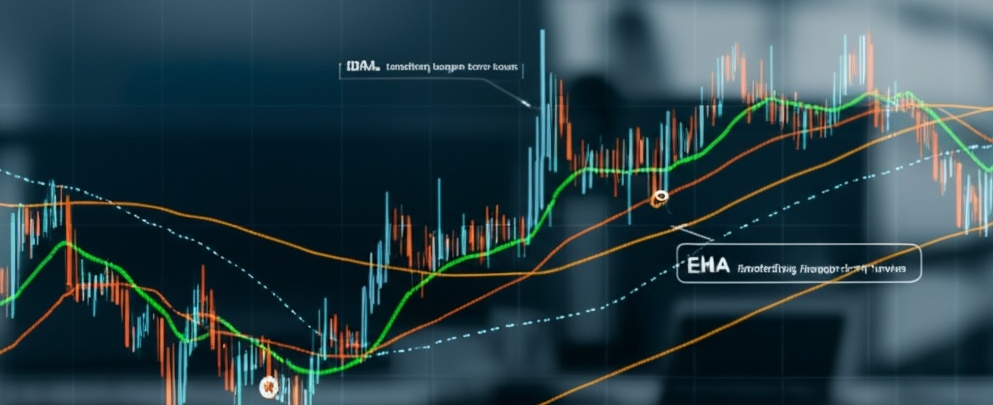
Moving averages are one of the most popular and widely used indicators in Forex trading. They help smooth out price data, reducing the impact of short-term fluctuations and highlighting the direction of the trend. There are two main types of moving averages: Simple Moving Average (SMA) and Exponential Moving Average (EMA).
SMA (Simple Moving Average):
A straightforward calculation of the average closing price over a set period (e.g., 50 days or 200 days). It’s a lagging indicator that reacts more slowly to price changes.EMA (Exponential Moving Average):
More sensitive to recent price changes, the EMA gives more weight to the most recent data points. This makes it quicker to respond to price movements compared to the SMA.
How Moving Averages Help:
Trend Direction: Moving averages can help identify whether the market is trending up, down, or consolidating. If the price is above the moving average, it suggests an uptrend. Conversely, if the price is below the moving average, it signals a downtrend.
Smoothing Effect: By averaging the price data, moving averages filter out noise and volatile movements, allowing traders to focus on the bigger picture.
| Type | Purpose | Key Advantage |
|---|---|---|
| SMA | To identify longer-term trends | Simple and easy to understand |
| EMA | To react faster to price moves | More responsive to recent price changes |
RSI: Identifying Overbought & Oversold Conditions
The Relative Strength Index (RSI) is a momentum oscillator that measures the speed and change of price movements. It is typically used to identify overbought or oversold conditions in the market.
How It Works:
The RSI ranges from 0 to 100. Generally:Above 70: Market is considered overbought, suggesting that prices may be due for a pullback.
Below 30: Market is considered oversold, implying that prices may be due for a reversal upward.
Divergence:
RSI also signals divergence when the price and RSI move in opposite directions. This divergence can indicate a potential trend reversal.
Common RSI Signals:
Overbought (above 70): The asset might be overpriced, and a price decline could follow.
Oversold (below 30): The asset may be undervalued, and a price increase might happen soon.
Practical Example:
If an asset’s price is rising but the RSI starts to decline, this could signal that the current uptrend is losing momentum, suggesting an upcoming reversal.
MACD: Measuring Momentum and Trend Strength
The Moving Average Convergence Divergence (MACD) is a powerful momentum indicator that helps traders identify trend direction, momentum, and potential reversals by comparing two exponential moving averages.
Components of MACD:
MACD Line: The difference between the 12-day and 26-day EMAs.
Signal Line: The 9-day EMA of the MACD Line, used as a trigger for buy and sell signals.
Histogram: The graphical representation of the difference between the MACD line and the Signal line.
How to Use MACD:
Buy Signal: When the MACD line crosses above the Signal line.
Sell Signal: When the MACD line crosses below the Signal line.
Zero Line Crossover: A crossover above the zero line suggests bullish momentum, while a crossover below signals bearish momentum.
MACD Histogram:
The histogram visually shows the difference between the MACD and Signal line. When the histogram is rising, it indicates increasing momentum in the direction of the MACD line, and when it falls, it shows decreasing momentum.
| MACD Component | Purpose | Usage |
|---|---|---|
| MACD Line | Measures momentum | Determines trend direction |
| Signal Line | Trigger line for entry/exit points | Confirms MACD line crossovers |
| Histogram | Displays momentum changes | Helps visualize momentum shifts |
Each of these indicators—Moving Averages, RSI, and MACD—provides critical insights into the Forex market. By combining them in your trading strategy, you can better identify trends, manage risk, and make more informed decisions.
Emotional Control in Trading
Avoiding Greed in Forex Trading
Greed is a dangerous emotion in Forex trading. It can lead traders to take excessive risks, make poor decisions, and ignore established risk management rules. When driven by greed, traders often forget their original trading plan and chase quick profits, leading to significant losses. The key to controlling greed is discipline. Stick to a strategy, focus on consistent small gains, and understand that the market will always be there for another opportunity. Remember, consistency beats high-risk, high-reward trades.
| Greed in Forex Trading | Key Factors to Avoid | Recommended Actions |
|---|---|---|
| Emotional Impulses | Taking excessive risks | Stick to a trading plan |
| Overtrading | Chasing profits | Control position sizing |
| Ignoring Stop-Loss | Risking more capital | Use proper risk management |
Overcoming Fear of Missing Out (FOMO)
FOMO is an emotional trap that can hurt your trading. It arises when traders see others making profits and feel the urge to jump into trades impulsively. This often leads to entering trades that don't align with your trading strategy. To overcome FOMO, develop patience. Stick to your plan and wait for setups that match your criteria. Trust that more opportunities will come, and avoid the fear-driven urge to trade. Trading with discipline and having a clear strategy will help you avoid emotional decisions and stay in control of your trades.
Have a written trading plan.
Use risk management to avoid making high-risk trades out of impulse.
Avoid watching others’ trades constantly; it fuels the FOMO effect.
Developing Patience in Trading
Patience is a key trait of successful traders. Jumping into trades without proper analysis or waiting for the best setups can lead to poor decisions. Sometimes, the best action is no action at all. Instead of rushing, focus on waiting for trades that offer the best probability of success. Selective trading based on market analysis will help you avoid overtrading. Developing patience involves understanding that every trade does not need to be taken, and sometimes, the market will present better opportunities if you wait.
| Patience in Trading | Benefits of Patience | How to Improve Patience |
|---|---|---|
| Waiting for setups | Fewer mistakes | Set clear entry/exit rules |
| Avoiding overtrading | Better long-term profits | Practice mindfulness and mental discipline |
| Analyzing trends | Reduced emotional stress | Focus on high-probability trades |
Staying Calm After Losses
Losses are inevitable in Forex trading. How you handle them determines your success in the long run. If you let emotions like anger or frustration take over, it can lead to revenge trading and further losses. Instead, stay calm and stick to your trading psychology. After a loss, take the time to analyze what went wrong, refine your strategy, and move forward. Post-loss analysis helps you learn from your mistakes and ensures that emotions don’t dictate future decisions. Keep your mindset focused on continuous improvement.
Step Back: Take a break to clear your mind.
Analyze the Trade: Was the loss due to a poor decision or just market volatility?
Reassess Your Strategy: If necessary, adjust your strategy to avoid repeating the same mistakes.
By mastering emotional control, you can avoid common pitfalls like greed, fear, and impatience, making more informed and disciplined trading decisions. These skills are crucial for long-term success and stability in the Forex market.
Conclusion
Trading Forex can feel like you're trying to ride a wave, only to wipe out more times than you'd like to admit. But once you nail down a solid strategy, control your risks, and keep your emotions in check, the ride gets smoother. Remember, it’s about the long game – consistent effort and learning from each trade is what separates the pros from the rookies.
As Warren Buffet wisely put it, “The stock market is a device for transferring money from the impatient to the patient.” Stick with it, stay disciplined, and watch your skills grow over time.
Forex trading, also known as foreign exchange trading, involves buying and selling currencies to profit from fluctuations in their exchange rates. It's one of the largest financial markets in the world, with a daily trading volume of over $6 trillion.
In Forex, you trade currency pairs, such as EUR/USD or GBP/JPY. For example, when you trade the EUR/USD pair, you’re buying euros and selling U.S. dollars at the same time.
A pip stands for "percentage in point" and is the smallest price movement in a currency pair.
For most currency pairs, a pip is equivalent to 0.0001. However, in pairs involving the Japanese yen, one pip equals 0.01.
For example:
- EUR/USD moves from 1.2000 to 1.2001 – that’s a movement of one pip.
- USD/JPY moves from 110.00 to 110.01 – that’s a movement of one pip.
Leverage allows traders to control a large position with a relatively small amount of capital. It’s expressed as a ratio, such as 50:1, 100:1, or 500:1.
- High leverage can amplify profits, but it also increases the risk of losses.
- Example: With 100:1 leverage, a trader can control $100,000 of currency with just $1,000 of their own capital.
Leverage enables greater potential rewards, but it should be used cautiously, especially by beginners.
A stop-loss order is used to limit a trader’s potential loss on a trade. It automatically closes a position when the market moves against you by a certain amount.
For example, if you enter a trade at 1.3000 and set a stop-loss at 1.2950, your position will close if the price falls to 1.2950, limiting your loss.
- Benefits of stop-losses:
- Helps you avoid significant losses.
- Provides peace of mind by setting predefined exit points.
- Protects you when you cannot constantly monitor the market.
Currency pairs consist of two currencies: the first currency is called the "base currency," and the second is the "quote currency." When you trade a currency pair, you are buying the base currency and selling the quote currency.
For example, in the pair EUR/USD:
- EUR is the base currency.
- USD is the quote currency.
- If you buy EUR/USD, you are buying euros and selling dollars.
- If the price rises, you profit; if the price falls, you lose.
- Major currency pairs: These pairs include the most traded currencies in the world. They always involve the USD and include pairs like EUR/USD, GBP/USD, and USD/JPY.
- Minor currency pairs: These don’t include the USD but involve other major currencies, such as EUR/GBP or EUR/AUD.
- Exotic currency pairs: These pairs involve one major currency and one currency from an emerging market, like USD/TRY (U.S. Dollar/Turkish Lira) or EUR/ZAR (Euro/South African Rand). They are often more volatile and have wider spreads.
A Forex broker is a financial services company that provides traders with access to a platform for buying and selling currencies. Brokers offer leverage, trading tools, and other resources to help traders make informed decisions.
- Brokers also act as intermediaries between the retail trader and the larger financial market.
- It’s important to choose a reputable broker, as they should be regulated by financial authorities and offer secure transactions.
Profit or loss is calculated by determining the difference between your entry and exit prices, multiplied by the size of your position.
For example:
- If you buy 1,000 units (1 micro lot) of EUR/USD at 1.2000 and sell it at 1.2050, the difference is 50 pips.
- If each pip is worth $0.10, your profit is $5.
- The formula:
Profit = (Exit Price - Entry Price) * Pip Value * Position Size
Forex trading can be profitable, but it also carries significant risks, especially for inexperienced traders.
- Market Volatility: Currency prices can change rapidly due to economic news, geopolitical events, or central bank decisions.
- Leverage Risk: High leverage can magnify both gains and losses, leading to substantial risk if not managed properly.
- Emotional Trading: Trading based on emotions, such as fear or greed, often leads to poor decision-making.