



You ever feel like Forex day trading strategies are a bit like trying to catch lightning in a bottle—fast, unpredictable, and borderline magical when done right? Truth is, most folks jump into the game swinging blindfolded, chasing charts with more colors than a piñata party. But here’s the secret sauce: high win rate setups aren’t unicorns—they’re just well-kept secrets passed between traders who know what to look for.
Day trading isn’t about guts—it’s about rhythm. You’ve got hours (not days) to make your move. Miss your cue? The market doesn’t wait around with sympathy in its eyes. According to research from IG’s DailyFX team, traders who stay profitable tend to rely on strict entry rules backed by technical triggers—not vibes.
Some swear by MACD crossovers; others live and die by breakouts during London open. What matters is knowing which plays have teeth—and which just bark pretty lines on a chart.
We’re about to unpack seven strategies that don’t waste time or pander to wishful thinking—just high-probability moves designed for people who want results before dinner.
Forex Day Trading Strategies: Key Points for Success
Understanding Forex Day Trading
Understanding Forex Day Trading: Forex day trading focuses on short-term positions, requiring traders to close all trades before day’s end to capitalize on rapid market movements.
➔ Essential Terms: Familiarize yourself with key forex terminology like pip, spread, leverage, and stop-loss to navigate the markets effectively.
- Top Strategies: Beginners can start with popular strategies such as scalping, trend following, and reversal strategies to align trades with market conditions.
High Win Rate Importance
High Win Rate Importance: A higher win rate improves profitability but should always be balanced with effective risk management.
➔ Risk Management Techniques: Implement strategies like stop-loss orders and position sizing to reduce losses and optimize potential returns.
- Essential Tools: Use technical indicators (like MACD and RSI) and chart patterns (like Head and Shoulders) to inform trading decisions and maximize success.
Volatility Awareness
Volatility Awareness: Adjust strategies based on market volatility, using breakout tactics in high volatility and trend-following techniques in low volatility conditions.
➔ Currency Pairs for Beginners: Focus on major pairs such as EUR/USD and GBP/USD, which typically offer tighter spreads and higher liquidity for smoother trading experiences.
Understanding Forex Day Trading: An Introduction
What Makes Forex Day Trading Unique?
Forex day trading isn’t your average sit-and-hold game—it’s a whirlwind of decisions made on the fly within a single trading session.
High-speed action: Traders open and close positions quickly based on small market movements.
The forex market operates 24/5, making it perfect for those who want flexibility around the clock.
You’re dealing with ultra-liquid instruments—major currency pairs like EUR/USD or GBP/JPY trade with tight spreads and fast execution.
Thanks to high daily volume, volatility can spike quickly, offering multiple trade opportunities in just one morning.
Short-term traders often use higher levels of leverage, which amplifies both gains and losses in a flash.
Unlike stocks, there’s no centralized exchange; trades happen over-the-counter in a global network.
If you’re dipping your toes into forex day trading strategies, this pace might feel intense—but it's also what makes it so addictive.
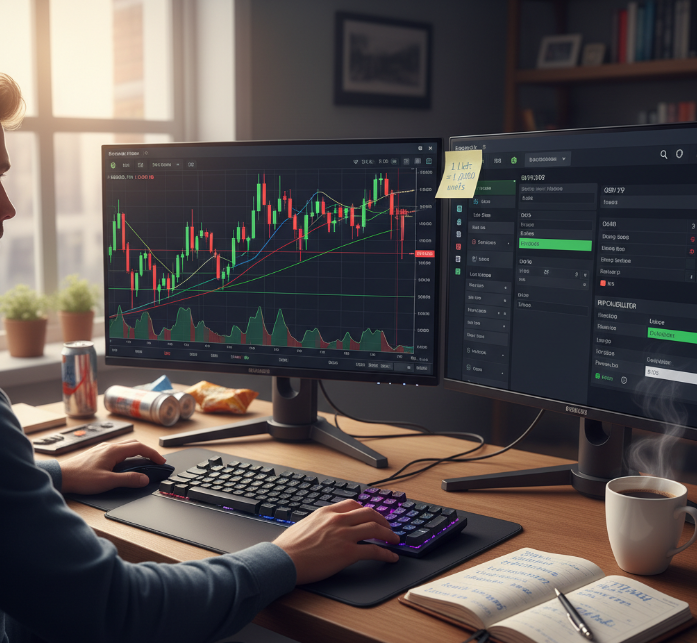
Key Terms Every New Trader Should Know
Get fluent in trader-speak fast—these terms are your survival kit when navigating forex day trading strategies.
• A pip is the smallest price move a currency pair can make—usually the fourth decimal point. For JPY pairs, it’s often the second decimal. • Lot sizes define how big your position is—standard lots, mini lots, and micro lots are common; lots are smaller chunks used by beginners. • The difference between Bid and Ask price is the Spread—that’s your cost of entering a trade. • Leverage lets you control larger positions with smaller capital—but it’s a double-edged sword. • A Stop-Loss (SL) protects you from excessive losses by automatically closing your order at a set level. • A Take Profit (TP) locks in gains when price hits your target.
Getting these basics down is your first non-negotiable step before you even think about high win rate setups.
Why Forex Day Trading Appeals to So Many
So why do so many people gravitate to forex day trading—and especially high win rate strategies?
You aren’t tying up capital for weeks or months—capital rotates quickly.
Feedback is instant. Strategies can be tested and refined within days, not years.
Many traders love the idea of “winning most of the time”—even if each win is small.
You can build structured routines around key sessions like London and New York, turning trading into a disciplined daily practice.
One quick plug: EasyCashBackFx gives traders cash rebates per trade—so even if you break even on some moves, you're still stacking value behind the scenes while sharpening those forex day trading skills.
Top 3 Forex Day Trading Strategies for Beginners
Get your feet wet in Forex day trading strategies with these beginner-friendly tactics that actually make sense—and might even make you money.
Scalping Strategy: Quick Trades for Fast Results
Scalping is all about speed. You’re in and out faster than a barista making espresso. Here’s what makes it tick:
High frequency trading means dozens of trades per session—think volume over size.
Targets are tiny, so you’ll often aim for just a few pips using small pip targets.
Charts? Stick to the ultra-short ones like the one-minute or five-minute.
A tight stop-loss is your best friend here—no room for second guesses.
You'll need rapid execution tools; lag can kill profits in this game.
Look for high-volatility times, especially during major market overlaps.
Major pairs like EUR/USD are ideal due to low spreads and fast movement.
This approach isn't for the faint-hearted, but if you're quick on the draw and love action, scalping could be your style of choice in mastering early forex trading strategies.
Trend Following: Riding the Market Momentum
When markets move strong, why fight it? This method rides the wave:
• Spotting a trending market starts with identifying higher highs or lower lows. That’s step one. • Use moving averages, especially EMA and SMA, to confirm direction—these smooth out noise. • Breakouts above resistance or below support zones signal entry points. • Add RSI or MACD into your toolkit—they help confirm momentum strength. • Set wider stop-losses than scalping; trends breathe before they soar.
You’re not chasing every flicker here—you’re catching longer moves with confidence by aligning with existing force. For many beginners diving into day trading forex, this strategy feels more natural and less chaotic than others.
Reversal Strategy: Capitalizing on Trend Changes
Markets don't trend forever—this strategy bets on when they'll turn around:
Use candlestick patterns like Engulfing or Doji at key levels to hint at reversals.
Watch out for price hitting strong support/resistance levels, then stalling hard.
Combine this with indicators showing overbought/oversold conditions—RSI above 70 or below 30 is common ground.
Divergence between price action and an indicator like MACD often screams reversal.
Double Tops/Bottoms are classic patterns that still work when timed right.
Reversals are tricky but rewarding if timed well. New traders should practice spotting these setups before risking real cash—it’s a sharp skill that takes time to hone within any set of solid forex day trade strategies.
Currency Pairs to Focus on as a Beginner
Not all currency pairs play fair—some are wildcards while others behave predictably:
• Start with major pairs like EUR/USD, which offer high liquidity and tight spreads—perfect for beginners learning how spread affects profit margins. • Try adding in GBP/USD if you want slightly more volatility without going off the rails entirely. • Consider USD/JPY too—it tends to follow technical rules better than most other pairs, making it easier to apply chart-based analysis techniques from your chosen strategy.
These three give you cleaner charts, lower costs per trade, and enough movement to test any basic setup from your growing arsenal of beginner-level forex day trading strategies.
Why High Win Rates Matter in Forex Day Trading
Knowing how often you win trades is cool, but knowing what that means for your wallet? That’s the real game changer.
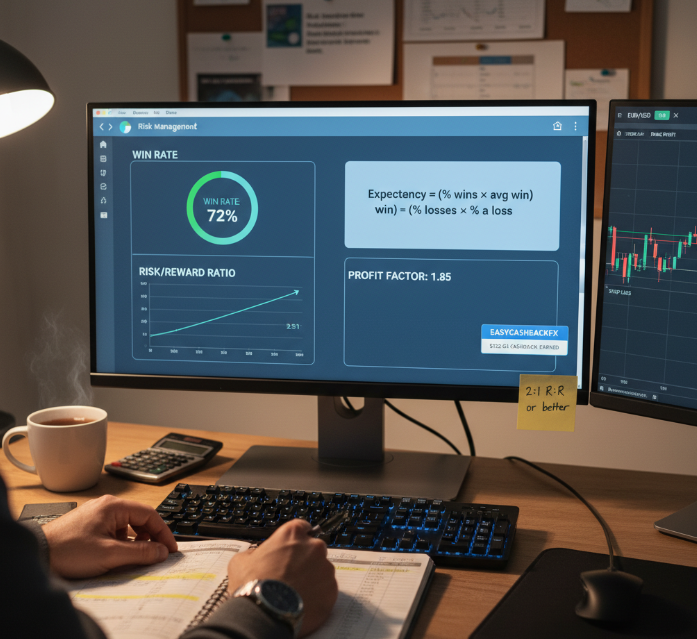
Data Insights: How Win Rates Affect Profitability
Win rate isn’t just a bragging right—it’s central to measuring profitability. But it only tells part of the story. You’ve got to pair it with your average risk-to-reward ratio.
A trader with a high win rate but a poor reward ratio can still end up negative.
Let’s break this down:
A trader wins 70 out of 100 trades—sounds great, right?
But if each win nets $50 and each loss costs $100, the math flips quick.
? Many traders get hooked on boosting their performance evaluation without checking expectancy. Expectancy = (% wins × avg win) – (% losses × avg loss). If that number isn’t positive, you're not profitable.
Shorter-term moves using Forex day trading strategies benefit from higher frequency wins, but only if you’re not giving back too much when you lose. Educational research from FXCM’s Traits of Successful Traders series shows that even traders with relatively low win rates can stay profitable when they combine sound money management with favourable reward-to-risk ratios.
That said, don’t obsess over hitting some magic number. Instead:
Track your trade data consistently
Review your average return per trade
Monitor slippage and spread impact on outcomes
And if you're looking for tools that automate tracking and analysis while offering cashback on every trade? EasyCashBackFx has your back—once is all it takes to see the difference.
Balancing Win Rate with Risk Management Techniques
? There’s no point having an epic win rate if one bad move wipes out weeks of gains. That’s where smart risk management steps up.
Here’s how savvy traders keep themselves safe while chasing green candles:
? Use tight but logical stop-loss orders
Don’t set them based on emotion or “gut feel”
Base them on volatility and recent price action
? Adjust your position sizing
Never risk more than a small percentage per trade
This keeps drawdowns manageable even during losing streaks
? Stick to favorable risk/reward ratios
Aim for setups where potential gain outweighs potential loss by at least 2:1
It cushions any dip in win rate
? Maintain ironclad trade discipline
Avoid revenge trading or overleveraging after losses
Follow pre-set rules like it’s gospel
Quick tip: Even with lower-frequency setups in some intraday systems, combining these techniques ensures better capital preservation during sideways market conditions—something common across many popular day trading strategies for forex pairs like EUR/USD or GBP/JPY.
In short bursts or choppy days, traders who balance high accuracy with smart downside controls often outperform those who only chase big wins. Because when things go south—and they will—it’s not about how many times you won… it's whether you were ready when you didn’t.
5 Most Effective Forex Day Trading Strategies Revealed
These smart Forex day trading strategies can help you trade smarter, not harder. Let’s break down what actually works for real traders.
Breakout Trading: Catching the Market on the Move
A Breakout happens when price busts through a Resistance Level or dips below a Support Level
Confirm it with rising Volatility, especially during high-volume sessions
Set your Entry Point just above resistance for long trades, or just below support for shorts
Watch the Trendline—if it aligns with the breakout direction, momentum is likely legit
Don’t forget to analyze recent Price Action, especially candles with long wicks near key levels
Traders love this because breakouts often lead to big moves fast—perfect for those who don’t have all day.
Effective Use of Technical Indicators: MACD and RSI
Start by combining tools instead of relying on just one:
• Use MACD crossovers to spot trend changes early—when signal line crosses above, that’s bullish; below, bearish vibes ahead. • Layer that with the RSI—if it’s above 70, things might be too hot (Overbought) and ready to cool off; under 30? Possibly too cold (Oversold) and due for a bounce.
Then:
Check for divergence between price action and either indicator—it can scream reversal.
Confirm trends using a simple or exponential Moving Average, ideally overlaid on your chart.
Time exits when both indicators flash opposite signals from your entry point.
This combo filters out noise better than most setups you'll find floating around forums.
Understanding Chart Patterns: Head and Shoulders Explained
The classic Head and Shoulders pattern is like a warning siren before a trend U-turn.
Here’s how it plays out:
A peak forms (left shoulder) followed by an even higher high (head) then another lower peak (right shoulder). Connect their lows to sketch out the Neckline, which acts as your trigger zone.
When price breaks and closes below the neckline after the right shoulder in an uptrend, sellers may be taking control.
You can use volume spikes or confirmation candles to add confidence before entering.
For day traders, spotting mini Head and Shoulders patterns on intraday charts (15M, 30M, 1H) can unlock precise short-term reversal plays.
Using Support and Resistance Levels: Building Structure Around Trades
Support and resistance are like the floor and ceiling of a market’s current mood.
Support: A price level where buyers historically step in to halt declines.
Resistance: A level where sellers often appear to cap rallies.
Here’s how day traders use these zones:
Watch how price reacts when revisiting old highs or lows—hesitation or sharp wicks signal areas of interest.
Use these zones to place limit orders for entries and stop-losses just beyond them.
Combine these areas with indicators like RSI or MACD to filter which levels matter most.
Mapping these zones before sessions (especially before London or New York open) gives your strategy a skeleton to work with—no more random entries.
Volatility-Based Strategies: Riding the Storm Without Drowning
Volatility is both opportunity and danger—use it right and high win rates get a lot more realistic.
A solid volatility-based day trading approach might include:
Identifying key news events that spark volatility—NFP, CPI, interest rate decisions.
Using an updated economic calendar to track those events ahead of time.
Applying tools like ATR (Average True Range) to gauge how far price might stretch intraday.
Avoiding overleveraging during wild swings—volatility without risk control is a recipe for blown accounts.
High volatility sessions are where many traders score their best trades—but they’re also where undisciplined traders donate the most.
Matching Strategy Types to Different Trader Profiles
Not every trader should run the same playbook. High win rate forex day trading strategies only make sense if they fit your personality and schedule.
.png "Full-Time Screen Watcher (Intraday Addict).png")
For the Full-Time Screen Watcher (Intraday Addict)
You might prefer:
Scalping during London/NY overlaps
Breakout strategies on key session opens
Quick mean-reversion setups during consolidations
Why? You’ve got time to watch multiple pairs and react fast.
For the Busy Professional (Part-Time Day Trader)
You’ll likely lean toward:
Trend-following on 30M/1H charts
Trading only during a fixed 1–2 hour window daily
Fewer trades with higher quality setups
Here, patience and selectivity beat constant screen watching.
For the Data-Driven Strategist
This trader cares deeply about metrics:
Win rate
Expectancy over a large sample size
They’re more likely to backtest strategies, tweak parameters, and treat trading as a statistical game—because it is.
Strategy 1: Scalping – Fast In, Fast Out
Scalping focuses on tiny profits taken frequently. It’s the “sniper fire” of day trading.
Ideal Market Conditions
High-liquidity pairs (EUR/USD, GBP/USD, USD/JPY)
Tight spreads
Times of overlapping sessions (London + NY)
Typical Setup
Timeframe: 1-minute to 5-minute charts
Tools: Moving Averages, RSI, MACD, or simple price action
Risk: Very tight stops, small lot size relative to capital
Scalpers live or die by execution speed, spread, and discipline. This strategy often has a high win rate but smaller average profit per trade.
Strategy 2: Trend Trading – Following the Dominant Move
Trend trading rides the big waves intraday.
You identify a clear direction—higher highs and higher lows (uptrend) or the opposite for a downtrend.
You wait for pullbacks toward moving averages or previous structure.
You enter in the direction of the trend with the expectation of continuation.
This strategy can have a very respectable win rate when market conditions are clean and trending.
Strategy 3: Reversal Trading – Fading Exhausted Trends
Reversal trading goes against the current trend—but only when there’s evidence of exhaustion.
Look for signs like divergence (price makes a new high, indicator doesn’t).
Candlestick patterns (Pin Bars, Engulfing candles) at key levels matter.
Support and resistance zones are crucial.
Reversal strategies often have lower win rates but higher reward per trade when done right.
Strategy 4: Breakout Trading – Entering as Price Escapes a Range
Breakout trading is about catching explosive moves after price has been “trapped” in a tight range.
Mark key consolidation zones or chart patterns (triangles, rectangles).
Identify support and resistance boundaries.
Place pending orders just beyond those zones.
Confirm with volume or volatility spikes where possible.
Well-timed breakouts can deliver excellent win rates during high-volatility sessions.
Strategy 5: Pullback Trading – Entering After a Controlled Pause
Pullback traders wait for price to “breathe” before joining the main move.
Spot the trend first.
Wait for a retracement back to a moving average, Fibonacci level, or prior structure.
Enter once price shows signs of resuming in the trend direction.
This gives a good mix of win rate and risk-reward potential because you’re not chasing extended moves.
Strategy 6: Range Trading – Profiting in Sideways Markets
Markets don’t trend all the time. Range traders capitalize on sideways movement:
Identify well-defined support and resistance boundaries.
Buy near support, sell near resistance.
Use oscillators like RSI/Stochastics to confirm overbought/oversold zones in the range.
Win rates here can be high if the range holds—but watch out for breakouts that can flip the script fast.
Strategy 7: News-Based Day Trading – Trading the Reaction
News trading focuses on volatility spikes during major economic releases.
Key events: NFP, interest rate statements, CPI, GDP.
Often uses straddle-type setups (orders on both sides before news).
Or reactive trading—waiting to see where the first spike goes, then trading pullbacks.
High win rate setups can emerge when traders understand typical news reactions and have strict rules for slippage and spread spikes.
Risk Management Essentials for High Win Rate Strategies
You can have the best forex day trading strategies, but without proper risk control, even a 70% win rate can go south.
Position Sizing: How Much to Risk Per Trade
Most pros keep risk small per trade—often 0.5% to 2% of account balance. That way, even a losing streak doesn’t put them out of the game.
Key factors:
Account size
Volatility of the pair
Distance to stop-loss
Confidence in the trade setup
Stop-Loss Placement: Protecting Capital Intelligently
Stop-losses aren’t just arbitrary lines—they’re your last line of defense.
Place them beyond obvious noise zones.
Avoid placing stops exactly on round numbers or major levels—market often “hunts” those.
Don’t move a stop further away hoping price snaps back—that’s hope, not strategy.
Take-Profit Strategy: Locking in Real Gains
You don’t need to chase the absolute top or bottom of a move.
Use structure-based targets (previous highs/lows, Fibonacci levels).
Consider partial take profits: close part of the trade and move stop to breakeven.
Let price action guide whether to extend or cut targets.
A consistent TP method brings stability to your risk-reward profile—and consequently, your overall win rate’s impact on profitability.
How to Track and Improve Your Forex Day Trading Win Rate
You can’t manage what you don’t measure.
Using a Trading Journal
Log everything:
Entry/exit price
Time of day
Strategy used (scalping, breakout, reversal, etc.)
Rationale for trade
Result (win/loss, R-multiple)
This lets you see which forex day trading strategies actually deserve more of your capital.
Calculating Win Rate the Right Way
Win rate = (Number of winning trades ÷ Total trades) × 100
Track it by strategy type.
Track it by time of day.
Track it by instrument.
Patterns will start to emerge—maybe you crush London session trends but bleed during low-volatility Asian ranges.
Adjusting Strategies Based on Data
If a strategy’s win rate tanks below breakeven once you factor in risk and costs, it needs a tune-up—or to be retired.
Ask:
Are my entries too early or too late?
Are my stops too tight?
Is my TP unrealistic relative to volatility?
Small tweaks in rules can create major improvements in both win rate and overall expectancy.
Common Mistakes that Destroy High Win Rate Systems
Even the best systems can be ruined by human error.
Overtrading
Taking too many setups dilutes quality.
Stick to your rules; don’t “force” trades out of boredom.
High win rates often come from being picky—not from constant activity.
Moving Stops Emotionally
Shifting stops wider mid-trade is how small losses become disasters.
Set and forget—unless your rules say otherwise.
If price action clearly invalidates your thesis, exit without drama.
Ignoring Trading Costs
Spreads and commissions eat into high-frequency setups.
Scalpers especially need tight spreads and solid rebate structures.
That’s where using a platform like EasyCashBackFx for rebates can soften the blow of frequent trading costs.
Matching Strategy to Timeframe and Lifestyle
Choosing a system that doesn’t match your reality is a recipe for frustration.
Can’t watch charts all day? Avoid scalping.
Hate holding trades for more than an hour? Pure swing trading may not fit.
Love structured routines? Focus on trading only one or two sessions.
Your ideal forex day trading strategy is the one you can execute consistently, not the one that looks fanciest on social media.
Putting It All Together
By now, you’ve seen that “high win rate” isn’t just about being right a lot—it’s about combining:
Solid strategy selection (scalping, trend, reversal, breakout, range, news-based)
Strong risk management
Realistic risk-reward ratios
Consistent execution discipline
If you’re serious about mastering Forex day trading strategies with high win rates, the path isn’t about copying random signals—it’s about building a rule-based playbook, tracking your numbers, and refining relentlessly.
And if you want every trade—win or lose—to work a bit harder for you, EasyCashBackFx lets you earn rebates while you trade. That’s stacking the deck in your favor without changing a single entry rule.
How fast you grow from here depends on how fast you want results from your chosen strategy type.
Risk-Reward Ratio: Maximizing Your Trading Success
Grouping all your setups under one idea: “Is the potential reward worth the risk I'm taking?”
This mindset:
Keeps you from chasing low-quality setups just to stay “busy”
Helps you filter trades before they ever hit the chart
Keeps you sane—and profitable:
? Core Concepts:
A solid Risk-Reward Ratio means risking $1 to make at least $2—that's a minimum target.
Smart traders use tight but logical levels for both their Stop Loss and their desired Take Profit
? Tools You Need:
Predefined rules within your overall Trading Plan
Calculators or scripts that auto-calculate position size based on risk percentage
Clear understanding of how much capital you're willing to lose before pulling out
? Pro Tips: “Education from IG’s Academy on balancing risk and reward makes the same point: traders who apply consistent risk-reward rules across their trades tend to see better long-term profitability than those who don’t.”
That says everything right there—discipline pays off big-time when applied consistently across all your trades.
And hey—platforms like EasyCashBackFx make execution smoother while giving cashback perks along the way… win-win!
References
IG – Your trading DNA / Traits of successful traders - https://www.ig.com/en/master-your-trading-mind/your-trading-dna IG
FXCM – Traits of Successful Traders - https://www.fxcm.com/uk/trading-guides/traits-successful-traders/ FXCM Markets
IG – Risk-reward ratio: what it is and why it matters - https://www.ig.com/en/risk-management/risk-reward IG
IG Academy – Balancing risk and reward - https://www.ig.com/en/ig-academy/money-management/balancing-risk-and-reward IG
BabyPips – Reward-to-Risk Ratio in Forex Trading - https://www.babypips.com/learn/forex/reward-to-risk-ratio babypips.com
Samurai Trading Academy – Trading Expectancy: The Power of an Edge - https://samuraitradingacademy.com/trading-expectancy/ samuraitradingacademy.com
FAQ
What attracts beginners to Forex day trading?
Fast-paced trades in liquid pairs like EUR/USD or GBP/USD offer instant feedback.
Short time frames such as the 5-minute chart keep attention sharp and energy high.
Strategies like scalping strategy turn tiny price moves into real gains within minutes.
Which strategies fit turbulent market conditions best?
Breakout trading—using Bollinger Bands to spot explosive moves beyond resistance lines.
Scalping strategy—grabbing quick profits in USD/JPY during rapid swings under high volatility.
Momentum tracking with MACD indicator when trends refuse to settle, catching surges before they fade.
Why is mastering key terms an early necessity?
A trader who mixes up pip values with spread size risks more than confusion—they risk their capital’s pulse stopping mid-session! Knowing stop-loss orders, position sizing, or setting precise take-profit levels makes sense of chaos when markets shift from trending market to sideways movement without warning.
Why start with specific pairs instead of chasing every currency swing?
Fewer charts mean deeper focus: AUD/USD for clean trend following on a 15-minute chart; USD/CAD for tight-range plays in low volatility sessions; sticking here lets traders catch subtle Head and Shoulders reversals that impatient eyes miss.
How do technical indicators shape winning entries and exits?
MACD indicator: signals momentum breaks after Double Top formation collapse.
Relative Strength Index: flashes oversold alerts before Wedges pattern bursts upward.
Fibonacci Retracement: maps pullback zones post-breakout so one can reload positions without chasing candles blindly.
Does win rate matter more than other measures of success?
Chasing only a high win rate tempts overconfidence—what breathes life into accounts is harmony: careful position sizing, measured risk-reward ratio, and refusal to ignore stop-loss orders even on an Hourly chart setup where patience feels eternal yet danger hides just behind the next candle’s shadow.