


Scalping is a fast-paced trading strategy that involves making numerous small trades over short periods to capitalize on minor price movements. The powerful 1 min scalping system has become one of the most effective methods for traders who aim to profit from volatility within a single minute. This approach focuses on rapid entries and exits, requiring precision and quick decision-making. In this guide, we'll explore how to build a robust 1-minute scalping strategy, the technical indicators that drive success, and how to manage risks effectively in such a fast-paced environment. Whether you're a novice or an experienced trader, understanding the core elements of this system is essential for optimizing your trading performance.
Scalping Basics and Framework
Scalping is an aggressive trading strategy designed to exploit small price changes. The powerful 1 min scalping system specifically targets quick, profitable trades within a single minute.
What is Scalping in Trading?
Definition: Scalping involves making rapid trades, often with minimal price movement, to accumulate profits over time.
Timeframe: In scalping, trades are typically opened and closed within a few seconds to a minute.
Key Characteristic: Scalpers capitalize on liquidity and volatility, using technical analysis and indicators to make split-second decisions.
Difference from Other Strategies: Unlike day trading or swing trading, which aim for longer-term positions, scalping requires constant monitoring and quick execution.
Why 1-Minute Scalping is Effective in High-Volatility Markets
1-Minute scalping thrives in volatile market conditions, where price fluctuations are rapid and predictable within a short time. This strategy works well during:
Breakouts: When a price breaks through established support or resistance levels.
Reversals: After sharp price movements that reverse direction.
Range-bound Markets: When the price moves in a predictable range, offering opportunities for small, repetitive profits.
The speed of the 1-minute scalping system helps traders take advantage of these frequent, small price movements that would otherwise be missed in longer timeframes.
Building a Powerful 1 Min Scalping System
To create a successful powerful 1 min scalping system, focus on these elements:
Key Indicators: EMA, RSI, Bollinger Bands, and VWAP to pinpoint entry and exit points.
Risk Management: Set tight stop-loss orders to limit losses and use trailing stops for profits.
Order Types: Employ market orders for immediate execution and limit orders to set precise entry points.
Market Conditions: Scalping works best in liquid and volatile markets, where price movements are quick but predictable.
| Indicator | Purpose | Recommended Settings |
|---|---|---|
| EMA | Identifies trend direction | 9-period for short-term trends |
| RSI | Measures overbought/oversold conditions | 14-period, over 70 (overbought), under 30 (oversold) |
| Bollinger Bands | Identifies volatility and breakout points | 20-period SMA, 2 standard deviations |
| VWAP | Confirms entry/exit points based on volume | Use with market orders for confirmation |
This table highlights key indicators used for effective 1-minute scalping systems. By selecting the appropriate settings for each, traders can better align with market movements and optimize their results.
Common Pitfalls for Beginner Scalpers
Overtrading: The temptation to enter too many trades without waiting for the right setups can lead to losses. Stick to the system’s rules and be patient.
Ignoring Risk Management: Failing to set stop-loss orders or using too high leverage can result in significant losses.
Emotional Trading: Emotional decisions, such as chasing losses or jumping into trades based on fear of missing out (FOMO), can harm a scalper's account.
Lack of Focus: Scalping demands intense focus and discipline. Losing attention, even for a moment, can result in missed opportunities or errors.
Each of these pitfalls can derail a promising 1-minute scalping system if not addressed with discipline and strategy.
Building a powerful 1 min scalping system requires a combination of technical indicators, strict risk management, and an understanding of the market conditions that make scalping successful. By avoiding common pitfalls, traders can enhance their chances of consistent profitability.
Technical Indicators for 1-Minute Scalping
Technical indicators are essential tools in developing a powerful 1 min scalping system, helping traders identify trends, entry points, and exit strategies. In this cluster, we’ll explore how specific indicators enhance scalping effectiveness.
EMA vs. SMA: Which is Better for Scalping?
Exponential Moving Average (EMA):
Gives more weight to recent prices, making it more responsive to short-term price movements.
Best for scalping systems because it can react faster to price changes in 1-minute charts.
Works well in trend-following strategies.
Simple Moving Average (SMA):
Averages the price over a set period, giving equal weight to all price data.
Less sensitive than EMA, which may be advantageous in trend confirmation over longer periods.
Which to Choose:
EMA is preferred for 1-minute scalping, as it quickly adapts to price shifts, while SMA might be used for broader trend analysis on higher timeframes.
Identifying Breakouts with Bollinger Bands
Bollinger Bands highlight volatility and price action, making them indispensable for scalpers looking to capture breakouts.
Bollinger Bands Expansion:
When the bands widen, volatility increases, signaling potential breakout opportunities.
Breakout Strategy:
A price breakout above or below the bands often signals a strong move in the direction of the breakout.
Ideal for scalping when price trends follow through quickly.
Support and Resistance:
The upper and lower bands often act as dynamic support and resistance levels, helping define entry and exit points.
MACD and RSI Based on Momentum
The MACD (Moving Average Convergence Divergence) and RSI (Relative Strength Index) are momentum indicators that complement each other in scalping strategies.
MACD:
Used to spot trend reversals by observing the crossover of the signal line and MACD line.
Effective in detecting bullish or bearish momentum over short timeframes.
RSI:
Measures overbought or oversold conditions.
An RSI above 70 signals overbought, while an RSI below 30 signals oversold, indicating potential entry or exit points.
Pivot Points for Intraday Support and Resistance
Pivot points are crucial for identifying intraday support and resistance levels, essential for effective scalping.
How to Use Pivot Points:
Pivot points provide key price levels that predict potential turning points.
Traders use these levels to set stop-loss and take-profit targets.
Sub-pivot levels:
Support and resistance levels (S1, S2, R1, R2) guide the placement of trades and give scalpers reference points for market direction.
Pivot Points Table Example
| Pivot Point | Level | Usage |
|---|---|---|
| Pivot Point | 1.1050 | Key level for market reversal or continuation |
| S1 | 1.1025 | Support level, potential buying point |
| R1 | 1.1075 | Resistance level, potential selling point |
| S2 | 1.1000 | Stronger support, likely reversal |
| R2 | 1.1100 | Stronger resistance, potential breakout |
The Role of Volume and VWAP in Scalping
Volume and VWAP (Volume Weighted Average Price) are critical for price confirmation in scalping.
Volume:
A sudden surge in volume confirms strong price movement, often leading to breakout opportunities.
Higher volume often indicates higher liquidity, essential for quick scalping decisions.
VWAP:
Acts as an indicator of the average price a stock has traded throughout the day, weighted by volume.
Scalpers use VWAP to gauge if the price is above or below the average, signaling potential buying or selling opportunities.
Combining Indicators for High-Probability Scalping Setups
Successful scalping often requires combining multiple indicators for high-probability setups.
EMA + RSI:
An EMA crossover combined with an RSI reading below 30 or above 70 offers a strong signal for entry.
MACD + Bollinger Bands:
MACD crossovers at the same time as a breakout from Bollinger Bands provide confirmation for direction and strength.
Pivot Points + VWAP:
Entering a trade when the price hits a pivot point level near the VWAP line increases trade accuracy and confidence.
By combining these indicators, traders can identify high-probability scalping opportunities, making their strategies more precise and profitable.
Each of these technical indicators plays a crucial role in the powerful 1 min scalping system, allowing traders to make data-driven, high-probability trades. Whether using EMA, RSI, or VWAP, mastering these tools will increase your effectiveness in scalping.

Best Scalping Platforms and Tools
When choosing the right scalping platform, the right tools and fast execution capabilities are crucial for success in the 1-minute scalping system. This group explores the platforms and tools designed for precision, speed, and customization.
MetaTrader 4 vs MetaTrader 5: Which is Better for Scalpers?
MetaTrader 4 (MT4) and MetaTrader 5 (MT5) are both popular platforms for scalping, but each has unique features that cater to different needs:
MT4:
Offers a stable, user-friendly interface with an extensive range of technical indicators.
Provides fast execution, making it ideal for short-term scalping on 1-minute charts.
Supports Expert Advisors (EAs) for automated scalping.
MT5:
Includes more timeframes and additional order types, making it better suited for advanced scalping strategies.
Faster processing speed and deeper market analysis tools improve scalper performance in high-frequency markets.
Allows for more complex backtesting and optimization features.
Both platforms are excellent for scalping, but MT5 has the edge for advanced features like multi-market trading.
Backtesting Scalping Strategies Using TradingView
TradingView provides a variety of tools for backtesting scalping strategies. Here's how to use it effectively:
Charting Tools:
TradingView offers a wide range of technical indicators such as EMA, RSI, and MACD, which are essential for backtesting scalping systems.
Backtest Features:
The Strategy Tester allows users to simulate trades based on historical data.
Apply your scalping strategy with real-time price action to test its viability in the 1-minute timeframe.
| Backtesting Features on TradingView | Benefit | Applicable to Scalping |
|---|---|---|
| Strategy Tester | Simulate past trades | Optimizes for fast executions |
| Multiple Timeframes | Analyze different market scenarios | Allows multi-timeframe analysis |
| Technical Indicators | Test with indicators like RSI, EMA | Ensures accurate, high-frequency setups |
Fast Execution Tools for High-Frequency Trading
In high-frequency trading (HFT), platforms with minimal latency are key.
cTrader:
Known for its low-latency execution, making it a strong contender for 1-minute scalping.
Includes features like One-Click Trading and Depth of Market for quicker entries and exits.
NinjaTrader:
Offers fast execution with customizable trading strategies.
Best suited for traders looking to engage in high-frequency scalping with tight spreads and low latency.
Both platforms excel in environments where speed is crucial for success.
Customizing Indicators on Thinkorswim
Thinkorswim allows traders to create custom indicators tailored to their scalping system:
Custom Scripts:
Use ThinkScript to develop personalized indicators like custom moving averages, RSI strategies, or momentum indicators.
Helps fine-tune entry and exit points for high-probability scalping setups.
Flexibility:
Thinkorswim offers a high degree of flexibility in terms of creating indicators that match the unique style of the 1-minute scalping system.
Automating Scalping Strategies Using Algorithmic Tools
Algorithmic trading can significantly enhance scalping efficiency:
Automation Tools:
MetaTrader 4 and MetaTrader 5 offer automated trading systems through Expert Advisors (EAs), executing trades based on predefined strategies.
Advantages:
Speed: Automates the execution of orders, reducing delays from manual trading.
Accuracy: Reduces emotional biases and improves trade precision in scalping strategies.
Considerations:
Scalping robots should be fine-tuned to adapt to changing market conditions, particularly in the 1-minute timeframe.
Automating scalping can free up time while maintaining consistent trade execution.

Advanced Techniques for Successful Scalping
To achieve success with a powerful 1 min scalping system, advanced techniques are crucial for enhancing profitability. This group covers how to capitalize on market dynamics, economic events, and broader strategies to refine your scalping approach.
Exploiting Market Gaps for Scalping
Market gaps can offer unique opportunities for scalpers to make quick profits. These gaps occur when price opens significantly higher or lower than the previous close, often after a news event or over the weekend. Here’s how to trade them:
Opening Gaps:
Gaps at market open often signify strong momentum, making them ideal for quick scalping trades.
Post-Event Gaps:
Gaps following significant news releases, such as earnings reports or geopolitical events, can be volatile. Scalpers often use tight stop-loss orders to manage risk in such situations.
Gap Strategy:
Scalpers should wait for the price to stabilize after a gap before entering a position, looking for small reversals or continuations.
| Gap Trading Strategy | Entry Point | Target | Risk Management |
|---|---|---|---|
| Breakout Gap | Enter after the gap is confirmed | Small profit target | Tight stop-loss orders |
| Continuation Gap | Wait for a pullback before entry | Follow trend | Dynamic stop-loss |
News Trading: A Scalper’s Perspective
Economic data releases, such as interest rate decisions or employment reports, can significantly impact market volatility, creating scalping opportunities.
High Impact News:
Reports like NFP (Non-Farm Payroll) or GDP data often cause sharp price movements.
Reaction Time:
Scalpers must react swiftly, entering trades within seconds of the release.
News-Based Scalping:
1-minute charts are ideal for capitalizing on the immediate price movement that follows such events. It’s crucial to watch the volatility and adjust stop-loss settings accordingly.
Identifying Scalping Opportunities in Consolidating Markets
Scalping in consolidating markets requires a different approach, as price moves within a narrow range without clear direction.
Range Bound Trading:
Support and Resistance Levels are key indicators in such markets. Scalpers often buy near support and sell near resistance.
Oscillators:
RSI and Stochastic Oscillator help identify overbought and oversold conditions in a consolidation phase, providing entry points for scalpers.
Tight Spreads:
Scalpers prefer tight spreads in ranging markets, allowing them to capitalize on small fluctuations in price.
Combining Scalping with Other Trading Methods
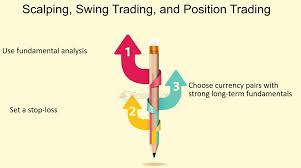
Scalping can complement broader strategies such as day trading or swing trading, enhancing overall trading performance.
Day Trading and Scalping:
A day trader might combine long-term trends with scalping opportunities within the day. For instance, use scalping to capitalize on minor corrections during a trending market.
Swing Trading and Scalping:
Scalpers might wait for swing trades to develop and then enter short-term trades within those swings.
Hedge Strategy:
Combining scalping with hedging strategies, such as options trading, can further reduce risk while exploiting short-term price movements.
By blending scalping with these other methods, traders can create a more diversified trading portfolio that balances quick profits with longer-term positions.
Conclusion
Incorporating a powerful 1 min scalping system into your trading strategy can provide you with the agility and precision needed to profit from fast-moving markets. By utilizing the right technical indicators, applying effective risk management techniques, and selecting the best scalping platforms, traders can capitalize on short-term price fluctuations to achieve consistent profits. Whether you're using tools like MetaTrader 4, MetaTrader 5, or TradingView for backtesting, or exploiting opportunities in market gaps or news trading, the key to success lies in understanding how these elements work together. With the proper knowledge, discipline, and strategy, 1-minute scalping can become a powerful addition to your trading toolkit.
A **1 min scalping system** is a trading strategy that aims to capitalize on small price movements within a one-minute timeframe. It typically involves rapid entry and exit points, requiring high precision and speed.
• **EMA** and **SMA** are commonly used for identifying trends. • **Bollinger Bands** help detect breakouts and volatility. • **RSI** and **MACD** are useful for spotting momentum shifts.
**MetaTrader 4** (MT4) is ideal for scalping due to its fast execution speeds and customizable indicators. It allows scalpers to set precise entry and exit points, especially using **EMA** and **RSI**.
• Limit the number of trades you make by setting specific criteria for trade entries, such as using a combination of **technical indicators** and only entering positions when certain conditions are met. • Focus on quality setups rather than quantity.
The best time to use a **1-minute scalping system** is during periods of high liquidity and volatility, such as during the market open or when major economic news is released. These conditions create the rapid price movements that scalpers aim to exploit.
Effective **risk management** is crucial in 1-minute scalping because of the high-speed nature of the trades. Tight **stop-loss** and **take-profit** levels help limit potential losses, while using **proper position sizing** and capital allocation ensures you are not risking too much on each trade.
Yes, **algorithmic trading** can be very effective for scalping, especially when executing large volumes of trades. Algorithms can identify entry and exit points, manage **stop-loss** and **take-profit** levels, and execute orders faster than manual traders.
Market gaps can present significant **scalping opportunities** as they often lead to rapid price movements. Scalpers typically trade the initial breakout following a gap or use strategies that take advantage of volatility following such events.