


Table of contents
In the world of forex trading, Risk Management isn’t just a good idea—it’s the difference between staying in the game or getting wiped out. Imagine driving without brakes. That’s what trading without risk control feels like. Most people jump into forex chasing quick wins, only to realize too late that smart risk habits matter more than flashy strategies.
As Warren Buffett once said, “The first rule of investing is don’t lose money. The second rule is don’t forget the first rule.” That mindset applies perfectly here. Risk management keeps your account alive long enough to actually learn and grow.
In this guide, we’ll break down practical tools, expose rookie mistakes, and walk you through setups that real traders use to manage risk and keep their cool—even when the market gets wild.

1.What Is Risk Management in Forex Trading?
Understanding Trading Risk Types
Forex trading comes with a wide variety of risks, and knowing them is your first line of defense. These aren’t just textbook terms—they show up in real trades and can wipe you out if you ignore them.
Market risk is the most obvious—when the market moves against your trade.
Liquidity risk happens when you can’t enter or exit a position easily due to low trading volume.
Currency risk arises from fluctuations in exchange rates, especially in cross-pairs.
Political risk can shake currency values if governments change policies, or worse, collapse.
Credit risk and counterparty risk? Those hit when the broker or institution behind your trade defaults.
Add in interest rate risk, operational risk, legal risk, and systemic risk—and you realize you’re not just trading a pair, you’re juggling a minefield.
Learning these types of risk isn’t just good knowledge—it’s essential survival.
Importance of Risk Control Measures
Managing risk isn't just a task—it’s a mindset. Smart traders don’t try to control the market; they control their exposure to it.
Risk management starts with proper risk assessment. Know what you're up against before you enter a trade.
Use stop-loss orders to put a floor on your losses.
Apply position sizing to keep your exposure in check—don’t bet the farm on a single trade.
Diversification helps reduce overall portfolio risk, while hedging can counterbalance high-risk positions.
Always follow compliance rules, keep your policies and procedures updated, and continuously monitor trades in real time.
“If you don't respect risk, risk won’t respect your account balance.” – Carla Bren, Forex Analyst at FXEdge
Your strategy might be good, but without a strong framework to mitigate risk, you're gambling, not trading.
Forex Volatility and Capital Exposure
The forex market is famous for its lightning-fast moves. High volatility can deliver big wins—or big losses—in just minutes. That’s where understanding capital exposure comes in.
Volatility increases your chance of hitting targets, but also boosts the chance of hitting your stop-loss. Add leverage to the mix and the stakes go way up. Traders often overlook how quickly exposure builds.
Here’s a snapshot of how volatility impacts common currency pairs:
| Currency Pair | Avg Daily Volatility (Pips) | Leverage Risk Factor |
|---|---|---|
| GBP/JPY | 120 | Very High |
| EUR/USD | 75 | Moderate |
| USD/CHF | 50 | Low |
High drawdown and margin calls are common when you’re trading volatile pairs without proper limits. If you risk too much capital on a high-volatility setup, a few wrong moves can cause risk of ruin—where recovery becomes nearly impossible.
The bottom line? Volatility is not your enemy—but unmanaged exposure is.
2.Forex Stop-Loss Strategy
Setting Effective Stop-Loss Levels
Placing a stop-loss isn’t guesswork—it’s about logic and structure. Your stop should reflect your risk tolerance, entry price, and the volatility of the forex pair you're trading. Most traders consider technical levels like support and resistance, but some also use a percentage-based method or a fixed pip distance.
There’s no one-size-fits-all solution. The stop-loss strategy you choose should match your trading plan and help you stick to it, even under pressure. If you find yourself moving stops just to stay in a losing trade… that’s not strategy, that’s hope.
Here’s a quick breakdown of common methods:
| Stop Type | Distance from Entry | When to Use |
|---|---|---|
| Technical Level Stop | Near support/resistance | Trending markets |
| Percentage-Based Stop | 1%–3% of account equity | Balanced risk control |
| Fixed Pip Stop | 20–50 pips | Short-term or scalping trades |
Pro tip: Always test your stop levels in demo trading before going live.
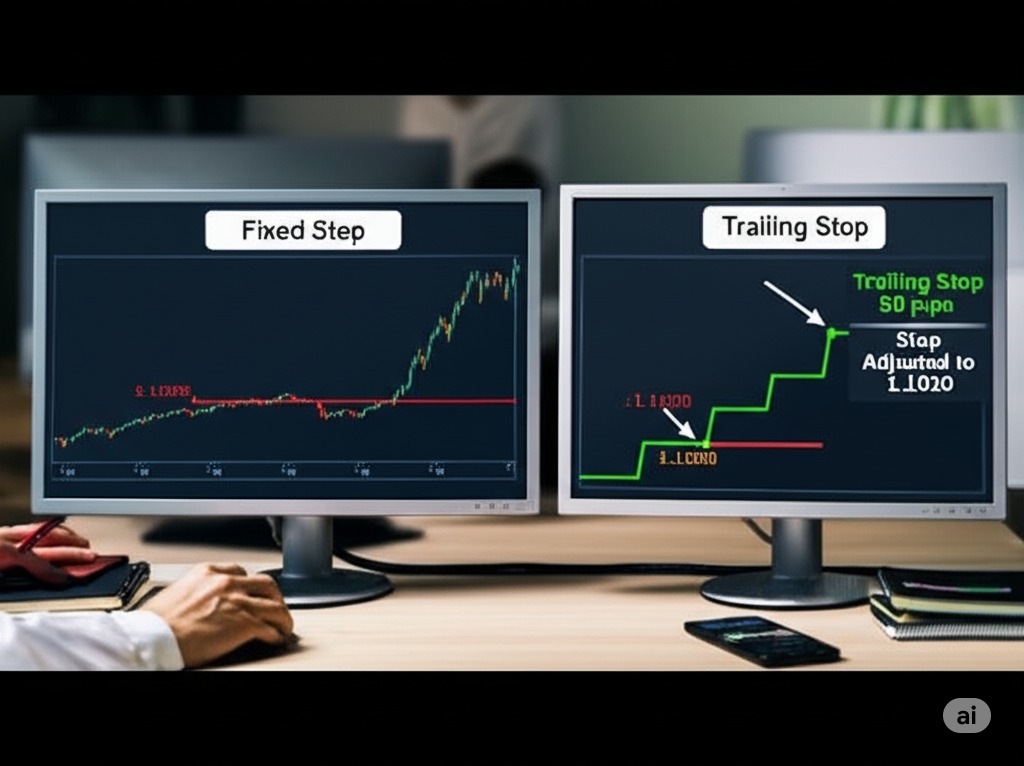
Trailing Stop vs Fixed Stop
Alright, let’s get real—when it comes to stop-losses, it’s not just about if you use one, it’s about how you use it. That’s where the big difference between a Trailing Stop and a Fixed Stop kicks in.
Fixed Stop:
You set it. It stays there.
Great for clear, predefined strategies.
Ideal in volatile or sideways markets where price might swing but come back.
Trailing Stop:
This one’s dynamic—it moves with the market when your trade’s in profit.
Helps lock in gains without you constantly watching the chart.
Awesome for trend-followers who want to ride the wave.
Example: Let’s say you’re long on EUR/USD at 1.1000 with a 50-pip trailing stop. If price goes to 1.1050, your stop moves up to 1.1000. If price hits 1.1070, your stop adjusts to 1.1020. If the price drops back, your stop stays and closes the trade if triggered.
"Trailing stops let profits run without stress. They’re your silent exit strategy." – Linda Raschke, Professional Trader
Choose your stop style based on your strategy, trade duration, and how hands-on you want to be. Some traders even combine both methods depending on the situation.

3. Beginner Risk Management Tips
“When I first entered the forex market, I thought I was ready,” shared Michael Reeves, an independent retail trader who now manages a six-figure portfolio. “I had the charts, the platform, and the hype. What I did not have was a grip on risk.” This is a common pitfall—new traders are often seduced by potential profits, ignoring the less glamorous but absolutely vital world of risk management.
Below is a breakdown of simple but powerful risk management foundations for beginners, combining direct insights from professionals and real-life trading journeys:
Identify Risks Early and Often
New traders must learn to recognize exposure before entering trades. Risks include:
Leverage misuse: Trading with excessive leverage amplifies both gains and losses.
Volatility ignorance: Overlooking scheduled economic news can trigger price spikes.
Platform errors: Technical glitches or internet lags can lock you out mid-trade.
“Once, I lost $450 in under 30 seconds because I ignored a CPI release,” said Reeves. “That was my tuition.”
Beginner-Friendly Risk Register Example
Use simple spreadsheets or notes to track common risks in real-time.
| Risk Source | Type of Risk | Planned Response | Monitor Frequency |
|---|---|---|---|
| Leverage Settings | Financial | Cap max leverage at 1:30 | Every trade |
| Market News Events | External/Market | Avoid trades 30 mins before | Daily |
| Platform Outages | Technical | Use backup mobile login | Weekly check |
Use Simple Tools That Work
Complex analytics are not required for solid risk habits. Beginners should stick with:
Stop-loss orders: Set these on every trade.
Lot size calculators: Ensure position size matches account size and risk tolerance.
Risk-reward ratio tools: Aim for trades with at least 1:2 ratio setups.
Daniel Vance from the London Institute of Finance says, “The mistake is thinking you need to master the market. You only need to master your own risk first.”
Clarify Your Risk Appetite vs. Tolerance
Risk Appetite: What you are willing to lose emotionally or psychologically.
Risk Tolerance: What your capital can handle financially.
“Most people say they can handle risk until they are down 20%,” notes Anita Chao of FXCore Markets. “Define those numbers. Write them. Follow them.”
Develop Responses and Monitor Consistently
Do not rely on a single strategy. Markets evolve, and so must your risk responses:
Revisit and adjust your stop-loss techniques weekly.
Reduce risk exposure during high-impact news cycles.
Track every mistake for pattern recognition.
Reeves adds: “I created a journal template that includes what I did wrong. Those notes saved my account more times than technical indicators ever did.”
Communication Is Internal Discipline
Even solo traders must communicate clearly—with themselves. Journaling, talking through a trade plan aloud, or recording video logs helps clarify strategy and refine behavior.
Use Awarded Tools for Confidence
Products like ForexShield, which won “Best Risk Management App” at the 2024 Global FX Tech Awards, show that practical tools win over flashy ones. Choose resources that:
Have transparent reviews.
Are endorsed by financial educators or institutions.
Offer user-friendly risk modules, even on mobile.
New traders do not fail because they lack knowledge. They fail because they chase results without a process for managing risk. Discipline builds consistency, and consistency builds success. Let every trade begin with a question, not a hope: “Is the risk worth it?”
4.What Is a Good Risk-Reward Ratio in Forex?
Ideal Risk-Reward Ratio Formula
Every forex trader needs a strategy, and that begins with calculating the risk-reward ratio correctly. The basic formula is simple:
Risk-Reward Ratio = (Potential Profit) / (Potential Loss)
Let’s say your entry point is at 1.1000 on EUR/USD and your stop-loss is at 1.0950. Your exit point is 1.1100.
Potential Risk = 50 pips
Potential Reward = 100 pips
Ratio = 100 / 50 = 2:1
A 2:1 ratio is often considered optimal — it gives you enough upside while allowing for manageable losses. But it's not one-size-fits-all; some traders prefer 3:1 or even 1.5:1 depending on their position sizing strategy and trading goals.
Remember, the “perfect” ratio depends on your trading style. Scalpers might use lower ratios, while swing traders may aim for more extended targets.
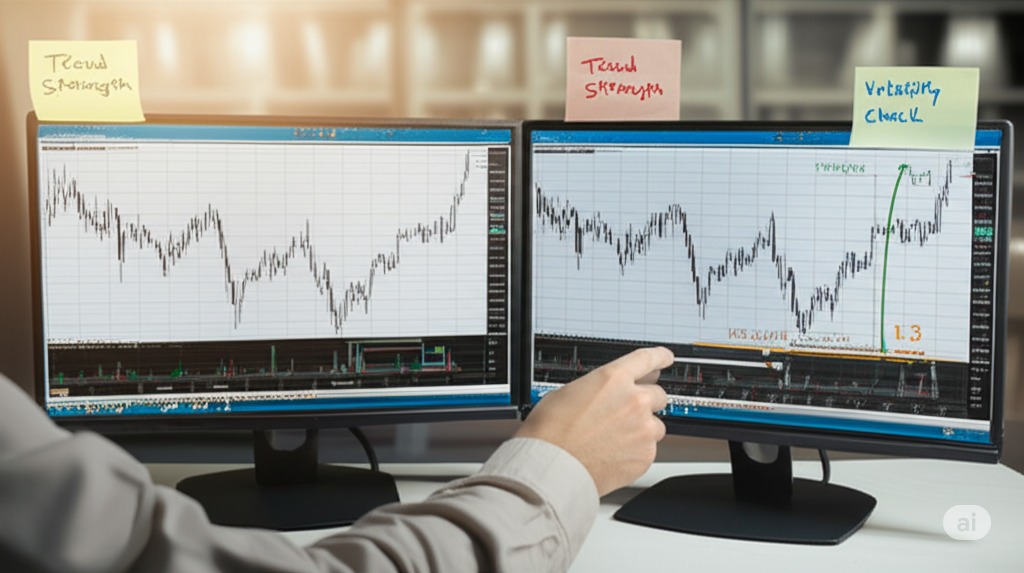
Adjusting Ratio for Market Conditions
Market conditions shift constantly, and your risk-reward ratio should shift with them. Static strategies don’t work in dynamic environments.
In a trending market (bull or bear), go for a higher ratio (e.g., 1:3). The price tends to follow a clear path, giving room to stretch your reward.
In a sideways market, aim lower. A 1:1 ratio might be more practical as reversals are frequent.
During high volatility, widen both stop-losses and targets to avoid getting knocked out prematurely.
Adjusting ratios isn't about guesswork. Use market analysis, check volatility indicators like ATR, and match your ratio to the trend strength.
Example:
If you’re in a low-volatility, range-bound market, targeting a 3:1 ratio might keep you waiting forever. Adapt or risk missing out.
Ratio Impact on Win Rate
There's a direct relationship between your risk-reward ratio and your win rate. Higher ratios sound attractive but often come with lower winning probabilities.
Here’s the reality:
A 1:1 ratio requires at least a 50% win rate to break even.
A 1:2 ratio needs only 33%.
At 1:3, a trader can profit with just a 25% win rate.
Risk-Reward Ratio vs Required Win Rate
| Risk-Reward Ratio | Minimum Win Rate | Profit Potential |
|---|---|---|
| 1:1 | 50% | Balanced |
| 1:2 | 33.3% | Better |
| 1:3 | 25% | High |
| 1:4 | 20% | Very High |
This is where statistical analysis comes in. You must weigh the trade expectancy, which includes both your win rate and how much you gain per trade.
Don’t fall for the trap of going only for big wins. A consistent 1:2 ratio with solid execution often outperforms riskier 1:5 setups.
Common Misconceptions About Ratios
Too many new traders get hooked on the idea that “bigger is always better” when it comes to risk-reward ratios. Let’s clear that up.
Misconception 1: Always target 1:3 or higher.
Not every trade will allow for a 1:3 ratio realistically. Chasing these setups blindly can lead to missed opportunities or premature exits.
Misconception 2: Low ratios mean low profits.
A well-executed 1:1 strategy with an 80% win rate is often more profitable — and emotionally manageable — than a 1:4 ratio with a 20% win rate.
“People overestimate high reward setups,” says FX mentor Brian Lutz. “Without precision, a 1:4 ratio doesn’t help if you never hit the target.”
Common Errors:
Ignoring market context
Not adjusting ratios with volatility
Using ratios as rigid rules, not flexible guidelines
Clarification: The ratio is a tool — not a promise. Combine it with proper risk management, accurate entry and exit points, and adaptability.
5.Forex Position Sizing Guide
Lot Size Based on Risk
Getting the lot size right isn’t optional—it’s essential. If you ignore risk-based sizing, you’re not really trading, you’re gambling. This approach ensures that each trade reflects your risk tolerance and account size.
Here’s how it works:
Step 1: Decide your risk percentage. Most traders risk 1% to 2% of their account balance per trade.
Step 2: Determine your stop-loss in pips. This varies depending on market volatility and strategy.
Step 3: Use a formula to calculate the appropriate lot size for that risk level.
For example, if you’re trading a $5,000 account and risking 2%, you’d only risk $100 on a single trade. If your stop-loss is 50 pips, your lot size would adjust accordingly to keep that $100 exposure.
Tip: Never set your lot size before you’ve calculated your stop-loss.
Here’s a sample lot size calculation table:
| Account Balance ($) | Risk % | Stop-Loss (pips) | Suggested Lot Size |
|---|---|---|---|
| 1,000 | 1.5% | 30 | 0.05 |
| 5,000 | 2.0% | 50 | 0.20 |
| 10,000 | 1.0% | 40 | 0.25 |
This keeps risk proportional and protects your capital even during losing streaks.
Equity-Based Position Sizing
Equity-based position sizing is a more dynamic method that adapts to your account equity, not just the starting balance. It’s a smart strategy for traders who want their risk exposure to shift along with their portfolio growth or decline.
Here's the breakdown:
Calculate your current account equity (not just balance).
Define your percentage risk per trade—e.g., 1.5%.
Multiply your equity by your risk % to determine how much capital to risk.
Based on your stop-loss in pips, calculate your position size.
This technique ensures that if your account dips, you risk less; if it grows, you can scale up safely. It’s ideal for traders using fixed fractional risk management, keeping everything proportional.
“Equity-based sizing is like trading with a seatbelt on,” says Marcus Levin, senior forex analyst at BlueTrade Labs. “It lets you stay aggressive without blowing up your account.”
This method keeps your strategy adaptive, helping you avoid emotional overreactions to wins or losses.
6. Top Forex Risk Management Mistakes

Overleveraging Small Accounts
Overleveraging happens when traders with small capital try to punch above their weight using excessive leverage. It might look like a shortcut to fast account growth, but it’s usually a shortcut to blowing up your brokerage account. When your position sizing doesn’t align with your available margin, you’re not just risking a trade—you’re risking your whole account.
A lot of traders confuse aggressive with smart. Here's the thing: being too aggressive with borrowed capital puts your trading in survival mode, not success mode. Margin calls, panic, and spiraling losses follow.
Key risks of overleveraging:
Huge losses on minor market moves
Inability to recover after back-to-back losses
Higher chances of emotional, irrational trading decisions
“If you're overleveraged, you're not trading—you’re gambling.” – Jon Morgan, FX Fund Manager
Ignoring Market News Events
Ignoring market news is like trading blindfolded. One unexpected central bank announcement or geopolitical event can flip a winning trade into a loser in minutes. Yet, many traders still fail to check economic calendars or brush off earnings reports and fundamental analysis altogether.
Why it matters:
News impact can trigger massive market volatility within seconds.
Earnings reports and economic data often create temporary market bias.
Ignoring news makes your setup vulnerable to sharp reversals.
| Market Event | Impact Strength | Avg. Volatility Spike | Risk Management Tip |
|---|---|---|---|
| FOMC Statement | Very High | 120–180 pips | Stay flat or widen stop-loss |
| Non-Farm Payroll (NFP) | High | 80–150 pips | Reduce trade size |
| Crude Oil Inventory Data | Moderate | 40–70 pips | Use tight stop-loss on USD/CAD |
Pro Tip: If you’re not watching news, the market is watching you—and it doesn’t play nice.
Risking Too Much Per Trade
You can have the perfect trading strategy, but if you're betting too much on each trade, you’ll wipe out faster than you can say “margin call.” Traders often ignore position sizing and let emotions override logic—especially after a few wins or losses. This results in broken risk management discipline and major drawdowns.
A smarter approach:
Keep risk per trade below 2% of account capital
Always calculate stop-loss distance before entering
Focus on capital preservation, not just big wins
Sometimes less really is more. Protect your downside, and your upside will take care of itself. Over-risking is the silent killer in forex—it doesn’t scream, but it always shows up when you’re not prepared.
"Survive first, thrive second." – Classic trader’s mindset
7. Which Risk Management Tools Help in Forex Trading?
Forex Risk Calculator Apps
Forex risk calculator apps are essential tools that help traders quickly and accurately calculate how much to risk per trade. These apps use input values like account balance, leverage, stop-loss in pips, and currency pair volatility to generate optimal position sizes. Whether you're trading major pairs or diving into crosses, this tool eliminates second-guessing.
Common features include:
Live exchange rate integration
Pip value calculations
Margin requirement estimations
Position sizing based on % risk
Example usage: A trader with $5,000 risking 2% on a trade with a 50 pip stop-loss on GBP/USD would use the app to determine the correct lot size—no manual math required.
MT4 Risk Management Plugins
MetaTrader 4 (MT4) plugins are software extensions that enhance the platform’s native risk management features.
These plugins often function as Expert Advisors (EAs), allowing for real-time calculation of position size, setting automated stop-loss and take-profit levels, and enforcing risk caps.
Traders can define a fixed percentage of their capital to risk per trade, and the plugin automatically adjusts lot sizes accordingly.
Some plugins even include dashboards for visual feedback, displaying risk levels, active trade summaries, and leverage used.
MT4 risk plugins are ideal for rule-based traders who want precision and discipline built into every order.
"Good trading starts with great tools. MT4 plugins eliminate emotional mistakes." — Dan Goldberg, FX Strategy Coach
Automated Stop-Loss Tools
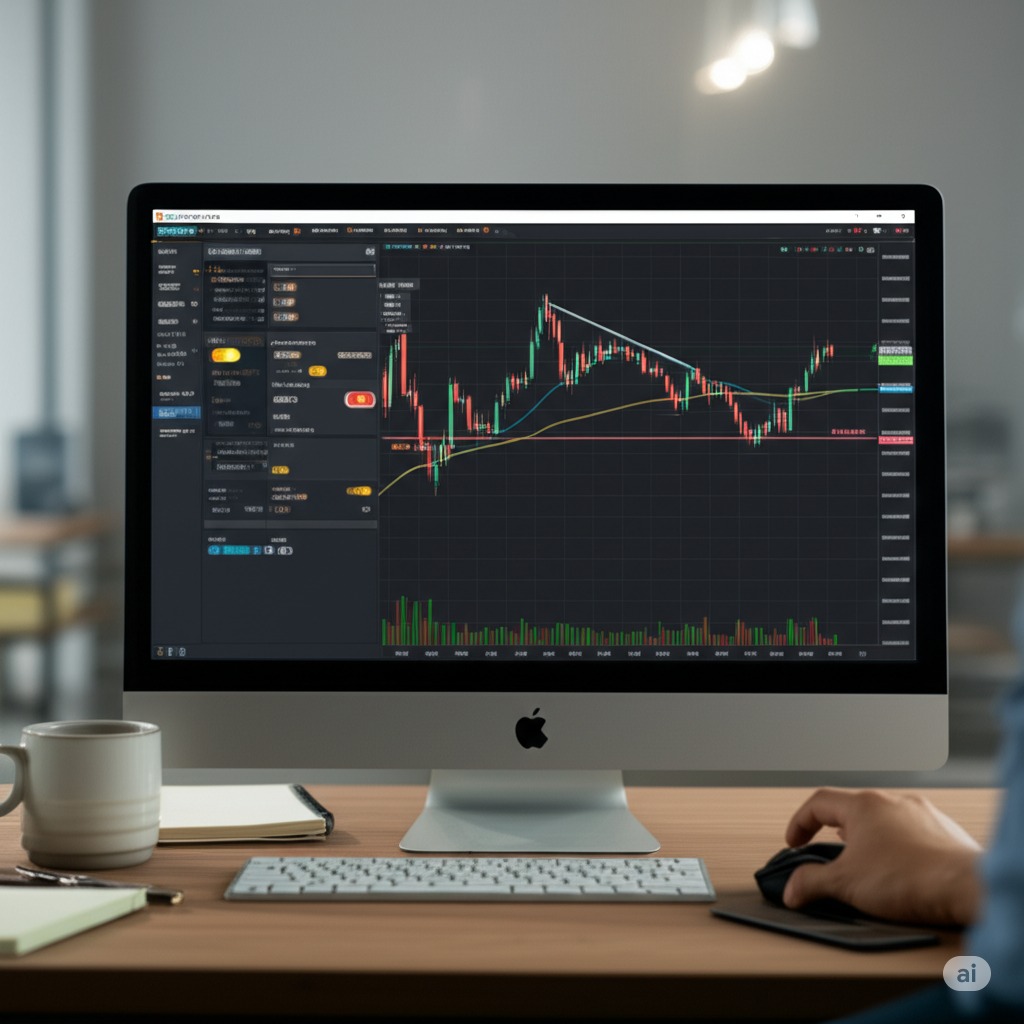
Let's be real: nobody wants to manually monitor every trade. Automated stop-loss tools make sure you're covered, even when you're not glued to your screen. These tools can place, adjust, and trigger stop-loss orders based on custom rules.
Two popular types:
Fixed stop-loss: Set a static exit based on predefined pip distance.
Trailing stop-loss: Adjusts dynamically as the market moves in your favor, locking in profits along the way.
Some advanced tools integrate with platforms like MT5 or cTrader, letting you automate your exit strategy entirely. That means no more panic-closing positions or missing out while you're grabbing coffee.
Risk Tracker Spreadsheet Templates
| Template Name | Key Features | Ideal For |
|---|---|---|
| Trade Log Sheet | Entry, exit, lot size, result | Manual trade tracking |
| Risk Summary Sheet | % risk per trade, R:R ratio, win rate | Strategy analysis |
| Performance Dashboard | Equity curve, drawdown, profit factor | Long-term insights |
Risk tracker spreadsheet templates give you a full picture of your trading behavior. Using Excel or Google Sheets, you can document each trade, calculate risk metrics, and visually assess your performance over time.
This is especially valuable for traders building a system or reviewing past errors. Want to know if you're risking too much on losers or cutting winners short? Your spreadsheet will tell you—loud and clear.
Conclusion
Wrapping your head around forex risk management isn’t just about dodging losses—it’s about playing the long game smart. Think of it like driving in fog: you slow down, stay alert, and trust your brakes. Stop-losses, risk-reward ratios, and smart position sizing are those brakes. Skip them, and you're gambling, not trading.
As Warren Buffett said, “Risk comes from not knowing what you're doing.” Stick to your plan, size your trades with care, and don’t chase the market. Let your strategy do the heavy lifting.
Risk management is used to limit potential losses and preserve trading capital. It ensures traders don't risk too much on any single trade and helps them survive long-term market volatility.
A common rule is the 1% rule, where you risk no more than 1% of your total account balance on a single trade. This keeps losses small and manageable even after a string of unsuccessful trades.
These tools support smarter decision-making and reduce emotional trading errors.
Risk-reward ratio calculators
Stop-loss and take-profit settings
Position size calculators
Forex trading journal software
Stop-losses prevent catastrophic losses by automatically closing trades when the market moves against you. Improper placement, however, can lead to frequent stop-outs or insufficient protection.
Not necessarily. A trader can be profitable with a low win rate if the risk-reward ratio is favorable. For example, risking 1 to gain 3 means you can lose more often and still make money. The two should be balanced for consistency.
Mistakes like these often lead to rapid account drawdowns.
Overleveraging trades
Ignoring economic news and volatility
Not using a stop-loss
Risking too much on revenge trades
No, it doesn’t guarantee success—but it significantly increases your chances of long-term survival. Risk management is more about capital preservation than prediction. Without it, even a great strategy can fail.