

Table of contents
How To Trade Forex Currency Pairs And Rates might sound like something only Wall Street pros mess with—but truth is, regular folks are diving in every day. It’s like learning to ride a bike: once you figure out how currency pairs move and how exchange rates tick, you’re on your way to rolling with the big dogs. This guide is built to give you the straight talk—no fluff, no complicated jargon. Just the tools you need to spot good trades, avoid rookie mistakes, and start making moves.
A trader once said, “You don’t need to predict the market—you need to react smart.” That’s the vibe here. You’ll learn which currency pairs work best for beginners, how to catch the right trends, and what platforms are actually worth your time.
If you’ve been burned by confusing lingo or analysis paralysis, this is your reset button. Let’s break it down and help you trade smarter, not harder.

1.What Are Forex Currency Pairs?
Base And Quote Currency Explained
In forex trading, currencies are quoted in pairs — like EUR/USD — to show the value of one currency relative to another. The base currency is the first listed and serves as the reference point. The quote currency (also called the counter currency) is the one you're comparing it against. The exchange rate tells you how much of the quote currency you need to buy one unit of the base.
Here’s a breakdown:
Base Currency: Always the first in the pair (e.g., EUR in EUR/USD)
Quote Currency: Always second (e.g., USD in EUR/USD)
Example: If EUR/USD = 1.1000, it means 1 Euro = 1.10 US Dollars.
When you're trading, you’re either buying the base and selling the quote, or vice versa. This is where terms like bid, ask, and spread come into play. You buy at the ask, sell at the bid — the difference is your cost (and the broker’s profit).
How Forex Pairs Are Priced
Forex pair prices are determined by the interbank market, where major financial institutions trade currencies 24/5. Prices constantly change due to supply and demand, liquidity, and market sentiment.
Here’s how the pricing works:
Bid Price – The highest price a buyer is willing to pay.
Ask Price – The lowest price a seller is willing to accept.
Spread – The difference between the bid and ask; typically measured in pips.
Pip Value – The smallest unit of price change; most pairs quote in 4 decimal places.
"The forex market reacts to everything — political news, inflation, interest rate changes — and those reactions are baked into the pricing instantly," says AvaTrade strategist Melissa Ford.
Pricing also depends on trading volume and liquidity. Major pairs have tighter spreads because they’re heavily traded, while exotic pairs may have wider spreads due to lower liquidity.
Examples Of Major And Minor Pairs
To truly understand forex currency pairs, it's important to know how they're grouped. Currency pairs are typically categorized into three main types: Major, Minor, and Exotic.
Major Pairs
These always include the USD and are the most actively traded. Examples:
EUR/USD (Euro/US Dollar)
USD/JPY (US Dollar/Japanese Yen)
GBP/USD (British Pound/US Dollar)
Minor Pairs
These don’t include the USD but involve other major global currencies. Examples:
EUR/GBP
AUD/JPY
CHF/JPY
Exotic Pairs
One currency is from a developing economy. These pairs are less liquid and more volatile. Examples:
USD/TRY (US Dollar/Turkish Lira)
USD/THB (US Dollar/Thai Baht)
Here's a helpful comparison:
| Pair Category | Example Pair | Avg. Daily Volume (USD) | Liquidity |
|---|---|---|---|
| Major | EUR/USD | 1.1 Trillion | Very High |
| Minor | EUR/GBP | 150 Billion | Medium |
| Exotic | USD/TRY | 10 Billion | Low |
Traders often start with major pairs due to their predictable movement, tight spreads, and access to real-time data.
2.Trade Forex With Major Pairs
USD Pairs Trading Strategy
When trading USD pairs, you’re stepping into the most liquid zone of the forex market. The USD is involved in nearly 90% of all currency trades, making it a magnet for traders using both technical and fundamental analysis.
Fundamental Drivers: Watch for Fed rate decisions, CPI data, and geopolitical events that influence USD strength.
Best Strategies:
Trend-following during major economic releases
Range trading during quieter Asian sessions
Scalping with tight stop-losses on low-volatility pairs like USD/CHF
Risk Management: Use a 1–2% max risk per trade rule. Employ position sizing calculators to align exposure with account size.
Whether you're trading USD/JPY, USD/CHF, or USD/CAD, you need to be in sync with the U.S. economic pulse. And hey, don’t ignore those Friday NFP numbers — they can move the market like an earthquake.
EUR/USD Pair Trading Tips
The EUR/USD is the most traded currency pair globally. It’s favored for its liquidity, relatively lower volatility, and responsiveness to macroeconomic trends. Here are a few quick-hit tips to boost your EUR/USD game:
Time Matters: Trade during the London-New York overlap for tighter spreads and stronger moves.
Tech Toolbox: Use RSI for overbought/oversold zones and MACD crossovers for trend confirmation.
Stay Macro-Aware: Keep an eye on ECB policy speeches and U.S. employment data for breakout potential.
“EUR/USD isn’t just liquid — it’s a canvas for disciplined traders. If you can’t handle it, you won’t survive in wilder pairs.”
— Kathy Lien, Managing Director, BK Asset Management
EUR/USD often respects key support and resistance zones — great for range traders. But don’t get cocky — ECB or Fed news can reverse a trend in minutes.
GBP/USD Volatility Trends
Nicknamed “Cable,” the GBP/USD pair is well-known for its whippy price action and sensitive reaction to UK news. It’s not a beginner’s pair, but with discipline, it can be highly rewarding.
Why So Volatile?
Political instability (Brexit aftermath, snap elections)
Bank of England policy surprises
Sensitive economic metrics (GDP, unemployment, inflation)
Trading Advice:
Use wider stop-losses — GBP/USD can spike 100+ pips fast.
Set alerts around UK and US economic releases.
Avoid over-leveraging — price swings can burn your capital quick.
| Pair | Avg Daily Range (Pips) | News Sensitivity | Volatility Level |
|---|---|---|---|
| EUR/USD | 60–75 | Medium | Moderate |
| GBP/USD | 90–130 | High | High |
| USD/JPY | 40–60 | Low | Low |
The takeaway? GBP/USD is like a sports car — fast, fun, but risky. Don’t drive without a seatbelt (aka stop-loss).
Why Traders Prefer Major Pairs
So why do most traders stick to major pairs like EUR/USD, USD/JPY, and GBP/USD?
High Liquidity: Easier entries/exits even in large volumes.
Tighter Spreads: More cost-effective — ideal for scalpers and day traders.
Better Tools & Resources: Most brokers and trading platforms prioritize major pair data, charting tools, and support.
3 reasons traders love major pairs:
Efficiency — Low slippage and fast execution during peak sessions.
Transparency — Economic news releases are predictable and widely covered.
Lower Risk of Manipulation — Large institutional volume reduces erratic price behavior.
Whether you’re day trading or swing trading, major pairs offer a balance of movement and structure — great for building consistent strategies.

3.Best Forex Currency Pair For Beginners?
Low-Risk Currency Pairs To Start
When starting out in forex trading, it’s smart to go with low-risk currency pairs that are highly liquid and less volatile. Major pairs like EUR/USD, GBP/USD, and USD/JPY are widely traded, which means tighter spreads and more predictable price movement. These stable pairs allow beginners to focus on learning technical analysis and market fundamentals without being blindsided by unexpected price spikes.
These pairs often have the backing of strong economies (like the US, EU, and Japan), which makes them easier to research and less prone to erratic moves caused by geopolitical instability.
Here’s a comparison of beginner-friendly pairs:
| Currency Pair | Average Daily Volume (USD) | Typical Spread (Pips) |
|---|---|---|
| EUR/USD | 1.1 trillion | 0.8 |
| USD/JPY | 900 billion | 1.1 |
| GBP/USD | 700 billion | 1.5 |
Start simple. These major pairs are like training wheels—they help you build confidence without the stress of wild volatility.
Beginner Mistakes In Pair Selection
Even though the forex market is huge, beginners often fall into a few classic traps when choosing pairs. Let’s break down what to watch for:
Picking exotic or minor pairs too early – These often have low liquidity and high spreads. Sounds exciting? Yeah—but it’s the kind of excitement that drains your account.
Skipping the research – If you don’t understand what drives a currency’s value (like interest rates or economic data), you’re flying blind. Know what you’re trading.
Falling for emotional trades – Just because a pair had a huge jump doesn’t mean it's a smart buy. Beginners often chase trends without a plan.
Neglecting risk management – Trading without stop-loss orders or a position sizing strategy is one of the fastest ways to fail.
As forex expert Kathy Lien once said:
“The goal of a successful trader is to make the best trades. Money is secondary.”
Mastering pair selection isn’t about luck—it’s about building habits that keep you in the game.
4.Currency Pair Volatility Guide
High Volatility Forex Pairs List
If you’re looking for action, you’ll want to stick with currency pairs that move. High volatility in Forex means big swings in price—sometimes in your favor, sometimes not. Knowing which pairs are the most volatile gives you an edge in timing entries, managing risk, and spotting potential setups.
Some currency pairs—especially certain minor and exotic pairs—are known for their explosive behavior. They’re not for the faint of heart, but with proper planning, they offer massive opportunities.
| Currency Pair | Avg Daily Range (pips) | Classification |
|---|---|---|
| GBP/JPY | 110 | Minor Pair |
| AUD/JPY | 85 | Minor Pair |
| USD/TRY | 160 | Exotic Pair |
| EUR/NZD | 95 | Minor Pair |
| NZD/JPY | 80 | Minor Pair |
GBP/JPY, often called “the beast,” can easily move 100+ pips on regular days.
USD/TRY, an exotic pair, is extremely volatile but has lower liquidity and higher spreads.
AUD/JPY and NZD/JPY are influenced by Asian market flows and global risk sentiment.
Traders who specialize in high volatility pairs often have strong technical discipline and tight stop losses. They know these pairs move fast, break hard, and don’t always come back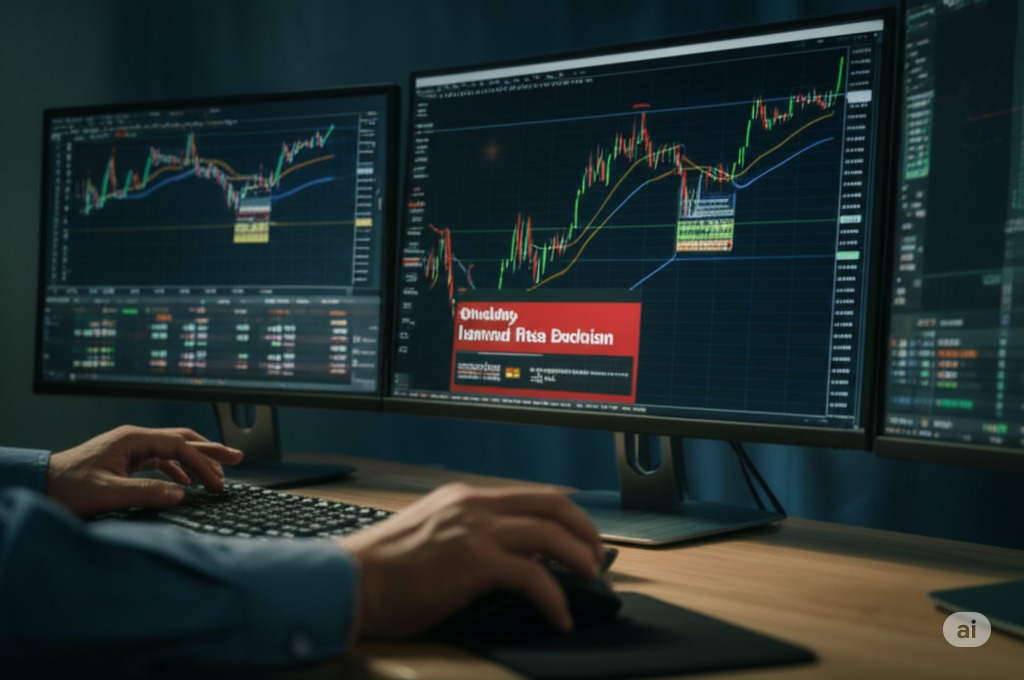
How Volatility Affects Spread Costs
When market volatility spikes, spreads usually widen. That’s not just a small fee—it can cut directly into your profits or turn a winning trade into a loser.
Here’s how it typically plays out:
Brokers increase the bid-ask spread when volatility is high to manage their own risk.
Slippage becomes more common, especially during fast-moving markets like news releases.
Exotic pairs already have wide spreads, and volatility makes them even more expensive to trade.
"Volatility doesn't just boost the upside—it boosts your costs, too. Always include spread risk in your strategy," advises Natalie Cho, a senior FX analyst at GlobalMarketsPro.
So while volatility creates potential profit windows, it also brings uncertainty in execution and higher trading friction. If you're trading through volatile conditions, use a broker with tight spreads and fast execution—otherwise, you're just donating money.
Trading Strategies For Volatile Pairs
High-volatility pairs don’t follow the same rules as slower-moving ones. They can whip, break, fake, and then surge all within minutes. You need a strategy designed to move fast, lock in gains, and minimize exposure.
Here are a few trading approaches tailored for volatile markets:
Scalping
Get in, get out, and don’t blink. This short-term strategy thrives on the quick price moves found in pairs like GBP/JPY or EUR/NZD. It requires tight spreads, a reliable platform, and nerves of steel.Breakout Strategy
Perfect for high-energy market opens or post-news volatility. You place buy/sell stop orders just outside of support/resistance and catch the price as it breaks out. Tools like Bollinger Bands or ATR can help you size trades appropriately.Momentum Trading
Ride the wave. Once a currency pair starts moving with force, you ride that move until signs of exhaustion. You’ll want to watch for confirmation via RSI or MACD crossovers.Risk Management
Always use stop losses—never trade volatile pairs without them.
Keep your risk per trade under 2% of your capital.
Avoid revenge trading after a loss; it leads to emotional decisions.
Volatility gives you speed—but speed without control is just chaos. Build your plan, set your stops, and remember: you’re not here to be a hero—you’re here to trade smart and win consistently.
5. How Do Forex Rates Impact Trades?
“When the exchange rate shifts, even by one pip, it is not just a number. It is your profit walking in or your stop-loss tapping out,” says Marcus Leung, a senior forex strategist with over twenty years of market experience in Singapore. His voice carries a certain gravity that only comes from watching markets move billions of dollars in seconds.
Forex trading lives and dies on the back of rate movements. These fluctuations are not background noise. They are the core mechanism through which every trader wins or loses. Yet, for many beginners, this connection between exchange rates and real trade outcomes often gets overlooked.
Here is how forex rates directly shape your trades
Exchange Rate Movement and Trade Outcome
The moment you open a trade, the exchange rate becomes your battlefield. A long position on EUR/USD benefits when the euro strengthens against the dollar. A short position wins when it weakens. Even the slightest pip shift can turn a profitable trade into a red screen moment.Volatility Increases Spread and Slippage Risk
High volatility — often driven by economic events — causes spreads to widen. That means the difference between the buy and sell price grows, instantly costing you more to enter or exit. Slippage, where your trade executes at a worse rate than you intended, becomes unavoidable during major news releases. It is frustrating, and often expensive.Leverage and Pip Impact
A single pip movement, insignificant on paper, becomes massive under leverage. With 100:1 leverage, a 10-pip move on a $1,000 trade is no longer just a ten-dollar difference — it is a hundred. Traders often forget that leverage does not just amplify profit. It doubles down on risk and pain.Economic Data Drives Rate Shocks
“The most violent rate movements come within thirty seconds of a data release,” notes Sarah Godwin, FX strategist at EuroEdge Markets. She points to U.S. Non-Farm Payrolls and central bank interest rate decisions as the biggest disruptors. These events trigger massive algorithmic trading flows, moving exchange rates fast — often too fast for manual traders to react.Margin Pressure From Rate Shifts
When the market moves against your trade, your margin gets squeezed. If your account balance drops below the broker's maintenance threshold, a margin call hits. That means adding funds quickly or watching your position close at a loss. This pressure is directly tied to how the forex rate shifts.
Trader Experience:
In September 2022, a retail trader in London, known by his handle “@FXWatchman,” turned a £2,000 account into £6,700 overnight by riding the GBP/USD rebound following a surprise GDP report. On the same day, another trader posted a live screenshot on Reddit showing a -£900 loss after being caught on the wrong side of the same rate surge. That is the reality. Same market. Two outcomes. All depending on how — and when — the rate moved.
Building Trust:
Choosing a broker with verified awards from regulators like ASIC or FCA provides protection. Look for credentials like "Best Forex Execution" or "Most Trusted Broker" from respected institutions like Investment Trends, Finance Magnates, or Global Forex Awards.
Marcus says it best:
“Forex is not about buying or selling. It is about responding — to the rate, to the momentum, to what the numbers are whispering when they start to move.”
Trading is not passive. It is a constant reaction to rate movement. The smarter the response, the better the result. When you begin to see rates as the heartbeat of every trade, you begin to trade with intention — not just with hope.
6.Technical Setup For Trading Forex Pairs
Indicators For Forex Pair Analysis
Technical indicators help traders decode market movements and make educated trade decisions. Whether you're aiming to catch a trend or time a reversal, these tools give crucial insights.
Let’s break down the most commonly used ones:
| Indicator | Main Function | Best Use Case |
|---|---|---|
| Moving Average | Identifies overall price trends | Spotting uptrends or downtrends |
| RSI (Relative Strength Index) | Measures momentum and overbought/oversold zones | Pinpointing entry/exit points |
| MACD | Shows momentum and trend reversals | Catching shifts in price direction |
| Bollinger Bands | Gauges market volatility | Trading breakouts |
| Fibonacci Retracement | Predicts support and resistance levels | Planning pullback entries |
Quick Tip: Don’t just rely on one. Combining indicators — like RSI + MACD — gives a clearer signal. But don’t overcomplicate your chart either. Two or three solid indicators are enough to build a reliable strategy.
“The market is never wrong, but indicators can help you make fewer wrong moves,” says Andrew Mitchem, forex trading coach.
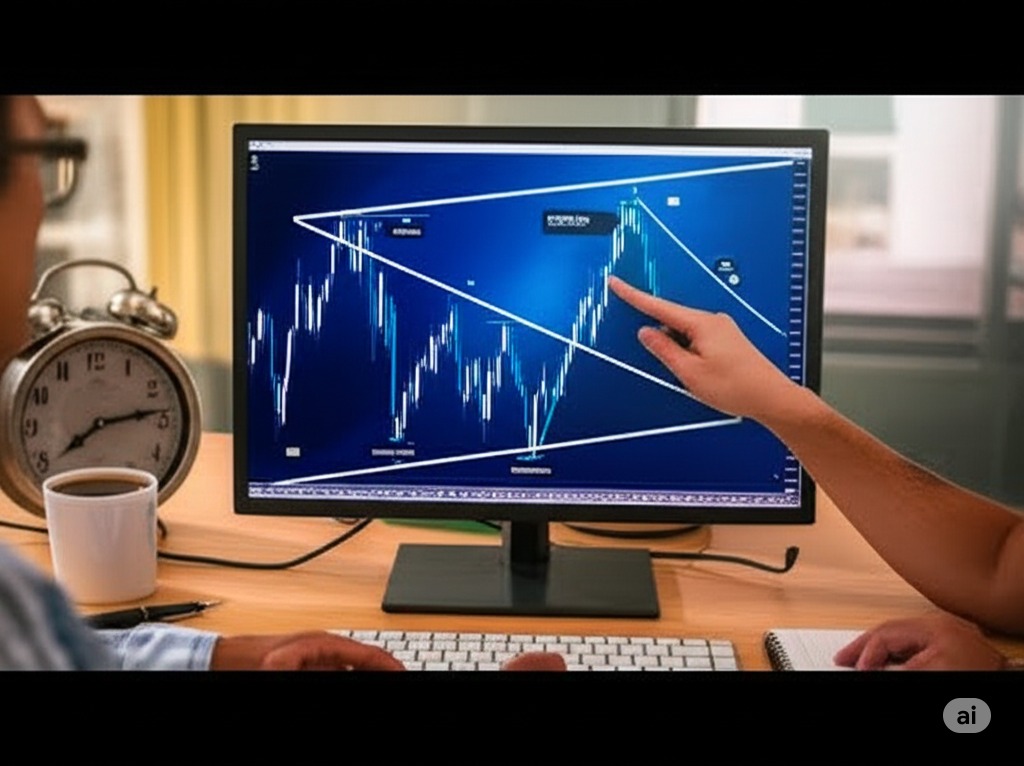
Chart Patterns In Forex Trading
Charts don’t lie. They just need someone who speaks their language. Chart patterns help you anticipate price direction by recognizing familiar formations that repeat over time.
Here are some that should be in your trading toolbox:
Head and Shoulders – Indicates a trend reversal; commonly seen before a downward move.
Double Top / Double Bottom – Signals price exhaustion and possible reversals.
Triangle Pattern – Comes in ascending, descending, or symmetrical; can signal a breakout.
Flag & Pennant Patterns – Short-term continuation signals that follow strong price moves.
Doji & Engulfing Patterns – Candlestick formations that reveal indecision or major momentum shifts.
Why it matters: These patterns work across most timeframes and currency pairs. Spotting a Wedge Pattern during an uptrend might be your early signal to take profits or adjust stops.
Don’t forget, patterns aren’t predictions — they’re probabilities. Use them in tandem with indicators for high-confidence trades.
7.Which Platform Is Best To Trade Forex?
Platform Features For Currency Pair Trading
A solid trading platform makes trading currency pairs feel smooth and reliable. But it's not just about placing trades — it’s about the full suite of features that support high-quality forex trading.
Fast execution speed to avoid slippage in volatile markets
Multiple order types like stop-loss, trailing stops, and OCO (One Cancels the Other)
Robust charting tools for technical analysis, including indicators like RSI, MACD, and Bollinger Bands
Access to fundamental analysis data like economic calendars and news feeds
Adjustable leverage and margin controls for capital efficiency
Real-time trading signals to assist entry/exit decisions
When you combine these tools, you’re not just trading — you’re trading with intent and intelligence.
Best Apps For Forex Beginners
For beginners, simplicity is everything. A cluttered app kills confidence — and often your money. The best forex apps for newbies are intuitive, educational, and supportive.
User Interface (UI): Look for clean layouts and minimal distractions. Think less Excel, more iPhone.
Practice Mode: A demo account is non-negotiable. It lets beginner traders learn without risking cash.
Learning Resources: Apps with educational tools like video guides, glossaries, and quizzes help flatten the learning curve.
Forex Basics: Features like daily tips, trading checklists, and in-app tutorials build habits that matter.
“Starting with a good app is like learning to drive in a quiet neighborhood — it sets the right tone.”
— Jared Martinez, FX Chief & Trading Educator
Apps like MetaTrader 4 Mobile, TradingView, and cTrader top the list for beginner-friendliness with strong core tools.
Low-Spread Brokers Compared
Spreads might seem tiny, but they add up fast — especially if you’re scalping or trading high frequency. That’s why comparing low-spread forex brokers matters big time.
| Broker Name | Avg. Spread (EUR/USD) | Commission | Minimum Deposit | Execution Type |
|---|---|---|---|---|
| Pepperstone | 0.09 | $3.50/lot | $200 | ECN |
| IC Markets | 0.10 | $3.00/lot | $200 | ECN |
| XM | 0.17 | None (Zero Account) | $5 | STP |
| Forex.com | 1.00 | None | $100 | Market Maker |
These brokers are known for excellent trading conditions, low trading costs, and regulatory transparency. The tighter the spread, the more you keep in your pocket — especially when trading large currency pairs.
Trading Platforms With Live Charts
You can’t trade what you can’t see. That’s why live charts with real-time data are the beating heart of a quality trading platform.
Timeframes: Scalpers love 1- and 5-minute charts; swing traders prefer 1-hour and daily views
Chart Types: From classic candlesticks to Heikin Ashi and Renko — each offers different visual cues
Technical Indicators: Load up with MACD, moving averages, stochastic oscillators, and volume
Drawing Tools: Fibonacci retracement, trendlines, and custom annotations improve market analysis
Historical Data Access: Great for backtesting and spotting recurring price action patterns
Pro tip: Platforms like TradingView and MetaTrader 5 excel with interactive charts that support multi-timeframe and multi-asset views. That’s a huge edge when you're juggling different currency pairs or analyzing the broader market landscape.
Conclusion
Trading forex can feel like learning a new language — but once the lingo clicks, it’s like riding a bike downhill. You’ve learned how currency pairs tick, which ones play nice with beginners, and how to spot the right moment to make your move. Pair that with the right tools, and you’re not just guessing — you’re trading with purpose.
As Warren Buffett put it, “Risk comes from not knowing what you’re doing.” Now, you do. Keep it simple, stay sharp, and get in the game smart.
The most traded forex currency pairs are known as the major pairs. These include:
These pairs are popular due to their high liquidity, low spreads, and alignment with major economies.
EUR/USD
USD/JPY
GBP/USD
USD/CHF
Start with a demo account to learn the basics. Focus on one or two major pairs, and avoid exotic pairs initially. Stick to these steps:
Learn basic terms like pips, leverage, and margin.
Choose a beginner-friendly platform with good educational tools.
Practice risk management with small lot sizes.
Study one or two trading strategies in depth.
Exchange rates are influenced by a combination of economic indicators and market sentiment:
Interest rates
Inflation data
Employment statistics
Central bank policies
Geopolitical events
Pairs like EUR/CHF and EUR/USD tend to be less volatile compared to exotic or commodity-based pairs. They’re often used by risk-averse traders who prefer more stable price movements.
Not exactly. Forex trading is open 24 hours a day five days a week, not seven. The market opens on Sunday evening (UTC) and closes on Friday evening. This continuous cycle is driven by the overlapping time zones of the global financial centers — London, New York, Tokyo, and Sydney.
If you have a small trading account, consider pairs with low spreads and low volatility, such as:
These are cost-effective and have relatively predictable behavior, making them suitable for tighter budgets.
EUR/USD
AUD/USD
USD/JPY
No. While most brokers offer the major pairs, the availability of minor and exotic pairs can vary widely. Always check a broker's instrument list before signing up, especially if you're interested in trading less common pairs like USD/TRY or ZAR/JPY.