


Before comparing spreads, platforms, or promotions, verify that you can legally become a client where you live. That single step changes the conclusion of this AvaTrade review 2026 for U.S. readers: AvaTrade's support center says it does not accept clients residing in the United States or funds originating in the U.S. Read AvaTrade's U.S. residency notice.
That does not make the remaining checks irrelevant. They are the questions a prospective client in an eligible jurisdiction should answer before funding any forex or CFD account. The aim is to compare the real conditions of the entity that would serve you, not a headline offer seen in a search result. This is educational information, not investment, legal, or tax advice.

The short answer for U.S. residents
If you live in the United States, stop at factor one. AvaTrade states that it is not regulated in the U.S. and cannot accept U.S. residents or U.S.-originating funds. Do not treat an overseas address, VPN, or payment workaround as a solution; using a broker outside its accepted-client rules can create verification, withdrawal, and regulatory problems.
U.S. retail forex has its own framework. The CFTC explains the rules for retail off-exchange foreign currency trading and points investors to NFA BASIC for registration and disciplinary-history checks. If you are a U.S. resident, use a properly authorized provider for the exact product you intend to trade instead of trying to open an AvaTrade account.
1. Confirm residency and legal eligibility before anything else
Broker availability is determined by residency, not merely nationality or the language shown on a website. Confirm the country on your proof of address, the origin of your funding method, and the product you want to use. Ask support to identify the legal entity that would hold your account before uploading documents or depositing money.
For readers who are not U.S. residents, eligibility can still change by country, account type, and product. A broker may offer forex, CFDs, options, or other products in one jurisdiction but not another. Read the local disclosure and application terms rather than assuming an international brand offers identical conditions everywhere.
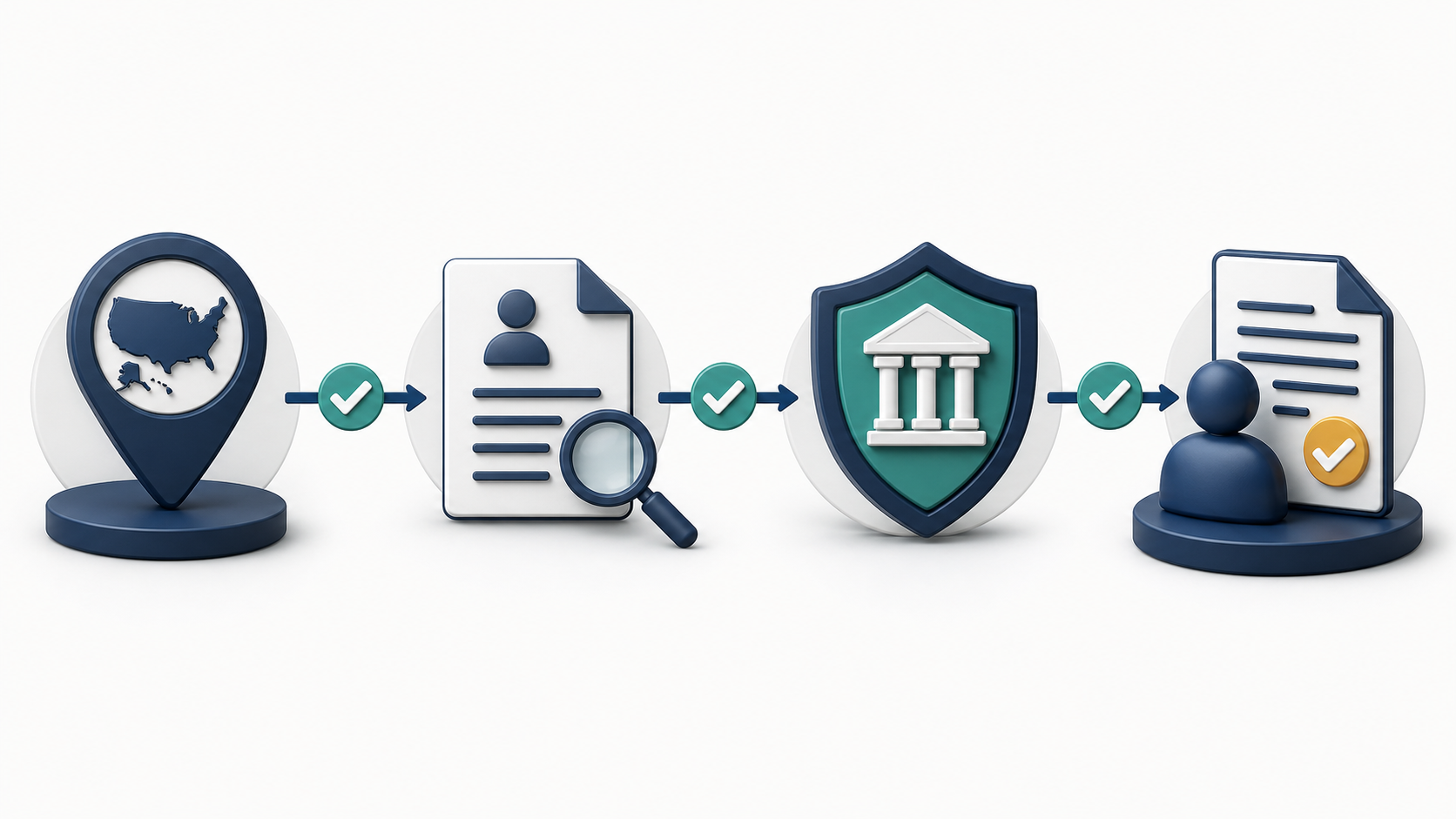
2. Identify the contracting entity, regulator, and client protections
AvaTrade's global comparison page lists different contracting entities and notes that protections, leverage, and product access depend on the region. Its page specifically warns that applying to a non-European entity means you may not receive European retail-client protections, including leverage caps and the Investor Compensation Scheme. Compare the entities and stated regional conditions.
Write down the entity name from the account agreement, then verify its regulator in the regulator's own register. Check how client-money safeguards, negative-balance protection, complaints procedures, and compensation arrangements apply to that entity. Do not transfer an attractive feature from one jurisdiction's website to another jurisdiction's account.
3. Match the available products and account type to your actual plan
Start with a short list: the currency pairs or other instruments you plan to trade, typical holding time, preferred order types, and whether you need a demo first. AvaTrade describes a multi-asset offering, but product availability is regional. Confirm the exact symbols, contract sizes, margin requirements, and trading hours inside the platform or the applicable product specification before making a decision.
Be especially precise about CFDs. A CFD is not ownership of the underlying share, fund, commodity, or currency. Product naming can sound familiar while its risks, financing, and protections differ from buying the underlying asset. If your strategy involves holding positions through major news releases, market close, or weekends, read the trading-condition notes for those periods.
4. Calculate total trading costs, not only the displayed spread
A fair cost comparison uses the instruments and holding periods you expect to use. AvaTrade says it is compensated through the bid/ask spread and that the applicable spread is visible in the platform's instrument details. Its fees and charges page also describes overnight premiums and inactivity-related charges, which are subject to change.
For a realistic estimate, record the current spread, any commission, overnight funding, conversion cost, and funding or withdrawal cost that applies to your method and entity. Compare a few normal trades and a few longer holds. A low headline cost on one instrument does not answer what a different instrument, volatile session, or multi-day position will cost.

Inactivity is easy to overlook. AvaTrade's published schedule says a USD account may incur a $50 fee after three consecutive months of non-use and a $100 annual administration fee after 12 consecutive months of non-use, unless prohibited by law. Treat those figures as a prompt to check the current terms for your account rather than as a permanent quote.
If you are comparing rebates, do the math only after eligibility and broker terms are clear. The forex rebate calculator on easycashbackfx.com can help model a rebate against trading volume; it does not remove market risk, financing costs, or the need to confirm a broker's local availability.
5. Test the platform and order workflow before committing capital
Platform choice should follow the workflow you actually use. Check which desktop, web, and mobile platforms are available to your entity, whether the account type supports the platform you want, and which order types work on the instruments you plan to trade. A demo account is useful for learning the layout, but it cannot guarantee live pricing, execution, or liquidity.
Use the demo period to find the contract specifications, swap/financing fields, margin display, stop-loss and take-profit controls, order history, and support channels. For risk-based sizing, use a neutral tool such as this forex position-size calculator before placing a trade. Recheck the broker's own pip value, contract size, and margin data because those values can differ by instrument.
6. Read the verification, funding, and withdrawal rules in advance
Account opening is not complete when the online form is submitted. Expect identity and address verification, and make sure the name on the funding method matches the account holder. AvaTrade's support material says an account must be fully verified for a withdrawal and describes return-to-source funding practices that may affect the withdrawal method available to a client. Review the AvaTrade Help Center for the current process.
Before the first deposit, save copies of the withdrawal policy, accepted funding methods, currencies, conversion treatment, documentation requirements, and processing-time language for your entity. Use a funding amount you can afford to lose and avoid borrowing, using emergency savings, or relying on a withdrawal timetable for a bill. The CFTC cautions that forex losses can occur quickly and encourages careful due diligence. Read the CFTC's forex risk guidance.
7. Set risk limits that make an account opening decision reversible
Broker research cannot turn leveraged trading into a low-risk activity. Decide in advance how much of your capital is risk capital, the maximum loss you can tolerate on one trade, your maximum drawdown, and the conditions under which you will stop trading. The CFTC notes that retail forex is highly risky and that, in most cases, roughly two out of three accounts lose money. That is a reason to plan for loss, not a prediction about any individual account.
Keep the first live trade smaller than your maximum intended size, verify the platform behavior and account statements, and review your plan after it closes. Be skeptical of any signal, copy-trading, automation, or cashback message that implies consistent profits. A rebate may reduce a stated transaction cost when available, but it does not offset an unsuitable position size or a losing strategy.

A practical decision checklist
Confirm that your residence and funding source are accepted.
Identify the exact contracting entity before sharing documents or depositing.
Verify the entity in its regulator's register and read the local disclosure.
Check the products, leverage, contract sizes, and platform for your region.
Estimate spread, financing, conversion, and inactivity costs using your likely trading pattern.
Read verification and withdrawal terms before your first deposit.
Set a position-size and loss limit before placing a live order.
For a U.S.-based reader, the first item resolves this AvaTrade review 2026: AvaTrade's own policy says the account is not available to U.S. residents. For an eligible non-U.S. reader, the useful next step is to obtain the terms for the exact entity and account type—not to rely on general reviews or promotional copy.
Frequently asked questions
Can a U.S. resident open an AvaTrade account?
According to AvaTrade's support center, no. It says the broker cannot accept clients residing in the United States or funds that originate from the U.S. Confirm your residency directly with the broker; do not attempt to use another person's address or a workaround.
What is the most important point in an AvaTrade review 2026?
Start with legal availability in your country and the exact entity that would serve you. Platform choice and headline spreads are secondary if the broker does not accept your residence or the product is unavailable under your local rules.
Why does the contracting entity matter?
Different entities can operate under different regulators and client-protection rules. The applicable entity may affect leverage, product access, complaint handling, balance protection, compensation arrangements, and the terms you sign.
Does a spread tell me the full cost of a trade?
No. Consider the spread alongside commission, overnight financing, currency conversion, and any payment-related or inactivity charge. The importance of each item depends on the instrument, trade size, and holding period.
Are AvaTrade's published fees permanent?
No. Broker fees and product conditions can change. Use published fees as a starting point, then check the current schedule, instrument details, and account agreement that apply to your entity before opening or funding an account.
Should I test a demo account first?
A demo can help you learn navigation, order controls, contract details, and mobile workflow. It is not proof that live execution, available liquidity, or trading results will match the demo environment.
What documents might be required to open a forex account?
Requirements vary, but brokers commonly request identity and address verification and may ask for information connected to funding and suitability. Follow the exact document list from the entity that will hold your account; do not submit altered or third-party documents.
Can forex cashback remove trading risk?
No. A rebate may reduce an eligible transaction cost, but it cannot prevent losses from price movement, leverage, spread changes, financing, or poor position sizing. Review broker eligibility and rebate terms separately.
What should I check before my first deposit?
Confirm residence eligibility, entity, regulation, required verification, funding method, withdrawal rules, account currency, total costs, and your own loss limit. Keep copies of the terms that apply when you fund the account.
Is this article a recommendation to open an account?
No. This article is a due-diligence checklist. It does not recommend a broker, predict returns, or replace financial, legal, or tax advice tailored to your circumstances.
Sources and disclosure
This article relies on public broker and regulator materials. Product availability, fees, and legal eligibility can change, so verify the current terms before acting. EasyCashbackFX broker reviews and tools are educational resources; any service eligibility, broker relationship, and rebate terms should be confirmed on the relevant live pages.
Forex and CFD trading involve substantial risk and may not be suitable for all investors. You can lose some or all of your invested capital; do not trade with funds needed for essential expenses.