


For U.S. traders, a polished chart and a fast order button are not enough. The best forex trading apps start with a broker that can be independently verified, clear trading terms, sound account controls, and a process for getting help when something goes wrong. This guide explains how to assess those basics before you deposit funds or place a live trade.
Important: Forex trading involves substantial risk and can result in the loss of all funds used for trading. This article is educational, not investment, legal, or tax advice.

What “best” should mean for a forex trading app
“Best” is often treated as a list of indicators, chart types, or promotional spreads. Those things matter after safety has been settled. A safer definition is more practical: the app belongs to a firm you can identify; its regulatory status and disciplinary record can be checked; its costs and margin rules are understandable; its security tools work; and the support and withdrawal paths are clear before a problem occurs.
That standard is especially important in the United States. When a retail trader uses a forex platform, the trader generally deals with the dealer rather than connecting to a registered exchange. The Commodity Futures Trading Commission (CFTC) warns that an attractive platform can give an unregistered operation a veneer of legitimacy. Treat the app as one part of a wider broker relationship—not as proof that the underlying firm is safe.
There is no universal best app for every strategy, account size, or device. There are, however, non-negotiable checks. If a provider cannot pass them, its extra features should not move it up your shortlist.
The U.S.-first safety check: verify the firm before the features
Begin with the legal entity that will hold or transact against your retail forex account. Write down its full name, website domain, business address, support phone number, and the specific app you plan to use. Then search the name in NFA BASIC, the National Futures Association’s public background-affiliation status center. The CFTC says this is where consumers can review registration, disciplinary or regulatory history, and financial information.
For U.S. residents, do not assume that a well-known global brand, an influencer recommendation, or an app-store listing establishes eligibility. The entity offering retail forex to you must be appropriate for your location and product. Ask the firm to explain any difference between the app brand, the broker brand, the account agreement, and the entity shown in its disclosures. If the details do not line up, pause rather than trying to reason them away.
The CFTC also identifies warning signs worth treating seriously: pressure to act fast, promises of unusually easy returns, an unregistered dealer with no real U.S. presence, crypto-only funding, and missing or questionable contact details. A registration record is not a guarantee against loss or misconduct, but an inability to verify a firm is a decisive problem.

A practical safety scorecard for the best forex trading apps
Use the same questions for every candidate. This keeps a smooth onboarding flow or a large promotional banner from outweighing basics that are harder to inspect.
| Area | What to check | Why it matters |
|---|---|---|
| Legal entity | Exact company name, U.S. availability, CFTC/NFA status, and current disclosures. | You need to know who is actually providing the account and which rules apply. |
| App provenance | Download only from the broker’s verified site or an official app store listing linked from that site. | Look-alike apps and fake support links can capture credentials or payment information. |
| Account security | Unique password, multi-factor authentication, login alerts, device management, and prompt recovery support. | These controls reduce the chance that a lost device or reused password becomes an account takeover. |
| Order controls | Visible order type, size, estimated margin, stop/limit fields, confirmation, and open-order editing. | A mobile interface should make it hard to submit an unintended order during a fast market. |
| Costs | Spread, commission, financing or rollover, conversion, deposit, withdrawal, inactivity, and data fees. | A low advertised spread is not the total cost of holding and closing a position. |
| Reliability | Status page, maintenance notices, order history, statements, and a way to document an issue. | When the market moves, you need a usable audit trail—not just a chart. |
| Support and withdrawals | Published channels, business identity, withdrawal conditions, time frames, and fee disclosures. | A fair evaluation includes how the relationship works after the deposit, not just before it. |
A candidate does not need to be perfect in every category to suit a particular trader. But a missing legal identity, inaccessible risk disclosure, unclear cost schedule, or unsupported withdrawal route is not a small usability defect. It is a reason to stop and investigate.
How to verify a forex app before you fund it
Start from the broker’s own domain. Do not install an app from a search ad, social-media message, QR code, or “account manager” link. Navigate to the firm’s official website yourself and follow its app-store link.
Match names across documents. Compare the website footer, account agreement, privacy notice, risk disclosure, app publisher name, and NFA BASIC record. A trading name may differ from a legal entity, but the relationship should be explained clearly.
Review registration and history. Search the exact entity in NFA BASIC and read the record rather than relying on a badge in an app. The CFTC’s registration guidance also explains why registration and disciplinary history are useful starting points, not a substitute for judgment.
Read risk and margin disclosures. Understand what can trigger margin action, how leverage is applied, and what happens in volatile conditions. Do not rely on a tutorial video or a sales chat for this.
Test the workflow without rushing. If a demo is available, use it to locate order confirmation, statements, support, and security settings. A demo does not prove live execution quality, but it can expose an interface you do not understand.
Check the withdrawal path early. Read the policy before depositing. Confirm the stated funding and withdrawal methods, fees, identity checks, and how to reach support. Save copies of the documents you relied on.
Keep a short evidence folder: the date of your NFA BASIC check, the app-store listing URL, the risk disclosure, the fee schedule, and support correspondence. This is useful for your own review and helps you describe a problem accurately if one occurs.
Costs, order controls, and the details that matter on mobile
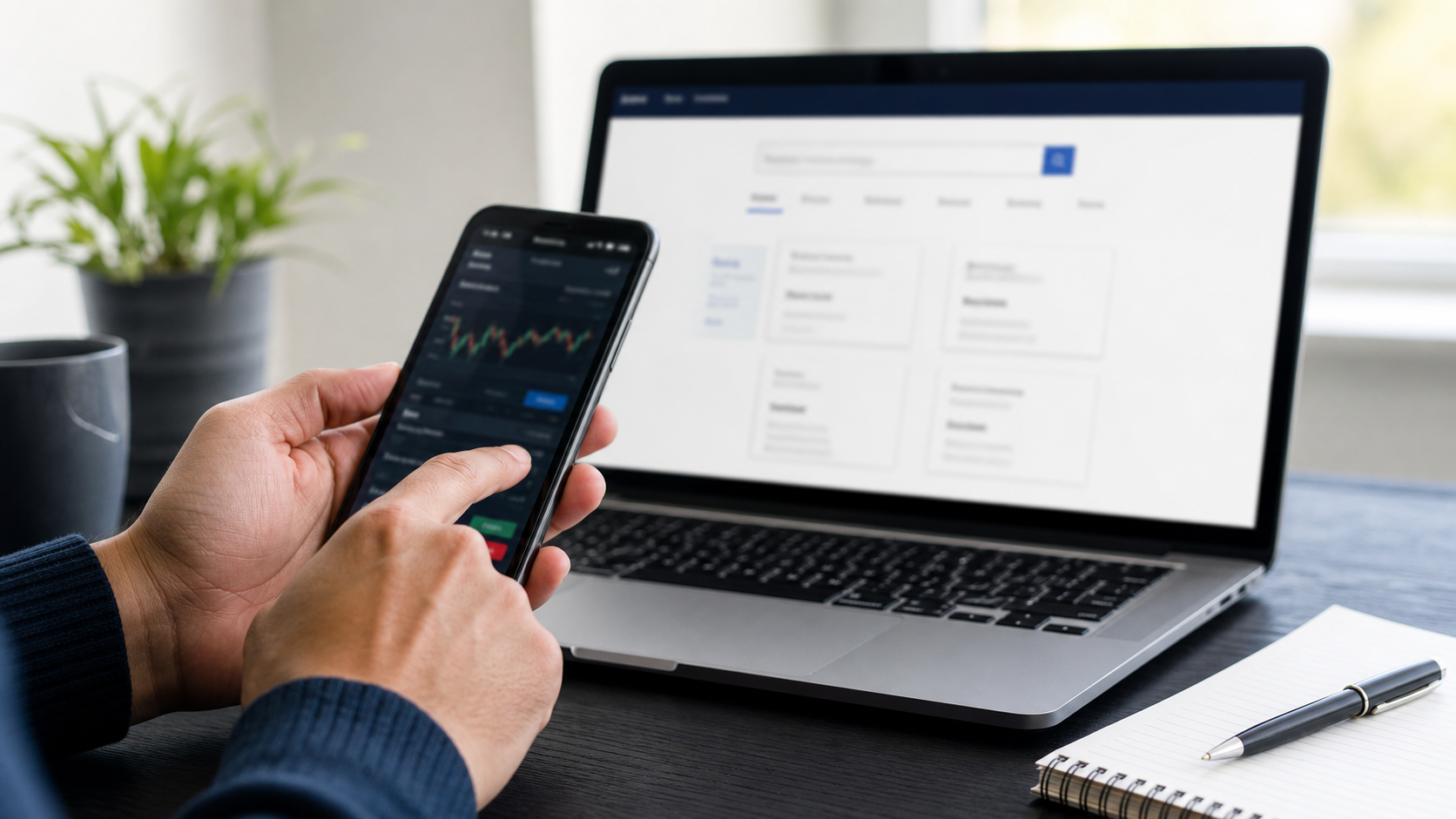
After verification, compare how an app behaves in the moments that create trading risk. On a small screen, the best design is usually the one that shows enough information before an order is sent: instrument, direction, order type, size, estimated margin impact, stop or limit choices, and a clear confirmation. A compact design that hides these fields behind several taps may be less appropriate for you, even if it looks modern.
Costs deserve the same discipline. Ask whether the headline spread applies to your likely account type and market conditions, whether a commission is added, how overnight financing is calculated, and whether currency conversion or withdrawal fees apply. Compare written schedules, not just a single live quote. If you expect to hold trades across sessions, financing can matter more than a narrow spread seen for a few seconds.
Security is partly a habit. Use a password manager to create a unique password, enable multi-factor authentication where offered, keep your operating system and app current, and avoid placing or managing trades over public Wi-Fi. Never share a one-time code, remote access to a device, or your broker credentials with a supposed support representative. Contact the firm through the published channel you independently found.
Finally, assess records. A solid mobile experience should let you find balances, open positions, order history, executions, statements, fees, and support tickets without reconstructing events from memory. When an order, margin event, or withdrawal needs an explanation, these records are more useful than an attractive dashboard.
Where cashback and comparison services fit
Cashback or rebate services can be part of a cost review, but they should sit after the broker-and-app safety checks—not before them. EasyCashbackFX explains that its forex rebate listings may return a portion of a volume-based broker commission to eligible traders. Eligibility, rates, account types, payment methods, and broker availability can change, and an offered broker or program may not be suitable or available for U.S. residents.
Before linking an account to any third party, confirm the broker permits the arrangement, read the provider’s terms and payment rules, and compare the complete trading cost with and without the rebate. A rebate does not make a risky strategy safe, compensate for unsuitable leverage, or turn an unverified dealer into a suitable choice. It is a cost consideration only.
For planning, use a tool such as EasyCashbackFX’s forex rebate calculator as an estimate, then compare it with the broker’s actual transaction and financing costs. If you need to translate a risk amount into a possible position size, the site’s position size calculator can support a separate risk-management exercise. Neither tool predicts returns or removes the possibility of loss.
If a cashback question arises after signup, use the provider’s published support information and retain your broker statement. EasyCashbackFX states that it does not have access to customer accounts; that is a reminder to avoid sharing account credentials with any rebate or support service.
A calmer way to choose
Build a shortlist of two or three eligible providers and complete the same checks for each. Start with registration and disclosures; then examine the total cost, app controls, security settings, records, support, and withdrawal terms. Only after that should you compare the extras—charts, news, alerts, calculators, or a potential rebate.
This order matters because it puts the difficult questions first. The best forex trading apps are not the ones that promise the easiest path to profit. They are the ones where you can independently identify the firm, understand the terms, operate the controls deliberately, and get a clear record of what happened. Those qualities cannot remove market risk, but they make the broker relationship easier to evaluate.

Frequently asked questions
What makes the best forex trading apps safe for U.S. traders?
Safety begins with a broker or dealer that you can independently identify and verify for the account offered to you. Then assess disclosures, total costs, login protection, order controls, records, support, and withdrawal policies. An attractive app interface alone is not proof of safety or suitability.
How can I check a U.S. forex broker’s registration?
Search the exact legal entity in the NFA BASIC database and review the record, including registration and disciplinary information. Match that entity with the broker’s disclosures and account agreement. If the names or claimed availability do not align, ask for a written explanation before funding an account.
Is an app-store listing enough to show that a forex app is legitimate?
No. Use an official listing only as part of the download check. Start at the broker’s own domain, confirm the developer or publisher information, and verify the firm’s regulatory status and legal entity independently. App-store availability does not establish that a provider is eligible for your location or that its terms suit you.
Should I use a demo account before trading forex on an app?
A demo can be useful for learning the interface, finding security settings, practicing order entry, and locating statements or support. It cannot prove how live execution will behave during volatile conditions or whether trading will be profitable. Read the live account disclosures and cost schedule separately.
Which security settings should I enable?
Use a unique password and enable multi-factor authentication if it is available. Review device-management, login-alert, password-reset, and withdrawal-security options. Keep your phone and app current, and do not disclose one-time codes or permit an unsolicited caller to access your device remotely.
What forex app costs should I compare?
Review spreads, commissions, financing or rollover charges, conversion costs, funding and withdrawal fees, inactivity fees, and any market-data charges. Ask how terms vary by account type and instrument. A quoted spread is only one component of the cost of opening, holding, and closing a position.
Can a forex cashback program make trading safer?
No. A cashback program may affect eligible transaction costs, but it does not reduce market risk, confirm broker eligibility, or guarantee a payout. Verify the broker first, then read the cashback provider’s terms, account-linking requirements, payout rules, and regional availability before treating it as part of a cost comparison.
What are red flags when choosing a forex app?
Red flags include guaranteed or unusually easy returns, pressure to deposit quickly, crypto-only funding, no verifiable business address or phone number, unclear legal-entity information, missing risk disclosures, and support that moves you to private messaging. Treat a failure to appear in relevant public records as a reason to stop and investigate.
Why do order controls matter on a mobile trading app?
Small screens can make it easier to submit an unintended trade or overlook margin impact. Look for a clear pre-trade view of instrument, direction, size, order type, estimated margin, and attached stop or limit settings. You should also be able to find, edit, and document open orders without confusion.
What should I save after opening a forex account?
Save the account agreement, risk disclosure, fee schedule, funding and withdrawal terms, confirmation emails, and periodic statements. Record the date you checked public registration information. Keeping these documents makes it easier to review costs and explain a specific issue to the broker or a regulator if needed.