


Finding the right forex brokers for a wholesale brokerage deal is not just about seeing the lowest spread and saying, “Done deal.” In this space, cheap on paper can turn pricey very fast when liquidity dries up, fees pop up, or support goes missing at crunch time.
For many firms in India and beyond, the pain point is simple: you want tight pricing, steady execution, and a setup that does not give daily headaches. No one wants a flashy promise in the sales pitch and then a backend that runs like a traffic jam in peak hour.
A good broker-partner should feel less like a gamble and more like a solid business machine. Think of it like buying a fleet for transport: the sticker price matters, sure, but uptime, service, spare parts, and control matter even more.
As one brokerage executive says, “Low spreads bring attention; stable liquidity keeps clients.” That one line says a lot.
This guide cuts through the noise and looks at what really matters in 2026: pricing models, white-label speed, hidden costs, and the tech stack behind the scenes, so you can pick a partner that is built for growth, not just good for a brochure.
How to choose wholesale forex brokers in 2026?

Buyer criteria for Majors, Minors, and Exotics
Check Currency pairs mix. A good wholesale setup should cover EUR/USD, key Majors, active Minors, and selected Exotics.
Watch Volatility and Liquidity. Tight pricing means little if Market depth is thin.
Review Pip value and Trading volume. Bigger flows need stable fills.
EUR/USD should stay sharp under peak volume.
Exotics need deeper risk controls.
Low spread alone is not enough; execution during fast moves matters a lot.
FCA, ASIC, and CySEC licensing checkpoints
Start with License verification on the broker site and regulator register.
Look for Financial Conduct Authority, ASIC, or CySEC approval in a Tier-1 jurisdiction when possible.
Check Regulatory compliance details, not just logo badges.
3 quick checks:
Investor compensation terms
Capital requirements disclosure
MiFID II handling for EU-facing operations
A broker that goes vague here is a red flag, plain and simple.
Spreads, Commissions, and Execution speed benchmarks
Tight Bid-ask spread numbers look nice, but the real test is trade quality.
Check Round-turn commission alongside spread.
Ask about Slippage in volatile sessions.
Review Latency in Milliseconds from order entry to fill.
Confirm Order fill rate and rejected-order frequency.
Ask where the Server location sits.
A broker with slightly wider pricing can still win if execution stays clean and quick.

ECN account, STP account, and Raw spread account fit
Pick the model that matches your brokerage flow.
ECN account fits buyers needing Direct Market Access, Interbank rates, and deep pools from multiple Liquidity providers.
STP account works for smoother routing through Straight Through Processing.
Raw spread account suits cost-focused operations chasing near Zero spread quotes.
Ask if the setup is truly No Dealing Desk.
Check Bridge technology quality, because weak routing can wreck good pricing.
Segregated accounts, Negative balance protection, and Liquidity review
This is the trust check, and yeah, it matters big time.
Confirm Client funds are held in Segregated accounts.
Ask which Tier-1 banks or Custodian bank partners hold balances.
Review Negative balance protection terms and Margin call handling.
Check depth from Tier-2 liquidity sources too, not just headline providers.
Strong Risk management and visible Financial stability tell you the broker can handle rough markets without drama.
Low spreads vs. stable liquidity
Pip costs across Currency pairs
Major pairs usually post the lowest Pip costs because liquidity is deep and Spreads stay tighter.
Currency pairs outside the majors can look cheap, then widen fast during news.
Pip costs should be checked with lot size, not headline spread alone.
For wholesale buyers, clean Trading costs beat flashy promo pricing every time.
Majors, CFDs, and Indices pricing
Major pairs: tighter Spreads, steadier fills, easier cost forecasting.
CFDs pricing: can swing more with market mood, especially around sessions and news.
Indices pricing: often depends on cash hours, futures flow, and broker markup.
Smart brokerage buyers compare all three side by side, because a broker that looks cheap on forex can get pricey on CFDs and indices.
Execution speed under Volatility
Fast Order execution matters most when Volatility kicks off. If Latency is high, Slippage can eat the benefit of a low spread in seconds. In rough Market conditions, brokers with stable routing usually hold up better than firms that only advertise tiny numbers. For wholesale brokerage deals, ask how Execution speed is measured during NFP, CPI, and major central bank events. That is where the real story shows up.
Raw spread account and Commissions
Raw spread pricing looks lean, but Commissions decide the true bill.
ECN brokers often suit buyers who want transparent Trading fees.
STP brokers may bundle more cost into the spread.
Compare Account types using the full Pricing model: raw spread, commission per lot, swap, and minimum deposit.
For procurement teams, the cleanest deal is the one clients can understand without a headache.
Need a brokerage fast? White-label setup explained
White-label launch path with MetaTrader 5 and cTrader
Pick a WL provider that supports MetaTrader 5 and cTrader without weird add-on fees.
Lock in a Liquidity provider and test the Bridge for price flow and order sync.
Set up Server hosting close to target markets for snappier fills.
Connect the Backend to your Trading platform for accounts, reports, and dealing rules.
Fast launch is cool, but stable launch is what keeps clients from bouncing.
Live account onboarding and KYC workflow
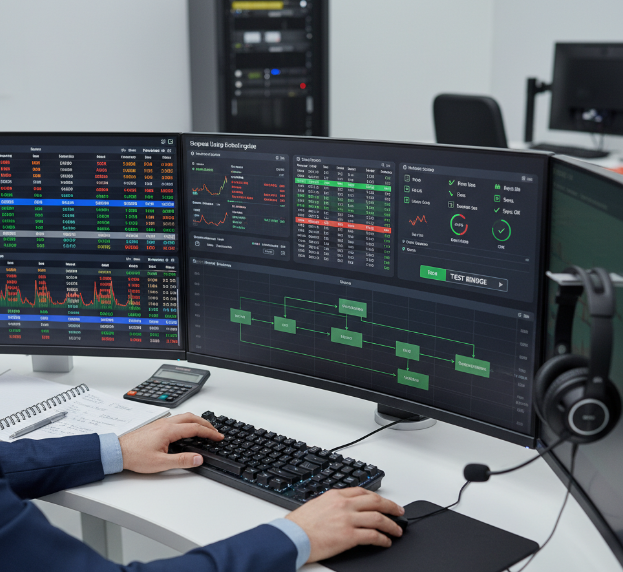
A smooth Live account flow should feel easy, not like a brick wall. Start with simple Onboarding, then run Identity verification, AML checks, and Document upload in a clean order. Your CRM should pass every step into the Back office so the ops team is not chasing files all day. Good Compliance here cuts delays, reduces fraud risk, and gets funded users trading way quicker.
Leverage, Margin, and Lot settings for new brokerages
Set risk rules early or things get messy fast.
Match Leverage ratio to client type and jurisdiction.
Define Lot size ranges for retail and pro flows.
Build Margin call and Stop out level logic into the platform.
Track Pips, exposure swings, and Exposure limits in real time.
Keep Risk management practical so clients can trade without blowing up on day one.
Customer support, Demo account, and Educational resources setup
Short version: clients stay longer when help is easy to find.
Live chat for quick fixes.
Help desk for deeper issues.
A Ticketing system so nothing disappears.
A Demo account with Virtual funds so new users can test the waters.
Add Webinars, a Trading academy, and a searchable Knowledge base to cut repeat questions and warm up leads before the first deposit.
Market analysis, Copy trading platform, and Mobile trading app options
Your offer looks stronger when clients get tools, not just a login. Add an Economic calendar, clean Technical analysis feeds, and a solid Mobile trading app with an iOS app option. A Copy trading platform with Social trading, Signal providers, and MAM tools helps attract both beginners and money managers. If you support API integration, advanced partners can plug in reporting, analytics, or custom workflows without duct-tape fixes.
Forex brokers for institutions
Big-ticket institutional flow needs more than tight spreads; it needs clean routing, low latency, and proper Liquidity providers standing behind the pricing.
Institutional buyers usually come with a simple headache: retail-grade setup looks shiny, but once ticket size grows, slippage, patchy fills, and weak support start showing full drama. For this audience, the real game is not just ECN branding on the homepage. It is about Prime brokerage access, FIX API stability, Market depth visibility, and how Aggregated liquidity performs when the market goes full pagal.
What institutions actually look for
Deep liquidity stack
A broker must connect with strong Liquidity providers, not just one or two names for show. Access to Tier 1 banks, non-bank market makers, and Aggregated liquidity matters when order size is heavy.Execution quality
Low latency is not a fancy extra. For funds, prop desks, and active allocators, it directly affects fill quality, hedging cost, and trade timing.Real ECN or clean STP flow
Many firms say ECN, but institutional buyers want routing clarity. If it is STP, say STP properly. If it is ECN, there should be Market depth, not marketing only.Prime brokerage compatibility
Bigger clients often need easier credit intermediation, cross-venue access, and cleaner post-trade workflows. That is where Prime brokerage fit becomes a serious filter.FIX API readiness
Manual dealing is fine for small flow. Institutions need FIX API for automation, custom pricing streams, order routing, and reporting.Capacity during stress
Calm market is easy, boss. The real test comes during NFP spikes, central bank events, and sudden volatility when Dark pools, Tier 1 banks, and liquidity bridges behave differently.
Why “institutional” means a different buying checklist
Ticket size changes everything
A retail trader can survive average fills. An institution moving larger blocks cannot ignore partial fills, rejections, or wide jumps in execution.Counterparty strength matters
Institutions do not just check spreads. They check who is behind the price feed, how many Liquidity providers are connected, and how stable those connections remain.Technology is part of risk control
FIX API, Low latency hosting, bridge stability, and reporting tools are not “nice to have.” Without them, ops teams end up firefighting daily.Transparency saves money quietly
Visible Market depth, clear STP or ECN model disclosure, and honest routing notes help buyers compare brokers without getting trapped in sales talk.
Quick buyer notes
Liquidity providers
More connections usually mean better resilience, but quality beats quantity. Ten weak feeds are not equal to a few strong Tier 1 banks plus reliable non-bank flow.
Prime brokerage
This becomes useful when the institution wants broader market access, better settlement comfort, and smoother handling of large exposure.
ECN
Good for buyers wanting transparent matching and visible Market depth. Still, the actual setup should be checked, not assumed.
FIX API
Essential for algorithmic routing, order automation, and custom reporting. If the API docs are weak or support is slow, red flag hai.
Dark pools
Useful in some workflows where discretion matters. Not every buyer needs them, but some institutions value reduced market impact.
Aggregated liquidity
This helps combine quotes from several sources, improving fill options across changing market conditions.
Low latency
Very relevant for high-frequency styles, arbitrage-sensitive setups, and institutions running execution-sensitive books.
Institutional broker comparison snapshot
| Broker capability focus | Why it matters for institutions | What to check in practice | Buyer signal |
|---|---|---|---|
| Liquidity providers and Tier 1 banks access | Supports larger orders with better continuity | Number and quality of LP connections, failover setup, quote consistency | Strong if pricing stays stable during news |
| ECN or STP model | Affects routing clarity and execution logic | Market depth visibility, order handling notes, bridge details | Strong if routing is explained cleanly |
| FIX API and Low latency setup | Helps automation and faster execution | API docs, uptime, hosting options, latency benchmarks | Strong if tech team can answer directly |
| Prime brokerage and Aggregated liquidity | Useful for scale, settlement comfort, and multi-source fills | PB relationship model, liquidity mix, reporting workflow | Strong if post-trade process is smooth |
Signs a broker is built for institutions, not just saying it
Dedicated account coverage with someone who understands execution flow
FIX API onboarding without too much back-and-forth
Clear explanation of ECN, STP, and liquidity routing
Stable access to Liquidity providers during active sessions
Market depth tools that show actual usefulness
Low latency options near major matching engines
Comfort discussing Prime brokerage workflows
Honest talk around Dark pools and off-book execution options
Small but important traps
“We have ECN pricing”
Nice line, but ask how orders are routed, how many LPs are connected, and if Market depth is visible.
“We work with top banks”
Good, but which Tier 1 banks? Is access direct, aggregated, or just partially syndicated through another provider?
“Our API is institutional-grade”
Then ask for FIX API documentation, session specs, uptime records, and onboarding timelines. Simple.
“Low spreads always available”
Institutions know spread alone means very little. During stress, the better question is: does Aggregated liquidity stay usable?
Voices from easycashbackfx
Rohit Menon, Execution Engineer at easycashbackfx
“Institutions usually ask about spreads first, but once flow size increases, Low latency and fill consistency become the real headache-saver.”
Asha Verma, Brokerage Operations Manager at easycashbackfx
“A proper institutional broker should explain ECN, STP, and Liquidity providers in plain language. If the answer feels too filmi, something is off.”
Kabir Sethi, Partnerships Executive at easycashbackfx
“Buyers dealing with allocators and funds often want Prime brokerage compatibility and FIX API support early, not as an afterthought.”
Naina Kapoor, Product Designer at easycashbackfx
“Market depth tools should help decision-making fast. Fancy screens are useless if the dealing desk and ops team cannot trust the data.”
Quick Q&A buyers often ask
Q: Is ECN always better than STP for institutions?
Not automatically. Some STP setups perform very well if the broker has strong Liquidity providers and stable Aggregated liquidity.
Q: Do all institutions need Prime brokerage?
No. Smaller firms may not need it on day one. Larger books, multi-venue activity, or complex settlement needs can make it very useful.
Q: Is FIX API only for quant firms?
No yaar. It also helps desks that want cleaner order handling, custom reporting, and smoother system integration.
Q: Are Dark pools necessary?
Only for some workflows. Institutions focused on discretion and lower market impact may care more than others.
Too many hidden costs? Compare pricing models first
Standard account fee structure and spread markup
A Standard account often looks clean because it feels commission-free, but the cost is tucked into the bid-ask spread and markup. For a retail trader, that may be fine. For brokerage procurement, those extra pips add up fast. Check if fixed spreads stay stable during news spikes, ask how the liquidity provider pricing is passed through, and compare quoted spreads with real fills. If the spread looks too neat all day, somebody is probably baking in a chunky markup.
ECN account pricing with raw spreads
ECN account pricing usually starts with raw spreads.
Then comes commission per lot, so the true cost is spread plus commission.
Ask how much interbank liquidity is available on Majors and busy sessions.
Check direct market access claims against real slippage data.
Watch variable spreads during volatile moves.
Looks slick on paper, sure, but without execution proof, an Electronic Communication Network label can be just marketing fluff.

STP account costs across Spot forex and CFDs
Straight Through Processing sounds simple: no dealing desk, market execution, and cleaner routing through bridge technology. Nice in theory. In practice, Spot forex and CFDs can carry very different costs. CFD margin rules, spread widening during volatility, and pricing differences across asset classes all matter. A broker may offer decent FX pricing but weaker CFD terms. So do not lump everything together. Compare fills, not just homepage claims, and ask how the bridge technology connects to liquidity.
Swap, Hedging, and overnight exposure costs
rollover rates can change with the interest rate differential
carry trade setups may look juicy, then overnight financing bites back
triple swap days can sting if positions stay open
swap-free accounts may include admin-style replacement charges
hedging can still raise margin requirements depending on broker rules
If your clients hold trades overnight, these costs are not side issues. They are the bill.
Mini account, Micro account, and Cent account economics
Mini account: good for testing with a lower minimum deposit, but cost efficiency can be weaker at scale.
Micro account: smaller lot size and fractional lots help with risk management, though spreads can be less competitive.
Cent account: useful for early-stage onboarding, with cent lots or nano lots making losses feel less brutal. Still, tiny contract size and high leverage can give a false sense of safety. Cheap entry does not always mean cheap long-term economics.
Risk control, CRM, and liquidity integration

Stop loss, Take profit, and Hedging controls
Clean Risk management starts with smart defaults. A Stop loss and Take profit setup should match Position sizing, not gut feeling. Add a Trailing stop for fast-moving books, and keep Order execution tight so Slippage does not eat the edge. Good hedging controls also reduce ugly Drawdown spikes when markets get jumpy. If your system reacts late, a small move can snowball into a Margin call mess real quick.
Liquidity routing for Spot forex and Futures
Use an ECN or STP model that fits your dealing flow.
Connect a strong Bridge provider to link platforms and LPs.
Source from Tier-1 banks when deeper pricing is needed.
Watch the Order book through an Aggregator for cleaner fills.
Keep Low latency front and center for Spot forex and Futures routing.
For bigger books, Prime brokerage access can make pricing and settlement way smoother.
CRM workflow for Live account retention
Start with fast KYC and friction-free Client onboarding.
Track every prospect through Lead management so no hot inquiry goes cold.
Use Marketing automation to nudge inactive users at the right time.
Monitor Deposit tracking to spot real trading intent.
Support partners with an IB portal that is simple and transparent.
Keep an eye on Churn rate weekly, because small leaks can turn into big headaches.
MetaTrader 4, WebTrader, and Proprietary platform integration
API: clean data flow between platform, CRM, and payment stack.
White label: quicker launch, lower tech drag.
MT5: handy when you want a broader product setup beside MetaTrader 4.
TradingView: strong chart appeal for modern users.
Mobile app: non-negotiable now.
Backend: stable sync keeps ops sane.
UI/UX: bad flow kills retention.
Server hosting: fast, stable hosting keeps execution from going wonky.
NFA, CFTC, BaFin, ESMA, and JFSA compliance mapping
A solid Regulatory framework is not just paperwork; it shapes product design, onboarding, reporting, and risk settings. NFA and CFTC rules raise the bar in the U.S., while BaFin, ESMA, and JFSA bring different expectations around Licensing, AML, and Reporting. Under MiFID II, firms also need tighter controls around transparency and conduct. Add Leverage limits and Negative balance protection, and you get a clearer map for what can be sold, to whom, and how.
Technical analysis, Fundamental analysis, and Day trading client needs
Day traders want speed, but they also want tools that feel useful, not cluttered.
For Technical analysis, sharp Charting tools, Indicators, Fibonacci, and clean Price action views matter a lot.
For Fundamental analysis, a live Economic calendar and fast News feed help traders react without scrambling.
For Scalping and other short-term styles, the big thing is handling Volatility without lag, weird re-quotes, or messy fills.
Conclusion
Picking a broker is a bit like choosing a business partner for a long road trip. A low spread looks great on paper, but if liquidity dries up or execution speed slips at crunch time, the whole ride gets bumpy. For 2026, the smart pick is the one that keeps cost, stability, and trust in proper balance.
Good forex brokers are not just cheap; they are clean in pricing and steady in service. Check spreads, commissions, and hidden charges with a cool head. Compare ECN, STP, and raw spread accounts side by side. On top of that, regulation from FCA, ASIC, or CySEC is not just nice to have; it is your safety net when the market starts doing full drama.
A lot of firms learn this the hard way: the cheapest option can become the costliest later. Solid risk controls, dependable CRM flow, and smooth liquidity integration save time, reduce friction, and keep clients from jumping ship. If the platform, onboarding, and reporting feel clunky, that is usually a red flag.
In simple terms, do not chase only the lowest number. Pick the broker that fits your model, keeps things transparent, and can handle pressure without falling apart.
References
[FCA Financial Services Register - https://register.fca.org.uk/s/]
[How to check a firm or individual is authorised - https://www.fca.org.uk/consumers/how-check-firm-individual-authorised]
[ASIC Professional Registers Search - https://www.asic.gov.au/online-services/search-asic-registers/professional-registers-search/]
[CySEC Investment Firms (Cypriot) - https://www.cysec.gov.cy/en-GB/entities/investment-firms/cypriot/]
[ESMA MiFID II Rulebook - https://www.esma.europa.eu/publications-and-data/interactive-single-rulebook/mifid-ii]
[ESMA CFD product intervention measures - https://www.esma.europa.eu/press-news/esma-news/esma-adopts-final-product-intervention-measures-cfds-and-binary-options]
[ESMA obligations under CFD product intervention measures - https://www.esma.europa.eu/press-news/esma-news/esma-reminds-firms-their-obligations-under-cfd-product-intervention-measures]
[Investor.gov on segregating customer assets - https://www.investor.gov/introduction-investing/general-resources/news-alerts/alerts-bulletins/investor-bulletins-27]
[FATF Recommendations - https://www.fatf-gafi.org/en/publications/Fatfrecommendations/Fatf-recommendations.html]
[MetaTrader 5 Find Broker - https://www.metatrader5.com/en/find-broker]
[cTrader Brokers - https://ctrader.com/brokers]
[cTrader Download and platform overview - https://ctrader.com/download]
[MetaTrader 4 official site - https://www.metatrader4.com/]
[TradingView broker trading page - https://www.tradingview.com/trading/]
[Forex Factory Calendar - https://www.forexfactory.com/calendar]
[NFA Investor FAQs - https://www.nfa.futures.org/faqs/investors.html]
[CFTC Foreign Currency (Forex) Fraud Advisory - https://www.cftc.gov/LearnAndProtect/AdvisoriesAndArticles/fraudadv_forex.html]
[BaFin warning on unlicensed trading platforms - https://www.bafin.de/SharedDocs/Veroeffentlichungen/EN/Verbrauchermitteilung/unerlaubte/2018/meldung_180807_Internet_Handelsplattformen_en.html]
[JFSA Financial Market Entry Office - https://www.fsa.go.jp/en/policy/marketentry/index.html]
FAQ
How do wholesale forex brokers keep spreads low?
Wholesale forex brokers usually keep spreads low through deep Liquidity from Tier-1 banks, clean ECN or STP routing, fast Order execution, lower Slippage on Majors, and tighter pricing on key Currency pairs.
What should I check before choosing forex brokers for brokerage setup?
Check Licensing, the Regulatory framework, and support for MetaTrader 5 or cTrader. Then compare Spreads, Commissions, and Segregated accounts.
Why does liquidity matter more than just cheap pricing?
Better Liquidity means cleaner fills, while thin books can widen Spreads. Poor routing can hurt Scalping, and a strong Order book helps across Spot forex, CFDs, and Futures.
Are raw spread accounts always better for brokers and clients?
Not always. A Raw spread account can look cheap, but Commissions, fill quality, and product range in CFDs or Commodities can lift the real cost.
Which account types fit different client segments best?
A Standard account fits many retail users. ECN account and STP account suit active traders, while Islamic account, Mini account, and Micro account widen client reach.
How do forex brokers manage risk on volatile days?
Forex brokers manage risk on volatile days by setting clear Risk management rules, using Stop loss and Take profit, watching Margin call risk, controlling Position sizing and Drawdown, and cutting Slippage with better execution.
What regulations matter most for wholesale brokerage buyers?
Strong oversight from FCA, ASIC, CySEC, NFA, or CFTC matters most. Also check AML, Reporting, Negative balance protection, and MiFID II rules.
What platform features should a modern brokerage demand?
A modern brokerage should demand support for MetaTrader 4, MT5, and cTrader, plus clean API access, a stable Mobile app, simple UI/UX, and reliable Server hosting.
How can brokers reduce churn after opening a live account?
Brokers can reduce churn by using smart Lead management, quick KYC, and clean Deposit tracking. Add helpful Customer support and an easy IB portal to keep the Churn rate down.
Why do forex brokers need CRM and compliance working together?
Forex brokers need CRM and compliance working together for smoother Client onboarding, better AML control, easier Reporting, a clearer view of Live account activity, and fewer gaps in the Regulatory framework.