

Forex Trading isn’t a casino trick or a late-night Reddit dare; it’s a high-speed chess match with real money on the board. Banks move billions before breakfast, spreads twitch in milliseconds, and one bad call can torch a quarter’s gains.
And now executives ask if AI can spot patterns faster without blowing up compliance or risk. That’s the bet: sharper signals, same guardrails. No smoke, mirrors.
Data Integrity
Signal quality depends on verified market data, clean archives, and continuous validation.
Compliance Standards
Any AI-assisted Forex Trading workflow must align with regulation, transparency, and audit controls.
Execution & Risk
Latency, pair coverage, hedging, and stress testing shape whether signals survive live markets.
Why Trust ChatGPT For Forex Trading?
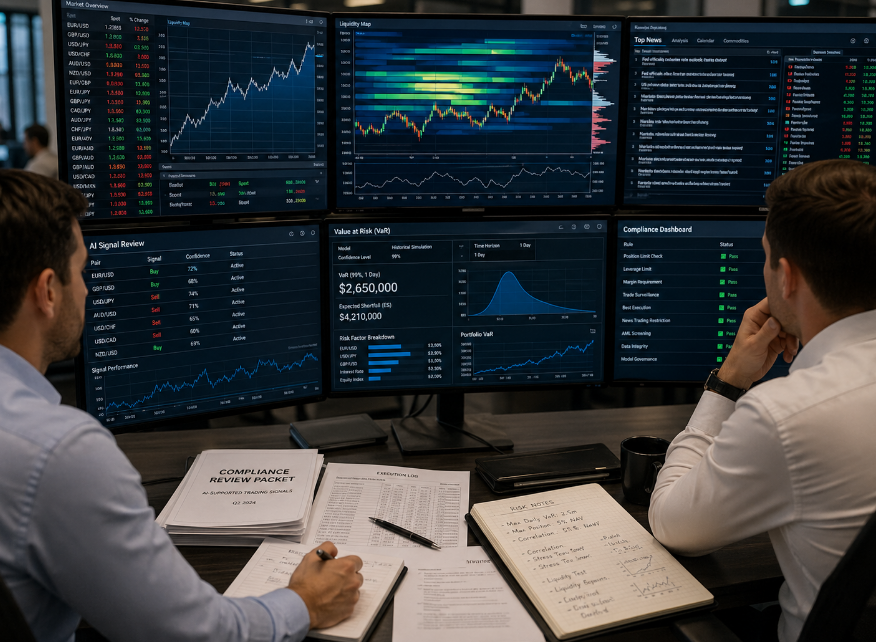
Forex Trading moves fast. One headline, one rate hike, and the whole forex market shifts. Traders need clean numbers, tight spreads, and clear logic. In online trading and currency trading, trust is built on data integrity, regulatory compliance, and serious risk management—not hype. That’s where disciplined AI support and tools like EasyCashBackFx fit in.
Bloomberg Terminal and Refinitiv Eikon: Ensuring Data Integrity
Reliable Forex Trading decisions begin with verified financial data. ChatGPT-driven insights gain credibility when aligned with institutional-grade market data sources.
Primary Data Validation
Clean tick data
Back-tested currency trading records
Bloomberg Terminal price streams
Refinitiv Eikon cross-asset dashboards
Real-time feeds
Historical archives
Data Quality Control
Cross-checking major and minor pair pricing
Monitoring spreads across ECN venues
Comparing broker quotes with interbank references
Information Reliability Framework
Continuous data validation cycles
Detection of pricing gaps
Confirmation through Reuters macro releases
This layered approach protects data quality and strengthens information reliability, which matters when placing high-frequency Forex trades in volatile sessions.
FCA Guidelines to ESMA Regulations: Meeting Compliance Standards
Forex Trading without regulatory compliance is a shortcut to trouble. Serious traders align strategies with established financial regulation and global legal frameworks.
Regulatory Standards Alignment
Market Oversight Integration
CFTC swap data reporting
Stress disclosures under Dodd-Frank
Internal audit trails for execution logs
Investor Protection Measures
Clear risk disclosure
Defined compliance requirements
“Sound risk controls and transparent reporting remain central to market confidence in wholesale FX markets,” noted the Bank for International Settlements in its 2024 FX market review.
For retail traders stepping into Forex Trading, platforms connected with compliant brokers—and cashback ecosystems like EasyCashBackFx—help maintain discipline while staying aligned with global financial conduct standards.
Tier-1 Banks vs. Non-bank Market Makers: Institutional Adoption
In Forex Trading, liquidity tells the real story. Price action reflects the behavior of major market participants.
Tier-1 Banks
Deep order books
Tight spreads
Core interbank liquidity
Direct access to the interbank market
Non-bank Market Makers
Algorithm-driven pricing
Fast execution across multiple execution venues
Flexible inventory management
Prime Brokers and ECNs
Aggregated liquidity providers
Transparent market structure
Institutional trading desks routing orders globally
Understanding this structure helps traders interpret slippage, spreads, and volatility in both forex trading and broader currency markets. EasyCashBackFx users often monitor these liquidity shifts to fine-tune trade timing.
Hedging Strategies and VaR Models: Mitigating AI-Driven Risks
Even smart Forex Trading signals need guardrails. That’s where layered risk management comes in.
Hedging Techniques
Direct hedges on correlated pairs
Options overlays
Partial position offsets
Quantitative Models
Daily Value at Risk (VaR) calculations
Scenario-based stress testing
Sensitivity checks for rate shocks
Risk Mitigation Workflow
Identify exposure in USD, EUR, or JPY pairs
Measure portfolio risk using VaR bands
Apply hedging orders
Reassess margin and capital buffers
Control Layers
Monitoring financial risk
Reviewing model risk
Tracking drawdown thresholds
Forex Trading isn’t about chasing every move. It’s about managing trading risk so one bad swing doesn’t wipe out months of gains. Pair disciplined currency trading habits with structured cashback advantages from EasyCashBackFx, and the edge becomes steady—not reckless.
3 Key Factors Affecting ChatGPT’s Signal Accuracy
Forex Trading moves fast, and signal accuracy can make or break a week. In Forex trading, data depth, execution timing, and pair coverage shape outcomes more than hype ever will. Let’s break down how these factors directly influence trading decisions in real-world FX trading environments.
Quality of Forex Data Feeds from Historical Data Archives
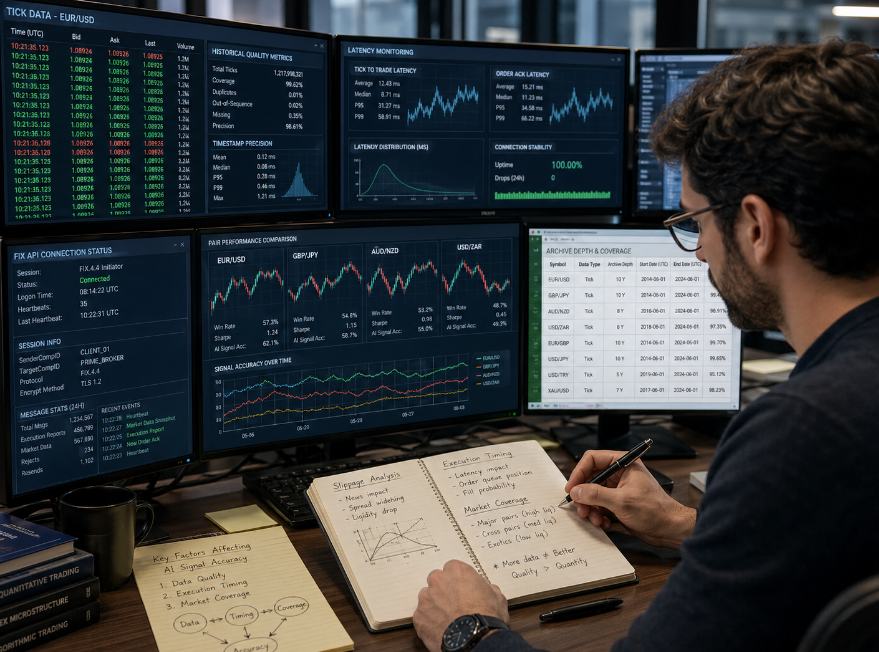
In Forex Trading, signal precision starts with data feeds and clean historical data. Weak archives mean shaky analysis.
Core Data Infrastructure
Cross-checking data accuracy across providers.
Monitoring data integrity during volatile news events.
Filtering corrupt or duplicated price records.
Clean tick data improves short-term Forex trading models.
Accurate timestamp alignment prevents distorted backtests.
High data resolution sharpens scalping signals.
Tick-Level Integrity
Validation Controls
| Pair | Avg Tick Frequency (per min) | Data Gaps (%) | Timestamp Precision (ms) | Archive Depth (Years) |
|---|---|---|---|---|
| EUR/USD | 1,200 | 0.02 | 1 | 15 |
| GBP/JPY | 950 | 0.05 | 1 | 12 |
| AUD/NZD | 600 | 0.08 | 5 | 10 |
| USD/ZAR | 400 | 0.15 | 10 | 8 |
Practical Impact on Forex Trading
Backtesting reliability rises with deeper historical data.
Intraday Forex trading benefits from refined data quality controls.
Stable data feeds reduce false breakouts during high volatility.
In currency trading, better raw input simply leads to clearer output.
Latency on High-frequency Trading Platforms and FIX API Connectivity
Forex Trading doesn’t just depend on analysis; it depends on timing. Even solid strategies struggle under poor latency.
Execution Environment Layers
Direct FIX API routing lowers processing delay.
Reliable connectivity prevents order rejection spikes.
Access to real-time data reduces reaction lag.
Server proximity affects execution speed.
Optimized network infrastructure cuts slippage.
Stable trading platforms ensure consistent fills.
Platform Infrastructure
API Connectivity
Latency Breakdown in FX Trading
Sub-10ms: Ideal for high-frequency trading models.
10–50ms: Acceptable for intraday Forex trading.
50ms+: Noticeable slippage during major releases.
Real-World Forex Trading Flow
Signal generation
Order transmission via FIX API
Broker confirmation
Market execution
For traders using cashback models like EasyCashBackFx, shaving milliseconds while reducing cost per trade can compound gains over time. In fast Forex trading cycles, small delays quietly eat profits.
Coverage of Major Pairs, Cross Pairs, and Exotic Pairs in Training
Forex Trading accuracy improves when models understand diverse currency pairs across shifting liquidity regimes.
Market Coverage Layers
Thinner liquidity
Larger spread variation
Strong reaction to geopolitical risk
Higher relative volatility
Regional macro sensitivity
Opportunity during USD consolidation
Deep liquidity
Lower spreads
Predictable institutional flows
Major pairs
Cross pairs
Exotic pairs
Training Data Breadth
Broader training data reduces bias toward EUR/USD-only patterns.
Wider market coverage enhances adaptive modeling.
Exposure to shifting volatility cycles strengthens Forex Trading resilience.
Practical Trading Edge
In FX trading, majors provide stability.
Cross pairs add tactical flexibility.
Exotics test risk controls in live currency trading conditions.
Forex Trading thrives on diversity. When models train across majors, crosses, and exotics, signal logic adapts better to changing liquidity waves. And in trading, adaptability is everything.
Day Trading: Instant AI-Driven Insights
Day trading in Forex Trading moves fast. Blink and price shifts. This cluster breaks down how real-time data, smart sizing, and live stress tests sharpen forex trading decisions without overthinking the game.
Real-Time Quotes from ECNs and OTC Market for Rapid Decisions
In active Forex Trading, speed lives in the flow of Real-Time Market Data. To act on Rapid Decisions, traders monitor:
ECNs
Direct liquidity streams
Transparent bid/ask spreads
Institutional order flow signals
OTC Market
Dealer-driven pricing
Variable depth during news spikes
Inside a typical trading routine:
Track Quotes across multiple liquidity venues.
Compare ECN spreads against OTC dealer pricing.
Confirm momentum before execution.
For currency trading desks, this layered view filters noise.
For retail traders, it prevents chasing fake breakouts.
For AI-assisted systems like ChatGPT, it anchors signals in actual price action.
The BIS Triennial Survey and related market reporting continue to show how fragmented liquidity and venue choice shape execution conditions in global FX markets.
Platforms linked with EasyCashBackFx help traders align execution costs with real spreads, tightening control in foreign exchange trading.
Position Sizing and Margin Requirements for Scalping Strategies
Scalping in Forex Trading is not about guts; it’s math under pressure.
Core pillars:
Position Sizing
Risk per trade under fixed percentage
Adjust lot size to volatility
Margin Requirements
Monitor usable margin
Avoid forced liquidation
Risk Management
Cap exposure per session
Control Leverage
Process flow inside short-term Strategies:
Define stop distance.
Calculate lot size based on account equity.
Cross-check broker margin rules.
Execute only if spread fits plan.
Tiny wins stack up. Oversized trades wipe accounts. In online forex trading, discipline beats adrenaline every time.
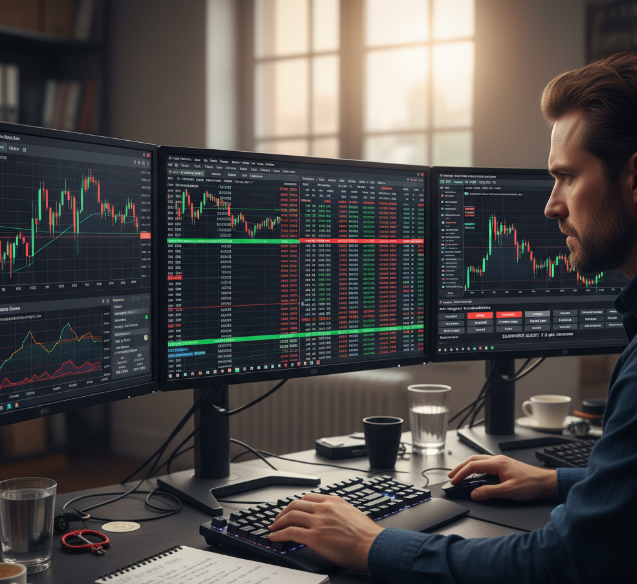
Stress Testing ChatGPT Signals with Live AUD/NZD and GBP/JPY Moves
AI-generated Signals feel sharp in calm markets. The real test shows up during volatile Market Moves in AUD/NZD and GBP/JPY.
Stress testing framework:
Data Layer
Feed Live Data from multiple liquidity pools
Scenario Layer
Simulate rate decisions
Inject surprise liquidity gaps
Execution Layer
Measure slippage
Review spread widening
Key checks for currency pairs:
Does the signal survive 30-pip spikes?
Does it adapt when spreads double?
Does correlation between Currency Pairs distort exposure?
Serious Forex Trading means pressure-testing every model before real capital hits the market. Traders using EasyCashBackFx often pair rebate efficiency with this disciplined testing cycle, keeping trading forex systematic instead of emotional.
Brokerage Team: Integrating ChatGPT Signals
Brokerage desks are no longer guessing in Forex Trading. Signals from AI models now shape routing, pricing, and client advisory in daily foreign exchange trading flows. From retail FX traders to institutional currency desks, everyone wants tighter spreads and smarter execution. In today’s fast-moving FX trading world, blending tech with human judgment just makes sense.
Direct Market Access (DMA) Platforms vs. Proprietary Execution Systems
Brokerage teams balance market access and internal control when aligning AI signals with execution systems for Forex Trading.
Trading platforms
Custom order routing logic
Embedded algorithmic trading models
Connect directly to ECNs and liquidity venues
Transparent pricing in live currency trading
External
Direct Market Access
Internal
Proprietary systems
Liquidity strategy
Smart routing based on volatility in Forex Trading
Internal crossing to reduce costs
Broader liquidity, variable spreads
External pools
Internal aggregation
Execution oversight
Real-time analytics
Slippage tracking
Latency control across FX trading pairs
For desks active in Forex Trading, proprietary engines allow tighter control of fills, while DMA keeps pricing competitive. Many hybrid setups now dominate foreign exchange trading, blending AI-driven signal scoring with customized routing logic.
Collaboration with Asset Managers and Corporate Treasuries
Institutional asset management desks approach Forex Trading differently than retail FX trading accounts.
Client relationships
Long-term mandates
Risk-adjusted currency exposure
Corporate treasury
Cash-flow hedging
Balance sheet stabilization
Institutional clients
Pension funds
Hedge funds
Multinational financial institutions
Some want directional exposure in Forex Trading. Others care only about protection.
A typical workflow looks like this:
Signal intake from AI models
Alignment with investment strategies
Execution through approved liquidity channels
Post-trade performance review
Partnership matters. That’s where EasyCashBackFx supports brokers by enhancing rebate structures around high-volume Forex Trading, helping institutional FX trading desks reduce effective transaction costs without changing their execution logic.
Short. Direct. Cost-aware. That’s what treasury teams ask for.
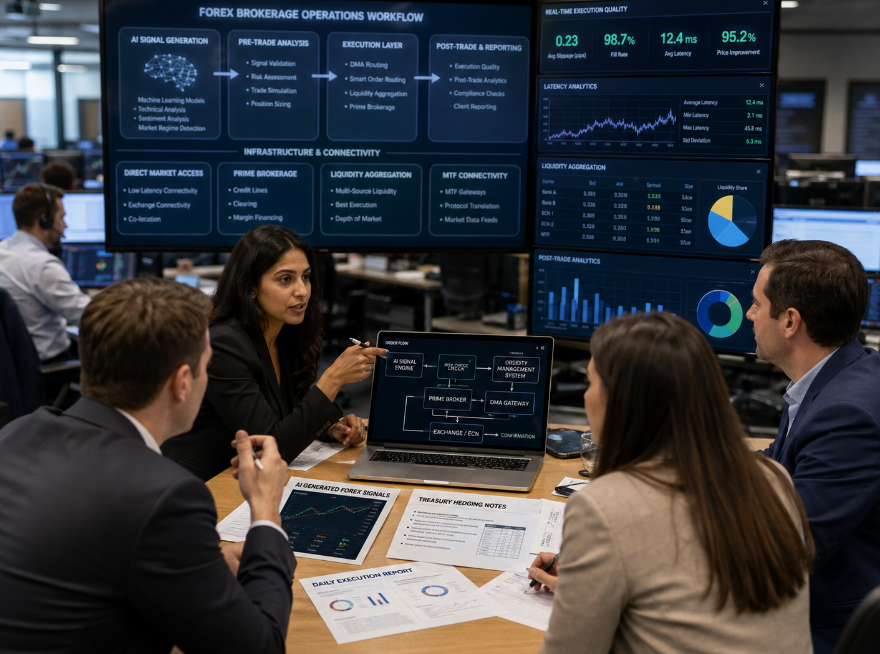
Streamlining Order Flow Through Prime Brokerage and MTFs
Efficient order flow in Forex Trading depends on tight coordination across infrastructure layers.
Prime brokerage
Netting exposures across currency trading books
Access to deeper interbank liquidity aggregation
Credit intermediation
Margin optimization
Multilateral trading facilities
Transparent trade execution
Competitive pricing across major and cross pairs
Integration with broader market infrastructure
Post-trade environment
Automated post-trade processing
Reporting compliance
Settlement reconciliation
In active Forex Trading desks, routing decisions often follow a clear chain:
Signal strength ranking
Liquidity venue comparison
Spread and fill probability check
Prime broker validation
Execution through MTF or internal book
Smooth flow means lower spreads. Lower spreads mean better FX trading performance.
EasyCashBackFx fits neatly into this structure by enhancing cost efficiency at the brokerage level, particularly for desks scaling Forex Trading volume across prime brokers and MTF networks.
In modern foreign exchange trading, execution quality is not luck. It’s structure, discipline, and smart integration.
References
[Bloomberg Terminal | Bloomberg Professional Services - https://professional.bloomberg.com/products/bloomberg-terminal/]
[Eikon Trading Software | LSEG - https://www.lseg.com/en/data-analytics/products/eikon-trading-software]
[Global Markets Data | Reuters - https://www.reuters.com/markets/global-market-data/]
[Strengthening wholesale markets | FCA - https://www.fca.org.uk/markets/strengthening-wholesale-markets]
[CASS 7 Client money rules | FCA Handbook - https://handbook.fca.org.uk/handbook/cass7]
[ESMA renew restrictions on CFDs for a further three months from 1 May 2019 - https://www.esma.europa.eu/press-news/esma-news/esma-renew-restrictions-cfds-further-three-months-1-may-2019]
[Q&A on MiFID II and MiFIR transparency topics | ESMA - https://www.esma.europa.eu/document/qa-mifid-ii-and-mifir-transparency-topics]
[Data Repositories | CFTC - https://www.cftc.gov/IndustryOversight/DataRepositories/index.htm]
[Dodd-Frank Act | CFTC - https://www.cftc.gov/LawRegulation/DoddFrankAct/index.htm]
[BIS Quarterly Review, June 2024 - https://www.bis.org/publ/qtrpdf/r_qt2406.pdf]
[Triennial Survey overview | BIS Data Portal - https://data.bis.org/topics/DER]
[The Financial Information eXchange (FIX) Protocol | FIX Trading Community - https://www.fixtrading.org/what-is-fix/]
FAQ
How does AI-supported analysis improve accuracy in Forex Trading for institutions?
Accurate Forex Trading begins with trusted data and disciplined validation.
Verified market data sources:
Bloomberg Terminal
Refinitiv Eikon
Reuters and institutional Forex data feeds
Deep historical data archives
Institutional cross-check process:
Compare live quotes across Major pairs and Cross pairs such as USD/EUR and GBP/JPY.
Validate pricing against Interbank market flows and ECN participants.
Review liquidity depth from Tier-1 banks and prime brokers.
| Layer | Function | Institutional Users |
|---|---|---|
| Data | Clean tick history | Hedge funds, Asset managers |
| Pricing | Interbank & ECNs | Investment banks |
| Oversight | CFTC, FCA guidelines | Pension funds, Corporate treasuries |
Behind every signal stands human supervision—risk desks, analysts, and compliance officers watching the pulse of the market.
How do institutional traders execute AI-driven Forex Trading strategies?
Execution is where tension rises—speed meets risk.
➤ Trading Infrastructure
Algorithmic trading systems
High-frequency trading platforms
Direct Market Access (DMA) platforms
FIX API connectivity
➤ Execution Venues
Electronic Communication Networks (ECNs)
Dark pools
Multilateral Trading Facilities (MTFs)
Over-the-counter (OTC) market
Hedge funds and investment banks route orders through prime brokerage relationships, tapping institutional liquidity pools. Major pairs absorb size smoothly; Exotic pairs demand patience and sharper spreads from non-bank market makers.
Human traders still intervene—adjusting position sizing, pausing systems during volatile GBP/JPY swings, or scaling exposure in AUD/NZD when liquidity thins.
How is risk controlled in high-speed Forex Trading environments?
Risk control is the quiet guardian behind every trade.
Core Risk Tools
Hedging strategies across Major and Cross pairs
Value at Risk (VaR) models
Stress testing under central bank shocks
Margin requirements and disciplined position sizing
Diversification across currency baskets
Regulatory Guardrails
MiFID II and ESMA regulations in Europe
Dodd-Frank Act and CFTC oversight in the U.S.
Basel Accords shaping capital discipline for banks
Central banks shift tone, spreads widen, and volatility surges through the Interbank market. In those moments, corporate treasuries, pension funds, and asset managers rely less on speed—and more on preparation.
Forex Trading rewards precision, but survival belongs to those who respect risk.