


Table of contents
You’ve made it this far, and that means you’re serious. DailyFX Forex Trading Course Walkthrough: Part Three is where things get real—less textbook, more trade room. We’re past the baby steps now, and heading into what actually moves the needle: strategy choice, trade execution, and managing your risk like a pro who’s been knocked down a few times but still shows up.
Traders don’t fail because they don’t learn—they fail because they don’t apply. As legendary trader Paul Tudor Jones said, “Don’t focus on making money; focus on protecting what you have.” That mindset is baked into everything we’ll cover here, from risk control to knowing when to trust your gut.
If you've ever stared at a chart and thought, "Now what?"—this part’s for you. Let’s unpack what the DailyFX pros actually do once the candles start dancing.
How Does DailyFX Use Technical Indicators
Technical indicators aren’t magic wands, but DailyFX shows how to make them work like a trader’s GPS—guiding, confirming, and keeping trades on track.
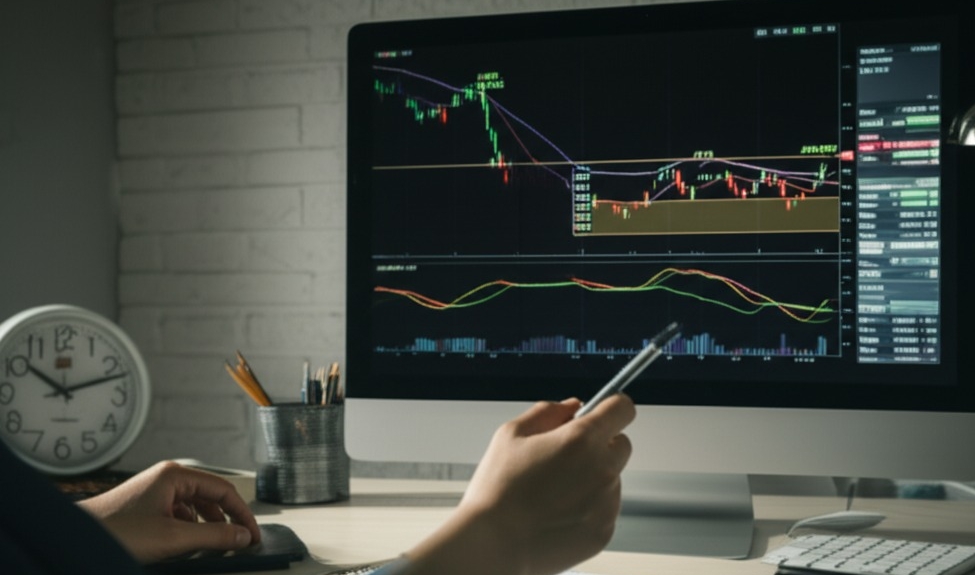
Momentum signals from RSI and MACD
RSI and MACD are like the mood detectors of the market. RSI measures if a currency pair’s sprinting too fast (overbought) or lagging (oversold), while MACD shows momentum shifts with its crossover and histogram patterns. Together, they help traders spot setups with stronger conviction. When both line up—boom, you’ve got a legit signal. But don’t fly blind; always back it with price action.
“Momentum indicators are great, but they’re even better when used in layers,” says John Kicklighter, Chief Strategist at DailyFX.
Donchian Channels in trend spotting
Donchian Channels work like highlighters on your chart—marking the high and low boundaries over a set period.
Breakouts above the upper band suggest bullish momentum.
Drops below the lower band hint at a bearish breakout.
Helps define support/resistance dynamically.
| Lookback Period | Channel Width (pips) | Typical Use |
|---|---|---|
| 20 | 85 | Swing Trades |
| 50 | 110 | Position Trades |
| 10 | 40 | Scalping |
This indicator is a go-to for trend-followers and breakout hunters alike.
Combining moving averages with price action
Moving averages give the overall direction; price action tells the story. When both agree, your trade confidence jumps.
Use a 50-day MA to identify trend direction.
Wait for a price pullback to a key level.
Look for candlestick confirmation (like a pin bar or engulfing pattern).
This combo reduces guesswork and sharpens timing. MA crossovers signal potential turns, while price action keeps you grounded in market context.
Identifying false signals using divergence
Ever seen RSI or MACD heading one way while price goes the other? That’s divergence—and it’s a red flag. It’s like the market saying one thing, but meaning another.
Bearish divergence: Price makes higher highs, indicator makes lower highs → Trouble ahead.
Bullish divergence: Price dips lower, indicator turns up → Possible reversal.
Use divergence as a “hold-up” signal. If you're about to jump in, it’s your cue to pause and confirm. It won't stop every bad trade, but it’ll sure dodge some landmines.
Reading Price Action with Confidence

“I used to clutter my charts with ten indicators,” said veteran trader Luis Moore during a panel at FXLive. “Then I met traders who read the market like a book—with just price.” That one sentence hit home. For many traders, confidence does not come from more tools. It comes from understanding what the market is telling you in real time—through price action alone.
Price action starts with market structure. This refers to the basic flow of highs and lows. When a chart forms higher highs and higher lows, you are looking at an uptrend. Lower highs and lower lows? That is a downtrend. Knowing this helps traders avoid fighting the market. Support and resistance levels act like psychological speed bumps. Price often reacts at these zones—bounces, stalls, or breaks through. Trend lines make it easier to see these reactions in real time.
Then you have the signals that price itself gives off. Candlestick patterns like the pin bar, engulfing pattern, and inside bar reveal market sentiment. A pin bar rejecting a key level is not just a shape—it is a story. It says buyers tried, but sellers took control. That insight gives you timing, not just theory.
Supply and demand zones are another layer. They are areas where large buy or sell orders are expected. These zones often line up with previous price turning points. Combine that with Fibonacci analysis, and now you have a roadmap. Many DailyFX analysts layer Fibonacci retracement levels with support zones to find low-risk, high-reward trade setups.
Top methods used by pros include:
Reading raw price near key zones
Matching candlestick behavior to trend direction
Marking Fibonacci levels to spot reaction areas
Watching volume near engulfing patterns for confirmation
John Kicklighter, Chief Strategist at DailyFX, puts it this way: “Price action is not a trick. It is what the market shows you when you stop forcing your opinion.” That quote sticks because it speaks to trader psychology. Confidence comes when the chart makes sense—without guessing, and without lag.
Trading with price action is not about overcomplicating. It is about removing the noise. When you learn to spot what matters—support zones holding, trend lines breaking, candles rejecting levels—you start to see trades the way pros do.
Breakout Trading vs Trend Following
Breakouts and trends can make or break your trades—literally. This cluster helps you spot the setups, confirm them smartly, and know when to jump in without flinching.
Spotting early breakouts on daily charts
Want to catch a breakout before it’s plastered all over Reddit? You’ve got to read the signs early on a daily chart—where volume spikes, tight candlestick patterns, and price hugging a resistance level often scream, “It’s go time!” A strong price action push through the support/resistance zone with momentum and volatility rising? That’s your trading signal. But hey, don’t guess—wait for confirmation.
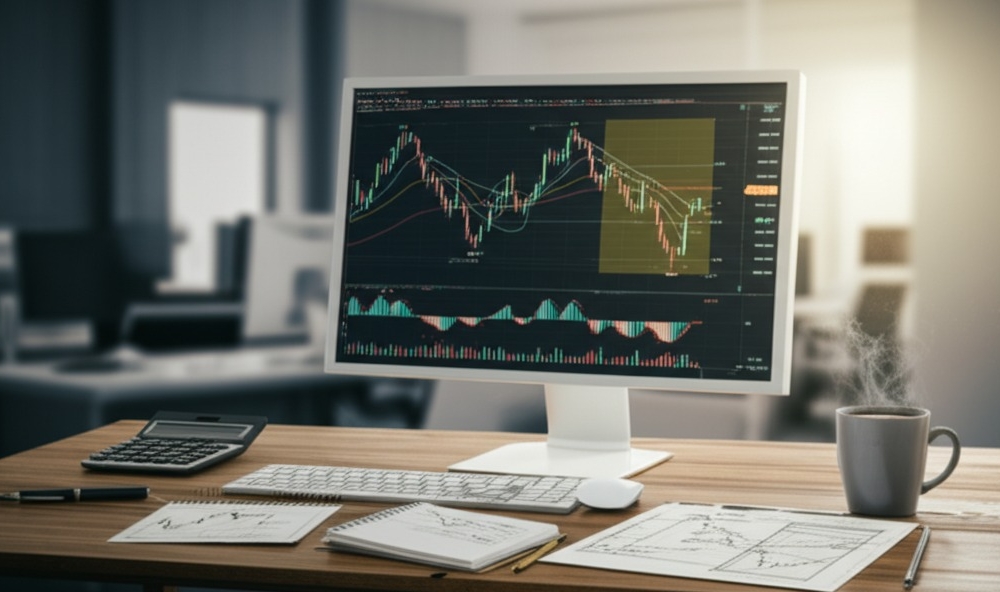
Tools to confirm a valid trend
A single candle doesn’t start a fire—you need multiple signals to confirm a market trend is real.
Moving Averages: Smooth out noise and reveal direction
RSI + MACD: Double-check strength with momentum
Volume Analysis: Strong trends rarely happen on weak volume
Fibonacci Retracement: Spot clean bounce zones
Trendlines & Support/Resistance: Visually back up your indicators
Using 2–3 of these technical indicators gives a solid confirmation signal before diving in.
Timing your entry after a pullback
Let’s face it—chasing a trend is a rookie move. Waiting for the pullback is how seasoned traders play it cool.
Identify the retracement to a key Fibonacci level or moving average support
Look for a bullish candlestick pattern near a support level
Confirm bounce with increased volume or a strong confirmation signal
Place your entry above the setup candle’s high
Use a stop loss just under the new support zone for solid risk management
This isn’t dip-buying with your fingers crossed—it’s planned, patient, and precise.
“The best entries often feel the hardest to take—because they’re after the market breathes,” says Kathy Lien, managing director of FX Strategy at BK Asset Management.
Risk Management in Forex Trades
Risk management is the backbone of every successful trader. If you can’t manage risk, you can’t manage profit. Here's how to protect your capital and keep your trading strategy intact.
Setting a stop-loss that sticks
A solid stop-loss is like having a safety net. It ensures your losses don’t spiral out of control. Whether it’s a limit order or a trailing stop, setting it at the right price level keeps you safe during market volatility. Be sure to evaluate your stop-loss placement periodically, especially when market conditions change or when your position moves into profit, allowing you to lock in gains or minimize losses. A well-placed stop-loss is your best defense against market unpredictability.
Risk-to-reward ratios that make sense
Don’t just trade for the sake of trading. Risk-reward ratios help you weigh potential losses against potential gains. A solid ratio like 1:3 means for every dollar at risk, you aim for a 3-dollar return. Calculate this before placing any trade to ensure the profitability aligns with your risk tolerance. For example, if your stop-loss is $50, your target profit should be $150 to maintain that ideal ratio. Trading based on a favorable risk-to-reward ratio means you’re planning with profit potential in mind, not just avoiding losses.
Calculating lot size like a pro
It’s all about proper position sizing. To calculate lot size, consider your account balance, risk percentage, and stop-loss distance. A typical approach is to risk 1-2% of your total account balance on each trade. This helps prevent one bad trade from wiping out a significant portion of your capital. The formula for calculating lot size typically involves your stop-loss distance and how much capital you’re willing to risk, adjusting for leverage if you choose to use it. By properly managing your margin and trade volume, you ensure that your trades remain consistent with your overall trading plan.
Avoiding overexposure on correlated pairs
When you trade correlated pairs, you risk putting your portfolio at the mercy of similar price movements. For instance, if you trade both the EUR/USD and GBP/USD, you might end up with more exposure to the USD than you intended. To avoid this, diversify your positions by considering currency correlations before making your move. By keeping track of cross-asset correlation, you can adjust your portfolio diversification and use hedging techniques to balance risks across pairs. This reduces the chances of being caught by a surprise price shift that impacts multiple positions.
Emotional control during losing streaks
Losing streaks can shake your confidence, but emotional control is key. Staying disciplined and sticking to your trading plan will help you power through tough times. Don’t let cognitive bias or fear cloud your judgment. A calm mindset and stress management are essential for bouncing back after a rough patch. Remember, trading is a marathon, not a sprint—sometimes it’s about surviving a losing streak and knowing when to step back and reassess. A trader who maintains mental resilience is more likely to succeed in the long run.
Do Fundamentals Drive Your Trades
In Forex trading, understanding fundamental factors is just as crucial as mastering technical analysis. Knowing when to react to economic news and central bank decisions can be the game changer that helps you anticipate market moves and stay ahead of the crowd.
Trading around major economic news
Economic indicators and news releases are among the most significant drivers of market volatility. Forex traders who react swiftly and strategically to news events often gain an edge. However, news-driven price moves can be unpredictable, so it's essential to know what to expect.
Focus on Impact Analysis: Pay attention to the high-impact economic indicators like Non-Farm Payrolls, GDP, inflation rates, and other key reports. These releases have the power to move markets significantly, especially in Forex, stocks, and commodities. Understanding the potential impact of each release allows you to plan ahead and manage risk effectively.
Risk with Caution: Trading during major news events can lead to large price swings that are difficult to predict. Be cautious and avoid overcommitting—volatility often means larger spreads and unpredictable price action.
Data Interpretation: It’s not just about the headline number. The market reacts to data in context—how it compares to previous reports, expectations, and the broader economic environment. Understanding the underlying factors helps you interpret the market’s reaction and plan your trades accordingly.
By understanding how to react to major economic news, you can turn volatility into an opportunity. But always remember that news-driven trades can be high-risk, so proper risk management is key.

Using central bank decisions as signals
Central banks wield enormous power in the Forex market through their monetary policy decisions. Interest rate changes, quantitative easing programs, and forward guidance are critical signals that can guide a trader’s strategy.
Pay Attention to Press Conferences: When central banks announce interest rate changes or shifts in monetary policy, they often hold press conferences shortly afterward. These are goldmines for information. Listen carefully to the statements made by central bank governors and board members—they often drop hints about future policy decisions that can affect the market for weeks or even months.
Understand Monetary Policy: Interest rate hikes signal a strong economy and usually cause the national currency to appreciate. On the other hand, rate cuts often suggest economic weakness and can weaken the currency. Keep a close eye on the central bank’s stance—whether they’re tightening, loosening, or staying neutral—and align your trades accordingly.
Track Forward Guidance: Central banks don’t just make decisions—they also guide markets on their future expectations. Forward guidance can be a powerful tool for predicting future moves. For instance, a central bank might hint at future rate hikes or cuts depending on inflation targets or employment data. Keeping track of this guidance helps you prepare for future market shifts and trade accordingly.
Understanding the role of central banks and their influence on currency markets gives you a significant edge in Forex trading. By aligning your trades with their monetary policy decisions, you’ll be better equipped to make informed, timely moves in the market.
Incorporating these fundamental analysis strategies into your trading approach can significantly improve your decision-making process and help you stay ahead of market movements caused by economic news and central bank actions.
Best Timeframes for Forex Beginners
When you first enter the world of Forex trading, selecting the right timeframe can often feel like finding a needle in a haystack. With so many options and methods available, it is easy to get caught up in the rush of making quick trades. However, for beginners, patience is a critical skill to develop. Understanding how different timeframes impact your strategy can make all the difference between becoming a confident trader or one that constantly feels overwhelmed by the market.
For newcomers, it is important to realize that long-term trading often requires a different mindset compared to short-term trading. Beginners may be tempted to focus on quick wins and the excitement of fast-paced trades. However, this can lead to poor decision-making due to a lack of experience. Successful Forex traders typically know when to slow down and take a step back, which is why choosing the right timeframe becomes crucial.
What to Know About Timeframes
In Forex, timeframes are essentially the periods that a chart covers. Depending on the timeframe you choose, you will either be looking at shorter or longer market movements. Here is a breakdown of the most common timeframes and how they affect a beginner's trading strategy:
| Timeframe | Suitable For | Characteristics |
|---|---|---|
| 1-Minute (1M) | High-frequency traders (scalpers) | Requires constant monitoring and quick decisions. |
| 5-Minute (5M) | Short-term traders (scalpers) | Fast-paced; ideal for rapid entry and exit. |
| 15-Minute (15M) | Active traders seeking short-term profits | More manageable than 1M or 5M; faster reactions needed. |
| 1-Hour (1H) | Swing traders or less aggressive traders | Provides a clearer picture of trends and less stressful. |
| 4-Hour (4H) | Swing traders with a longer perspective | Offers more time for research and analysis. |
| Daily (D) | Long-term traders | Best for viewing broader trends over several days or weeks. |
Short-Term Trading vs. Long-Term Trading
While it might seem exciting to trade using short-term timeframes, many beginners find that this approach leads to burnout. Short-term timeframes such as the 1-minute, 5-minute, or 15-minute charts can lead to fast decisions, but they often don’t allow enough time for careful analysis. With quick trades, there is a higher risk of making emotional decisions or reacting to market noise.
On the other hand, long-term timeframes like the 1-hour, 4-hour, and daily charts allow for more thoughtful analysis. They give traders the time to assess the overall trend, avoid making knee-jerk reactions, and execute trades with more confidence. These timeframes also align with a strategy that focuses on larger market moves, allowing beginners to work with the market at a comfortable pace without feeling rushed.
Expert Tips for Choosing Timeframes
When you are just getting started in Forex, it is often best to begin with longer timeframes. According to experienced traders, starting with the 1-hour or 4-hour chart provides enough time for you to understand price movement and market trends, without feeling overwhelmed. As Mark Douglas, a respected authority in the Forex space, advises: “The 1-hour chart allows beginners to spot trends clearly without the clutter of smaller, fast-moving timeframes. It strikes a balance between reaction time and trend clarity.”
Finding Your Ideal Timeframe
Ultimately, the ideal timeframe depends on your trading strategy, risk tolerance, and personality. If you prefer fast-paced action, a shorter timeframe may suit you, but be prepared for the intense focus and risk management that comes with it. However, if you’re looking to trade with less pressure and more time for analysis, longer timeframes such as the 1-hour, 4-hour, or daily charts will allow you to execute trades with greater confidence.
Choosing the best timeframe for your trading journey is a process of trial and error. Begin by focusing on longer timeframes to get a feel for market patterns. As you grow more comfortable, you may experiment with shorter timeframes, but it is essential to remember that patience is a virtue in the Forex market.
Trading Journal Practices by DailyFX
A trading journal isn’t just a record; it’s a tool that can take your trading to the next level. It’s all about tracking, learning, and improving over time.

Logging entries and exits with context
Every time you make a trade, log the details—but don’t just note the time and price. Include context: What was happening in the market? Was there a trend reversal, a breakout, or an important news event that influenced your decision? Also, note the reasoning behind the trade: why did you think it was a good idea to enter at that exact moment? Having these details gives you insight into your decision-making process, and over time, you’ll be able to see if there are patterns in your trade setups that lead to success or failure.
Tracking emotional patterns in trades
The emotional side of trading is huge—fear, greed, excitement, stress. These feelings often drive decisions more than we realize. By recording how you felt during each trade, you can identify emotional patterns that may be affecting your performance. For example, did you panic and sell too soon during a downturn? Did you hold on too long because you were greedy? Recognizing these emotional triggers helps you improve your psychology and avoid repeating the same mistakes. The more honest you are about your feelings, the better you’ll get at controlling them and making logical decisions.
Reviewing journal data for strategy tweaks
Your journal isn’t just for logging trades—it’s a powerful tool for strategy optimization. Go back and look at the data: What trades worked and why? What trades didn’t go as planned? Maybe you’ll notice that your best trades came when you followed a specific setup or used certain indicators. Alternatively, you might realize that you tend to fail when you rush trades or overtrade. Reviewing this data regularly gives you the insights needed to make adjustments to your strategy, helping you become more consistent in your approach.
Keeping a detailed journal is about more than just recording trades—it’s about creating a feedback loop that helps you grow as a trader. It’s a learning process that improves not only your technique but also your mindset and emotional control.
Conclusion
You’ve learned the basics, now it’s time to take your Forex skills to the next level. DailyFX Forex Trading Course Walkthrough: Part Three is all about turning what you know into consistent results. It's about using the right indicators, picking the right strategy, and knowing when to pull the trigger.
Don’t just read about it—get your hands dirty. Start testing these strategies in the real market and see how they feel. Practice makes perfect, but only if you’re out there, trying new things.
“Trading isn’t about being right all the time—it’s about managing risk.”
Keep learning, keep testing, and the profits will follow.
The right indicators depend on your trading style, but a few popular ones include:
These indicators work best when combined with price action and risk management tools.
RSI: Helps spot overbought or oversold conditions.
MACD: Good for identifying momentum shifts.
Moving Averages: Smooth out price data, showing trends.
Donchian Channels: Great for breakout strategies.
Price action trading is all about understanding how price behaves without relying on indicators. It’s like reading the market’s body language.
The more you practice, the more confident you'll get in predicting price moves.
Start with candlestick patterns like engulfing or pin bars.
Look for support and resistance levels, which price tends to bounce off.
Pay attention to the market's momentum—whether it's consolidating or trending.
Breakout trading is about jumping in when the price breaks a key level, often signaling a new trend. Trend following is about staying in a trade as long as the trend is active.
You need to choose based on the market environment. If the market is in a clear trend, trend following might be better. But if there's a strong breakout, a breakout strategy could deliver quicker profits.
Breakout Trading: Quick entries, focuses on volatility.
Trend Following: Longer-term strategy, smoother moves.
Risk management is what keeps you from blowing up your account. Here are a few tips:
Effective risk management is a skill you’ll build over time. The key is to never risk more than you're willing to lose.
Set stop-loss orders at logical levels to prevent huge losses.
Risk 1-2% of your capital per trade, no more.
Use proper position sizing based on your account balance and risk tolerance.
Fundamental analysis involves looking at the broader economic picture—like interest rates or GDP—to make informed trades. It’s crucial for:
While you don’t need to follow every piece of news, being aware of major economic reports can give you an edge.
Long-term positioning: Think about how an interest rate change could affect a currency over months.
Short-term volatility: Key news events can cause rapid price swings, offering opportunities.
For beginners, starting with daily or 4-hour charts is ideal. They provide a good balance between not feeling rushed and still being able to capture moves within a day or two.
Avoid jumping straight into 1-minute or 5-minute charts, as they’re fast-paced and can lead to overtrading.
Daily Charts: More time to analyze, fewer emotional trades.
4-Hour Charts: A bit faster, but still gives you time to make decisions.
Trading journals help you keep track of what works and what doesn’t. Here’s how you can use one:
It’s a powerful tool for improving as a trader, helping you learn from mistakes and celebrate wins.
Log entry points, exit points, and reasoning behind each trade.
Include emotional notes—did fear or greed affect your decision?
Track outcomes so you can spot patterns in your performance over time.
DailyFX offers a comprehensive free Forex course, but some traders might wonder how it stacks up against premium courses. Here’s a quick breakdown:
It’s all about your goals. If you're just starting, DailyFX’s free course is great. But if you want more tailored advice, a paid course might be worth it.
Free Course: Good for beginners, covers basics like technical analysis and risk management.
Paid Courses: Offer more in-depth strategies, personalized feedback, and advanced tools.