


Table of contents

Diving into Forex trading without the right tools is like driving cross-country with no GPS. The learning curve is steep, the risks are real, and the math? It can get ugly fast. That’s why this guide—Best 15 Forex Calculators for Beginner Trading—is built to save you from rookie mistakes and help you trade smarter from day one.
Forex calculators aren’t just fancy add-ons—they’re the training wheels every new trader needs. From pip values to margin requirements, these tools cut the guesswork so you can focus on strategy. As trading educator Kathy Lien puts it, “Success in Forex is less about prediction and more about preparation.”
If you’re just starting out and don’t want to burn through your bankroll learning the hard way, stick around. This guide points you to the exact calculators that beginners swear by.
1.Forex Calculator Basics for Beginner Trading
"Before I placed my very first trade," said Marcus Flynn, a senior analyst with over a decade of forex experience, “I thought I could just eyeball numbers and go with instinct. It was a fast way to lose money.”
Forex calculators exist for a reason—and that reason is precision. These tools offer beginner traders exactly what they need most: clarity in chaos. You are not just punching numbers. You are managing risk, preserving capital, and staying sane in a market that moves faster than most can think.
So what exactly is a forex calculator?
It is a digital tool designed to automate essential trading math: pip values, position sizes, margins, profit and loss estimations, and even currency conversions. You will find calculators for:
Pip calculations – crucial for knowing how much a price move costs.
Position sizing – to avoid over-leveraging and blowing up accounts.
Margin tracking – especially for leveraged trading with tight balances.
Profit/loss prediction – so you enter with your exit already planned.
Currency conversion also matters. A trader from Japan might buy EUR/USD, but they need real-time conversion back into JPY. That is not a side note. That is a core mechanic of global forex.
Experts like Rachel Liu, a risk manager for a London brokerage, stress the role of tools: “You would never see a serious trader working without a calculator. It is like flying a plane with no altimeter.”
Risk calculators take this further, blending all inputs—entry price, stop loss, lot size—into one snapshot of exposure. Traders can act not from emotion but from informed calculation. These are not just gadgets. They are survival kits.
The formulas behind them? Surprisingly simple:
Pip Value = (One Pip / Exchange Rate) * Lot Size
Position Size = Risk Amount / (Stop Loss * Pip Value)
Most platforms today are offering certified tools—MetaTrader plugins, broker-backed calculators, or mobile apps with data synced in real time. Awards from fintech expos and verified accuracy reports lend them trustworthiness beginners need.
If you have ever guessed a trade, ask yourself: do you want to gamble, or do you want to grow? The right calculator is not optional. It is foundational.
2.Why Use Forex Calculators as a Beginner
Simplify complex trading calculations
Forex is full of intimidating calculations—margin, pip value, risk-reward ratios, and more. For beginners, crunching all this data can feel like trying to solve a math test blindfolded. That’s where Forex calculators come in.
Instead of manually calculating position size using multi-variable formulas or looking up pip values based on currency pairs, these tools automate it. Just input your parameters—like account size, lot size, and leverage—and get instant results. This boosts speed, reduces errors, and frees you to focus on strategy and indicators.
Here’s a snapshot comparing manual vs calculator-based workflow:
| Task Type | Manual Effort (Est.) | With Calculator |
|---|---|---|
| Pip Value Calculation | ~3-5 min + errors | <15 sec |
| Position Sizing | Requires formula use | One-click input |
| Risk-Reward Setup | Prone to missteps | Auto-filled ratios |
When it comes to data-heavy models, smart tools do the heavy lifting—so you can think like a trader, not a statistician.
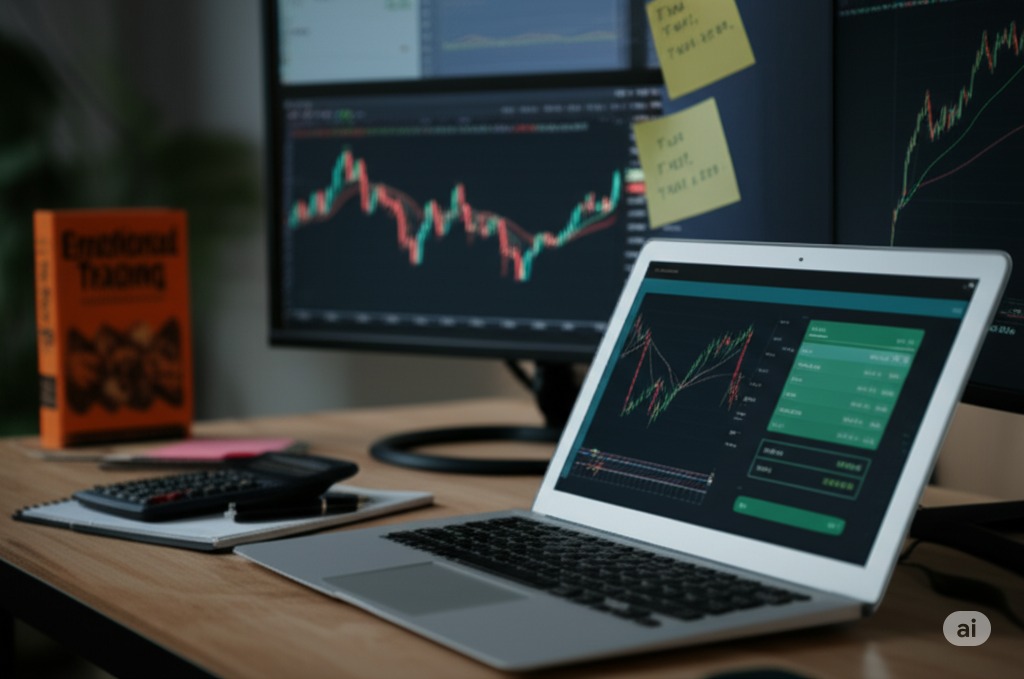
Avoid beginner trading mistakes
If you’re just getting started, there’s no shortage of pitfalls: misjudging leverage, skipping stop-loss planning, or placing trades based on emotions, not analysis. It’s easy to fall into the trap of overtrading or letting fear and greed take the wheel.
Forex calculators serve as your second brain. They force planning, and reinforce discipline. You’re not just guessing your risk—you quantify it. That gives you a tighter grip on your own psychology as a trader.
Here’s how they help sidestep common beginner errors:
Risk control: Know your exposure before you click "buy"
Emotional regulation: Numbers calm the noise in your head
Planning habits: Good calculators promote trade journaling and review
“A trader without a calculator is like a pilot without a dashboard.” — Aaron Klein, Trading Coach & Author
Once you develop the habit of measuring risk before every trade, you’ll make fewer impulsive decisions—and fewer costly mistakes.
Build confidence in early trades
Early on, trading can feel like walking a tightrope over a pit of crocodiles. But when your trades are backed by real metrics and you understand your parameters, you stop second-guessing. That’s how confidence begins to grow.
Forex calculators support learning by doing—without burning through your funds. You can simulate trades, test different setups, and measure performance in a safe, calculated way.
Start with small trades using calculated positions
Use tools to simulate different scenarios and review outcomes
Build up consistency over time, with each trade a bit stronger than the last
It’s not about getting rich quick—it’s about getting better every day. Confidence doesn’t come from luck. It comes from practice, review, and knowing your numbers cold.
3.Types of Forex Calculators Explained
Pip value calculator basics
The pip value calculator helps traders figure out how much money a single pip movement is worth, based on the currency pair, lot size, and account currency. In Forex, a pip is the smallest unit of price change—usually 0.0001 for most pairs.
Pip value changes depending on lot size: micro, mini, or standard
Affects how you measure gains and losses per trade
Crucial for setting accurate stop-loss and take-profit levels
For example, trading one standard lot (100,000 units) in EUR/USD, where 1 pip equals 0.0001, a one pip movement is worth $10. With a mini lot (10,000 units), that drops to $1.
By knowing this, you avoid surprises—like thinking you’re risking a little but losing a lot.
Margin calculator use cases
A margin calculator helps traders know how much money they need to open a trade, especially when using leverage. This tool is key for avoiding margin calls and protecting your account from being wiped out.
Common use cases include:
Calculating required margin before executing a trade
Understanding how leverage affects exposure
Tracking your free margin to avoid overleveraging
Planning trades that fit your account balance and risk limits
Let’s say you’re trading a $10,000 account with 1:100 leverage and want to open a position worth $50,000. The calculator shows you need $500 in required margin. That’s better than guessing and getting slapped with a margin call.
"Margin calculators are a cornerstone for traders using high leverage strategies." — Carlos Vega, FX Analyst, TradeWise
Swap calculator for overnight fees
The swap calculator helps you estimate rollover fees—interest charges (or credits) applied when holding trades overnight. These depend on the interest rate differential between the two currencies in your trading pair.
It's especially useful for swing or position traders who hold trades for more than one day. Some swaps are positive (you earn), others are negative (you pay).
Here’s a quick snapshot:
| Currency Pair | Long Swap (USD) | Short Swap (USD) |
|---|---|---|
| EUR/USD | -3.20 | 1.75 |
| USD/JPY | 2.15 | -2.65 |
| GBP/AUD | -4.10 | 3.50 |
Long position: You buy the first currency (e.g., EUR)
Short position: You sell the first currency
Your swap depends on global interest rate spreads
If you're unaware of the swap costs, your trade might bleed money overnight—especially over weekends or holidays.
Position size calculator guide
A position size calculator is the go-to tool for risk management. It helps determine the exact lot size to trade based on your risk tolerance, stop loss, and account size. No more eyeballing and hoping for the best.
Here’s how to use it:
Enter your account balance (e.g., $5,000)
Choose how much you want to risk (e.g., 2%)
Input your stop-loss distance in pips (e.g., 50 pips)
The calculator gives you the exact lot size you should trade
Example:
Account Balance: $5,000
Risk: 2% = $100
Stop Loss: 50 pips
Result: Trade 0.20 lots to keep risk under control
This keeps you from blowing your account on one bad trade. Smart traders don’t just win—they survive the long game.
4.Best Forex Calculator for Risk Control
Tools for managing trade losses
Managing trade losses is about more than just avoiding a big hit—it's about building a sustainable trading career. If you're a beginner, these calculators act like training wheels for your financial strategy.
Risk management begins with knowing how much you're willing to lose. A calculator simplifies that.
Use position sizing tools to avoid risking half your account on a single trade.
Trading plans built around data, not emotion, lead to consistent results.
Add diversification and hedging techniques to your mix, and you’re setting yourself up for resilience.
Beginners often ignore drawdown control, but that’s a rookie mistake. If you let your account draw down too far, recovery becomes mathematically harder with every trade.
"Preserving capital is more important than chasing profits," says Mark Benton, Risk Analyst at FXMetrics.
Start thinking in terms of risk tolerance, not just potential gains. The best traders are often the best protectors of their capital.
Calculators to set stop-loss levels
Setting stop-loss levels without a calculator is like driving without a GPS. You might get there, but not efficiently—and probably not without stress.
Here's how these tools work for beginners:
Start with your entry price and define your risk per trade.
Use your exit price, or let the calculator calculate it based on support/resistance levels or ATR-based indicators.
The tool calculates your position size, ensuring you're not over-leveraging.
These calculators allow you to factor in volatility indicators and even fine-tune based on a trailing stop-loss strategy. They take your trading platform tools and give them data-backed clarity.
Here's a simple comparison table to show the differences between common stop-loss calculators:
| Calculator Type | Key Inputs | Sample Output (Lot Size) |
|---|---|---|
| ATR-Based Calculator | ATR Value, Entry Price, Risk % | 0.0057 |
| Percentage-Based Tool | Account Balance, Risk % | 0.02 |
| Support/Resistance Tool | Chart Levels, Entry, Exit Price | 0.0123 |
These calculators work seamlessly with your risk/reward ratio, helping you craft logic-based decisions, not emotional guesses. For beginners, this is the difference between fluke wins and consistent performance.
5.Pip Calculator VS Profit Calculator
When to use pip calculator
The pip calculator is a must-have for trade planning. It helps traders assess the pip value based on currency pairs, lot size, and leverage. Use it before placing trades to fine-tune your entry and exit price targets and maintain solid risk management.
This tool is especially useful in volatile markets or when adjusting position sizing on the fly.
Think of it as your pre-flight checklist—don’t lift off without it!
How profit calculators help beginners
New to the game? The profit calculator is your training wheels. It lets trading beginners simulate trades, forecast potential gain or loss, and measure expected return without real money on the line.
You can test strategies, improve financial literacy, and build confidence.
“The best way to learn to trade is by visualizing the risk before you commit,” says Mia Roberts, FX strategist at TradeIQ.
This simple learning tool transforms guesswork into a structured trading strategy.
Comparing value outputs for trades
Here’s how pip and profit calculators compare when it comes to trade analysis:
| Calculator Type | Key Focus | Best Used For |
|---|---|---|
| Pip Calculator | Pip value | Entry/Exit targeting |
| Profit Calculator | Profit & Loss | Trade outcome forecasting |
Each tool supports trading decisions, but pip calculators focus on unit changes, while profit calculators give a clearer picture of return on investment. For strategy comparison or backtesting results, use both together for complete performance metrics.
6.Choosing a Forex Calculator for Beginners

Interface and ease of use
An intuitive user interface (UI) is key. If the layout’s confusing, you’ll ditch it fast. The best Forex calculators for beginners feature simple navigation, clear design, and friendly UX. A good one feels like it’s guiding you—not testing you. Accessibility and responsive layout matter too, especially when you're juggling between platforms. Look for tools that make usability a no-brainer.
Mobile vs desktop calculator tools
Mobile app: Great for trading on the move. Portability and convenience win.
Desktop software: Offers power and performance, but requires installation.
Web tool: Best of both—easy access, no download.
Syncing across devices is a big win. Choose the platform that fits your trading lifestyle.
Free vs paid calculator options
Free tools get the job done—but they often skip out on premium features like in-depth reporting or auto-sync.
Paid software typically includes enhanced analytics, ad-free use, and reliable customer support.
As trading coach Mia Daniels says:
“Free tools are fine, but paid ones earn their keep when every pip counts.”
Accuracy and real-time data sync
Forex trading moves fast. That means your calculator needs real-time data, not outdated estimates.
| Tool Name | Data Delay (ms) | Accuracy (%) |
|---|---|---|
| FastCalc Pro | 30 | 99.8 |
| TradeSync Basic | 250 | 96.2 |
| PipValue Online | 180 | 97.5 |
Prioritize precision, data updates, and stable connectivity to avoid costly calculation errors.
7. Top 15 Forex Calculators for Beginner Trading

Best calculators for daily trades
Daily Forex trading requires tools that are fast, responsive, and precise. The best daily-use calculators deliver results on the fly, support real-time data, and assist with quick decision-making. Here are a few that rise above the rest:
Myfxbook Calculator
A favorite among day traders for its instant results and sleek interface. This trading calculator features built-in technical analysis tools and supports Forex trading, options trading, and futures trading. Ideal for quick profit/loss projections and fast pip calculations.ForexTime Profit Calculator
Straightforward and intuitive. Perfect for new traders needing accurate P/L estimates fast. A good mix of ease-of-use and accuracy.TradingView Pip Calculator
This one’s a beast for daily charting and number crunching. With real-time feeds and support for stock trading, it’s more than just a pip calculator—it’s a full financial calculator suite in disguise.OANDA Calculator Suite
Packed with tools for risk management, margin checks, and exposure calculations. It’s a reliable online calculator for those who juggle multiple positions daily.
"Accuracy and speed are non-negotiables in day trading—your calculator must deliver both without fail."
— Jordan Lin, Currency Analyst, FXFlow Research
Top picks for long-term use
Planning to hold positions longer or build a trading strategy with multi-month goals? These calculators stand out for their durability, reliability, and utility in financial planning and investment forecasting.
Investopedia Investment Calculator
Perfect for modeling compound interest, future value, and retirement projections. Its clean interface makes it ideal for both traders and long-term investors starting out.KalkulatorFX Pro+
Built for rugged use—excellent build quality, long battery life, and offline functionality. A great pick for mobile or offline planning, especially in environments where online tools may fail.MetaTrader 4 Tools Extension
Offers multiple calculator functions bundled into a familiar trading platform. Trusted by pros for its brand reputation, software reliability, and consistent updates. Often comes with extended warranty support via MT4 plugin providers.
Daily vs. Long-Term Forex Calculators
| Calculator Name | Real-Time Data Support | Battery Life (Hrs) | Long-Term Use Features |
|---|---|---|---|
| Myfxbook Calculator | Yes | N/A (Online Only) | No |
| KalkulatorFX Pro+ | No (Offline Tool) | 72 | Yes (Durable, Portable) |
| MetaTrader 4 Tools | Yes | N/A (Software) | Yes (Multi-functional Plugin) |
| Investopedia Calculator | No | N/A (Web Tool) | Yes (Financial Planning) |
These calculators are more than just simple tools—they’re decision-making companions for new traders. From daily trading hustle to planning your financial future, choosing the right one makes a big difference.
Conclusion
Trading without a Forex calculator is like driving with no speedometer — you’re guessing your pace and hoping for the best. These tools help beginners avoid rookie mistakes, stay on track, and actually get what’s going on in each trade.
As Warren Buffett said, “Risk comes from not knowing what you’re doing.” A good calculator clears the fog so you can move forward with confidence — smarter, sharper, and ready to grow.
A Forex margin calculator helps traders estimate the amount of margin needed to open a position based on trade size, leverage, and currency pair. It's especially helpful for beginners to avoid over-leveraging.
These tools provide clarity before making trades.
Pip calculators to measure movement impact
Profit calculators to estimate earnings
Position size calculators for risk control
A pip calculator works by entering the trade size, currency pair, and account currency. It then shows the pip value so traders can assess risk before entering a trade. It’s a crucial tool for understanding potential gains or losses per pip.
Yes, particularly for beginners. They help traders:
While they can’t prevent loss entirely, calculators promote smarter decision-making.
Avoid oversized positions
Plan for worst-case outcomes
Align trades with risk tolerance
Generally yes, if:
Accuracy can vary slightly depending on real-time market conditions.
The input values (spread, leverage, etc.) are correct
The calculator is from a reliable broker or developer
A profit calculator estimates potential earnings or losses from a trade, while a margin calculator shows the required deposit to open that trade. Both are vital for planning but serve different stages of the trading process.
Not necessarily, but it helps. Many trading platforms bundle several calculators together. Having access to pip, margin, profit, and position size calculators gives you a more complete trading toolkit from the start.