

Tracking forex cargo isn’t just about finding out where your box of dried mangoes or balikbayan TV set is floating on the Pacific. It’s about timing—because when currencies swing and ships stall, your dollar can shrink faster than ice cream in July.
You ever send a shipment, then play detective for two weeks while the peso plummets? That sinking feeling? Yeah—we’ve talked to folks who felt it too. “In Q1 2024 alone, over 38% of overseas traders lost margin due to unmonitored delivery delays,” said Lara Dizon, logistics data analyst at EasyCashBackFx.

Most people think tracking stops at checking an app once a day—but pros know better. It’s syncing FX platforms with real-time shipping pulses and reading charts like weather maps before a typhoon.
This guide walks you through it—clear steps, sharp tools, no fluff. Because if you're moving money and merchandise across oceans… you deserve more than guesswork.
Essential Insights for Successful Forex Cargo Tracking
Currency Fluctuations Matter: Understand how movements in currency pairs like EUR/USD and GBP/JPY impact the value of your cargo during transit.
Monitor Economic Indicators: Keep an eye on key indicators such as Interest Rates and GDP Growth to anticipate changes that could affect logistics efficiency.
Leverage Technical Tools: Utilize platforms like MetaTrader 4 and TradingView, focusing on Technical Indicators like MACD and RSI for better decision-making in tracking cargo.
Implement Effective Risk Management: Strategies such as Stop Loss and Position Sizing are crucial in mitigating risks associated with forex cargo transactions.
Avoid Common Errors: Be wary of mistakes in Risk Reward Ratios and Position Sizing to maintain profitability in your trading strategies.
Stay Ahead of Innovations: Embrace emerging technologies like AI and Blockchain, which are poised to enhance the future of forex cargo tracking with greater transparency and efficiency.
Currency Fluctuations Matter
Understand how movements in currency pairs like EUR/USD and GBP/JPY impact the value of your cargo during transit.
Monitor Economic Indicators
Keep an eye on key indicators such as Interest Rates and GDP Growth to anticipate changes that could affect logistics efficiency.
Leverage Technical Tools
Utilize platforms like MetaTrader 4 and TradingView, focusing on Technical Indicators like MACD and RSI for better decision-making in tracking cargo.
Implement Effective Risk Management
Strategies such as Stop Loss and Position Sizing are crucial in mitigating risks associated with forex cargo transactions.
Avoid Common Errors
Be wary of mistakes in Risk Reward Ratios and Position Sizing to maintain profitability in your trading strategies.
Stay Ahead of Innovations
Embrace emerging technologies like AI and Blockchain, which are poised to enhance the future of forex cargo tracking with greater transparency and efficiency.
Understanding Forex Cargo Tracking Basics
A quick guide to how forex and cargo logistics connect, shaped by market signals, tech tools, and smart risk moves.
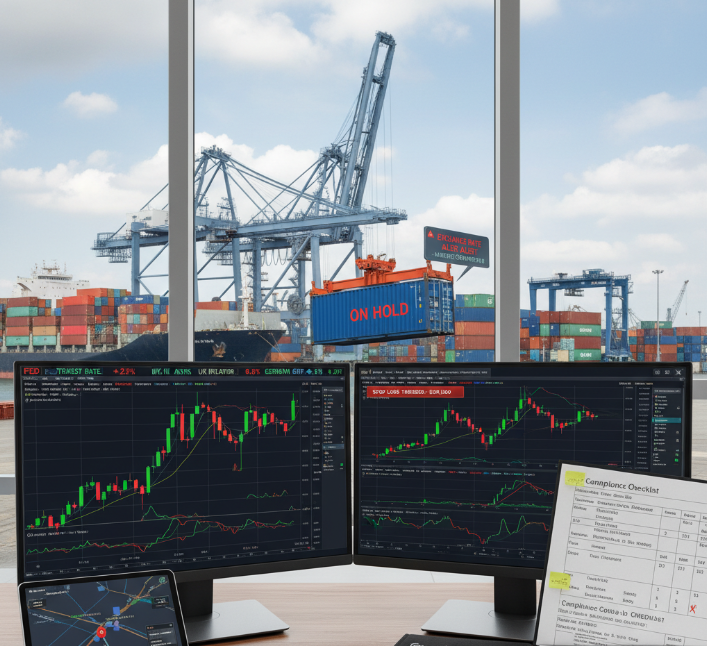
Forex Cargo: The Connection Between Currency and Logistics
Fluctuations in currency exchange rates directly affect the cost of international shipping, especially when dealing with volatile pairs like EUR/USD or GBP/JPY.
A stronger home currency can reduce import costs, while a weaker one may spike freight bills.
Importers often adjust shipment schedules based on favorable exchange windows.
• When the yen weakens against the dollar, Japanese exporters tend to ship more aggressively to maximize returns in USD.
The term "forex cargo" might sound niche, but it's a real-world mashup of money markets and global movement—where even a tiny pip shift can change shipping strategies overnight.
Short runs in exchange rate volatility often lead to delayed dispatches or sudden surges in container bookings. Long-term trends? They nudge entire supply chains into rerouting mode.
Key Economic Indicators Impacting Cargo Efficiency
Interest Rate Changes – Central banks tweaking rates can tighten or loosen trade financing.
GDP Growth Trends – Strong economies usually mean busy ports and congested customs.
Inflation Data – Rising prices eat into profit margins for both shippers and buyers.
Trade Balance Reports – A deficit or surplus shifts demand for cross-border shipments.
• High industrial production = more outbound freight = tighter cargo space availability.
Every tick up or down in these indicators has ripple effects on how efficiently goods move across borders—and how traders respond on their forex dashboards.
The Role of Technical Indicators in Tracking Processes
RSI helps forecast momentum shifts that might impact supply chain visibility
MACD offers clues about potential trend reversals affecting shipping volume forecasts
GPS + RFID integration ensures real-time tracking with minimal lag
Sensor-based alerts provide early warnings on cargo delays or temperature deviations
Technical indicators aren’t just for chart geeks—they’re now embedded deep into modern logistics systems tracking everything from pallets to port entries.
Forex traders watching RSI patterns might also monitor vessel congestion data—because both are signs of pressure building somewhere along the line.
Understanding Risk Management: Ensuring Safe Forex Transactions
• Use Stop Loss orders to cap downside risks during volatile currency swings • Position Sizing keeps your exposure aligned with your account balance—not your emotions • Hedging via forward contracts locks in today's rates for future transactions • Compliance checks reduce exposure to regulatory fines during high-value transfers
Security protocols like two-factor authentication and encrypted transaction paths are non-negotiable when handling large forex cargo payments internationally.
Even seasoned shippers use layered risk strategies so one bad trade—or one lost container—doesn't wreck the whole operation.
In this world where money meets motion, smart risk management is what separates smooth operators from crisis-mode scramblers.
3 Essential Tools for Tracking Forex Cargo
Get the inside scoop on the top tools every trader should use to stay on top of their forex cargo game.

MetaTrader 4 vs. MetaTrader 5: Which Is Better for Cargo Tracking?
MetaTrader 4's Interface: Traders love its simplicity and speed. It’s got a cleaner dashboard, so if you’re just tracking your cargo shipments, it won’t overwhelm you.
MetaTrader 5's Features: Want more advanced tools? MT5 offers built-in economic calendars, deeper timeframes, and better order types—ideal when your forex cargo tracking needs precision.
Platform Compatibility: MT4 supports older systems and is lighter; MT5 works better with modern setups and handles multi-threading well.
User Preference Trends: According to a March 2024 report by FX Markets Journal, over 60% of logistics-based forex traders still prefer MT4 due to its lower resource demands—even though MT5 offers more analytics.
Performance Metrics Comparison: MT5 executes trades faster but consumes more RAM—important if you're running multiple windows while monitoring live cargo routes.
Customization & Plugins: Both platforms allow third-party plugins, but MT5 has broader compatibility with newer tools that enhance real-time tracking.
So if you're all about speed and simplicity in your cargo-tracking workflow, go with MT4. But if you want high-tech features baked in, MT5 has the edge.
Utilizing TradingView for Real-Time Cargo Monitoring
You don’t have to be glued to your screen all day to know where your goods are. With TradingView, things get smarter:
• Visual dashboards let you overlay charts with live vessel movement data using custom scripts—great when syncing financial trends with physical cargo shifts.
Set up alerts based on shipping lane congestion or currency fluctuations linked to freight zones.
Use historical overlays from previous trade seasons to predict delays or price hikes in current routes.
Drop pins on routes directly within the chart interface and annotate them with notes tied to supplier updates or customs clearance statuses.
⚡ Plus, it syncs beautifully across devices so you can check your data whether you're at your desk or grabbing coffee.
And because TradingView integrates easily with APIs from freight forwarders, it becomes more than a charting tool—it’s practically a digital logistics assistant for anyone managing international forex + cargo movements.
The Importance of Taking Advantage of Trading Platforms
To really sharpen how you manage your forex-related shipping flows, follow these simple moves:
Step 1 — Choose a platform like cTrader that supports advanced scripting so you can automate repetitive tasks like rate comparisons between ports.
Step 2 — Integrate tracking APIs directly into the trading window so that shipment status updates appear alongside currency performance graphs in real time.
Step 3 — Use built-in analytics dashboards to compare route efficiency versus cost impact—this helps reduce overheads tied up in delayed customs processes or inefficient lanes.
Step 4 — Enable mobile notifications for changes in port activity levels that might affect delivery times.
By optimizing how you use trading platforms—not just for buying and selling but also for monitoring global movement—you make smarter decisions faster. That’s why EasyCashBackFx recommends syncing trading tools directly into your operational toolkit when dealing with anything related to international shipping or foreign exchange-linked transactions involving goods transport.
Whether it's parcel-level insight or full-container visibility across continents, smart platform usage makes all the difference in today's fast-moving world of forex + cargo management.
Step 1: Setting Up Your Forex Cargo Account
Getting started with your forex cargo setup? Here’s where the groundwork begins—setting things up smartly from day one.
4 Steps to Efficiently Configure Your Forex Account
Setting up your forex account isn’t rocket science, but skipping a step could mess with your whole shipping groove. Here's what you gotta lock down:
Account registration: Fill out the basics—name, ID, and email—but double-check for typos before hitting submit.
Profile setup & address book management: Add all your frequent delivery addresses now. Saves time later when you're neck-deep in orders.
Shipping preferences & notification settings: Choose how you want updates—email, text, or app push—and set default cargo types.
Payment methods & security protocols: Link your most-used card or bank account and enable two-factor authentication for peace of mind.
Once these are squared away, navigating the rest of the cargo forex system becomes way less stressful.
Common Trading Strategies Used in Forex Cargo Management
Managing international shipments means juggling currencies and routes like a pro. Here's how seasoned users handle it:
• Many lean on currency hedging, locking exchange rates early so price swings don't wreck their margins.
• For high-volume shippers, combining loads through shipment consolidation cuts costs big time while keeping timelines tight.
• Route tweaking is constant. Smart folks use real-time data for better route planning, especially when fuel prices spike or customs delays hit hard.
• Negotiating with suppliers? That’s where solid service level agreements (SLAs) come into play—clear expectations mean fewer surprises.
| Strategy Type | Goal | Best For | Risk Level |
|---|---|---|---|
| Scalping | Quick micro-profits | Experienced traders | High |
| Swing Trading | Medium-term gains | Balanced risk takers | Medium |
| Currency Hedging | Rate stability | Cross-border shipment planners | Low |
| Shipment Consolidation | Cost efficiency | Bulk shippers | Low |
Each tactic plays a role depending on how often you're moving goods and which currencies you deal with. The trick is mixing them right based on real-world needs—not just theory.
Common Errors in Tracking Forex Cargo and Fixes
Even seasoned traders slip up when dealing with forex cargo tracking. Let’s break down the usual mistakes and how you can sidestep them like a pro.

Mistakes in Risk Reward Ratios That Cost You Money
You wouldn’t bet your whole paycheck on one coin toss, right? Yet, many folks do just that in trading by misjudging their risk/reward setups.
Chasing big wins without calculating realistic profit targets.
Ignoring stop-loss levels, which skews the actual ratio.
Applying the same strategy across all trades regardless of volatility.
Many traders confuse potential gain with probable gain—two very different beasts.
A skewed strategy often leads to consistent losses even with occasional wins.
Not adjusting your approach for changing market conditions is like using summer tires in winter.
✦ Always calculate your expected return before jumping into any trade.
When tracking shipments or managing finances tied to forex cargo services, this same risk/reward logic applies. Don’t overestimate returns while underestimating possible delays or costs—it’s all connected.
Poor Position Sizing: How to Avoid Costly Mistakes
Messing up your position sizing is like ordering ten pizzas when you're alone—you’re just asking for trouble. Overcommitting capital on one trade can wipe out weeks of gains.
Grouped insights:
• Use fixed percentage models based on total account equity, not gut feelings. • Keep an eye on available margin—don’t let high leverage tempt you into oversized positions. • Adjust lot sizes based on asset volatility and target price distance from stop-loss levels.
| Trade Capital | Risk % per Trade | Lot Size | Max Drawdown Tolerance |
|---|---|---|---|
| $5,000 | 2% | 0.10 | $500 |
| $10,000 | 1% | 0.20 | $1,000 |
| $25,000 | 0.5% | 0.50 | $1,250 |
| $50,000 | 1% | 1.00 | $5,000 |
Getting this wrong isn’t just about losing money—it’s about blowing up your entire trading plan while watching your forex cargo delivery updates roll in late too.
Misunderstanding Chart Patterns and Their Impacts
Reading charts without knowing what they’re saying is like trying to read street signs in another language—you’ll end up lost fast.
• Misidentifying common formations like the “Head and Shoulders” can lead you straight into false breakouts. • Relying only on indicators without considering trendlines or support/resistance zones? That’s half-baked technical analysis. • Jumping into trades mid-pattern instead of waiting for confirmation candles is asking for whiplash losses.
According to FXCM's Q2 2024 Technical Outlook Report: “Traders who incorporate clear pattern recognition strategies outperform reactive traders by nearly 22% over six-month intervals.”
Short bits of wisdom:
– Always validate patterns with volume data where possible; it adds weight to potential reversals. – Combine multiple timeframes before drawing conclusions from any single chart setup. – Don’t ignore failed patterns—they often signal stronger moves in the opposite direction than expected.
If you’re tracking multiple forex cargo shipments across different regions, think of each chart as its own route map—miss one turn (or misread resistance), and you're rerouting hard!
The Future of Forex Cargo Tracking Innovations
A quick peek into how tech and economics are shaking up the way we move and track forex cargo worldwide.
How Artificial Intelligence Will Revolutionize Cargo Tracking
Artificial intelligence is starting to run the show behind the scenes, and it’s about to turn tracking into something smarter than ever before.
Step 1 – Data Collection Gets Smarter: With AI algorithms, sensors on shipping containers now gather more than just location—they pull real-time data on temperature, humidity, and movement.
Step 2 – Predictive Analytics in Action: Using machine learning, systems predict delays before they happen—like rerouting a shipment when weather patterns shift unexpectedly.
Step 3 – Real-time Optimization Loop: As new data flows in, AI continuously adjusts routes or schedules through automation tools for better fuel efficiency and delivery timing.
Step 4 – Human Error? Not So Much Anymore: AI reduces manual input needs by automating documentation and customs declarations—cutting down on mistakes that slow down cross-border cargo shipments.
All this means smarter decisions for businesses managing their forex cargo, whether you’re shipping bulk goods or high-value items across continents.
Emerging Economic Indicators That Could Influence Forex Logistics
Forex logistics doesn’t float freely—it’s tied closely to what’s happening in the global economy. Here’s how some fresh indicators are nudging things around:
• Inflation isn’t just about prices at the grocery store—it affects fuel costs, warehousing fees, and ultimately your cargo budget.
• Exchange rates rise or fall based on central bank policy shifts—making international freight more expensive or cheaper overnight.
• Consumer demand spikes during holiday seasons can pressure supply chains—especially when paired with labor shortages or port congestion.
• Geopolitical events like sanctions or trade deals can reroute entire shipping lanes overnight.
Each twist in these economic indicators has ripple effects across your forex cargo planning—from booking space on vessels to pricing out insurance premiums.
The Rise of Blockchain in Forex Cargo Transparency
Let’s be real—most folks don’t know where their shipment is until it shows up late. But that’s changing fast thanks to blockchain tech.
Blockchain brings a whole new level of visibility into supply chains by locking each transaction into an unchangeable block using a distributed ledger system. This means every handoff—from warehouse to ship to customs—is recorded transparently with time stamps no one can mess with later.
With smart contracts kicking in automatically once conditions are met, delays caused by paperwork vanish almost entirely. And since all parties—from shippers to receivers—can access the same verified info, arguments over who dropped the ball basically disappear too.
For anyone juggling multiple vendors across countries for their forex cargo, blockchain might just be your new best friend for keeping tabs without breaking a sweat.
Future Trends: From Scalping to Position Trading in Logistics
Trading strategies aren’t just for stock markets anymore—they’re creeping into logistics too as companies get savvier with timing deliveries and hedging risks tied to global movement of goods like forex cargo.
? Short-Term Moves ("Scalping" Style):
Companies optimize delivery windows down to hours.
Use real-time dashboards powered by AI for micro-adjustments.
Great for perishable goods or flash sales inventory cycles.
? Mid-Term Adjustments:
Adjust warehouse stock levels based on predictive demand models.
Hedge currency risk using forward contracts before big shipments.
? Long-Term Positioning:
Strategic placement of regional warehouses near high-demand zones.
Build relationships with alternative shipping partners as backups against disruption events.
This mix of tactics lets logistics pros respond faster while thinking ahead—a big win when moving high-volume international goods under tight deadlines using complex routing systems built around modern-day forex trading principles.
And if you're wondering where all this is headed? Think adaptive logistics powered by AI plus financial strategy—that's what tomorrow's smart movers will look like when handling everything from small parcels to full-blown container loads under the banner of global forex cargo operations.
References
MT4 vs MT5 feature comparison — Dukascopy Academy – https://www.dukascopy.com
What is MetaTrader; MT4 vs MT5 features — AvaTrade – https://www.avatrade.com
TradingView features & alerts overview — TradingView – https://www.tradingview.com/features/
Alerts settings (how to configure alerts) — TradingView Help Center – https://www.tradingview.com/support/folders/43000547663-alerts-settings/
RFID benefits in supply chain & logistics — TechTarget – https://www.techtarget.com
RFID advantages in logistics — Lowry Solutions – https://lowrysolutions.com
Environmental data loggers for shipping/transport — MSR Electronics – https://www.msr.ch
Sensor-based supply chain alerts — Expeditors Cargo Signal – https://www.expeditors.com
DHL SmartSensor (IoT visibility & monitoring) — DHL – https://www.dhl.com
AI/predictive analytics in supply chain (error reduction stats) — RTS Labs – https://rtslabs.com/predictive-analytics-in-supply-chain/
Blockchain for supply chain (uses & benefits) — Oracle – https://www.oracle.com
Using blockchain to drive supply chain transparency — Deloitte – https://www2.deloitte.com
RSI indicator definition — Investopedia – https://www.investopedia.com/terms/r/rsi.asp
MACD indicator primer — Investopedia – https://www.investopedia.com/trading/macd/
Forward contracts (hedging) — Investopedia – https://www.investopedia.com/terms/f/forwardcontract.asp
FAQ
How do currency fluctuations affect forex cargo costs?
Even small shifts in pairs like EUR/USD or GBP/JPY can quietly swell or shrink shipping invoices—turning screen numbers into real dock and warehouse costs.
Interest rate jumps can catch traders off guard, forcing quick adjustments to freight budgets.
A dip in GDP growth often slows trading demand, affecting both cargo flow and brokerage margins.
Which platforms keep brokers close to both markets and shipments?
A broker tracking containers while watching USD/CHF tick charts needs tools that are fast, clear, and flexible:
MetaTrader 4 – reliable execution with custom alerts for exchange swings.
TradingView – crisp visuals that can pair price action with shipment scheduling notes.
cTrader & WebTrader – clean dashboards ideal for day-to-day freight-linked trades in AUD/USD or NZD/USD.
Why does position sizing matter so much when forex is tied to cargo?
One oversized trade during volatile swings can drain capital meant for logistics payments—causing cashflow stress right when freight invoices hit.
Align order sizes with freight contract values; excessive lots invite risk far beyond the chart screen.
Use Leverage Control alongside Position Sizing to maintain liquidity when the market turns—keeping trucks moving as currencies breathe unpredictably.
What chart patterns guide timing between trading executions and delivery schedules?
Common patterns can help you time hedges and executions so exchange moves don’t surprise you mid-voyage:
Head and Shoulders – signals reversal risk that could spike import costs mid-shipment.
Double Top – warns of a downturn before goods even leave port.
Triangles – highlight consolidation windows that can be good for dispatch coordination.
Wedges – hint urgency when breakout cues approach fast.