


Table of contents
If you've ever wondered how some traders seem to pull consistent profits from the Forex market, you're not alone. Forex Day Trading: Key Strategies for Consistent Success isn't about chasing big wins, but rather about building a steady, repeatable process. The key to success in Forex day trading isn't luck—it's about being disciplined, using the right strategies, and managing risk like a pro.
We’ll dive into the essentials: developing a winning strategy, using key indicators, and maintaining a trading routine that keeps you grounded. And let’s not forget the mental side of things—staying calm and focused can be the difference between a good day and a bad one.
As trading expert Nial Fuller once said, "Discipline is the bridge between goals and accomplishment." This article will give you the tools to cross that bridge and set you on a path to consistent success.

What Is Forex Day Trading?
Let's dive into what Forex day trading is, how it works, and why it’s different from other types of trading. Here, you’ll get the essentials to start trading.
Overview of Forex Day Trading
Forex day trading involves buying and selling currency pairs within the same trading day. Unlike longer-term strategies, day traders capitalize on intraday market movements, often making quick decisions based on real-time price action. The goal is to make small profits from these fluctuations, measured in pips (percentage in points).
The Forex market operates 24 hours a day, providing ample opportunities to trade across different time zones. Day traders use leverage to amplify their positions and capitalize on small price changes. Liquidity in the Forex market is high, ensuring that there’s always a buyer and a seller for your trade, and the spread—the difference between the bid and ask price—affects your profitability.
Leverage is a double-edged sword; while it can magnify profits, it can also increase losses. In fact, even small price moves can lead to significant gains or losses, making risk management crucial.
| Aspect | Day Trading | Swing Trading | Position Trading |
|---|---|---|---|
| Holding Period | Less than a day | Several days to weeks | Weeks to months |
| Frequency of Trades | High (multiple times/day) | Medium (a few trades/week) | Low (a few trades/month) |
| Risk Exposure | No overnight risk | Overnight risk exposure | High overnight risk |
| Capital Requirements | Lower capital needed | Moderate capital required | Higher capital required |
| Leverage Usage | High leverage (common) | Moderate leverage usage | Lower leverage usage |
Why It’s Different from Other Trading Strategies
Forex day trading stands out because it focuses on short-term price movements, meaning positions are opened and closed within the same day. This is unlike swing trading, where traders may hold positions for several days or weeks, or position trading, which involves holding trades for months. Day traders are looking for multiple opportunities to trade within a day, aiming for smaller profits on each trade but accumulating these profits over time.
With day trading, the risk of overnight market shifts is eliminated, but it also requires more capital to cover the higher frequency of trades. Traders can take advantage of market volatility using leverage, which means they can control larger positions with smaller amounts of capital, but this also introduces a higher level of risk.
Traders use tools like stop-loss orders to limit losses and manage risk efficiently. The strategy involves staying highly engaged with the market, often using technical analysis and indicators to find entry and exit points within the short window of each trading day.
By comparison, swing traders hold positions longer to take advantage of broader market movements, while position traders look for long-term trends. Each trading style has its advantages and drawbacks, but day trading appeals to those who enjoy high-frequency trading and can manage the fast-paced nature of the market.
In summary, Forex day trading is an exciting, fast-paced way to trade currencies, where the focus is on short-term price movements within a single trading day. It differs from other trading strategies in the frequency of trades, holding period, and use of leverage, making it ideal for traders who thrive on quick decisions and managing small, consistent profits.
Traits of Successful Traders
To succeed in Forex day trading, it's not just about knowing the right strategies—it’s about having the right traits. The psychological strength and discipline successful traders have is what sets them apart. Let's explore the key traits needed for consistent success.
Patience and Discipline: The Key to Longevity
Patience and discipline are essential for long-term success in Forex day trading. Without them, you're likely to jump into impulsive decisions that could lead to losses. In day trading, things don’t always move as fast as you’d like. The key is to stay calm and stick to your plan, even when the market feels slow or unpredictable.
Successful traders have the perseverance to follow their strategy consistently, regardless of short-term market fluctuations. They resist the temptation to make hasty decisions based on emotions like fear or greed. The ability to maintain focus and resist distractions will ultimately keep your trading journey on track, helping you build a steady portfolio over time.
| Trait | Benefit to Trading Success | Example in Trading |
|---|---|---|
| Patience | Helps avoid impulsive, short-term decisions | Waiting for optimal trade setup |
| Discipline | Ensures consistency and strategy adherence | Sticking to stop-loss and profit targets |
| Endurance | Builds resilience during tough market conditions | Staying calm after a series of losses |
Adaptability in a Volatile Market
The Forex market is constantly changing, and volatility is a part of the game. The ability to adapt quickly to market shifts is one of the most important traits for traders. The market doesn’t care about your personal plans, and when things change, your strategy must change too.
Successful traders don’t panic when the market swings unexpectedly. Instead, they adjust their tactics and remain flexible. They’ve developed the agility to quickly spot new opportunities and modify their approach as needed. Whether it's tweaking an indicator or shifting timeframes, being open to adjustment ensures that a trader doesn’t get stuck in a losing position for too long.
Mental Toughness for Day Trading Success
Day trading isn’t just about strategies and charts—it's about mastering your mind. The best traders have mental toughness; they stay focused, resilient, and confident no matter how the market behaves. It’s easy to let emotions like fear or frustration take over, but successful traders know how to keep their emotions in check.
Mental toughness also means having the resilience to handle losses without letting them affect your decision-making. Stress management is essential—if you can’t handle the pressure of trading, your strategy won’t matter. Confidence, however, is equally important—without belief in your decisions, it’s hard to execute a trade with conviction.
Developing an Effective Strategy
Creating a winning strategy isn't just about hope—it’s about preparation and flexibility. A solid approach can make all the difference, even when markets get tough.
Why a Solid Plan Beats Relying on Luck
A trading plan is your blueprint for success. Without it, you're flying blind. You can’t expect consistent wins by relying on luck! A solid strategy focuses on risk management, discipline, and objectives. Think of it like a roadmap: when you stick to the plan, you're more likely to avoid the chaos and randomness of the market. A disciplined approach leads to consistent profits over time, unlike the unpredictable nature of pure luck.
Choosing a Trading Strategy That Fits Your Style
Your trading strategy should match your style and risk tolerance. Are you in it for the long haul, or do you prefer quick, high-intensity trades? Whether you go for day trading, swing trading, or position trading, the right approach depends on your time horizon and how much risk you're willing to take. Tailor your strategy based on market analysis—technical or fundamental—and choose what feels most comfortable for your goals and personality.
Backtesting Your Strategy Before Going Live
Never jump into live trading without testing your strategy. Backtesting is like a practice run—it helps you simulate trades using historical data. This allows you to see how your strategy would have performed in the past. It’s essential for validating and optimizing your method before risking real money. Think of it as a way to iron out the kinks and adjust your approach for better performance.
When to Adjust Your Strategy for Market Conditions
Market conditions are constantly changing, and your strategy needs to be flexible to adapt. Whether it’s volatile movements or a sudden news event, recognizing when to adjust is crucial. Rebalancing your approach based on economic data or market trends helps you stay on top. A static strategy won’t work in dynamic markets, so always assess your risk and be prepared to adjust for shifts in the market environment.
Essential Trading Indicators
Indicators are like your compass in the Forex market—they help guide your decisions and keep you on the right track.
Moving Averages: Simple Yet Powerful
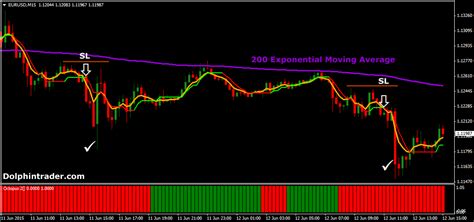
Moving averages (SMA and EMA) are staples in any trader's toolkit. They help smooth out price data over a specified period, allowing traders to focus on the broader market trend, rather than getting lost in short-term fluctuations.
Simple Moving Average (SMA): The SMA is calculated by averaging a set of prices over a specific time period, like the last 10, 50, or 200 trading days. It’s one of the easiest indicators to understand, making it ideal for beginners. However, it’s slower to react to sudden price changes because it treats all data points equally.
Exponential Moving Average (EMA): Unlike the SMA, the EMA gives more weight to recent prices, which makes it more sensitive to new price movements. This is particularly useful for traders who want quicker signals, especially in fast-moving markets.
Crossover: The crossover strategy uses the interaction between short-term and long-term moving averages to identify potential buy or sell signals. When a short-term moving average (like the 10-period EMA) crosses above a longer-term moving average (like the 50-period SMA), it signals a bullish trend. Conversely, when the short-term average crosses below the long-term one, it signals a bearish trend. This simple yet effective technique helps traders stay in tune with the market's direction.
Moving averages are key for determining the trend of an asset, whether it's bullish, bearish, or sideways, which makes them one of the most reliable indicators for long-term traders.
RSI and MACD for Spotting Trends
Both RSI (Relative Strength Index) and MACD (Moving Average Convergence Divergence) are oscillators that help traders measure the momentum and strength of trends. These indicators are particularly useful when it comes to spotting potential trend reversals and entry/exit points.
RSI: The RSI is a momentum oscillator that measures the speed and change of price movements. It ranges from 0 to 100 and typically uses a threshold of 70 for overbought conditions and 30 for oversold conditions. A reading above 70 suggests that an asset might be overbought, and a pullback could be coming. A reading below 30 indicates oversold conditions, where a reversal to the upside might be imminent. Traders look for these extreme levels to make their move, whether they’re buying in an oversold market or selling in an overbought one.
MACD: The MACD is another momentum oscillator, but it combines moving averages to show the strength of a trend. It includes the MACD line (which is the difference between the 12-day and 26-day exponential moving averages), the signal line (which is a 9-day EMA of the MACD line), and the histogram (which shows the difference between the MACD line and the signal line). When the MACD line crosses above the signal line, it's a bullish signal; when it crosses below, it’s bearish.
Divergence: Divergence occurs when the price action moves in the opposite direction of an indicator. For example, if the price of an asset is making higher highs, but the RSI is making lower highs, it’s a sign of weakening momentum, and a potential reversal could be near. Divergence is one of the most powerful tools to predict market shifts, especially when combined with other indicators.
When used together, RSI and MACD provide a complete picture of market momentum and can alert traders to potential reversals, helping them make more informed decisions about entering or exiting trades.
These two indicators, Moving Averages and RSI/MACD, are incredibly useful for identifying market trends, monitoring momentum, and spotting key entry and exit points. By mastering them, traders can improve their chances of success in the fast-paced world of Forex day trading.
Risk Management Essentials
Risk management is a crucial part of Forex day trading. By managing risk effectively, you safeguard your capital and set yourself up for consistent long-term success. Proper risk management ensures that you minimize potential losses, protect your gains, and optimize profitability.
The Importance of Position Sizing
Position sizing refers to how much capital you allocate to each trade, and it's one of the most important aspects of risk management. It determines the impact of a losing trade on your account balance. If you risk too much on each trade, you can wipe out your account quickly. A good rule of thumb is to risk only 1-2% of your account balance on each trade.
By adjusting position size based on your risk tolerance and account balance, you protect your equity while maximizing profit potential. Keep in mind that your position size should match your trading strategy, whether you're trading short-term or long-term.
Example:
| Account Balance | Risk Percentage | Risk per Trade | Position Size (Lot Size) |
|---|---|---|---|
| $10,000 | 1% | $100 | 0.1 Lot |
| $10,000 | 2% | $200 | 0.2 Lot |
Setting Stop-Loss Orders to Limit Losses
Stop-loss orders are essential for limiting your losses and protecting your account from big downturns. A stop-loss automatically closes your trade if the market moves against you by a certain amount, preventing further losses. There are different types of stop-loss orders, such as market orders and trailing stops, each offering unique advantages.
Setting your stop-loss level appropriately is vital. If it’s too tight, you risk being stopped out of trades too early. If it’s too loose, you might lose more than you’re willing to. Think of a stop-loss as a "safety net"—it ensures you don’t fall too far if the market swings in the wrong direction.
Example: If you enter a trade at 1.1000 and set a stop-loss at 1.0950, you’ve defined a loss of 50 pips. A 100-pip stop-loss would allow a larger price move before the trade is closed, but that also increases your risk.
Understanding Risk-to-Reward Ratios
The risk-to-reward (R/R) ratio helps you evaluate whether a trade is worth the risk. A ratio of 1:2 means that for every dollar you risk, you’re aiming to make two dollars. The key here is that you want the reward to outweigh the risk. If you risk too much for too little reward, you might win trades, but the profits won’t cover your losses in the long run.
An ideal R/R ratio is at least 1:2. If your R/R is lower, you’ll need to win more than half of your trades just to break even. Higher R/R ratios can be riskier, but they generally offer a more favorable long-term return if your strategy is sound.
Example:
Risk: $100
Reward Target: $200
R/R Ratio: 1:2
This setup ensures that even if you lose several trades in a row, your profits from winning trades will compensate for those losses.
Diversifying Your Trades for Stability
Diversification is a common practice in investment portfolios, and it applies just as much in Forex trading. By diversifying your trades—using different currency pairs, market sectors, or instruments—you reduce the impact of a single trade gone wrong. Diversification doesn’t guarantee profit, but it helps spread out the risk and prevents significant losses from taking down your entire account.
For example, if you only trade EUR/USD and the market suddenly moves against you, all your positions are vulnerable. However, if you also trade GBP/USD and USD/JPY, a loss in one pair could be offset by a gain in another.
How to Avoid Overleveraging
Overleveraging occurs when you use too much leverage in relation to your account size, creating excessive risk exposure. Leverage allows you to control larger positions with less capital, but it also amplifies your potential losses. For example, using 100:1 leverage means that for every $1 you put down, you can control $100 worth of currency. If the trade goes against you, your losses can quickly exceed your initial investment.
To avoid overleveraging, it’s crucial to calculate your position size based on your risk tolerance and account balance. Many traders recommend using leverage of no more than 10:1 or 20:1 to maintain safe levels of risk exposure. Trading with high leverage might seem appealing, but it can lead to margin calls and wipe out your account if the market moves against you.
Example:
Account Balance: $5,000
Leverage Used: 100:1
Position Size: $500,000
If the trade moves 1% against you, your loss would be $5,000—wiping out your entire account. It’s always better to be conservative with leverage.
By following these key risk management principles, you ensure that you're trading with control, protecting your capital, and positioning yourself for long-term success. Proper risk management isn't just about avoiding losses—it's about setting yourself up to thrive in the face of inevitable market fluctuations.
Building a Daily Routine
A solid daily routine is key to staying on track as a Forex trader. This cluster dives into the power of structure, from setting goals in the morning to analyzing the market before jumping in, to reflecting after the day’s trades. Consistency is what will make the difference in the long run. Let's break it down:
Setting Clear Trading Goals Each Morning
To start your trading day right, set clear and achievable goals. Think of it as a roadmap. What do you want to accomplish today? Break your larger objectives into manageable targets. This helps you stay focused and motivated while maintaining discipline. Establishing daily targets within your trading plan helps you assess your performance at the end of the day. Consistency and clear objectives will give you a sense of control and purpose.
How to Analyze the Market Before Trading
Before you dive into any trades, you need to analyze the market. Take a moment to study both technical and fundamental data. Look at chart patterns, trading indicators, and check for any economic news or data that could impact market trends. By conducting a thorough pre-market analysis, you're setting yourself up with the right information to make educated decisions. It’s like reading a map before setting off—you wouldn’t want to guess where you’re headed!
The Importance of Post-Trade Reflection
After a day of trading, don’t just close your laptop and walk away. Spend some time reflecting. Keep a trading journal and review your trades. What worked? What didn’t? Take note of your emotions during the trades, and learn from mistakes. This reflection is essential for refining your strategy and improving over time. Remember, successful traders don’t just rely on what’s in their heads—they track, learn, and adjust constantly.
This cluster shows how small but effective habits can create a consistent and disciplined approach to Forex day trading. By following these steps—setting goals, analyzing the market, and reflecting on trades—you build a routine that keeps you sharp and prepared for success.
Spotting High-Probability Trades
Finding high-probability trades can make all the difference between consistent profits and losses.
How to Spot Breakouts with Confidence
Breakouts are powerful, but to enter one confidently, you need to look for clear signs. Focus on chart patterns like triangles, flags, or rectangles, which often indicate potential breakouts. Once you spot a pattern, confirm the breakout by looking for a surge in volume—this signals that the price is likely to keep moving in the breakout direction. The key levels to focus on are trendlines and resistance points. If momentum is strong, you're likely on the right track, but make sure you don’t jump the gun. Wait for confirmation, which can be the closing of a candlestick above resistance or a breakout from a consolidation area.
Using Price Action to Predict Movements
Price action is the raw, unfiltered data of the market. By paying attention to candlestick patterns, you can get a solid read on what’s likely to happen next. Candlestick formations like engulfing patterns, pin bars, or doji candles give you insights into market sentiment. Combine this with chart patterns and trendlines to understand the broader market structure. Support and resistance zones are critical here—they represent areas where price is likely to reverse. The more times a level is tested without being broken, the stronger it becomes. Price action allows you to predict market movements by recognizing patterns that have repeated themselves over time.
Identifying Support and Resistance Levels
Support and resistance levels are a trader’s best friends. These levels represent price points where the market has historically struggled to move beyond. Support is where the price tends to bounce upwards, while resistance is where the price tends to hit a ceiling and reverse. By analyzing horizontal levels, pivot points, and Fibonacci retracements, you can identify these key areas. A breakout from these zones often signals the potential for strong trends. Look for multiple touches at these levels; the more times price has tested these areas without breaking through, the stronger the level. Support and resistance zones are like markers on the map, guiding you to profitable trades.
| Support and Resistance Tools | Purpose | When to Use |
|---|---|---|
| Horizontal Levels | Identifying key price levels | When price consolidates near them |
| Pivot Points | Calculating turning points | To spot potential reversals |
| Fibonacci Retracement | Spotting pullback areas | During price retracements in trends |
When to Enter and Exit Trades for Maximum Profit
Knowing when to enter and exit a trade is a skill that can’t be overlooked. Start with a clear entry point, defined by your strategy and confirmed by technical indicators like moving averages or RSI. Once you’re in a trade, it’s all about managing risk—set a stop loss to protect yourself if the trade goes against you. Equally important is setting a take profit level so you know when to exit for maximum profit. Position sizing is crucial—don’t risk more than you’re willing to lose on any one trade. Finally, market timing plays a huge role in maximizing profits. Be mindful of major news events or market open/close times that can lead to increased volatility. Make sure your exit strategy is just as well planned as your entry.
Trading Psychology: Staying Calm
In the fast-paced world of Forex day trading, your mind is your most powerful tool. Let’s explore how managing your emotions and making rational decisions can drive your success.
Dealing with the Emotional Rollercoaster of Trading
Trading isn’t just about analyzing charts—it’s about managing your trading psychology. From the exhilaration of a win to the frustration of a loss, emotions can cloud judgment and lead to poor decisions. Many traders face the challenge of fear and greed, which can drive them to make impulsive decisions that don't align with their trading plan.
Understanding investor behavior is key: the trading mindset plays a huge role in whether a trader sticks to their strategy or deviates from it. Emotional control is vital when market volatility kicks in. With a solid approach to risk management, you can minimize the impact of emotions on your trading. This means building a disciplined approach where emotional intelligence helps you stay grounded and avoid rash decisions.
Key Factors for Emotional Control in Trading:
| Factor | Impact on Trading Decision | Solution |
|---|---|---|
| Fear | Can lead to missed opportunities | Build confidence through preparation |
| Greed | Causes overtrading or chasing losses | Stick to your risk rules and limits |
| Stress | Reduces decision-making ability | Practice relaxation techniques, like deep breathing |
| Euphoria | Leads to overconfidence, risky trades | Stick to your strategy, even in winning streaks |
How to Avoid Impulse Decisions During Volatility
Market volatility is like a rollercoaster—one minute it’s up, and the next it’s down. In the middle of this, impulse trading can feel like a natural response. However, jumping into trades without a solid plan often leads to bad decisions. That’s why it’s crucial to stick to your trading strategy, even when emotions are running high.
Key tools like stop-loss orders and position sizing can act as safety nets when the market goes wild, giving you the confidence to stick with your plan. Instead of reacting impulsively, focus on risk assessment and use your trading strategy to guide you through the storm. Volatility management is all about staying rational and not being swept away by the noise of the market. Trading rules are there to keep you on track, especially when emotions start to take over.
Tips to Avoid Impulse Trading in Volatile Markets:
Stick to your trading plan – Plan your trades, and trade your plan. No exceptions.
Use stop-loss orders – Protect yourself from larger-than-expected losses by setting stop-losses in advance.
Monitor volatility – If the market is highly volatile, consider reducing your position size to manage risk better.
Maintain emotional discipline – Take breaks and avoid trading during stressful moments.
In this cluster, we’ve covered the two sides of trading psychology: emotional control and avoiding impulsive decisions. These mental strategies are just as important as technical skills when navigating Forex day trading. Staying calm and making rational decisions, especially during times of market chaos, can keep you on the path to long-term success.
Conclusion
To succeed in Forex day trading, it’s all about sticking to your plan. The markets can be unpredictable, but consistent strategies and solid risk management will keep you on track. As Warren Buffet once said, "The stock market is a device for transferring money from the impatient to the patient."
Stay disciplined, manage your emotions, and keep learning. With time, you’ll build a routine that turns small efforts into big wins. Keep at it, and success will follow.
Forex day trading is the practice of buying and selling currencies within the same trading day. The goal is to profit from short-term price movements in the forex market. Traders close all positions before the end of the day to avoid overnight risks.
Some popular indicators for day trading include:
These indicators can provide insights into market momentum, trend strength, and potential reversal points.
Moving Averages: Helps smooth out price action and identify trends.
RSI (Relative Strength Index): Signals overbought or oversold conditions.
MACD (Moving Average Convergence Divergence): Used for spotting potential buy or sell signals.
The amount of capital needed varies depending on the trading strategy and leverage used. However, many traders recommend starting with at least $1,000 to $2,000 for a more manageable risk. Always ensure you have enough capital to handle potential losses without going overboard.
Yes, but it’s not easy. Success requires a solid strategy, proper risk management, and psychological discipline. Most successful Forex traders work consistently and remain patient. It’s not about making quick money but about achieving consistent, steady profits over time.
Day Trading: Positions are opened and closed within a single day.
Swing Trading: Trades last from a few days to weeks, taking advantage of short-term market moves.
Day trading focuses on small, frequent profits, while swing trading involves holding positions longer to capture larger trends.
Staying emotionally neutral allows traders to think clearly and stick to their trading rules, avoiding costly mistakes.
Emotional Control: Avoid impulsive decisions driven by greed or fear.
Discipline: Stick to your strategy and plan, even during market volatility.
Patience: Wait for the right setups and don’t rush trades.
Risk management is critical for longevity in Forex trading. Here are a few ways to minimize risk:
With these strategies in place, you can protect your capital while aiming for steady profits.
Use Stop-Loss Orders: Limit losses by setting a predefined exit point.
Position Sizing: Don’t risk more than 1-2% of your capital on each trade.
Leverage Management: Avoid using too much leverage, as it can amplify losses.
Yes, but it can be challenging. With a small account, it's essential to be more conservative, focusing on lower-risk trades. You might also need to use leverage cautiously, as it can magnify both profits and losses. Always have a solid plan to manage risk.
A successful Forex day trader needs:
These traits form the foundation for making consistent profits in the competitive world of Forex day trading.
Patience: Wait for high-probability setups.
Discipline: Stick to your strategy, even when tempted to deviate.
Emotional Control: Avoid reacting emotionally to losses or wins.
Adaptability: Be ready to adjust strategies based on market conditions.