


Table of contents
The Forex market never sleeps. In fact, Forex Market Hours operate 24 hours a day, five days a week, across major financial hubs worldwide. For traders, this sounds like a dream come true—endless opportunities to trade. But here’s the catch: not all hours are created equal. Some periods buzz with activity, while others feel like a ghost town. Knowing when to trade can mean the difference between a big win and a missed opportunity.
According to trading experts at Investopedia, "Liquidity and volatility vary significantly across different trading sessions." In other words, if you’re placing trades without a clue about timing, you might be setting yourself up for disappointment. Understanding the dynamics of market hours can sharpen your strategy and help you stay ahead of the game.
Timing is everything. From the bustling overlap of the London and New York sessions to the quieter, methodical pace of the Sydney session, each time zone has its own vibe. In this guide, we’ll break down how to navigate these windows of opportunity, spot the best trading times, and dodge those liquidity traps. Let’s get you trading smarter, not harder.
1.Understanding Forex Market Hours
Forex Market Hours define when traders can participate in the global currency exchange. The decentralized nature of Forex allows for continuous trading across multiple global markets.
Definition of Forex Market Hours
Forex Market Hours refer to the specific times when currency trading is actively conducted across global financial centers. Unlike traditional markets, Forex operates 24 hours a day, thanks to overlapping Trading Hours in different Time Zones. The major sessions include the London Session, New York Session, Tokyo Session, and Sydney Session, each contributing to the global liquidity and volatility of the Foreign Exchange market.
Key Facts:
Forex is open 24 hours from Sunday 5 PM EST to Friday 5 PM EST.
Trading begins with the Sydney Session and rolls through global time zones.
Each market has its own Opening Times and Closing Times, influencing trading strategies.
Key Features of Major Trading Sessions
The four major Trading Sessions—London, New York, Tokyo, and Sydney—each bring unique characteristics to the market:
London Session:
Peak volatility and highest liquidity.
Often overlaps with the New York Session.
New York Session:
Strong price movements; ideal for major currency pairs.
Influenced heavily by US economic reports.
Tokyo Session:
Focus on JPY pairs; steady, low-volatility movements.
First major market to open after the weekend.
Sydney Session:
Kicks off the Forex Day, with modest trading volume.
Important for early positioning in the market.
24-Hour Trading Cycle Explained
Forex is unique in its 24-Hour Trading cycle, driven by Global Sessions seamlessly transitioning from one to the next. This Around-the-clock availability allows for continuous trading and analysis, which is ideal for diverse trading strategies, including scalping, day trading, and swing trading.
Why It Matters:
Traders can react instantly to market news, regardless of time.
Session Overlaps provide higher liquidity and tighter spreads.
Opportunities arise at all hours due to the decentralized nature of Currency Trading.
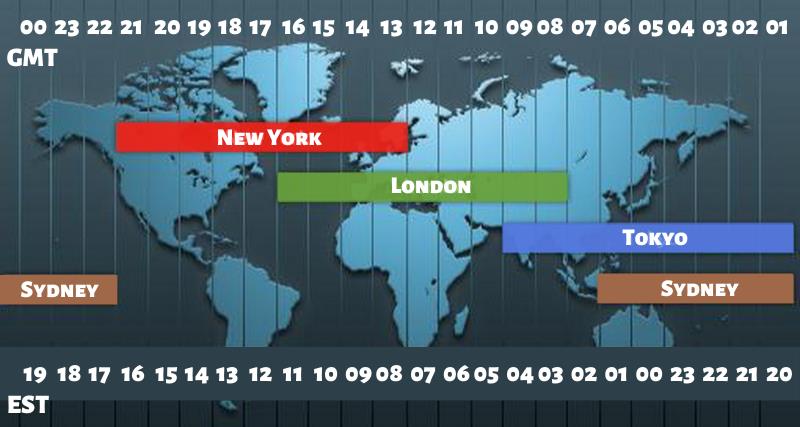
| Session | Opening Time (GMT) | Closing Time (GMT) |
|---|---|---|
| Sydney | 10:00 PM | 7:00 AM |
| Tokyo | 12:00 AM | 9:00 AM |
| London | 8:00 AM | 5:00 PM |
| New York | 1:00 PM | 10:00 PM |
The 24-Hour Trading Cycle ensures that there’s always an active market, providing unparalleled opportunities for traders to engage in Foreign Exchange.
2.Global Forex Market Time Zones
Forex market time zones influence trading opportunities and volatility. Understanding each session’s unique characteristics helps traders make informed decisions.
London Trading Session Characteristics
The London session is one of the most influential periods in the Forex market, known for high volatility and deep liquidity. It opens at 8:00 AM GMT and overlaps with the New York session, creating a surge in trading volume.
Traders often focus on GBP pairs (like GBP/USD) and EUR pairs (such as EUR/GBP) due to the dominance of European equities. The session’s impact is especially evident during major economic news releases, which can lead to rapid price movements.
Key Features:
High Volatility: Most active between 8:00 AM - 12:00 PM GMT.
Deep Liquidity: Especially during the overlap with New York.
Active Pairs: GBP/USD, EUR/GBP, EUR/USD.
News Impact: European economic data and political news.
New York Trading Session Overview
The New York session kicks off at 1:00 PM GMT, marked by the opening of Wall Street. Known for robust trading volume, it is dominated by the US dollar (USD) and driven by economic data releases from the Federal Reserve.
Traders monitor movements on major indices like the NYSE and NASDAQ. During overlaps with London, trading intensifies, with increased activity on USD pairs.
Expert Insight:
"The New York session sets the tone for the afternoon, with significant movements tied to Wall Street's performance." — John Baker, Senior Forex Analyst
Tokyo and Asian Market Dynamics
The Tokyo session is the starting point for Asian markets, opening at 12:00 AM GMT. Although characterized by lower liquidity, it significantly impacts JPY pairs, especially AUD/JPY. The Bank of Japan’s announcements can create volatility, and the Nikkei 225 index often sets the mood.
Traders looking to capture early liquidity in the Asian equities market focus on pairs like USD/JPY and AUD/USD. Activity is relatively moderate compared to the London or New York sessions.
3 Key Aspects:
Session Open: 12:00 AM GMT.
Major Pairs: USD/JPY, AUD/JPY, EUR/JPY.
Market Influences: Bank of Japan policies, regional economic data.
Sydney Session: The Market Opener
The Sydney session opens the Forex market week at 10:00 PM GMT, marking the start of trading in the Pacific region. While known for lower liquidity, it serves as a warm-up for the Tokyo session.
Focus is typically on commodity currencies like the Australian dollar (AUD) and New Zealand dollar (NZD). Economic news from the Reserve Bank of Australia (RBA) can stir the market.
| Session | Time (GMT) | Currency Focus |
|---|---|---|
| Sydney | 10:00 PM | AUD, NZD |
| Tokyo | 12:00 AM | JPY, AUD |
| London | 8:00 AM | GBP, EUR |
| New York | 1:00 PM | USD, CAD |
This table highlights the sequential start of major sessions, helping traders align strategies.
Grasping the characteristics of each Forex market time zone enables traders to optimize strategies based on liquidity and volatility, leveraging regional influences effectively.
3.Best Trading Times for Forex Market
Knowing the best trading times is crucial for maximizing profits in the Forex market. Timing can make or break your trading strategy.
Peak Liquidity Windows for Forex:
The peak liquidity windows in the Forex market occur during session overlaps. The most significant overlap is between the London and New York sessions, where trading volume surges and liquidity is at its highest. This is because both GBP pairs and US dollar pairs are actively traded.
Here are the most liquid trading windows:
London-New York Overlap:
Time: 8 AM to 12 PM (EST)
Key Pairs: GBP/USD, EUR/USD
Characteristics: High volatility, deep liquidity, strong market moves
Tokyo-London Overlap:
Time: 3 AM to 4 AM (EST)
Key Pairs: GBP/JPY, EUR/JPY
Characteristics: Moderate activity, significant price movements
Expert Insight:
According to currency strategist John Smith, "Trading during overlap hours not only boosts liquidity but also offers opportunities to catch big market moves, especially with major pairs."
Most Volatile Times to Trade:
High volatility in the Forex market often coincides with economic news releases and market openings. The London session typically sees the most volatility, driven by the release of European economic data.
London Session:
Start: 3 AM (EST)
Features: Major movements in GBP pairs and EUR pairs
New York Session:
Start: 8 AM (EST)
Influenced by: US economic reports, Federal Reserve statements
Major pairs: EUR/USD, USD/JPY
Tokyo Session:
Start: 7 PM (EST)
Active pairs: USD/JPY, AUD/JPY
Volatility drivers: Bank of Japan policies, regional news
Fun Fact:
Traders often say, "If you're trading Forex, make sure to be awake during the London session – that's where the action is!"
4.Overlapping Forex Market Sessions: A Trader’s Goldmine
When it comes to the world of Forex trading, there is one term that gets every trader's pulse racing: session overlap. This magical window, when two major financial hubs are active simultaneously, is where market liquidity and volatility explode. Imagine walking into Times Square on New Year's Eve – the energy is electric, the crowd is massive, and every move matters. This is what overlapping sessions are like for the Forex market.
The Key Overlaps:
London and New York Session Overlap (8 AM to 12 PM EST): This is the heavyweight match of the trading world. Why? Because the London session, which accounts for nearly 35% of global trading volume, converges with New York, contributing 17%. During these four hours, popular currency pairs like EUR/USD and GBP/USD see massive movement. Prices swing, spreads tighten, and opportunities multiply. As one trader once put it, "If you are not trading the London-New York overlap, you are leaving money on the table."
Tokyo and London Session Overlap (3 AM to 4 AM EST): Though short, this overlap is critical for JPY-based pairs. Traders looking for volatility in the GBP/JPY or EUR/JPY often zero in on this hour. It is like catching the wave just before it crests – quick, powerful, and filled with opportunity.
Why Does Overlap Matter?
It all comes down to liquidity and trading volume. More traders in the market mean tighter spreads, faster execution, and less slippage. This is where major market moves are made. "You can practically feel the market breathing," says an experienced Forex analyst. "When London and New York are both online, the charts speak louder – breakouts are cleaner, trends are sharper, and reversals are swift."
During these overlaps, economic news from Europe and the United States often gets released, triggering wild swings. The Non-Farm Payroll (NFP) report, ECB rate decisions, and Fed announcements all fall into this window, making it the most action-packed period of the trading day.
Trading Opportunities
For traders, overlapping sessions represent the pinnacle of market activity. Scalpers thrive on the minute-to-minute volatility, while swing traders look for trend confirmations that tend to hold strong during these hours. "If you are going to trade Forex, your eyes should be glued to the screen during these overlaps," one veteran trader advised during a Bloomberg interview.
The beauty of overlapping sessions is their predictability. Unlike news-driven spikes, these hours are consistent. You know when they are coming, you know which pairs will be hot, and you can prepare your strategy accordingly.
Trading the overlaps is not just about catching big moves – it is about timing, patience, and precision. As the old saying goes, "Trade smart, not hard," and overlapping Forex market sessions are the perfect stage for smart traders to shine.
5.Forex Market Hours and Trading Strategies
Mastering Forex trading requires the right strategies tailored to specific market hours. Here’s how different methods thrive during varying session dynamics.
Scalping Strategies During High Volatility
Scalping is all about grabbing quick profits during moments of High Volatility. In Forex, volatility spikes during major news events and market overlaps—like when the London and New York sessions coincide. The goal is to exploit rapid price movements in short timeframes using tick charts and market orders.
Key Elements of Effective Scalping:
Price Action Analysis to catch micro-trends
Ultra-fast Order Execution to capitalize on tiny price gaps
Tight Bid-Ask Spreads to minimize transaction costs
Sharp Risk Management for controlled losses
This strategy is not for the faint-hearted; it demands sharp reflexes and ironclad discipline.
Swing Trading in Low-Volume Sessions
When the market slows down during Low Volume Sessions like the Sydney and Tokyo markets, Swing Trading shines. Traders hold positions for a few days to weeks, banking on chart patterns and technical analysis to predict swings.
Top Techniques for Swing Trading:
Spotting Support and Resistance zones to define entry and exit points.
Using Trend Following to ride steady price movements.
Placing Stop-Loss Orders to protect against unexpected shifts.
Setting Profit Targets for calculated exits.
Low-volume markets offer smoother price action, ideal for methodical, less stressful trading.
Day Trading Across Different Time Zones
Day trading in Forex is a global affair, thriving on market overlaps between key sessions. Whether it’s the London-New York overlap or the Tokyo-London bridge, liquidity surges and spreads tighten.
To make the most of these timeframes:
Monitor Economic Calendars for impactful news releases.
Trade during Session Volatility for optimal movement.
Choose a Broker with low spreads for better cost efficiency.
Smart day traders know: the right time zone can make all the difference.
6.Holiday Impacts on Forex Market Hours
Forex market hours can be significantly impacted by holidays, leading to reduced trading activity and unexpected market behavior. Understanding these impacts is crucial for effective trading.
Major Holidays That Affect Liquidity
During major holidays, market liquidity often takes a hit, with trading volume dropping sharply. This slowdown is most evident during global celebrations or significant bank holidays. Financial markets in countries like the United States, United Kingdom, Japan, and Australia are particularly influential due to their substantial trading activity.
Key Holidays to Watch:
Christmas and New Year: Global slowdown in trading volume.
Thanksgiving (USA): Reduced market activity, especially in the USD pairs.
Golden Week (Japan): Noticeable liquidity drop in JPY-related pairs.
Easter (Europe): Lower liquidity, affecting EUR pairs.
Why Holidays Matter:
Reduced trading volume increases market volatility.
Lack of liquidity can lead to wider spreads and unpredictable asset prices.
Investor behavior becomes cautious, with less order execution.
Expert Insight:
"Trading during holiday periods requires extra caution. Liquidity dries up, and even minor news can cause major price swings." - John Mathews, Forex Analyst
Adjusting Strategies for Holiday Closures
When the Forex market slows down during holidays, it’s vital to adjust your trading strategies to avoid unnecessary risks. Liquidity planning becomes essential, as order execution can be unpredictable.
Pre-Holiday Positioning: Close high-risk positions to mitigate exposure.
Post-Holiday Reassessment: Review market movements before re-entering.
Order Execution Tips: Use limit orders to control slippage during low liquidity.
Risk Management: Reduce leverage to cushion against volatile swings.
Quick Tips:
Check the economic calendar for holiday dates.
Keep an eye on bank holiday schedules for major trading hubs.
Monitor market closures to plan your portfolio adjustments efficiently.
| Holiday | Region | Liquidity Impact (%) |
|---|---|---|
| Christmas | Global | 50 - 70 |
| Thanksgiving | USA | 40 - 60 |
| Golden Week | Japan | 30 - 50 |
| Easter | Europe | 35 - 55 |
Being aware of holiday impacts helps traders manage portfolio risks efficiently, keeping their strategy adaptable to changing market conditions.
7.Building a Forex Trading Schedule
Creating a Forex trading schedule that aligns with market activity helps maximize opportunities and minimize risks. Let’s explore how to plan around high-volume sessions, avoid low-liquidity traps, set alerts for market openings, and adapt to Daylight Saving Time changes.
Planning Around High-Volume Sessions
During high-volume sessions, trading activity, volatility, and liquidity peak. Knowing when these sessions occur helps you develop a robust trading strategy.
Peak Hours: The most active trading hours occur when major markets overlap, such as London-New York (8 AM to 12 PM EST).
Order Execution: High volume improves order execution speed, reducing slippage.
Risk Management: Prepare for sudden price moves with strategic stop-loss placements.
Pro Tip: Focus on pairs like EUR/USD or GBP/USD during peak sessions to leverage high liquidity.
Avoiding Low-Liquidity Traps
Low liquidity can lead to slippage and wide bid-ask spreads, putting your capital at risk. It’s essential to recognize and avoid these traps.
Identify Low-Volume Periods: Sessions like Sydney and pre-Tokyo can exhibit poor market depth.
Watch for Price Gaps: Low liquidity increases the chance of price gaps, especially during news releases.
Trade Liquid Pairs: Stick to major pairs to reduce the risk of illiquid assets.
Slang Tip: Don’t get caught swimming in the shallow end – trade where the volume’s at!
Setting Alerts for Market Openings
Setting timely alerts helps you capitalize on market opening movements.
Exchange Notifications: Set up alerts for major market openings, like the London and New York sessions.
Price Movement Tracking: Configure alerts for significant price shifts at session start.
Reminder Systems: Use apps to receive notifications just before opening hours.
| Alert Type | Market Openings | Recommended Tool |
|---|---|---|
| Session Start | London, New York | MetaTrader Alerts |
| Price Movement | Major Currency Pairs | TradingView Signals |
| News Impact | Economic Announcements | Investing.com Alerts |
Adapting to Daylight Saving Time Changes
DST can mess with your trading schedule, so it’s crucial to stay in sync.
Adjust Your Clock: Keep an eye on changes in major trading hubs like New York and London.
Synchronize Your Calendar: Update your trading calendar when DST shifts occur.
Stay Informed: Bookmark resources that list DST adjustments for global markets.
Expert Quote:
"Trading during DST transitions can lead to unexpected volatility. Always double-check your time zone settings." — Mark Hamilton, Forex Analyst.
Building an efficient Forex trading schedule involves timing your strategies around high-volume sessions, avoiding liquidity traps, setting strategic alerts, and accounting for DST changes. Stay agile and proactive to optimize your trading outcomes.
Conclusion: Timing Is Everything in Forex Trading
Mastering Forex Market Hours isn’t just about knowing when the clock ticks—it’s about understanding when the market really breathes. Catching those high-energy overlap sessions is like surfing the perfect wave—you ride the momentum instead of fighting it. As the saying goes, "The early bird catches the worm," but in Forex, it’s about catching the right market.
As veteran traders often say, "Liquidity is king." Knowing the prime hours and planning around holidays can be the difference between riding the trend or missing the boat. Align your strategy with the clock, and you’ll find your trades landing with more punch and less guesswork.
Forex Market Hours refer to the specific times during which participants in the global Forex market can buy, sell, exchange, and speculate on currencies. The market operates 24 hours a day, five days a week, due to the global nature of currency trading.
The Forex market is open 24 hours because it spans multiple global time zones, including major financial centers such as:These overlapping sessions enable continuous trading and liquidity.
Sydney (Opens 10 PM GMT, Closes 7 AM GMT)
Tokyo (Opens 12 AM GMT, Closes 9 AM GMT)
London (Opens 8 AM GMT, Closes 5 PM GMT)
New York (Opens 1 PM GMT, Closes 10 PM GMT)
The most volatile Forex Market Hours usually occur during market overlaps, particularly:These periods experience high liquidity and significant price movements, ideal for day trading.
London/New York Overlap (8 AM to 12 PM EST)
London/Tokyo Overlap (3 AM to 4 AM EST)
Yes, Forex Market Hours shift slightly during Daylight Saving Time (DST). This is because financial centers like London and New York adjust their local times, affecting global trading schedules. Traders need to be aware of these shifts to avoid trading outside of optimal hours.
During major holidays in financial centers, Forex market activity can slow down or even pause. For example:Traders should always check global holiday schedules to plan effectively.
Christmas Day and New Year's Day see very low liquidity.
National holidays in countries like the US (e.g., Independence Day) can also impact trading volume.
Typically, the middle of the week (Tuesday, Wednesday, and Thursday) is the best time to trade due to:Mondays and Fridays are often slower, with less predictable movements.
Higher liquidity and volume
More significant price movements
More market participants
No, the Forex market officially closes on Friday at 10 PM GMT and reopens on Sunday at 10 PM GMT. However, certain cryptocurrency pairs that trade against fiat currencies may still be available on some platforms during the weekend.