


Navigating the world of forex trading automation raises an important question: Are forex trading bots legal? As more traders turn to forex trading bots to execute trades with precision and speed, concerns over their regulatory status continue to grow. These automated systems operate based on pre-programmed algorithms, analyzing market conditions and executing trades without human intervention. However, the legality of using forex trading bots varies across different jurisdictions, with some countries imposing strict regulations while others offer more leniency. Understanding the legal framework surrounding these bots is crucial for traders who want to avoid potential compliance risks while maximizing the efficiency of algorithmic trading.
Forex Trading Bot Legality by Region
The legality of forex trading bots varies significantly across jurisdictions, as regulators aim to prevent market manipulation while allowing algorithmic trading innovations. Traders must navigate complex regulatory frameworks that differ between the U.S., European Union, and Asia-Pacific regions. Understanding these laws is essential for compliance and risk management.
Forex Trading Bot Regulations in the U.S.
(Format: Bullet Points)
Commodity Futures Trading Commission (CFTC): The CFTC oversees forex markets and enforces strict rules against fraudulent algorithmic trading practices.
National Futures Association (NFA) Regulations:
Requires all automated trading software to be used through registered brokers.
Imposes compliance checks on forex brokers offering bot trading.
SEC Involvement in Algorithmic Trading:
Regulates high-frequency trading (HFT) and its impact on market volatility.
Monitors automated strategies like trend following and arbitrage bots.
Broker Compliance & Restrictions:
Some U.S.-regulated brokers prohibit forex bots due to risk management concerns.
Strict anti-money laundering (AML) policies apply to automated forex trading.
Forex Trading Bot Legality in the European Union
In the European Union, MiFID II (Markets in Financial Instruments Directive II) governs automated trading, imposing stringent compliance requirements. The European Securities and Markets Authority (ESMA) regulates algorithmic trading to prevent market manipulation.
Different EU countries implement MiFID II rules with varying levels of strictness. Germany and France have stricter forex bot controls due to concerns over high-frequency trading, while Malta and Cyprus offer a more flexible approach under regulated forex brokers.
ESMA's intervention has limited leverage and tightened requirements for automated trading strategies like scalping and news trading bots. Traders must ensure their forex trading bot complies with market abuse regulations to avoid legal consequences.
Asia-Pacific: Forex Trading Bots Under Scrutiny
1.Japan (Financial Services Agency - FSA)
The FSA strictly regulates forex trading bots to prevent market manipulation.
Algorithmic trading, including carry trade bots, must follow stringent reporting guidelines.
2.Singapore (Monetary Authority of Singapore - MAS)
Encourages algorithmic trading but requires brokers to monitor forex bots for potential abuse.
Forex brokers must maintain adequate risk management frameworks for automated trading.
3.China’s Ban on Retail Forex Trading Bots
China prohibits retail traders from using forex bots, though institutional high-frequency trading is allowed.
The Chinese government restricts offshore brokers offering automated forex trading to domestic traders.
4.Australia’s ASIC Guidelines on Algorithmic Trading
The Australian Securities and Investments Commission (ASIC) enforces rules on bot trading risk management.
Requires stop loss and position sizing features for risk mitigation.
How Offshore Forex Brokers Handle Trading Bots
While some regions impose strict regulations on forex trading bots, offshore brokers operate under more relaxed conditions. However, they come with higher risks related to security, execution, and fraud.
Comparison of Offshore Brokers and Regulated Brokers for Forex Trading Bots
| Feature | Offshore Brokers | Regulated Brokers (U.S./EU) |
|---|---|---|
| Legal Compliance | Often based in unregulated jurisdictions | Must comply with CFTC, ESMA, ASIC regulations |
| Leverage Limits | Can offer 1:500 or higher | Restricted (e.g., 1:30 in EU under ESMA) |
| Stop Loss Enforcement | Not always required | Mandatory risk management measures |
| Market Conditions Control | May manipulate spreads in volatile markets | Adheres to market stability regulations |
| Broker Reputation | Higher risk of scams and fraud | Established, licensed brokers ensure security |
| Suitability for Algorithmic Trading | Permits forex bots with fewer restrictions | Strict bot trading rules, especially on high-frequency trading |
Traders using offshore brokers for forex bot trading must be cautious, as lack of oversight can lead to issues like slippage, unreliable execution, and hidden fees.
The legality of forex trading bots is highly dependent on regional regulations, making compliance critical for traders. While the U.S. and EU impose strict oversight, offshore brokers offer more flexibility but come with higher risks. Traders must evaluate regulatory frameworks, risk factors, and broker legitimacy before deploying automated trading strategies in volatile forex markets.
Risk Management for Forex Trading Bots
Forex trading bots can execute trades based on market conditions, but poor risk management can lead to severe drawdowns and margin calls.
Stop Loss & Take Profit in Automated Trading
Essential Risk Management Tools
Stop Loss prevents excessive drawdowns by automatically closing losing trades at a set price level.
Take Profit secures profits by closing trades once a predefined target is reached.
Adjustable Stop-Loss Levels:
Fixed Stop-Loss: Remains unchanged regardless of market volatility.
ATR-Based Stop-Loss: Adapts to market volatility using the Average True Range (ATR) indicator.
Trailing Stop: Moves dynamically with price fluctuations, locking in profits.
Strategic Take Profit Placement:
Risk-Reward Ratio Consideration: Typically set at a 1:2 or 1:3 ratio to ensure long-term profitability.
Scalping Bots: Lower take-profit levels due to frequent trading in volatile markets.
Trend Following Bots: Larger take-profit levels to capitalize on strong trends.
Risk-Reward Ratio: The Balancing Act
Finding the Right Ratio for Forex Trading Bots
A well-calibrated risk-reward ratio is essential for sustainable automated trading. It defines the relationship between potential losses and gains, ensuring risk is managed effectively.
Common Risk-Reward Ratios & Application
| Risk-Reward Ratio | Best Used For | Pros | Cons |
|---|---|---|---|
| 1:1 | Scalping Bots, High-Frequency Trading | Fast execution, quick profits | Low reward potential |
| 1:2 | Swing Trading Bots, Breakout Trading | Balanced risk & reward | Requires strong risk management |
| 1:3 | Trend Following Bots, Carry Trade | High reward potential | Lower win rate |
| 1:5+ | News Trading, Long-Term Algo Trading | Maximizes profit in strong trends | Rare high-probability setups |
Higher risk-reward ratios are useful for bots operating in trending markets, whereas lower ratios benefit scalping and range-trading strategies.
A well-optimized risk-reward ratio improves bot efficiency, reducing unnecessary stop-outs in volatile conditions.
Managing Drawdowns in Forex Bots
How to Prevent Capital Erosion
Drawdowns represent the reduction in account equity due to a series of losing trades. If unmanaged, drawdowns can cause margin calls or complete account wipeouts.
Set Maximum Drawdown Limits
Configure a 5-10% max drawdown threshold before halting trading.
Use position sizing to prevent excessive losses.
Diversify Currency Pairs
Avoid overexposure to highly correlated pairs (e.g., EUR/USD & GBP/USD).
Trade a mix of liquid pairs and safe-haven currencies.
Adaptive Risk-Reward Management
Lower risk exposure when facing prolonged sideways markets.
Increase lot sizes when bots detect strong trends using Moving Averages & ADX.
Use Hedging Strategies
Deploy hedging techniques (e.g., using both long and short positions).
Apply carry trade strategies to reduce downside exposure.
Leverage and Margin Call Risks for Bots
Understanding the Dangers of High Leverage
Leverage amplifies both profits and losses in forex bot trading. When improperly managed, it can trigger margin calls, forcing trades to be liquidated.
Leverage Levels & Their Risks:
1:10 - 1:50: Suitable for scalping bots in a liquid market.
1:100 - 1:200: Used in trend-following bots to capitalize on long movements.
1:500+: High risk, often resulting in rapid account depletion.
How to Avoid Margin Calls
Monitor Available Margin: Ensure bots stop trading when the margin falls below 30%.
Adjust Position Sizing: Reduce lot sizes in volatile conditions.
Use a Margin Call Buffer: Keep extra equity in the account to prevent forced liquidation.
Hedging Strategies for Algorithmic Trading
Reducing Risk Exposure in Automated Systems
Hedging strategies allow forex trading bots to mitigate risk by using offsetting trades. Proper hedging can reduce drawdowns and stabilize trading performance.
Types of Hedging for Forex Bots
Direct Hedging
Simultaneously open a long and short position in the same currency pair (e.g., EUR/USD).
Reduces exposure but may increase trading costs.
Pair Trading Hedging
Open opposite positions in correlated currency pairs (e.g., long EUR/USD, short GBP/USD).
Effective in choppy markets where correlation weakens risk exposure.
Option-Based Hedging
Use forex options to hedge against adverse movements.
Common in carry trade and long-term trading strategies.
Volatility-Based Hedging
Bots use ATR and Bollinger Bands to determine optimal hedge positions.
More effective in highly volatile market conditions.
Hedging works best when combined with proper stop-loss and risk-reward strategies.
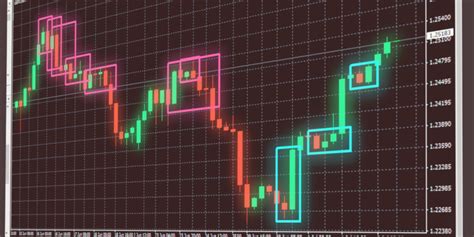
Best Trading Strategies for Forex Bots
Forex trading bots use algorithmic strategies to execute trades across different market conditions. Whether in a trending market or during high volatility, the strategy chosen dictates a bot’s profitability. Below, we explore some of the most effective trading strategies used by forex bots.
Trend Following: Bots Riding the Market Waves
Trend-following bots capitalize on market momentum by identifying strong bull markets and bear markets. These bots often use Moving Averages, ADX, and Ichimoku Cloud to confirm trends before executing trades.
Indicators Used:
Moving Average (SMA & EMA): Identifies long-term trends.
ADX (Average Directional Index): Measures trend strength.
Ichimoku Cloud: Provides trend confirmation and entry/exit points.
Risk Considerations:
False trends in choppy markets can trigger premature exits.
Stop Loss & Take Profit placement is crucial to avoid drawdowns.
Scalping Bots: High-Frequency Trading in Forex
Scalping bots execute multiple trades within seconds to capture small price movements in liquid markets. These bots rely on Bollinger Bands, Stochastic Oscillator, and Volume indicators to identify quick trade opportunities.
Scalping Bot Execution Table
| Factor | Description | Risk Considerations |
|---|---|---|
| Trade Duration | Few seconds to minutes | Susceptible to high spreads & slippage |
| Key Indicators | Bollinger Bands, Stochastic Oscillator, Volume | False signals in volatile markets |
| Market Suitability | Works best in liquid markets | Ineffective in sideways markets |
| Broker Requirements | Low latency execution & tight spreads | High-frequency execution restrictions |
Best for: Traders using brokers with low spreads and fast execution speeds.
Avoid if: Your broker imposes trade execution delays.
Breakout Trading Bots: Entering Market Shifts
Breakout trading bots thrive in volatile markets by detecting price movements beyond key support and resistance levels. These bots use Pivot Points, ATR (Average True Range), and RSI (Relative Strength Index) to confirm breakouts.
Key Features of Breakout Bots:
1. Pivot Points: Identify potential breakout zones in the forex market.
2. ATR: Measures volatility to determine breakout strength.
3. RSI: Confirms whether the breakout has enough momentum.
Common Mistakes:
False breakouts in ranging markets can lead to losses.
Poor stop-loss placement may lead to unnecessary drawdowns.
Mean Reversion: Bots Betting on Market Pullbacks
Some forex bots operate on the assumption that prices eventually return to their mean, especially in sideways markets. These bots use Bollinger Bands, Fibonacci Retracement, and Stochastic Oscillator to identify price reversals.
How Mean Reversion Bots Work:
Detect overbought/oversold conditions using RSI & Stochastic Oscillator.
Identify price extremes with Bollinger Bands.
Place trades when price moves near Fibonacci retracement levels.
Limitations: If a strong trending market develops, mean reversion strategies can fail.
News Trading Bots: Reacting to Economic Events
News trading bots analyze real-time economic data to execute trades based on high-impact news events. These bots use economic calendars and volatility indicators (ATR, Bollinger Bands) to gauge potential price swings.
Steps in News Trading Automation:
Step 1: Detect high-impact news via an economic calendar.
Step 2: Assess volatility using ATR & Bollinger Bands.
Step 3: Execute trades based on historical price reactions.
Step 4: Implement stop-loss strategies to manage risks.
Risk Warning: Unexpected market sentiment shifts can trigger erratic movements in forex pairs like EUR/USD & GBP/USD.
Arbitrage Trading Bots: Exploiting Price Differences
Arbitrage bots leverage price inefficiencies across different forex brokers or between currency pairs. These bots require ultra-low latency execution to capitalize on price discrepancies.
Types of Arbitrage Strategies:
✔ Latency Arbitrage: Exploits price delays between different brokers.
✔ Triangular Arbitrage: Uses three currency pairs to profit from exchange rate imbalances (e.g., EUR/USD, USD/JPY, EUR/JPY).
✔ Statistical Arbitrage: Analyzes historical price relationships for trade opportunities.
Challenges: Many brokers restrict arbitrage trading, and execution speed is critical for profitability.
By integrating trading strategies, technical indicators, and market conditions, forex bots optimize their performance while mitigating risks.
Technical Indicators for Forex Trading Bots
Forex trading bots rely on technical indicators to analyze market conditions and execute trades efficiently. Key indicators like Moving Averages, RSI, Stochastic Oscillator, and Bollinger Bands play a crucial role in trend analysis, momentum detection, and risk management, improving bot-driven trading performance across forex currency pairs like EUR/USD, GBP/USD, and USD/JPY.
Moving Averages: Foundation of Trend Bots
Moving Averages (MA) are essential in trend following strategies, helping forex bots identify bull markets and bear markets. Bots primarily use Simple Moving Averages (SMA) and Exponential Moving Averages (EMA) to assess price direction.
SMA vs. EMA: While SMA calculates an average of past prices, EMA gives more weight to recent data, making it suitable for fast-paced high-frequency trading.
Trend Confirmation: Bots analyze moving average crossovers, such as the Golden Cross (bullish) and Death Cross (bearish).
Volatility Adaptation: In choppy markets, bots integrate ATR (Average True Range) to filter false signals.
Forex trading bots adjust MA parameters to fit various market conditions, ensuring optimized trade execution across liquid forex pairs like EUR/GBP and USD/CAD.
RSI and Stochastic Oscillator: Momentum Indicators
Momentum indicators like RSI (Relative Strength Index) and Stochastic Oscillator help forex trading bots detect potential entry and exit points based on overbought and oversold conditions.
RSI (0-100 Scale):
RSI above 70 signals overbought conditions, indicating a potential price reversal.
RSI below 30 suggests oversold conditions, prompting a possible trend reversal.
Forex bots use divergence patterns (price vs. RSI trend) to refine signals.
Stochastic Oscillator (Fast & Slow K/D Lines):
Measures price momentum relative to recent highs and lows.
Bots detect crossovers between %K and %D lines to predict shifts.
Works best in range trading but needs filters in volatile markets.
By integrating RSI and Stochastic Oscillator, bots enhance their scalping strategies and mean reversion trading, particularly in ranging markets like USD/CHF and AUD/JPY.
Bollinger Bands: Bot-Based Volatility Trading
Bollinger Bands provide a dynamic range for price movements, helping forex bots adapt to volatile markets by assessing price volatility and breakout potential.
| Aspect | Explanation |
|---|---|
| Bands Calculation | Bollinger Bands consist of a 20-period SMA (middle band) and two standard deviation bands (upper & lower bands). |
| Volatility Detection | When bands contract, the market is consolidating (low volatility). When they expand, it signals increased volatility. |
| Breakout Trading | Bots monitor price breaking the upper/lower bands to confirm trend continuation or reversals. |
| Mean Reversion Bots | Bots use Bollinger Bands to trade price bouncing off the upper or lower bands, expecting reversion to the middle band. |
| Indicators Synergy | Bollinger Bands are often combined with RSI, MACD, and ATR to avoid false breakouts. |
Forex bots use Bollinger Bands to adapt to liquid and illiquid markets, ensuring efficient breakout trading and trend confirmation in EUR/JPY, GBP/USD, and CAD/JPY pairs.
Technical indicators like Moving Averages, RSI, Stochastic Oscillator, and Bollinger Bands enable forex trading bots to navigate trending, ranging, and volatile markets efficiently. By integrating multiple indicators, bots optimize trading strategies, enhancing risk management and profitability across forex pairs like EUR/USD, USD/JPY, and GBP/JPY.
Conclusion: Legality, Risk, and Strategy in Forex Trading Bots
The legality of forex trading bots remains a complex issue, shaped by regional regulations, risk considerations, and trading strategies. While some countries, like the United States and the European Union, impose strict rules on automated trading under bodies like the CFTC, NFA, and MiFID II, others, such as Japan and Singapore, have more structured frameworks for algorithmic trading. Traders must be aware of jurisdictional laws before deploying automated systems to avoid potential legal consequences.
Beyond legality, ensuring proper risk management is essential. Elements like stop-loss orders, take-profit levels, risk-reward ratios, and hedging play a pivotal role in preventing excessive drawdowns. A trading bot without risk controls can expose traders to high leverage dangers, margin calls, and sudden market volatility.
Selecting the right trading strategy is equally important, as different bots operate on different models. Trend-following bots capitalize on momentum, while scalping bots exploit micro price movements. Breakout trading bots seek market shifts, whereas arbitrage bots exploit price inefficiencies. The choice of strategy should align with market conditions and risk tolerance.
Finally, technical indicators provide the framework for bots to execute precise trades. Moving Averages, RSI, Stochastic Oscillator, and Bollinger Bands serve as key tools in enhancing trade accuracy, helping bots recognize trends, momentum shifts, and volatility levels.
By combining legal awareness, risk management, strategic selection, and technical analysis, traders can ensure that their forex trading bot operates efficiently, legally, and profitably.
Yes, but they must comply with regulations set by the Commodity Futures Trading Commission (CFTC) and National Futures Association (NFA). Trading bots must follow anti-manipulation laws, and brokers offering automated services must be registered with regulatory bodies.
Forex bots use built-in risk management techniques, such as:
Stop-loss and take-profit orders to limit potential losses.
Risk-reward ratios to ensure profitable trades outweigh losses.
Leverage control to prevent excessive margin exposure.
Hedging strategies to offset potential losses in volatile markets.
The best strategy depends on market conditions and trader goals. Trend following works well in trending markets, while scalping bots are ideal for high-frequency trading. Breakout bots capitalize on market shifts, and arbitrage bots exploit price discrepancies between exchanges.
Forex trading bots often rely on:
Moving Averages for trend detection.
RSI and Stochastic Oscillator for momentum analysis.
Bollinger Bands to assess volatility levels.
Yes, but their performance depends on the strategy used. News trading bots and breakout trading bots thrive in volatile conditions, while mean reversion bots may struggle due to unpredictable price swings.
Over-optimization, where bots perform well in past data but fail in live markets.
Broker restrictions, as some platforms do not allow bot trading.
Execution delays, especially during high volatility.
Software failure, leading to unintended trades.
No, certain currency pairs perform better with specific strategies. EUR/USD and GBP/USD are ideal for scalping and high-frequency trading, while USD/JPY and AUD/JPY may be better suited for trend-following bots due to their liquidity patterns.
Verify the bot’s track record and check user reviews.
Ensure it works with regulated brokers to avoid fraud.
Avoid bots promising “guaranteed profits”, as forex trading always involves risk.
Test on a demo account before committing real capital.