


Table of contents
Let’s be honest—most traders don’t lose money because they don’t know enough. They lose because they don’t track what they’re doing. Forex Trading Journal: A How-To and Other Forex Trading Tips is here to fix that. Think of it like a personal replay button for your trades—so you can stop winging it and start refining what works.
As trading coach Mark Douglas said, "Trading is 80% psychology and 20% strategy." If you’re not logging your thoughts, setups, and slip-ups, you’re leaving profits on the table. No more guessing why last Tuesday was a disaster.
This guide breaks it all down—from what to jot down, to how often to review it, to the exact tools that make journaling a breeze. It's like having a trading mirror—showing you what’s helping and what’s hurting. Let’s sharpen your edge.

Purpose of a Trading Journal
"You do not need to be a genius to win in forex, but you do need to be consistent," said John Carter, founder of Simpler Trading. That consistency begins with a trading journal—your personal scoreboard for performance tracking, emotional discipline, and long-term self-assessment.
Every seasoned trader I have interviewed, from retail rookies to hedge fund strategists, echoes one truth: if you are not journaling, you are not growing. A well-kept journal helps with:
Strategy refinement through detailed trade analysis
Identifying patterns across different market conditions
Learning from mistakes without repeating them
Risk management based on clear historical insight
Setting achievable goals tied to real performance
One trader I worked with went from chaotic, emotional decisions to a calm, rule-based approach—all because he finally tracked his entries and mindset in real time. That journal became his mirror.
The CMT Association has long emphasized journaling in its certification study programs. Recognized platforms like TraderSync and Tradervue back this up with user data showing improved outcomes among consistent journal users. This is not theory—it is practice, and it works.
What Should You Record in a Forex Journal
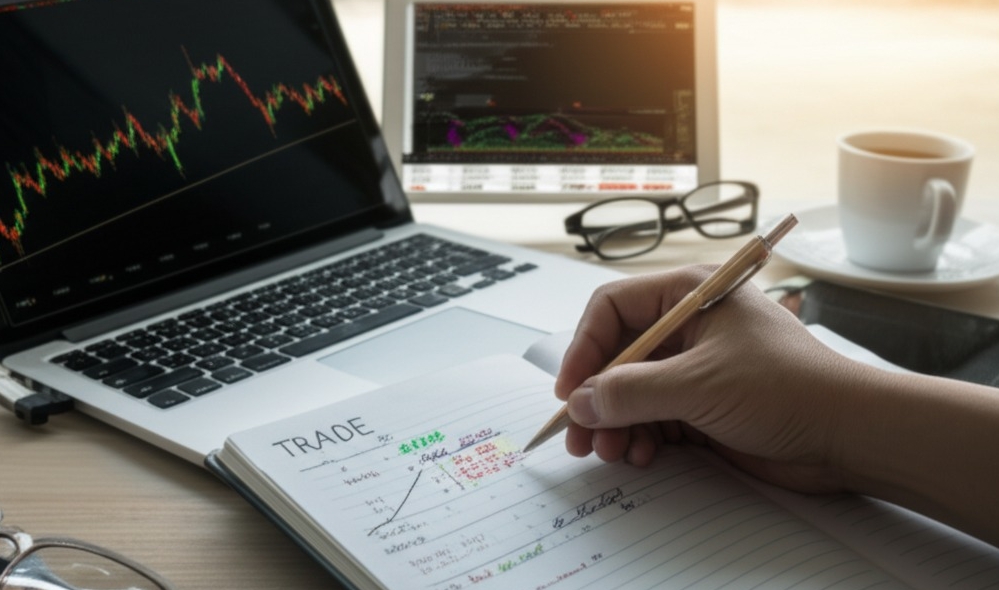
The details you log make or break your journal’s usefulness. Let’s dig into what you absolutely need to write down.
Key Trade Details to Always Note
The nuts and bolts matter. Every journal entry should capture:
Entry price and exit price
Stop-loss and take-profit levels
Position size and risk-reward ratio
Trade volume and instrument type
Order type (market or limit), plus any slippage or commission
These give you the hard stats to analyze later. Sloppy records = sloppy learning. Want to trade like a pro? Log like a pro.
Market Conditions and Timing Factors
Markets don’t move in a vacuum—context is king. Be sure to log:
Volatility level and overall market trend
Liquidity during entry and exit
Support/resistance levels nearby
Economic indicators or news releases
Which trading session you entered in
This helps you spot patterns like “I trade better during high-volatility London sessions” or “Fed days mess me up.”
Personal Mindset Before Each Entry
Let’s be real—your headspace can wreck a perfect setup. Before each trade, ask yourself:
Was I focused or distracted?
Feeling confident or chasing losses?
Letting FOMO or greed drive the move?
Did I stick to my strategy, or just wing it?
Writing this stuff down builds self-awareness. You’ll start noticing that stress, cognitive bias, or just being hangry can nuke your edge.
“Trading isn’t just about charts—it’s about managing the person in the mirror.” — Dr. Brett Steenbarger, trading psychologist
News Events Impacting Trade Behavior
Even the cleanest chart can get wrecked by a headline. Don’t forget to note any:
Earnings reports or economic data releases
Geopolitical events and central bank announcements
Corporate news like mergers or product launches
Ratings from analysts or changes in commodity prices
Quick Tip: Tag your trades by news type so you can later filter “trades made during Fed policy changes” vs. “normal days.” You'll find out real fast how much noise you can handle.
Pre-Trade and Post-Trade Structure
Every trade needs structure—before you hit “buy” and long after it’s closed. These steps turn random results into real strategy.
Checklists for Entering a Trade
Let’s face it—winging it doesn’t work. Before diving into any forex trade, you need to lock in key elements that set you up for success. Here's a checklist built on actual trader workflow:
| Step | Task Description | Entity Word Highlight |
|---|---|---|
| Market Research | Analyze trends, indicators, and news | Market Research |
| Strategy Development | Ensure trade idea aligns with plan | Strategy Development |
| Risk Assessment | Determine stop-loss and risk per trade | Risk Assessment |
| Entry Criteria | Confirm setup using signals or conditions | Entry Criteria |
| Mindset Preparation | Emotional check-in before committing funds | Mindset Preparation |
| Platform Setup | Ensure platform and orders are working | Platform Setup |
“The more you sweat in preparation, the less you bleed in battle.” – George S. Patton
Review Steps After Trade Closes
Closing a trade isn’t the end—it’s a checkpoint in your long-term improvement loop. This post-trade process helps you make sense of every win and every misstep.
Profit/Loss Calculation – Crunch your final numbers, including fees
Performance Analysis – Did the trade stick to your original plan?
Trade Journaling – Record emotions, decisions, and key details
Lessons Learned – Quick notes on what you’d do better
Strategy Evaluation – Revisit the strategy for flaws or strengths
Adjustment Planning – Small tweaks for smarter trades next time
Tip: Keep a “feedback loop” journal. Re-read older trades monthly to track your growth or spot recurring mistakes.
Why Emotions Matter in Trading
Behind every bad trade is usually a bad mood. Emotions can tank even the smartest strategies—so let’s get them out in the open and under control.

Recognizing Fear and Greed in Action
Two of the biggest traders on the floor? Fear and Greed. These emotional forces are behind market bubbles, crashes, and your last impulsive entry. FOMO (Fear of Missing Out) creates euphoria, pushing you to buy at tops. Panic selling can have you dumping solid positions in seconds. When you catch yourself feeling either extreme—step back. That’s market behavioral finance at work.
Traders who recognize these signals early often stay one step ahead. Impulsivity is your enemy; awareness is your edge.
Logging Emotional Triggers During Trades
You wouldn’t trade without logging price—so don’t skip logging feelings. Create a column or voice note in your trading journal dedicated to emotional triggers. Did a sudden price drop spike your stress? Did you feel frustration after a missed setup?
Your emotion before entering the trade
Your emotion during the trade
What triggered that emotion
Doing this consistently builds self-awareness, sharpens discipline, and paints a clear picture of how your psychological state impacts performance.
Identifying Patterns in Overtrading
Overtrading isn’t always obvious—until you see it in black and white.
| Indicator | Symptoms Observed | Impact on Performance |
|---|---|---|
| Increased Trade Volume | 35 trades in 5 days | -27% drawdown |
| Impulsive Trades | 8 setups entered w/o plan | Higher stop-outs |
| Emotional Trading | After 3 consecutive losses | Revenge trading spike |
| Boredom Triggers | Trading during low volume | No setups, just churn |
Use tables like this for performance analysis—you’ll spot overtrading habits faster and fix them before they sink your strategy.
Building Discipline Through Self-Awareness
Discipline starts with knowing you. Not the market. Not your mentor. You.
Set a clear rule per trade (e.g., no entry without confirmation).
Use post-trade journaling to rate your discipline 1–10.
Log why you broke rules—no shame, just facts.
Over time, these habits turn into mental resilience and build real consistency. You’re not just tracking trades; you’re training your brain.
Mental Recovery After a Losing Streak
"Losses are just tuition in the school of trading." – Van K. Tharp
After a rough patch, you need recovery, not revenge. Step away from the charts. Go outside. Journal, but don’t obsess. Reflect on:
What went wrong?
Were rules followed or ignored?
Did emotion drive execution?
When you come back, do it with a refreshed mindset, a strategy adjustment, and a little grace for yourself. That bounce-back? It’s part of your trader evolution.
Trade Pattern Analysis
Pattern analysis helps you decode your trading history like a map. Spot trends, avoid repeat mistakes, and fine-tune your strategy with each trade you log.
Spotting Repeated Entry Setups
Recognizing your go-to setups is like spotting familiar stains on your favorite shirt—same spot, same pattern. Look at trades that repeat under similar “fabric types” (market conditions), especially when dust accumulation (volatility) or material wear (trend exhaustion) is involved.
Track the cleaning frequency (how often the setup appears).
Record dirt patterns like price structure before entry.
Note which shade materials (currency pairs) behave consistently.
Patterns lead to confidence. Miss them, and you’re just guessing.
Tracking Winning vs. Losing Conditions
Knowing why a trade worked—or bombed—is priceless. This isn't just "win or lose"; it's why.
Stain removal vs. residue buildup: Did the strategy clean up or leave a mess?
Restored appearance vs. surface dullness: Were results sharp or disappointing?
Fabric integrity or damage: Did your method protect or stretch your account?
“Successful traders don’t trade more—they trade smarter.” — Kathy Lien, FX expert.
Don't just count wins. Understand the conditions behind them.
Understanding Market Behavior Trends
Markets have moods. And just like seasonal cleaning trends, patterns evolve. Track what's rising or falling in demand.
| Market Demand | Popular Materials | Cleaning Tool Innovation |
|---|---|---|
| Bullish EUR/USD | Eco-friendly setups | Auto journaling software |
| Risk-off trends | Durable safe havens | Strategy heatmaps |
| Volatility spikes | DIY breakouts | Multi-timeframe scanners |
Keeping tabs on these trends gives you a clearer view of what’s currently working—and what’s yesterday’s news.
Risk and Position Tracking
Managing your money in forex isn’t about luck—it’s about strategy.
Recording Stop-Loss and Take-Profit
You can’t just hope a trade goes your way. Smart traders use stop-loss and take-profit levels to stick to their trading plan—not their emotions. These price levels act as your automated exit strategy:
Stop-loss: the limit of how much you’re willing to lose.
Take-profit: your profit target—where you happily cash out.
Placement of these orders should be based on market structure, not random guesses. Trade management is all about minimizing the damage and maximizing the wins—period.

Tracking Position Size per Trade
Getting your position sizing wrong is like driving blindfolded. It’s one of the biggest killers of trading accounts.
Decide your risk per trade (commonly 1–2% of account balance).
Calculate lot size based on your stop-loss distance.
Keep your leverage and margin within sane limits.
Position size links directly to your money management game—don’t guess, calculate!
Calculating Risk-Reward Ratio Accurately
"If your winners don’t outweigh your losers, you're in trouble."
The risk-reward ratio helps you measure the profit potential of a trade against its loss potential.
Let’s say:
Stop-loss = 30 pips
Take-profit = 90 pips
Risk-reward ratio = 1:3
This means for every $1 you risk, you aim to make $3. By sticking to high-probability setups with positive ratios, you set up your trading strategy for long-term success.
Factoring in Leverage and Margin
Don’t let leverage tempt you into blowing your account. Just because your broker lets you trade big doesn’t mean you should.
Using 50:1 leverage with low account equity puts you at high risk of a margin call.
Keep your margin requirements reasonable
Understand how borrowed capital affects your risk exposure
Check how different financial instruments behave under pressure
| Leverage | Account Balance ($) | Trade Size ($) |
|---|---|---|
| 10:1 | 1,000 | 10,000 |
| 50:1 | 1,000 | 50,000 |
| 100:1 | 1,000 | 100,000 |
Monitoring Slippage and Spread Costs
Ever hit "Buy" and get filled at a worse price? That’s slippage.
And that sneaky little gap between buy/sell? That’s the spread—a hidden transaction cost that adds up.
Watch for high volatility times when order execution becomes erratic.
Trade during liquid market hours to avoid price gaps.
Choose brokers with tight spreads and solid execution price history.
Little costs kill big profits if you’re not paying attention.
Avoiding Overexposure to One Currency Pair
If all your trades rely on one currency pair, you’re just gambling. Real traders diversify.
Limit trade volume per pair
Watch for correlated pairs moving the same way
Use hedging strategies when necessary
By spreading risk across different pairs and instruments, you reduce the chance of a single move wrecking your week. As they say, don’t put all your pips in one basket.
How Often Should You Review Your Journal
"Most traders fail not from bad entries, but from failing to learn from them," says Marco Eldridge, a seasoned FX mentor with over 15 years on the charts.
Daily, weekly, or monthly—journal review frequency is not a luxury. It is a non-negotiable ritual for trading performance analysis. Top-performing traders like Eldridge swear by it.
Daily Journal Review:
Spot emotional reactions or impulsive entries
Capture market context while memory is fresh
Tweak entries before habits form
Weekly Journal Review:
Detect recurring issues in setup or execution
Pinpoint common trade errors or missed signals
Balance post-trade analysis with short-term strategy shifts
Monthly Journal Review:
Reveal deeper trading patterns
Measure progress across different market conditions
Align goals with actual behavior
Professional trading desks mandate structured journal reviews—some use AI-based dashboards; others rely on handwritten logs. The tool matters less than the consistency in journaling.
"A trader who never looks back is trading blind," says CMT-certified analyst Dana Wicks. Reviewing trading mistakes is not just humbling—it is transformational.
Improving trading strategy starts with accountability. Revisit, reflect, and refine—because your edge lives in your data.
Best Tools and Templates for Journaling
Choosing the right tools can turn your trading journal from a chore into a game-changer. Here’s how to gear up with the best apps, templates, and spreadsheet hacks.
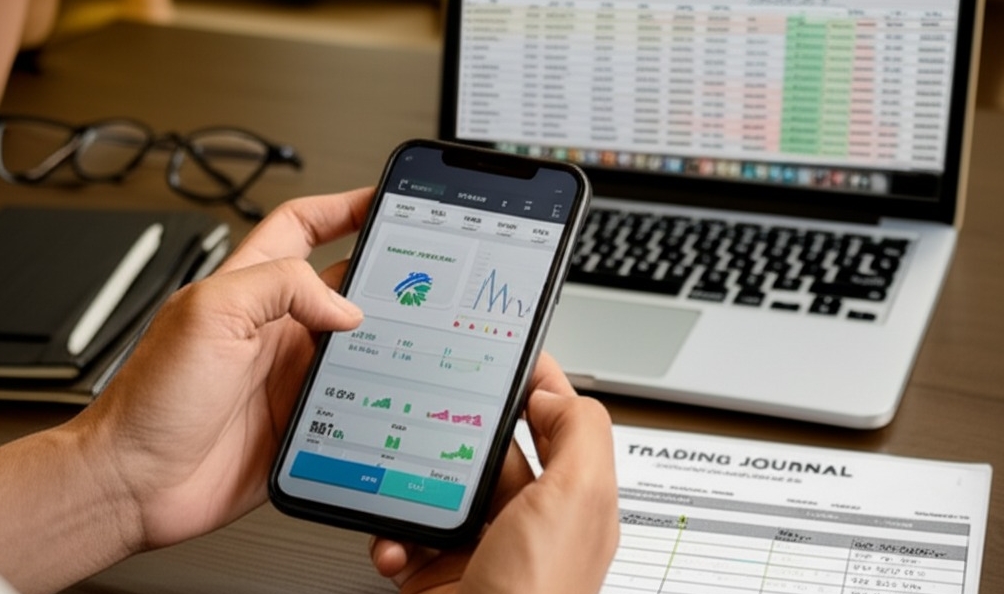
Top Forex Journal Apps in 2025
When it comes to Forex, using the right mobile app can make trade logging fast and foolproof. The top trading journal apps in 2025 don’t just record your activity—they analyze your moves, track market conditions, and offer clean dashboards to monitor performance across currency pairs.
Real-time performance tracking
Automatic trade syncing from brokers
Visual breakdowns of winning/losing setups
AI-powered trade suggestions
"A good trading journal app should show you patterns before you even notice them." — Tom Hougaard, pro trader & author
Printable Templates for Manual Logging
Still prefer pen and paper? You’re not alone. Manual logging has its charm—and surprisingly, it builds stronger trade memory for many traders.
Use log sheets to track entries, exits, position size, and notes.
Add emotion scales (1-10) next to each trade to monitor mental patterns.
Keep forms simple: one page per trade or per day.
Pro Hack: Use colored pens or highlighters to flag winning setups vs. questionable trades—it makes patterns jump off the page later.
Custom Spreadsheet Tracking Tips
If Excel or Google Sheets is your thing, custom spreadsheets let you control every cell and formula. Think of it as your personal trading software—built to your quirks.
Use conditional formatting to highlight profitable trades.
Insert pivot tables to group by currency pairs or setups.
Apply formulas to auto-calculate risk/reward ratios.
| Column | Format Type | Description |
|---|---|---|
| Date | MM/DD/YYYY | Trade entry date |
| Pair | Text | Currency pair traded |
| P/L | Currency | Profit or Loss in USD |
Spreadsheets are perfect for performance junkies who love slicing up financial data. Plus, you can integrate with trading APIs for auto-imports.
Conclusion
Trading without a journal is like driving without a GPS—you might get there, but you’ll miss some turns. A solid journal helps you find your path, track mistakes, and spot patterns.
As traders like Mark Douglas say, “The market doesn’t reward those who guess—it rewards those who plan.”
So, don’t just trade—track, learn, and improve. Your journal is your ticket to smarter moves and better profits.
A forex trading journal is simply a log where traders record the details of their trades. It’s much more than a simple record—it helps track strategy performance, emotional state, and can even highlight patterns in your trading behavior. Keeping this journal allows traders to reflect on their decisions, learn from mistakes, and improve their skills.
It’s easy to get caught up in the day-to-day of trading and forget the lessons from previous trades. A trading journal helps you:
Without this tool, you may miss critical patterns and leave profits on the table.
Identify successful strategies that you can replicate.
Spot mistakes and avoid repeating them.
Track emotional triggers that may affect your decision-making.
Monitor your progress and see tangible improvements over time.
The structure of your journal can vary depending on your goals, but here’s a simple structure to follow:
The goal is to capture both your trading strategies and your emotional state during the trade.
Pre-Trade Section: Record your plan before entering a trade (setup, risk, goal).
Trade Execution: Log the exact entry and exit points, plus any adjustments.
Post-Trade Review: Reflect on how well you followed your plan, what worked, and what didn’t.
When creating your forex journal, make sure to track these critical elements:
Tracking these elements will give you insights into what works and what doesn’t.
Entry and Exit Points: Record the exact prices and times.
Trade Size and Risk: Note how much capital you’re risking and the size of your position.
Market Conditions: What was happening in the market at the time?
Your Emotions: What were you feeling before, during, and after the trade?
It’s important to review your journal regularly, but the frequency can depend on your goals and how active you are as a trader. Here’s a general guide:
Reviewing too often can lead to over-analysis, so balance is key.
Daily: Quick review after each trading session to assess individual trades.
Weekly: Look for patterns or recurring mistakes.
Monthly: Perform a more in-depth review to assess your overall strategy and emotional patterns.
A trading journal allows you to track performance and spot patterns that you might otherwise miss. By regularly reviewing your trades, you can:
Ultimately, the more you track, the more you can fine-tune your trading.
Identify which strategies are consistently profitable.
Learn from past mistakes and prevent them in future trades.
Improve your emotional discipline and risk management.
There are several tools available, ranging from simple spreadsheets to advanced software. A few top picks include:
Pick a tool that matches your style—whether you prefer digital solutions or a pen-and-paper approach.
TraderSync: Great for tracking trades and analyzing patterns.
Tradervue: Excellent for reviewing trade performance over time.
Excel/Google Sheets: Simple and customizable—good for DIY traders.
Emotions like fear, greed, and excitement can cloud your judgment. Tracking your emotions in your journal can help you identify patterns and avoid making rash decisions. A few tips to manage emotional trading:
Understanding emotional triggers can help you stay more disciplined.
Set Rules and Stick to Them: Create a clear trading plan and follow it, no matter how you feel.
Take Breaks: If you’re feeling overwhelmed or overly excited, step away from the screen.
Reflect on Your Emotions: Write down what you were feeling before and after each trade to better understand your triggers.
A daily log might just be a list of trades, but a trading journal is more detailed. It’s not just about logging when you entered and exited a trade—it’s about capturing the why, how, and what behind every move. Journals include:
A trading journal provides deeper insights into your decisions and overall growth as a trader.
Pre-trade plans
Emotional states
Market analysis at the time of trade