

Table of contents
Ever watched the dollar spike out of nowhere and thought, “What just happened?” That mystery move probably had something to do with GDP. In A Guide to GDP and Forex Trading, we break down how this one economic number can shake the forex market—and your trades—with just a single report.
Think of GDP like a country’s financial report card. Strong grade? The currency usually pops. Weak one? It could tank. As Warren Buffett once said, *“The rearview mirror is always clearer than the windshield”—*but with GDP, traders try to use both.
This guide strips the fluff. You’ll learn how GDP is calculated, why it makes currencies jump, how pros trade the data drops, and how to protect your capital when the news hits. Let’s get into it.
What is GDP in Forex Trading
“I have seen currencies swing five hundred pips in an afternoon—just because a GDP number came in hot,” said Eric Donnelly, a former institutional forex trader at Barclays Capital. “If you are trading without watching gross domestic product, you are flying blind.”
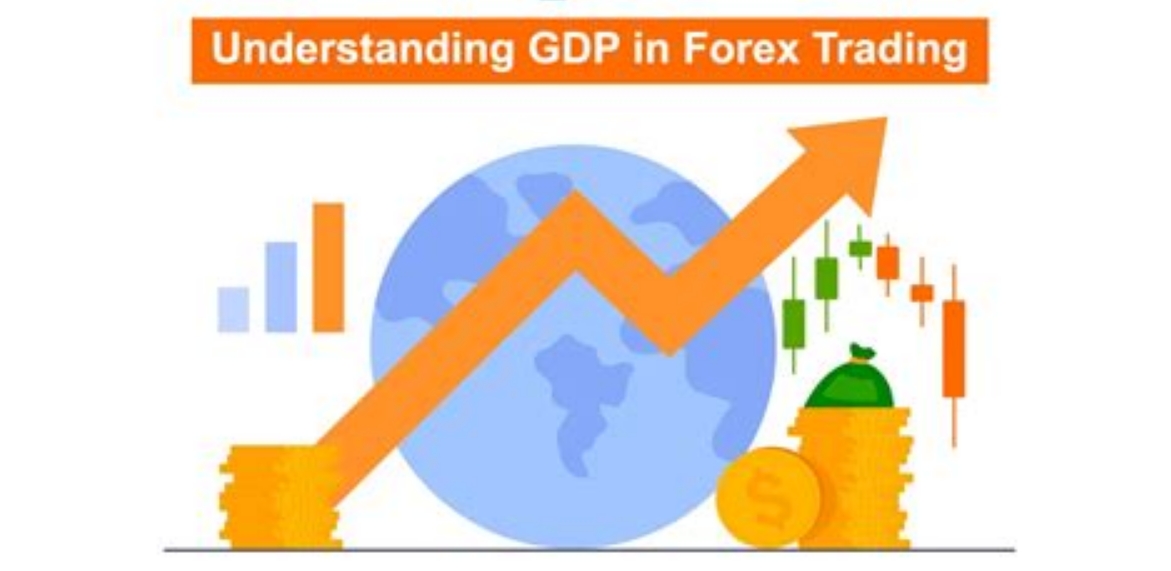
The definition of GDP is simple: it is the total value of all goods and services produced within a country’s borders over a set period. It is not just a number—it is a critical economic indicator used by central banks, hedge funds, and day traders alike. In forex trading, GDP tells the story of economic growth, and it directly influences currency value across the board.
A rising GDP typically strengthens a currency, signaling robust national output and attracting foreign investment
Weak GDP data can trigger sell-offs, especially if the number diverges sharply from market forecasts
The impact on forex is immediate after a GDP report, often affecting interest rate expectations and risk sentiment
Trading strategies built around GDP releases involve anticipating the economic data release, interpreting its implications, and reacting swiftly. For example, a trader may position long on the U.S. dollar before the GDP report, expecting strong numbers based on employment and retail data.
As the Bureau of Economic Analysis states, “GDP is one of the most comprehensive indicators of economic activity,” and forex markets react accordingly. For traders, ignoring GDP means ignoring the heartbeat of a nation’s economy.
GDP Calculation Methods
GDP isn't just pulled from thin air—it’s built using different calculation lenses. Understanding these methods helps traders spot where the market might be heading.

Expenditure approach and its market impact
This one’s the crowd favorite among economists and traders. The expenditure approach tallies Consumption, Investment, Government Spending, and Net Exports to measure Aggregate Demand.
A boost in consumer spending or exports often signals Economic Growth—and forex markets love that.
For example, rising U.S. consumer demand can spike the dollar due to expected rate hikes.
Traders watch for changes in any component because they ripple through Market Prices and overall Market Impact.
Income approach in economic analysis
This angle sums all income earned: Wages, Salaries, Interest, Rent, and Profits. It reflects how much money is made in producing goods/services.
“Tracking income flow helps us understand demand-side pressure,” says Mark Zandi, Chief Economist at Moody's Analytics.
Trends in Income Distribution
Shifts in National Income levels
The higher the factor payments, the hotter the economy looks—and that can push currency values up.
Production approach used by central banks
Also called the value-added method, this one’s a central bank favorite. It focuses on output, subtracting Intermediate Consumption from Gross Value Added across Economic Sectors.
Each industry’s Output is recorded
Costs of inputs are removed
Remaining Economic Activity is the GDP chunk
Used in Economic Statistics, this approach is reliable for tracking Industry Output—and helps central banks like the ECB assess where growth is really coming from.
GDP revisions and trader confidence shifts
Ever traded on GDP only to see the number change a month later? Welcome to the world of Data Revisions.
Initial GDP Data is based on estimates
As more info rolls in, Economic Indicators are revised
These changes often shift Trader Confidence
For example, a downward revision can squash Market Sentiment, triggering sharp moves in Financial Markets. Traders should build Volatility buffers and stay alert to second estimates—it’s not just the headline that moves the market.
| GDP Release Type | Timing (Days After Quarter) | Volatility Impact |
|---|---|---|
| Advance Estimate | 30 | High |
| Second Estimate | 60 | Medium |
| Final Estimate | 90 | Low |
GDP vs inflation and employment
GDP doesn't move in a vacuum—it dances with inflation and employment.
Inflation data comparison with GDP trends
Inflation and GDP are like two sides of the same economic coin. When GDP grows fast, inflation tends to creep up—unless productivity keeps pace. But when GDP slows and inflation rises, you've got a stagflation red flag. Here’s how traders compare them:
CPI vs. GDP growth: Rising Consumer Price Index often signals overheating.
PPI indicators: Producer prices spike ahead of GDP dips.
Recession signals: GDP down + deflation = tightening risk.
Monetary policy clues: Central banks balance GDP growth with price stability.
“Inflation is always and everywhere a monetary phenomenon.” — Milton Friedman
Labor force strength signals in GDP shifts
When more people are working, they’re spending. That boosts GDP. Simple, right? But look deeper and the labor market can tell you where and how GDP is headed:
Unemployment rate drops usually signal higher economic output.
Wage growth trends give insight into consumer demand power.
Labor participation rates show if more folks are joining the game—or checking out.
Productivity gains mean the economy’s getting more out of the same number of workers.
| Indicator | Normal Range | Impact on GDP |
|---|---|---|
| Unemployment Rate (%) | 3.5–5.5 | High = GDP drag |
| Labor Participation (%) | 61–63 | High = Growth boost |
| Wage Growth (YoY %) | 2.5–4.0 | High = Demand up |
When labor stats shift, GDP usually follows. Keep your eyes on the workforce—it's the engine under the hood.
Why does GDP move currency prices
GDP isn’t just a government stat—it’s fuel for the forex market. Here’s how this one number triggers big moves across currencies, banks, and investor behavior.
Capital flows reacting to growth data
Capital flows—money moving across borders—tend to chase growth. When a country posts stronger-than-expected GDP growth, it draws in foreign direct investment (FDI) and portfolio investment, especially in emerging markets. This drives up demand for the local currency, strengthening exchange rates. Investors weigh economic cycles, interest rates, and growth data to shift their cash into markets they believe will outperform. Think of it as global capital chasing the next big thing.
Central bank expectations from GDP spikes
When GDP spikes, central banks take notice. A hotter economy often leads to higher inflation expectations, nudging banks toward interest rate hikes or tightening monetary policy. These expectations ripple through markets as forward guidance changes and policy reaction functions kick in. As the economic outlook shifts, traders price in tighter credit and stronger currency moves. “The central bank is watching GDP like a hawk,” as Goldman Sachs once quipped.
Market sentiment on GDP surprises
Markets hate surprises—unless they’re profitable. When GDP data beats or misses expectations, market sentiment shifts fast. A surprise beat? Cue a surge in the currency market, a jump in trading volume, and renewed risk appetite. A miss? Welcome volatility. The stock market and bond market follow suit, as investors digest what the number means for future performance. Traders live and die by how the market feels after a number lands.
Interpreting GDP forecasts
Understanding GDP numbers is one thing—knowing what the market expects before they drop is where real opportunity lives.
Consensus estimates vs actual GDP results
Every quarter, analysts throw their hats in the ring with GDP forecasts—called consensus estimates. When the actual GDP results roll out, traders watch closely for surprises. That difference? It’s gold. If actuals crush expectations, currencies often surge. A weaker-than-expected print? Expect a quick drop. Keeping track of forecast vs outcome helps sharpen your reaction time and builds a clearer trading narrative from the economic data.
Economic calendar tools for traders
Economic calendars are your market cheat sheet.
They list upcoming events—like GDP releases—with timestamps and expected figures.
Great tools: Forex Factory, Investing.com, and Trading Economics.
Smart traders use these to plan trades, reduce noise, and align with market data flow.
Pre-release sentiment in the FX market
Before GDP data drops, the FX market doesn’t just sit quiet. It hums with sentiment, whispering clues about trader expectations. News headlines, analyst commentary, and asset flows can all paint the pre-release mood. A quote from Kathy Lien, FX analyst:
“Market reaction often starts before the data hits. Sentiment drives early positioning.”
So, if you spot a calm before the storm—get ready.
Analyzing historical GDP expectations
Looking back at historical GDP expectations vs actuals tells you a lot. Have analysts been too optimistic? Are certain countries more prone to upside surprises? Track past performance of forecasts to spot data patterns. Use economic models or spreadsheet tools to build visual trends.
| Country | Avg. Forecast Error | Directional Bias |
|---|---|---|
| USA | ±0.4% | Overestimate |
| Japan | ±0.3% | Neutral |
| Germany | ±0.5% | Underestimate |
Adjusting forecasts after mid-quarter data
New mid-quarter data—like retail sales or PMI—can shift outlooks.
Analysts update their forecasts accordingly, tweaking economic models.
Traders who catch these updates early often gain a huge edge.
If you're stuck trading old forecasts, you're driving with yesterday's GPS. Stay current, stay sharp.
How do traders use GDP reports
GDP reports can move markets like a jolt of caffeine. Smart traders don’t just watch—they act with precision.
Short-term breakout trades on GDP news
Short-term breakout trading during GDP releases is about speed, timing, and volatility. Traders look for sudden price bursts right after the data hits. Key elements include:
Entry point: Just after the GDP report release, if price breaks a key resistance or support.
Stop loss: Tight and logical—just outside the consolidation zone.
Profit target: Measured moves based on recent volatility range.
“Price often moves faster in 10 seconds of GDP news than 10 hours of quiet markets.” — Mark Chandler, Chief Market Strategist
Positioning strategies before data release
Prepping for GDP day? It’s like laying a trap—you want to be early, not reactive.
Analyze market sentiment using futures and options pricing.
Build a position with hedging tools like straddles or risk-defined options.
Monitor pre-release volatility—if it's creeping up, so is anticipation.
Control risk by sizing small and placing stops wide enough to survive noise.
Options traders especially love the calm before the storm. Positioning right before the data gives you edge… if you’re on the right side.
Swing trading after GDP confirmation
Not all GDP trades need to be fast and furious. Some traders prefer swing setups that play out over days—not minutes.
Look for retracement entries using Fibonacci or trendlines.
Combine fundamental direction with technical setups.
Spot entry signals in consolidation phases post-news.
Aim for a risk/reward ratio of at least 2:1.
A GDP surprise that aligns with existing macro momentum? That’s your sweet spot. Patience + confirmation = power.
Risk control on news releases
GDP days can make or break a trader.

Using stop orders during GDP volatility
GDP releases often cause wild price movement in seconds. A well-placed stop order acts like a bodyguard for your trade. Use volatility-adjusted stops—wider on major announcements—and combine with limit entries for tighter market execution. Timing matters, so avoid placing stops too tight in choppy sessions. Smart risk management means letting your trade breathe while staying protected.
Slippage and how to avoid it
Slippage is that annoying cousin who shows up uninvited—when you hit buy at 1.1500 but get filled at 1.1515. During GDP drops, price deviation can spike due to liquidity gaps.
Using limit orders instead of market orders
Trading with a reputable trading platform
Reducing order size during thin-volume hours
Position sizing for macro announcements
You wouldn't bring your whole bankroll to a poker hand on a full moon—same rule applies here. Scale your position sizing down when trading high-impact macro announcements.
Use % of capital allocation (e.g., 1–2% max risk per trade)
Factor in volatility from previous GDP releases
Match trade size to your account’s risk tolerance
Hedging techniques with correlated assets
Long EUR/USD + Short USD/CHF (correlated but inverse)
Use financial instruments like options or ETFs
Diversify into a different asset class (e.g., gold or bonds)
Pro tip: Watch correlation strength—too weak, and the hedging falls flat.
Avoiding over-leverage before GDP drops
Over-leveraging before GDP is like stepping on the gas before a blind turn. GDP data can double volatility in seconds. To stay alive:
Cap leverage to 5:1 or lower pre-news
Check your margin level and shrink position size
Avoid stacking trades around the same economic announcement
| Leverage Ratio | 10-Pip Loss | Account Impact (%) |
|---|---|---|
| 10:1 | $100 | 1% |
| 50:1 | $500 | 5% |
| 100:1 | $1,000 | 10% |
Managing emotional bias after data shocks
GDP drops can mess with your head. Your trade just lost 50 pips in a blink—now what? Don’t chase. Take a breather.
“Traders lose more from reacting emotionally than from the data itself.” — Linda Raschke, veteran trader
Stick to your trading plan
Log the data shock and your decision making
Learn to spot cognitive bias creeping in
This is where discipline beats revenge trading every time.
Which currencies respond strongest to GDP
“You can feel the tension on GDP day,” said Olivia Grant, a senior FX strategist at BlueBridge Capital. “The right number, and the US Dollar (USD) can surge like a rocket. The wrong one? It sinks like a stone.”
In forex trading, GDP data is not just a number — it is a verdict on a country’s economic growth, confidence, and stability. Currencies from nations with transparent economies and globally watched reports respond fastest and hardest.
US Dollar (USD) – Reacts sharply due to its global reserve status. Traders price in Fed rate moves within minutes of strong GDP prints.
Euro (EUR) – Responds to EU-wide and Germany-specific data. The EUR's reaction often leads to swings in EUR/USD.
Japanese Yen (JPY) – Seen as a safe haven, yet volatile after weak GDP due to Japan’s fragile growth outlook.
British Pound (GBP) – Sensitive to UK GDP revisions and Bank of England shifts. Local data often stirs major movement.
Canadian Dollar (CAD) – Highly responsive to GDP tied to energy exports. Strong growth often boosts CAD via oil strength.
Australian Dollar (AUD) – Moves with China-linked sentiment. Australia’s GDP beats often drive AUD strength across Asia sessions.
The market reaction is not just speed—it is scale. As ForexLive reported in 2024, “A single upside surprise in Canada’s GDP moved USD/CAD by 130 pips within 20 minutes.”
Understanding GDP's impact is key. As Warren Buffet famously said, “Risk comes from not knowing what you are doing.” Traders who align with the numbers tend to survive the storm — and sometimes ride the wave.
Conclusion
Trading around GDP isn’t just for economists in suits—it’s for anyone who wants to make smarter moves in the forex world. This guide gave you the tools to read the numbers, spot the setups, and avoid getting blindsided on news day.
As Paul Tudor Jones once said, “The most important rule of trading is to play great defense.”
Now’s the time to tune into those economic calendars, test your strategies, and treat GDP drops like the golden windows they really are.
GDP stands for Gross Domestic Product. In forex trading, it's shorthand for how healthy (or unhealthy) a country's economy is. Traders use it as a barometer—if GDP is rising, chances are the currency is about to flex.
Because GDP tells the story of an economy’s performance. If a country is growing, it attracts investors—and that demand boosts the local currency. On the flip side, weak GDP numbers can send a currency sinking fast.
Most countries release GDP quarterly
Some offer monthly estimates (e.g., UK)
Final GDP numbers often come with revisions
Big economies (like the U.S.) release in three stages: advance, preliminary, and final
Not always. They're like siblings—closely linked, but different. GDP gives the big picture, while employment zooms in on the labor force. Many traders use both together to get a stronger signal before placing trades.
This is the tension traders love. Forecasts are what economists expect. The actual is what really happened. If there’s a big gap—surprise!—markets can swing hard.
Use a demo account first to practice
Don’t go all-in before a release—volatility can be wild
Have a risk management plan in place
Consider waiting 15–30 minutes post-release to avoid whipsaws
Currencies like the U.S. dollar (USD), Euro (EUR), British Pound (GBP), and Japanese Yen (JPY) tend to react the most—because those economies are closely watched and actively traded worldwide.