

Table of contents
In the world of Forex trading, understanding how monetary policies shape currency values is crucial. "Hawkish vs Dovish: How Monetary Policy Affects FX Trading" breaks down the two main approaches central banks use to control inflation and boost or slow down economic growth. If you're a trader, you know that these decisions have a direct impact on the market and your bottom line.
A hawkish stance means the central bank is raising interest rates to fight inflation—think of it like tightening your belt when money’s tight. On the flip side, dovish policies are like loosening the belt to encourage more spending and investment, often leading to a weaker currency but a boost to the economy.
The key to successful Forex trading? Knowing how these policies affect the value of currencies so you can make smarter moves. Let’s dive into how hawkish and dovish approaches play out in the real world of FX trading.
What is Hawkish Monetary Policy?
Hawkish monetary policy is about tightening the money supply to control inflation, often by raising interest rates. Let’s break it down and see how this impacts the market.
Controlling Inflation with High Rates
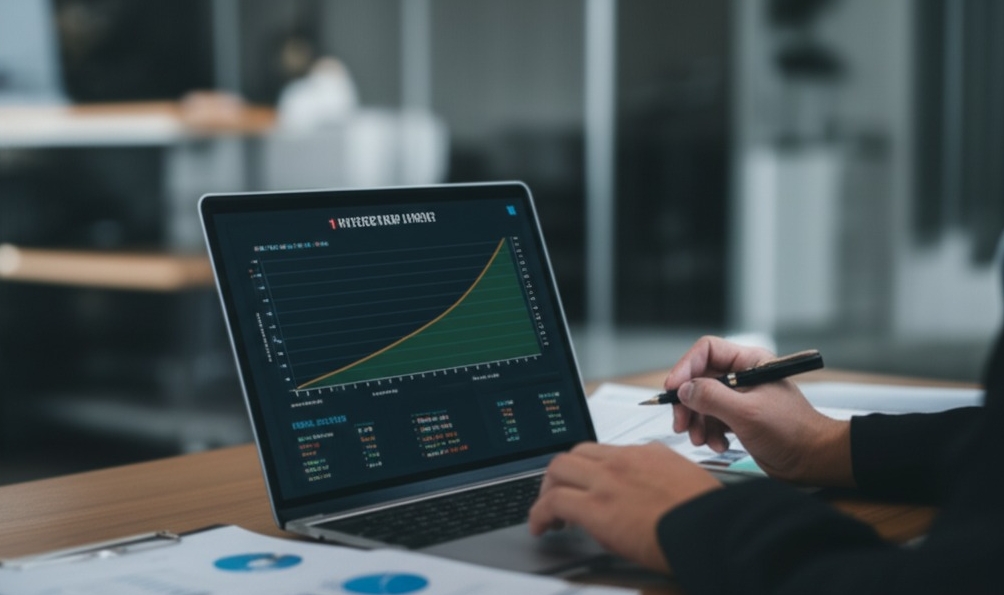
Hawkish policies are all about fighting inflation. By raising interest rates, central banks aim to make borrowing more expensive, which cools down demand in the economy. As demand decreases, inflation slows down, keeping prices stable. This approach focuses on reducing inflationary pressures and targeting a certain rate of inflation, like the Consumer Price Index (CPI).
Impact on Borrowing and Investment
When interest rates climb, borrowing costs go up. This impacts everything from mortgages to business loans. Higher rates discourage consumers from taking out loans, reducing consumer spending, and limiting business investment. However, for those looking to save or invest, higher rates can be a draw, as the return on savings increases. Still, the overall effect is a slowdown in economic activity.
Effects on Currency Strength
A hawkish stance can make a country's currency stronger. Why? Because higher interest rates attract foreign investment, which increases demand for that currency. Investors seeking better returns will move their capital to markets offering higher rates, driving up the currency’s value. This strengthens the currency and improves the trade balance, as imports become cheaper and exports more expensive.
What is Dovish Monetary Policy?
Dovish monetary policy is designed to boost economic activity by lowering interest rates and making borrowing cheaper. It focuses on stimulating growth, often at the risk of inflation.
Lowering Interest Rates for Growth
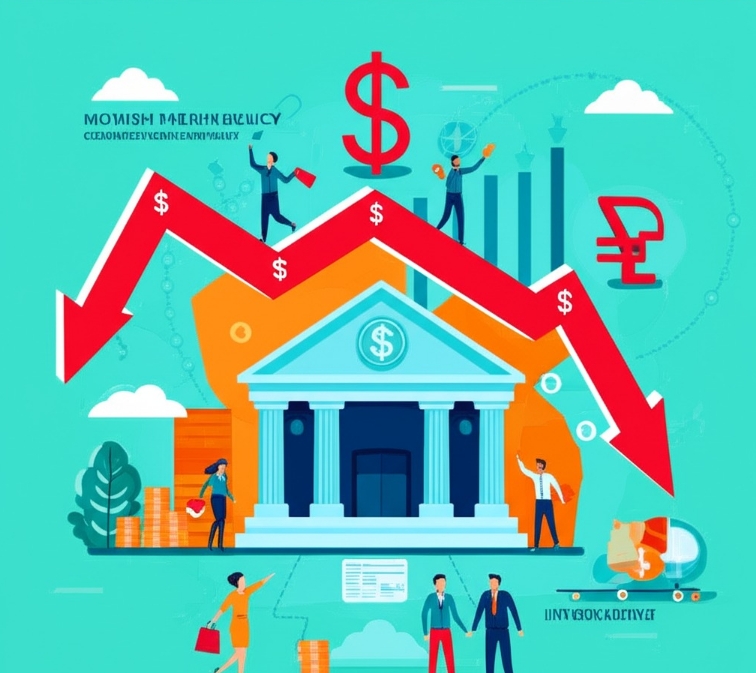
When a central bank lowers interest rates, it’s like giving the economy a shot of caffeine. Cheaper borrowing costs mean people and businesses spend and invest more. This boosts GDP and drives economic expansion, creating a cycle of growth.
Encouraging Spending and Investment
With lower interest rates, consumers feel more confident and willing to spend, while businesses ramp up investments. Central banks may also implement fiscal policies like tax cuts or increased government spending to encourage economic activity, leading to higher demand and job creation.
Potential Weakening of Currency
As central banks ease monetary policies, the currency often weakens. This depreciation can make exports cheaper, but imports more expensive. For businesses, it can boost competitiveness, though it may trigger capital flight if investors seek stronger currencies elsewhere.
Risks of Inflation with Dovish Policies
While lowering rates sparks growth, it carries the risk of inflation. If too much money flows through the system too quickly, prices can rise. This undermines purchasing power, forcing central banks to raise rates later to restore price stability.
Hawkish Policy & FX Markets
Hawkish monetary policies significantly influence FX markets. Let's break down how higher interest rates and investor sentiment play a vital role in shaping currency movements.
Interest Rates and Currency Appreciation
When central banks hike interest rates to curb inflation, it often leads to currency appreciation. Higher interest rates tend to attract foreign capital, driving demand for the currency, which boosts its value in the foreign exchange market. As bond yields rise and returns become more appealing, capital flows into the economy. This leads to stronger exchange rates, making exports more expensive but attracting investors looking for higher yields. The interplay of monetary policy, interest rates, and inflation drives this dynamic.
Market Sentiment and Investor Confidence
Hawkish policies also impact market sentiment. Investors tend to react positively to the promise of higher returns, which boosts investor confidence.
As central banks tighten policies, the economic outlook improves, attracting more capital.
On the flip side, hawkish actions can create volatility, with some traders seeing them as a signal of potential economic slowdown.
This blend of investor confidence and shifting market sentiment shapes trading behavior, where news, economic indicators, and central bank announcements can spark sharp currency movements.
Dovish Policy & Currency Movements
Dovish monetary policies can significantly influence currency movements. Let's take a closer look at how low interest rates and market behavior shift in such an environment.

Low Rates and Weaker Currency
Dovish policies typically mean low interest rates, which can lead to currency depreciation. Central banks cut rates to stimulate the economy, boosting exports and encouraging economic stimulus. However, the flip side is weaker currency performance in the foreign exchange markets due to a lower return on investments. While bond yields might drop, this could trigger capital outflows, further weakening the local currency. This trade-off between economic growth and currency value is crucial for monetary policy.
Investor Behavior in Dovish Environments
In a dovish policy environment, investor sentiment tends to shift. The appetite for risk increases, especially in equity markets, as low interest rates make safer investments less appealing. On the flip side, fixed income investments like bonds often suffer as central banks continue their quantitative easing measures. Asset allocation strategies change, with more money flowing into riskier assets. As liquidity increases, there’s a notable shift in market psychology, prompting investors to take higher risks.
Market Volatility and Dovish Shifts
With market fluctuations driven by economic uncertainty, dovish shifts often trigger policy uncertainty in the markets. As interest rate cuts push down bond prices, currency markets experience increased volatility. While investor confidence may rise initially, it can be tempered by concerns over long-term economic stability. In these times, risk management becomes crucial, and understanding how dovish policies influence the stock market, bond market, and currency markets helps traders make informed decisions.
Hawkish vs Dovish Outcomes
Hawkish and dovish policies create different outcomes in the economy and FX market. Let’s explore how these contrasting approaches shape inflation, currency movements, and broader economic impacts.

Inflation Control vs. Economic Growth
Hawkish policies prioritize inflation control, typically through higher interest rates. This helps stabilize prices but may slow economic growth and increase unemployment. On the flip side, dovish policies aim to stimulate economic growth, often sacrificing some price stability. The challenge lies in finding the right balance between controlling inflation and fostering economic expansion.
Currency Appreciation vs. Depreciation
Interest rate hikes in a hawkish environment can lead to currency appreciation, as higher rates attract foreign capital. Meanwhile, dovish policies, which tend to lower interest rates, can result in currency depreciation as investors seek higher returns elsewhere. This shift in currency value has a direct impact on exports, imports, and trade balances.
| Policy | Impact on Currency | Effect on Exports & Imports |
|---|---|---|
| Hawkish | Appreciation | More expensive exports, cheaper imports |
| Dovish | Depreciation | Boosts exports, raises import costs |
Interest Rate Increases and Their Effects
When central banks raise interest rates, borrowing costs rise, which can slow down consumption and investment. While this dampens inflation, it can also lead to an economic slowdown or even a recession. Higher rates typically increase bond yields and mortgage rates, influencing both consumer behavior and investor sentiment.
Investor Preferences in Different Policies
Investors are keen on policy stability. In a hawkish environment, they often favor low-risk, high-yield investments like bonds, while a dovish stance may lead them to take more risks in search of higher returns. Changes in fiscal and monetary policy can significantly alter capital allocation, shaping investment climates and portfolio strategies.
Global Trade and Economic Impacts
Hawkish policies can dampen global trade by strengthening a country’s currency, making exports more expensive and imports cheaper. On the other hand, dovish policies often support exports by making domestic currency more competitive, boosting international trade. These shifts affect supply chains, employment, and economic growth in the globalized market.
Central Bank Strategies

Raising Rates to Tackle Inflation
When inflation starts running hot, central banks typically raise interest rates to cool things down. By hiking rates, borrowing becomes more expensive, which slows consumer spending and investment. This helps curb inflation but can also lead to slower economic growth. For instance, when the Federal Reserve raises rates, the price of goods and services tends to stabilize as demand drops.
Interest rates directly affect borrowing costs, influencing everything from loans to mortgages.
Higher rates make savings more appealing, which can attract foreign investment, strengthening the local currency.
Central banks use quantitative tightening alongside rate hikes to decrease money supply.
| Factor | Impact of Raising Rates | Impact on Currency |
|---|---|---|
| Interest rates | Increases borrowing costs, reduces inflation | Currency strengthens |
| Consumer behavior | Less spending, lower demand for goods/services | Lower inflation, stable prices |
| Investment flows | More appealing for foreign investors | Attracts capital, strengthens currency |
Quantitative Easing and Stimulus Packages
During times of economic distress, central banks often turn to quantitative easing (QE). QE is all about increasing the money supply to help stimulate the economy. The central bank buys bonds and other financial assets to pump more liquidity into the financial system, hoping to lower long-term interest rates and encourage spending. It’s like injecting steroids into the economy to jumpstart recovery.
QE tends to weaken the currency because it increases the money supply.
Stimulus packages often accompany QE, aimed at bolstering government spending and job creation.
These measures are most common during financial crises or recessions, like in 2008 or during the COVID-19 pandemic.
| Measure | Purpose | Impact on Market |
|---|---|---|
| Quantitative Easing | Increase money supply, stimulate spending | Weaker currency, lower rates |
| Stimulus Packages | Boost government spending and recovery | Increased market liquidity |
| Government Bond Purchases | Lower long-term rates | More liquidity in markets |
Forward Guidance and Market Expectations
Forward guidance is a communication tool central banks use to influence market behavior. By signaling their future actions—such as whether they plan to raise or lower rates—the central bank helps shape expectations. Think of it as a GPS for the economy, giving traders and investors an idea of where things are headed.
Clear communication boosts investor confidence, as markets don’t like uncertainty.
Market expectations are often shaped by economic indicators and policy statements from central banks.
Forward guidance can influence not only interest rates but also the broader economic outlook.
| Forward Guidance | Purpose | Effect on Market |
|---|---|---|
| Interest Rate Signals | Inform market of future rate decisions | Shape expectations, stabilize markets |
| Economic Outlook | Predicts future economic conditions | Influences investment strategies |
| Policy Communication | Reduces uncertainty, enhances transparency | Boosts confidence, reduces volatility |
Monetary Tightening and Credit Control
When the economy is overheating or inflation is rising too fast, central banks might take steps to implement monetary tightening. This involves raising interest rates, reducing the money supply, and tightening credit conditions to prevent runaway inflation. It’s a tool used to slow down an overheated economy.
Credit control raises borrowing costs and can cause an economic slowdown.
Tightening measures often include increasing reserve requirements and adjusting the discount rate.
While effective in curbing inflation, too much tightening can push the economy into contraction.
| Measure | Impact | Effect on Market |
|---|---|---|
| Raising Interest Rates | Slows borrowing, controls inflation | Curb economic growth, strengthen currency |
| Credit Control | Reduces liquidity, slows spending | Lower demand, potential market contraction |
| Increasing Reserve Requirements | Limits lending capacity | Tightens credit, slows economic expansion |
Best Policy for Traders?
In the unpredictable world of FX trading, understanding which monetary policy to trade under can make or break your strategy. Let's break it down!

Maximizing Profits in Hawkish Environments
In a hawkish environment, traders can capitalize on rising interest rates and inflation control by focusing on currencies of countries with higher rates.
Interest rates drive currency strength, so investing in stronger currencies is key.
Defensive investments like bonds can provide stability, even as the economy faces recessionary pressures.
Debt reduction strategies are important for minimizing risk, especially when monetary tightening leads to more expensive borrowing.
By focusing on pricing power and cash flow management, traders can profit from these tougher, more uncertain times.
Capitalizing on Opportunities in Dovish Markets
Dovish policies are all about stimulating growth, so traders can look to invest in sectors likely to benefit from economic expansion.
Low interest rates are a great signal for borrowing and investing, especially in growth sectors.
Strategic partnerships and mergers and acquisitions become more common as companies take advantage of low-cost capital.
When consumer spending rises, sectors like tech and consumer goods often lead the charge.
Emerging opportunities in markets that innovate quickly can provide the highest returns.
This is a time to get into riskier but higher-return investments.
| Strategy | Hawkish Markets | Dovish Markets |
|---|---|---|
| Focus on Strong Currencies | Invest in currencies with higher interest rates | Look for countries with low interest rates |
| Defensive Investments (e.g., Bonds) | Bonds provide stability in uncertain times | Use stimulus for growth, focus on high-yielding assets |
| Debt Reduction Strategies | Minimize exposure to high debt | Take on more debt for growth and expansion |
| Invest in Growth Sectors | More cautious, focus on inflation control | Leverage opportunities in expanding sectors |
| Strategic Partnerships & M&A | Rare in hawkish conditions | Increased M&A activity, more partnerships |
| Rising Consumer Spending | Limited consumer expansion due to higher rates | Higher consumer spending driven by easy credit |

Future of FX Trading
As global monetary policies evolve, so too does the FX market. Here's a look at what's on the horizon for currency trading.
Evolving Trends in Global Monetary Policies
The landscape of global monetary policy is changing rapidly. Central banks are adjusting their approach to inflation, often shifting interest rates to maintain financial stability and spur economic growth. Quantitative easing has played a key role in boosting economies, while forward guidance helps shape market expectations. Central banks are also experimenting with digital currencies, which could disrupt traditional currency markets in the future.
| Trend | Impact on FX Trading | Example |
|---|---|---|
| Interest Rate Shifts | Influences currency strength | Fed’s rate hikes |
| Quantitative Easing | Weakens currency, boosts liquidity | ECB's bond purchases |
| Digital Currencies | Disrupts traditional exchange rates | Central bank digital currencies (CBDCs) |
Technological Advances in Currency Trading
The future of Forex trading is increasingly driven by technology. Algorithmic and high-frequency trading allow for rapid market analysis and execution, while artificial intelligence and machine learning refine strategies and improve decision-making. Blockchain technology, fintech innovations, and the rise of automation are creating faster, more efficient trading platforms. In addition, APIs and electronic trading are enabling greater access to the market, making Forex trading more streamlined and less reliant on human intervention.
Technological Highlights:
AI and Machine Learning – Predictive models that adapt to market conditions for better trade execution.
Blockchain Technology – Ensures transparent, tamper-proof transactions for greater security.
Algorithmic Trading – High-frequency strategies that dominate fast-paced market environments.
Impact of Global Economic Shifts on Forex
Economic shifts, from trade wars to geopolitical risks, will continue to shape FX markets. Changes in exchange rates, fueled by varying economic indicators, will dictate currency value fluctuations. Emerging markets may experience higher volatility as global capital flows and interest rate differentials influence their currencies. GDP growth and inflation data will remain key drivers for forecasting future trends, while commodity prices continue to exert influence on the value of many currencies.
Global Economic Shifts:
Trade Wars – Can cause sudden shifts in currency value as markets react to tariffs and negotiations.
Geopolitical Risks – Instability affects investor confidence and currency flows, causing volatility.
Inflation Data – Directly influences interest rates, and thus currency value, in major economies.
Conclusion
Hawkish and dovish policies are two sides of the same coin, each with its own impact on the FX market. Hawkish moves can lead to stronger currencies by tightening up the economy, while dovish moves often weaken currencies to spur growth.
For traders, understanding these shifts is key. Watching central banks closely can give you the upper hand in predicting currency moves.
The future’s always in flux, but staying ahead of policy changes will keep you in the driver’s seat. As they say, "knowledge is power"—in trading, it’s also profit.
Hawkish and dovish policies are two opposite approaches used by central banks to manage the economy.These policies impact inflation, interest rates, and currency movements, which is key for Forex traders to understand.
Hawkish: Focuses on controlling inflation, usually by raising interest rates.
Dovish: Focuses on stimulating economic growth, typically by lowering interest rates.
Hawkish policies tend to increase interest rates, which usually strengthens the currency because higher interest rates attract more foreign investment. Traders often see hawkish policies as a signal to buy that currency, anticipating growth in its value.
Currency tends to appreciate due to higher returns for investors.
Foreign capital flows into the country, strengthening the currency.
May lead to reduced inflation, benefiting long-term stability.
Dovish policies are primarily aimed at stimulating economic activity, especially during times of low growth or recession. By lowering interest rates, central banks make borrowing cheaper, encouraging spending and investment. This helps boost the economy but can weaken the currency, which is something traders need to be cautious of.
Interest rates are one of the most important factors in determining the strength of a currency. When central banks increase interest rates, it can make a country’s currency more attractive to investors, thus strengthening the currency. On the flip side, low interest rates can lead to depreciation because investors look for better returns elsewhere.
High interest rates = stronger currency.
Low interest rates = weaker currency.
Yes, if interest rates are raised too quickly or too high, it can lead to an economic slowdown, which may affect investor confidence and the currency's strength. Additionally, too aggressive of a hawkish stance could lead to reduced consumer spending and a slower economy.
A dovish policy aims to boost economic growth, but it can sometimes cause inflation to rise if too much money enters the economy without an increase in goods and services. However, in times of low inflation or deflation, a dovish stance can be beneficial to keep the economy moving forward.
Central banks use a range of tools to influence the economy, including:These tools are key in shaping the currency markets.
Interest rate adjustments: Raising or lowering rates to control inflation and stimulate or slow down growth.
Quantitative easing: A form of dovish policy that increases the money supply to encourage lending and investment.
Forward guidance: Central banks often communicate future plans regarding monetary policy to shape market expectations.
Monetary tightening: Involves reducing money supply or increasing rates to slow down inflation.
Traders are always looking for signs of what the central bank might do next. If the central bank hints at a hawkish stance, traders may start buying the currency in anticipation of higher interest rates and stronger returns. Conversely, dovish statements often lead to selling as traders expect lower rates and weaker currency strength.
In a dovish market, traders may want to focus on selling the currency in question, as lower interest rates often lead to a weaker currency. Traders could also look for opportunities in other markets where interest rates are rising or remain stable.
Sell the currency if it's weakening due to low rates.
Look for better opportunities in countries with higher interest rates.
Monitor economic indicators closely to spot shifts in policy.