

Table of contents
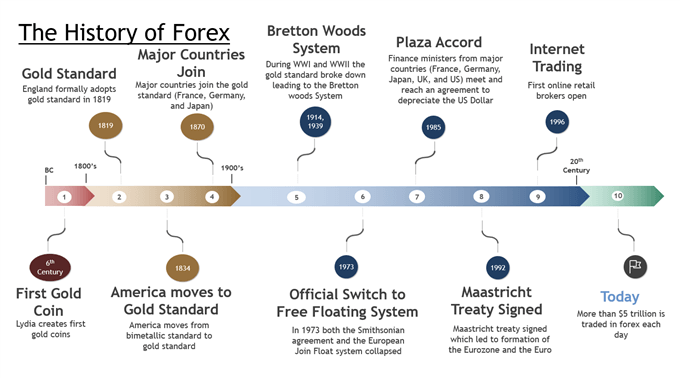
You’ve probably heard the buzz about currency trading, but how did it all start? The History of Forex isn’t just some dusty timeline—it’s the backstory of how a global, fast-paced market exploded from ancient trade routes to the $7-trillion-a-day beast it is now. If you’re thinking about jumping into Forex trading, understanding how it got here could save you some serious headaches.
As Warren Buffett once said, “Risk comes from not knowing what you’re doing.” The truth is, today’s Forex tools, apps, and strategies all trace back to moments in history when markets shook, governments shifted, and money changed hands—literally.
This guide breaks it down so it actually makes sense. You’ll see how the past connects to the screens we trade on today—and why knowing the story behind the chart could give you an edge.
What Is Forex Trading and How Did It Begin?
Origin of currency exchange systems
Before dollars, yen, or euros, there was the barter system. People exchanged goods directly — like grain for fabric or tools for livestock. It worked... until it didn’t. Why? Because it lacked flexibility and standardized value. You can’t always trade a goat for shoes.
To solve this, early civilizations created basic currency systems — using shells, salt, or metal objects as a medium of exchange. These items held perceived value and simplified trade. Eventually, rulers minted coins to represent value more precisely, introducing early exchange mechanisms.
As international trade expanded, these systems became more structured. Over time, currency exchange evolved into an organized network, enabling smoother rate conversion between regions. That marked the true origin of global Forex.
Early trade and money concepts
Early trade wasn’t fast or fancy. It was survival-based — people swapped what they had for what they needed. This is what we call a primitive trade system, and it formed the base of our modern economy.
Back then, the idea of money didn’t exist yet. But society needed a better system than “three chickens for a pot.” So, commodity money entered the scene — things like copper, salt, and cattle, which were widely accepted in transactions.
Over time, civilizations developed the concept of value storage and portable currency. Coins with stamped images became common, representing agreed-upon worth. The concept of money systems began to take form, transitioning humanity from isolated barter exchanges to structured economic systems.
First centralized currency markets
Once kingdoms started dealing with distant markets and rising trade volumes, there was a need for more stable exchange systems. Enter: centralized currency markets — the first form of formal currency exchange institutions.
These entities, often government-backed or merchant-run, played a crucial role. They controlled exchange rates, ensured secure mechanisms for transferring value, and regulated money movement between regions.
| Institution | Country | Founded | Core Function |
|---|---|---|---|
| Bank of Amsterdam | Netherlands | 1609 | Currency clearing, reserve banking |
| Medici Bank | Italy | 1397 | Managed bills of exchange, credit |
| Royal Exchange | England | 1571 | Trading venue for merchants |
| Hamburg Bank | Holy Roman Empire | 1619 | Standardized silver currency trade |
These markets laid the groundwork for today’s massive, digital Forex trading systems. The transition from informal barter to regulated currency institutions was not just a financial upgrade — it was an evolutionary leap in human commerce.
Major Shifts in Forex Trading History
The gold standard system
The gold standard locked a country’s currency value to a specific quantity of gold, promoting stability in exchange rates and international trade. Under this system, governments needed sufficient reserves to back their currency’s full convertibility into gold.
This setup limited monetary policy flexibility. For instance, during recessions, governments couldn’t print more money without equivalent gold. Still, it brought trust to global commerce—nations knew what each currency was worth.
| Country | Gold Reserves (circa 1935) | Currency Peg to Gold |
|---|---|---|
| United States | 11,000 metric tons | $35 per ounce |
| United Kingdom | 8,000 metric tons | £4.25 per ounce |
| France | 7,400 metric tons | 100 Francs per ounce |
The Bretton Woods agreement
Crafted in 1944 at a global conference in Bretton Woods, New Hampshire, this agreement laid the foundation for a new world financial order. The system tied major currencies to the US Dollar, which was itself pegged to gold at $35/oz.
This created a form of fixed exchange rates, while also launching the International Monetary Fund (IMF) and World Bank to support financial stability and post-war reconstruction.
“Bretton Woods was more than an agreement—it was the economic reboot of the 20th century,” said Dr. Lydia Warren, currency historian and IMF advisor.
It worked—until U.S. gold reserves couldn’t support the demand for dollar conversions, setting the stage for collapse.
End of fixed exchange rates
In 1971, President Richard Nixon halted the convertibility of the US Dollar to gold, a move known as the Nixon Shock.
This act dismantled the Bretton Woods system, as countries could no longer rely on a stable dollar-to-gold peg.
Fixed exchange rates were increasingly vulnerable to currency speculation, massive capital flows, and inflationary pressures.
By the late 1970s, most developed countries transitioned to floating exchange rate regimes.
This marked the official collapse of global fixed currency alignment, forcing central banks to take on greater responsibility for managing their economies through interest rates and money supply.
Emergence of floating currencies
With floating exchange rates, currency values now rise and fall based on market forces like supply and demand, interest rate differentials, geopolitical events, and monetary policy actions from central banks.
There’s no gold safety net here. Currency values can swing sharply—good news for traders, nerve-wracking for governments. The shift introduced more volatility and speculation, but also gave economies room to breathe and adjust faster.
This setup, while chaotic at times, reflects a modern, globalized financial world—one that’s dynamic, interconnected, and driven by perception as much as policy.
Birth of Modern Forex Trading
Rise of retail Forex brokers
The rise of retail Forex brokers reshaped global trading. What was once a market dominated by banks and hedge funds is now accessible to students, freelancers, and part-timers.
Back then, you needed millions to play. Today? You can start with as little as $10. That’s thanks to leverage, tight spreads, and online platforms offering margin trading tools even beginners can use. MetaTrader 4 and MetaTrader 5 became household names, offering real-time data, technical indicators, and algorithmic trading features.
Some brokers follow ECN (Electronic Communication Network) or STP (Straight Through Processing) models, offering direct access to the market without dealing desk interference.
Comparison of Broker Features
| Broker Type | Average Spread (EUR/USD) | Leverage Offered | Platform Example |
|---|---|---|---|
| ECN Broker | 0.1 – 0.3 pips | Up to 1:500 | MetaTrader 4 (MT4) |
| STP Broker | 0.5 – 1.2 pips | Up to 1:200 | cTrader, MT5 |
| Market Maker | 1.5 – 3.0 pips | Up to 1:1000 | Proprietary platforms |
As regulations tightened globally (from entities like the FCA and CFTC), brokers were forced to adopt stricter compliance measures, which has boosted trader confidence—though scams still exist in unregulated zones.
Growth of internet-based trading
The internet turned Forex trading from a niche activity into a mainstream online hustle. Let’s face it—before the internet, only a few insiders even knew what currency pairs were. Now? High school students trade during lunch breaks.
Trading platforms like MetaTrader, cTrader, and even proprietary mobile apps made online trading feel intuitive.
Electronic trading gave instant access to Forex, stocks, crypto, and CFDs, with near-zero latency.
The rise of mobile trading means you don’t need a setup—just a smartphone and some guts.
Some people even automate their trades using algorithmic trading bots that analyze market data 24/7. It’s no longer a question of "Can I trade?" but "How fast can I enter and exit?"
“Internet-based trading leveled the field—everyone's got access, but not everyone's got discipline,” says Ravi Kapoor, senior trading strategist at Quantum Markets.
This shift didn’t just expand access; it redefined how, when, and who trades. From casual day traders to full-time pros, the game’s changed—forever.
Which Events Changed Forex Trading Forever?
Black Wednesday market collapse
On September 16, 1992, the British government tried to keep the pound within the European Exchange Rate Mechanism (ERM). But massive pressure from currency speculators, especially George Soros, overwhelmed the Bank of England’s efforts. Soros shorted the pound hard—and walked away with over $1 billion in profit.
This event exposed how limited central banks can be when fighting market forces. Forex traders learned a crucial lesson: sometimes governments can’t win against the market. Since then, volatility in currency pairs has been seen as both a threat and an opportunity.
“Markets can stay irrational longer than governments can stay solvent.” — Popular trading adage
2008 global financial crisis
The 2008 meltdown wasn’t just about stocks—it rocked the Forex world, too. Here's what happened:
Interbank trust broke down, tightening liquidity in Forex.
Currencies like the U.S. dollar and Japanese yen surged as safe havens.
Riskier currencies (like the South African rand or Turkish lira) tanked overnight.
Retail traders faced wider spreads and more margin calls, while institutional investors had to reassess how macroeconomic chaos influences currency valuation. It also sparked new regulations and closer scrutiny of broker practices, especially around leverage.
“Forex isn't just charts and candlesticks. The 2008 crisis reminded us that geopolitics and finance are deeply linked.” — Thomas Reid, FX analyst at MarketPulse
Flash crashes in Forex markets
Flash crashes are the market’s way of saying, “I can still surprise you.” These are sudden, sharp price drops in major currency pairs—often without any clear catalyst.
The infamous 2016 pound crash? GBP/USD lost 6% in less than two minutes, triggered by a mix of algorithmic trading errors and low liquidity in the Asian session. These crashes continue to haunt even experienced traders.
| Year | Currency Pair | % Price Drop | Time of Day |
|---|---|---|---|
| 2016 | GBP/USD | 6.0% | 7:07 AM HKT |
| 2019 | USD/JPY | 3.7% | 9:35 AM JST |
| 2020 | AUD/JPY | 5.2% | 2:01 AM GMT |
Platforms now implement circuit breakers, and some brokers limit leverage during illiquid sessions. Still, it’s a cold reminder: even in highly liquid markets, unpredictability rules.
Forex Trading Platforms Evolution
MetaTrader 4 and MetaTrader 5
MT4 and MT5 are two of the most popular trading platforms in the Forex world, developed by MetaQuotes. MT4, released in 2005, is known for its stability, simplicity, and strong support for automated trading through Expert Advisors written in MQL4. MT5, launched in 2010, was built to expand on MT4's features—offering more technical indicators, extra order types, economic calendars, and support for trading stocks and commodities.
Both platforms support charting tools, backtesting, and algorithmic trading, but MT5 offers faster execution and multi-threaded processing, making it better suited for complex strategies and diverse asset classes.
| Platform | Language | Release Year | Supported Assets |
|---|---|---|---|
| MT4 | MQL4 | 2005 | Forex only |
| MT5 | MQL5 | 2010 | Forex, stocks, futures |
Traders often stick with MT4 due to habit and broker support, but MT5 is becoming the new industry standard for advanced users and institutional traders.
Mobile apps for Forex trading
Smartphone trading has completely reshaped how retail traders engage with the market. Whether you’re using an iPhone or Android, mobile trading apps now give you access to real-time quotes, technical analysis, and one-click order execution. You can monitor open trades, check mobile charts, and receive instant push alerts for price movements or margin calls.
Mobile platform features are ideal for people who can’t sit at a desk all day. Whether you're grabbing coffee, commuting, or on a lunch break—you can trade.
Examples of core app features include:
Account balance monitoring
Trade history review
Multi-chart view
Biometrics for login security
API integration for custom strategies
If you’re serious about Forex and want full control, API integration is the next level. With access to your broker’s trading API, you can create custom-built systems that interact directly with market data, execute trades in real time, and adapt strategies on the fly.
Choose your language – most APIs work with Python, C++, or Java.
Design your logic – whether it’s scalping or hedging, define your algorithm.
Backtest & deploy – simulate historical performance before going live.
This kind of automated trading is ideal for developers and quantitative traders who want lightning-fast response and tight integration with external data feeds or indicators.
“The ability to connect your custom logic directly to live markets is a game changer,” says Rachel Munoz, Lead Developer at TradeFlow Labs.
Web-based trading terminal growth
Web terminals are the new norm for brokers targeting accessibility and convenience. Unlike downloadable software, web-based platforms don’t require installation—just log in from Chrome, Firefox, or Safari, and you're ready to go.
These terminals offer full cross-platform compatibility, meaning you can switch between your laptop, tablet, and phone without losing your workspace. They come with responsive design, real-time market data, web charting, and even support for multi-monitor layouts in some advanced versions.
Web-based platforms are especially popular among newer traders and digital nomads who want flexibility without sacrificing function.
How Technology Transformed Forex Trading?
Impact of AI in trading
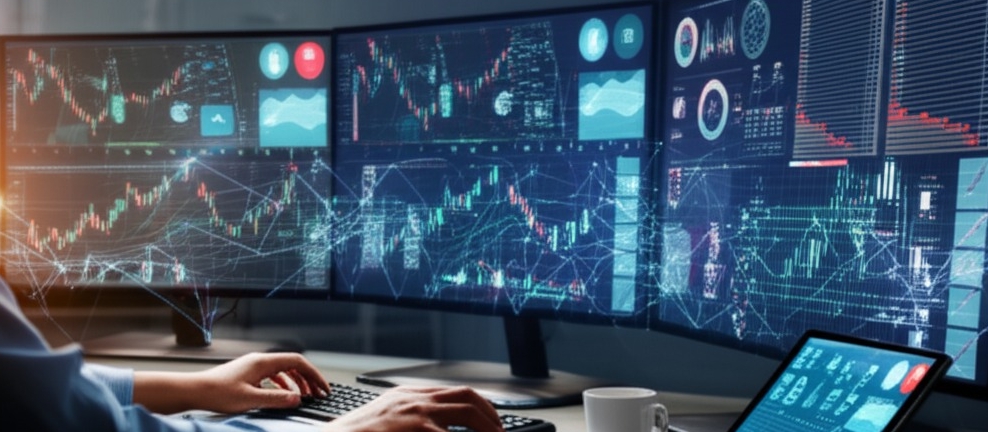
Artificial Intelligence (AI) has brought serious smarts to the Forex world. This isn’t just number crunching—it’s learning, predicting, and reacting in real-time.
AI in Forex uses machine learning to study patterns across massive datasets, like years of candlestick movements or economic events.
Deep learning goes even deeper, recognizing subtle shifts in market sentiment that humans often miss.
Automation and risk control: Traders now rely on AI bots that self-adjust risk thresholds based on real-time volatility. No more panic selling or sleepy trades at 2 a.m.
In casual terms? AI doesn’t take bathroom breaks, doesn’t get emotional, and never forgets a pattern. That’s why it’s showing up in everything from MetaTrader 5 plugins to hedge fund infrastructure.
“AI has moved beyond the hype—it’s a working trader in today’s Forex space.”
— Marcus Lang, Chief Technology Officer at FXBotTech
High-frequency algorithmic systems
High-frequency trading (HFT) is like the Formula 1 of Forex—built for speed, precision, and high-stakes gains.
HFT systems run on lightning-fast algorithms that make decisions in nanoseconds, often exploiting tiny price movements dozens of times a second.
Latency optimization is everything. Firms install their trading servers near exchange hubs (co-location) to shave off milliseconds.
Order book manipulation and market microstructure analysis are used to predict how prices might shift before retail traders even blink.
These systems are driven by PhDs in physics and finance, but they power a huge chunk of everyday market liquidity.
Execution Speed in Forex Trading Systems
| Trading Method | Avg. Execution Time (Milliseconds) | Avg. Orders per Second |
|---|---|---|
| Manual Trading | 1,000–3,000 | <10 |
| Standard Algorithmic | 100–500 | 100–300 |
| High-Frequency (HFT) | 1–10 | 1,000+ |
While not every trader needs HFT or AI, understanding how they shape the Forex environment is critical. Even if you’re trading small, you’re sharing a digital floor with machines that move in microseconds.
Is Forex Trading Still Profitable Today?
"You can still make money in Forex. Just not the way you did ten years ago," says Darren Cole, a seasoned Forex strategist based in New York, who has coached thousands of traders since 2004. “Back then, all you needed was a basic chart and some gut instinct. Now? If you are not integrating technology and managing risk like a pro, you are playing a losing game.”
Profitability in Forex trading today is alive—but far from guaranteed. The entire landscape has shifted. High-speed trading, stricter global regulation, and more intense market volatility have all changed the rules. The days of easy wins are long gone. What remains are opportunities—but only for those who understand the game and stay disciplined.
What Makes Forex Still Profitable for Some?
Traders who are successful in today’s Forex market usually share several habits:
They have solid risk management systems in place—setting tight stop-losses, knowing when to walk away
They use advanced trading strategies, including algorithmic systems and data-driven models
They are aware of regulatory shifts and avoid over-leveraging their capital
They continuously adapt their approaches based on market volatility and global news
Maria Lopes, a lead analyst at FXCM, explains:
"Profit is still on the table. The tools are better, but the competition is sharper. If you are not evolving, you are getting left behind."
Statistical Insight
According to a 2024 Forex.com report, over 68% of retail traders who turned a consistent profit used automated trading platforms. Many paired those platforms with strict journaling habits and real-time market alerts.
Anika Rodriguez, a full-time trader from Miami, shared her experience:
"Before automation, I was emotionally reacting to every price spike. Once I brought in AI-based trade filters, my losses dropped by half in just three months."
Key Factors Affecting Profitability Today
| Strategy Depth | Shallow strategies no longer work. Scalping, grid systems, or martingale methods need refinement or replacement. |
| Risk Management | Traders now treat risk controls as non-negotiable. One bad trade without a stop can end your month. |
| Technology Use | From MetaTrader bots to Python-based scripts, those who automate gain speed and reduce error. |
| Market Access | Regulated brokers with tier-one liquidity offer tighter spreads and better execution. |
| Psychological Discipline | With thousands of trades possible a month, emotional control separates winners from quitters. |
Experience Still Matters
Veterans like Darren Cole point out that no bot can replace market feel. He says, “There are patterns the charts cannot tell you. Only experience teaches that. You learn it after hundreds of hours watching how price moves before big announcements or during thin liquidity periods.”
Certificates, awards, and broker trust scores are also becoming more important in choosing who to trade with. Traders increasingly look for brokers with NFA, ASIC, or FCA certifications to feel confident their funds are safe.
So, Is Forex Still Profitable?
Yes—for the informed, the prepared, and the adaptable. It is no longer the Wild West, but it is still a frontier of opportunity.
Traders who treat Forex like a business—leveraging technology, following regulations, using smart strategies, and practicing strong risk management—are still seeing meaningful returns. Those who treat it like gambling, hoping for luck, often disappear within months.
Forex is not dead. It has just grown up.
Conclusion
Forex didn’t just pop up overnight — it’s been a wild ride from ancient coin swaps to lightning-fast digital trades. Knowing the history isn’t just trivia; it’s like having a map in a market that never sleeps. If you're trading blind, you're betting more than money — you're betting your peace of mind.
As economist Milton Friedman once said, “Only a crisis—actual or perceived—produces real change.” Forex history proves it. Smart traders learn from the past, not just the price chart.
Forex trading, or foreign exchange trading, involves buying and selling currencies to profit from fluctuations in their value. Traders aim to exchange one currency for another at the most favorable rates, typically using online platforms.
The history of Forex began with the need for currency exchange in ancient trade routes. Over centuries, this evolved into more organized systems with coinage, central banks, and finally, modern currency markets influenced by politics, economics, and global finance.
Collapse of the Bretton Woods system
Nixon’s 1971 decision to suspend the gold standard
The 1992 Black Wednesday crisis
The rise of online retail Forex in the 2000s
These are called "major pairs" and account for the highest trading volumes globally.
EUR/USD
GBP/USD
USD/JPY
USD/CHF
Technology has transformed Forex trading by making it faster, more accessible, and increasingly automated. Platforms now support real-time data feeds, mobile apps, and algorithmic strategies, allowing traders to operate with more precision and flexibility than ever before.
Each platform offers demo accounts, which are great for learning without financial risk.
MetaTrader 4 (MT4) – widely used, beginner-friendly
cTrader – clean interface, ideal for manual trading
TradingView – popular for chart analysis and education
Yes, Forex trading can still be profitable, but it depends on:
Past success is not a guarantee of future profits, so informed decision-making is key.
Having a well-researched strategy
Effective risk management
Staying updated on global economic events