


Table of contents
So you’ve heard people talking about trading dollars and euros from their phones and earning a side income. Sounds slick, right? But when it comes to how forex market works in India?, things aren’t as free-flowing as they seem abroad. In India, forex is like a cricket match with strict rules—you can't just play your own shots unless you're following the pitch conditions set by RBI and SEBI.
Most folks jump in thinking it's a quick money game, only to hit roadblocks like legal restrictions, limited currency pairs, and confusing broker choices. As SEBI once warned, “unauthorized forex trading can land you in serious trouble.” That’s where knowing the system can save your skin—and your savings.
This guide breaks it all down, no jargon, no fluff. Just straight talk on how to start, what’s allowed, and how to stay safe while trading in India’s forex jungle.
Forex Market Basics in India

Definition of forex market India
The foreign exchange (forex) market in India is a segment of the global financial system where participants buy, sell, and exchange currencies at prevailing exchange rates. In India, the forex market is overseen by the Reserve Bank of India (RBI) and is tightly regulated to prevent currency manipulation and capital flight.
The primary purpose of the Indian forex market is to:
Facilitate international trade and remittances.
Maintain exchange rate stability.
Support foreign investment flows.
India's forex transactions mostly occur in the spot market, meaning currency exchanges happen almost immediately at the current market rate. Participants include commercial banks, corporations, importers/exporters, and institutional investors.
How currency exchange works
Currency exchange is like a behind-the-scenes conversion booth operating globally 24/5. Here's how it works:
A buyer and seller agree on an exchange rate (e.g., USD/INR).
The bid price is the rate a buyer is willing to pay.
The ask price is the rate a seller wants in return.
The spread is the small profit margin for banks or brokers.
A conversion takes place—this could be for business, travel, or investment.
Let’s say you want to convert ₹10,000 to USD:
Bid = 83.20
Ask = 83.45
You receive ≈ $119.80
Currency exchanges in India are usually handled by banks, licensed money changers, and travel agencies. They make revenue from transaction fees and exchange spreads.
Indian forex market structure
India’s forex market is structured into two core segments:
| Segment | Participants | Nature of Trades |
|---|---|---|
| Interbank Market | RBI, Commercial Banks, Financial Firms | Bulk currency trading |
| Retail Market | Individuals, Importers/Exporters | Small, customer-driven |
This market operates under a managed float exchange rate system, where the RBI allows market forces to determine the rupee’s value but intervenes when volatility threatens economic stability.
Key components include:
Authorized dealers (banks and NBFCs).
Currency exchanges and electronic trading platforms.
Over-the-Counter (OTC) trades dominate, but some contracts are cleared through recognized exchanges like NSE or BSE.
The structure ensures liquidity, compliance, and capital flow control—all vital for India’s economic security.
Role of RBI in forex market
The Reserve Bank of India (RBI) acts as both a regulator and a stabilizer in India’s forex market. It is tasked with:
Regulating forex reserves to manage demand/supply shocks.
Supervising foreign exchange dealers under FEMA (Foreign Exchange Management Act).
Intervening in the market to curb sharp rupee fluctuations.
When there’s a sudden drop in the rupee’s value, RBI might sell dollars to support the INR. On the flip side, if the rupee strengthens too fast, it might buy dollars to stabilize exports.
“We act when markets misbehave,” said an RBI official, referring to an unexpected rupee drop in 2023 that triggered a $5 billion intervention.
RBI's monetary policy tools also include adjusting interest rates, which indirectly influence forex inflows and outflows. The RBI is essentially the market's safety net and watchdog.
Is Forex Trading Legal in India
RBI Guidelines on Forex Trading
Forex trading in India is governed by the Reserve Bank of India (RBI) through the Foreign Exchange Management Act (FEMA). These rules ensure all foreign exchange transactions are compliant, traceable, and conducted within a legal framework.
Key elements of RBI’s forex trading guidelines include:
Authorized Dealers (ADs): Only entities licensed by RBI can facilitate foreign exchange transactions.
Permitted Transactions: Retail traders can only trade in specific INR currency pairs on recognized Indian exchanges.
Liberalised Remittance Scheme (LRS): Allows individuals to send up to $250,000 per year abroad for investments, including specific types of forex trades.
Reporting Requirements: Traders must maintain documentation and reports for all forex activities for audit and legal verification.
Risk Management: Leverage, position size, and exposure must align with RBI’s risk control protocols.
“The RBI is not anti-trade—it’s pro-transparency. If you’re within the limits of FEMA, you’re good to go,” — Rajiv Patkar, FX Compliance Analyst
Legal Forex Instruments in India
In India, you can’t just hop onto any global forex platform and start trading random pairs. There are specific instruments that are legal, and they must be traded under oversight—typically on regulated exchanges.
Here's a breakdown of permitted forex instruments in India:
| Instrument Type | Legality Status | Where Traded |
|---|---|---|
| INR Currency Pairs | Legal | NSE, BSE, MCX-SX |
| Cross Currency Futures | Legal (limited) | NSE/BSE (EUR/USD, GBP/USD, USD/JPY) |
| OTC Forex | Not Legal | Not allowed for retail investors |
| Derivatives (Options) | Legal (on pairs) | Indian regulated exchanges |
Common legal instruments include:
Spot Market Trading: Involves buying/selling currency at current rates; only allowed for certain INR pairs.
Forward Contracts: Mostly used by businesses for hedging, these are allowed through authorized dealers.
Futures Contracts: Available on exchange platforms with limited pair options.
Options Contracts: Permitted for hedging and speculative purposes, but again, only on allowed pairs.
Note: Trading forex through international brokers like those offering MetaTrader platforms is illegal for Indian retail investors unless routed through LRS with strict documentation.
This legal foundation helps protect Indian traders from scams and unregulated exposures while ensuring compliance with national financial policy.
Forex Market Platforms in India

SEBI-approved forex brokers
If you're trading forex in India, using a SEBI-approved forex broker isn't just a good idea—it's the law. SEBI (Securities and Exchange Board of India) governs the Indian financial markets and only allows trading through regulated brokers who facilitate INR-based currency pairs via recognized exchanges like NSE or BSE. These brokers are required to comply with capital adequacy norms, investor protection standards, and transparent fee structures.
Here's a table showing real, SEBI-registered brokers for forex trading:
| Broker Name | SEBI Reg. No. | Market Access |
|---|---|---|
| Zerodha | INZ000031633 | NSE Currency |
| Angel One | INZ000161534 | BSE, NSE Currency |
| ICICI Direct | INZ000000164 | NSE Currency |
| HDFC Securities | INZ000186937 | BSE, NSE Currency |
| Kotak Securities | INZ000200137 | BSE, NSE Currency |
These authorized brokers don’t provide access to global forex markets like EUR/USD or GBP/USD directly, but you can trade INR pairs like USD/INR or EUR/INR via exchange-traded derivatives.
Always double-check the broker’s SEBI license on the SEBI website before signing up.
Forex trading apps in India
In India, mobile-first is the norm—and forex trading apps have caught up. Modern apps now offer a full suite of tools, letting you trade from anywhere with real-time prices, candlestick charts, technical indicators, and biometric-secured logins. They also provide features like fund transfers, instant order execution, and P&L summaries.
Popular apps in India include:
Zerodha Kite App – Clean UI, excellent charting with TradingView integration
Angel One App – Good for beginners, includes educational content
ICICI Direct Markets App – Strong security, suited for high-value traders
Whether you're analyzing USD/INR movement on your lunch break or setting alerts on the go, these trading platforms offer the flexibility that desktop terminals just can’t match.
And let's be honest: no one likes a laggy app. A slick user interface, real-time data, and secure execution can make the difference between a good trade and a missed one.
Choosing the right forex platform
There’s no “one-size-fits-all” when it comes to choosing a forex platform in India. You need to find a platform that aligns with your goals, budget, and experience level. Here’s how to make a smart pick:
Execution Speed – Look for platforms that process trades with minimal latency. Delays can literally cost you money.
Security & Regulation – SEBI oversight is non-negotiable. Extra points if the platform supports 2FA and data encryption.
Features – Look for tools like customizable charts, risk management settings, and news feeds.
User Interface – If the platform is hard to navigate, you'll hesitate—and hesitation in forex can be costly.
Demo Access – A demo account lets you test the waters without financial risk before switching to a live account.
You don’t need a platform with all the bells and whistles—just the right ones. Prioritize charting tools, regulation, and fast trade execution.
“A platform is your cockpit—if you don’t know how to fly it, you’re heading straight for turbulence,” says Ritesh Jain, former CIO of Tata Mutual Fund.
What Are the Forex Trading Hours in India
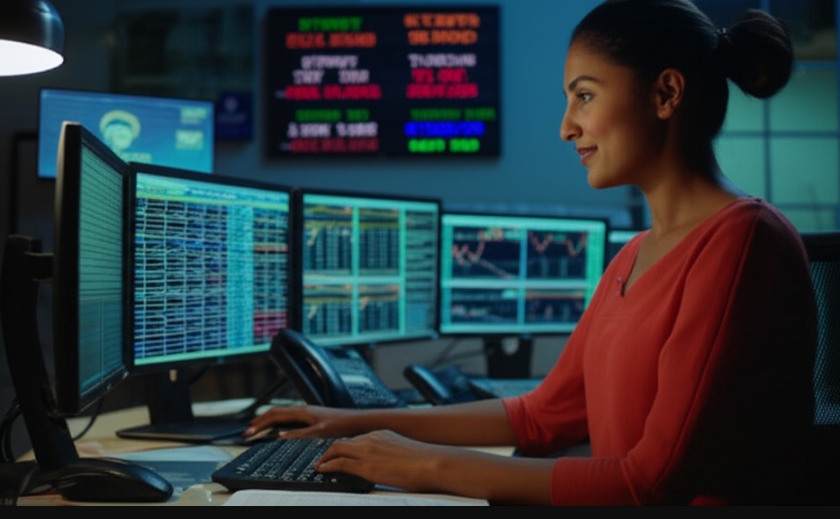
Late one evening in Bengaluru, currency analyst Deepika Menon turned off her terminal just after 10:30 PM IST. “That last hour of the New York–London overlap? That is where the real price action is,” she smiled. Her words echoed what seasoned traders know well—forex trading hours are not just about time zones, they are about timing opportunities.
The forex market operates 24 hours a day due to its global nature, with trading sessions rotating across key financial centers: Sydney, Tokyo, London, and New York. Yet for Indian traders, everything must sync with Indian Standard Time (IST).
Quick reality check: The Indian forex market is not a 24/7 free-for-all. The Reserve Bank of India (RBI) regulates participation and only permits trading in select currency pairs through exchanges like NSE, BSE, and MCX-SX.
So what does that mean for real-time decision making?
Here is how trading hours align with IST and how each session impacts your trading strategy:
| Session Name | IST Timing | Key Features | Best for Indian Traders |
|---|---|---|---|
| Sydney Session | 3:30 AM – 12:30 PM | Low volatility, opens the week | Quiet strategy testing, small moves |
| Tokyo Session | 5:30 AM – 2:30 PM | Yen pairs active, moderate volume | JPY/INR or Asia-focused trading |
| London Session | 1:30 PM – 10:30 PM | High liquidity, strong market direction | Major market moves, GBP, EUR pairs |
| New York Session | 6:30 PM – 1:30 AM | Economic news, major USD flows | Volatile swings, aggressive trades |
| London–New York Overlap | 6:30 PM – 10:30 PM | Peak liquidity, most traded hours | Prime time for serious strategies |
Expert Note: “You would not want to swing a trade without understanding the volume flow,” said Rajesh Nair, technical strategist at an RBI-recognized forex training institute. “The session overlap is when price momentum is real, spreads tighten, and execution gets efficient.”
When Indian Traders Thrive
Session Overlaps: Especially the London–New York period, offer explosive momentum—ideal for breakout or news-based strategies.
IST Strategy Syncing: Avoid low-volume hours where slippage can erode profits.
Use Tools Like: Economic calendars, volume trackers, and volatility indices aligned to IST, not GMT or EST.
Personal Take
Naveen, a 29-year-old swing trader from Pune, shared: “I made more progress timing my entries during 6:30 to 9 PM than grinding 12 hours a day. Understanding trading hours changed my win rate.”
In India, where traders often juggle other careers, this timing knowledge becomes more than tactical—it becomes liberating.
Pro Tip: Stick to RBI-regulated hours and platforms. Use authorized brokers and remain INR-compliant for full legal protection and risk management.
Emotional Edge: Knowing when to trade, not just how, brings confidence. Forex is not luck—it is timing, structure, and restraint.
Forex Market Account Setup India
Documents needed for forex account
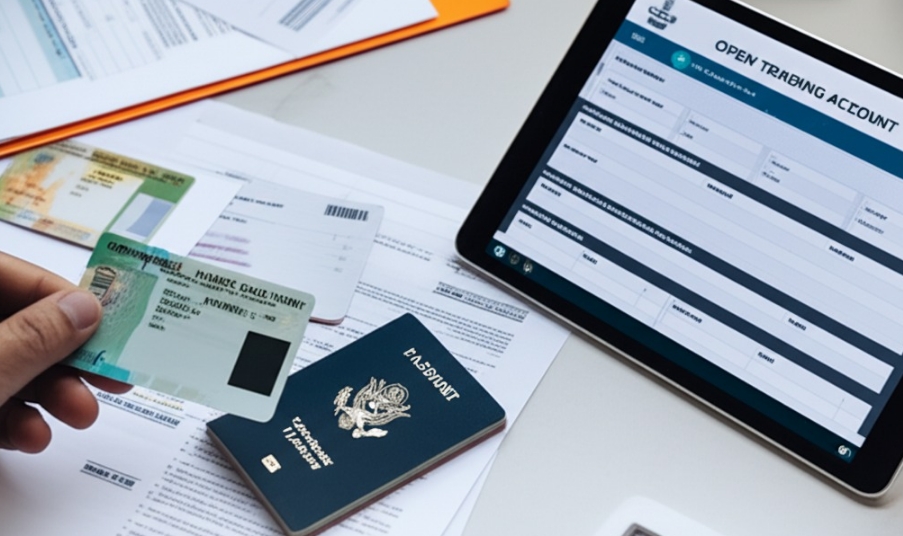
To open a forex account with an Indian trading broker, you need to complete the Know Your Customer (KYC) procedure. This is not just a formality—it's legally required for regulatory compliance and fraud prevention.
Here’s what most brokers will ask for:
Identification Document: A government-issued ID like PAN card, Aadhaar card, or a passport copy
Proof of Address: Utility bills (like electricity or water), bank statement, or a rent agreement
Photograph: A passport-size photo or a selfie (some brokers require live verification)
Application Form: Usually a digital form, filled directly on the broker’s platform
“People often skip document checks, but that’s where trouble starts. The KYC keeps you safe—and legal,” says Rahul Mittal, Chief Compliance Officer at iTrade India.
Sample Document Checklist Table
| Document Type | Accepted Examples | Notes |
|---|---|---|
| Identity Document | PAN Card, Passport | Mandatory for tax & KYC |
| Address Proof | Utility Bill, Bank Statement | Dated within last 3 months |
| Photo | Passport-size, Selfie | May require webcam/live capture |
Steps to open trading account
Opening a trading account in India isn’t a tech wizard’s job. With just a few steps, you're on your way to trading currency pairs on a secure platform.
Here’s how to do it:
Broker Selection
Choose a SEBI-regulated broker. Think security, ease of use, and forex support.Online Application Form
Fill out the broker’s digital form with your personal and financial info.Identity & Address Verification
Upload the necessary documents for KYC verification. Some platforms also use e-signatures and video calls.Account Funding
Make an initial deposit through UPI, bank transfer, or net banking. Brokers usually set a minimum funding amount.Account Approval & Platform Access
After verification, your account gets approved. Then you’ll receive login credentials for web or app-based trading.Sign the Trading Agreement
Read and accept the broker’s trading agreement before executing trades.
It’s smooth sailing once you’re verified. And yes, you’ll finally see those live charts and currency pairs flashing green and red.
Which Forex Pairs Are Allowed in India

INR-based currency pairs only
In the Indian forex market, only INR-based currency pairs are allowed for retail trading. These include:
USD/INR
EUR/INR
GBP/INR
JPY/INR
These pairs are available for trading on regulated exchanges such as NSE, BSE, and MCX-SX through futures and options contracts. The RBI (Reserve Bank of India) limits access to just these pairs to ensure better market control, minimize currency speculation, and protect the exchange rate of the Indian Rupee.
These pairs are considered more stable and are monitored more closely. Cross-currency pairs, such as EUR/USD or USD/JPY, are not permitted for retail investors. This rule ensures the focus remains on domestic currency exposure and helps keep the market stable and transparent for small traders.
Cross-currency pair restrictions
Retail investors in India are not allowed to trade cross-currency pairs freely—think USD/EUR or GBP/JPY. This is because of strict RBI and FEMA (Foreign Exchange Management Act) regulations that aim to keep the Indian forex market controlled and compliant.
Here’s what these restrictions typically mean:
You cannot trade non-INR-based pairs unless you're classified as an Authorized Dealer, hedging entity, or financial institution.
Trades must occur on recognized Indian exchanges that list only approved instruments.
Violation of cross-currency trade rules can result in legal penalties and account bans.
This regulatory framework is India’s way of balancing market access with economic risk management. It protects the country from capital flight, currency manipulation, and unregulated speculation.
USD-INR volatility overview
The USD/INR pair is the most traded and most watched currency pair in India. It’s also the most volatile—meaning prices change quickly, often unpredictably.
This volatility is driven by:
Economic announcements like GDP growth, interest rate changes, or inflation numbers
Global market sentiment, especially around the US dollar
Geopolitical events and policy decisions by central banks
In 2024 alone, the pair saw wild swings from ₹81.05 to ₹84.22 due to fluctuations in oil prices, US Fed rate hikes, and domestic fiscal data. Traders often use both implied and historical volatility metrics to guide their trades. It’s a high-risk, high-reward scenario.
"Trading USD/INR without understanding its behavior is like riding a bull blindfolded." – Ramesh K. Mehta, FX Risk Consultant, Mumbai
Impact of regulation on pairs
Regulation in India has a direct influence on what currency pairs are available, how liquid those pairs are, and how traders behave. Here's a breakdown of how RBI and FEMA policies shape forex trading:
| Regulatory Factor | Currency Pair Impact | Market Behavior Effect |
|---|---|---|
| RBI pair limitations | Limits to 4 INR pairs | Lower pair diversity |
| FEMA compliance rules | Reduced cross-pair access | Fewer arbitrage opportunities |
| Capital controls | Suppress foreign pair flow | Focus shifts to INR-based trading |
| Periodic circulars | Sudden access changes | Short-term disruptions in volume |
These rules aim to stabilize the market structure, reduce speculative trading, and promote responsible participation. While it narrows your trading options, it adds a layer of safety and regulatory oversight—especially important for newer investors navigating the complex world of forex.
Forex Market Risks and Safety in India

Risk of forex leverage
Using leverage in forex trading can make small wins look big—but it can also turn minor losses into disasters. Leverage allows you to control a large position with a small amount of money, called margin. But with high leverage comes high volatility, and if the market moves against your trade, you can face a margin call or liquidation.
Many traders, especially beginners, fall into the trap of overleveraging. The more you're exposed, the faster you can drain your account—and even end up in debt.
Here’s a quick comparison of how leverage affects potential losses:
| Leverage Ratio | Capital Used (USD) | Potential Loss from 1% Move |
|---|---|---|
| 5:1 | $1,000 | $50 |
| 20:1 | $1,000 | $200 |
| 50:1 | $1,000 | $500 |
Tip: Stay conservative. In volatile pairs, high leverage is like playing with fire.
Recognizing forex scams India
India has seen a spike in forex fraud, especially through social media and WhatsApp groups. These scams often involve fake brokers, Ponzi schemes, or “mentor” traders who ask for deposits in exchange for trading signals or access to a platform. If the broker isn’t SEBI-regulated, that’s your first red flag.
Look out for these common signs of a forex scam:
No verifiable registration under SEBI or RBI.
Promises of “guaranteed” returns (there’s no such thing).
High-pressure sales language: “Act fast, or miss out.”
Withdrawal delays or blocked accounts after depositing.
“Real brokers don’t chase you. If they’re calling you daily, they’re probably hustling you.”
— Amit Bansal, Forensic Finance Consultant
Stay alert, and always double-check credentials on the SEBI website.
Safe trading practices
Let’s be real—most losses happen not because the market was wild, but because the trader didn’t have a plan. Practicing safe trading is like wearing a seatbelt: you might not need it every time, but it could save your account one day.
Here’s a checklist for safer trading:
Use stop-loss and take-profit orders on every trade.
Never risk more than 1–2% of your capital per trade.
Build and follow a trading plan that fits your risk tolerance.
Start with a demo account to test strategies.
Stick to regulated brokers—avoid shady platforms.
Learn to chill. Emotional control beats revenge trading.
Don’t just focus on making money—focus on protecting it.
Conclusion
Trading in the forex market in India isn’t rocket science, but it’s not a free-for-all either. Think of it like driving on Indian roads—you need to know the rules, follow the lanes, and choose the right vehicle. Stick to INR pairs, use RBI-approved platforms, and don’t fall for shortcuts or shady brokers.
As RBI rightly says, “Forex trading must be carried out within the prescribed regulatory framework to safeguard public interest.” Stick with the legit route, and you’re good to go.
Technically, Indian residents are not allowed to trade forex through international platforms that offer currency pairs not approved by Indian regulators. Doing so violates the Foreign Exchange Management Act (FEMA). Only SEBI-authorized brokers are legal for Indian traders.
These hours offer the highest liquidity and price movements.
1:30 PM – 4:30 PM IST (overlap of European and Asian sessions)
6:30 PM – 9:30 PM IST (overlap of European and U.S. sessions)
RBI only permits trading in a few currency pairs on Indian exchanges:
All trading must be done through authorized brokers on recognized exchanges like NSE or BSE.
INR-based pairs: USD/INR, EUR/INR, GBP/INR, JPY/INR
Cross-currency pairs (recently added): EUR/USD, GBP/USD, USD/JPY
Yes, but like any high-volatility market, it carries risks. Profit depends on strategy, market knowledge, and discipline. Many new traders lose money due to lack of planning and emotional decision-making.
The account is opened with a SEBI-registered broker, who will also complete KYC and risk profiling.
PAN Card
Aadhar Card (or other valid ID/address proof)
Bank account details
Recent photograph
Yes. Profits from forex trading are taxable as income from business or profession or capital gains, depending on the nature and frequency of trading. You may also be liable to pay GST and STT, depending on the instrument used.
Take certified online courses (some offered by NSE or SEBI-accredited platforms)
Practice on demo accounts before risking real money
Follow RBI and SEBI updates to stay compliant
Read forex trading books tailored to Indian laws and market behavior