


Table of contents
You’ve probably heard those stories—people diving into Forex with just a few bucks and coming out with stacks of cash. But is it really that simple? "How Much Money Do You Need to Start Trading Forex" is a question that nags almost every beginner. The answer isn’t one-size-fits-all, but understanding the basics can save you from costly mistakes. After all, you wouldn’t jump into the deep end of a pool without knowing how to swim, right?
According to the experts, starting small is fine, but knowing how to manage that small amount is what truly matters. Leverage, hidden fees, and risk management can turn your ₹10,000 into ₹50,000—or wipe it out in days. As Warren Buffett says, “Rule No. 1: Never lose money. Rule No. 2: Never forget Rule No. 1.”
In this guide, we’ll take you through everything you need to know: the minimum capital required, the role of leverage, and practical tips for growing your account safely. No fluff, just real talk. Ready to crack the Forex code? Let’s dive in.

1.What is the Minimum Amount of Money Required to Start Trading Forex?
Starting Forex trading requires understanding the minimum capital needed. Let’s break down the factors influencing how much you’ll need to get started.
Forex Brokers and Minimum Deposits
The amount of money required to start trading Forex heavily depends on the forex broker you choose. Each broker sets its own minimum deposit based on factors like broker regulation and the types of trading platforms they offer.
Here are some key considerations when choosing a broker:
Broker Regulation: Regulated brokers usually have higher minimum deposits but offer more security.
Leverage Options: Some brokers offer high leverage, reducing initial capital requirements but increasing risk.
Deposit Methods: Check if the broker supports your preferred payment method (e.g., credit cards, bank transfers).
Broker Fees: These include spreads, commissions, and other fees that can affect your trading budget.
Trading Platforms: Ensure compatibility with your device and desired trading features.
Expert Quote:
“A good broker balances low minimum deposits with reliable trading conditions.” – John Murphy, Forex Analyst.
Micro, Mini, and Standard Accounts
Forex accounts come in three main types: micro, mini, and standard. Each type has different lot sizes and capital requirements, influencing how much money you need to start.
Micro Account:
Lot Size: 1,000 units (0.01 lot)
Capital Requirement: As low as $10
Best For: Beginners testing strategies
Mini Account:
Lot Size: 10,000 units (0.1 lot)
Capital Requirement: Around $100
Best For: Intermediate traders focusing on small risks
Standard Account:
Lot Size: 100,000 units (1 lot)
Capital Requirement: Typically $1,000 or more
Best For: Experienced traders with larger capital
| Account Type | Lot Size | Minimum Deposit |
|---|---|---|
| Micro Account | 0.01 lot | $10 |
| Mini Account | 0.1 lot | $100 |
| Standard Account | 1 lot | $1,000 |
Understanding the differences helps you choose the right account type based on your risk management strategy.
Choosing the Right Starting Capital
Picking the right starting capital is crucial for successful trading. Your decision should reflect your risk tolerance, trading strategy, and the leverage impact.
Risk Tolerance: Higher capital allows more flexibility with position sizing.
Trading Strategy: Day traders might need more capital than swing traders.
Margin Requirements: Ensure your capital covers potential drawdowns.
Financial Goals: Align your initial investment with your expected returns.
Example Calculation:
If using 1:100 leverage with a $100 starting capital, you can control $10,000. However, high leverage also means increased risk.
In summary, choosing the right amount to invest in Forex trading depends on your financial goals and the broker options you select. Make sure to balance initial investment with the potential for loss.
2.Leverage and Starting Capital
Leverage is a game-changer in Forex trading, amplifying both potential profits and risks. Understanding how to use it wisely can make or break your trading journey.
Understanding Leverage Ratios in Forex
Leverage in Forex allows traders to control large trading positions with a relatively small amount of capital. The ratio represents how much capital a trader can borrow relative to their own. For example, a 50:1 leverage ratio means controlling $50 for every $1 invested.
Leverage Ratios Examples:
50:1: Control $5,000 with $100
100:1: Control $10,000 with $100
200:1: Control $20,000 with $100
Forex brokers set leverage limits based on regulations, account type, and currency pairs. Always review Broker Terms and understand the margin required. Calculating leverage's impact on Profit Potential and Risk Assessment helps maintain sustainable trading practices.
How Leverage Affects Risk Exposure
Leverage can significantly increase your Risk Exposure in the Forex market. While it can amplify gains, it also heightens potential losses. Imagine trading with 100:1 leverage – a minor market swing can lead to margin calls if the Account Equity drops below the required level.
Margin Calls: Occur when your equity falls below the broker’s margin requirements.
Stop-Loss Orders: Essential to limit potential losses in volatile markets.
Trading Psychology: High leverage can tempt impulsive trading; stay disciplined.
As a pro tip: "Use leverage as a tool, not a shortcut to profit." - James Carter, Forex Analyst
Leverage Strategies for Small Accounts
When trading with small capital, leverage can be both a friend and a foe. The key is to use it strategically.
Position Sizing: Start small to limit potential losses.
Scalping Techniques: Quick, small trades to gradually grow your capital.
Day Trading Methods: Focus on short-term trends to minimize exposure.
Capital Growth: Consistency over risky one-off trades.
Small accounts need precise planning to avoid over-exposure. Aim to blend Profit Objectives with careful Risk Management to sustain growth.
Avoiding Over-Leveraging in Trading
Many novice traders fall into the trap of over-leveraging, leading to massive losses. To avoid this pitfall:
Set a leverage limit that matches your Trading Discipline.
Trade Size Limits: Never risk more than 2% of your account on a single trade.
Monitor your Margin Requirements regularly to avoid sudden margin calls.
Prioritize Capital Preservation over ambitious but risky gains.
Over-leveraging is like playing with fire – thrilling but dangerous. Smart traders know that cautious use of leverage ensures Financial Safety and long-term success.
Impact of Different Leverage Ratios on Capital
| Leverage Ratio | Capital Invested | Trading Power | Risk Level |
|---|---|---|---|
| 50:1 | $100 | $5,000 | Moderate |
| 100:1 | $100 | $10,000 | High |
| 200:1 | $100 | $20,000 | Very High |
Leverage in Forex trading offers tremendous potential, but it comes with equally significant risks. By mastering leverage ratios, managing risk exposure, using smart strategies for small accounts, and avoiding over-leveraging, you can optimize your trading capital and sustain long-term profitability.
3.Is $100 Enough to Start Trading Forex?
Can you really start trading Forex with just $100? Let's explore the possibilities, limitations, and expectations of diving into Forex with a small initial capital.
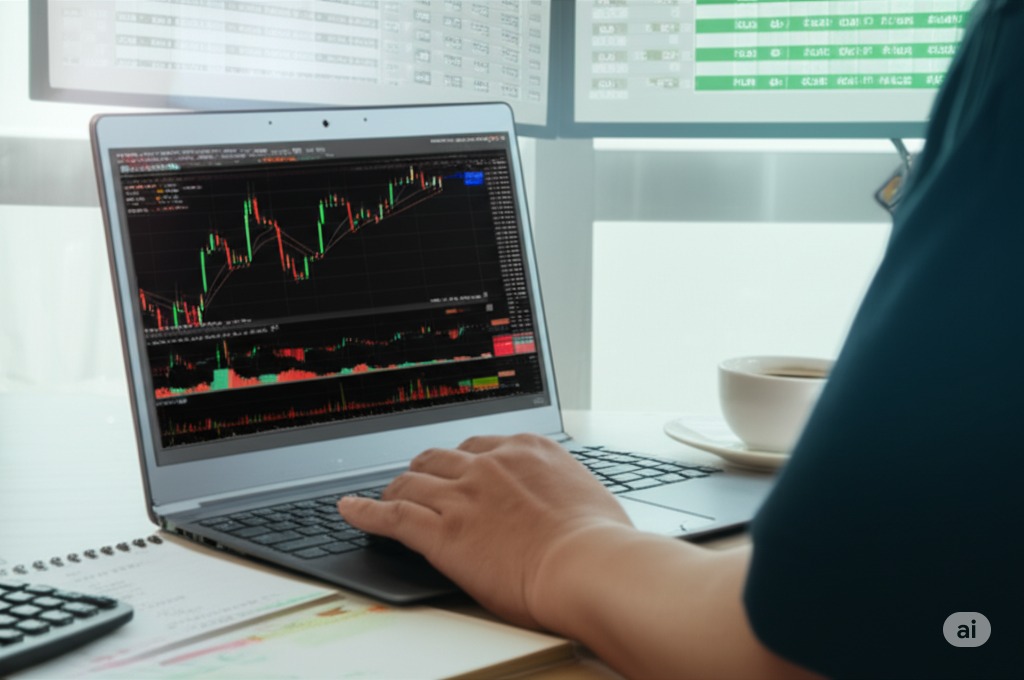
Pros and Cons of Starting with $100
Starting with $100 in Forex trading has its fair share of Investment Benefits and Investment Drawbacks.
Pros:
Financial Accessibility: Low initial capital requirement means you can get started even with a tight budget.
Learning Curve: A smaller investment minimizes risk while you learn the ropes of Forex trading.
Risk Management Practice: You’re forced to be disciplined, which sharpens your understanding of proper Risk Management.
Cons:
Growth Limitations: With such a small starting amount, compounding growth is limited unless you aggressively leverage, which increases risk.
Transaction Fees: Even small spreads and commissions can eat into your profits quickly.
Diversification Challenges: $100 doesn't allow for much trade diversification, increasing vulnerability to market swings.
"Starting small isn't just about money—it's about learning to manage risk before it manages you." — John Paulson, Hedge Fund Manager
Realistic Expectations with a Small Account
When starting with a small Account Size, it's crucial to set Realistic Goals.
Profit Expectations: Don't expect to double your account overnight; sustainable growth is key.
Risk Assessment: A $100 account means that even minor losses can have significant impacts.
Trading Psychology: Patience and discipline are essential—small wins should be celebrated, and losses should be learning experiences.
Tip: Focus on building good habits over massive profits. Your Investment Horizon may be longer, but good risk management can still lead to solid gains.
4.Calculating Your Ideal Starting Money
Calculating your ideal starting money in Forex trading requires understanding your goals, costs, and risk tolerance. Here’s how to figure it out effectively.
Factors That Determine Starting Capital
To calculate your ideal Starting Capital, you need to consider several key factors. Start by evaluating your Investment Size based on your Business Model and Operating Expenses. Don’t skip the Market Research – it’s crucial for estimating potential earnings and costs.
Risk Tolerance: The higher your risk appetite, the lower your starting capital might be. But don't go overboard – be smart!
Initial Outlay: Account for upfront costs like training, equipment, and software.
Financial Projections: Forecast your returns and ensure your capital can sustain potential losses.
Funding Sources: Identify where your capital will come from – savings, loans, or investments.
Expert Tip:
"Your starting capital should be proportional to your trading strategy and risk profile." - John Marshall, Forex Analyst
Budgeting for Forex Trading Costs
Creating a Forex Budget is essential to maintain control over your investments. Don’t just focus on the initial deposit – factor in ongoing costs.
Trading Fees: Brokerage fees, Spreads, and Commissions can eat into profits.
Platform Costs: Check if your trading platform has subscription fees or Swap Rates.
Slippage and Transaction Costs: Fast-moving markets can cause unexpected losses.
Capital Allocation: Set aside a portion of your capital specifically for trading expenses.
| Cost Type | Estimated Amount | Frequency |
|---|---|---|
| Brokerage Fees | $5 per trade | Per transaction |
| Swap Rates | 0.75% | Daily |
| Platform Subscription | $50 | Monthly |
Creating a Capital Growth Plan
A Growth Strategy helps in scaling your trading capital systematically. The aim is to increase Asset Growth through Compounding Returns and Reinvestment.
Set Financial Goals: Define clear Return Targets and track progress.
Reinvestment: Use a portion of profits to build capital rather than withdrawing too soon.
Portfolio Diversification: Don’t put all your money into one currency pair. Spread it around to reduce risk.
Risk Management: Implement strategies that balance growth with safety to maintain Long-Term Investment sustainability.
Remember, wealth building is not a one-time effort but a continuous process of careful planning and disciplined execution.
5.Risk Management and Capital Protection
Effective risk management is essential for protecting your capital while trading Forex. Here’s how to manage risks smartly and safeguard your investments.
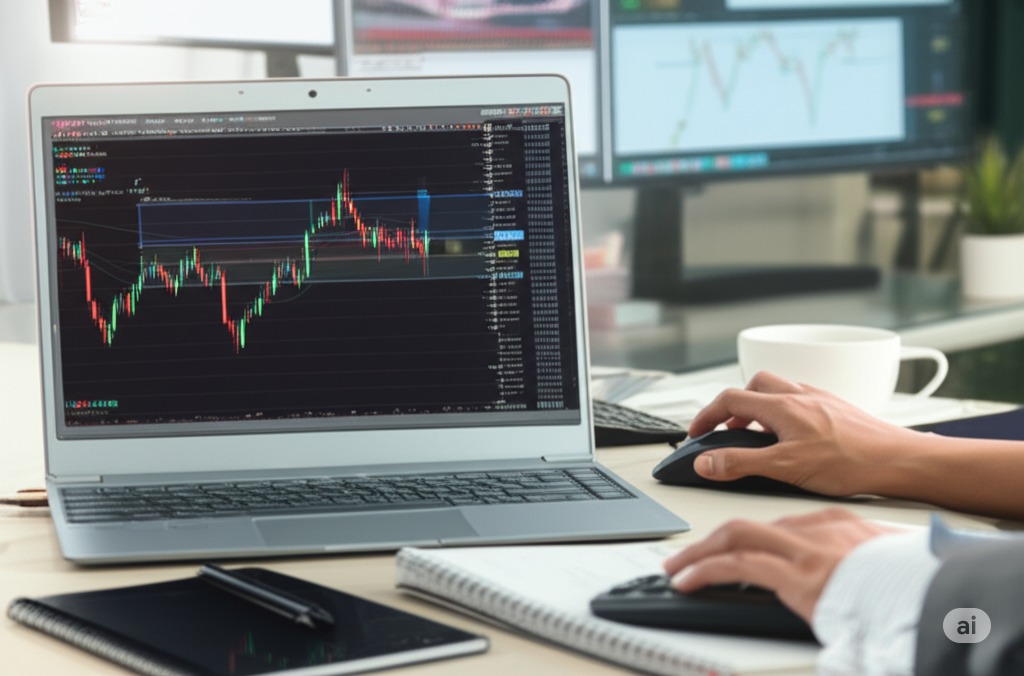
Setting Stop-Loss and Take-Profit Levels
Stop-Loss and Take-Profit levels are crucial tools for managing risk and securing profits.
Stop-Loss helps limit your losses by automatically closing a trade when it reaches a predetermined price level.
Take-Profit locks in gains when your trade hits a specific profit target.
These order types allow for disciplined trade execution, removing emotion from decision-making.
The key is to set these levels based on market analysis and realistic profit expectations.
Managing Risk with Proper Lot Sizes
Choosing the right Lot Size directly impacts your risk exposure. Here’s how to size positions correctly:
Micro Lots (0.01): Ideal for beginners, representing 1,000 units of currency.
Mini Lots (0.1): Equal to 10,000 units, suitable for moderate capital.
Standard Lots (1): Represents 100,000 units, generally for experienced traders.
Factors like account balance, leverage, and margin requirements influence your lot size. Risking no more than 1-2% of your capital per trade is recommended for sustainable trading.
Diversifying Trades to Reduce Risk
Diversification is about spreading investments across multiple assets to minimize risk.
In Forex, this means trading various currency pairs that are not highly correlated.
Portfolio Management becomes more stable when exposure is spread across different market sectors.
Hedging strategies can further protect against market volatility, balancing risks with potential rewards.
Avoiding Emotional Trading Decisions
Emotional trading often leads to poor decisions driven by fear and greed.
Stick to a solid Trading Plan and predefined Exit Strategies.
Control impulses and practice discipline to avoid chasing losses or overleveraging.
Mastering Trading Psychology ensures rational decisions even during high-pressure situations.
6.Forex Trading Costs and Hidden Fees
When traders first step into the world of Forex, their eyes are often set on profits—rightfully so. Yet, beneath the surface, there are costs that many newcomers overlook. It is not just about the money you invest; it is also about the money you spend to keep those trades running. These are the silent costs of Forex trading, the ones that do not scream for attention but silently chip away at your profits.
Understanding Bid-Ask Spreads
The bid-ask spread is one of the most fundamental concepts in Forex trading. It represents the difference between the buying price (ask) and the selling price (bid) of a currency pair. Think of it as the broker's cut—like when you exchange currency at a bank and notice that the rate to buy is always higher than the rate to sell. It is a margin that brokers hold onto, and it is how they make a profit, even without charging explicit commissions.
"Many traders ignore the impact of bid-ask spreads," says James Hunter, a senior analyst at FXTrade Insights. "It may look like pennies at first glance, but on high-volume trades, that spread can eat up hundreds of dollars."
Trading Commissions: The Quiet Taker
While some Forex brokers offer commission-free trading, many still charge a small fee per trade. This is particularly true for ECN accounts where tighter spreads are offset by fixed trading commissions. For high-frequency traders, these costs can accumulate rapidly.
I once spoke to a Forex trader named Sarah, who mentioned, "I thought I was winning my trades, but after factoring in the commissions, I barely broke even." Her experience is not uncommon—small commissions, when multiplied by frequent trades, add up quickly.
Overnight Rollover Fees: The Price of Holding Positions
In Forex, when a position is held overnight, traders may be charged or even paid a fee known as a rollover fee. This fee is influenced by the interest rate differential between the two currencies in the pair. If you are holding a currency with a higher interest rate against one with a lower rate, you might earn interest. If the situation is reversed, you pay.
Many traders are unaware of this cost until they see it deducted from their accounts. "It was a surprise for me," admitted John, a part-time trader. "I left a trade open for a week, and those rollover fees almost erased my profit."
Account Funding Fees and Withdrawal Charges
Moving money in and out of your trading account can come with its own set of costs. Account funding fees vary depending on the payment method—bank transfers, credit cards, and online wallets may all have different charges. Withdrawal fees are similarly inconsistent, with some brokers charging flat rates and others a percentage of the amount withdrawn.
One trader described his frustration: "I was happy with my trade earnings until I realized how much it cost just to move my money around. The bank fees and broker charges combined were a real eye-opener."
Account Inactivity Penalties
Many brokers charge a fee if your account remains inactive for a certain period. It is their way of encouraging trading activity or at least closing out dormant accounts. If you are not aware of this, it can slowly drain your balance.
"You would be surprised," explained Michael Tiller, a financial advisor, "I have seen traders who lost half their account to inactivity fees simply because they stopped trading for a few months."
Trading Platform Subscriptions and Currency Exchange Fees
While some brokers provide free access to trading platforms like MetaTrader 4 or 5, others charge subscription fees for advanced features. These fees might include data feeds, analytical tools, or faster execution times. In addition, if you fund your account in a currency different from your base currency, expect to pay currency exchange fees.
Order Slippage Costs and Hidden Broker Markups
Finally, there is order slippage—when the price you see is not the price you get. This usually happens during periods of high volatility or low liquidity. Even a few pips of slippage can significantly impact your bottom line, especially for scalpers and day traders. Hidden broker markups can also inflate the spread without your knowledge, increasing costs with every trade.
As you step into the world of Forex, remember that the path to profit is not just about the trades you win, but also the costs you avoid. Understanding these fees allows you to trade smarter, keeping more of your money where it belongs—in your account.
7.Growing a Small Forex Trading Account
Starting with a small Forex trading account is possible, but it requires patience, smart strategies, and effective risk management. Here’s how you can turn that modest starting capital into something much bigger.
Compounding Profits with Small Capital
The compounding effect is your best friend when growing a small Forex account. By reinvesting your profits, you allow your initial investment to grow exponentially over time. Think of it like planting a tree—small at first, but with consistent nurturing, it becomes massive.
Profit Reinvestment: Reinvesting even minor gains can snowball into larger sums as trades accumulate.
Micro Investing Techniques: Utilize micro-lots to trade small and minimize risk while compounding profits gradually.
Financial Leverage: Smart use of leverage can amplify small investments, but be cautious—overleveraging can wipe out gains just as fast.
"Compounding is the eighth wonder of the world. He who understands it, earns it; he who doesn't, pays it." — Albert Einstein
Strategies for Gradual Account Growth
Building a small account isn't just about winning big trades; it's about steady, consistent performance. Here are some effective strategies:
Dollar-Cost Averaging: Invest fixed amounts at regular intervals, smoothing out the impact of market volatility.
Incremental Investing: Gradually increase trade sizes as your account grows, scaling up responsibly.
Long-Term Planning: Avoid the temptation for quick wins; aim for sustainable account development.
Asset Allocation: Spread investments across different currency pairs to mitigate risk and maximize opportunities.
| Strategy | Goal | Risk Level |
|---|---|---|
| Dollar-Cost Averaging | Smoother returns over time | Low |
| Incremental Investing | Gradual increase in investment | Medium |
| Asset Allocation | Risk distribution | Low to Medium |
These strategies build momentum, allowing your small account to expand steadily over time without unnecessary risks.
Conclusion: How Much Money Do You Really Need to Start Trading Forex?
Getting started with Forex trading isn't about having deep pockets; it's about understanding the game. Like planting a seed, even a small amount can grow if nurtured well. You don't need to break the bank—just smart planning, solid risk management, and a bit of patience. As Warren Buffett famously said, “Risk comes from not knowing what you're doing.”
Start small, learn the ropes, and focus on building your skills before scaling up. The journey might be slow, but every trade is a step forward. Invest wisely, keep learning, and remember: it's not the size of your capital but the strength of your strategy that counts.
Yes, you can start trading Forex with as little as $50, but it comes with limitations:
Low capital restricts trade size, limiting potential profits.
High leverage is often required, increasing risk.
Margin calls are more likely with small account balances.
The primary costs of Forex trading include:
Spread: The difference between the buy and sell price.
Commissions: Charged by brokers for executing trades.
Swap Fees: Overnight interest if you hold positions overnight.
Platform Fees: Some brokers charge for platform access or premium tools.
It is possible, but growth is slower, and risks are higher. Many traders start small to practice and understand the market before scaling up.
A general rule of thumb is the 1-2% rule:
Risk only 1–2% of your total account balance per trade.
This approach helps manage losses and protect capital.
Yes, Forex trading is facilitated through brokers who provide access to currency markets. Selecting a reliable broker with low fees and strong security measures is crucial.
Leverage allows you to control a large position with a small amount of money, but it also increases risk. For example, with 1:100 leverage, $100 can control $10,000 in trading capital. While this can magnify profits, it can also amplify losses.
Effective risk management strategies include:
Setting stop-loss and take-profit levels.
Diversifying trades across different currency pairs.
Avoiding over-leveraging your account.