


Table of contents
Part 1 - Central Banks and FX Markets
Part 2 - Interest Rates and Currency Fluctuations
Part 3 - Policy Influence on Currency Value
Part 4 - Political Impact on Forex
Part 5 - Currency Pegs & Market Interventions
Part 6 - Central Bank Communication
Part 7 - Long-Term FX Market Effects
Part 8 - Trading Strategies Amid Political & Economic Shifts
In the fast-paced world of currency trading, every second counts. The value of money changes in the blink of an eye, influenced not just by market forces, but also by the decisions of central banks and the political landscape. How do politics and central banks impact FX markets? Well, the answer is simple: a lot more than you might think.
Central banks control the flow of money, making key decisions on interest rates and currency policies that can send shockwaves through the forex market. It’s like a traffic light — when they turn green, everything moves fast; when they turn red, things slow down. Meanwhile, political events, from elections to international tensions, throw their own curveballs that can shift market behavior in surprising ways.
As the famous investor Warren Buffett once said, "The stock market is filled with individuals who know the price of everything, but the value of nothing." The same goes for the FX market—understanding the driving forces behind currency changes can give you the edge you need to make smarter financial moves. This guide will walk you through how these factors come together to shape the forex market and what it means for your money.
Central Banks and FX Markets
Central banks have a huge influence on the foreign exchange (FX) market. They manage currency stability, control inflation, and even intervene directly to keep markets in check. Let’s dive into how they make all this happen!

Central Banks' Role in Currency Markets
Central banks are the engines behind the FX market, controlling the flow of money through monetary policies. They manage exchange rates and ensure market stability by stepping in with FX interventions when needed. As guardians of the national currency, they help maintain liquidity and prevent extreme fluctuations, allowing economies to function smoothly. Major central banks like the Federal Reserve, ECB, and Bank of Japan hold substantial power in determining the global value of currencies.
"Central banks are the referees of the global financial game, ensuring no team gets too far ahead."
The Impact of Monetary Policy on FX Rates
Monetary policy is one of the most powerful tools central banks use to influence the FX rate. When they change interest rates or apply quantitative easing, it sends signals to the market about economic health. Inflation and currency valuation are directly tied to these decisions, influencing capital flows across borders. For example, a rate hike often leads to currency appreciation, as investors seek better returns.
Central bank interest rate cuts usually weaken a currency, making exports cheaper.
A hike in interest rates strengthens the currency, increasing capital flows.
Quantitative easing pushes down interest rates, affecting inflation and currency value.
How Central Banks Control Inflation Through Currency
By adjusting interest rates and performing open market operations, central banks can keep inflation in check. When inflation threatens, they raise rates or use quantitative tightening to stabilize the currency. This helps prevent the value of money from plummeting, ensuring price stability for everyday consumers. Central banks also step in to adjust exchange rates when external pressures (like trade imbalances) threaten economic stability.
“When inflation rises, the central bank’s job is to tighten the reins and restore balance.”
| Central Bank Action | FX Market Effect | Example |
|---|---|---|
| Interest Rate Increase | Currency Appreciation | Fed rate hike strengthens USD |
| Interest Rate Decrease | Currency Depreciation | ECB cuts rates, weakening EUR |
| Quantitative Easing (QE) | Currency Depreciation | QE in Japan weakens the JPY |
| Quantitative Tightening (QT) | Currency Appreciation | QT in the US boosts USD |

Interest Rates and Currency Fluctuations
Interest rates are one of the most powerful tools central banks use to manage a country's economy. These rates influence everything from inflation to capital flows, directly affecting currency exchange rates. The connection between interest rates and currency fluctuations is fundamental to understanding the dynamics of the foreign exchange market.
When a central bank adjusts interest rates, it signals the health of the economy. Higher interest rates typically attract foreign capital, increasing demand for a country's currency. Investors seek higher returns on their investments, pushing the currency’s value up. On the other hand, lower interest rates tend to drive capital out of a country as investors look for better returns elsewhere, causing the currency to weaken.
For example, consider the case of the carry trade, a popular strategy among forex traders. This involves borrowing in a low-interest-rate currency and investing in a high-interest-rate currency. The goal is to profit from the difference in yields, which can lead to increased demand for the higher-yielding currency. As a result, interest rate changes can trigger significant movements in exchange rates.
Central banks use interest rate policies as part of their broader monetary policy to control inflation and stabilize the economy. If inflation rises, central banks often raise interest rates to cool down the economy and strengthen the currency. Conversely, when inflation is low, they might lower interest rates to stimulate economic activity and weaken the currency to boost exports.
It is essential to consider other economic indicators when analyzing currency fluctuations. GDP growth, unemployment rates, and inflation data all play a role in determining how interest rates will impact the currency. A strong economy often leads to higher interest rates, which in turn can strengthen a country's currency, while a weak economy might lead to lower interest rates and a weakened currency.
In the end, interest rates are much more than just a number; they shape the economic environment, influence inflation and capital flows, and directly impact currency exchange rates. Understanding the relationship between interest rates and currency fluctuations is key to mastering the foreign exchange market.
Policy Influence on Currency Value
Monetary policy and fiscal decisions made by governments and central banks play a significant role in determining the value of a currency.

How Monetary Policy Shifts Affect Currency Movements
Monetary policy can trigger significant movements in exchange rates. Central banks adjust interest rates, reserve requirements, and engage in open market operations to control inflation and influence capital flows. When central banks shift their monetary policy, it impacts economic indicators like inflation, exchange rates, and even the value of a country's currency in the forex market. For example, an increase in interest rates may attract foreign investment, pushing the currency value up.
Quantitative Easing and Its Impact on Forex Markets
Quantitative easing (QE) happens when a central bank buys government bonds or assets to inject money into the economy. While it can stimulate economic growth, QE also increases the money supply, which might devalue a currency. As QE expands a central bank’s balance sheet, bond yields decrease, affecting inflation and exchange rates. In some cases, markets may perceive QE as a sign of economic distress, which can weaken the currency.
| QE Action | Effect on Money Supply | Effect on Currency | Effect on Bond Yields |
|---|---|---|---|
| Central bank purchases bonds | Increases money supply | Currency devaluation | Lowers bond yields |
| Central bank injects funds | Increases liquidity | Currency weakening | Lower yields for bonds |
| Reduced QE activity | Reduces money supply | Currency appreciation | Higher yields for bonds |
The Role of Fiscal Policy in Currency Value
Fiscal policy refers to government decisions about spending and taxation. When governments increase spending or cut taxes, it stimulates demand, potentially leading to higher inflation. A budget deficit or surplus can also influence currency value. Increased debt levels may lead to currency depreciation, while fiscal responsibility (low deficit or surplus) could strengthen the currency. Fiscal policy influences inflation and interest rates, both of which are crucial drivers of exchange rates and capital flows in the forex market.
Political Impact on Forex
Politics and forex are deeply intertwined. Political events shape investor sentiment and economic conditions, which can influence currency values.
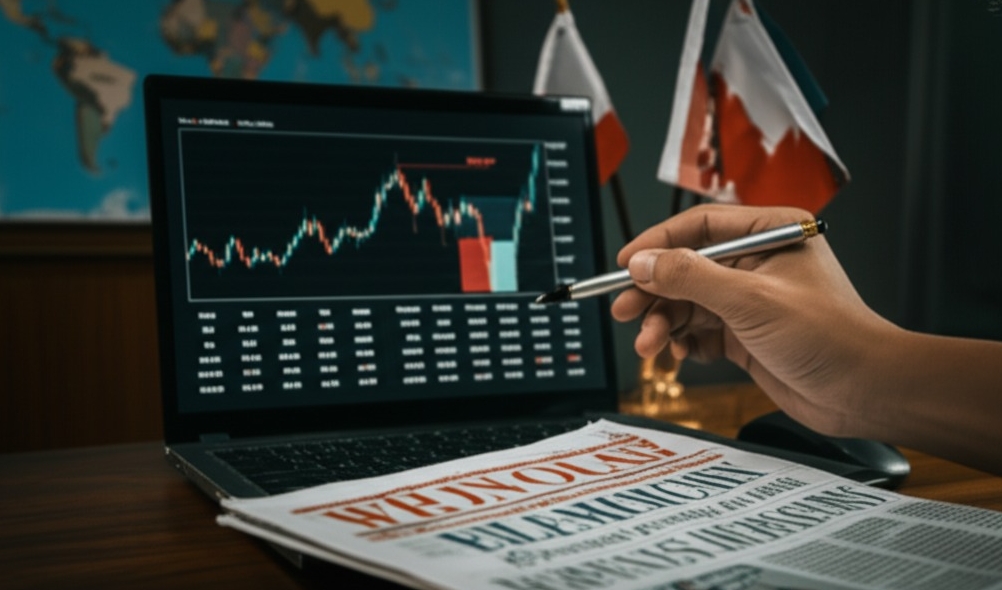
How Elections Influence Currency Movements
Elections often stir up uncertainty, and currencies can be highly sensitive to this. When there's a shift in government or policy, it can directly impact investor confidence and exchange rates.
For example:
Changes in government policy can affect economic stability, altering the attractiveness of a country’s currency.
Political parties’ economic plans may boost or weaken the currency market, as they indicate the future economic direction.
As voters head to the polls, markets often anticipate outcomes, adjusting exchange rates based on which party is most likely to win.
When the dust settles, if the election outcome promises more stability, the currency may strengthen. However, if it suggests instability or unpredictability, investors could pull back, leading to a decline in the value of the currency.
Geopolitical Tensions and Currency Volatility
Geopolitical risk has a huge impact on the forex market. Events like trade wars, sanctions, or conflicts can lead to significant currency volatility.
For instance:
Trade wars can make a currency weaker by hurting exports or investor sentiment.
Sanctions can have similar effects, especially if they impact a country’s ability to trade freely.
Conflicts or international relations tensions often drive investors to safe havens like gold or the US dollar, increasing demand for these currencies and pushing others down.
Currency volatility often spikes when these events unfold, as investors scramble to understand how global economic stability will be affected.
Understanding how these tensions unfold can help investors navigate the global economy and anticipate major currency fluctuations.
Both political events—like elections—and geopolitical issues play a pivotal role in shaping currency values. Whether through voting outcomes or trade wars, these factors impact investor sentiment and can cause rapid changes in the forex market.
Currency Pegs & Market Interventions
Currency pegs and market interventions are two key tools central banks use to stabilize and manage their country's currency. These strategies have significant effects on exchange rates and the overall economy.

What is a Currency Peg and Why Use It?
A currency peg is when a country's central bank "pegs" its currency to another (often a stable currency like the U.S. dollar). The idea is to create stability by keeping the exchange rate fixed, which helps control inflation and prevent extreme fluctuations. This is particularly helpful for countries with smaller, less stable economies that need to avoid devaluation or encourage trade.
Why use a peg?
Ensures stability and predictability for businesses.
Helps control inflation and encourage trade.
Avoids severe devaluation during economic crises.
Direct Market Interventions by Central Banks
Central banks can step into the forex market directly by buying or selling their own currency. This is often done to control volatility or correct an exchange rate that’s moving too far from the target. For example, if the central bank feels the currency is undervalued, it will buy reserves to increase demand. Conversely, they might sell currency if it's too strong and hurting exports.
Central banks use interventions to:
Stabilize the currency and prevent excessive volatility.
Adjust the market’s direction by influencing supply and demand.
Protect the economy from sudden shocks or crisis situations.
The Pros and Cons of Currency Pegging
Currency pegging can offer significant benefits like stability, but it’s not without risks. The predictability it offers can attract investment and make trade easier, especially in volatile regions. However, pegging a currency reduces the flexibility a country has to manage its own economy, and in times of crisis, it can lead to issues like speculative attacks or draining reserves.
Pros of pegging:
Provides stability and predictability.
Encourages foreign trade and investment.
Useful for economies facing inflation or exchange rate volatility.
Cons of pegging:
Limits flexibility for central bank actions.
Can drain reserves if not properly managed.
Vulnerable to speculative attacks during economic crises.

How Interventions Shape Currency Value
When central banks intervene, they can either strengthen or weaken their currency, depending on whether they’re buying or selling. These moves impact the currency’s value by directly influencing the market’s supply and demand balance. Such interventions can reduce volatility, but if done too aggressively, they can also create imbalances and unintended consequences like prolonged depreciation or inflation.
Key intervention effects:
Appreciation: Buying currency strengthens it.
Depreciation: Selling currency weakens it.
Volatility: Interventions can reduce or increase market volatility.
| Action | Effect on Currency | Impact on Market |
|---|---|---|
| Buying Currency | Strengthens the currency | Increased demand, stable exchange rate |
| Selling Currency | Weakens the currency | Decreased demand, possible devaluation |
| Increased Reserves | Stabilizes currency | Reduces extreme fluctuations |
Central Bank Communication

How Central Bank Statements Influence Market Sentiment
Central banks don’t just control the money supply—they also control the narrative. When a central bank announces interest rate changes or adjusts its economic outlook, it can send shockwaves through financial markets. Investors react to these moves by adjusting their portfolios, which in turn shifts currency values.
Press conferences and official statements are carefully crafted to guide market expectations.
Small nuances in tone can lead to big reactions in the forex market.
Central banks use these moments to signal future moves, calming or rattling investor confidence.
The Role of Forward Guidance in FX Markets
Forward guidance is a tool central banks use to steer expectations about future monetary policy. By giving markets a preview of what’s to come—whether it’s about interest rates or economic outlook—they provide a sense of transparency that helps stabilize exchange rates. Forward guidance doesn't just impact the present; it helps shape how currency markets move in the future.
FX markets are highly responsive to signs of future interest rate changes.
Clear guidance can reduce uncertainty, improving investor sentiment.
When central banks give a timeline for future policy actions, traders adjust their positions accordingly.
Through these communication tools, central banks influence both short-term and long-term currency movements.
Long-Term FX Market Effects
Understanding long-term trends in the FX market requires recognizing the slow-burn effects of central bank policies and political shifts. Over time, these forces shape the stability and direction of currencies, which is essential for traders and investors.

How Central Bank Policies Shape Long-Term Currency Trends
Central banks have the power to create long-lasting impacts on currency trends through their monetary policies. Interest rates, quantitative easing, and inflation control are tools central banks use to manage economic growth. Over time, these actions create ripples in the FX market, shaping long-term currency trends.
Key factors at play:
Interest rates: When central banks hike or lower rates, currencies can either appreciate or depreciate based on economic health.
Quantitative easing (QE): A tool central banks use to inject money into the economy, often leading to a weaker currency in the long run.
Inflation control: Maintaining stable inflation is crucial for currency value retention.
As these policies unfold, the foreign exchange market adapts to reflect the stability or instability of a currency’s economy. Traders who understand these trends can anticipate market shifts and trade accordingly.
Political Shifts and Their Long-Term Impact on Forex
Political shifts like elections, trade wars, or geopolitical events can disrupt the Forex market for years. Government policy changes, shifts in political stability, and international relations shape the overall outlook for currencies.
Key points to consider:
Elections: Election results often cause uncertainty, affecting currency stability in the short-to-medium term.
Trade wars and tariffs: Political decisions around trade can spark volatility, affecting exchange rates and overall currency value.
Geopolitical events: Conflicts, sanctions, or international agreements can create major shifts in currency performance.
| Political Event | Short-Term Impact | Long-Term Impact |
|---|---|---|
| Elections | Uncertainty, currency volatility | Policy shifts, long-term instability or stability |
| Trade Wars | Exchange rate volatility | Weakening of affected currencies, global trade imbalance |
| Geopolitical Events | Sudden price changes, risk aversion | Long-term shifts in global trade relations |
The long-term impact of political shifts often lingers, especially when they result in changes to government policies that affect trade or monetary policy. Understanding this dynamic helps traders make more informed, long-term decisions.
Long-term FX market trends are driven by both central bank policies and political shifts. By analyzing these factors, traders can better navigate the unpredictable and volatile world of currency trading. Understanding the broader economic and political landscape provides insight into long-term currency movements.
Trading Strategies Amid Political & Economic Shifts
In this cluster, we’ll dive into the practical aspects of trading, focusing on how to adapt your strategy to political and economic changes that influence the FX markets.

Adapting to Central Bank Interest Rate Announcements
When central banks like the Federal Reserve or ECB announce interest rate changes, the market reacts fast. Whether it’s a rate hike or cut, these moves can swing currencies dramatically. Smart traders watch these announcements closely to adjust their strategies accordingly. A rate hike typically strengthens the currency, while a cut might weaken it. Market reaction can create opportunities for quick, short-term trades. The key is to stay informed and prepared for volatility.
| Event | Market Reaction | Trading Strategy |
|---|---|---|
| Federal Reserve Rate Hike | USD Strengthens | Long USD positions |
| ECB Rate Cut | EUR Weakens | Short EUR positions |
Understanding Political Events and Their Market Implications
Political events, like elections or major policy changes, have a huge impact on forex markets. They can trigger market volatility, shifting investor sentiment and creating trading opportunities. For example, when a country’s government is unstable, it could lead to a weaker currency. Traders keep an eye on geopolitical risks to adjust their strategies. Even events like international trade talks can influence the value of a currency, so understanding these events and how they affect market expectations is crucial.
Tip: Keep an eye on government stability, as it’s often a leading indicator for market movement.
How to Trade Around Economic Data Releases
Economic data releases—think non-farm payrolls, GDP, or CPI—are key drivers of market movement. Traders watch these numbers closely, as they provide vital clues about the health of a country’s economy. High-impact data, such as an unexpectedly strong jobs report, can send currencies soaring. A good trading strategy around data releases is to trade the news—anticipating the market reaction. However, be cautious of the volatility these events can cause.
| Economic Data | Market Impact | Trading Action |
|---|---|---|
| Non-Farm Payrolls | Strong numbers = USD up | Buy USD |
| GDP Growth (Quarterly) | Positive growth = Currency strengthens | Long position on currency |
Risk Management in Volatile Political Conditions
Political risk can create wild swings in the market. When things get uncertain—like in the lead-up to an election or during geopolitical tensions—it’s vital to manage your risk. Hedging, position sizing, and using stop-loss orders are all strategies to protect yourself. Diversifying your portfolio can also help buffer against unpredictable market shifts. In volatile conditions, it’s better to err on the side of caution and avoid placing all your bets on a single market movement.
Risk Management Tips:
Hedging: Use options or futures to offset potential losses.
Stop-Loss Orders: Set them to limit potential downside.
Diversification: Spread your investments to reduce risk exposure.

Developing a Long-Term FX Trading Strategy
Long-term FX trading requires patience and discipline. Focus on fundamental analysis, studying economic indicators, and market trends. A strategy might involve trading currency pairs based on broader economic cycles or capitalizing on interest rate differentials, as seen in carry trades. Balancing risk management with technical analysis and portfolio management will help you navigate the twists and turns of the forex market. Over time, a solid, well-researched trading plan will help you stay on track, even when markets are volatile.
As central banks shift interest rates, political events unfold, and key economic data is released, your trading strategy should be flexible enough to handle these changes. By staying informed and managing risks, you can navigate the complexities of the forex market with more confidence.
Conclusion
Understanding how central banks and politics shape the FX market is like learning the playbook of a high-stakes game. Every decision—whether it’s an interest rate hike or a sudden election result—can send currencies soaring or tanking.
As the old saying goes, "It's not about predicting the storm, but learning to dance in the rain." Knowing the rules of the game allows you to make informed, confident moves.
For anyone trading or investing in FX, staying ahead of central bank actions and political shifts is crucial. Knowing what drives currency values can help you make smarter, faster decisions.
Central banks play a crucial role in the foreign exchange markets by managing interest rates and controlling the money supply. Their decisions can cause immediate fluctuations in the value of a country’s currency. For example, when a central bank raises interest rates, it typically makes the currency more attractive to investors, which can cause the value of that currency to rise.
Interest rates directly impact currency values by influencing investor behavior. When interest rates are high, they tend to attract more investment in that country’s currency because investors seek higher returns. Conversely, low interest rates can discourage foreign investment, leading to a weaker currency. This is one of the main tools central banks use to either stimulate or cool down their economy.
Weaken the currency
Reduce foreign investment
Strengthen the currency
Increase investment in government bonds
Attract foreign investors
Higher interest rates usually:
Lower interest rates can:
Political instability can cause a lot of uncertainty in currency markets. When there’s a change in government or political unrest, investors may become wary of investing in that country, leading to a drop in the currency’s value. On the other hand, stable political conditions tend to foster confidence, which can strengthen a currency.
In summary, when there’s political instability, it often results in:
Currency depreciation due to fear and uncertainty
Increased volatility as markets react to unexpected changes
A currency peg occurs when a country’s currency is tied to another currency, usually a major one like the US Dollar or Euro. The central bank of the country with the pegged currency maintains the value of its currency within a narrow band relative to the other currency. The peg helps stabilize the currency and reduce volatility, but it can limit the central bank’s ability to control inflation or respond to economic changes.
Central banks sometimes intervene in the forex market by buying or selling their currency to influence its value. While this can be effective in stabilizing a currency during periods of extreme volatility, it also carries risks. For instance, prolonged intervention can lead to:
Currency misalignments, where the value of the currency is artificially controlled
Market skepticism, as investors may question the sustainability of such actions
Quantitative easing (QE) involves central banks purchasing large amounts of government securities to increase the money supply and lower interest rates. While QE can stimulate economic growth, it also has a significant impact on the forex market. By increasing the money supply, QE can lead to a weaker currency, as more money in circulation typically reduces the value of a currency.
Lower interest rates
Increase the money supply
Weaken the currency over time
QE tends to:
Yes, central bank communication—such as statements, speeches, and forward guidance—can have a profound effect on currency values. Investors pay close attention to what central banks say about future monetary policy, as it helps them predict the direction of interest rates and economic conditions. A hint that rates may rise or fall can cause significant movement in currency prices.
Fiscal policy, which involves government spending and taxation, can influence a country’s currency. When governments run large deficits or increase spending, it can lead to inflation and currency depreciation. Conversely, a balanced budget and sound fiscal management can support a strong currency.
Increased government debt leading to inflation concerns
Higher deficits reducing investor confidence
Fiscal policies that may weaken the currency include:
Elections, especially presidential or parliamentary ones, can bring uncertainty to the market. Traders may react to the possible changes in economic policies or leadership. If the market expects a change that could favor economic stability or growth, the currency may appreciate. On the other hand, uncertainty or a result that might lead to economic instability could lead to a currency drop.