


Table of contents
Getting into forex trading? You're not alone—more Indians are testing the waters every day. But before you dive in, knowing how to open forex trading account in India is half the battle. It's like trying to drive a car without a license—you need the right account to even get on the road. This guide is your shortcut through all the confusion, paperwork, and platform overload.
Forex isn’t some overnight jackpot scheme. It’s a serious game, watched closely by RBI and SEBI. “Always trade with a regulated broker,” says market analyst Vivek Bajaj. And he’s spot on—legal safety is non-negotiable.
We’ll break it all down: types of accounts, what documents you'll need, and how to pick the account that doesn’t eat up your profits in hidden fees. If you're ready to start smart and avoid rookie mistakes, you’re in the right place.
What Is a Forex Trading Account in India
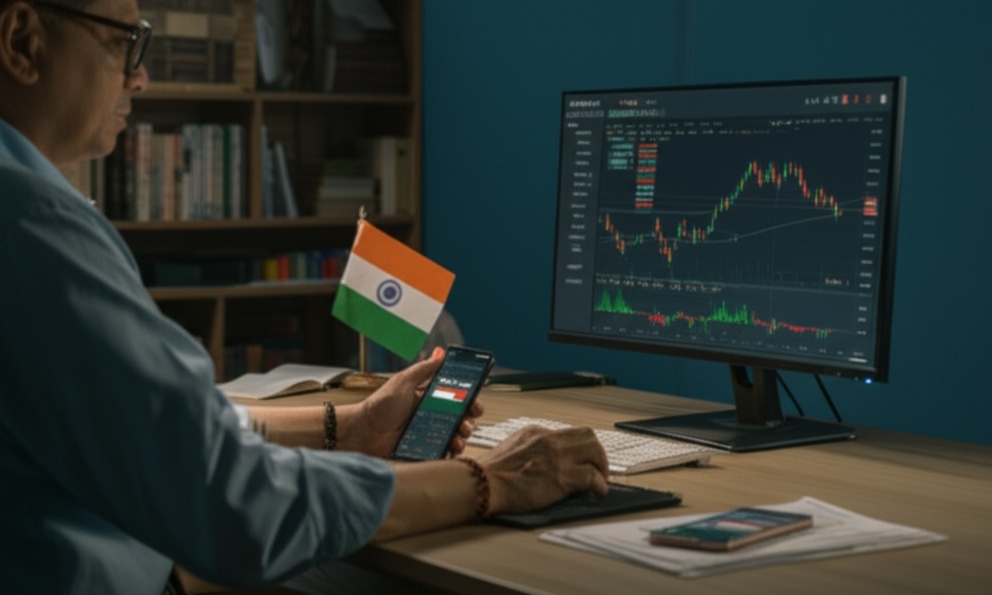
A forex trading account in India is a financial account that allows individuals to participate in the foreign exchange market, often referred to as the currency market. Through this account, traders can buy and sell currency pairs like USD/INR or EUR/JPY in real time using digital trading platforms provided by licensed brokers. Though it sounds simple on the surface, opening and managing such an account in India involves navigating a structured regulatory environment and understanding specific market limitations.
To gain firsthand insights, we spoke with Ajay Mehra, a forex strategist with over fifteen years of experience at a Mumbai-based financial consultancy. He said:
“A forex trading account is your gateway to the world’s largest financial market—but in India, it is tightly regulated. You cannot just open an account with any global broker. It must be one approved by SEBI and operating under RBI guidelines.”
This regulatory framework, led by the Reserve Bank of India (RBI) and the Securities and Exchange Board of India (SEBI), defines how Indian residents can legally trade in forex. Unlike traders in other countries who may have access to hundreds of currency pairs and high leverage through offshore brokers, Indian residents are restricted to trading specific pairs such as USD/INR, EUR/INR, GBP/INR, and JPY/INR. These are traded through recognized domestic exchanges like NSE and BSE, not through foreign-based platforms.
Here is what defines a forex trading account in India:
It is hosted by a SEBI-registered broker or financial institution.
It allows access to exchange-traded currency derivatives, not spot forex.
It supports online trading, usually via proprietary or integrated third-party platforms.
It requires full KYC documentation, including a PAN card, Aadhaar, and bank account verification.
It operates under controlled margin trading rules, with limited leverage to protect retail investors.
There are multiple account types available depending on the trader’s profile:
Demo Accounts – Ideal for new traders to practice without risking capital.
Standard Trading Accounts – For real-money trades on approved currency derivatives.
Corporate Accounts – Designed for businesses managing international exposure.
Neha Kapoor, a retail forex trader from Delhi, shared her personal experience:
“At first, I was tempted by offshore brokers offering 1:500 leverage and exotic pairs. But I realized the risk. Now I trade only with SEBI-regulated platforms like Zerodha. My funds are protected, and the trading environment feels much more secure.”
This level of protection is crucial in a market as volatile as forex. Regulatory oversight, margin restrictions, and SEBI audits help minimize fraud, mispricing, and customer fund mismanagement.
Why Trust Matters in Forex Trading Accounts in India:
SEBI mandates regular audits and public disclosures by licensed brokers.
RBI ensures forex transactions align with India’s foreign exchange laws (FEMA).
Trusted platforms such as Zerodha, ICICI Direct, and HDFC Securities are backed by years of market credibility, certifications, and transparent fee structures.
Awards, customer satisfaction ratings, and investor grievance redressal mechanisms enhance consumer trust.
In a landscape often filled with too-good-to-be-true promises, Indian traders need clarity and confidence. A regulated forex trading account is more than just a tool—it is a safeguard. It links India’s cautious yet steadily expanding role in the global currency market with everyday investors looking to grow their capital under legally sound conditions.
A quote from an RBI whitepaper on currency market stability reads:
“Capital account convertibility must be pursued with prudence, especially where public participation and leveraged products intersect.”
This statement perfectly captures the spirit of India’s approach to forex: opportunity, but with oversight.
The result? A unique model where online trading, currency regulation, and investor safety converge—making the Indian forex trading account a controlled, credible, and increasingly popular financial instrument.
Types of Trading Accounts in Forex
Demo vs Live Trading Accounts
If you’re just getting your feet wet, a demo account is your safest bet. It lets you practice trading using virtual funds while experiencing real-time market conditions. The environment simulates everything — from execution speed to price action — but with zero financial risk. It’s perfect for strategy testing, platform familiarization, and building risk management habits.
A live account, on the other hand, deals with real money, real stress, and real stakes. It’s where profits — and losses — start to matter. Traders shift from demo to live when they’ve tested their strategies and feel confident about navigating the actual trading platform.
“A demo account is your training ground, but don’t stay there forever. The real learning starts with a live account.”
— Amit Khurana, Senior FX Analyst at FXGlobe
Key Differences:
| Feature | Demo Account | Live Account |
|---|---|---|
| Funds Used | Virtual | Real money |
| Emotional Pressure | None | High |
| Strategy Testing | Ideal | Risky |
| Risk Level | Zero | Market risk involved |
| Market Conditions | Simulated | Real-time |

Standard Account Features Explained
The standard forex account is the go-to for most everyday traders in India. It offers a balanced blend of leverage, access to global trading instruments, and relatively low minimum deposit requirements. These accounts are widely supported across brokers and platforms, including MT4, MT5, and proprietary tools.
Main features include:
Leverage – Typically up to 1:100 in India, letting you control larger positions with less capital.
Spread – Average spreads range from 1.5 to 2.5 pips on major currency pairs.
Commission – Most standard accounts are commission-free; brokers earn from spreads.
Minimum Deposit – Usually starts around ₹7,000 to ₹15,000.
Execution Speed – Fast execution via STP/ECN models.
Customer Support – 24/5 support is standard, but quality varies.
Standard accounts are great if you're past the beginner phase but not ready to commit to a pro or high-volume account.
Islamic Forex Account Overview
If you want to trade while staying true to Islamic finance principles, an Islamic forex account — or swap-free account — is the answer. These accounts don’t charge or pay overnight swap fees, making them fully Sharia-compliant. That means no riba (interest), making the trading process halal and ethically sound.
Perfect for Muslim traders or anyone wanting to avoid interest, Islamic accounts offer access to all major account types, from standard to pro, with no difference in trading conditions — except for the absence of overnight charges.
| Account Type | Swap Fees | Sharia Compliance | Min Deposit (INR) |
|---|---|---|---|
| Islamic Standard | No | Yes | ₹10,000 |
| Islamic Micro | No | Yes | ₹5,000 |
| Islamic ECN | No | Yes | ₹20,000 |
Even better, many brokers allow you to open a demo Islamic account to test things out — no strings, no riba.
How To Choose a Forex Trading Account
Risk Level vs Account Type
Understanding your risk level is the first step toward choosing the right account type. Many beginners make the mistake of selecting advanced accounts because they promise bigger gains — but without considering their trading strategy, leverage tolerance, or capital strength, this can be a quick path to loss.
If you’re cautious or new to forex, consider a micro or cent trading account. These require minimal investment, offer lower leverage, and let you get used to real-market dynamics with reduced risk. They’re perfect for building confidence and learning without pressure.
If your investment profile is more balanced, a standard account is a step up. These accounts offer better spreads and access to more currency pairs, while still keeping things manageable for traders with a medium risk appetite. You get to apply more complex portfolio management tactics and grow your return on investment steadily.
Traders with high risk tolerance and experience might go for ECN (Electronic Communication Network) or Raw Spread accounts. These accounts feature extremely low spreads, fast execution, and sometimes access to market depth data. They're ideal if you’re trading large volumes or using automated trading strategies that rely on precision and speed.
Here’s a quick look at how different account types align with risk levels:
| Account Type | Suggested Risk Level | Typical Leverage | Best For |
|---|---|---|---|
| Micro/Cent Account | Low | Up to 1:100 | Beginners, cautious traders |
| Standard Account | Medium | Up to 1:200 | Intermediate traders |
| ECN/Raw Spread | High | Up to 1:500 | Advanced/high-risk traders |
"Don’t let leverage tempt you — risk tolerance isn’t about bravery, it’s about knowing how much loss you can handle without losing sleep."
— Siddharth Mehra, Market Strategist, FXEdge India
Account Choice for Indian Traders
For Indian traders, picking a forex trading account is more than just comparing features. It’s about understanding local compliance, checking broker reliability, and matching the account to your banking and regulatory environment.
Here’s a simple guide to help:
Trading Platform Integration
Choose a broker that accepts INR deposits, works with Indian payment gateways, and offers easy withdrawals to domestic bank accounts. This avoids unnecessary currency conversion losses and delays.Regulations and KYC Compliance
Forex trading in India is allowed only under specific conditions through the Liberalized Remittance Scheme (LRS). Always go for brokers that clearly explain KYC requirements like PAN card, Aadhaar, and address proof. Some global brokers operating under gray areas could create legal trouble — avoid them.Brokerage Fees and Hidden Charges
Pay close attention to not just the spreads, but also commission fees, inactivity charges, and deposit/withdrawal costs. A low-spread account isn’t worth it if you’re getting hit with hidden fees.
"In India, traders often skip due diligence when choosing a platform — then end up locked out of their funds. Go with regulation first, bells and whistles second."
— Manisha Rao, Senior Trading Analyst, NSE Academy
Your account choice should reflect both your trading ambition and your practical setup as an Indian resident. Combine smart regulation checks, honest risk evaluation, and platform usability to find your best fit. Avoid blindly copying influencer picks — what works for someone else might not suit your profile.

Forex Trading Account Documents Required
PAN Card and Aadhaar Use
The PAN card and Aadhaar card are your primary identity verification tools in India’s financial system.
PAN (Permanent Account Number) is required for tax reporting and must be submitted to any SEBI-registered forex broker.
Aadhaar is used to verify your identity and residency. Most brokers perform Aadhaar-PAN seeding checks to ensure your identity matches across databases.
If your PAN and Aadhaar are not linked, your forex trading application may be rejected outright. This linkage also simplifies e-KYC, speeding up approval.
“Your PAN and Aadhaar are not just documents — they’re digital keys to the Indian financial system.” — Rohit Mishra, Compliance Head at FXPro India
Address Proof for Forex KYC
To comply with KYC (Know Your Customer) norms in foreign exchange trading, you must provide proof of your permanent or current residency address. Acceptable documents include:
• Latest utility bill (electricity, water, or gas – within last 90 days)
• Bank statement showing full address and account holder name
• Valid passport or driving license with a printed address
Be sure the address on the proof exactly matches what you enter in your account application form. Any mismatch could cause KYC verification to fail.
Bank Statement Requirements India
Your bank statement plays multiple roles in forex trading account applications — it acts as both address and financial proof.
Here’s what brokers typically require from your statement:
Minimum 3 to 6 months of transaction history
Your name, bank account number, and IFSC code
The document must be PDF format, downloaded from the bank portal
Statements showing consistent income or deposits can positively influence your account’s funding limits or leverage settings.
Trading Account Verification Timeline
Here’s a realistic timeline you can expect after submitting all necessary forex documents to a regulated broker:
| Stage | Average Time Frame | Method of Completion |
|---|---|---|
| Document Upload | 1–2 hours | Via broker’s app/website |
| Initial KYC Screening | 12–24 hours | Automated + manual check |
| Final Review and Approval | 24–48 hours | Email confirmation |
| Account Activation | Up to 3 business days | Broker platform access |
Note: Some brokers like Zerodha, Upstox, or ICICI Direct process applications faster if documents are pre-verified via Digilocker or Aadhaar e-KYC.
How To Open Forex Trading Account Step by Step
Online Forex Account Registration Steps
Creating a forex account online is easier than ever, but there’s a specific process involved — and skipping a step can cost you time. Here’s a complete breakdown:
Choose a reliable broker
Start with a well-known online forex broker that accepts Indian clients and complies with RBI and SEBI regulations. Look for brokers with a clean interface, demo account, and solid support.Start the sign-up process
Go to the broker’s official website or download their trading app. Click “Create Account” or “Get Started” to begin the application.Fill out the registration form
Enter your full name, country, email, mobile number, and preferred account currency (usually INR or USD). Make sure the information matches your official documents.Upload verification documents
You’ll need:PAN card (mandatory for tax reporting in India)
Aadhaar card or passport for ID proof
Recent bank statement or utility bill for address proof
Complete identity verification
Some brokers offer instant eKYC, while others may request a video call or selfie with your ID. Verification can take anywhere from a few hours to 3 business days.Deposit funds into your account
Once verified, fund your forex account via UPI, IMPS, debit card, or wire transfer. Most brokers have a low minimum deposit ($5 to $50).Activate your account and start trading
As soon as the deposit reflects, your account becomes active. You’ll now have access to live forex markets.
“The registration process is quick, but be cautious. Only sign up with brokers who are transparent about KYC and fund withdrawals.” — Anita Rao, Senior FX Compliance Consultant
Broker Platform Account Walkthrough
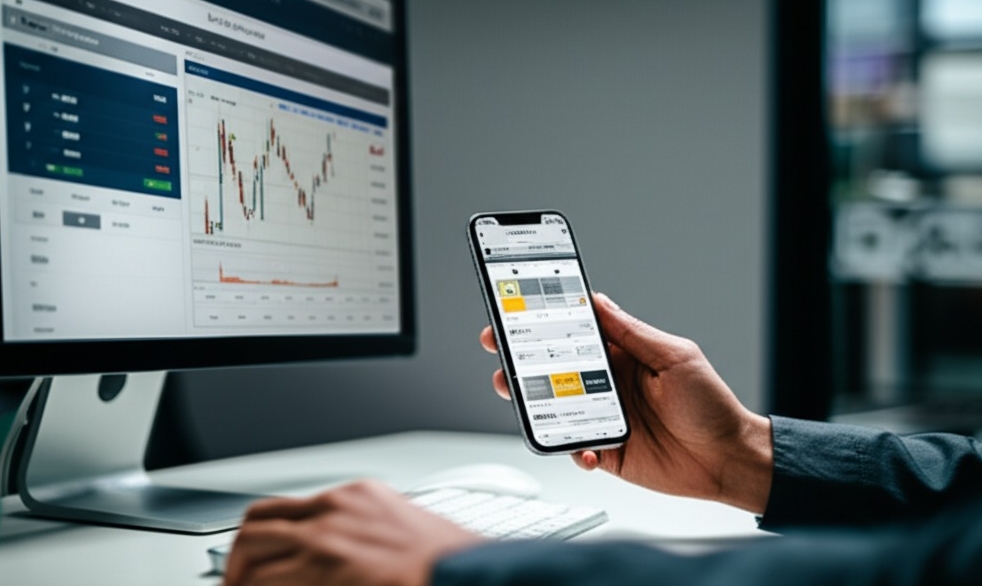
So, your forex account is active — now what? Time to get familiar with the broker platform. Whether you’re using a desktop terminal or mobile app, this walkthrough will help you get oriented fast.
Modern forex platforms are loaded with features. But don’t worry — you don’t need to master them all at once.
Key Areas of the Trading Platform:
Dashboard Overview
Shows account balance, available margin, and open trades at a glance.Forex Pair Selector
Choose from major pairs like EUR/USD or regional options like USD/INR. You’ll see real-time price updates, spreads, and trading volume.Order Execution Panel
Set market orders, limit orders, stop-loss, and take-profit. It’s where trades are placed and modified.Charting & Technical Tools
Use candlestick charts, indicators like RSI/Moving Averages, and drawing tools for analysis.Funding/Withdrawal Section
Handle all money transfers, track transaction status, and set up payment methods.
“Don’t rush. Spend time in the demo account to really understand the broker’s tools. Trading blind is just guessing.” — Karan Mehta, Forex Educator & Coach
Here’s a comparison of popular broker platforms and their key features:
| Broker Platform | KYC Speed (Hrs) | Demo Account | Mobile App UX Rating (★) |
|---|---|---|---|
| OctaFX | 12 | Yes | 4.6 |
| FBS | 24 | Yes | 4.3 |
| FXTM | 36 | Yes | 4.5 |
Pro Tip: Always test your platform with a demo account before trading real money. It'll save you from costly mistakes down the road.
Forex Account Charges and Minimum Balance
Spread and Commission Comparison
Spreads and commissions are two major components of forex trading costs. They impact how much you actually pay per trade — beyond what brokers advertise.
Spread refers to the bid-ask difference in a forex pair. Lower spreads typically mean tighter pricing and better execution. ECN accounts usually have the lowest spreads.
Commission is a flat fee (often per lot traded) applied by some brokers, especially ECN-type, for direct market access.
Combined Trading Costs depend on your broker model: some charge low spreads but add commissions, while others bundle everything in the spread.
| Broker Type | Avg. Spread (EUR/USD) | Commission per Lot | Execution Model |
|---|---|---|---|
| ECN Broker | 0.1 – 0.4 pips | $3 – $7 | Direct (Market) |
| STP Broker | 0.5 – 1.5 pips | Varies | Straight Through |
| Market Maker | 1.2 – 2.0 pips | $0 | Internal Liquidity |
Pro Tip: Don’t just compare spreads — look at the total cost per round-trip trade. What you save on one end, you might lose on the other.
Hidden Fees in Forex Accounts
Ever feel like your balance mysteriously shrinks? That’s probably the hidden fees kicking in. While brokers love advertising “zero commission,” the fine print can pack a punch.
Some of the most common hidden forex account charges include:
Inactivity Fees – Charged if you don’t trade for 3–6 months. Can be up to $50/month.
Swap or Rollover Fees – Applied to positions held overnight. These vary daily and are higher for exotic pairs.
Withdrawal Fees – Yes, some brokers charge you to access your own money — especially for wire transfers or local Indian bank withdrawals.
Conversion Fees – For deposits in INR that need to be converted into USD or EUR.
“Always read the broker’s full fee disclosure. Some of the lowest-spread brokers hide their profit in account maintenance or withdrawal charges,” warns Neeraj Malhotra, FX educator at ForexLearn India.
Minimum Deposit by Broker Type
The minimum deposit is the initial capital you need to fund a forex account. It’s not just a number — it often reflects the broker’s infrastructure, account tier, and target audience.
ECN Brokers: These brokers require higher deposits ($100–$500+) due to their real-market access and pricing transparency. Suitable for serious traders.
Market Makers: Often allow $10–$50 minimum deposits, appealing to beginners, though spreads can be wider.
Tiered Accounts: Premium, VIP, or Pro accounts usually start from $1,000+, offering perks like faster withdrawals, lower spreads, and priority support.
| Broker Type | Typical Min. Deposit | Regulation Impact | Ideal User Type |
|---|---|---|---|
| ECN | $200 – $500 | Medium–High | Advanced/Pro Trader |
| Market Maker | $10 – $50 | Low | Beginner |
| VIP/Pro Account | $1,000+ | High | Institutional/High Volume |
Watch out: Some platforms may show a low deposit on ads but require a higher one to unlock full account features.
Which Forex Trading Account Is Best in India

Top Brokers for Indian Users
For Indian traders, top brokers must meet regulatory requirements, offer smooth platforms, and maintain low brokerage fees. The following names are widely trusted in the Indian trading scene:
Zerodha – A pioneer in online trading, offering excellent usability, fast execution, and SEBI regulation. It's a great mix of forex access and stock broker India reliability.
Angel One – A top broker that combines traditional brokerage experience with modern trading tools. It’s ideal for those seeking both investment options and forex access.
ICICI Direct – A secure option backed by a leading Indian bank, perfect for traders who prefer having their Demat and trading account under one roof.
“Pick a broker that balances platform performance with SEBI compliance — shortcuts lead to long-term regrets.”
— Arun Patel, Trading Platform Consultant, Pune
Beginner-Friendly Account Providers
New to forex? No worries. The right platform can make all the difference. These brokers stand out for beginner trading and overall ease of use:
OctaFX – Known for its ultra-simple account setup guide and intuitive UI. Demo account access helps new traders build confidence.
Exness – Low minimum deposit (₹1,000 range), clean user interface, and solid customer support. It even throws in real-time educational resources.
RoboForex – Offers step-by-step onboarding and a simple platform. You’ll love the one-click trading tools for beginners and live chat support.
These brokers understand that starting out in forex shouldn't feel like decoding alien tech. Simple platform, fast learning, and no nonsense.
Fastest KYC Approval Brokers
Speed matters when you're ready to start trading today. These brokers offer fast, digital KYC processes that can get you trading within hours—or less.
FBS – Offers paperless KYC and one of the fastest account activation times in the industry—often within 15 minutes.
XM – Seamless document verification with a fully online KYC process. New traders often get approved in under 30 minutes.
IC Markets – Focused on instant account opening with minimal friction. Great for those who don’t want to wait around.
Perks of fast KYC brokers:
Quick onboarding
Fully digital setup
Reliable backend systems for verification
If time is money, these platforms are your best investment.
High-Leverage Account Options
Some traders thrive on high-leverage forex accounts for maximizing gains—but they come with serious risk. Always use solid risk management strategies. Below is a comparison of popular high-leverage brokers:
| Broker | Leverage Ratio | Margin Requirement | Regulation |
|---|---|---|---|
| Exness | 1:2000 | 0.05% | FSA, CySEC |
| FXTM | 1:1000 | 0.1% | FCA, CySEC |
| InstaForex | 1:1000 | 0.1% | BVI, FSC |
Note: Leverage amplifies both profits and losses. These brokers are best suited for experienced users familiar with margin trading and risk controls.
Conclusion
Opening a forex trading account in India isn’t rocket science—it’s more like setting up a new savings app, just with a few extra checks. From choosing the right account to sorting out your KYC, you’ve now got the whole roadmap. Most folks get stuck on the paperwork or broker choices, but once that's out of the way, you’re good to go.
As SEBI once said, “An informed investor is a protected investor.” Stick to regulated platforms, start small, and don’t rush—markets reward patience, not panic.
Yes, forex trading is legal in India but with specific restrictions. Indian residents are only allowed to trade currency pairs that include the Indian Rupee (INR), such as USD/INR, EUR/INR, GBP/INR, and JPY/INR, through exchanges like NSE and BSE, regulated by SEBI. International forex trading through unauthorized platforms is considered illegal.
No, PAN card is a mandatory document when opening a forex trading account in India. It is required to meet KYC (Know Your Customer) norms and to ensure tax compliance with the Income Tax Department.
The minimum deposit varies depending on the broker. Some foreign brokers may allow opening accounts with as little as $10 (INR 800), while SEBI-regulated Indian brokers might require ₹10,000 to ₹25,000 for basic accounts.
Log in to your broker’s platform
Select the “Withdraw” or “Funds” section
Choose your payment method (bank transfer, UPI, etc.)
Submit a withdrawal request and wait for processing (1–5 business days)
There’s no single best broker, but several perform well depending on user needs:
Always choose brokers that are either SEBI-registered or globally reputable with transparent policies.
Zerodha: Good for INR-based forex trading
ICICI Direct: Offers integration with banking
Alpari or Exness (international): Popular with experienced users, but use with caution as not SEBI-regulated
Leverage is a feature that allows traders to control a larger position with a smaller amount of actual capital. For example, 1:50 leverage means you can trade $50,000 with $1,000. While leverage increases profit potential, it also significantly raises risk exposure, making risk management crucial.
Not all brokers charge all these fees — compare before opening an account.
Spread: The difference between buying and selling price
Commission: Charged per trade by some brokers
Swap/Overnight Fees: Interest on positions held overnight
Inactivity Fee: Some brokers charge if you don’t trade regularly