


Table of contents
Ever heard someone say, "You can make money when the market drops"? That’s no joke—and it’s exactly what this guide is about. In How to Short Forex: Short Selling Currency Explained, we break down how traders cash in when currencies fall, not rise. If buying high and selling higher feels like a slow grind, shorting might be your faster lane.
Think of shorting forex like betting your team’s gonna lose—and getting paid when they do. It sounds risky, sure, but with the right tools, timing, and mindset, it’s a smart move. As trading legend George Soros once said, “It’s not whether you’re right or wrong, but how much money you make when you’re right.”
This intro will hit the basics fast: what short forex means, how it works, when to jump in, and what traps to dodge. If you're tired of trading blind and want a sharper edge, you’re in the right place.

What Does Short Forex Mean in Trading?
Shorting in Forex isn’t just for pros—any trader can learn it.
Meaning of Short in Forex
In Forex trading, a short position means you’re betting the base currency in a currency pair will go down in value. For example, if you short EUR/USD, you expect the euro to fall against the U.S. dollar. You’re essentially selling high and aiming to buy low later.
This strategy is used in bearish market conditions, and it's popular among traders who follow news, technical indicators, or economic trends. However, since shorting involves leverage and margin, it can lead to bigger profits—but also bigger losses.
“If you don’t respect leverage when shorting currencies, the market will make sure you learn the hard way.” — Carlos Vega, FX Strategist at GlobeEdge Capital
In practice:
You borrow the currency you want to short.
Sell it at the current market rate.
Buy it back later when the price drops (hopefully).
Pocket the difference as profit—or take the loss.
This move is widely used in speculative trading, especially during times of economic uncertainty.
Short Selling vs Forex Hedging
Though both tactics involve reacting to market movement, short selling and Forex hedging are not the same thing. One chases profits; the other protects existing positions.
| Strategy Type | Purpose | Trader Mindset | Risk Profile |
|---|---|---|---|
| Short Selling | Profit from price drop | Aggressive, Speculative | High Risk |
| Forex Hedging | Limit losses, offset exposure | Defensive, Protective | Moderate to Low |
Short selling is a pure speculation strategy—you’re aiming to make money off a falling currency. It requires confidence in your market outlook and often involves technical analysis or news-based timing.
Hedging, on the other hand, is a risk management strategy. A trader might open an opposite position to protect a long-term trade from sudden volatility. Think of it like buying insurance for your trade.
Every trader should know both approaches—especially when dealing with fast-moving global markets.
Why Traders Short Currencies
So, why do traders short currencies in the first place? Simple—because sometimes going “long” just doesn’t cut it. Here’s why shorting makes sense for many:
Bearish Economic Outlook: If a country releases poor GDP data or faces a credit downgrade, traders expect its currency to fall.
Interest Rate Shifts: Central bank policy changes, like lowering interest rates, often weaken a currency—creating a shorting opportunity.
Political Risk: Elections, wars, and unstable governments can crash a currency’s value overnight.
Speculation + Leverage: Traders take calculated risks using leverage to maximize small price movements.
Many seasoned traders use shorting as a go-to strategy when the market mood turns south. Even casual traders get in on it—especially when they spot a pattern like a double top or trend reversal.
Ultimately, shorting gives traders the chance to profit when most people are panicking.
How Does Short Selling Currency Work in Forex Trading?
Understanding the real mechanics behind shorting a currency pair helps you avoid rookie mistakes.

Role of Brokers in Shorts
In short selling, the broker is way more than just a button-clicking interface. They're the ones setting up the financial machinery that makes your short trades even possible.
At a high level, here's how they fit into the picture:
A broker provides access to the market and the infrastructure to borrow currency for short selling.
You must have a margin account, where your broker lends you the assets for the short position.
Brokers monitor regulatory compliance, keep you within margin requirements, and can auto-liquidate if your trade moves too far against you.
They also act as your risk partner—some platforms even have built-in risk management tools that block trades based on volatility or market exposure.
Here’s a simplified breakdown of key broker responsibilities and tools:
| Broker Function | Purpose | Related Entity Term |
|---|---|---|
| Borrowing Currency | Enables short selling | Margin account |
| Risk Monitoring | Prevents excessive loss | Risk management |
| Regulatory Compliance | Legal trading practices | Regulation |
| Order Execution | Trade routing | Execution, Market access |
| Clearing Transactions | Settles trades post-execution | Clearing |
Execution Process of Forex Shorts
Now let’s talk about how that short trade actually gets fired off. This is where things get real—and fast. You’re trading in the forex market, where milliseconds matter.
So you see a setup on EUR/USD, and it looks like the euro’s about to dip. You’re ready to short. Here’s how it typically goes:
You select a currency pair and place a sell order at the bid price.
The execution platform processes the order using its liquidity network.
Your position opens using leverage, which magnifies both potential gains and losses. This is tied to your margin—so keep an eye on it.
You immediately set a stop-loss order to manage downside risk and a take-profit order to lock in profits if it moves your way.
Let’s keep it real: forex is fast-paced. One minute your trade’s flying, the next it’s reversing hard. That's why execution speed and platform reliability matter more than you think.
Pro tip: Always check the ask price vs. bid price spread—if it's wide, you're paying more than you should to get in and out.
Short Forex Entry Signals
Getting into a short forex trade at the right time is a game changer. Here are four key signals to help spot ideal shorting opportunities with more precision.
Trend Reversal Chart Patterns
Chart patterns are essential for predicting when a bullish trend may reverse into a bearish one. Key setups like the Head and Shoulders, Double Top, and Rising Wedge are known for signaling weakening buying pressure.
The Head and Shoulders pattern shows a peak (head) between two smaller peaks (shoulders), indicating potential trend exhaustion.
A Double Top forms when price tests the same resistance level twice and fails, often followed by a sharp downturn.
The Rising Wedge appears during uptrends but narrows at the top—hinting at a coming breakdown.
Other helpful candlestick patterns include the Bearish Engulfing and the Shooting Star, which reflect selling pressure through price action. These signals are more reliable when paired with volume confirmation and basic technical analysis tools.

RSI for Short Entry Timing
The Relative Strength Index (RSI) is a widely used technical indicator that measures market momentum on a scale of 0 to 100. Values above 70 typically indicate overbought conditions—an ideal time to start scanning for short selling setups.
Look for RSI above 70: Possible overbought signal
Watch for bearish divergence: Price makes a higher high, but RSI makes a lower high
Confirm with another indicator or candlestick pattern
Enter short when momentum turns, or the RSI crosses below 70
Using RSI alone isn’t enough—always pair it with confirmation signals like moving averages or trendline breaks. The RSI helps you avoid “blind shorts” and improves entry accuracy.
Support Break as Sell Signal
A support break occurs when price crashes through a key support level—a price floor that previously held up. This often creates a sell signal for forex traders.
Sharp move through support = clear sign of breakdown
Increased volume confirmation = stronger reliability
Retest of the broken level turning into resistance = ideal short entry
Support breaks are part of broader market structure shifts. When paired with a bearish chart pattern or trendline break, the signal is even more compelling. Always use a stop loss just above the former support to manage risk.
Forex News Triggering Downtrend
Sometimes, forex trading is driven more by headlines than charts. Economic news releases can cause sharp reversals or accelerate a developing downtrend. Events like interest rate changes, weak non-farm payrolls, or central bank announcements can tank a currency pair in minutes.
| News Event | Volatility Level | Expected Market Reaction |
|---|---|---|
| Interest Rate Cut | High | Sharp sell-off of currency |
| Disappointing GDP Report | Medium | Gradual bearish trend |
| Hawkish Central Bank Talk | High | Strengthens domestic currency, weakens others |
| Inflation Surprise (CPI) | Medium to High | Fast adjustment in forex rates |
To effectively short based on fundamental analysis, combine news monitoring with technical confirmation to avoid false breakouts caused by temporary sentiment shifts.
Forex Trading Platforms for Short Selling
Short selling forex requires more than just timing — your platform must support powerful features and meet your leverage and margin needs.
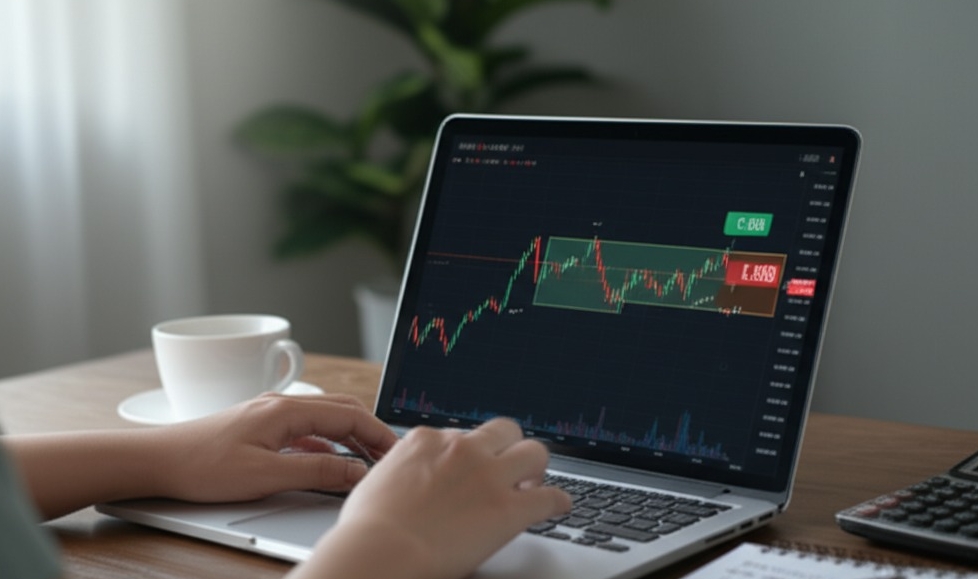
Margin Requirements for Shorting
Short selling in forex involves borrowing a currency you believe will drop in value, selling it, and then buying it back at a lower price. But to do this, you need a margin account — and you better know the rules that come with it.
Here's what you’re working with:
Initial margin is the deposit you must front to open a position — typically 1% to 5% of the trade size depending on broker and Regulation T standards.
Maintenance margin is the bare minimum equity required to keep the position alive.
If your trade tanks and your account value dips, you might get hit with a margin call, forcing you to either deposit more or watch the broker liquidate your trade.
“Traders new to short selling often overlook maintenance margin. That’s where risk blows up,” says Morgan Bates, FX risk analyst at Sinclair Markets.
Good brokers outline their broker requirements clearly. Smart traders always monitor borrowed shares, equity, and margin levels as part of solid risk management.
Leverage Tools for Forex Shorts
Leverage in forex is a double-edged sword — it multiplies your power, but also your pain. When going short, you’re relying on margin trading to control larger positions using less capital. The key is understanding how to manage that leverage responsibly.
Leverage ratio: Common options range from 1:30 (conservative) to 1:500 (aggressive), depending on your broker and location.
Stop-loss orders: Your safety net. Set them strategically to control downside.
Take-profit orders: Lock in gains without watching the screen 24/7.
Swap rates: Keep an eye on overnight fees; they sneak up especially with exotic currency pairs.
Risk exposure: Don’t let high leverage blind you — track your margin level closely.
Some trading platforms offer built-in risk calculators and alerts. That’s your friend when volatility hits.
Platform Interface Comparison Guide
Not all trading platforms are made equal — especially when it comes to short selling. A clunky interface can lead to missed entries, slow order execution, or worse — trading errors. Below is a simple breakdown of 3 major platforms, compared across key usability and technical features:
| Trading Platform | Charting Tools | Mobile Access | Order Execution Speed |
|---|---|---|---|
| MetaTrader 4 | Standard | Yes | Fast |
| TradingView | Advanced | Browser only | Moderate |
| cTrader | Integrated | Yes | Very Fast |
MetaTrader 4: Classic for a reason. Custom indicators, but the UI feels a bit dated.
TradingView: Killer charts, awesome community scripts, but less ideal for order flow.
cTrader: Clean, fast, and built for both technical and algorithmic traders.
Whether you’re using a desktop platform, web platform, or mobile trading app, prioritize features that fit your short-selling game. Good usability equals better reaction time in fast-moving forex markets.
Short Forex vs Long Positions
“Shorting AUD/USD during a commodity crash felt like standing in front of a freight train and hoping it stops,” recalls Marcus Hill, a currency strategist who has worked with OANDA and Saxo Bank. “I won that trade. Barely. But I learned what real risk tastes like.”
In forex, trading direction is not just a technical decision—it is an emotional commitment. You are either buying a currency pair expecting strength (long position) or selling a pair expecting weakness (short selling). These choices define profit potential, exposure, and mindset.
Key Differences Between Short and Long Positions
| Feature | Short Selling | Long Position |
|---|---|---|
| Market Outlook | Bearish market | Bullish market |
| Position Entry | Selling currency pair | Buying currency pair |
| Exit Price vs Entry | Exit price < Entry price | Exit price > Entry price |
| Profit Expectation | Price drops | Price rises |
| Risk Management Need | High (due to unlimited loss potential) | Moderate (losses capped by 0) |
| Emotional Pressure | Higher (moves often fast and sharp) | Lower (trend often steadier) |
Experience from the Trading Floor
Sofia Clarke, a licensed educator with the Global Forex Institute, puts it bluntly:
“Most retail traders lose money shorting too early. They confuse a dip with a trend reversal. That is where entry price discipline and exit planning become crucial.”
Unlike long positions, where trends can build over days, short trades often behave like tightrope acts. One news spike, one central bank comment, and the market moves against you fast. That is where risk management becomes a survival skill, not just strategy.
Psychology Behind Trade Direction
Long Position Psychology: Hopeful, trend-following, patient. Backed by strong data or optimism.
Short Selling Psychology: Contrarian, alert, defensive. Often built on fear, policy tightening, or risk aversion.
A well-known case on TradingView showed GBP/JPY dropping over 1,200 pips in 48 hours due to sudden policy shifts. Traders with short positions made serious gains—but only those who knew their exit price and set tight stops walked away with profits.
Expert Advice for Beginners
According to FXCM’s 2024 retail trader performance report, traders who started with long positions had a 16% higher win rate than those who shorted early in their journey. Industry veterans recommend:
Master long setups first for better trend analysis.
Only short with clear bearish confirmation.
Always set stops and never average down losing shorts.
Short forex vs long positions is not a rivalry—it is a choice of timing, psychology, and risk appetite. Both can be profitable. Both can be devastating. The real edge? Knowing which one suits you—and when to switch.
What Are the Risks of Short Selling Currency?
Shorting forex may sound like a solid game plan, but the risks? They can hit harder than you think. Here’s what traders should be prepared for.

Unlimited Loss Risk Explained
In forex trading, when you go short, your potential losses are unlimited. Why? Because the price of a currency can, in theory, rise endlessly. Let’s say you short a pair at 1.1000. If the pair spikes to 1.3000, you're 2000 pips underwater—and if you're trading on margin, those losses are magnified big time.
Short selling involves leverage and margin accounts, which means you're borrowing funds to enter larger trades. If the market goes against you, brokers can issue margin calls, forcibly closing your trades to cover the downside. That’s the real kicker with leveraged markets.
“In leveraged trading, you’re not just risking your money—you’re risking borrowed money. That multiplies your exposure and your stress.”
— Amir Donnelly, FX Market Strategist
Here’s how losses can stack up in real-world scenarios:
| Position Size | Pips Lost | Leverage Used | Account Impact |
|---|---|---|---|
| 1 Standard Lot | 200 pips | 50:1 | -$2,000 |
| 2 Standard Lots | 300 pips | 30:1 | -$6,000 |
| 0.5 Lot | 150 pips | 100:1 | -$750 |
The takeaway? Never short without a proper stop-loss and realistic position sizing. The forex market can move faster than you can blink—and your capital could vanish just as quickly.
Slippage During Market Volatility
Slippage is one of those silent killers in short forex trading. You expect one thing... and get slapped with another. This happens when market volatility sends prices jumping around faster than your platform or broker can fill your order.
Let’s break it down:
Slippage occurs when there’s a difference between the order price and the execution price.
During extreme volatility, the bid-ask spread widens and liquidity dries up.
A stop-loss turns into a market order, and the next best price might be way worse than you planned.
Limit orders? They might never get filled, especially in fast-moving conditions.
Say you're shorting the EUR/USD at 1.1450 with a stop-loss at 1.1470. A sudden news release spikes price up to 1.1500 before your order can execute. You don’t lose 20 pips—you lose 50.
Pro tip:
Trade during high-liquidity sessions (London/New York overlap).
Use guaranteed stop-losses if your broker offers them.
Always monitor economic calendars to avoid surprise volatility.
Trading in unpredictable markets without a game plan for slippage? That’s like driving blindfolded—hope won’t save you when the curve hits.
Short Forex Strategy for Beginners
Start smart: shorting doesn’t have to be scary. With a few foundational tactics, new traders can jump into the forex game without blowing up their account.
Choosing the Right Currency Pair
Understanding how to choose the right currency pair is the first move any beginner needs to make before opening a trade.
There are three types of pairs:
Major pairs like EUR/USD and USD/JPY are highly liquid and stable, with tighter spreads, making them ideal for new traders.
Minor pairs (e.g., GBP/CAD) offer more movement but come with slightly higher costs.
Exotic pairs (e.g., USD/TRY) are volatile and illiquid—fun to watch, risky to trade.
Volatility and liquidity are key considerations when shorting. Look for currency pairs that react strongly to economic indicators but also show predictable market behavior. Correlation also matters: if you're shorting EUR/USD, don’t double down on a pair like GBP/USD without checking how closely they move together.
Quick Tip: Avoid overlapping currency pairs unless you’ve analyzed their market correlation—it can double your risk exposure unintentionally.
Setting Stop-Loss for Shorts
Stop-loss placement isn’t just about minimizing losses—it’s a core part of your risk management plan.
When you open a short position, you’re betting that price will go down. If it goes the other way, you want a stop-loss order to automatically close your trade before losses pile up.
There are several ways to do this:
Fixed Stop: Set at a fixed pip distance from your entry price.
Percentage Stop: Risk only a small percentage of your capital (commonly 1–2%).
Technical Stop: Place the stop just above a resistance level or significant price action area.
Trailing Stop: Moves with the market, locking in profits as price drops.
Don’t just slap a stop-loss randomly—back it up with technical analysis and account for market volatility. Emotional trading kills more trades than bad strategy.
Shorting with Trend Confirmation
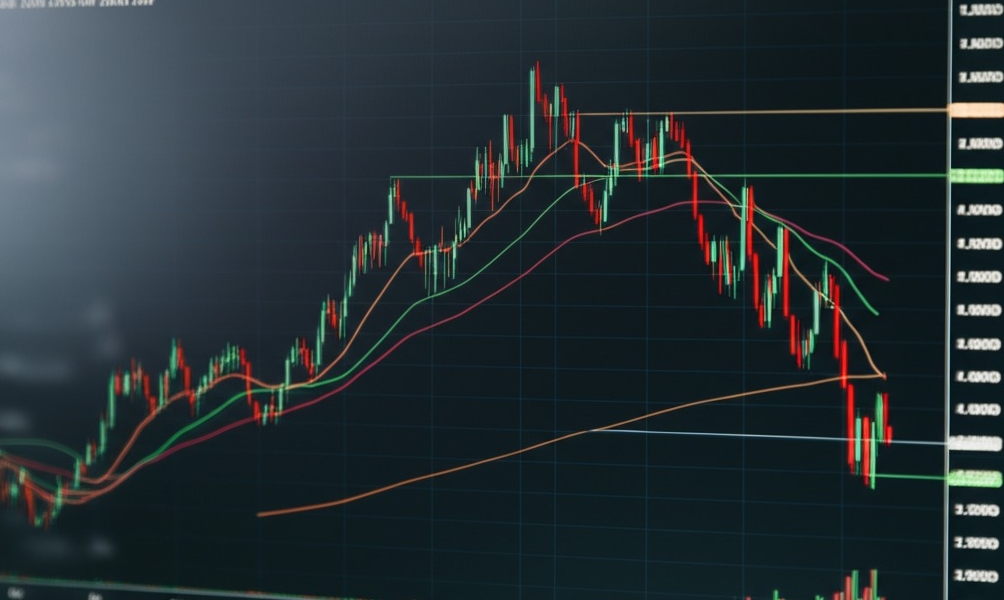
Shorting based on guesswork? Bad idea. You need strong trend confirmation before you hit "sell".
Look for a solid downtrend backed by:
Technical indicators like MACD or RSI turning bearish
Moving averages that show the price consistently below the 50 or 200 EMA
Chart patterns like head and shoulders or descending triangles
Volume analysis showing declining buyer interest and growing seller strength
This approach aligns your trade with the market structure, reducing the odds of getting caught in a fakeout. Wait for the right entry point, usually after a pullback to a broken support level, now acting as resistance.
When you short with the trend, you’re riding the wave—not swimming against it.
Simple EMA Crossover Strategy
This beginner-friendly method uses Exponential Moving Averages (EMAs) to spot sell signals when market momentum shifts. It’s ideal for shorting in a trending market.
Here’s how it works:
Apply two EMAs: a short-term (e.g., 12-period) and a long-term (e.g., 26-period).
When the 12 EMA crosses below the 26 EMA, it generates a sell signal.
Confirm the crossover with other indicators or chart analysis.
Use this on 15-min, 1-hour, or daily charts, depending on your trading style. Always backtest the strategy and adjust the period settings to fit your chosen currency pair and time frame.
| EMA Period | Use Case | Signal Type |
|---|---|---|
| 12 | Fast market reaction | Entry/Exit trigger |
| 26 | Trend confirmation base | Direction filter |
| 50 | Intermediate trend line | Momentum indicator |
| 200 | Long-term trend tracker | Major trend signal |
Pair this strategy with risk management tools like stop-losses and trend filters. It won’t win every time—but when it does, it keeps things simple and low-stress.
Conclusion
Shorting forex might sound like Wall Street wizardry, but it’s really just betting a currency will drop—and cashing in when it does. If you’ve ever thought, “I knew that currency was tanking!”, now you know how to actually trade on that gut feeling. Understanding the signals, picking the right platform, and managing risk smartly? That’s the real game-changer.
As trading legend Paul Tudor Jones put it, “The secret to being successful is being wrong fast.” Start small, stay sharp, and practice before going live—because profits love preparation.
Shorting forex means selling a currency pair with the expectation that its value will fall, so you can buy it back at a lower price and profit from the difference.
Most major and minor currency pairs can be shorted, but availability may depend on your broker’s platform, leverage rules, and liquidity. Exotic pairs are less commonly shorted due to high spreads and low volume.
RSI (Relative Strength Index)
Moving Average crossovers
Break of support levels
Candlestick reversal patterns
Yes, short selling currency is legal in regulated forex markets. However, it carries significant risks like leverage exposure and unpredictable news-driven movements. Always use stop-loss orders.
A long position profits from a currency increasing in value, while a short position profits when the currency declines in value. Essentially, they reflect opposite market expectations.
Yes, forex brokers require margin to open short positions
Margin acts as collateral for leveraged trades
Margin requirements vary based on the broker and currency pair
Beginners **can** short forex, but they should first:
Understand market signals
Use demo accounts to practice
Apply strict risk management
Avoid overleveraging early on
For individual retail traders, short selling has negligible impact. However, when large institutional investors short a currency en masse, it can influence price movement and market sentiment.