


Table of contents
Part 1 - What is Forex Trading and How Does it Work in India?
Part 2 - Is Forex Trading Legal in India?
Part 3 - How to Start a Forex Trading Business in India?
Part 4 - What Are the Best Forex Trading Strategies for Indian Traders?
Part 5 - How to Analyze the Forex Market Effectively?
Starting a business is like planting a seed—you need the right soil, proper care, and a bit of patience. When it comes to How to Start a Forex Trading Business in India, the same principles apply. The Forex market is booming, and Indians are catching on fast. With technology at your fingertips and global markets just a click away, trading currencies isn't just for big-shot investors anymore; it's for anyone willing to learn the ropes and take calculated risks.
In India, the Forex scene is tightly regulated, but that’s a good thing—it keeps things transparent and protects your hard-earned money. According to the Reserve Bank of India (RBI), only specific currency pairs are allowed for trading, ensuring safe and legal transactions. SEBI has also stepped up its game, making it easier for aspiring traders to access the market while staying compliant. As Warren Buffett famously said, "Risk comes from not knowing what you're doing." Understanding the regulations and mastering the basics is your first step toward success.
This guide is designed to cut through the noise and hand you the essentials on a silver platter. From setting up your trading account to mastering strategies that work, you'll find practical, step-by-step instructions that make the journey smoother. It’s not just about trading; it’s about building a business that grows with you. Ready to dive in? Let's get you started on your Forex trading journey.
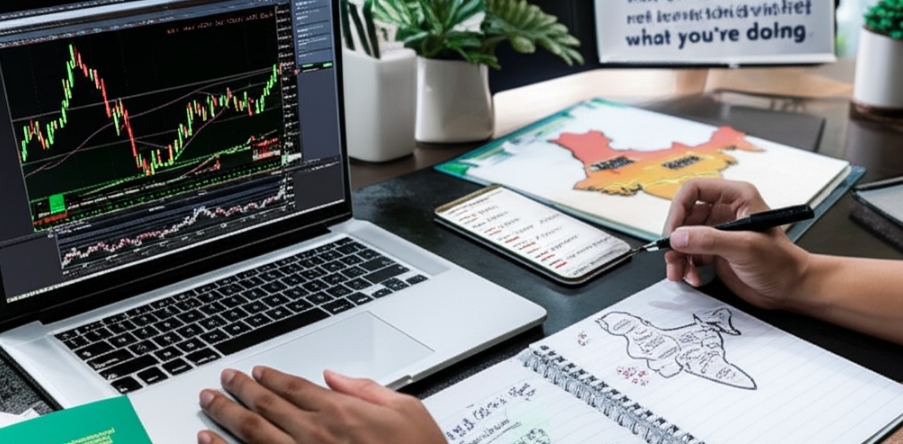
What is Forex Trading and How Does it Work in India
Forex trading in India is gaining traction as more individuals seek opportunities in the global currency market. Understanding the basics is crucial for success.
Understanding Forex Market Basics
Forex, or foreign exchange, involves trading currencies in a global, decentralized market. It’s where currencies are bought, sold, and exchanged at current or determined prices. This market operates 24/5, driven by liquidity, trading platforms, and the actions of central banks.
Key concepts include:
Leverage and Margin: Tools that amplify trading capacity but increase risk.
Pips and Spreads: Fundamental units in currency trading indicating price changes and transaction costs.
Market Participants: Include retail traders, financial institutions, and central banks.
Economic Indicators: Interest rates, GDP, and inflation impacting currency values.
"Forex trading is not just about buying low and selling high; it’s understanding how global economies intertwine." - Rajesh Mehta, Forex Analyst
Currency Pairs and Their Importance
Currency pairs are at the core of Forex trading, representing two currencies quoted against each other. The base currency is the first listed, while the quote currency is the second.
Types of Currency Pairs:
Major Pairs: Most liquid (e.g., EUR/USD).
Minor Pairs: Lesser volume (e.g., EUR/GBP).
Exotic Pairs: One major and one developing currency (e.g., USD/INR).
Cross Pairs: Exclude USD (e.g., EUR/JPY).
Importance:
Liquidity: Major pairs are highly liquid, reducing transaction costs.
Volatility: Exotic pairs can exhibit large price swings.
Correlation: Pairs may move in similar or opposite directions, influencing trading strategies.
Global vs. Indian Forex Markets
The Global Forex market is vast and highly liquid, with major hubs like New York, London, and Tokyo. In contrast, the Indian Forex market operates under strict regulation by the RBI and SEBI.
| Aspect | Global Forex Market | Indian Forex Market |
|---|---|---|
| Market Size | $7.5 trillion daily | $40 billion daily |
| Major Currency Pairs | USD/EUR, USD/JPY | USD/INR, EUR/INR |
| Trading Hours | 24/5 | Limited, RBI-regulated |
| Regulation Authority | No central authority | RBI, SEBI |
| Hedging and Speculation | Freely available | Restricted to RBI norms |
Key Differences:
Regulation: Indian traders face tighter restrictions.
Trading Hours: Indian markets align with global timings but have domestic limitations.
Currency Pairs: Only RBI-approved pairs are allowed for trading in India.
Understanding these distinctions is vital for traders looking to navigate both domestic and international currency markets effectively.
Is Forex Trading Legal in India
Forex trading in India is strictly regulated. To trade legally, one must comply with the guidelines set forth by SEBI and the RBI.
SEBI Guidelines for Forex Trading
SEBI, the Securities and Exchange Board of India, sets forth strict guidelines to ensure investor protection and maintain market integrity. Here are the key aspects:
Regulated Currency Derivatives: SEBI permits Forex trading only through authorized currency derivatives on recognized exchanges like NSE and BSE.
Compliance Requirements: Both brokers and traders must comply with SEBI's strict norms to avoid penalties.
Broker Registration: Only SEBI-registered brokers can facilitate Forex trading legally in India.
"Compliance isn't just about following rules; it's about safeguarding your investments." — SEBI Spokesperson
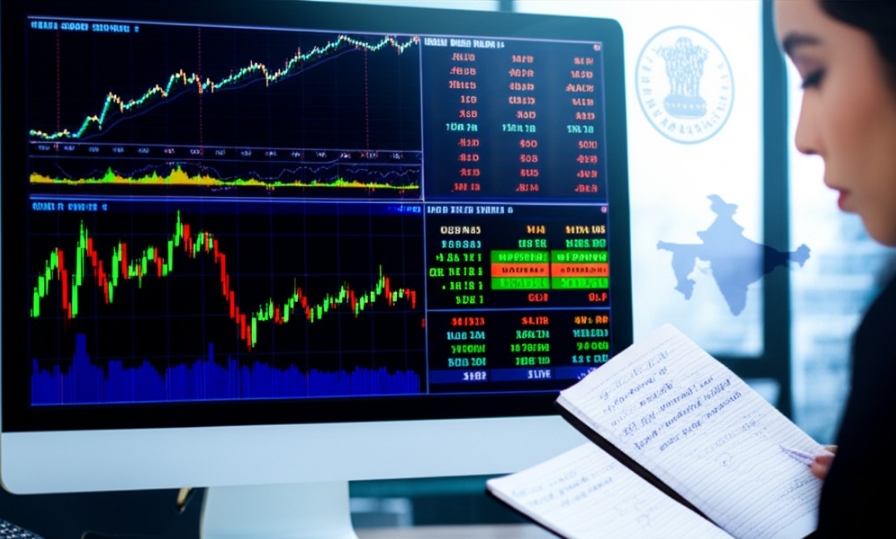
RBI Approved Currency Pairs
The Reserve Bank of India (RBI) allows trading only in certain currency pairs that involve the Indian Rupee (INR). Here are the approved pairs:
| Currency Pair | Description | Type |
|---|---|---|
| USD/INR | US Dollar and Indian Rupee | Major Pair |
| EUR/INR | Euro and Indian Rupee | Major Pair |
| GBP/INR | British Pound and Indian Rupee | Major Pair |
| JPY/INR | Japanese Yen and Indian Rupee | Major Pair |
Trading in unapproved currency pairs is considered illegal.
Forex transactions are routed only through Authorized Dealers regulated by RBI.
RBI ensures that currency trading is restricted to INR-based pairs to control currency fluctuations and maintain economic stability.
How to Start a Forex Trading Business in India
Starting a Forex trading business in India requires careful planning and adherence to regulations. Follow these steps to establish your trading journey.
Registering as a Forex Trader
To start trading Forex in India, you must complete the registration process with a regulated broker. Ensure your chosen broker complies with SEBI regulations.
Application: Fill out the broker’s online registration form.
Documentation: Submit identity proof, address proof, and PAN card.
Verification: The broker will verify your documents.
Approval: Once verified, your trading account will be activated.
Pro Tip: Make sure your details are accurate to avoid delays. It’s also wise to choose a broker known for fast verification.
Choosing the Right Broker
Selecting the right broker can make or break your trading experience. Consider the following criteria:
Regulation: Always opt for SEBI-regulated brokers.
Fees and Spreads: Lower costs increase profitability.
Platform Features: Check for mobile compatibility and charting tools.
Customer Service: Reliable support is crucial for quick issue resolution.
Expert Insight: "Choosing the right broker is like choosing a business partner. Transparency and reliability are key." – Rajiv Mehta, Forex Analyst
Setting Up Trading Platforms
Once registered, the next step is setting up a reliable trading platform. This involves selecting software that suits your trading style.
Download and Install: Get the platform from the broker’s website.
Configuration: Adjust chart settings, indicators, and data feed preferences.
Account Linkage: Connect your trading account for real-time execution.
Testing: Run a few demo trades to familiarize yourself.
Popular Platforms:
| Platform | Features | Compatibility |
|---|---|---|
| MetaTrader 4 | Custom Indicators, EA | Windows, Android |
| MetaTrader 5 | Advanced Charting, Hedging | Windows, iOS |
| cTrader | Depth of Market, Scalping | Windows, Web |
Initial Capital and Investment Planning
Budgeting your initial investment is vital for sustainable trading. Calculate the capital based on your risk appetite and financial goals.
Capital Allocation: Divide funds between trading and reserves.
Risk Management: Keep risk per trade under 2% of your capital.
Financial Goals: Set short-term and long-term return targets.
Deposit Methods: Choose fast and reliable payment options.
Example: If your initial capital is ₹1,00,000, allocate ₹80,000 for trading and ₹20,000 as a buffer.
Real Talk: No need to dive in headfirst. Start small, test strategies, and scale gradually.
Setting up a Forex trading business in India involves compliance, selecting the right broker, configuring your trading platform, and planning your capital wisely. Follow these steps to build a solid foundation for trading success.
What Are the Best Forex Trading Strategies for Indian Traders
Mastering Forex trading strategies is crucial for consistent profits. In this chapter, we explore effective strategies to maximize your trading success.

Scalping vs. Day Trading
Scalping and Day Trading are both popular short-term strategies in Forex. Scalping focuses on rapid-fire execution, leveraging tiny price movements with high frequency—think seconds to minutes. Day Trading, on the other hand, involves holding positions throughout the trading day but closing them before the market ends.
Scalping:
Timeframe: Seconds to Minutes
Execution Speed: High
Profit Margin: Small but frequent
Requires: Technical Analysis and Order Flow mastery
Day Trading:
Timeframe: Minutes to Hours
Execution Speed: Moderate
Profit Margin: Larger single trades
Requires: Market Volatility awareness and chart analysis
"Scalping is like sprinting; Day Trading is more like running a marathon with sprints in between." — Nial Fuller, Professional Forex Trader
Position Trading Techniques
Position Trading is the long-term game of Forex, perfect for those who are patient and follow macroeconomic trends. Unlike Scalping or Day Trading, Position Traders hold their trades for weeks or even months, capitalizing on large market cycles.
Characteristics:
Long-term Focus: Weeks to Months
Trend Following: Catching big market moves
Fundamental Analysis: Macroeconomic indicators drive decisions
Technical Analysis: Support and resistance levels for entry/exit
Essential Tools:
Stop Loss: To limit losses
Take Profit: To secure gains
Capital Allocation: Careful planning to withstand market swings
Risk Management in Forex Strategies
Risk management is the backbone of sustainable Forex trading. Without it, even the best strategies can lead to major losses. Key aspects include:
Position Sizing: Never risk more than 2% of your total capital on a single trade.
Stop Loss and Take Profit: Set automatic triggers to exit trades at predetermined levels.
Risk-Reward Ratio: Aim for at least a 1:2 ratio—risk ₹500 to potentially make ₹1,000.
Leverage Awareness: Use leverage wisely; high leverage can amplify both gains and losses.
Diversification: Spread your trades across multiple currency pairs to minimize exposure.
| Risk Management Technique | Description | Recommended Practice |
|---|---|---|
| Position Sizing | Controlling the amount at risk | 2% Rule of total capital |
| Stop Loss & Take Profit | Automatic trade closure | Set triggers before entering |
| Leverage Awareness | Amplifying trade potential | Use cautiously; avoid over-leverage |
How to Analyze the Forex Market Effectively
Forex market analysis is vital for making informed trading decisions. This chapter covers technical and fundamental analysis, chart reading, and the impact of global news on currency pairs.
Technical Analysis Essentials
Technical analysis involves analyzing past price data to predict future movements. Traders use chart patterns, indicators, and price action to identify potential trends. Essential tools include moving averages, trend lines, and candlestick patterns.
Here’s a quick breakdown of key technical indicators:
| Indicator | Use | Calculation Basis |
|---|---|---|
| Moving Averages | Identifying trend direction | Average of closing prices |
| RSI (Relative Strength Index) | Overbought/oversold signals | Price gain/loss ratios |
| MACD (Moving Average Convergence Divergence) | Trend changes | EMA (12) - EMA (26) |
Pro Tip: "Price action tells the story; technical indicators provide the interpretation."
Fundamental Analysis of Currencies
Fundamental analysis focuses on economic indicators and policy changes. Traders look at interest rates, GDP, and inflation to evaluate a currency's strength. For example, higher interest rates often strengthen a currency, while political instability can weaken it.
Interest Rates: Affect borrowing costs and investment flow.
GDP Growth: Reflects economic health and currency strength.
Inflation Data: High inflation generally weakens currency value.
Expert Insight: "Economic data doesn't lie; it reflects the true state of a currency." - Raj Malhotra, Forex Analyst
Reading Forex Charts Accurately
To read Forex charts accurately, traders must understand chart types:
Candlestick Charts: Show open, close, high, and low prices.
Bar Charts: Similar to candlesticks but less visual.
Line Charts: Display closing prices over time.
Tips for Accurate Reading:
Identify trend direction using trend lines.
Locate support and resistance levels for entry and exit points.
Use technical indicators to validate trends.
Quick Insight: Spotting price patterns early can give a strategic edge!
Impact of Global News on Forex
Global news plays a crucial role in Forex trading. Key news events like non-farm payrolls, interest rate decisions, and central bank announcements can cause sudden market shifts.
News Impact Tips:
Follow an economic calendar for scheduled news.
React cautiously to geopolitical events.
Monitor market sentiment to gauge potential volatility.
Example:
After a central bank raises interest rates, the national currency often appreciates, especially if the hike was unexpected.
Mastering both technical and fundamental analysis is essential for making well-rounded trading decisions. Stay updated with global news to anticipate potential market reactions. Combining these techniques can enhance accuracy in predicting currency movements.
What Are the Main Challenges in Forex Trading
Forex trading in India is exciting but challenging. Understanding and managing risks can significantly impact success.
Handling Volatility and Risks
Managing market volatility is crucial for Forex traders. Volatility Management involves analyzing market fluctuations and applying Risk Mitigation techniques. Here’s how to handle it:
Diversification: Spread investments across multiple currency pairs to minimize risk.
Hedging Strategies: Use opposite trades to reduce potential losses.
Exposure Control: Limit the amount of capital exposed to volatile markets.
Stress Testing: Simulate market drops to assess risk tolerance.
Traders often underestimate the importance of Portfolio Protection. Incorporating Risk Assessment and Stress Testing into your strategy helps mitigate sudden market shifts.
Expert Quote: "Managing volatility isn't about avoiding risk—it's about preparing for it." — Arjun Patel, Forex Analyst
Avoiding Common Trading Mistakes
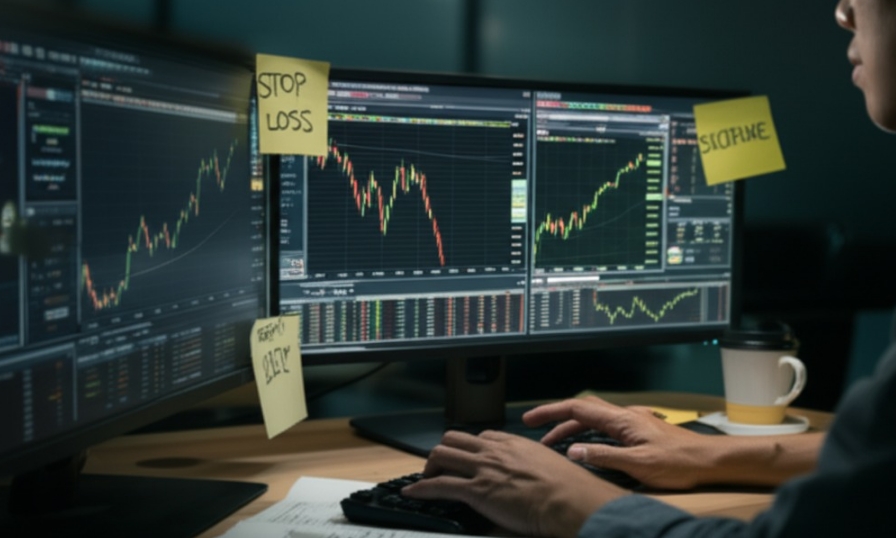
Traders often make mistakes due to poor planning and lack of discipline. Trading Psychology plays a major role here. Below are some common pitfalls:
Overtrading: Chasing every price movement can drain your capital.
Ignoring Stop-Loss: A recipe for disaster—set it and respect it.
Emotional Control: Greed and fear can lead to poor decisions.
Insufficient Research: Trading without analyzing the market is risky.
A smart trader always plans ahead and avoids Chasing Losses. Understanding Market Timing Errors can prevent unnecessary losses, while maintaining Emotional Control helps stay disciplined.
Common Trading Mistakes and Their Impact
| Mistake | Consequence | Mitigation Strategy |
|---|---|---|
| Overleveraging | Magnified losses | Use leverage cautiously |
| Chasing Losses | Emotional trading | Set clear stop-loss points |
| Lack of Discipline | Inconsistent trading results | Follow a structured trading plan |
Managing volatility and avoiding trading mistakes are fundamental for Forex success. Building Risk Tolerance and maintaining Discipline help mitigate common trading risks.
How to Grow Your Forex Trading Business in India
Forex trading is more than just executing trades; it is a journey toward building a scalable and sustainable business. As many seasoned traders would say, the real challenge begins after you have learned the ropes and started generating consistent returns. Growing your Forex trading business in India involves a structured approach, strategic decision-making, and continuous adaptation to market changes. Let us dive into the key aspects of scaling your operations and ensuring long-term growth.
Scaling Operations
"Growth without strategy is like building a house without a foundation," remarked Rakesh Sharma, a veteran Forex trader with over a decade of experience in Indian markets. Scaling operations requires a clear roadmap. This includes increasing your trading volume, diversifying your portfolio, and leveraging advanced trading platforms that support high-frequency transactions. Many successful traders recommend gradually increasing your position sizes as your account balance grows, maintaining risk levels at a manageable percentage. Technology adoption, such as algorithmic trading and automated bots, can enhance execution speed and efficiency.
Advanced Strategies for Sustained Growth
Stepping up your trading game means more than just adding funds. It is about mastering advanced strategies like hedging, swing trading, and multi-timeframe analysis. Veteran traders in Mumbai have often cited the importance of understanding global market shifts, geopolitical events, and their impacts on currency pairs. "The difference between a novice and a professional is the ability to anticipate and react to market shocks," said Priya Sinha, a Forex market analyst at a major brokerage firm. Advanced strategies minimize risk exposure while maximizing profit potential.
Technology Adoption: The Edge of Modern Trading
Automation is the secret weapon of modern traders. With AI-powered trading systems and real-time analytics, traders can execute multiple transactions across different markets with precision. Cloud-based trading platforms allow you to monitor trades from any device, ensuring you never miss an opportunity. Many top traders in India are now adopting blockchain for enhanced security and transparency in their transactions.
Team Expansion: Building Your Support Network
While trading is often seen as a solitary endeavor, expanding your business may require building a team. This can include financial analysts, IT support, and even compliance officers to navigate SEBI regulations effectively. "A strong team is not a luxury; it is a necessity," emphasized Manish Patel, who manages a successful Forex trading desk in Delhi. As your operations grow, the need for specialization becomes crucial to handle various aspects of risk and strategy.
Marketing and Branding: Establishing Your Identity
Forex trading is not just about numbers; it is about reputation. Building your brand through social media, networking events, and educational webinars can position you as an authority in the Indian Forex community. Many successful traders use platforms like LinkedIn and Twitter to share insights and engage with budding traders, enhancing their visibility and credibility.
Client Retention: The Lifeline of Your Business
A profitable trade is great, but a loyal client base is even better. Retaining clients through consistent performance, transparent communication, and timely updates on market changes can set you apart from competitors. Offering personalized insights and exclusive trading tips to your clients can significantly improve loyalty and trust.
Regulatory Compliance: Navigating Indian Laws
Compliance is not optional in the Forex market. Adhering to SEBI guidelines and RBI regulations is critical for maintaining your business operations. Penalties for non-compliance are severe and can result in heavy fines or even a trading ban. Regular audits and compliance checks ensure you remain within the boundaries of Indian law.
Funding and Investment: Fueling Your Growth
Expanding your Forex trading business may require additional capital. Options include venture capital, angel investors, or even strategic partnerships with financial institutions. Many Indian traders have successfully raised capital by showcasing consistent profitability and robust risk management practices.
Diversification and Risk Management: Expanding Horizons
Diversifying your trading portfolio across various currency pairs and financial instruments can mitigate risk. Many top traders in India have diversified into commodities and indices to stabilize earnings. As the famous saying goes, "Do not put all your eggs in one basket." Risk management strategies like stop-loss orders and diversified trading platforms help safeguard against unexpected market shifts.
Growing a Forex trading business in India is a dynamic and challenging journey. It demands a blend of strategic scaling, advanced technology, regulatory adherence, and robust client relationships. Each aspect builds upon the other, creating a framework for sustainable growth in one of the world's most volatile financial markets.
Conclusion
Starting a Forex trading business in India isn't just about crunching numbers—it's about seizing opportunities. Like planting a seed, the right knowledge and strategy can help your investment grow strong and steady. From understanding the legalities to picking the best strategies, each step brings you closer to financial independence. "Risk comes from not knowing what you’re doing," as Warren Buffett wisely said, and in Forex, preparation is your best friend.
The Forex market is thriving, and now's the perfect time to jump in. Equip yourself with the right tools, follow the regulations, and stay sharp with market analysis. Your journey to becoming a successful trader in India starts with that first trade. Ready to make it happen?
Yes, Forex trading is legal in India but is regulated strictly by the Reserve Bank of India (RBI) and Securities and Exchange Board of India (SEBI). Indian residents can trade only in currency pairs that are benchmarked against the Indian Rupee (INR), such as USD/INR, EUR/INR, GBP/INR, and JPY/INR.
Most brokers allow you to start with as low as $100 (around ₹8,000).
Some brokers also provide micro-accounts where the minimum deposit is as low as $10 (around ₹800).
The amount you start with may impact the strategies you can use effectively.
Regulation: Ensure the broker is registered with SEBI.
Trading Platform: Look for user-friendly platforms like MetaTrader 4 or 5.
Customer Support: Opt for brokers with responsive support.
Transaction Fees: Compare spreads and commission rates.
Indian residents are restricted from trading through international brokers that are not regulated by SEBI. Engaging with unregulated or offshore brokers is considered a violation of the Foreign Exchange Management Act (FEMA) and may lead to legal consequences.
Trend Following: Identifying and following market trends.
Breakout Trading: Entering trades when the price breaks a support or resistance level.
Scalping: Making quick trades to capture small price movements.
Each analysis method helps traders make informed decisions about market movements.
Technical Analysis: Involves chart patterns, indicators, and price action.
Fundamental Analysis: Focuses on economic indicators, political events, and global news.
Yes, it is possible to make Forex trading a full-time business in India if you:However, it requires dedication, market knowledge, and the ability to handle volatility.
Develop a consistent trading strategy.
Properly manage risks and capital.
Understand market trends and economic indicators.
Market Volatility: Sudden market movements can cause significant losses.
Leverage Risk: High leverage can magnify both gains and losses.
Liquidity Issues: Some currency pairs have lower liquidity, affecting trade execution.
Regulatory Risks: Compliance with Indian financial regulations is necessary.