


Gold trading isn’t just shiny charts and candlestick patterns—it’s a wild ride through inflation fears, dollar dives, and economic curveballs that hit harder than your morning espresso. When the markets get jumpy, gold doesn’t flinch—it paces like a tiger waiting for its cue. No wonder traders treat it like their financial north star when currencies start acting up. But here’s the kicker: most folks wade in with nothing but vibes and guesswork—and end up learning lessons the hard (and expensive) way.
“Most people underestimate how emotional gold can be,” says Marco DeLuca, senior market analyst at EasyCashBackFx (May 2024). “It moves fast when fear hits—especially during overlapping London-New York sessions.” If you’re eyeballing XAUUSD Live Chart hoping to strike it rich without getting whiplash, you’ll need more than luck on your side—you’ll need strategy, timing, and tools built for this kind of action.
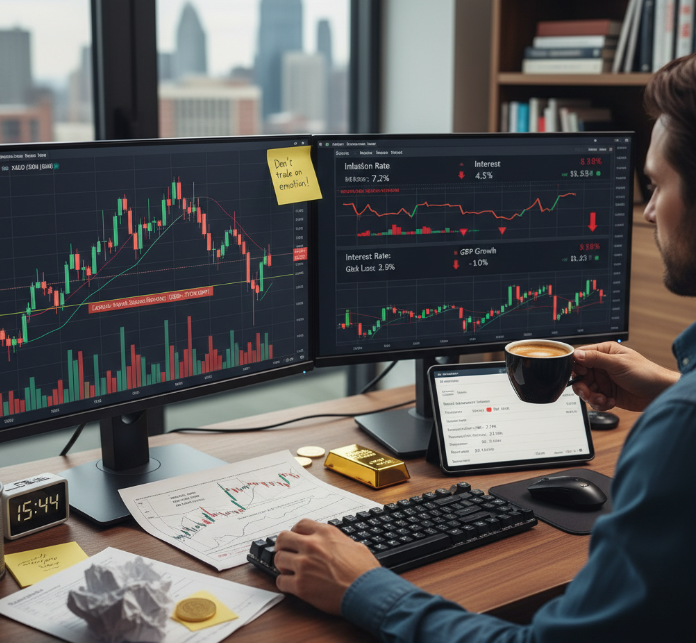
Golden Insights: Essential Guide Tips for Gold Trading
Economic Indicators: Gold prices fluctuate based on interest rates, inflation, GDP growth, and unemployment data, often inversely correlated with economic strength.
Trading Sessions: Liquidity for gold peaks during the London and New York sessions, making them the best times for active trading.
Currency Pair Sensitivity: Ideal currency pairs for gold trading include USD-related pairs such as EUR/USD and AUD/USD, as they reflect economic shifts in the US.
Risk Management: Employ critical techniques such as position sizing and setting a stop-loss order to protect capital and manage risks effectively.
Trends and Patterns: Utilize tools like Moving Averages and Fibonacci Retracement levels to identify trends and potential reversal points for informed trading decisions.
Gold Trading Basics
Quick intro: Let’s break down the essentials of gold trading—from market movers to timing, currency pairings, and smart risk tactics.
The influence of Economic Indicators on Gold Prices
Economic signals shape the heartbeat of gold trading, so if you're not watching them, you're flying blind.
Interest rates rising? Expect gold to dip as yields become more attractive.
High inflation usually pushes gold higher—it’s seen as a hedge.
Strong GDP growth tends to pull gold prices down due to optimism in other assets.
Weak unemployment data can spook investors and boost demand for safe-haven assets like gold.
Central bank chatter—especially from the Fed—can shake up the market instantly.
Mix that with unexpected geopolitical events, and you’ve got yourself a recipe for volatility in your trades.
How Trading Sessions Impact Gold Liquidity
Not all hours are created equal when you’re deep into the world of gold trading.
• London session: This is where things really heat up—most global volume flows through here, making it highly liquid. • New York session: Volatility spikes again when Wall Street wakes up; overlaps with London mean fast moves and sharp reversals. • Asian session: It’s quieter here, but ideal if you prefer slower-paced price action or prepping trades before big moves begin.
These three major sessions shape how much movement—and opportunity—you’ll see in your trades based on global trading volume, regional demand, and overall market mood.
Currency Pairs: Best Options for Gold Trading
Pairing gold with currencies isn’t just about preference—it’s about strategy rooted in correlation and commodity exposure.
Start with these combos:
XAU/USD: The kingpin of all pairs—this one moves directly with U.S. economic data due to its tight link with the greenback.
EUR/USD & GBP/USD: These offer indirect plays on dollar strength or weakness, which impacts gold movements significantly.
AUD/USD: Australia exports tons of precious metals, so this pair often dances in sync with shifts in global metal sentiment.
JPY/USD: A wildcard during uncertain times; yen strength can mirror rising gold demand when markets get shaky.
In short, picking the right pair lets you ride waves driven by both currency shifts and core trends within the broader forex market.
Risk Management Essentials in Gold Trading
A solid risk game plan is what separates consistent traders from those who blow their accounts chasing shiny dreams.
Step 1 – Define your risk per trade using smart position sizing, never risking more than 1–2% of your capital. Step 2 – Always set a clear-cut stop-loss based on recent price swings—not gut feelings or hope. Step 3 – Use a favorable risk-reward ratio like 1:2 or better; don’t take trades that don’t justify potential losses. Step 4 – Avoid overusing high leverage, especially during periods of high market volatility around news events or data releases. Step 5 – Diversify across timeframes or instruments where possible; don’t go all-in just because one setup looks good today.
By sticking to these rules—even loosely—you’ll protect your bankroll while giving yourself room to grow smarter over time in this wild space we call gold trading.
And hey, platforms like EasyCashBackFx make it easier by offering cashback perks that can soften losing streaks while rewarding consistent volume traders too!
Key Strategies for Successful Gold Trading in Forex
No fluff here—just practical tools and smart moves to help you stay sharp in gold trading. Let’s break it down.
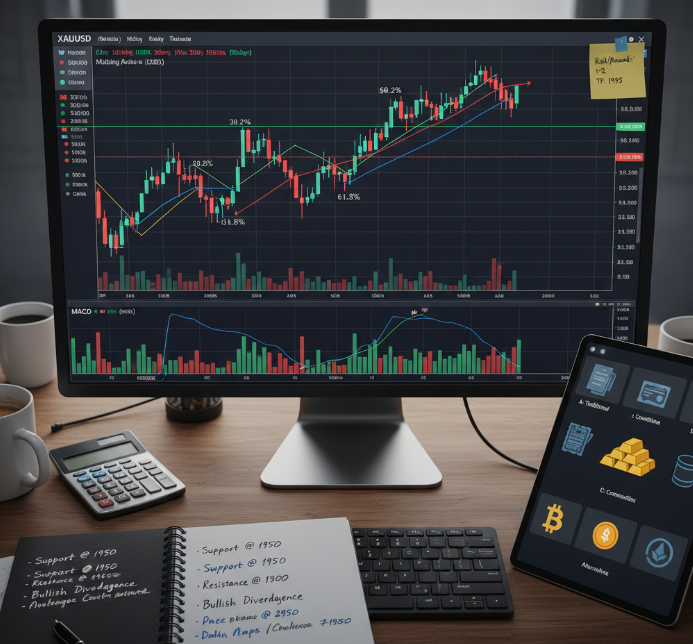
Using the Moving Average for Predicting Gold Trends
• The Moving Average (MA) acts like a trend whisperer. It filters out noise and shows where price is really heading.
• Short-term MAs (like 20-day) catch quick swings, while long-term ones (like 200-day) track bigger trends in XAUUSD.
• If price stays above the MA, bulls are likely in control. Below it? Bears may be driving.
The trick lies in combining multiple MAs—called a crossover strategy—to spot when momentum flips. In fast-moving forex gold markets, this can be your early warning system.
The Role of Fibonacci Retracement in Gold Trading
Identify a major swing high and low on your chart.
Apply the Fibonacci Retracement tool from top to bottom—or vice versa.
Watch key levels like 38.2%, 50%, and 61.8%. These often act as bounce or reversal zones.
When you're tracking gold prices, especially after big moves, these levels can flag where buyers or sellers might step back in. That’s why many traders use them alongside support/resistance zones—doubling their edge when trading volatile assets like XAUUSD.
Employing the MACD to Time Your Gold Trades
| Signal Type | Trigger Condition | Action | Signal Strength |
|---|---|---|---|
| Bullish Crossover | MACD line crosses above signal line | Consider buying | Medium |
| Bearish Crossover | MACD line crosses below signal line | Consider selling | Medium |
| Histogram Expansion | Bars grow taller above/below zero | Confirm trend strength | High |
| Zero Line Cross | MACD crosses zero line | Trend confirmation | Strong |
How to Set Up Take-Profit Orders for Gold Positions
• Pick a target level based on previous highs/lows or technical signals like resistance levels or Fibonacci extensions.
• Use risk-reward ratios—aim for at least 1:2 so that even if some trades go south, you're still net positive over time.
• Set your TP slightly before round numbers; markets often reverse just shy of them due to psychological barriers.
In fast-paced gold forex trading, emotions run hot—TP orders keep greed from hijacking your gains and let you walk away with profits locked down automatically.
Diversification Strategies: Balancing Gold with Other Assets
“Gold remains one of the most effective hedges during economic downturns,” noted Bloomberg Intelligence's April 2024 Commodities Outlook report—a reminder that no single asset should carry all your hopes.
Group A – Traditional Asset Mix:
Equities (U.S., emerging markets)
Bonds (government and corporate)
Cash equivalents
Group B – Commodity Diversifiers:
Physical gold
Silver
Oil or agricultural ETFs
Group C – Alternative Hedges:
Real estate investment trusts (REITs)
Cryptocurrencies
Inflation-protected securities
By spreading exposure across these buckets, especially pairing volatile assets with stable ones like physical gold or bonds, you lower portfolio shocks. This is how seasoned traders ride out storms without panic-selling everything at once—and it's one reason EasyCashBackFx recommends keeping at least 10–15% of holdings allocated to precious metals during uncertain times.
3 Essential Tools for Gold Trading Success
Knowing your way around the tools of the trade can mean everything when it comes to smart gold trading decisions.
Chart Patterns: Identifying Head and Shoulders in Gold Charts
Spotting a Head and Shoulders pattern on gold charts isn’t just for technical analysts—it’s one of those things that could save your portfolio from a nasty dip. Here are key elements you’ll want to watch out for:
Left Shoulder – A price peak followed by a minor drop.
Head – A higher peak forms, then falls again.
Right Shoulder – Another rise, but not as high as the head.
The Neckline, connecting the troughs, acts like a trigger line—once broken, it often signals a bearish reversal.
Pay attention to declining volume, especially during the formation of the right shoulder—it usually hints at weakening momentum.
Sharp traders use this pattern alongside other indicators for confirmation rather than relying on it solo.
When this reversal setup appears after an uptrend, seasoned traders often prep their exit strategies or even consider shorting gold positions.
Utilizing Bollinger Bands to Gauge Gold Price Volatility
Understanding how wide or narrow those bands get can give you serious insight into upcoming moves in gold prices. Here's how:
• When prices hug the upper band, it might mean gold is overbought—but don’t jump ship yet; check if there's strong volume behind it. • If candles start punching through either band with force, it's often an early sign of a potential breakout—or fakeout. Context matters here. • A "Bollinger squeeze" (when bands tighten) usually means volatility is drying up fast… but something big might be brewing right after.
"Since mid-February 2024, narrowing Bollinger Bands preceded three significant $30+ intraday swings in spot gold," noted IC Markets' April report on commodities behavior.
Mixing these bands with RSI or MACD gives you more muscle when trying to read market tension before making any bold moves in your next trade.
Understanding the Stop-Loss Order to Protect Gold Investments
Using a solid stop-loss order strategy is like wearing armor when you're walking into battle—essential if you're serious about protecting your cash while trading gold:
Define your risk tolerance clearly—are you cool losing 2% or max 5% per position? That guides where you place your stop.
Set your stop-loss order just below recent support levels if you're long—or above resistance if you're shorting gold.
Decide between types: a basic market-triggered stop-loss closes instantly once hit; meanwhile, a limit stop may offer better pricing but risks not executing at all.
Don’t forget slippage during volatile moments—a tight stop might get triggered prematurely if spreads widen suddenly.
Review regularly! What worked last week may not protect you today as new data hits and sentiment shifts.
This tool isn't just about cutting losses; it's also about staying sane when markets go haywire—because they will sooner or later during active sessions in global gold trading markets.
Common Mistakes to Avoid in Gold Trading
Even seasoned traders mess up sometimes. Let’s break down two big blunders that trip up folks in gold trading more than they’d like to admit.

Overlooking the Importance of Position Sizing
Mess up your position sizing, and you're basically gambling with your account balance. Here's what people often get wrong:
Using the same lot size for every trade without adjusting for volatility or market conditions.
Ignoring how much capital is at risk relative to total account balance—big mistake.
Relying on fixed trade sizes instead of calculating based on a set percentage of equity.
Forgetting to link stop loss levels with trade size, which throws off proper risk management.
Jumping into trades emotionally, letting excitement override rational capital allocation.
Misunderstanding how leverage impacts exposure and amplifies losses if not sized properly.
Overcompensating after a loss by doubling down—classic revenge trading behavior.
In fast-moving markets like gold, even a small misstep in determining your trade size can spiral out quickly. Smart traders treat position sizing like their financial seatbelt—it’s boring until you crash without it.
Misjudging Risk-Reward Ratios in Gold Trades
A lot of folks chase shiny profits but forget to weigh them against what they could lose. That’s where the risk-reward ratio comes into play—and messing this up can wreck your edge in gold trading.
• Set a weak ratio like 1:1? You’re needing too many wins just to stay afloat. • Place stops too tight or targets too far? You’ll either get stopped out early or miss realistic profit windows.
Always define your profit target before entering any trade—that keeps emotions out of it.
Match your stop loss logically—not just where it “feels right.” Use technical levels or volatility-based methods instead.
→ Many new traders ignore how small losses stack up when their potential gain doesn’t outweigh their potential loss consistently.
Short-term spikes can tempt you into poor setups, especially in volatile times when gold swings wildly on macro news or dollar movement. A solid plan means knowing when the math makes sense—not just when price looks good.
To stay ahead, treat every single entry as a calculated bet: Is the reward worth what I’m risking? If not, skip it—there’ll be another setup soon enough in this ever-buzzing world of gold markets.
References
World Gold Council — Gold Outlook 2026 - https://www.gold.org
World Gold Council — Mid-Year Outlook 2025 - https://www.gold.org
Reuters — Gold hits all-time high, propelled by US rate-cut hopes - https://www.reuters.com
Reuters — Gold hits record high on safe-haven demand - https://www.reuters.com
Investopedia — Moving Average (MA) - https://www.investopedia.com/terms/m/movingaverage.asp
Investopedia — Exponential Moving Average (EMA) - https://www.investopedia.com/terms/e/ema.asp
Investopedia — What Are Fibonacci Retracement Levels - https://www.investopedia.com/terms/f/fibonacciretracement.asp
Investopedia — Strategies for Trading Fibonacci Retracement Levels - https://www.investopedia.com/articles/active-trading/091114/strategies-trading-fibonacci-retracements.asp
Investopedia — What Is MACD? - https://www.investopedia.com/terms/m/macd.asp
Investopedia — Understanding MACD Histogram - https://www.investopedia.com/articles/technical/091001.asp
Investopedia — Bollinger Bands - https://www.investopedia.com/terms/b/bollingerbands.asp
Investopedia — Using Bollinger Bands - https://www.investopedia.com/articles/technical/102201.asp
Investopedia — How To Profit From the Bollinger Squeeze - https://www.investopedia.com/articles/technical/04/030304.asp
Investopedia — Head and Shoulders - https://www.investopedia.com/terms/h/head-shoulders.asp
Investopedia — How to Trade the Head and Shoulders Pattern - https://www.investopedia.com/articles/technical/121201.asp
Investopedia — Stop-Loss Order - https://www.investopedia.com/terms/s/stop-lossorder.asp
Investopedia — Stop-Limit Order - https://www.investopedia.com/terms/s/stop-limitorder.asp
Investopedia — What Drives the Price of Gold? - https://www.investopedia.com/financial-edge/0311/what-drives-the-price-of-gold.aspx
J.P. Morgan Global Research — Gold price drivers - https://www.jpmorgan.com/insights/global-research/commodities/gold-prices
EBC — Best XAUUSD Trading Hours - https://www.ebc.com/forex/what-are-the-best-xauusd-trading-hours
QuantVPS — When to Trade Gold (XAUUSD) - https://www.quantvps.com
World Gold Council — Gold Market Commentary (Oct 7, 2025) - https://www.gold.org
FAQ
What economic indicators matter most in gold trading?
The pulse of gold often beats with shifts in:
Interest Rate changes that sway the USD value against EUR/USD or AUD/USD.
Inflation Rate pressure, drawing investors into a safe harbor.
GDP Growth signals, coloring market optimism or caution.
Unemployment Rate, which can push traders from risk toward the security of precious metals.
How do trading sessions shape gold’s volatility?
Gold wakes gently in the Asian Session yet roars when London and New York overlap—spreads tighten as Market Orders flood XAU/USD charts; Sydney Session remains calmer but sets tones for Tokyo traders bracing for sharp moves tied to GBP/JPY swings and overall Consumer Confidence reports.
Why is position sizing vital during fierce price swings?
A disciplined soul watches Position Sizing like a heartbeat monitor:
Keeps exposure aligned with Risk Reward Ratio goals.
Prevents capital from burning under sudden spikes spotted via Bollinger Bands or Head and Shoulders breakouts on daily XAU/USD patterns.
How do take-profit orders secure gains in turbulent markets?
In quick surges—perhaps after a Double Bottom rally confirmed by MACD—a Take-Profit Order stands ready: it closes your victory before retracements bite back, turning market chaos into captured reward across currency plays from EUR/USD to USD/CHF without lingering hesitation at reversal zones marked by Fibonacci Retracement levels.