


Table of contents
Trading the Japanese Yen (JPY) isn't just for Wall Street pros — it's for anyone who’s tired of guessing and ready to play smart. How to Trade the Japanese Yen (JPY) is your fast track to understanding one of the world’s most liquid currencies. If you’ve ever felt overwhelmed by forex charts or unsure when to jump in, you’re not alone. This guide breaks it down without the fluff, giving you the tools to trade with more confidence and less guesswork.
The JPY reacts like clockwork to global headlines, interest rate moves, and market sentiment — it’s like reading the room, but with charts. “Forex is 80% psychology and 20% strategy,” says Kathy Lien, a leading voice in currency trading. So learning the Yen's behavior gives you an edge most traders overlook.
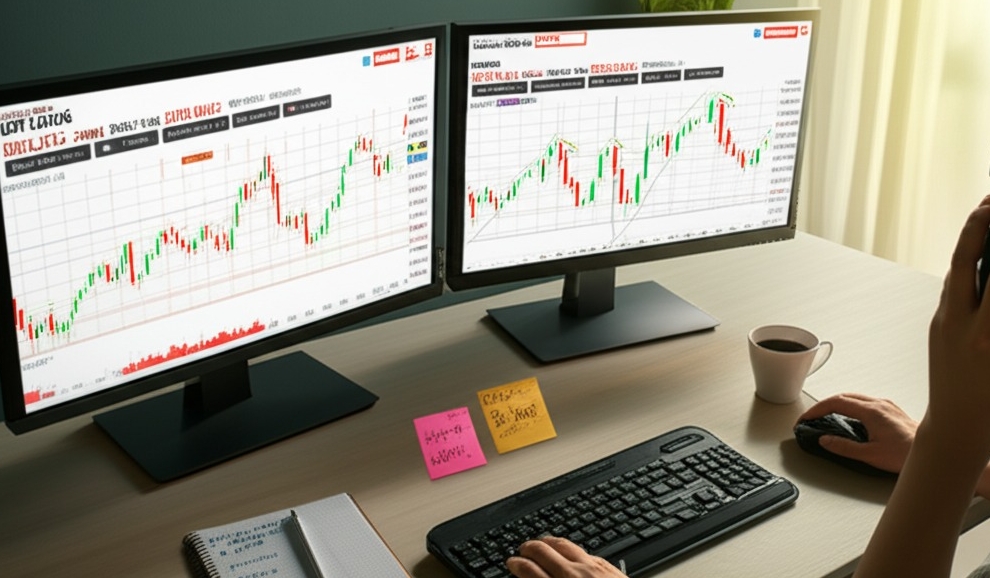
We’ll walk you through real tips, solid strategies, and no-BS comparisons — from picking USD/JPY over EUR/JPY, to spotting the best trading times, to choosing the right platform that won’t burn your wallet. Ready to stop winging it and start trading smarter? Let’s dive in.
What Affects JPY in Forex Trading?
Understanding what moves the Japanese Yen (JPY) helps traders react faster and smarter in the forex market.
Bank of Japan policy moves
The Bank of Japan (BoJ) is the single most powerful force behind the Japanese Yen. When the BoJ adjusts its monetary policy, forex traders take notice. Core tools include:
Interest rates: If the BoJ hikes or cuts rates, JPY reacts immediately.
Yield Curve Control (YCC): Japan’s unique strategy to manage long-term bond yields directly affects currency demand.
Quantitative Easing (QE) & Asset Purchases: These flood markets with liquidity, often weakening the Yen.
Negative Interest Rate Policy (NIRP): When rates are below zero, holding JPY becomes less attractive.
Forward Guidance: The BoJ’s tone during policy meetings influences expectations more than the actions themselves.
The BoJ Governor’s press conference can move markets as much as the rate decision itself. Traders often watch for subtle changes in language or shifts in inflation targeting to position themselves ahead of time.
Global risk sentiment and JPY
The Japanese Yen (JPY) is widely known as a safe-haven currency, meaning it strengthens when global investors get nervous. Let’s say there’s a war scare or a stock market crash. Investors flee riskier assets and move into the JPY. That’s called a risk-off environment. In contrast, during risk-on periods — when the world seems stable — JPY tends to weaken as capital flows into higher-yielding assets.
Geopolitical events (wars, sanctions, major elections) → JPY often gains.
Stock market crashes or volatility spikes → USD/JPY tends to drop as Yen strengthens.
Bond yields and investor confidence → Changes here shift global demand for safe currencies like the Yen.
"When global risk sentiment turns, the JPY moves before anyone says a word." — Lisa Adams, Chief Currency Strategist, FXEdge
Economic indicators driving JPY
The Japanese Yen doesn’t just move on emotion — hard data plays a big role too. Regularly released economic indicators provide insight into Japan’s economic health and shape BoJ expectations. Traders who track these closely can spot trends early.
| Indicator | Release Frequency | Impact on JPY |
|---|---|---|
| CPI (Inflation Data) | Monthly | High — affects rate policy |
| GDP Growth Rate | Quarterly | High — reflects economic strength |
| Unemployment Rate | Monthly | Medium — gauges labor health |
| Tankan Business Survey | Quarterly | Medium — shows business sentiment |
| Retail Sales | Monthly | Moderate — signals consumer activity |
| Industrial Production | Monthly | Moderate — affects economic outlook |
If CPI runs hot, BoJ may tighten policy — that often boosts the Yen. Weak GDP? Expect traders to price in more easing, which usually weakens JPY. These numbers are like breadcrumbs that lead to the BoJ’s next move — follow them, and you might stay one step ahead.
JPY Trading Basics
Mastering the Japanese Yen starts with understanding the basics — currency pairs, pip values, trade orders, and leverage.
JPY major and minor pairs
The Japanese Yen (JPY) trades as both a major and minor currency. Major pairs like USD/JPY, EUR/JPY, and GBP/JPY have high liquidity and tight spreads. Minor pairs — also called cross pairs — include AUD/JPY, NZD/JPY, and CAD/JPY, offering volatility and correlation with commodities.
| Currency Pair | Type | Typical Daily Volume | Spread Range (Pips) |
|---|---|---|---|
| USD/JPY | Major | Very High | 0.6 – 1.0 |
| EUR/JPY | Major | High | 0.8 – 1.5 |
| AUD/JPY | Minor | Medium | 1.2 – 2.0 |
For newbies, start with USD/JPY — it’s the most beginner-friendly due to stable pricing and lower costs.
How pip value is calculated
A pip in JPY pairs is the second decimal place, unlike the fourth in other forex pairs. Knowing your pip value is crucial for managing risk, especially with different lot sizes.
Formula:
Pip Value = (0.01 / Exchange Rate) × Lot Size
Example for USD/JPY at 150.00:
- Standard lot (100,000 units): ≈ $6.67 per pip
- Mini lot (10,000 units): ≈ $0.67 per pip
- Micro lot (1,000 units): ≈ $0.067 per pip
This helps you calculate stop-loss and profit targets with precision.
JPY trade order types
If you're trading JPY, don't just click “Buy” or “Sell” and hope for the best. Use the right order types to control execution:
Market Order – Instant entry at current price.
Limit Order – Buy/sell only if price reaches a better level.
Stop Order – Triggers a market order once price crosses a threshold.
Take Profit / Stop Loss – Automatically close trades at preset levels.
These tools aren’t optional — they’re your seatbelt in a fast-moving forex market.
Leverage rules in JPY forex
Leverage can boost your buying power, but it can also blow up your account fast. In JPY forex trading, leverage is heavily regulated — especially in Japan.
The FSA (Japan's regulator) limits retail leverage to 1:25
Offshore brokers might offer 1:100, 1:200, or even more
Lower leverage = higher margin requirements
Always check the margin call level set by your broker. As FX strategist Tony Nakamura says:
“The biggest mistake new traders make with JPY isn’t overtrading—it’s overleveraging.”
Stay cautious and never risk what you can't afford to lose.
Best Time to Trade JPY?
Timing is a critical edge in forex. Knowing when to trade the Japanese Yen (JPY) can seriously boost your chances of hitting stronger moves with tighter spreads.
Tokyo and London overlap
When Tokyo and London markets overlap, it's game time for JPY traders. This happens for about two hours daily — from 08:00 to 10:00 GMT (which is 5:00 PM to 7:00 PM JST). Both the Tokyo trading session and London trading session are active, increasing overall market liquidity.
Tighter spreads on major currency pairs like USD/JPY and GBP/JPY
Faster price movement for scalpers and short-term traders
High potential for breakout trades after the quieter Asian session
Casual traders often miss this window, but it’s pure gold for active players. Even if you're based in the U.S., setting an alert for this window can lead to solid opportunities.

JPY volatility by session
Volatility is the name of the game — and every trading session brings its own flavor when you're dealing with the Japanese Yen. Here's a breakdown of what to expect based on historical market data and session behavior:
| Trading Session | Volatility Level | Best Use Case |
|---|---|---|
| Tokyo (00:00–06:00 GMT) | Low to Moderate | Range trading, tight stops |
| London (08:00–16:00 GMT) | High | Breakouts, trend setups |
| New York (13:00–21:00 GMT) | Moderate to High | News-based trades, reversals |
The JPY tends to be less volatile in the Tokyo session unless there's a surprise from the Bank of Japan. Things heat up once London opens, especially when economic reports or central bank commentary hit the wire.
And during the New York session? Expect mood swings — U.S. economic data often moves the USD/JPY, creating sharp bursts of price movement.
"A trader who ignores session-based volatility is like a surfer ignoring the tide," says forex analyst Elena Brooks.
USD/JPY vs EUR/JPY
When traders first step into the world of forex trading, the Japanese yen often catches their eye. It is liquid, heavily influenced by central banks, and plays a major role in global market sentiment. Yet one question always surfaces early: Should I trade USD/JPY or EUR/JPY?
“They may both include the yen, but that’s about where the similarities end,” explains Leo Carter, a veteran FX strategist with twenty years at Horizon Markets. His advice is rooted in years of live trading—before, during, and after major central bank moves, including the Bank of Japan’s negative rate policies and the Federal Reserve’s tightening cycle.
USD/JPY vs EUR/JPY: The Expert Breakdown
USD/JPY is driven primarily by the Federal Reserve (Fed) and the Bank of Japan (BOJ). These two central banks tend to be slow-moving and methodical. The pair is typically more stable, offering cleaner trends and lower bursts of volatility.
EUR/JPY, in contrast, is influenced by the European Central Bank (ECB). The euro is more reactive to political headlines, inflation data, and sentiment shifts across multiple EU nations. That makes EUR/JPY more volatile and sometimes unpredictable.
Key Differentiators Between the Pairs
Interest rates: USD/JPY often reflects the yield differential between US Treasuries and Japanese Government Bonds (JGBs). EUR/JPY responds to the ECB’s policy rate outlook, which can shift sharply depending on inflation prints across the eurozone.
Volatility: EUR/JPY tends to swing wider and move faster, especially during ECB press conferences, German economic data releases, or geopolitical events in Europe. USD/JPY sees steadier price action.
Liquidity and spread: USD/JPY usually has tighter spreads, making it attractive for high-frequency traders and institutional desks.
Correlation and sentiment: During risk-off events, both pairs may see JPY strength, but EUR/JPY tends to show sharper reversals due to the euro’s sensitivity to broader European risk sentiment.
Trader Testimony
Ava Liu, a Tokyo-based day trader, shares her routine: “I scalp EUR/JPY right before the London open when volatility peaks. It’s a high-risk window, but the price action is incredible. Still, when I want structure, I go back to USD/JPY. It respects levels more cleanly.”
Market Credibility
Industry research backs this. According to the Bank for International Settlements’ Triennial FX Survey, USD/JPY remains one of the most traded currency pairs globally, while EUR/JPY ranks highly among retail and algorithmic traders in Europe and Asia.
Platforms like IG and SaxoBank have named USD/JPY the “Most Stable JPY Pair” multiple times in their annual client reviews, while EUR/JPY won “Best Volatility Pair” in trade challenge events hosted by FX Week Live.
Which Pair Fits Your Style?
Trading hours: Are you trading during Tokyo, London, or New York sessions?
Risk appetite: Do you prefer sharp volatility or stable conditions?
Central bank fluency: Are you more comfortable reading the Fed or ECB?
If you prefer predictability, tighter spreads, and macro-driven setups, USD/JPY could be your go-to. If you are drawn to momentum, breakouts, and event-driven trades, EUR/JPY offers more excitement.
As Leo Carter puts it: “It’s not about choosing the flashiest pair. It’s about knowing which one suits your mindset.”
Choose with clarity, and trade with intent.
JPY Chart Patterns
Chart patterns are essential tools for traders analyzing the Japanese Yen (JPY). Learn to recognize critical zones, candle signals, and breakout setups to make smarter forex trading decisions.
JPY support and resistance zones
Support and resistance zones are key components of technical analysis and form the basis of nearly every reliable trading strategy involving the Japanese Yen.
Support zones are levels where JPY prices tend to stop falling due to increased buying pressure. These are usually previous lows or psychological round numbers like 100.00 or 110.00.
Resistance zones are levels where JPY prices often stop rising, as traders begin to take profits or enter short positions.
These zones aren’t exact prices—they’re ranges where reactions occur. The more times a support or resistance level is tested without breaking, the stronger the zone becomes.
Traders often mark these zones using horizontal lines on a chart, combining them with moving averages or Fibonacci retracements to increase reliability.
“Support and resistance levels in JPY forex trading are like guardrails. They don’t stop you from moving forward, but they warn you when you’re pushing too far.” — Brian K., Professional Forex Analyst
Candle signals in JPY charts
Candlestick patterns are visual indicators that reflect market sentiment and price direction in a compressed format. For JPY forex trading, certain patterns carry extra weight due to the currency’s safe-haven status and reaction to global macro events.
Bullish Engulfing: This occurs when a small bearish candle is immediately followed by a larger bullish candle that completely “engulfs” it. It signals a strong reversal to the upside.
Bearish Doji: A Doji candle, where the open and close prices are nearly equal, followed by a bearish move, often signals a stall or reversal in an uptrend.
Hammer and Hanging Man: These single-candle patterns indicate reversal potential, depending on their location in the trend.
These candlestick indicators are often paired with volume or other technical indicators (like RSI or MACD) to confirm signals in the volatile JPY forex market.
Want a tip? Don’t chase candles. Wait for confirmation on the next bar before placing a trade.
JPY breakout trading setups
Breakouts occur when JPY price action escapes a defined range, often following a consolidation pattern. They can be powerful trading opportunities when managed correctly, especially with tight stop-loss placement and defined targets.
Here’s a practical 4-step approach:
Identify consolidation areas on the chart (such as triangles, flags, or rectangles).
Mark your breakout level (support or resistance).
Set a pending order slightly outside the range with a stop-loss just inside.
Define your profit target using a 1:2 risk-reward ratio or recent swing highs/lows.
Common Breakout Patterns in JPY Trading
| Pattern Type | Avg. Win Rate | Suggested Timeframe |
|---|---|---|
| Rectangle Range | 68.5% | 1H to 4H |
| Triangle Pattern | 72.1% | 30M to 1H |
| Bullish Flag | 76.8% | 15M to 1H |
Breakouts are more effective during high liquidity periods, like the Tokyo–London overlap. Always watch for fakeouts, especially in JPY pairs like USD/JPY, which are known for sharp reversals.
“Don’t just trade the breakout—trade the retest. That’s where real confirmation lives.” — Lena Fujiwara, Head FX Trader, Tokyo Markets
How to Manage Risk When Trading JPY?
Risk management separates the pros from the hobbyists. When you're trading the Japanese Yen (JPY), a disciplined approach to exposure, stop-losses, and strategic hedging can make or break your account.
Setting JPY stop-loss levels
Using stop-loss orders is non-negotiable when trading JPY currency pairs. They automatically close your position at a predetermined price level, protecting your capital from sudden swings. Don’t just pick random values — calculate based on the pair’s average true range (ATR), recent price structure, and major resistance or support levels. For example, on a volatile USD/JPY trade, a 40–60 pip stop may be realistic, but on a calmer pair like CHF/JPY, you might need less room.
Pro tip: Always define your exit strategy before entering the trade — that’s real risk management.

Avoiding overexposure to JPY
Too much JPY in your portfolio? That’s like putting all your eggs in one sushi basket. Overexposure to the Japanese Yen amplifies currency risk, especially during news events or BOJ (Bank of Japan) announcements. Even if you're trading different JPY pairs, you could still be overexposed if the Yen moves sharply across the board.
Spread exposure across multiple currencies.
Watch for correlated trades (e.g., USD/JPY and EUR/JPY).
Use a position sizing calculator based on account equity and risk tolerance.
Concentration risk is sneaky — review your total JPY exposure regularly.
Risk-reward ratios in JPY trades
Your risk-reward ratio tells you whether a trade is worth it — plain and simple. If you risk $50 to make $100, that’s a 1:2 ratio. Stack enough trades with that math and you can lose half the time and still come out ahead. Set your stop-loss based on technical levels, then place a profit target at least 2x the distance.
| Risk Type | Risk (Pips) | Reward (Pips) | Ratio |
|---|---|---|---|
| Conservative | 25 | 50 | 1:2 |
| Balanced | 40 | 80 | 1:2 |
| Aggressive | 75 | 100 | 1:1.33 |
"A good trader isn't right more often—they just lose less when they're wrong." — Dan Reynolds, FXEdge Capital
Hedging with JPY instruments
Hedging JPY exposure is like taking out insurance on your trades. It won't always make you money, but it protects you when things go south. Traders can hedge JPY risk through:
Options – Ideal for volatility. Buy a put to cover downside on a JPY long.
Futures – Great for institutional traders needing contract precision.
Forwards & Swaps – Long-term exposure? These lock in rates for future trades.
Inverse correlations – Offset JPY risk with assets that move in the opposite direction, like USD strength plays.
Remember, smart hedging doesn’t reduce your returns — it preserves your capital.
Best Forex Platforms for JPY Trading
If you're serious about trading the Japanese Yen, choosing the right forex platform or app is just as important as timing the trade itself.
Low spread platforms for JPY
Trading the Japanese Yen with high spreads? That's a no-go if you're aiming to stay profitable. The best forex platforms offer low spreads, especially on major pairs like USD/JPY and EUR/JPY. Low spread means less cost per trade — a key edge for scalpers and intraday traders.
Look for regulated brokers that consistently maintain tight spreads, even during volatile market sessions. Below is a comparison of popular platforms known for favorable conditions on JPY pairs:
| Platform | Avg USD/JPY Spread | Regulation | Execution Speed (ms) |
|---|---|---|---|
| IC Markets | 0.62 | ASIC | 36 |
| Pepperstone | 0.85 | FCA | 30 |
| FXTM | 1.20 | CySEC | 49 |
| Exness | 0.90 | FSA | 43 |
Tip: Always check the spread during your trading hours — what looks great in the morning can widen in the New York session.
Mobile apps with JPY support
Ever wanted to place a JPY trade while sitting on a train or at lunch? Yeah, we all have. That’s where mobile apps with solid JPY support come in clutch. They're not just convenient — they’re essential in today’s fast-paced forex world.
JPY wallet integration – lets you deposit and withdraw directly in Japanese Yen without conversion fees.
Real-time rate tracking – allows you to monitor volatile moments on-the-go.
In-app trading tools – draw lines, set alerts, and analyze patterns — no laptop required.
Bank-level security – protects your currency and data like a vault.
Top picks include MetaTrader 4 Mobile, OANDA FX Trade, and TradingView App, each offering seamless JPY currency management.
“The best traders don’t wait to get home,” says Kaori Nishida, senior currency strategist.
“They trade the JPY wherever the opportunity strikes — and mobile apps make that possible.”
Conclusion
Trading the Japanese Yen isn’t just about charts and candles—it’s like learning to drive in a new city. You’ve got to know the traffic rules (market forces), choose the right car (currency pair), and steer with confidence (strategy and timing). If you skip risk management, it’s like driving without brakes.
As Warren Buffett says, “Risk comes from not knowing what you’re doing.” So, take what you’ve learned here, start small, and build from there. Smart moves beat fast ones every time.
The most popular and liquid forex pair involving the Japanese Yen is USD/JPY. It's widely traded due to tight spreads, consistent volatility, and deep market liquidity. However, EUR/JPY and GBP/JPY also attract attention from more advanced traders seeking higher volatility.
The Bank of Japan (BoJ) influences the JPY through:
These actions directly affect trader sentiment and market direction in JPY-based forex pairs.
Interest rate policy (including negative rates)
Quantitative easing programs
Verbal intervention or direct currency market intervention
Inflation control and economic forecasts
Yes, the Japanese Yen is traditionally considered a safe-haven currency, especially during times of global economic uncertainty. This status often leads to JPY appreciation when markets become risk-averse, even if Japan's domestic economy isn't necessarily strong.
The optimal time to trade JPY pairs is typically during the Tokyo trading session (00:00–09:00 GMT). Even more activity occurs during the Tokyo-London overlap (07:00–09:00 GMT), when liquidity and volatility peak. Trading during this window often results in tighter spreads and stronger price movements.
For traders analyzing JPY price action, the following indicators are commonly effective:
These tools help in identifying trade opportunities in JPY-heavy forex pairs.
Bollinger Bands (volatility)
RSI (momentum)
Ichimoku Cloud (trend strength and signals)
Moving Averages (support/resistance and direction)
Reducing risk in JPY forex trading involves:
Risk management is key to surviving high-volatility movements often seen in pairs like GBP/JPY or during BoJ announcements.
Setting clear stop-loss levels
Avoiding over-leverage
Diversifying trades across currencies
Managing position sizes carefully
Yes, but with caution. USD/JPY is often recommended for beginners because of its stable behavior, deep liquidity, and clear price patterns. However, pairs like GBP/JPY or AUD/JPY can be too volatile for those without strong risk controls.
The best platforms for trading JPY pairs offer:
Popular options include MetaTrader 4, cTrader, and brokers like IC Markets, OANDA, and IG.
Tight spreads on USD/JPY
Fast execution during Asian hours
Advanced charting tools for JPY volatility
Mobile-friendly interfaces for real-time alerts