


If you are searching for an AvaTrade review 2026 because you want to make your first forex trade, start with eligibility—not an account form. AvaTrade's Help Center says it does not accept clients residing in the United States or funds originating there. That means this guide is useful for understanding the platform and the normal onboarding path for eligible residents, but it is not a way for U.S. residents to work around that restriction.
For an eligible beginner, the sensible order is: learn the product, practise on a demo, verify the legal entity and account terms shown for your country, complete verification, fund carefully, then place a deliberately small, planned trade. Forex and CFD trading can result in substantial losses and is not suitable for every investor.

First: can a U.S. resident trade on AvaTrade?
Not according to AvaTrade's current Help Center guidance. Its page for U.S. citizens states that AvaTrade is not regulated in the United States and cannot accept clients who reside there; it also says it cannot accept funds that originate in the U.S. Read AvaTrade's U.S. client eligibility notice.
If you live in the U.S., do not submit a foreign address, use another person's account, or route money to evade the restriction. Instead, choose a provider that is permitted to serve your circumstances and verify its registration and disciplinary record before depositing. The CFTC's registration-check guidance points consumers to the NFA BASIC database for those checks. EasyCashbackFX also maintains a forex broker reviews directory you can use as a starting point for research; confirm every provider's current U.S. eligibility directly with that provider and the relevant regulator.
AvaTrade review 2026: what beginners should check before signing up
AvaTrade presents a multi-platform offering that includes WebTrader, the AvaTrade mobile app, MetaTrader 4, MetaTrader 5, AvaOptions, AvaSocial, and DupliTrade. The available products, entity, leverage, platform features, payment methods, and protections can change by residence and regulatory jurisdiction. Treat the registration page for your country—not a global marketing page—as the definitive source for what you can open.
AvaTrade's official platform overview is the right place to compare the listed platform families. For a risk-free way to explore the layout, AvaTrade also describes a demo account. A demo can help you learn clicks, charts, and order tickets, but it cannot fully reproduce the pressure, spreads, fills, or financing of live trading.
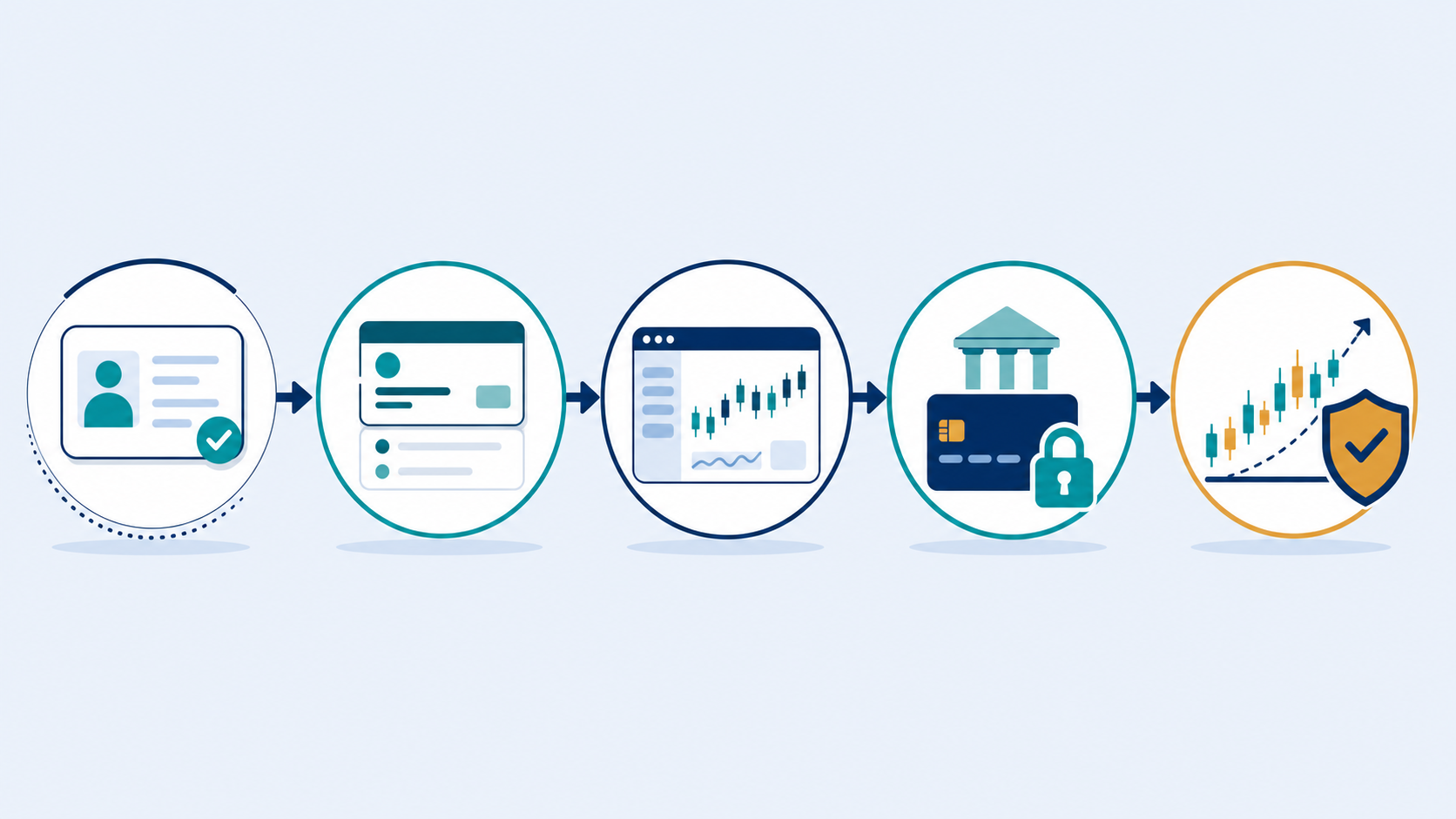
Step-by-step: how eligible residents can prepare to trade on AvaTrade
Confirm eligibility and the legal entity. Start at the official site, select your residence truthfully, and read the terms, risk disclosure, and product conditions that apply to that entity. Stop if the broker says it cannot accept you.
Open a demo before a live account. Use it to find the chart, instrument search, order ticket, stop-loss control, take-profit control, and account history. Practise cancelling an order and closing a position as well as opening one.
Choose a platform deliberately. WebTrader can be convenient for a browser-based workflow; MT4/MT5 may suit traders who already use those tools; the app can be useful for monitoring. Do not select a platform merely because a signal provider or social post mentions it.
Complete identity verification accurately. AvaTrade says verification may require government ID and proof of address, and the account details must match the documents. It may request additional material for certain payment situations. Upload only through official account channels and never email card security codes.
Read the current costs and funding options. The methods displayed in your account depend on country. AvaTrade's help material explains that payment methods can vary by location and that withdrawal processing is subject to verification and the original funding route. Confirm the details in your own account before you transfer money.
Fund only an amount you can afford to lose. A minimum deposit is not a recommended trading balance. Do not fund an account with emergency money, borrowed money, or money needed for bills.
Set a written risk limit before the first order. Define the instrument, direction, entry idea, invalidation point, stop-loss, target or exit rule, position size, and maximum dollar loss. If you cannot state the maximum loss, you are not ready to submit the order.
For account-funding context, AvaTrade's official deposits and withdrawals FAQ says available payment methods vary by region and describes verification and original-funding-method requirements. Check the version displayed to you because those details may change.
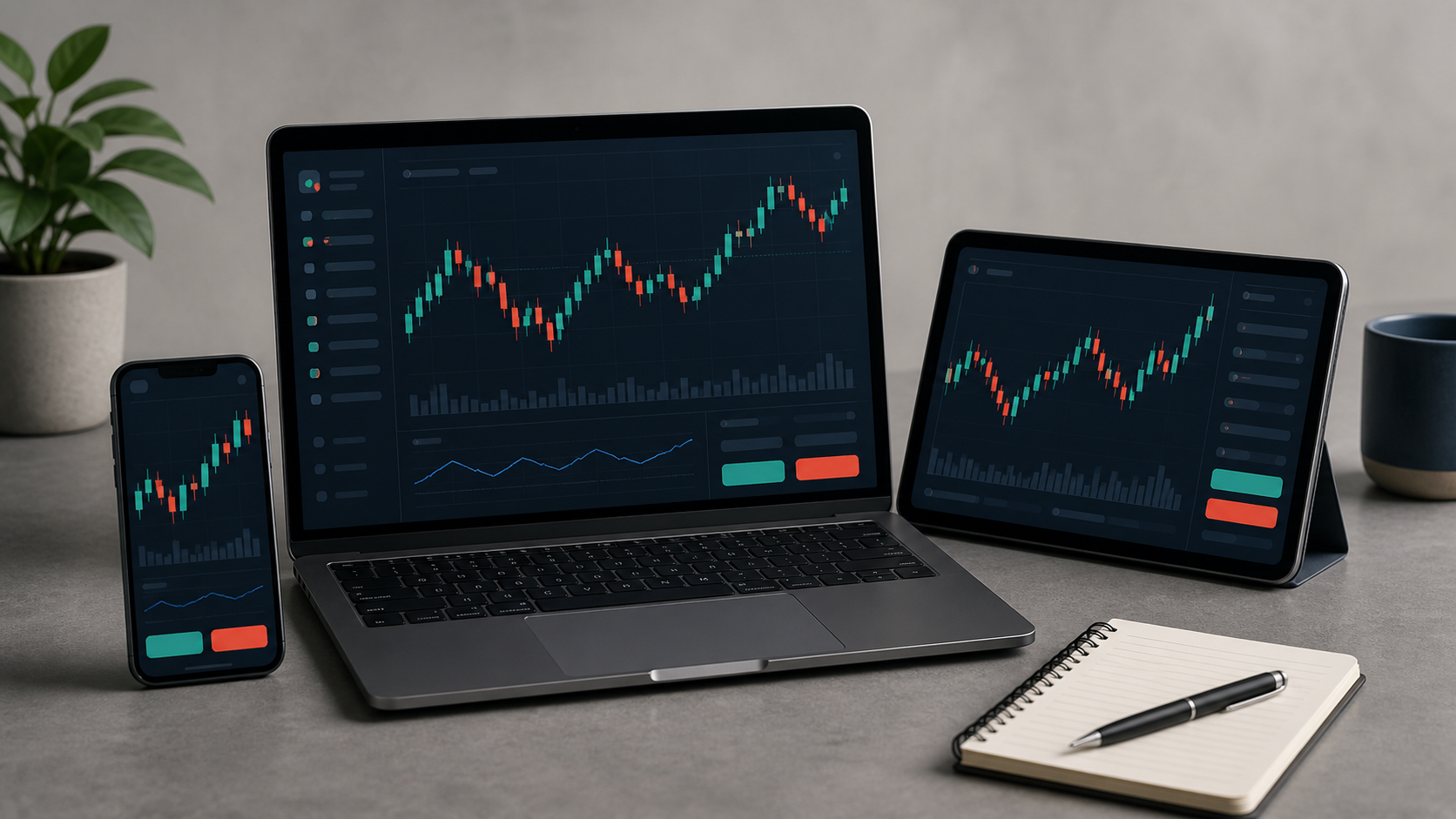
Choose the account and platform around your actual use case
Beginners often over-focus on the platform and under-focus on the contract. The platform is only the workspace; the key question is what an order represents and how much a one-pip or one-point move can cost. Before going live, open the instrument specification and confirm the spread or commission, overnight financing, contract size, margin requirement, trading hours, and any guaranteed-stop or protection feature that applies to your entity.
Use a simple workflow: research on a larger screen, calculate position size, place orders only when you can review every field, and use the mobile app mainly for monitoring or pre-planned adjustments. The position size and risk calculator and forex beginner guide on EasyCashbackFX can help you think through position sizing and basic terms before a trade. They are educational tools, not personalized investment advice.
How to place your first small trade
For an eligible client who has completed the checks above, a first order should be a process test, not a prediction contest. Use the smallest size that lets you verify how the platform behaves without making a loss emotionally or financially disruptive.
Pick one liquid instrument you have studied in the demo.
Check the market session, upcoming economic events, current spread, and whether the instrument is tradeable.
Write the reason for the trade and the price level that would prove the idea wrong.
Calculate a size so the loss at the stop is within your preset limit; reduce size if it is not.
On the order ticket, recheck buy versus sell, volume, market versus pending order, stop-loss, and take-profit before confirming.
After the order is active, record the entry, stop, target, and reason. Do not widen a stop simply to avoid realizing a loss.
Retail OTC forex is not the same as sending an order to a public exchange. The CFTC cautions that, in OTC forex, the dealer is your counterparty and controls the electronic platform you use. Read its customer advisory on retail forex before making a first deposit.

Risk controls that matter more than a market call
Use a stop-loss that matches your trade idea. A stop can reduce loss exposure, but it does not eliminate slippage or gap risk.
Size from the stop, not from the balance. Decide the cash amount you are prepared to lose, then calculate volume from the distance to your stop.
Avoid stacking correlated positions. Several trades tied to the same currency, index, or macro event can behave like one oversized trade.
Know financing before holding overnight. CFDs and leveraged products can carry daily financing or other holding costs.
Keep a trade journal. Record the plan, execution, result, and whether you followed your rules. A journal is for learning, not for justifying impulsive trades.
Pause after rule-breaking. If you moved a stop, doubled down, or traded to recover a loss, step away and review the process before the next order.
Readers interested in rebate mechanics can also review how forex cashback bonuses work. Any cashback arrangement should be evaluated separately from the broker's trading costs, eligibility, and risk terms; a rebate does not make a trade low-risk or profitable.

What to do after you open a position
Once a trade is open, the most useful question is whether the market still matches the written plan—not whether you can find a reason to stay in. Review the current spread, margin status, scheduled events, and your stop or exit rule. If you need to change an order, make the change because your pre-defined conditions call for it, not because the position is uncomfortable.
Before increasing size or adding new instruments, practise a full cycle: open a small position, monitor it, close it according to a rule, check the account history, and understand how funds and withdrawals work for your account. Keep records for your own tax and financial planning, and seek qualified advice where appropriate.
Common beginner mistakes to avoid
Trying to bypass country or residency restrictions.
Depositing before reading the fee schedule, entity terms, and withdrawal rules.
Using leverage because it is available rather than because it fits a defined risk limit.
Copying a social-media trade without understanding the instrument, size, or exit rule.
Assuming a demo result proves a strategy will perform the same way with real money.
Risking more after a loss in an attempt to recover quickly.
Bottom line
For eligible residents, trading on AvaTrade should begin with platform practice, truthful verification, a careful review of current terms, and a small, risk-defined first order. For U.S. residents, the correct conclusion of this AvaTrade review 2026 is simpler: AvaTrade says it cannot accept you or U.S.-originating funds, so use a properly registered alternative and verify it before sending money. In either case, focus on broker eligibility, costs, and risk controls before trying to predict a market move.
Frequently asked questions
Can U.S. residents trade on AvaTrade in 2026?
AvaTrade's Help Center says it cannot accept clients who reside in the United States and cannot accept funds that originate in the U.S. Do not try to bypass that restriction. Look for a provider that is permitted to serve you and verify its registration before depositing.
What is the first step in an AvaTrade review 2026?
Confirm residence eligibility and the legal entity that would serve your country. Then review the current products, costs, platform options, risk disclosure, and funding terms shown for that entity. A global feature list is not a substitute for country-specific terms.
Should a beginner use a demo account first?
Yes. Use a demo to learn the platform, find contract specifications, and practise placing, amending, and closing orders. A demo is a learning tool, however; it cannot reproduce every cost, fill, or emotional pressure of a real-money position.
Which AvaTrade platform should a beginner choose?
Choose the platform that you can operate confidently after practising. WebTrader may suit browser use, while MT4, MT5, and the mobile app have different workflows. Check which platforms and features are actually available in your country and account type.
What documents may be needed for verification?
AvaTrade says identity and address verification may require a valid government-issued ID and proof of address, with documents matching the registered account details. Requirements can vary, and additional documents may be requested depending on the payment situation.
How much should I deposit to begin trading?
Do not treat a broker's minimum as a recommendation. Deposit only money you can afford to lose after you understand the contract, position size, possible loss at your stop, and funding or withdrawal conditions. Never use borrowed or essential money.
Can I withdraw to a different payment method?
Often, anti-money-laundering rules require withdrawals to follow the original funding method before another method is considered. AvaTrade describes this principle in its funding FAQ. The precise options and timing depend on your country, payment method, and verification status.
What is the safest first trade size?
There is no universally safe size. Use the smallest volume that keeps the maximum possible loss at your stop within a pre-set amount you can comfortably absorb. If a valid stop makes the loss too large, reduce the size or skip the trade.
Do stops guarantee that losses will be limited?
No. A stop-loss is an important risk tool, but fast markets, gaps, and product rules can affect execution. Read the order policy and product terms for your specific account before relying on any protection feature.
Are forex rebates a reason to choose a broker?
No. Evaluate eligibility, regulation, product costs, execution, and risk terms first. A rebate may change the net cost of qualifying trading, but it does not remove risk or make an unsuitable broker appropriate for you.
How can a U.S. trader check a forex firm?
Check the firm's registration and disciplinary history through the resources identified by the CFTC, including NFA BASIC. Confirm the exact legal name, website, and account type; do not rely only on a social-media profile, an affiliate link, or a name that merely resembles a registered firm.
Is this guide investment advice?
No. This article is general educational information. It does not recommend a trade, broker, account, or strategy for your personal situation. Consider independent, qualified advice if you need help evaluating financial or tax consequences.
Risk notice
Trading forex, CFDs, options, and other leveraged products involves substantial risk and may result in the loss of all funds committed to a position. Availability, regulation, fees, leverage, and protections depend on your residence and the entity serving you. This content is educational and is not investment, legal, or tax advice.