

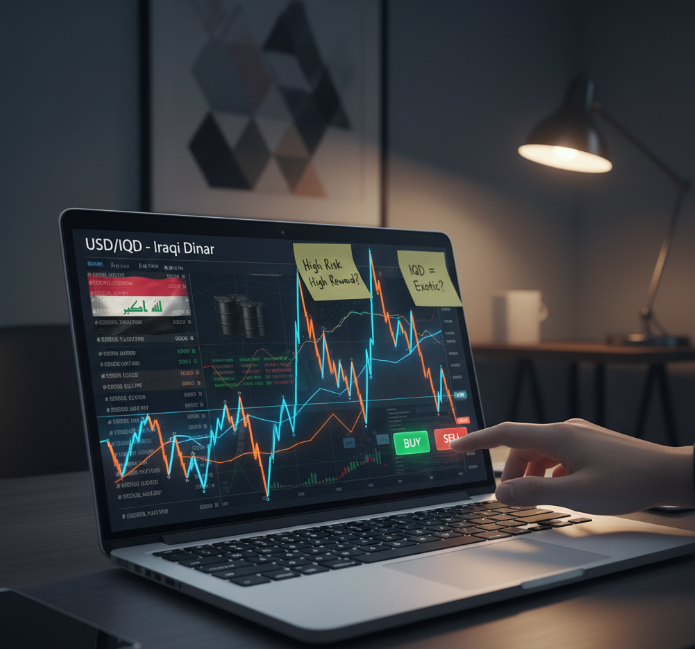
Most folks trading Forex stick to the usual suspects—EUR/USD, GBP/JPY—you know the drill. But some traders catch wind of something different drifting through the chatter: “Is the IQD on Forex?” Short answer? Kind of. The Iraqi Dinar isn’t exactly front and center on your average trading app, but that doesn’t mean it’s invisible. It's like that eccentric uncle who only shows up at family reunions when oil prices spike.
Hard truth? Exotic currencies like IQD come with more plot twists than a late-night crime doc. According to IMF data, Iraq’s inflation was about 5.3% in 2023 and ~3.6% in 2024—yep, not small potatoes—and shifts in regional politics can swing its value faster than a cat video goes viral.
If you’re eyeballing non-mainstream plays or just want to sharpen your edge where others aren’t looking, knowing how (and where) IQD fits into FX markets might be your secret sauce. Also note: legitimate USD/IQD spot trading on mainstream retail platforms is very limited, with most major brokers not offering it directly.
Economic Influence
The IQD’s value is significantly impacted by macroeconomic indicators, such as inflation rates and consumer confidence, which influence purchasing power and demand.
Technical Analysis Tools
Traders can utilize indicators like MACD and Fibonacci Retracement to navigate IQD fluctuations and identify strategic entry and exit points.
Volatility Patterns
Chart patterns, including head and shoulders formations, can signal shifts in IQD's volatility, providing essential cues for potential trades.
Platform Choices
Selecting the right trading platform, such as MetaTrader 4, is crucial for accessing advanced tools necessary for effective IQD trading.
Risk Management
Employing techniques like Stop Loss and Take Profit can help manage risk effectively, securing profits and minimizing losses in the tumultuous IQD market.
Understanding the IQD on Forex Trading
The IQD on forex is more than just a niche currency—it’s a barometer for regional tension, economic shifts, and speculative sentiment.
The role of the IQD in the EUR/USD pair
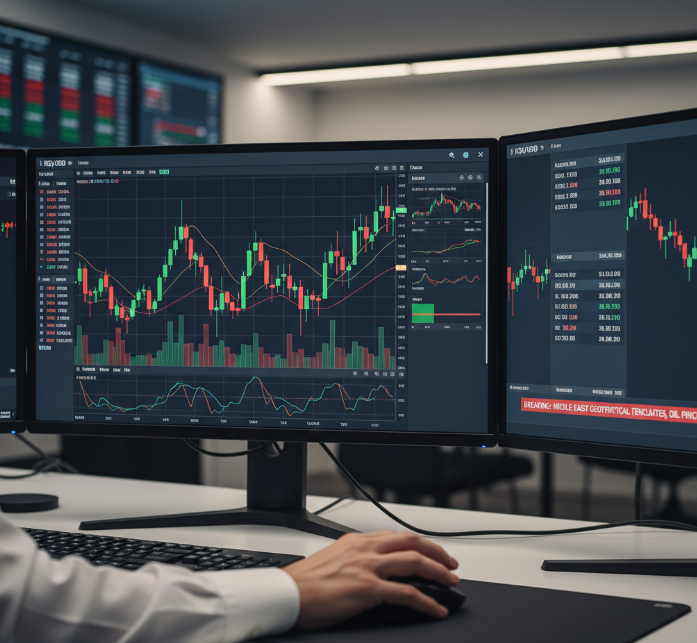
IQD, while not directly traded against EUR/USD, influences cross-market behavior due to oil exports priced in USD.
When geopolitical uncertainty spikes in Iraq or broader Middle East, traders often hedge risk through major pairs like EUR/USD.
Central banks may adjust their exposure to currency pairs, indirectly shifting demand for euros or dollars based on perceived IQD stability.
A surge in oil prices → boosts Iraq's revenue → strengthens IQD sentiment.
Rising tensions → weakens confidence in regional currencies → impacts global forex market flows.
Think of it like a domino effect—when one part of the region shakes, major pairs like EUR/USD feel the aftershock.
Short-term traders often ignore this ripple, but swing traders keep an eye on it via news feeds and cross-currency correlation charts.
Understanding IQD fluctuations through MACD indicators
The MACD (Moving Average Convergence Divergence) is clutch when tracking momentum changes in thinly traded currencies like the IQD.
It works best when paired with volume metrics and RSI to confirm trend reversals or fake-outs.
→ Watch for: • Sharp MACD histogram divergence = potential reversal; • Signal line crossovers = entry/exit cues; • Flat lines = consolidation zones — time to wait it out.
Multiple short bursts of volatility are common with the iqd forex pair, especially around policy announcements or OPEC decisions affecting oil exports.
Traders using MACD often combine it with fundamental events—like central bank meetings—to fine-tune their entries into speculative positions involving emerging market currencies.
Assessing the IQD against economic indicators: Interest Rate and GDP
Group A – Monetary Policy Drivers: • Iraq’s central bank interest rate decisions directly affect investor appetite for holding dinars versus majors like USD or EUR. • A rate hike typically supports a stronger IQD, assuming inflation remains stable. (See recent official rate communications by the Central Bank of Iraq.)
Group B – Growth Fundamentals: • GDP growth signals economic health—stronger numbers usually align with increased confidence in the local currency. • Inconsistent GDP data leads to erratic moves in smaller currency markets including those involving the iqd on forex platforms.
Group C – Inflation Pressure & External Debt: • High inflation erodes purchasing power quickly—bad news for any long position on the dinar. • External debt levels also spook investors and can lead to sudden capital flight from emerging markets altogether.
EasyCashbackFX offers up-to-date analytics tools that help retail traders assess these macroeconomic indicators before placing trades involving exotic currencies like the Iraqi Dinar.
5 Reasons Traders Watch the IQD on Forex
Traders keep a close eye on the IQD on forex because it reacts to subtle economic cues and global market shifts. Here’s why it matters so much.
Economic Influence: How Inflation Rate Affects the IQD
When inflation flares up, so does concern about the Iraqi Dinar’s real value. Recent multilateral and press summaries citing IMF data show inflation easing from ~5.3% (2023) toward ~3.6% (2024), which shapes expectations for purchasing power and policy.
High inflation rates often trigger tighter interest rates, which can either support or suppress the currency value.
The Central Bank of Iraq might intervene by adjusting monetary policy when inflation gets out of hand.
Slower inflation tends to stabilize demand for the dinar in both domestic and international markets.
The bottom line? Inflation isn’t just a number — it’s a signal that tells traders whether to hold or ditch their exposure to the IQD on forex.
The importance of Consumer Confidence for the IQD
? Stronger consumer confidence index numbers suggest rising optimism about income, jobs, and future stability.
? This optimism often leads to increased local consumption — boosting GDP, which gives strength to the Iraqi Dinar.
? Weak sentiment? That usually means households are saving instead of spending, which cools down growth potential.
When people feel good about their financial future, they spend more. And that ripple effect strengthens not only internal economics but also global faith in Iraq’s currency game.
Position Sizing Considerations When Trading the IQD
Trading volatile currencies like the IQD on forex without smart sizing? That's asking for trouble. Managing risk here is less about luck and more about planning:
? Risk Management:
Use tight stop-losses due to unpredictable price swings
Avoid over-leveraging even if spreads look tempting
? Capital Allocation:
Allocate no more than 2%–3% per trade
Adjust based on recent volatility spikes or geopolitical headlines
? Trade Size Control:
Keep position sizes small during uncertain macro conditions
Scale only after confirmation signals align with your strategy
Without proper control over your trade size, even one bad move in this market can wipe out weeks’ worth of gains.
Why GBP/JPY is important for IQD traders
You wouldn’t think a pair like GBP/JPY would matter much when trading something niche like the IQD on forex, but here’s what savvy traders know:
? The wild volatility of this cross-pair sets a tone for broader risk appetite across Asian-European sessions.
? Movements in this pair often correlate with global shifts in carry trade sentiment — influencing emerging-market currencies like the Iraqi Dinar.
? Because both GBP and JPY are tied closely to central bank policy shifts, changes here ripple through liquidity channels that touch lower-volume pairs such as USD/IQD.
So when you see big moves in GBP/JPY? It might be time to reassess how exposed you are in your dinar positions too.
How to Trade the IQD on Forex Effectively
Market Order strategies for the IQD
Trading the IQD with a market order can be a smart move when speed matters more than price precision. Here's how to make it work:
Execution Speed: Use market orders during high-liquidity hours—typically when London or New York markets overlap—for faster fills.
Price Action Awareness: Watch recent price action closely; if momentum is strong, market orders help ride that wave instantly.
Liquidity Consideration:
Thin liquidity? Avoid market orders—they may result in slippage.
High liquidity? Perfect time to jump in without worrying about bad fills.
Strategy Matchup:
Scalpers benefit most from instant execution.
Swing traders might prefer limit or stop orders instead.
Forex Broker Settings:
Some brokers allow slippage tolerance settings—use this to avoid surprises.
When you're watching those fast ticks on an exotic pair like the IQD, reacting quickly with a well-timed market order can mean catching breakouts before they vanish.
Utilizing Bollinger Bands for IQD trading
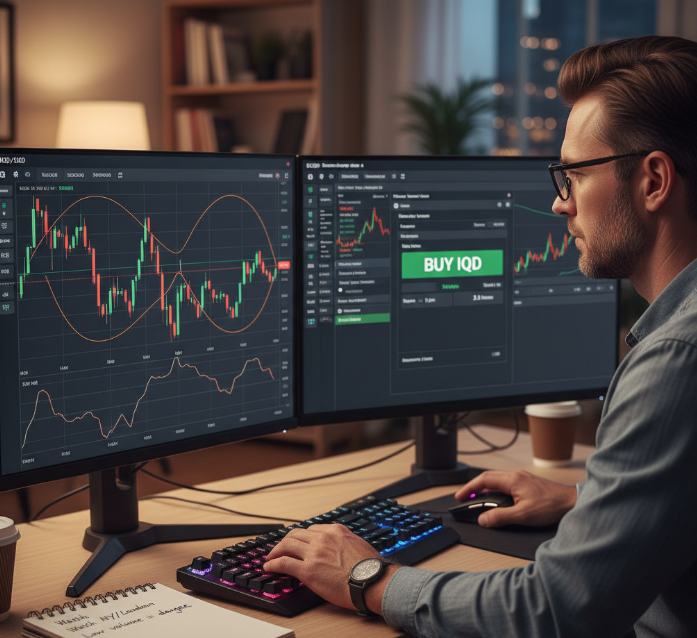
“Volatility is opportunity,” says a recent 2024 FXCM Volatility Report—and nowhere does this ring truer than with the unpredictable nature of the Iraqi Dinar.
Bollinger Bands are your best friend here:
• When bands widen, expect explosive movement. This often follows long periods of sideways drift in pairs involving the IQD.
• A touch of the lower band doesn’t always mean it’s oversold—but if paired with falling volume and weakening candles? That’s your cue.
• Riding inside tight bands? Wait it out. Breakouts usually follow consolidation zones like these, especially in lower-volume currency pairs like those involving the IQD on forex markets.
Use them alongside RSI or MACD indicators to confirm entries—especially when you're trying to avoid false signals caused by thin liquidity common with exotic currencies like this one.
Best platforms for trading the IQD: cTrader vs. MetaTrader 4
| Feature | MetaTrader 4 (MT4) | cTrader | Best For |
|---|---|---|---|
| Charting Tools | Basic but customizable | Advanced with depth | Technical Traders |
| Execution Speed | Good | Faster due to ECN support | Scalpers & Day Traders |
| Broker Integration | Widely supported | Fewer brokers support it | MT4 wins here |
| Custom Indicators | Strong via MQL4 | More limited | Algorithmic Strategy Users |
If you're after raw speed and visual clarity, go with cTrader, especially when scalping volatile spikes in pairs involving the Iraqi Dinar. But if you value customization and wide broker access, stick with good ol’ MetaTrader 4—it still packs plenty of punch when analyzing price swings tied to lesser-traded currencies like the IQD.
Analyzing the IQD's Volatility in Forex Markets
How wild is the ride when trading the IQD on forex? This section breaks down key technical tools that decode its unpredictable swings.
Why head and shoulders patterns signal IQD volatility
Spotting a Head and Shoulders pattern on your chart? That’s more than just lines—it’s a red flag for possible shakeups in IQD volatility:
Reversal pattern: When this chart forms, it often signals a trend flip—bulls might be out, bears might be in.
Technical analysis alert: Traders rely on this as one of the clearest signs of exhaustion in existing momentum.
Price action clue: The neckline break typically hints at strong directional moves.
Forex signals booster: Many automated systems use this pattern as part of their decision-making logic.
Chart patterns matter more with thin liquidity, like what we sometimes see when trading the IQD on forex, especially during off-market hours.
A completed Head and Shoulders setup can trigger cascading orders—stop losses get hit fast, adding fuel to volatile moves.
If you're watching Iraqi dinar charts closely, don’t ignore these formations—they’ve got teeth.
Using Fibonacci Retracement to assess potential IQD movements
When trying to pin down where the IQD on forex might bounce or stall out next, many traders turn to those golden ratios known as Fibonacci Retracement levels. Here’s how they work their magic:
• Start by identifying the most recent swing high and low—this gives you your range for plotting retracement levels. • The most-watched levels are typically 38.2%, 50%, and 61.8%. These act as psychological magnets where price tends to pause or reverse. • If price hits a key level but fails to break through it cleanly, that could signal consolidation—or even a reversal zone forming.
Combine Fib levels with other tools like moving averages or candlestick wicks for confirmation.
In low-volume pairs like the Iraqi dinar against major currencies, these zones can become self-fulfilling prophecies due to herd behavior.
Use Fib clusters across multiple timeframes for stronger confluence—you’ll see smarter entry points emerge.
It’s not just math—it’s rhythm baked into market psychology.
How Stop Loss and Take Profit settings impact IQD trades
Trading the IQD on forex without proper guardrails? That’s asking for trouble. Smart use of Stop Loss and Take Profit orders can make or break your outcome:
Risk management toolset
A tight Stop Loss limits exposure if unexpected news hits Iraq's economy or oil prices shift sharply.
Take Profit ensures you lock gains before retracements erase them—especially handy given how reactive the dinar can be.
Trade strategy refinement
Setting both SL/TP based on support/resistance—not arbitrary pips—makes your approach tactical instead of emotional.
Dynamic trailing stops help ride winning trends while protecting profits once momentum fades.
Position management flexibility
Use wider stops during high-impact events like central bank updates; narrow them during sideways chop sessions.
Scaling out partial profits at multiple TP targets lets you stay in trades longer while reducing risk exposure early on.
The truth? Without SL/TP rules baked into every position involving Iraqi dinars, you're not trading—you’re gambling.
Future Forecast: IQD on Forex Trends
The impact of unemployment rate trends on the IQD's future
A rising national unemployment rate often signals weakening economic fundamentals, which can drag down long-term confidence in the Iraqi Dinar (IQD).
Persistent joblessness typically leads to reduced consumer spending, slowing GDP growth—an indirect hit to currency valuation.
Lower employment levels also affect investor sentiment toward Iraq’s financial stability, impacting foreign exchange inflows.
Government response to job crises—like stimulus or subsidies—can either support or destabilize the IQD depending on execution and inflationary effects.
When labor markets tighten, it's usually bullish for a currency. But Iraq’s structural employment issues make such a turnaround slow and unpredictable.
In countries with oil-based economies like Iraq, external shocks—such as OPEC decisions—compound how unemployment affects local currencies like the IQD.
Watch out for central bank interventions tied to labor data; they often foreshadow tweaks in monetary policy that ripple into forex pricing.
For traders watching the iqd forex pair, employment stats are becoming as crucial as oil prices in forecasting directional bias.
Exploring rising trends in IQD volatility through TradingView analysis
When you plug into TradingView and search “IQD,” you’ll notice some wild swings lately—and here’s why:
• Technical indicators like Bollinger Bands and RSI have been flagging higher-than-average movement across several timeframes for the IQD forex pair.
• ? Short-term spikes often correspond with geopolitical news or sudden shifts in oil futures, both deeply tied to Iraq's fiscal health.
• Traders using Fibonacci retracement levels have noticed repeated resistance zones forming around key psychological barriers—a sign of speculative flows dominating fundamentals.
| Date Range | Avg Daily Volatility (%) | Volume Spike Events | Key Indicator Triggered |
|---|---|---|---|
| Jan–Mar 2024 | 0.8 | Oil price dip | MACD Cross |
| Apr–Jun 2024 | 1.2 | Budget revision news | RSI Overbought |
| Jul–Sep 2024 | 1.5 | Regional tensions | Bollinger Band Breakout |
| Oct–Dec 2024 | 1.7 | Central bank rumors | EMA Crossover |
These surges aren't just noise—they’re clues. Retail traders using EasyCashBackFx have started adjusting their strategies based on these patterns, especially when trading exotic pairs involving the Iraqi Dinar.
So if you're eyeballing any moves with "iqd" across your forex dashboard, keep those charts close—and your stop-losses closer.
References
Is the Iraqi Dinar a Wise Investment? – Investopedia - https://www.investopedia.com/articles/forex/081314/iraqi-dinar-investment-wise-investment.asp
Iraqi Dinar (IQD) – Corporate Finance Institute - https://corporatefinanceinstitute.com/resources/foreign-exchange/iraqi-dinar-iqd/
IMF DataMapper – Iraq Inflation (WEO) - https://www.imf.org/external/datamapper/PCPIPCH@WEO/IRQ
IMF projection recap via Iraq News – IMF anticipates inflation in Iraq to drop to 2% in 2028 - https://www.iraqinews.com/iraq/imf-anticipates-inflation-in-iraq-to-drop-to-2-in-2028/
Central Bank of Iraq – Bulletin on USD/IQD price (1320) - https://cbi.iq/static/uploads/up/file-176603924065972.pdf
FOREX.com – Trading Hours FAQ - https://www.forex.com/en-us/help-and-support/forex-trading-and-education/
USD/IQD Live Chart – TradingCharts - https://forex.tradingcharts.com/chart/US Dollar_Iraqi Dinar.html
FAQ
How does the IQD influence the EUR/USD pair?
Shifts in Iraq’s oil export revenues can ripple into USD demand, nudging EUR/USD sentiment.
A sudden change in Middle Eastern trade flows often sparks quick adjustments in currency positioning.
Traders watch for inflation rate updates and GDP trends from Iraq as subtle cues for cross-pair reactions.
Which platforms are best suited for trading the IQD on Forex markets?
MetaTrader 4 — crisp charting with RSI, MACD, and Fibonacci Retracement tools that catch early moves.
cTrader — precise Market Order or OCO Order execution when volatility bites hard.
TradingView — visual storytelling through Ascending Triangle or Falling Wedge patterns; perfect for spotting breakout tension before it snaps.
How do Stop Loss and Take Profit settings impact trades involving the IQD?
Stop Loss acts like a safety net during sharp Head and Shoulders reversals.
Take Profit secures gains at Bollinger Bands targets before momentum fades away.
Balanced Position Sizing keeps risk-reward ratios healthy across pairs like USD/CHF or AUD/USD when swings get wild.
Why is GBP/JPY movement relevant to those monitoring the IQD’s performance?
GBP/JPY breathes with global risk appetite—its surges or drops echo into exotic plays like USD/IQD.
When this pair spikes, speculative energy often spills over, pulling traders toward high-risk setups linked to consumer confidence shifts and unemployment rate data from emerging economies such as Iraq's market pulse.