

Table of contents
Every forex trader knows the sting of missing a big move. One minute you're scanning charts, the next—boom—a GDP growth report drops, and the market takes off without you. How to Use GDP Growth Reports for Forex Trading Decisions? isn't just a question—it’s the difference between riding the wave and watching it crash from the shore.
GDP isn’t just a dusty econ term from high school. It’s a real-time health check of a country’s economy. As Warren Buffett once said, “The economy is like a car and the market is like a drunk driver.” GDP is your map—and your seatbelt. Traders use it to sniff out currency strength, spot central bank mood swings, and jump on momentum before the herd.
In this guide, you’ll get clear strategies: how to read GDP data, trade around release timing, and connect the dots with inflation and interest rates. Let’s get you from guessing to making confident, data-driven moves.
What Is GDP and Why Does It Matter in Forex
GDP is more than just a headline—it’s a powerful pulse check on a nation’s economy and currency potential.

GDP as a Measure of Economic Health
Gross Domestic Product (GDP) is the big-picture scorecard of a country’s output, production, consumption, and investment. It reflects the overall economic well-being and standard of living.
Think of it like your car’s dashboard. If GDP is rising, your economy’s speeding up—more jobs, higher national income, and stronger consumer confidence. But if GDP shrinks? That’s a warning light for recession.
Consumption
Government Spending
Investment
Net Exports
Economists and traders use GDP to spot early signs of growth or decline, guiding both policy and trading strategies.
GDP’s Impact on Currency Demand
When GDP rises, investor confidence typically climbs too. That’s when traders often bet on a stronger currency value due to:
Higher interest rates from central banks trying to cool an overheating economy.
Increased capital flows as global investors chase growth.
Improved trade balance from rising output and exports.
All of this pushes up exchange rates, boosting purchasing power. But slow or negative GDP? That can tank a currency in the foreign exchange market, fast.
GDP vs. Other Economic Indicators
While Gross Domestic Product is a heavyweight, it’s not the only show in town.
| Indicator | Focus Area | Frequency |
|---|---|---|
| GDP | Total Economic Output | Quarterly |
| CPI (Inflation Rate) | Consumer Prices | Monthly |
| PMI (Purchasing Managers’ Index) | Business Activity | Monthly |
| GNP / GNI | National Income | Quarterly |
GDP is best viewed in context—combine it with the Unemployment Rate, Consumer Price Index, or Human Development Index to get a richer picture of a country’s economic performance. As one analyst put it, “GDP tells you the ‘what’—other indicators tell you the ‘why.’”
How Do Forex Traders Interpret GDP Growth
Understanding how traders decode GDP growth reports helps uncover hidden trading opportunities. This cluster reveals the mindset, patterns, and strategies pros use to read GDP like a playbook.
Reading GDP Reports Like a Trader
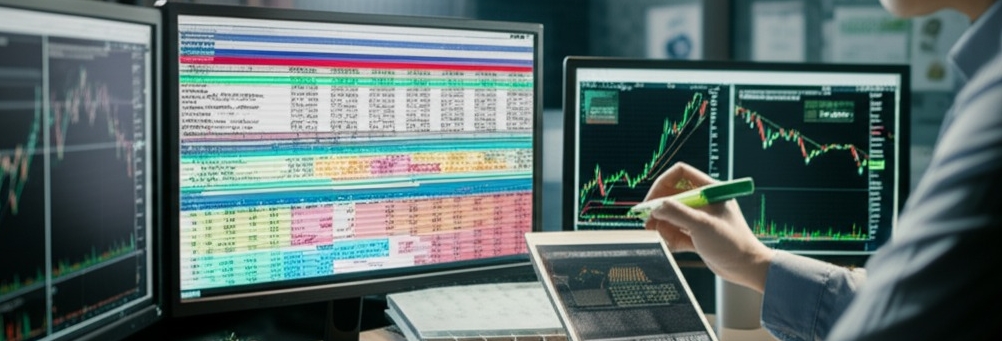
Successful traders don’t just scan GDP reports—they mine them for moves. From parsing economic indicators to reacting to report release timing, it’s about reading between the lines.
Look at headline vs. subcomponents (consumer spending, exports).
Watch how financial markets behave during economic news windows.
Use past GDP report market reactions to predict future sentiment.
A trader’s edge lies in the data interpretation, not the data itself.
Forecasts vs. Actual GDP Figures
Forecasts can hype up the market. But it’s the actual GDP that makes or breaks sentiment.
| Economic Term | Definition | Trading Impact |
|---|---|---|
| GDP Forecast | Estimated GDP by economists | Sets market expectations |
| Actual GDP | Reported value from government | Drives market reaction |
| Forecast Accuracy | Difference between forecast and actual | Triggers volatility |
Small discrepancies? Minimal movement. Big surprise? Boom—volatility spikes. Traders who understand data variance and how economic prediction models fail can exploit that chaos.
GDP Growth in Long-Term Strategies
GDP growth isn’t just a one-off event—it’s a macro compass for strategic planning. Smart traders zoom out and track economic development over quarters to shape their long-term strategy.
Match GDP trends with capital allocation cycles.
Align economic policy outlook with business strategy plays.
Use GDP growth to guide sustainable growth forecasts.
A good long-term play connects economic trends with macro-driven trades, not just candle wicks on a chart.
Behavioral Patterns After GDP Releases
Let’s be real: the market doesn’t always act rational after a GDP drop.
Initial reaction: Algo-trading kicks in, high-speed moves spike volatility.
Retail herd follows: Emotional buying or panic selling based on headlines.
Cool-off period: Price adjusts as real investor sentiment settles in.
“The first move is noise. The second move is truth.”
Understanding these trading patterns and economic psychology helps traders avoid being the latecomer in the price swing game.
Advance GDP vs Final GDP
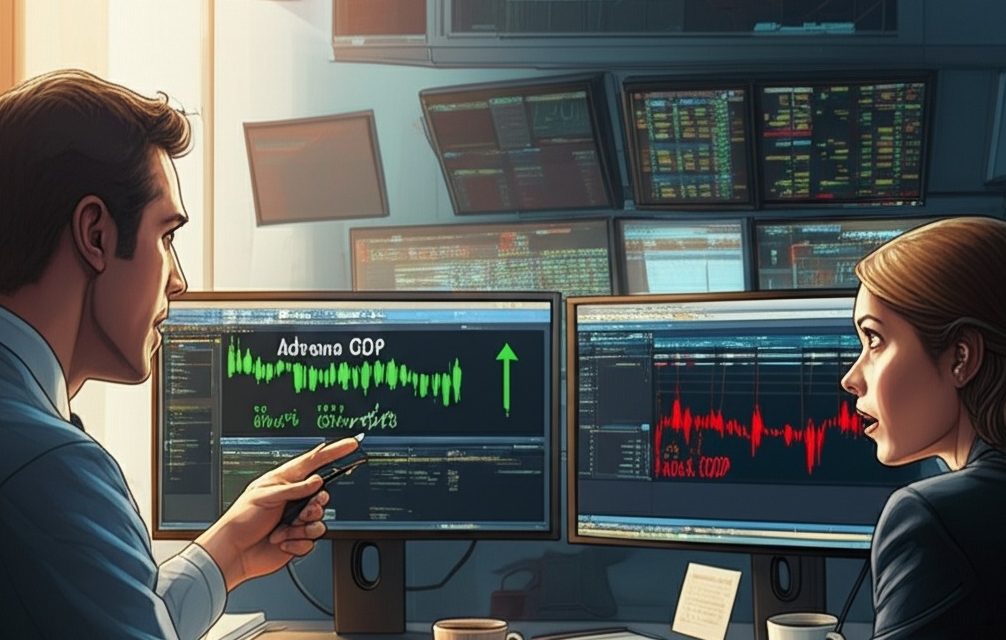
“Traders always react to the number first—then question it later,” said Raymond Gallagher, a senior analyst at WestPoint FX. He has been watching GDP prints shake the forex market for over two decades. The advance GDP release, often called preliminary data, tends to move the market the most. Why? Because it drops early, before the second estimate or final GDP revisions.
The forex market trades heavily on the initial reaction. A strong advance figure may spark a rally in the national currency. Then weeks later, when data revisions hit, traders either double down—or get burned. Sometimes the revisions flip the whole picture. “It is like trading on a weather forecast, then waking up to a snowstorm in July,” joked Gallagher.
Advance GDP: Based on partial data; fastest release; highest market impact.
Final GDP: Revised after full data is in; reflects accuracy, not speed.
Data discrepancy: When actual growth veers sharply from early estimates.
For traders, the goal is not just reacting—it is knowing when the market overreacts to flawed data. Some pros build their trading strategy around revision patterns and economic data release cycles.
According to the U.S. Bureau of Economic Analysis, the average revision between advance and final GDP sits around 0.5%. That margin can make or break positions in high-leverage forex setups.
GDP Surprises and Market Reactions
Not all GDP reports are created equal. When growth numbers shock the market, they can cause a tidal wave of reaction across assets—especially in forex. Let’s dive in.
Unexpected GDP and Volatility Spikes
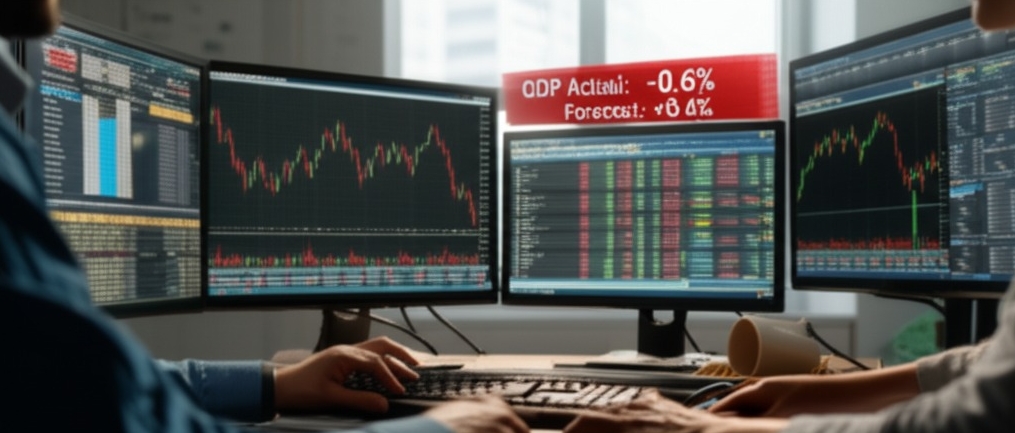
Sometimes the GDP data comes in way off the mark—either way better or worse than forecasted. That’s what traders call an economic surprise, and it often lights a fire under the volatility index (VIX). When actual figures deviate sharply from expectations, market reaction is swift and sharp.
A positive GDP surprise often fuels risk-on rallies in financial markets and strengthens the domestic currency.
A negative surprise might trigger sell-offs, safe-haven flows, or a jump in bond yields.
Forecast deviation is key—markets don’t just care about the number, they care about how different it is from what was expected.
Trading tip: Always check the forecast before a GDP data release. The greater the potential deviation, the bigger the trading impact.
How Traders React to Big GDP Misses
When there's a major GDP miss, things get dicey. Traders scramble to reposition, especially in high-liquidity markets like forex, stocks, and bonds.
Currency Trading: A weaker-than-expected GDP often hits the currency like a slap—investors dump it for stronger economies.
Stock Market: Risk sentiment sours fast. Equities take a hit, especially in sectors sensitive to growth.
Bond Market: Bonds usually rally on bad data, especially if it suggests a slowdown that might make central banks ease up.
As trader behavior kicks in, so does a flood of stop losses, sudden pivots, and sometimes—panic trades. Smart traders use risk management tools like tighter stops or hedging strategies.
"You don’t trade the GDP number. You trade the shock it brings." – Ray Dalio, Bridgewater Associates
Strong GDP Strong Currency
A strong GDP sounds like it should push a currency higher, right? Well… not always. Let’s unpack when that theory holds—and when it totally flops.

When GDP Growth Doesn’t Boost Currency
Sometimes GDP growth just doesn’t cut it. Even with positive GDP numbers, currency value can stay flat—or even dip. Why?
Inflation may spike, leading to worries about rising interest rates.
The market already "priced in" the growth before it was reported.
Capital flows move elsewhere due to stronger data abroad or geopolitical tension.
It’s like shouting in a noisy room: just because GDP growth is strong doesn’t mean the market hears it.
GDP and Safe-Haven Currency Behavior
In times of market volatility, even stellar GDP data can't always keep investors at home. They flock to safe-haven currencies like the Swiss Franc (CHF), Japanese Yen (JPY), and US Dollar (USD)—not because of growth, but fear.
“In risk-off environments, safe-haven demand often overrides domestic data,” says FX strategist Manuela Lenzi.
That’s why you’ll sometimes see a country with booming GDP… and a weakening currency.
GDP Strength vs. Market Sentiment
GDP strength is a number. Market sentiment is a mood. And sometimes, they’re just not vibing. Traders might see a great GDP print and still sell the currency due to poor consumer confidence or weak business outlook.
| GDP Strength (%) | Market Sentiment | Currency Direction |
|---|---|---|
| 3.4 | Bearish | Neutral/Down |
| 2.8 | Bullish | Upward |
| 4.1 | Mixed | Volatile |
Understanding this split helps traders stay smart—not just reactive.
Sector Data in GDP Reports
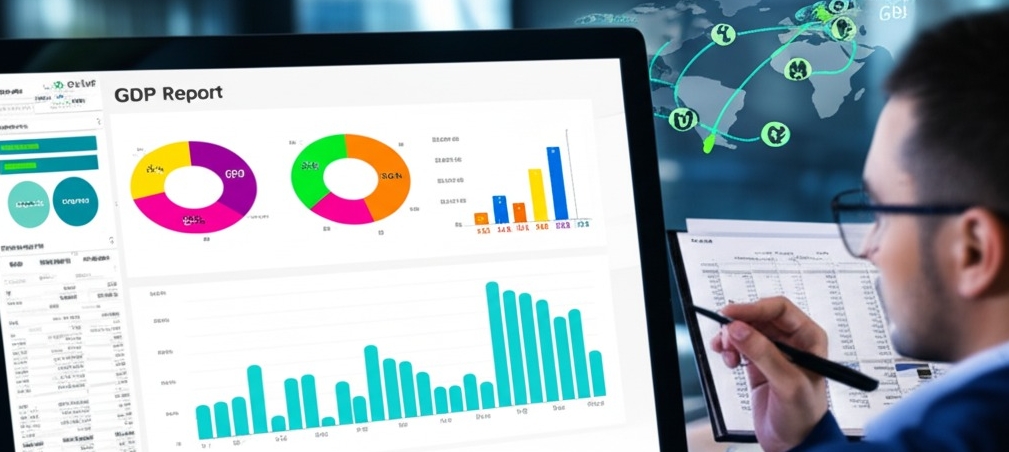
GDP reports aren’t just one big number—they’re loaded with sector data gold. Traders who dig deeper often spot currency moves before they happen.
Why Services Data Matters Most
The services sector—think banking, healthcare, tech—is now the backbone of modern economies. In the U.S., it makes up nearly 80% of GDP. So, when economic data from services show expansion (like a rising PMI or strong employment data), it's often a green flag for growth and future currency strength.
“Ignore services at your peril—they move the needle,” says Sarah Jenkins, senior FX strategist at CapitalScope.
Manufacturing’s Role in Currency Moves
The manufacturing sector might be leaner these days, but it's still a heavyweight when it comes to forex. Why? Because industrial production, exports, and trade balance directly affect currency valuation. For instance:
A jump in factory output can drive expectations of stronger GDP.
Rising imports? Could weaken the currency due to trade imbalance.
Surging exports? Expect bullish sentiment—especially in export-heavy nations like Germany or Japan.
Tracking Export-Driven Sector Growth
Export-driven economies ride or die by global demand. Here’s how traders can size up export sector health:
Check trade data monthly (look for positive trade balance trends).
Monitor industry trends—auto, semiconductors, agriculture.
Compare export performance against GDP growth to confirm momentum.
| Export Sector | Trade Surplus (Billion $) | GDP Contribution (%) |
|---|---|---|
| Electronics | 56.8 | 9.2 |
| Automotive | 72.3 | 11.5 |
| Agriculture | 24.1 | 4.7 |
Using Sector Trends to Predict Direction
When sector trends shift, currencies tend to follow. Let’s break it down with a trader’s lens:
Use fundamental analysis to spot outperforming sectors in the GDP report.
Apply predictive modeling to cross-check with past market direction patterns.
Pair with technical analysis for entry timing—especially after trend confirmation.
It’s not magic, it’s economic forecasting powered by common sense and pattern recognition. You don’t need a PhD, just a sharp eye and a good data feed.
GDP vs Inflation and Rates
GDP alone won’t tell you the whole story. You’ve got to weigh it against inflation and rates to understand the full forex picture.
GDP Trends and Central Bank Policy
Central banks like the Federal Reserve are laser-focused on GDP trends when adjusting monetary policy. If economic growth runs too hot, they may raise interest rates to cool things off. If a recession looms, quantitative easing or cuts might come into play.
GDP growth = rate hike risk
Recession risk = stimulus on the table
Central banks weigh GDP with inflation, unemployment, and other economic indicators to set direction
As Janet Yellen once said, “Monetary policy is not on a preset course.” GDP steers the wheel.
Balancing GDP with Inflation Data
You can’t just follow GDP—inflation plays wingman in every central bank decision. The trick is watching the balance between strong economic output and rising prices.
If GDP rises and inflation stays low → bullish for currency (growth without overheating)
If GDP rises and inflation spikes → central bank may tighten (rate hike alert)
If GDP falls but inflation stays high → stagflation, which confuses traders and central banks alike
| Metric | Ideal Range | Signal to Traders |
|---|---|---|
| GDP Growth | 2%–3% | Healthy economy |
| CPI Inflation | 2% (Fed target) | Price stability signal |
| Interest Rate | Adjusted per trend | Tightening or easing |
Understanding the balance means knowing when to buy the rumor and sell the release.
When to Trade on GDP News
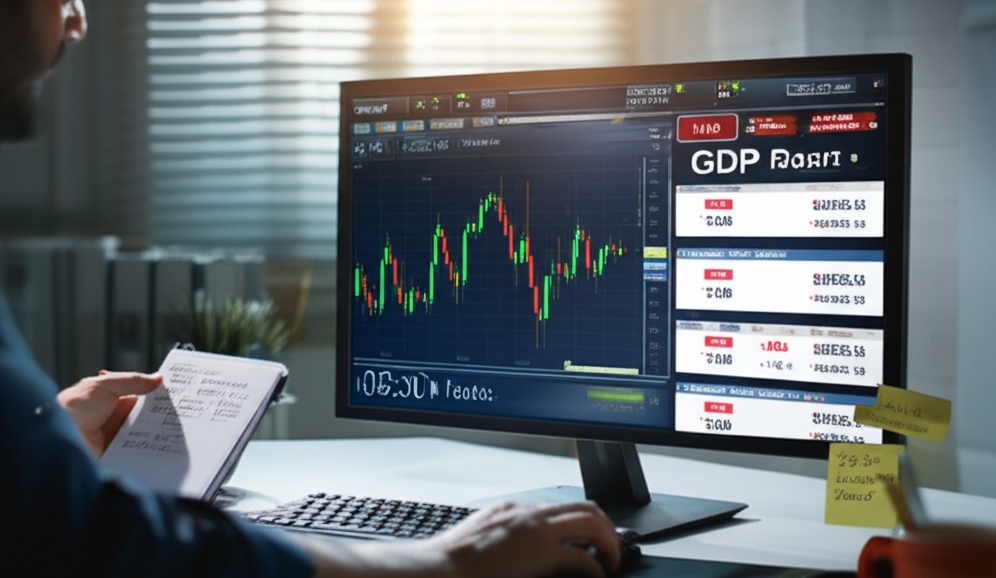
"Timing a trade around a GDP release is like catching a storm wave," said Jordan Tate, a senior currency strategist at FXEdge Analytics. "Miss it, and you are either late to the ride—or worse, wiped out by the volatility." That is why experienced traders check the economic calendar religiously. Knowing the exact GDP release time can define the difference between an entry with precision and one with costly slippage.
Smart traders plan with market expectations in mind. If forecasts point to steady growth, and the actual figure shows a dramatic change, that surprise factor can explode volatility in a matter of seconds. During the London or New York trading session, liquidity is higher—but so is risk. I still remember March 2023, when a U.S. GDP miss sent EUR/USD into a 70-pip spike in minutes. My stop-loss kicked in, but without pre-set risk management, that could have gone south fast.
Watch the post-release reaction before jumping in
Use a tested news trading strategy, not gut instinct
Double-check your broker’s execution during high volatility events
As Warren Buffett once said, "Risk comes from not knowing what you are doing." GDP trading is no exception. The pros do not trade blind—they use data, timing, and experience to stay one step ahead.
Conclusion
You’ve made it to the end—and now you’ve got more than just theory. You’ve got the toolkit to actually read GDP reports like a trader, not just a bystander. That edge can mean the difference between catching a breakout and watching it from the sidelines.
GDP data is like the market’s heartbeat. As legendary trader Paul Tudor Jones put it, “The whole world is simply nothing more than a flow chart for capital.”
So next time a GDP release hits, don’t freeze—lean in, read the signal, and make your move. You've got this.
GDP—Gross Domestic Product—is a snapshot of a country’s overall economic health. In forex, it’s a major economic indicator. A strong GDP often signals that the economy is growing, which can boost the value of its currency. Traders use GDP to anticipate potential rate hikes, capital flows, and investor sentiment shifts.
When GDP growth beats expectations, it usually strengthens the country’s currency. That’s because:
But if the GDP figure is weak or below forecast, the currency might drop like a stone.
Investors may expect higher interest rates to fight inflation.
It suggests strong consumer spending and industrial output.
Global capital often flows toward stronger economies.
Confidence in the currency increases.
Real GDP is adjusted for inflation; nominal GDP is not.
So, if prices are rising fast, nominal GDP might look strong even though actual economic output hasn’t changed much. Forex traders often focus more on real GDP because it gives a clearer view of real economic performance.
Yes—though it's not the only signal central banks watch, GDP plays a key role in rate decisions. Central banks like the Federal Reserve tend to raise interest rates during strong GDP growth to prevent inflation and lower them during slowdowns to encourage spending and borrowing.
Not really—both matter, but in different ways. GDP tells you how the economy is doing, while inflation tells you how much things cost. Together, they influence central bank decisions, which in turn affect currency values. You’ll often find traders analyzing both hand-in-hand before placing a position.
Timing varies by country, but here are some examples:
It’s smart to check an economic calendar so you’re not caught off guard.
United States: 8:30 AM ET (quarterly, 3 releases: Advance, Preliminary, Final)
United Kingdom: 7:00 AM GMT
Eurozone: Around 10:00 AM CET
Australia: Typically 11:30 AM AEST
Japan: Around 8:50 AM JST
It depends on your risk appetite and style:
Just don’t go in blind—have a strategy, and always watch your stop-loss.
Before: Risky, but potentially more profitable if you anticipate the surprise.
After: Safer, you react to confirmed data, but might miss the big move.
Scalpers: Often trade the initial spike in volatility.
Swing traders: May wait for confirmation before entering.