

Table of contents
Part 1 - What is Non-Farm Payroll (NFP)?
Part 2 - Why is NFP Important for Forex Traders?
Part 3 - Key Components of the NFP Report
Part 4 - When is NFP Released and How Often?
Part 5 - NFP and Market Volatility: A Trader’s Perspective
Part 6 - How to Trade NFP: Basic Strategies
Part 7 - Advanced NFP Trading Strategies
Part 8 - Common Pitfalls in NFP Trading and How to Avoid Them
NFP and Forex: What is NFP and How to Trade It? is a question many Forex traders face when trying to make sense of market movements. The Non-Farm Payroll (NFP) report is a key economic indicator, but it’s not just numbers on a page—it’s a market-moving event that can shake things up big time. If you’re in the Forex game, this report can be a goldmine, or it can leave you reeling.
Think of NFP like a storm in the market. It’s unpredictable, but it comes with clear signs—economic trends, job numbers, and wages—that tell you when it’s about to hit. Understanding the NFP isn’t just about reading the report; it’s about knowing how to ride the wave when it drops.
As traders, we know the volatility that comes with the NFP release can be both thrilling and risky. The trick is knowing how to stay ahead, and that's exactly what this article will help you with. By the end, you’ll be ready to take NFP head-on with strategies that keep you in the game, not scrambling to catch up.
What is Non-Farm Payroll (NFP)?

The Non-Farm Payroll (NFP) report is one of the most significant economic indicators released each month. Compiled by the U.S. Bureau of Labor Statistics (BLS), the report provides valuable insights into the health of the U.S. labor market. Unlike other employment data that includes sectors like farming and private households, the NFP focuses specifically on jobs outside these areas, giving a clearer picture of the overall economy.
Each month, traders, policymakers, and economists closely analyze the NFP report to gauge the state of employment and economic growth. The data includes not just the number of jobs added or lost in the economy, but also crucial elements like the unemployment rate and wage growth. These figures are essential in understanding the underlying trends in the labor market, as they directly impact consumer spending, inflation, and monetary policy decisions.
A key takeaway from NFP data is how it helps shape the economic outlook for the U.S. economy. For example, consistent job growth and rising wages signal a strengthening economy, potentially influencing the Federal Reserve's decisions on interest rates. On the flip side, disappointing NFP figures can indicate economic slowdown, which may prompt market reactions and adjustments.
The NFP is released on the first Friday of every month, creating a significant event in the Forex market. Traders watch the report carefully because its data often leads to increased volatility, especially in the U.S. dollar. Investors and traders alike will adjust their strategies based on the monthly employment data to capitalize on the market shifts triggered by these reports.
The importance of understanding the NFP cannot be overstated. For Forex traders, the NFP report serves as a key tool for predicting market trends and managing risk. By understanding its components—such as the unemployment rate and wage growth—traders can craft informed strategies that capitalize on the movements that follow its release. With each NFP report, the labor market's story unfolds, offering both opportunities and challenges for those involved in currency trading.
Why is NFP Important for Forex Traders?
Understanding NFP's importance in Forex trading helps traders navigate market shifts. NFP releases trigger volatility, creating opportunities for profit, but also risk.

The Role of NFP in Forex Markets
NFP as a Market Driver: Non-Farm Payrolls are a key piece of economic data. They offer insights into employment trends, which influence the US economy and, in turn, the Forex market. When the NFP report shows strong job growth, market participants often expect higher economic activity and adjust their strategies accordingly.
Liquidity and Volatility: These reports create volatility, offering both risk and liquidity. Traders rely on NFP releases to time trades, taking advantage of sharp price movements in currency pairs. A strong NFP number can increase the liquidity in the currency markets, allowing better execution and reduced spreads for traders.
NFP’s Impact on Currency Prices
Market Reaction to NFP Data: NFP releases are often linked to changes in interest rate expectations. A higher-than-expected NFP can signal strength in the economy, leading to a potential rate hike by the Federal Reserve. This may boost the USD, increasing its value against other currencies.
Impact on Major Currency Pairs: Currency pairs like EUR/USD and GBP/USD can see significant volatility. For example, if NFP figures are stronger than expected, the USD typically strengthens, causing the EUR/USD pair to drop. Traders often adjust their strategies based on these price movements, making informed decisions based on NFP results.
Price Volatility: The initial price swings can be sharp, offering traders opportunities to profit from quick, high-impact moves. However, the volatility can also work against traders who aren't prepared.
How Traders React to NFP Reports
Market Sentiment Shifts: Traders' reactions to NFP releases vary based on whether the data meets, beats, or misses expectations. Positive results can lead to bullish sentiment in the USD, while weak numbers might cause a bearish reaction.
Pre-NFP and Post-NFP Strategies: Traders prepare by positioning themselves ahead of the release. They use fundamental and technical analysis to anticipate the market’s reaction, setting stop-loss and take-profit levels. After the release, many traders use technical analysis to enter new positions based on the price movements.
Managing Risk: NFP reports can lead to heightened market risks, so traders often employ stop-loss orders to limit potential losses. It's crucial to manage risk, as the volatile nature of NFP data can cause sudden, dramatic shifts in price.
Opportunities for Profit in NFP Events
Breakout Strategies: Due to NFP's potential to move markets drastically, breakout strategies are often employed. Traders watch for price levels that are likely to break, profiting from these sharp moves.
Scalping and Day Trading: Short-term traders, like scalpers, target quick profits during NFP releases. High-impact news creates rapid market fluctuations, making it ideal for small, fast trades.
Swing Trading and Hedging: For those holding positions longer, swing trading allows traders to profit from medium-term price swings post-NFP. Others might use hedging to protect their positions from potential market reversals caused by NFP volatility.
Risk-Reward Ratio: Traders focus on achieving a favorable risk-reward ratio by balancing the possible rewards of NFP volatility with the risks involved in such fast-moving markets.
| Currency Pair | Before NFP | After NFP | Market Reaction |
|---|---|---|---|
| EUR/USD | 1.1200 | 1.1150 | USD strengthens |
| GBP/USD | 1.3100 | 1.3050 | USD strengthens |
| USD/JPY | 110.50 | 111.00 | USD strengthens |
| AUD/USD | 0.7600 | 0.7580 | USD strengthens |
Key Components of the NFP Report
Understanding the components of the NFP report is key to interpreting its impact on the Forex market. Let’s break down the three essential parts that make up this influential report.
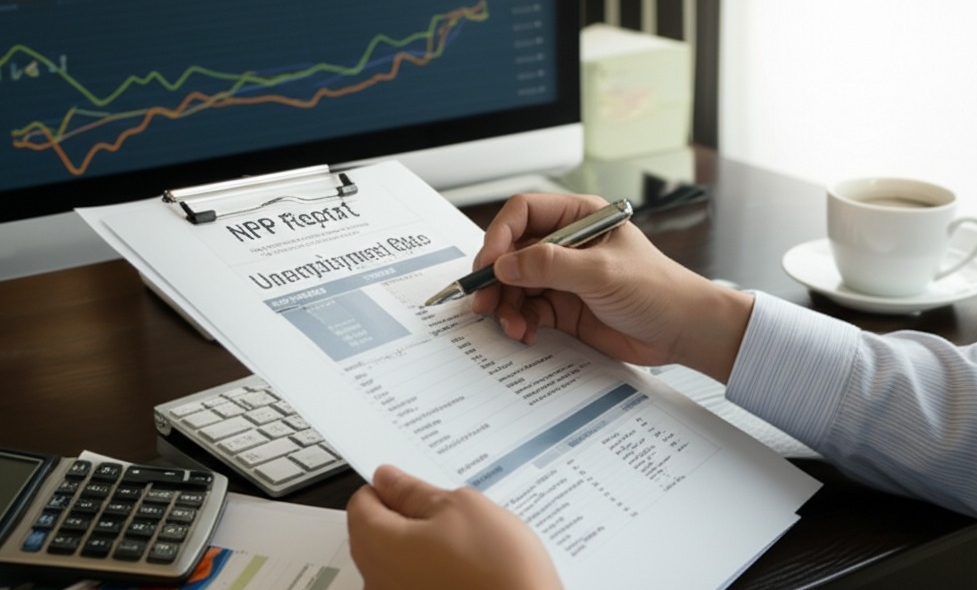
Unemployment Rate and Its Significance
The unemployment rate is a key metric within the NFP report, reflecting the percentage of people in the labor force who are jobless. It’s a major economic indicator and can signal the health of the labor market. A rising rate often points to economic troubles, like a recession, while a dropping rate signals recovery and growth. When traders see jobless claims rise, it may lead to market volatility, especially if the data shows signs of underemployment or weak labor force participation.
Job Gains in Key Sectors
Job creation in specific sectors reveals where the economy is growing or struggling. For example, significant growth in manufacturing jobs shows labor demand in the industrial sector. As part of the NFP report, this data provides traders with insights into sector-specific health and economic recovery. Strong job gains in industries like healthcare, tech, or construction can fuel positive sentiment in related stocks, while weakness in these areas may suggest a downturn.
Wage Growth: What It Tells Traders
Wage growth—measured through average hourly earnings—indicates the rate of wage inflation, which affects consumer spending power. High wage growth can be a sign of a healthy economy, but it might also lead to inflation, influencing Federal Reserve interest rate decisions. Traders watch these numbers closely because if wages rise faster than expected, it can suggest higher consumer demand and economic strength, boosting stock market performance and bond yields.
When is NFP Released and How Often?
Understanding when NFP is released and how often it occurs is crucial for any Forex trader. Let's explore the NFP schedule and the best times to trade it.
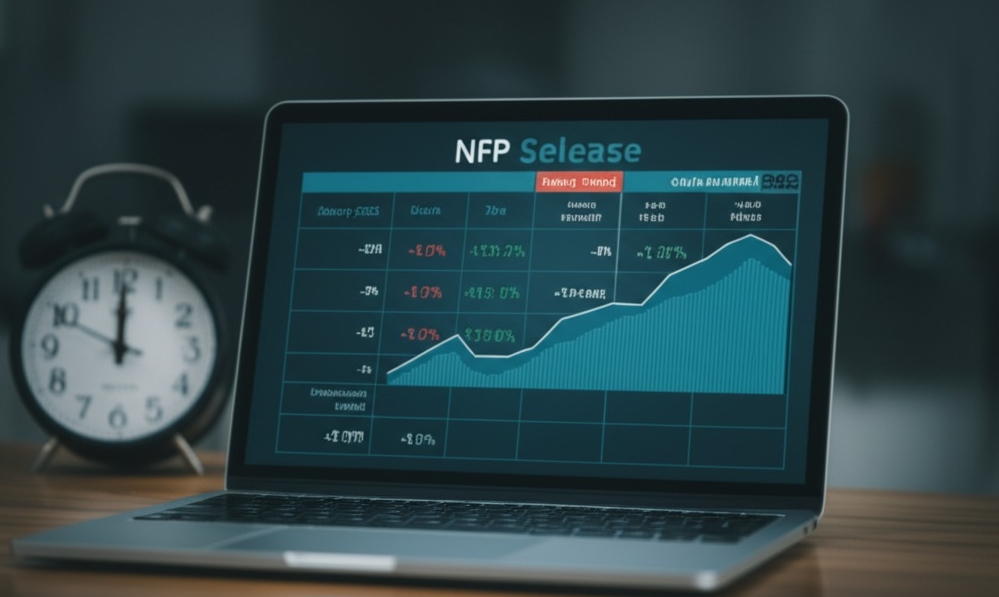
Monthly NFP Schedule
The Non-Farm Payroll report is released on the first Friday of every month, making it a key event for traders to plan around. The economic calendar will show the exact dates, often with updates in Forex calendars and market data schedules. Traders should mark these dates, as NFP release dates can send shockwaves through the market. These reports provide critical insights, including employment reports, unemployment figures, and wage growth data. The data sheds light on the state of the U.S. labor market, which directly impacts Forex trading strategies and market volatility.
| Month | NFP Release Date | Key Data Points |
|---|---|---|
| January | 05, 2025 | Employment growth, Unemployment rate, Wage data |
| February | 02, 2025 | Payroll data, Job gains in key sectors |
| March | 07, 2025 | Wage growth, Unemployment rate |
| April | 04, 2025 | Employment rate, Sector growth |
Best Times to Trade NFP Data
Pre-NFP trading: Focus on positioning your trades ahead of the data release. The hours before the report can be a high-impact news window, setting the stage for major moves.
Post-NFP analysis: After the report is out, the market can swing wildly. Timing is critical, as Forex trading sessions shift, and market volatility spikes. This is often when Gold trading or currency pairs can show massive movements.
Pay attention to trading hours in different sessions, as market volatility varies. Knowing when to act after the release is just as important as positioning before it. A well-timed NFP trading strategy during these hours can make or break your trade.
NFP and Market Volatility: A Trader’s Perspective
Understanding how NFP affects market volatility is key to maximizing your trading potential. Here, we’ll explore why NFP leads to big market moves and how to manage the risks involved.

How NFP Affects Forex Market Volatility
The NFP release is a major catalyst for volatility in the Forex market. Traders react to the surprise elements of the employment report, causing currency prices—especially the USD—to swing wildly. With economic data often deviating from expectations, the market can quickly shift, creating both opportunities and risks. Volatility spikes as traders digest the impact on the broader economy, making it crucial to stay informed and agile.
Big Moves: What Causes Them in NFP?
Surprise Data: If the actual NFP numbers differ significantly from the forecast, big market moves occur.
Market Expectations: Traders react to whether the report meets or falls short of consensus forecasts.
High Impact Events: NFP’s influence on the Forex market often depends on external economic indicators or central bank actions that magnify price swings.
NFP and Trading Risk
Trading around NFP can feel like walking a tightrope. The risk is real—slippage, market gaps, and increased volatility can lead to unexpected losses. Use stop-loss orders, control position sizing, and avoid excessive leverage to protect yourself. A solid risk management plan is essential to surviving these turbulent times.
Why NFP Volatility is Unpredictable
NFP volatility is a tricky beast. The unpredictability arises from multiple factors: traders’ interpretations of the data, the central bank’s reaction, or even global events that overshadow the report. Factors like algorithmic trading and shifting market sentiment add to the chaos. Every release is a unique event—just because last month’s NFP caused big swings doesn’t mean this one will.
Managing Risk Around NFP Events
Use the Economic Calendar: Time your trades based on the release schedule.
Implement Stop-Loss/Take-Profit: Lock in profits and protect against unexpected moves.
Position Sizing: Adjust your position size to reflect the increased volatility. A well-structured risk-reward ratio will help you survive these high-impact events.
How to Trade NFP: Basic Strategies

Using NFP as a Market Indicator
NFP is a key market indicator that traders use to gauge economic health. By analyzing the employment report, you can predict the likelihood of shifts in interest rates or changes in monetary policy. The Forex market, in particular, reacts strongly to these data points. If the NFP shows significant job growth, traders may expect a strengthening of the U.S. dollar, signaling potential profit opportunities.
Track the NFP release date
Analyze the employment data
Compare market expectations with actual results
Scalping During NFP Releases
Scalping during NFP releases can be a profitable short-term strategy, but it requires fast execution and sharp risk management. Due to high volatility, spreads widen, and slippage can occur. Traders look to take advantage of rapid price movements, relying on price action and a tight stop-loss strategy to minimize risk.
Fast execution is essential—watch for quick price changes
Be mindful of liquidity—spread widening and slippage can hurt profits
Use strict risk management—set tight stop-loss levels
Managing Positions Before and After NFP
Position management around NFP requires a solid pre- and post-event strategy. Before the NFP release, traders often tighten stop-loss orders and adjust take-profit levels to account for volatility. After the report, the market may either surge or correct, so having a plan to adjust positions can protect profits or limit losses.
Adjust positions before the report based on market sentiment
Monitor immediate post-NFP price action
Hedge or re-enter depending on market movement
Advanced NFP Trading Strategies

Introduction to Advanced NFP Trading Strategies:
If you’ve been trading for a while, it’s time to take your NFP game to the next level. Here are some advanced strategies that seasoned traders use to leverage the market moves sparked by NFP releases.
Using Economic Models to Predict NFP
Economic models can help predict NFP numbers with decent accuracy, by analyzing labor market data. These models rely on various macroeconomic indicators like the unemployment rate and wage growth. Through predictive analytics, you can anticipate the upcoming NFP release and prepare your strategy. By interpreting past data trends with econometrics, you’ll understand potential job gains or losses. Think of it as using a map to navigate a storm—you can’t control it, but you can avoid major hazards.
Hedging with Options During NFP Events
Hedging strategies during NFP events are key for managing market volatility. Traders use options contracts—like put and call options—to shield themselves from drastic price moves. A put option allows you to profit from a price drop, while a call option lets you benefit from price increases. By holding these positions, traders can limit risk while still positioning themselves for market swings driven by the NFP data. It's like having an umbrella just in case the forecast turns stormy.
Advanced Risk Management Techniques
Effective risk management is crucial during NFP releases. Quantitative models like Value at Risk (VaR) and stress testing help traders assess potential losses. The goal? To make sure you don’t bet too much on a single move. Using scenario analysis, you can predict different market outcomes and adjust your positions accordingly. This approach allows you to stay cool, even if the market goes wild, helping you to keep your risk exposure in check.
Algorithmic Trading for NFP
For high-speed traders, algorithmic trading is a game-changer during NFP. Trading algorithms automatically execute trades based on predefined criteria, such as price fluctuations triggered by NFP data. High-frequency trading (HFT) systems can scan the market in milliseconds, allowing traders to capitalize on short-term volatility. These algorithms can be backtested to improve strategies and adapt to new data. Think of it as a robot that works around the clock, scanning for opportunities while you take a break.
Potential Impact of NFP Data on Market Movements:
| NFP Component | Potential Impact on Market | Currency Pair Sensitivity |
|---|---|---|
| Job Gains | Positive job growth often strengthens the USD, while losses weaken it. | EUR/USD, USD/JPY |
| Unemployment Rate | A decrease in unemployment rate boosts USD strength. | USD/CHF, GBP/USD |
| Wage Growth | Rising wages suggest inflationary pressure, impacting rate expectations. | AUD/USD, USD/CAD |
By diving into these advanced strategies, you can refine your approach and take advantage of the opportunities that the NFP release provides.
Common Pitfalls in NFP Trading and How to Avoid Them
When trading around NFP releases, it’s easy to get caught up in the excitement. But beware—common mistakes can trip you up. Let’s explore the pitfalls and how to avoid them.

Overreacting to Early Data
In the world of NFP, it's tempting to jump on the first data you see. Early reports can be misleading, and making quick decisions can result in impulsive trades. Remember, early data might only show a fraction of the picture, and markets can flip on a dime. So, take a breath—patience pays off.
Ignoring Market Sentiment
Ignoring market sentiment is like driving blindfolded. The mood of investors drives markets more than any single piece of data. Pay attention to how traders feel. Are they optimistic or nervous? A contrarian approach often works well, so look for signals of fear and greed, which can move the market unexpectedly.
Misinterpreting NFP Trends
Don’t let the numbers confuse you. NFP trends, like unemployment rates and wage growth, can be misleading without the proper context. If you misread the underlying economic trends, you risk making poor decisions. Always check broader economic indicators and consider how they line up with market expectations.
Trading Without a Plan
A lack of a clear strategy is a fast track to losses. Trading without a plan means you’re setting yourself up for failure—especially with the high volatility NFP creates. Always define your entry/exit points, risk management rules, and goals before the event, and stick to them!
Chasing the Market After NFP
FOMO (Fear of Missing Out) can be powerful, but chasing the market after NFP often leads to disaster. You might feel like you’ve missed the boat, but jumping in late can be risky. By then, the market might have already priced in the data, and you’ll be stuck buying at the top. Stick to your plan.
Letting Emotions Control Decisions
Emotional trading is one of the biggest mistakes traders make, especially during volatile events like NFP. Fear and greed cloud judgment, leading to impulsive decisions. Keep your emotions in check, trust your analysis, and stay disciplined to avoid costly mistakes.
Conclusion
Trading NFP can feel like catching a wave – it’s fast, unpredictable, and full of potential. Knowing the ins and outs of the report, like timing and volatility, sets you up for a smoother ride.
By sticking to smart strategies and avoiding common mistakes, you can turn NFP events into your opportunity, not a headache.
Keep learning, stay sharp, and use what you've learned here to dive in with confidence. Like any pro trader says, "The market rewards the prepared."
NFP stands for Non-Farm Payroll, a key economic report released monthly by the U.S. Bureau of Labor Statistics. It tracks the number of jobs added to the U.S. economy, excluding jobs in agriculture, private households, and certain other sectors. It is considered a primary indicator of economic health.
NFP data can cause major price movements in the Forex market. A stronger-than-expected NFP report suggests a growing economy, potentially leading to a stronger U.S. dollar. A weaker-than-expected report might signal economic trouble, pushing the dollar lower.
NFP is typically released on the first Friday of each month at 8:30 AM Eastern Time. Traders often prepare in advance as the data can cause significant volatility.
Traders use NFP data to adjust their positions, speculating on how the report will affect the U.S. dollar and other currencies. Some traders look for immediate moves after the release, while others wait for the dust to settle and make decisions based on market trends.
NFP is a key indicator of the U.S. economy’s health, and Forex traders pay close attention because it directly impacts the currency markets. It helps traders understand market sentiment and anticipate movements in the U.S. dollar, which can affect global currency pairs.
Basic strategies include:
Pre-NFP Setup: Traders might establish positions ahead of the NFP release, taking advantage of price movements leading up to the event.
Scalping: Some traders engage in short-term trading, aiming to profit from quick price moves during the NFP release.
Waiting for Confirmation: Others wait for the data to be released and react after seeing the immediate market reaction, reducing risk.
Trading NFP can be risky due to its unpredictability. Some key risks include:
Volatility: The market can move drastically, which might lead to unexpected losses.
Slippage: During volatile times, orders might not execute at the expected price.
Overreaction: Some traders overreact to NFP reports, which can lead to poor decision-making.
To trade NFP successfully, consider these tips:
Understand the Data: Know what each part of the report signifies, such as the unemployment rate or wage growth.
Plan Ahead: Have a strategy in place before the data is released to avoid knee-jerk reactions.
Risk Management: Always use stop losses and avoid overexposing yourself to NFP volatility.
While it’s hard to predict the exact results, some traders use economic models, trends, and past data to make educated guesses. However, NFP reports are often a surprise, and markets can react unpredictably.