


Table of contents
Quantitative Easing (QE) Explained: Central Bank Tool for Growth is a strategy that’s been making headlines since the 2008 financial crisis. Imagine a country’s economy is a car that’s sputtering on the side of the road—QE is like the jump-start it needs to get moving again. By pumping money into the system, central banks aim to fuel spending, investment, and ultimately, growth.
It works by buying up financial assets like government bonds to flood the market with cash. The idea? Lower interest rates, making loans cheaper, and hopefully, kick-starting the economy into full gear. Think of it as trying to get people to buy more stuff by making credit cards more enticing.
But, like anything, there’s a catch. While QE can speed up recovery, it’s not without risks. Some argue it could inflate bubbles or even worsen income inequality. As economist Ben Bernanke put it, “QE is not a cure-all,” but it might just be the best tool we've got.
What Is QE?
Quantitative Easing (QE) is a key economic tool central banks use to stimulate the economy. But what does it really mean, and why does it matter?
Definition and Purpose of QE
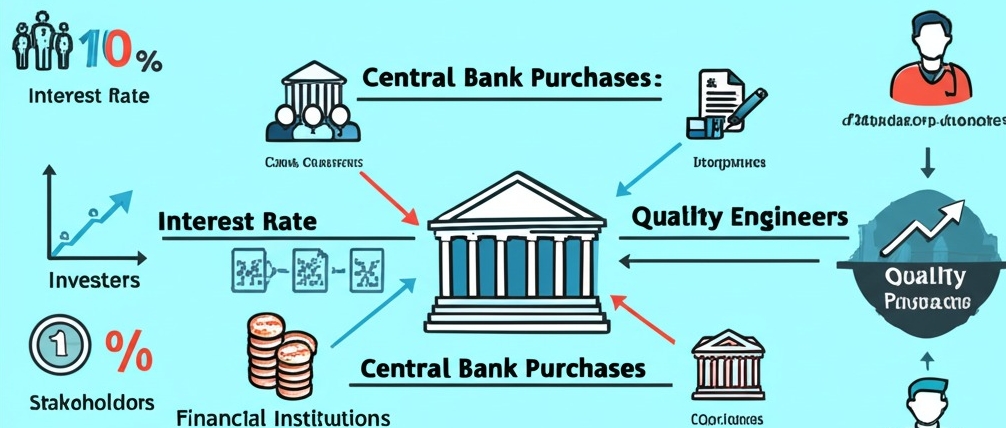
Quantitative Easing (QE) refers to a non-traditional monetary policy where central banks increase the money supply by buying financial assets like government bonds. This process helps lower interest rates, making borrowing cheaper, and stimulates spending, investment, and overall economic growth. Think of it like adding more fuel to a car that's running low to get it moving again. QE is typically used when traditional tools like interest rate cuts have already been maxed out.
| Step | Action | Impact |
|---|---|---|
| 1. Central Bank Purchases | The central bank buys bonds and other assets. | Increases money supply, lowers interest rates. |
| 2. Banks and Financial Institutions | Receive cash from asset sales. | Encourages lending to businesses and consumers. |
| 3. Wider Economy | Money flows into various sectors. | Promotes investment, consumer spending, and economic growth. |
Key Players in QE
Several key players are involved in the implementation and oversight of QE:
Central Banks – The primary decision-makers, like the Federal Reserve, manage QE to achieve economic goals such as low inflation and high employment.
Quality Engineers – In a similar way to controlling a production process, they ensure that the economic "processes" behind QE are optimized for long-term success.
Suppliers & Stakeholders – Market participants, including investors and businesses, are directly impacted by the liquidity created by QE.
Regulatory Agencies – Keep an eye on the broader financial system to ensure QE remains within controlled, effective boundaries.
Each player, much like in an engineering project, has its own role in ensuring the system runs smoothly and achieves the desired outcomes.
How Does QE Work?

Mechanism of Asset Purchases
Quantitative easing (QE) starts with the central bank buying government debt and other securities on the open market. By acquiring bonds, stocks, and other assets, it injects money directly into the financial markets. This process helps increase liquidity and encourages banks to lend more. In essence, the central bank is putting cash into the system, making more money available for businesses and consumers to borrow.
| Asset Type | Amount Purchased | Purpose |
|---|---|---|
| Government Bonds | $500 billion | Increase liquidity |
| Corporate Bonds | $100 billion | Support businesses |
| Mortgage-Backed Securities | $200 billion | Support housing market |
How QE Affects the Money Supply
The central bank’s purchases add reserves to commercial banks’ accounts, which boosts the money supply. With more money available, banks are more likely to lend to businesses and individuals, fueling spending and investment. This, in turn, helps stimulate economic activity. As more cash flows through the economy, inflation can increase if too much money chases too few goods, but ideally, QE is used to avoid deflation during a downturn.
Impact on Interest Rates
QE lowers long-term bond yields by increasing demand for government debt. This causes borrowing costs to drop, as bonds and interest rates have an inverse relationship. When bond prices rise, yields fall, and lending rates become cheaper for businesses and consumers. The lower interest rates make it easier for people to borrow money, which can spur spending and investment, and ease economic slowdowns.
The Role of Central Banks in QE
The central bank’s role in QE is crucial. It manages the overall financial stability of a country by controlling inflation targets and adjusting interest rates. Through asset purchases, the central bank expands its balance sheet, which increases liquidity in the economy. By doing so, the central bank directly influences the financial markets, stabilizing the economy and promoting growth when needed.
Why Use QE?
Quantitative Easing (QE) is used for several reasons, all aimed at strengthening the economy when traditional tools fall short. Let’s explore why central banks reach for QE.
Stimulating Economic Growth
Quantitative Easing is a tool used to spur economic growth by boosting key areas like consumption, investment, and innovation. By pumping money into the economy, central banks help lower borrowing costs, which encourages businesses to invest in R&D, infrastructure, and expansion. This creates jobs and increases GDP, ultimately improving productivity and business confidence. With more cash flowing into the system, both consumers and businesses feel more secure in spending, creating a positive cycle of growth.
Increased business investment in infrastructure and R&D
Higher consumer spending, boosting GDP
Job creation and economic expansion
Addressing Recession and Deflation
When a country faces a recession or deflation, QE can be a lifesaver. Central banks step in by increasing the money supply and lowering interest rates, making credit more available. This helps close the output gap by encouraging consumer spending and business investment. During tough economic times, when price stability is threatened, QE helps stabilize the economy by preventing deeper recessions and deflationary spirals, which can lead to higher unemployment and a shrinking economy.
| Impact of QE on Economic Downturns | Before QE | After QE |
|---|---|---|
| Interest rates | High | Low |
| Business investment | Low | High |
| Consumer spending | Low | High |
Increasing Liquidity in Markets
QE plays a key role in ensuring there’s enough liquidity in financial markets. By purchasing government bonds and other assets, central banks increase the money supply, which boosts liquidity in the banking system. This action ensures credit remains accessible to businesses and consumers alike. With more cash available, financial institutions can lend more freely, allowing for smoother transactions in capital markets and interbank exchanges. It stabilizes markets during times of uncertainty and helps maintain balance in the financial system.
Increased money supply and credit availability
More fluid transactions in capital and interbank markets
Enhanced financial system stability
What Are the Economic Impacts of QE?
Quantitative Easing (QE) impacts the economy in several ways, aiming to stimulate growth and create stability. Below, we explore its key economic effects:
Boosting Consumer Spending
QE can increase consumer confidence and purchasing power, leading to more spending. With lower borrowing costs and a better job market, people feel more confident about spending their disposable income, especially on discretionary goods. The increase in household spending often results in a surge in retail sales and greater economic activity. The ripple effect benefits sectors like retail, housing, and services, supporting a stronger economic recovery.

Lowering Borrowing Costs
QE aims to lower interest rates across the economy. By purchasing government bonds, central banks drive down bond yields, which in turn, reduces borrowing costs for consumers and businesses. Lower mortgage rates and cheaper loans stimulate housing markets and corporate investment. This shift in financial conditions can make borrowing easier, leading to greater economic activity and business expansion.
Rising Asset Prices
QE can push up the prices of stocks, bonds, and real estate. As central banks flood the market with money, investors turn to financial assets, inflating their prices. The wealth effect kicks in as people feel richer, boosting consumer demand. This rise in asset prices can also benefit pension funds, portfolio values, and overall investment returns, but it can increase concerns about bubbles in markets like real estate and equities.
| Asset Type | Impact of QE | Example Outcomes |
|---|---|---|
| Stock Market | Increased demand for shares, raising prices | Higher equity values and market indices |
| Real Estate | Lower mortgage rates boost property market | Rising home prices and property values |
| Bonds | Bond yields decrease, raising prices | Lower yields on government bonds and corporate debt |
Impact on Inflation
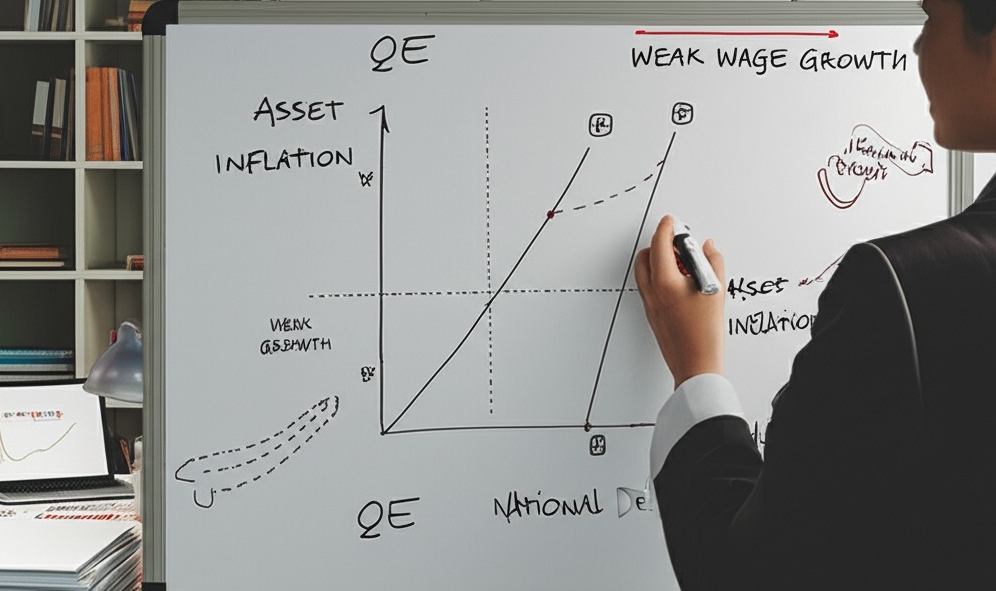
The relationship between QE and inflation is complex. While QE aims to boost economic growth, it can also contribute to rising inflation if demand exceeds supply. The increased money supply might push up prices, especially in asset markets, leading to asset inflation. However, in many cases, inflationary pressures remain moderate due to other economic factors like weak wage growth or a high savings rate.
Long-Term Economic Stability
In the long run, QE can contribute to economic stability by fostering growth, lowering unemployment, and encouraging investment. However, if relied upon too heavily, QE might undermine economic resilience and lead to issues like rising national debt or wealth inequality. To ensure sustainable growth, it must be paired with structural reforms and prudent fiscal policies that promote long-term stability.
What Are the Risks of QE?
While QE can stimulate the economy, it also comes with a set of risks that need to be considered. Let’s explore some of the most significant dangers.
Potential for Inflation
QE has the potential to push prices up, which can decrease the purchasing power of money. When central banks pump money into the system, it can lead to increased demand for goods and services, triggering inflation. This can become problematic if inflation rates grow unchecked, particularly in the case of demand-pull or cost-push inflation. In extreme cases, it may even lead to hyperinflation—a rapid increase in prices that can cripple the economy. Central banks need to carefully manage this risk, balancing the need for economic growth with the stability of the price level.
Wealth Inequality Concerns
One risk of QE is its potential to widen the wealth gap. By boosting asset prices, QE can benefit the wealthiest individuals who own stocks and real estate, while doing little to help those without significant assets. This increases economic disparity, making the distribution of wealth more uneven. As asset prices rise, people with limited financial resources may find it harder to access affordable housing or accumulate wealth. Economists often cite the Gini coefficient as a measure of this growing inequality, which, if left unchecked, can harm social mobility.

Over-Reliance on QE
While QE is an important tool in times of economic distress, there’s a danger in becoming too reliant on it. Continuous liquidity injections and asset buying by central banks can distort financial markets, creating a dependency on monetary stimulus. Over time, central banks may struggle to normalize their policies, leading to imbalances like an inflated balance sheet or excessive financial market distortions. If used too often, QE might lose its effectiveness and result in market inefficiency.
Risk of Asset Bubbles
Another risk of QE is the potential creation of asset bubbles. As central banks increase the money supply, speculative behavior can ramp up, pushing asset prices higher than their true value. This is often seen in real estate and the stock market, where irrational exuberance can lead to unsustainable valuation levels. If the bubble bursts, a market correction can follow, causing widespread financial damage. Such speculative bubbles can trigger another financial crisis, with devastating consequences for the broader economy.
While QE has its benefits, these risks highlight the need for a careful and measured approach. Understanding the balance between stimulation and caution is key to ensuring QE supports sustainable economic growth without creating new problems.
QE vs Traditional Policies

Differences Between QE and Interest Rate Cuts
Interest rate cuts and QE may sound similar, but they work in different ways. When a central bank lowers interest rates, borrowing becomes cheaper, and consumers are encouraged to spend. However, when rates hit rock-bottom (close to 0%), central banks turn to QE—buying government bonds and other securities to pump liquidity into the system. This process directly targets long-term interest rates and can boost asset prices, like stocks and real estate, which isn't always the case with just cutting rates.
Comparing QE to Fiscal Stimulus
While QE involves the central bank buying bonds to boost liquidity, fiscal stimulus is all about government spending or tax cuts to spur demand. Fiscal stimulus puts money directly into the hands of consumers or businesses. Think of it like handing out gift cards—immediate impact, more spending. QE, on the other hand, indirectly stimulates by encouraging lending and investment. Both strategies aim for economic growth, but QE's focus is on financial markets and interest rates, while fiscal stimulus targets direct consumer spending and government investment.
How Has QE Been Used Globally?

QE in the United States Post-2008
After the 2008 Financial Crisis, the United States' Federal Reserve turned to QE as a way to boost the economy. Through massive asset purchases, like Treasury bonds and MBS, the Fed aimed to keep interest rates low, encourage lending, and support economic recovery. By expanding the balance sheet, the Fed hoped to avoid deflation and push inflation toward its target. This policy marked a shift in monetary policy, significantly impacting the United States' recovery and economic dynamics.
The Eurozone’s Approach to QE
The European Central Bank (ECB) introduced QE to address the Sovereign Debt Crisis and stagnant growth. By launching an asset purchase programme that included government bonds, the ECB sought to bring inflation closer to its inflation target. Negative interest rates were also used to stimulate borrowing and economic stimulus. Over time, the balance sheet expansion became a vital tool in managing the Eurozone's slow economic recovery, especially during times of financial instability.
Japan’s Long-Term QE Strategy
Japan’s Bank of Japan (BOJ) has been a pioneer of long-term QE, most notably under Abenomics. In a fight against deflation and economic stagnation, the BOJ made significant asset purchases in Japanese Government Bonds (JGBs). The BOJ also employed yield curve control to keep borrowing costs low. Despite massive injections of liquidity, Japan has struggled with achieving a sustained inflation target, with concerns about the long-term sustainability of such policies.
QE and the COVID-19 Crisis
During the COVID-19 pandemic, central banks worldwide ramped up emergency measures, including large-scale asset purchases. In an effort to stabilize financial markets, keep liquidity flowing, and support the recovery, central banks faced difficult choices with inflation risks and supply chain disruptions. This crisis exposed vulnerabilities in the global economy, leading to more aggressive QE strategies to keep economies from falling into deep recessions.
Emerging Economies and QE
In emerging markets, central banks have turned to QE to manage capital flows and protect against currency depreciation. While this strategy has helped support financial stability, it has also raised concerns about inflation and the ability to service external debt. With less policy space and economic vulnerability, these countries face risks of global spillovers, making the impact of QE on their economies more challenging to navigate.
Global Reactions to QE
The implementation of QE across the globe has had broad cross-border effects, impacting capital flows and leading to currency wars and trade imbalances. Financial markets, investors, and international institutions have been forced to respond to the ripple effects. While some nations have benefited, others have seen economic inequality grow, fueling debates about the future of monetary policy and global coordination. The reactions to QE demonstrate the complex and sometimes unpredictable consequences of such expansive monetary measures.
| Region | QE Policy Type | Key Instruments | Focus Areas |
|---|---|---|---|
| United States | Asset purchases, Balance Sheet Expansion | Treasury Bonds, MBS | Economic Recovery, Inflation Management |
| Eurozone | Asset Purchase Programme (APP) | Government Bonds, Sovereign Debt | Inflation Targeting, Economic Stimulus |
| Japan | Long-Term QE with Yield Curve Control | Japanese Government Bonds (JGBs) | Deflation Control, Economic Stagnation |
| COVID-19 Crisis | Emergency QE Measures | Asset Purchases | Liquidity, Financial Stability |
| Emerging Economies | Targeted QE, Currency Depreciation Management | Government Bonds, Central Bank Purchases | Financial Stability, External Debt |

What Is the Future of QE?
The future of Quantitative Easing (QE) remains uncertain, with debates on its sustainability and whether central banks can maintain this policy in the long run. Here’s what to expect.
Is QE Sustainable Long-Term?
Many experts question whether QE is a sustainable long-term solution for economic growth. While QE has helped stabilize economies, it comes with risks such as inflation and market distortions. Central banks will need a clear exit strategy as the potential for inflation grows. The key question is whether they can continue bond-buying without undermining financial stability in the long run. As noted by economist Ben Bernanke, “QE is not a cure-all and should not be relied on indefinitely.”
The Future Role of Central Banks
Central banks have evolved far beyond traditional interest rate adjustments. In the coming years, their role will be pivotal in maintaining financial stability and navigating challenges like climate change, inequality, and inflation targeting. As the financial world becomes more interconnected, central banks may also adopt digital currencies to better manage economies. The need for effective monetary policy tools and independence will be more critical than ever to maintain stability.
Alternatives to QE in the Next Decade
Looking ahead, central banks may explore alternatives to QE to boost economic growth without the same side effects. These could include fiscal policies like government spending, or unconventional methods like helicopter money and negative interest rates. Tools like forward guidance, yield curve control, and even macroeconomic strategies could replace QE in the next decade, offering a new direction for central banks to address economic challenges while minimizing market distortions.
Conclusion
Quantitative Easing (QE) is like a turbo boost for the economy. When things are slowing down, central banks step in to inject money into the system, hoping to spark growth. It’s a tool that’s been used repeatedly in tough times, like after the 2008 crash, to help get economies back on track. While QE can kickstart growth, it’s not without its problems. Critics worry about inflation and how it may widen the gap between the rich and poor. As economist Ben Bernanke once said, "QE isn’t a cure-all," but it has proven useful when other options fail. Looking ahead, central banks will have to figure out how to balance the benefits of QE with its risks. In the end, QE has shaped modern economic policy—its role moving forward will be one to watch closely.
Quantitative Easing (QE) is a monetary policy tool used by central banks to stimulate the economy by increasing the money supply. It involves the central bank purchasing financial assets, such as government bonds, from commercial banks or other financial institutions. This helps lower interest rates and encourages borrowing and investment. QE is typically used when interest rates are already low and cannot be lowered further.
When central banks implement QE, they buy financial assets like government bonds from the market. This influx of money into the system lowers long-term interest rates, making borrowing cheaper for businesses and consumers. The goal is to stimulate economic activity by encouraging more spending and investment. Essentially, QE reduces the cost of credit, boosting demand for loans and assets.
Quantitative Easing can have several positive effects on the economy, including:
These benefits aim to boost economic activity, especially when traditional monetary policies (like lowering short-term interest rates) are no longer effective.
Stimulating spending: Lower interest rates encourage borrowing for homes, cars, and business investments.
Increasing asset prices: QE can drive up the prices of stocks and bonds, which benefits investors.
Reducing unemployment: By promoting growth, QE can help create jobs, especially during periods of recession.
While QE can be effective in the short term, there are also risks associated with this policy. Some of the key risks include:
These risks need to be carefully monitored by central banks to avoid negative long-term consequences.
Inflation: If too much money is pumped into the economy, it could lead to rising prices.
Wealth inequality: QE often increases asset prices, which disproportionately benefits wealthier individuals.
Over-reliance on QE: Continually relying on QE could delay necessary structural economic reforms.
QE can lead to inflation, but it depends on how much money is pumped into the economy and the state of overall demand. If demand remains low, QE may not cause significant inflation, but if demand picks up significantly as a result of QE, inflation can rise. Essentially, the goal is to stimulate the economy enough to boost demand without triggering runaway inflation.
QE doesn’t provide immediate results. It can take several months or even years for its effects to be fully felt. The policy works gradually by lowering interest rates and encouraging investment. Central banks generally monitor the impact of QE carefully and adjust the program as needed to ensure the desired outcomes—like economic growth and low inflation—are achieved.
While QE is most commonly used during periods of economic downturn, it can also be implemented in other situations, such as when inflation is too low, or when interest rates are already at or near zero. Central banks use QE as an unconventional tool when traditional monetary policies aren’t enough to stimulate the economy.
QE has a global impact, especially in today’s interconnected financial world. When major central banks like the Federal Reserve or the European Central Bank engage in QE, it can influence global capital flows, exchange rates, and investment patterns. For example, if the U.S. Federal Reserve conducts QE, it can affect the value of the U.S. dollar, influencing trade and investment decisions worldwide.
The future of QE is uncertain. While it has been effective in stimulating economies during crises, there are concerns about its long-term sustainability. Some economists argue that QE may lead to asset bubbles or income inequality, while others suggest that central banks will need to find new ways to manage economic growth. It’s likely that QE will continue to be used as a tool during economic slowdowns, but it may be accompanied by new policies designed to mitigate its risks.