


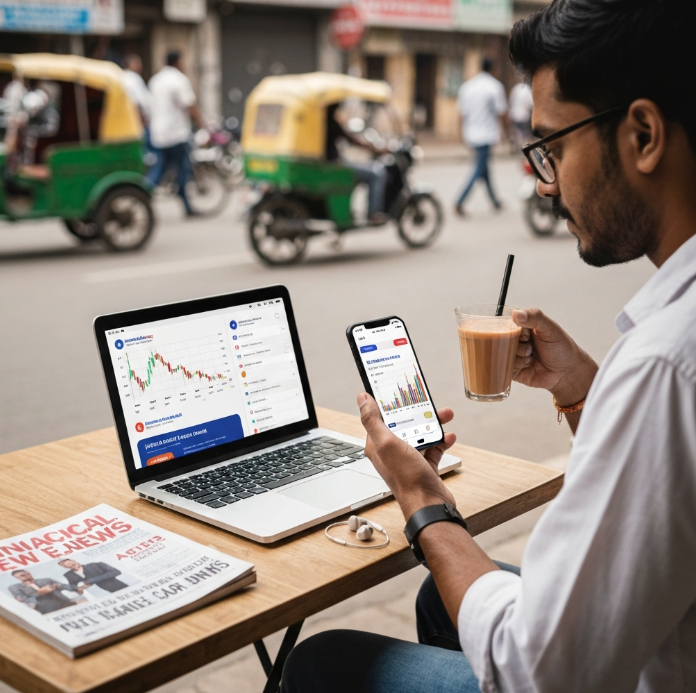
Back in 2020, forex trading felt like some Wall Street wizardry—something meant for suits and skyscrapers. But fast-forward to forex trading India 2026, and the game has flipped. College grads, freelancers, even your chai-sipping uncle are tossing INR into the mix alongside USD and EUR, all from their phones while waiting at traffic lights (not recommended). It’s not just hype either—according to a 2024 report by the Bank for International Settlements, daily global forex volumes crossed $7.5 trillion… that’s trillion with a ‘T’.
Still think it’s too risky or “not for folks like me”? You’re not alone. Most beginners freeze up when they see candlestick charts or hear words like “pip” and “margin call.” But truth is, you don’t need an MBA—or magic—to get started. What you do need is clarity, legality (hi RBI), and tools that don’t fry your brain. Grab a cup of coffee—we’ll break it down without breaking your spirit.
Forex Trading In India: A 2026 Introduction
Getting into forex trading in India in 2026? Here’s a no-fluff breakdown to get your bearings right.
What is Forex Trading: Understanding its Basics
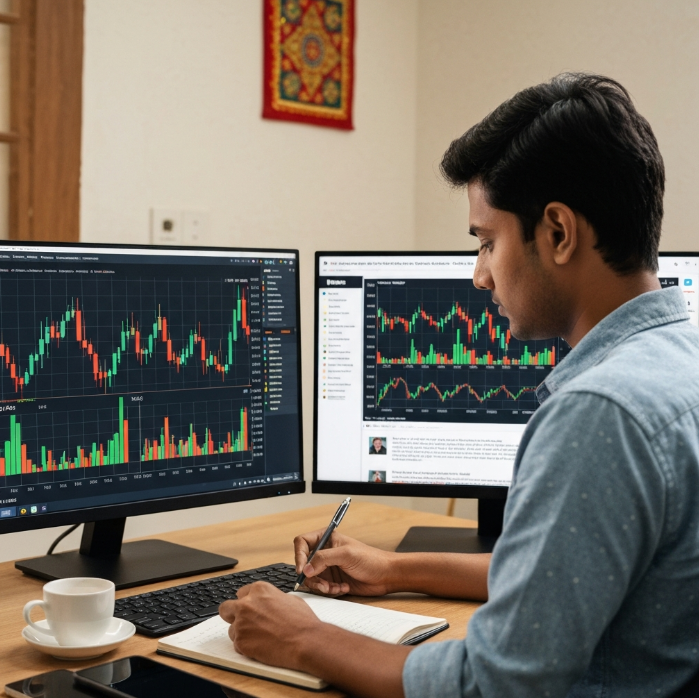
Forex trading is the act of exchanging one currency for another to profit from changes in value.
It's a global market, open 24/5, where trillions shift hands daily.
Traders watch for fluctuations between currency pairs, hunting for gains measured in pips.
The market includes:
Central banks
Retail traders
Corporations
Hedge funds
Key terms you’ll bump into:
Bid-ask spread – the difference between what buyers pay and sellers ask.
Margin – how much capital you must put up.
Leverage – borrowing power that amplifies both gains and losses.
Trading feels like a game of strategy with real stakes—move smart or get burned.
You’re not alone out there; millions are diving into the world of forex trading India 2026 with curiosity and caution.
The Role of RBI and SEBI in Forex Trading
SEBI lays down the rules for brokers offering access to currency markets.
RBI controls foreign exchange under FEMA (Foreign Exchange Management Act).
Together, they ensure transparency, limit risk, and prevent shady trades.
What RBI does:
Issues guidelines on who can trade what
Monitors flows through authorized dealers
Keeps an eye on compliance with FEMA regulations
What SEBI handles:
Approves platforms offering currency derivatives
Regulates broker behavior
Protects retail investors from fraud
If you're trading forex in India legally, you're dancing within these two regulators' lines.
With forex trading India 2026 becoming more accessible, knowing who’s watching over it helps you stay clean while chasing profit.
Key Currency Pairs: USD/INR and EUR/INR Explained
• USD/INR is India’s most traded pair—high liquidity, tight spreads
• EUR/INR offers volatility tied to European economic shifts
• Both reflect deep economic links between nations
→ Why these matter:
USD/INR reacts strongly to US Fed policy announcements or Indian budget releases
EUR/INR dances with ECB rate decisions or EU inflation data
→ Traders love them because:
✓ High volume = easier entries/exits
✓ Regular news events = plenty of movement
✓ Tight spreads = better profit potential
These pairs are go-to choices when exploring forex trading India 2026—especially if you're starting out or want consistent action.
Why Forex Trading is Gaining Popularity in India
People are waking up to the opportunities sitting inside their laptops and phones.
• More Indians now understand how currencies work thanks to YouTube tutorials and influencers
• Online brokers make it simple to open demo accounts and test strategies without big risks
• Economic growth has made people more financially curious—and bolder
→ Who's jumping in?
Young retail investors hunting for alternatives beyond stocks
Professionals looking for side income streams
Tech-savvy folks using apps that simplify complex trades
→ What's pulling them?
✓ Real-time access via mobile platforms
✓ Potential returns even when markets fall or rise
✓ Portfolio diversification beyond domestic equities
So yeah, forex trading India 2026 isn’t just a buzzword—it’s becoming part of everyday money talk across living rooms and WhatsApp groups alike.
Essential Forex Trading Strategies For Beginners In India
There’s no one-size-fits-all when it comes to forex trading. Let’s break down some beginner-friendly strategies that actually work for traders across India.
Day Trading vs. Swing Trading: What Works Best?
Day trading suits folks who love the action—fast trades, tight windows, and real-time decisions. It’s intense but rewarding if done right.
On the flip side, swing trading is more chill. You’re holding positions overnight or even for a few days, riding out trends with less screen time.
If you're juggling a job or studies, swing might be your jam; if you’ve got time and thrive on volatility, day trading could be your thing.
Consider your risk appetite—day trading involves higher frequency and sharper reactions to market volatility, while swing relies more on patience and spotting medium-term setups.
Scalping Techniques for Quick Profits
Scalping isn’t just about speed—it’s about precision and control over micro-movements.
Focus on highly liquid currency pairs like EUR/USD or USD/INR—they offer tighter bid-ask spreads, perfect for scalping.
Use ultra-short timeframes like the one-minute or five-minute charts.
Apply technical tools like Bollinger Bands or RSI to identify entry/exit points fast.
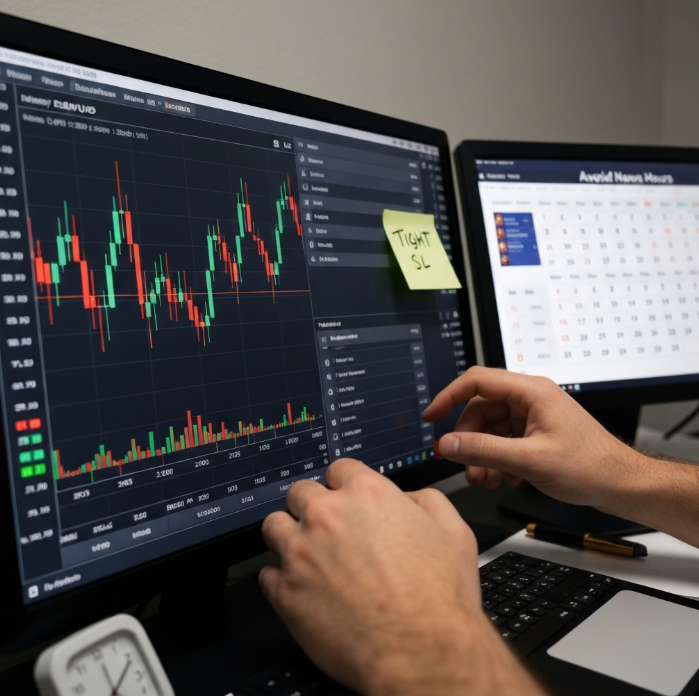
Always set a tight stop-loss—scalpers don’t have room for error.
Avoid news hours unless you're experienced—it can wreck your setup instantly.
Stick with brokers offering low latency execution; milliseconds matter here.
Scalping demands practice, discipline, and an eagle eye on price action.
Position Trading Fundamentals for Long-Term Success
Position trading is ideal if you’re playing the long game—think months instead of minutes.
• This strategy leans heavily on fundamental analysis, tracking macroeconomic signals such as GDP growth rates, central bank policies, inflation reports, and employment data.
• Traders often use large timeframe charts—weekly or monthly—to spot major trends before locking in positions based on broader economic cycles rather than daily noise.
• A good position trader has loads of patience and emotional control; you’re not reacting to every market twitch but staying focused on long-term direction.
According to a May 2024 report by the Reserve Bank of India, “Macro-driven forex positioning has seen increased participation from retail traders leveraging carry trade opportunities amid stable interest rate differentials.”
That insight alone speaks volumes about how powerful this strategy can be when applied smartly.
If you're serious about building wealth through forex trading India 2026, mastering position-based approaches will give you a solid edge.
Common Mistakes To Avoid In Forex Trading India 2026
It’s easy to trip up when you’re chasing profits fast. Here’s how not to blow your shot at smart forex trading in India by 2026.
Overleveraging: Why It Can Be Risky
When you're deep into margin trading, it can feel like you're playing with house money—until the house collects. Here's why going too big too fast wrecks accounts:
Leverage can double your gains—but also double your losses.
Using more than 10:1 on trades? You’re basically gambling, not trading.
Without a proper risk management plan, even one bad day could wipe out your entire account balance.
Traders often ignore proper position sizing, betting everything on one “sure thing.”
Many skip setting stop-loss orders, hoping for a bounce-back that rarely comes.
Preserving your core capital should always be priority #1—forget that, and it’s game over.
Smart traders treat each trade like a business decision, not a lottery ticket.
If you want to stay in the game long enough to win, keep an eye on how much you’ve got riding. That’s where EasyCashBackFx comes in—it rewards smarter trades without pushing you into risky waters.
Ignoring Economic Indicators: GDP Growth and Inflation Rate
The market doesn’t move randomly—it reacts to real-world signals. Dismissing key data points like GDP growth or the inflation rate is like flying blind in a storm.
• A rising GDP usually means stronger currency demand—basic supply and demand logic.
• High inflation? That spooks investors and weakens currency value fast.
• Central banks use these indicators when deciding interest rates—and those decisions shake up the forex world instantly.
"According to IMF's April 2024 outlook, India's projected real GDP growth of 6.8% suggests upward pressure on INR valuation through Q3 2026."
So if you're ignoring what central banks or policy makers are doing based on this data, you're missing half the picture. Solid fundamental analysis relies heavily on understanding these trends—not just chasing candlestick patterns.
Smart traders know that watching economic reports isn’t boring—it’s essential for predicting how currencies will shift next in the world of high-stakes forex trading across India heading into 2026.
How To Create A Forex Trading Plan In India
Crafting a solid forex plan in India isn't rocket science—it just takes clarity, discipline, and some smart choices.
Assessing Risk: Stop Loss and Take Profit Strategies
Managing risk is what separates casual dabblers from serious forex traders in India. Here's how you can do it without losing your cool:
Stop loss orders cap how much you're willing to lose on a trade—set them based on recent volatility, not gut feeling.
Use take profit levels to lock in gains when the market hits your target—don’t get greedy.
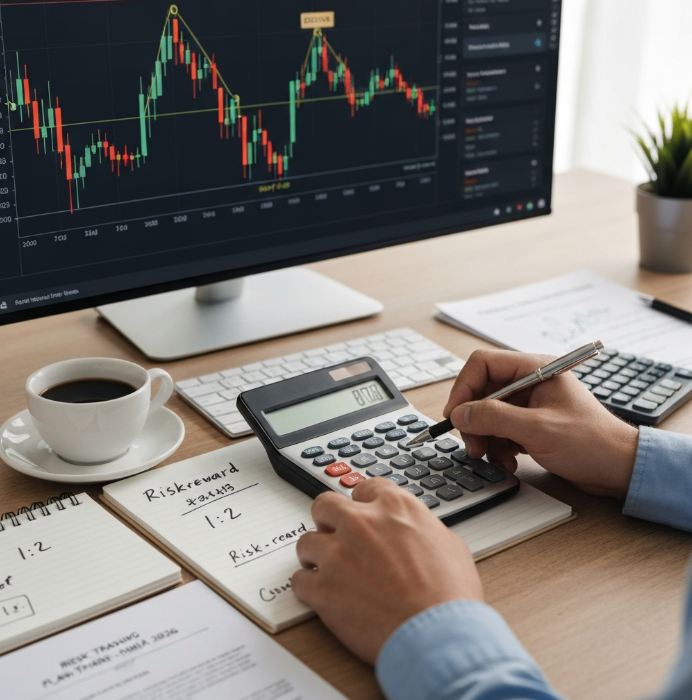
Stick with a defined risk-reward ratio like 1:2 or 1:3 so wins outweigh losses over time.
Adjust exit strategies depending on the pair’s behavior; some need tighter stops due to higher volatility.
Mix order types wisely—limit, stop-limit, and trailing stops—to fine-tune your exit strategy.
Avoid setting stops too tight—they’ll get hit by normal price action noise before any real move happens.
Always factor in major news events before placing trades; they can blow past both your stop loss and take profit levels.
This kind of planning is key for long-term survival in the world of forex trading India 2026.
Position Sizing: Finding the Right Balance
Finding that sweet spot between playing it safe and taking calculated risks? That’s where smart position sizing comes into play:
• Let’s say your account balance is ₹1,00,000. If you risk 2% per trade, that’s ₹2,000 max per trade. That’s your golden number.
• Now calculate position size using this formula:
(₹2,000 ÷ stop loss in pips) × pip value = lot size
• Say you're trading EUR/INR with a stop loss of 50 pips and each pip is worth ₹10:
(₹2,000 ÷ 50) × ₹10 = 4 mini lots
• Keep an eye on margin requirements—don’t let high leverage eat up all available capital.
• Never exceed more than 5% total exposure across open trades unless you’re scalping or hedging short term.
• Use percentage-based rules instead of fixed lots—it scales better as your account grows or shrinks.
• And yeah—don’t ignore currency pair behavior. Some pairs are wild; others are chill. Adjust accordingly.
Smart capital allocation, proper use of leverage, and respecting your own risk limits? That’s how you stay alive—and thrive—in forex trading India by 2026.
Setting Realistic Goals for Your Trading Journey
Let’s break down how to set goals that don’t just sound good but actually work:
Step 1: Define clear daily/weekly/monthly targets—not just profits but also process goals like “follow my entry rule every time.”
Step 2: Match those goals to your available time. Got only evenings free? Don’t aim for intraday setups that demand constant screen time.
Step 3: Align expectations with skill level. Beginners should focus more on consistency than hitting big numbers right away.
Step 4: Measure progress using real metrics like win rate, average return per trade, or drawdown—not just net profit alone.
Step 5: Adjust as needed every quarter based on actual results versus plans. It keeps things grounded and avoids frustration burnout.
Having realistic profit targets, tracking with clear performance metrics, and understanding your own trading psychology? That’s what makes goal-setting more than wishful thinking—it becomes part of a winning habit loop in forex trading India by the time we hit full stride in 2026.
The Impact Of Global Events On Forex Trading In India
Big global shifts can throw currencies into a spin. Here's how two major economic forces shape forex trading India 2026 and beyond.
How Interest Rates Influence Forex Markets
Interest rates aren’t just numbers — they’re signals that ripple through the entire forex trading scene in India. Here’s how they pack their punch:
Central banks like the RBI tweak interest rates to control inflation, which directly affects the strength of the rupee.
Higher rates often attract foreign capital, boosting demand for INR and shifting exchange rates.
Lower rates? Investors might pull out, weakening the currency and making imports pricier.
Changes in monetary policy, even anticipated ones, stir up volatility across forex pairs involving INR.
Traders track key economic indicators like CPI and GDP growth to predict possible rate hikes or cuts.
When inflation runs hot, central banks may raise rates — but if growth slows, they might ease off instead.
Shifts in global interest rate trends — especially from the US Fed or ECB — also influence forex trading India 2026 by redirecting capital flows toward or away from emerging markets like India.
In fact, according to a recent IMF bulletin from Q1 2024, over 70% of short-term currency volatility across Asia-Pacific was directly linked to unexpected interest rate decisions by central banks.
EasyCashBackFx helps retail traders stay ahead with real-time alerts on policy shifts that could shake up your next trade.
The Trade Balance's Role in Currency Fluctuations
Trade balance impacts aren’t just textbook theory—they show up fast on your charts when you're into forex trading India 2026. Let’s break it down:
• If exports exceed imports (a trade surplus), more foreign buyers need INR—pushing its value up.
• A trade deficit? That usually means more demand for foreign currencies than for INR—causing depreciation.
• But it’s not always black-and-white; seasonal spikes (like oil imports) can skew monthly data without long-term impact.
Now let’s look at actual numbers:
| Year | Exports ($B) | Imports ($B) | Trade Balance ($B) |
|---|---|---|---|
| 2023 | 447 | 714 | -267 |
| Jan '24 | 38 | 52 | -14 |
| Feb '24 | 41 | 48 | -7 |
| Mar '24* | 45 | 43 | +2 |
That March surplus? It briefly strengthened the rupee against USD by nearly ₹0.80 overnight.
According to India's Ministry of Commerce report published April 2024, "Short-term surpluses driven by high-tech exports have added resilience to INR performance despite broader current account deficits."
So yeah—watching those export-import curves isn’t optional anymore if you want an edge in forex trading India markets heading into late 2026.
Top 5 Trading Platforms For Forex In India 2026
Here’s a look at the top forex trading platforms making waves across India in 2026—backed by tools, tech, and trader trust.
MetaTrader 4: Features and Benefits
User-friendly Interface: Even total newbies can navigate the platform without needing a manual.
Automated Trading with Expert Advisors: Run trades on autopilot using custom-built Expert Advisors coded in MQL4.
Mobile Trading Access: Trade from your phone while waiting for coffee or riding the metro.
Custom Indicators & Charting Tools:
Over 30 built-in technical indicators
Real-time data display
One-click execution
Flexible chart customization
Whether you're scalping or swing trading, MT4 delivers solid performance. It's still a go-to for many involved in forex trading India 2026, thanks to its simplicity and reliability.
Exploring MetaTrader 5: Advanced Trading Tools
MT5 isn’t just MT4’s older sibling—it’s more like its high-IQ cousin who also plays multiple sports.
• Supports both hedging and netting, giving traders flexibility across strategies.
• Integrated economic calendar keeps you ahead of market-moving news.
• Depth of market tool shows real-time bid/ask liquidity.
The platform handles not just forex but stocks, commodities, and indices—making it ideal for those expanding beyond basic currency trades. It supports algorithmic strategies via the powerful MQL5, boosting decision-making speed during volatile sessions across Indian markets.
According to FX Markets Review Q1–2025, over “68% of multi-asset traders in India prefer MT5 due to its advanced analytics and integrated features.”
Advantages of cTrader for Forex Traders
cTrader is all about control—clean interface, fast execution, pro-level insights.
? Advanced order types like Market Range and Limit Stop give seasoned traders more precision.
? The integration with FIX API allows institutions or algo developers direct access with low latency.
? Visual depth-of-market view enhances transparency—a must-have when navigating fast-paced pairs like USD/INR or EUR/INR.
If you're deep into algorithmic setups using tools like cAlgo, this one’s tailor-made for you. In India's growing forex scene, cTrader stands out as a refined choice among active retail pros.
TradingView: Visualizing Forex Trends
Split-second clarity—that's what makes TradingView click with Indian forex enthusiasts these days.
Short bursts of brilliance:
• Community-driven ideas make it feel like Twitter meets Wall Street charts.
• Massive library of custom scripts through Pine Editor lets you tweak every indicator imaginable.
• Real-time alerts keep you posted even if you're binge-watching cricket highlights instead of watching charts.
From tracking INR-based cross-pairs to global majors, the visual edge here is unmatched. With millions sharing setups daily, it's become a social hub as much as a charting powerhouse for anyone serious about mastering trends within the evolving zone of forex trading India 2026.
WebTrader: Accessing Forex Trading on-the-go
Trading shouldn’t be chained to your desk—and that’s where WebTrader shines brightest.
Step-by-step convenience:
Open browser—any browser.
Log into your broker account securely.
Launch trades instantly without downloading anything.
Monitor positions while commuting or chilling at cafes.
Its clean user interface adapts smoothly across phones, tablets, or desktops—ideal for India's mobile-first generation diving into currency markets daily. Features like multi-device sync and encrypted login add peace of mind while handling orders on-the-fly within today’s fast-evolving landscape of Indian forex activity.
In fact, platforms like WebTrader are fueling accessibility as more users explore flexible options under the broad umbrella of forex trading india 2026, helping democratize opportunities once limited by desktop-only solutions.
References
Triennial Survey shows global foreign exchange trading volumes reach $7.5 trillion per day - https://www.bis.org/press/p221027.htm
RBI – Foreign Exchange Management FAQs for residents - https://www.rbi.org.in/commonman/english/scripts/FAQs.aspx?SID=6
SEBI – Currency Derivatives segment overview for investors - https://www.sebi.gov.in/curation/currency_derivatives.html
Foreign Exchange Management Act, 1999 – Overview - https://en.wikipedia.org/wiki/Foreign_Exchange_Management_Act
IMF World Economic Outlook, April 2024 – India growth projections - https://www.imf.org/-/media/files/publications/weo/2024/april/english/ch1.pdf
India’s exports up to US$ 447 billion in FY23 – Ministry of Commerce - https://indbiz.gov.in/exports-up-by-6-to-us-447-billion-in-fy23-commerce-minister/
MetaTrader 5 – Official multi-asset trading platform - https://www.metatrader5.com/en
cTrader – Forex and CFD trading platform - https://ctrader.com/
TradingView – Charting and social trading platform - https://www.tradingview.com/
FAQs about Forex Trading India 2026
1. What is forex trading and how does it work in India?
Trading foreign currencies here means pairing the Indian Rupee with others like USD/INR, EUR/INR, GBP/INR, JPY/INR or AUD/INR — buying one while selling another in a single breath of action. RBI and SEBI stand watch over each exchange; FEMA rules shape what’s allowed. You choose an ECN Broker or STP Broker to act as your gateway, place trades through trusted platforms like MetaTrader 4 or cTrader, and track every tick knowing that INR strength dances with world events.
2. Which strategy suits beginners starting small?
For early steps when capital feels precious:
Day Trading: seek short bursts across hours on pairs such as USD/INR
Scalping: tiny precision moves using WebTrader’s quick access tools
Swing Trading: holding GBP/INR positions over days for trend rhythms
Pair these styles with Stop Loss discipline and Position Sizing that fits your pocket — each move shaped by patience rather than haste.
3. How do economic indicators influence currency trades here?
Think of the market breathing with numbers: GDP Growth lifting INR confidence; Inflation Rate stealing quiet value away; Interest Rates pulling global funds toward rupee assets; Unemployment Rate stirring risk fears; Trade Balance turning sentiment between surplus joy and deficit concern. Watch these signals alongside chart patterns on MetaTrader 5 or TradingView — they color every rise and fall before you press “buy” or “sell.”
4. Who regulates online forex activity by law in 2026?
Three pillars guard legality: RBI sets monetary tone, SEBI shields investor interests, FEMA draws the lines traders must stay inside. Side roles emerge too — IRDAI watching insurance links for brokers’ offerings, PFRDA minding retirement-linked portfolios touching foreign currency play through hybrids like DMA Brokers or Dealing Desk setups connected to INR pairs only within permitted bounds.