


Table of contents
Part 1 - Trend Trading: Capturing Market Movements
Part 2 - Range Trading: Profiting from Price Boundaries
Part 3 - News Trading: Reacting to Market Events
Part 4 - Retracement Trading: Trading Market Pullbacks
Part 5 - Algorithmic Trading: Automating Strategies
Part 6 - Price Action Trading: Analyzing Price Movements
Jumping into forex trading can feel a bit like jumping into a fast-moving river—you need the right tools and a solid plan to stay afloat. The Top 8 Forex Trading Strategies and their Pros and Cons give you exactly that: the tools to not only survive but thrive in the currency market. But just like fishing, the right strategy can make or break your day—some folks swear by trend trading, while others will stick to news trading like glue.
No one strategy is one-size-fits-all. It's kind of like picking your favorite ice cream flavor—what works for one trader might not work for you. "The market is always changing, and so should your strategy," says forex expert John Doe, who’s been in the game for over 20 years.
Ready to learn how these strategies stack up? From catching the perfect swing to timing a quick dip, this guide will help you decide what’s best for your trading style.
Trend Trading: Capturing Market Movements
Trend trading helps you ride the wave of the market's direction, aiming to profit from its momentum. Let's break down the key elements for success.
Understanding Trend Direction and Momentum
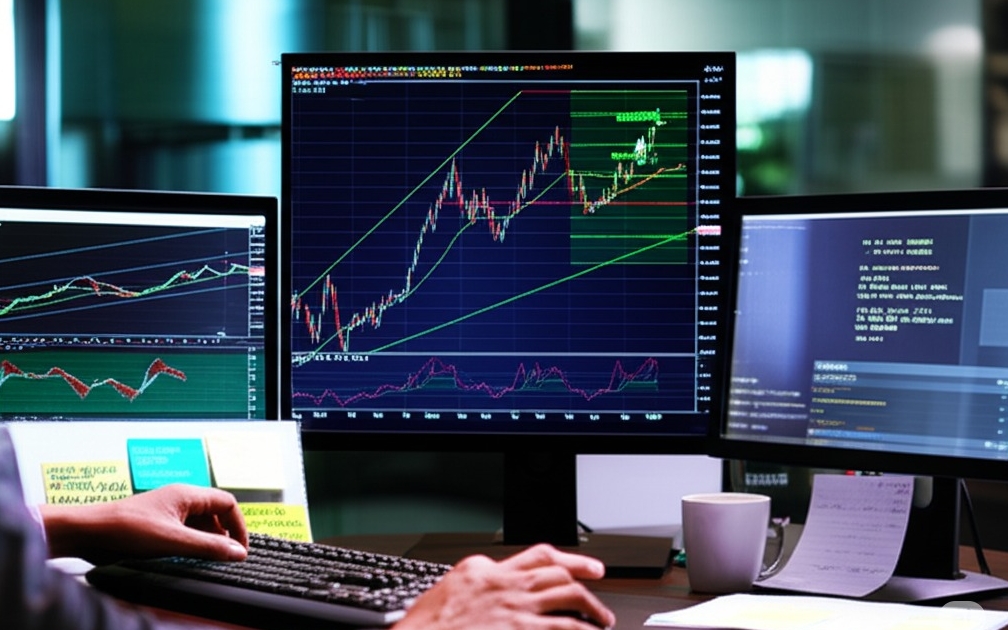
Trend trading starts with knowing the direction and strength of a market’s momentum. Using technical analysis, indicators like moving averages or RSI help identify whether a trend is up or down. It’s about catching the market’s rhythm, whether it’s a steady climb or a sharp drop, and knowing when to jump in or out.
Identifying Trend Reversals in Forex
Trend reversals signal when a prevailing trend may be about to change. Keep an eye out for candlestick patterns like engulfing or hammer patterns, divergence on the RSI, or even a sudden change in market psychology. Combine this with fundamental analysis and economic news to spot potential shifts early and manage risks effectively.
Tools for Spotting Market Trends
To spot trends, traders rely on various trading tools such as trend lines, Fibonacci levels, and Bollinger Bands. These tools help visualize price movements and confirm whether the trend is gaining strength or losing momentum. Whether you're using charting software or trading platforms, these tools guide entry and exit points.
| Tool | Purpose | Example Indicator |
|---|---|---|
| Trend Lines | Visual representation of price movements | Price action |
| Fibonacci Levels | Identifying potential reversal points | 38.2%, 50%, 61.8% |
| MACD | Measuring momentum and trend shifts | Moving average cross |
| Bollinger Bands | Spotting market volatility and trend continuation | Band width |
When to Exit a Trend Trade
Knowing when to exit is just as crucial as entering a trade. Consider using a stop loss or trailing stop to protect your profits, especially in volatile markets. When price reaches a predefined target, or you notice reversal signals, it’s time to close out your trade and lock in your gains. Keep a close eye on market conditions and adjust your exit strategy as needed.
Range Trading: Profiting from Price Boundaries
Range trading is all about capitalizing on price movements within defined boundaries. In a sideways market, where prices move between support and resistance levels, this strategy can be highly profitable.
What is Range Trading in Forex?
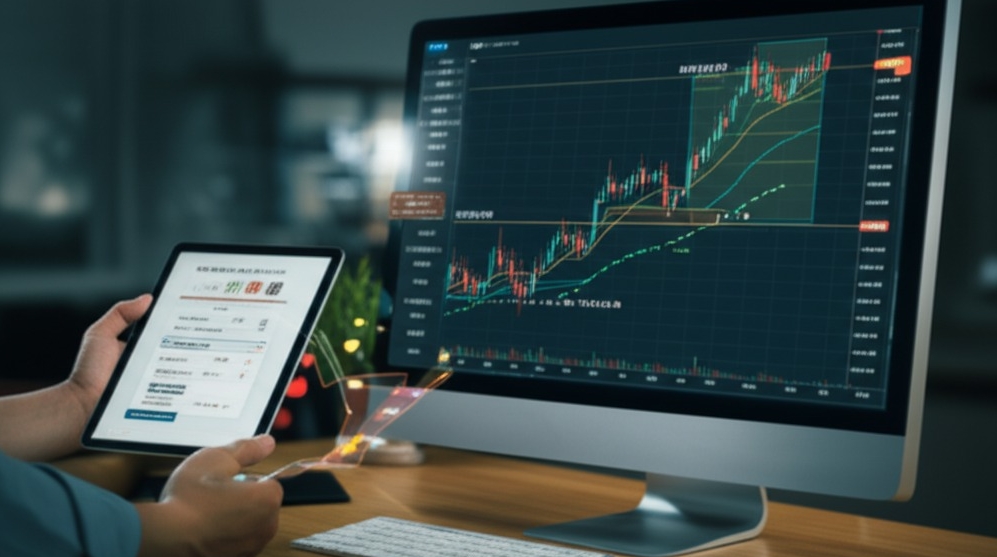
Range trading involves buying at support levels and selling at resistance levels within a sideways market. Traders rely on technical analysis to identify consolidation patterns, where currency pairs experience bounded price movement. This strategy works best in non-trending markets with low volatility, and it thrives when the market is not following a clear trend.
Key Indicators for Range Boundaries
| Indicator | Description | How to Use |
|---|---|---|
| Support and Resistance | Horizontal levels where prices often reverse. | Identify the key boundaries of the range. |
| Moving Averages (MA) | Smoothens price data to identify the central point of the range. | Apply to see if price is trading above or below average levels. |
| Bollinger Bands | Measures volatility and shows price extremes within the range. | Look for price bouncing off the bands to confirm the range. |
| RSI (Relative Strength Index) | Measures the strength of price moves and overbought/oversold conditions. | When RSI is extreme (over 70 or below 30), it signals potential reversals. |
| Stochastic Oscillator | A momentum indicator that compares closing prices to price ranges. | Use it to confirm potential entry points at range boundaries. |
Risk Management in Range Trading
Effective risk management is key to staying profitable in range trading:
Stop-Loss Orders: Protect against sudden market breakouts.
Take-Profit Orders: Lock in profits when price hits resistance or support.
Position Sizing: Ensure you don't risk too much on a single trade.
Risk-Reward Ratio: Always aim for a positive ratio to stay profitable long-term.
Backtesting: Test your strategy to confirm its effectiveness.
Emotional Discipline is essential in range trading; avoiding overtrading and sticking to your trading plan can protect you from unnecessary losses. Also, diversify your trades and avoid putting all your capital into one position.
News Trading: Reacting to Market Events
In the fast-paced world of forex trading, news trading is like catching the perfect wave—it’s all about timing. Market movements often occur in response to news releases that can shift investor sentiment dramatically. For forex traders, staying on top of economic data and interest rate decisions is crucial to identifying opportunities. Major central bank announcements or geopolitical events can trigger sharp price spikes, offering potential for profit—or risk.
Traders who specialize in news trading leverage fundamental analysis, studying economic indicators, employment reports, and consumer confidence levels to predict market behavior. These events are highly anticipated, often leading to market volatility right after the release. For example, when the Federal Reserve announces interest rate changes, the market volatility is felt globally, affecting currency values almost instantly. This is when savvy traders move quickly to capitalize on the fluctuations.
Risks are also present in news trading. With rapid price movements, slippage—where the execution price differs from the expected price—can eat into profits. Additionally, price spikes may not always go in a favorable direction. That is why risk management is critical. Many experienced traders use stop-loss orders or predefined exit strategies to manage potential downsides.
To sum it up, news trading is not just about reacting to headlines; it requires deep understanding and anticipation of how economic events can ripple through the forex market. Traders who can read the signs and act fast often find themselves at the forefront of profitable opportunities. Are you ready to make your move when the next big news breaks?
Retracement Trading: Trading Market Pullbacks
Retracement trading involves identifying temporary price corrections within a larger trend, allowing traders to re-enter the market at more favorable levels.
What is a Market Retracement?
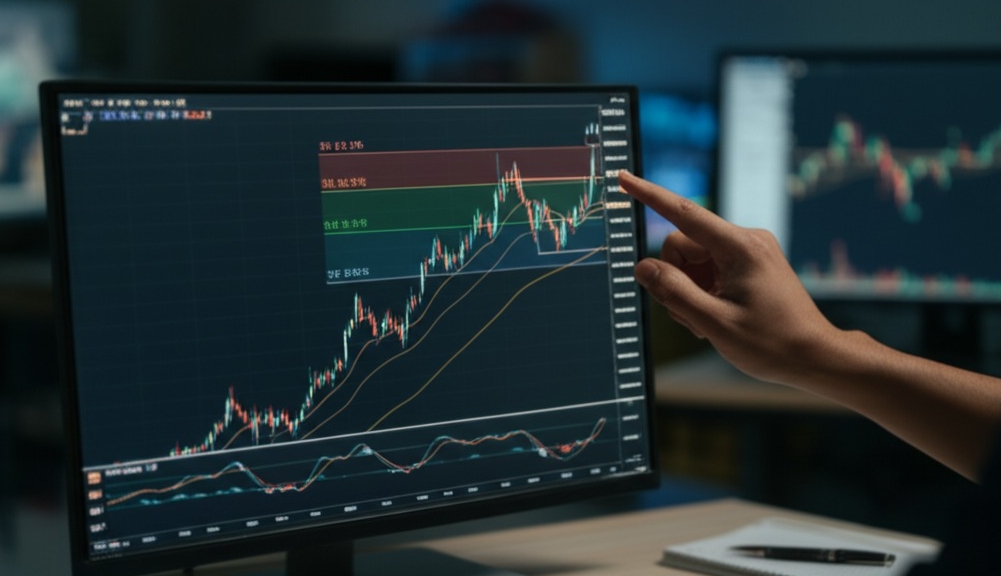
A market retracement is a short-term price correction that goes against the prevailing trend before continuing in the same direction. These pullbacks offer an opportunity to buy low or sell high. It's essential to recognize that retracements are different from reversals—they don't signal a trend change but merely a temporary reversal that sets the stage for trend continuation.
Identifying Pullbacks in Established Trends
To spot a pullback, focus on trend analysis using technical indicators like moving averages, RSI, or MACD. Look for price action that temporarily moves away from the trend, then returns. Using chart patterns like flags or wedges can also help identify ideal entry points. Market analysis paired with trading signals is crucial for entering trades with confidence.
Using Fibonacci for Retracement Levels
Fibonacci retracement levels are vital tools in technical analysis. By using Fibonacci ratios, traders can predict potential support or resistance levels. The key ratios—23.6%, 38.2%, 50%, and 61.8%—are based on the golden ratio and can help determine where price might reverse. Traders often wait for price to hit these levels before re-entering the market.
| Fibonacci Level | Common Use Case | Expected Market Behavior |
|---|---|---|
| 23.6% | Minor retracement | Shallow pullback, quick reversal |
| 38.2% | Moderate retracement | Stronger pullback, potential bounce |
| 50% | Mid-range pullback | Common reversal zone |
| 61.8% | Deep pullback | Major retracement, often signals trend continuation |
Managing Risks During Pullbacks
Effective risk management is essential during pullbacks, especially since volatility can spike. Utilize stop-loss orders to limit losses, and ensure position sizing is appropriate for the trade size. Capital preservation is key—maintain risk-reward ratios to safeguard your trading capital. Keep an eye on market volatility and adjust your trade management strategies accordingly.
How to Maximize Profits with Retracement Trades
To maximize profits from retracement trades, focus on finding the perfect entry and exit points. A solid trading strategy involves setting clear profit targets based on retracement levels. Use risk-reward ratios to ensure that your profit maximization is balanced with the potential risks. Optimizing these factors allows for smoother trades and higher returns.
Algorithmic Trading: Automating Strategies
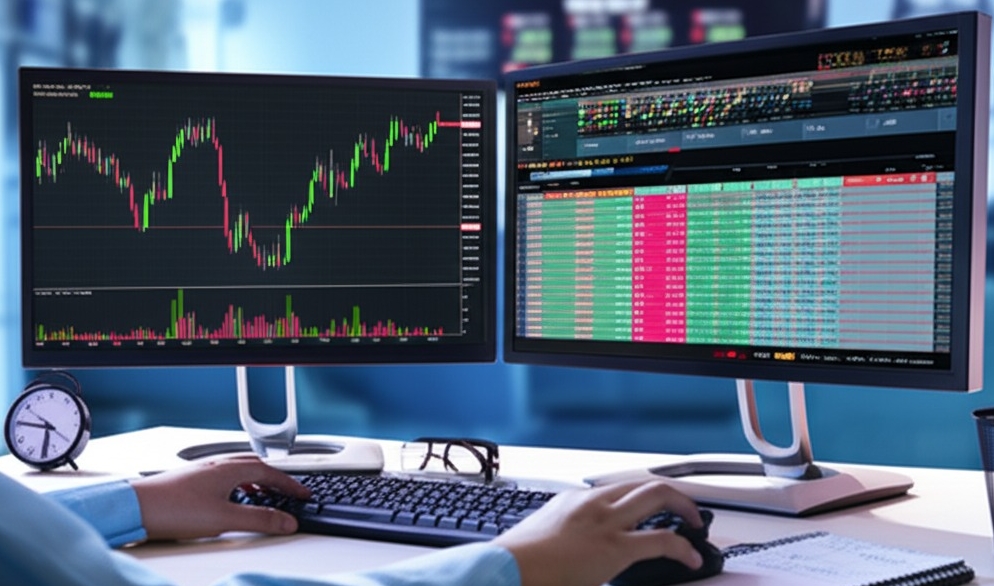
In the world of forex trading, speed and precision are crucial. Algorithmic trading has revolutionized the way traders operate, making it possible to automate trading strategies with remarkable efficiency. By using trading algorithms and expert advisors, traders can execute strategies based on predefined criteria without constantly monitoring the markets.
Many traders, especially those who focus on high-frequency trades, rely on automated strategies for their ability to react instantly to market movements. Backtesting plays a pivotal role in ensuring that these strategies are effective. By running a strategy through historical data, traders can evaluate its potential performance before committing real capital. Optimization further refines the strategies by tweaking parameters to find the best possible outcomes.
One of the standout benefits of algorithmic trading is its execution speed. Unlike human traders, algorithms can process vast amounts of data and execute trades in fractions of a second. This is a game-changer in forex, where even the slightest delay can result in missed opportunities. With quantitative models running at the core of these strategies, traders can trust that their algorithms are working continuously, even when they are away from the screen.
Many traders turn to trading platforms that support automated strategies to help streamline their operations. These platforms allow for seamless integration of algorithms with advanced tools for analysis and trade execution. Alongside this, risk control measures, such as setting stop-loss and take-profit limits, ensure that potential losses are minimized, offering peace of mind in volatile markets.
According to industry expert Jane Smith, "The beauty of algorithmic trading is that it removes emotion from the equation, ensuring that strategies are executed with precision and consistency." With these automated systems, traders can achieve a level of accuracy and efficiency that was previously unattainable, making algorithmic trading a vital tool for those serious about succeeding in forex markets.
In summary, algorithmic trading combines the power of automated strategies, advanced backtesting, and execution speed to deliver a level of performance that human traders simply cannot match. It offers a dynamic, hands-off approach to forex trading, allowing for smarter, faster, and more profitable decision-making.
Price Action Trading: Analyzing Price Movements
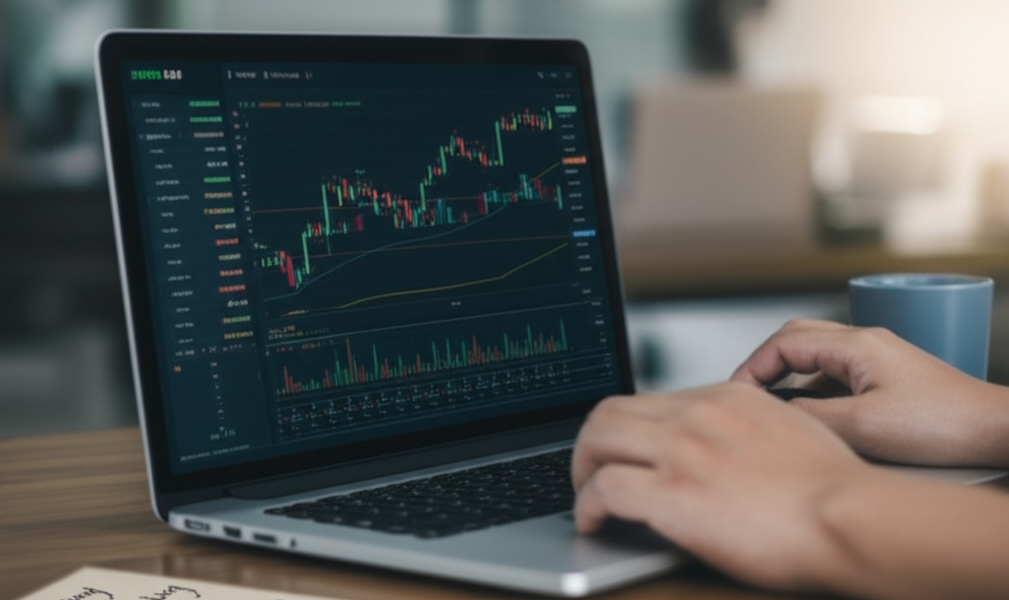
Price action trading is all about analyzing price movements on a chart to make trading decisions. Let’s break down the key elements of this strategy.
What is Price Action Trading?
Price action trading focuses on interpreting market behavior through price movements rather than relying on indicators. Traders use charts to identify patterns that reflect supply and demand dynamics. It’s simple but powerful—no fancy tools, just raw market data.
How to Read Candlestick Patterns
Candlestick patterns are the bread and butter of price action traders. Bullish and bearish patterns help you spot trends, reversals, and continuation signals. By studying the body and wick of candlesticks, you can predict where the market’s heading.
| Pattern Type | Indication | Example |
|---|---|---|
| Bullish Engulfing | Trend Reversal (Up) | Price moves up after pattern forms |
| Bearish Engulfing | Trend Reversal (Down) | Price moves down after pattern forms |
| Doji | Market indecision | Potential reversal or continuation |
Understanding Support and Resistance Levels
Support and resistance are key zones where prices tend to bounce or break. A strong support level signals a potential buying point, while resistance often marks where prices might hit a ceiling. These levels give traders clear entry and exit points.
Developing a Price Action Trading Plan
A solid trading plan keeps you disciplined. Focus on risk management, defining entry and exit rules, and backtesting strategies. Keeping a trading journal helps refine execution over time. Stick to your plan, and don’t let emotions lead the way.
Swing Trading: Navigating Medium-Term Trends
Swing trading focuses on capturing medium-term trends, typically lasting a few days to weeks. It's ideal for traders who want to catch significant price movements without being glued to their screens all day.
Understanding Swing Trading in Forex
Swing trading is a popular method for navigating the Forex market. Traders aim to capitalize on price swings, typically looking at currency pairs and leveraging both technical analysis and fundamental analysis. This strategy works best in medium-term trading because it allows traders to ride out market cycles without the need for constant monitoring. Swing trading involves identifying key price action signals and utilizing trend analysis to time entries and exits.
How to Spot Swing Points for Entry
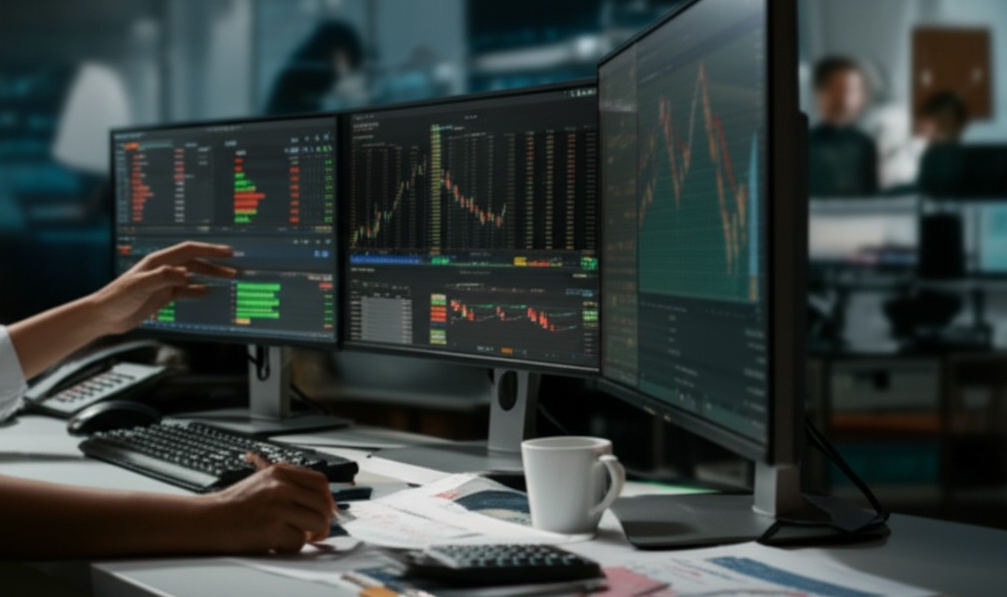
To successfully swing trade, identifying swing highs and swing lows is crucial. These points are the peaks and valleys in a price chart that signal potential entry points. Use support levels and resistance levels to spot these turning points. Tools like Fibonacci retracement and moving averages help confirm entries, while candlestick patterns and oscillators give additional insights into market momentum. Volume analysis is also key to understanding market strength.
Managing Risk in Swing Trades
Risk management is critical in swing trading. Always use stop-loss orders and take-profit orders to manage potential losses and lock in profits. Position sizing ensures you’re not overexposed to a single trade, while maintaining a favorable risk-reward ratio increases long-term profitability. Capital preservation is vital, especially during periods of drawdown. Diversification and emotional discipline help prevent impulsive decisions, while careful trade management can significantly improve your trading success.
Day Trading: Profiting from Daily Volatility
Day trading thrives on volatility and requires sharp decision-making to capitalize on short-term price fluctuations. Understanding the best times to trade and using effective techniques is key to making the most out of your trades.

Best Time of Day for Day Trading
Day trading is all about timing. Here’s a breakdown of the best times to jump in:
Trading Hours: The sweet spot for day traders is typically the first few hours after the market opens and the last hour before it closes. This is when volatility is high, and opportunities are plentiful.
Pre-market and After-hours: Pre-market trading begins before the official market open and can be less volatile. After-hours trading occurs when the regular market closes and offers fewer opportunities but can still be valuable for certain setups.
Key Moments: The opening bell (market open) is a prime time for big moves, and the closing bell signals the end of the trading day, often providing final chances for profits or reversals.
| Trading Session | Characteristics | Best for |
|---|---|---|
| Pre-market | Low volatility, lower liquidity | Specific strategies or news-based trades |
| Market open | High volatility, high liquidity | Active trades, swing opportunities |
| Market close | Volatility peaks, higher liquidity | End-of-day decisions, quick profits |
| After-hours | Lower volatility, lower liquidity | Quiet market opportunities or setup for next day |
Short-Term Techniques for Maximizing Profit
Here are some methods you can use to catch quick profits during the day:
Scalping: Think of scalping like hitting a quick home run. It involves taking small profits off quick, small price moves. You’ll need a sharp eye and high-speed execution to pull it off.
Momentum Trading: When you spot momentum, it’s time to ride the wave. With this method, you’re betting on a strong, continued price move rather than predicting a reversal.
Breakout Trading: A breakout occurs when a price moves above a resistance level or below a support level. This often signals a new trend, and entering right after the breakout can lead to a quick profit.
In day trading, it’s not about rushing into trades; it’s about knowing when the market’s most likely to give you the best shot at profit, then jumping in with a solid plan. Timing is everything!
Conclusion
Choosing the right forex strategy is like picking the right tool for a job. Some methods work better for quick trades, while others shine in the long run. It’s all about matching the strategy to your style.
No strategy is foolproof, but with practice and patience, you’ll find what clicks. “Success in forex comes with time,” says trading expert Jane Doe.
Stay smart, stay flexible, and keep learning—your next trade could be your best one.
If you’re just starting out, trend trading is usually the go-to move. It’s easier to follow and doesn’t require lightning-fast decisions. You’re basically riding the wave of where the market’s already going. Less noise, more clarity.
Not necessarily—it’s about your personality and how much screen time you can handle. Scalping means dozens (or hundreds) of quick trades a day. Day trading is faster-paced than swing trading but slower than scalping. If you hate stress and timers, scalping might drive you nuts.
MetaTrader 4/5 with custom scripts
Python or MQL4 for strategy coding
Real-time market data feeds (like FXCM or OANDA)
VPS hosting to keep bots running 24/7
Risk management isn’t just helpful—it’s everything. If you don’t protect your capital, you won’t survive long in this game.
Use stop-loss orders every single trade
Risk only 1–2% of your capital per trade
Don’t trade emotionally—ever
Keep a trading journal to learn from wins/losses
Great question—these two get confused a lot.
A retracement is a temporary pause or dip in a trend before it resumes.
A reversal means the trend changes direction completely.
Knowing the difference helps you avoid jumping ship too early.
Absolutely. Swing trading is perfect for people with day jobs or school. Since trades last for several days, you don’t need to stare at charts all day. Just carve out time to analyze setups and check in once or twice a day.
Not really. Many brokers let you start with as little as $100 or even less. Just know that starting small means smaller gains—and losses. Focus on learning before aiming to get rich quick.
A range happens when price bounces between support and resistance without trending up or down. Here's how to spot it:
Look for flat or sideways price action
Identify two or more bounces off similar highs (resistance)
Spot matching lows (support) at the bottom
Low volatility and volume often confirm the range
Honestly? It can be. News trading is volatile and fast-moving, which makes it tough for new traders to react correctly. If you’re still learning the ropes, you might want to practice it in a demo account first—no shame in staying safe while learning.