


Table of contents
Ever jumped into a trade just 'cause it felt right—then watched it tank faster than a lead balloon? Yeah, most traders have been there. The 7 Step Trading Checklist Before Entering Any Trade is here to fix that mess. It’s like your GPS in a jungle of price action—keeping you calm, clear, and in control when the markets get noisy.
As Mark Douglas said, “Trading is not about being right, it’s about managing risk.” And if your pre-trade game is sloppy, your account balance won’t lie.
This checklist strips out the guesswork. No more gambling with setups you barely understand or risking more than you can handle. Read on—we're about to turn shaky trades into solid moves.

What is a Trading Checklist and Why Use One
“Trading without a checklist is like flying blind in a storm,” says Dan Mason, a senior risk analyst at Tradax Capital. “Even pros can slip when they skip the basics.”
A trading checklist is not just a notebook scribble—it is a structured set of pre-trade criteria that reinforces discipline, sharpens decision making, and promotes consistency across every trade. Retail traders often rely on emotion. That works until it does not. A good checklist transforms instinct into strategic preparation, aligning each move with the trader’s defined strategy and risk management rules.
Seasoned traders at prop firms like SMB Capital often teach that “consistency beats genius.” Why? Because markets punish randomness. Checklists guide traders to ask hard questions before execution:
Does this setup match my core trading strategy?
Is the risk-reward balanced based on volatility?
Have I reviewed technical and fundamental triggers?
A recent case study published by Traders’ Journal showed that traders using structured checklists reduced their drawdowns by over 30%. This is not theory—it is practical defense.
Every trading checklist should echo a trader’s intentionality. No rushed entries. No overlooked risks. Just clean execution backed by clear thinking.
Trade suitability check
Before jumping into any trade, ask yourself: “Is this the right move for me?”

Trade fits your core strategy
No trade should feel like a wild guess. If it doesn’t align with your business model, value proposition, or long-term vision, it’s likely just noise. Strategic planning means sticking to setups that support your competitive advantage, not chasing whatever’s trending. You’ve built your growth strategy—trades should support it, not sabotage it.
Timing aligns with market conditions
Study market trends – Is the overall market bullish or bearish?
Monitor economic indicators – Inflation, rates, and news events can mess with your setup.
Gauge consumer demand – Seasonality or earnings can drive timing.
Smart traders wait for the wind to blow in their direction before setting sail.
Risk level matches your profile
"If you don’t know who you are, the market is an expensive place to find out." — George Goodman
| Investor Profile | Risk Appetite | Max Position Size (per trade) |
|---|---|---|
| Conservative | Low (capital protection) | 0.5% – 1% |
| Moderate | Balanced (growth-focused) | 1% – 2% |
| Aggressive | High (return-focused) | 2% – 5% |
Tip: If a trade exceeds your risk appetite, it’s better to scale down or pass altogether. Due diligence isn't just a buzzword—it’s protection.
Liquidity and spread analysis
Getting into a trade is one thing—getting in clean is another. Liquidity and spreads can make or break your entry and exit. Let’s break it down.

Bid-ask spread impact on trades
A wide spread can eat into your profit before you even blink. It’s the invisible toll of the market. The tighter the spread between the bid price and ask price, the better your execution price. Watch out during low-volume hours or sketchy news events—market makers may widen spreads.
Pro Tip: Scan the order book before placing large trades.
Daily average trading volume
Volume tells the story. Is the asset actively traded or a ghost town? Higher trading volume = better liquidity, tighter spreads, and faster fills. Low volume can mean choppy price action and unpredictable fills.
| Asset Type | Typical Avg. Daily Volume | Liquidity Level |
|---|---|---|
| Major Forex Pairs | $1–3 trillion | Very High |
| Blue-chip US Stocks | 5M–50M shares | High |
| Small-cap Stocks | <1M shares | Low to Medium |
| Crypto Mid-Caps | $10M–$100M | Medium |
| Commodity Futures | Varies widely | Depends on contract type |
Slippage risk in volatile moves
Ever hit “buy” and wonder, “Wait, why was that 20 cents higher than I expected?” Welcome to slippage. This happens when price moves faster than your order fills—especially common with market orders in high volatility.
Avoid market orders during news events
Use limit orders to lock in your price
Break large trades into chunks
Monitor liquidity pools for flash crashes
Slippage might seem small, but it adds up over time like sand in your trading shoes.
Choosing assets with tighter spreads
When your strategy depends on precision, asset selection is key. Here’s what to look for:
High-volume assets like major forex pairs or ETFs
Tight bid-ask spreads under normal conditions
Depth in the order book (not just top-level volume)
Market efficiency — blue-chip stocks are cleaner to trade than microcaps
Pro traders often avoid “exotic” instruments not because they’re bad—but because they’re expensive to enter and exit. Stick where execution quality is king.
Trend and momentum confirmation
You wouldn’t sail without checking the wind—same goes for trading. Confirming trend and momentum keeps you on the right side of the move.

Identifying major market trend
If you’re not trading with the current, you’re paddling upstream—exhausting and unprofitable. Look at longer timeframes (daily/weekly) to spot trend direction. Think like an analyst checking industry analysis or market research. You're not just guessing—you’re syncing up with real-world DIY cleaning market or sustainability trends.
Use moving averages for directional clarity
Watch for higher highs/lows or lower lows
Align with broader consumer cleaning habits
| Indicator | Bullish Signal | Bearish Signal |
|---|---|---|
| 50/200 MA Crossover | 50 MA crosses above 200 MA | 50 MA crosses below 200 MA |
| Price Structure | Higher highs + higher lows | Lower highs + lower lows |
| Volume Confirmation | Rising with price increase | Dropping with price fall |
Using momentum indicators correctly
Momentum tools are like radar—they don't show the whole battlefield, but they tell you where energy’s building. RSI, MACD, and Stochastics help track market growth metrics and trend forecasting models.
Convergence wins: Both price and momentum rising? Hop in.
Divergence = Caution: Price may be lying if momentum’s fading.
Don’t guess tops/bottoms: Indicators confirm, they don’t predict.
Entry signal validation
Nailing the entry is where your edge shows up.
Candlestick pattern as entry signal
Candlesticks are the street slang of technical analysis—fast, visual, and brutally honest. A bullish engulfing near support? That’s price whispering, “Let’s rally.” But don’t trust every shadow:
| Pattern Name | Type | Signal Strength | Common Context |
|---|---|---|---|
| Bullish Engulfing | Bullish | High | Near support, after downtrend |
| Shooting Star | Bearish | Medium | At resistance zones |
| Doji | Reversal | Moderate | At trend exhaustion points |
Chart context matters more than the candle itself. Match pattern + level + volume = green light.

Breakout versus pullback setups
Two styles. One goal: a cleaner entry.
Breakout setup: Enter as the price smashes through resistance or breaks a trendline with speed and momentum. Works great in strong trends.
Pullback setup: Wait for price to retest the breakout level or prior support zone. More confirmation, less FOMO.
If you like speed—go breakout. If you prefer confirmation—wait for the pullback.
Volume spike confirmation signals
Volume is like the background music in a thriller—too low and something feels off. When price makes a move, a volume spike says, “Pay attention.”
Breakout + rising volume = Go time
Low volume on breakout? Could be a head fake
Volume climaxes at tops/bottoms = possible reversal setup
“Increased volume is your trade's hype man.”
Multi-timeframe signal alignment
Here’s where most newbies fumble—trading a setup on the 5-min chart that’s going against the trend on the daily. Don’t be that trader.
Start with higher timeframe bias (4H/Daily)
Drop to lower timeframe for surgical entries
Use this combo to align signals and avoid conflict
Think of it like checking both the weather forecast and your local sky before heading out.
Avoiding false breakout traps
False breakouts are like fake friends: they look real… until your stop gets hit.
Wait for a proper retest after the breakout
Confirm with strong candlestick closes
Use stop-loss slightly below the last valid support
Avoid trading breakouts during low-volume sessions
Stay patient, and let the chart prove it before you jump in.
Volatility and risk review
Markets don’t move in straight lines. Before entering a trade, knowing how wild things can swing helps you stay in control—not in panic mode.
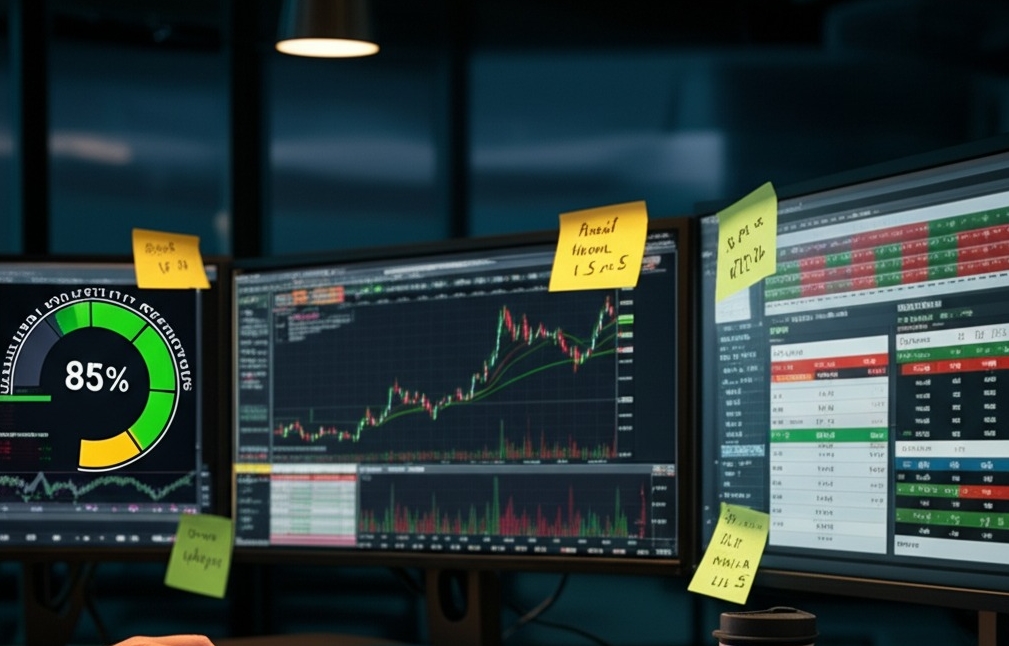
Implied volatility percentile check
When implied volatility is sky-high, premiums are expensive and risks get spicy. The IV percentile shows where current volatility ranks compared to the past year.
A high percentile (80%+) means volatility is elevated—great for selling options, risky for buying. A low percentile signals calm waters. Use this to gauge market sentiment and price in risk smartly.
"Volatility isn’t about direction—it’s about uncertainty." — Sheldon Natenberg
ATR to size stop-loss range
The ATR (Average True Range) tells you how much an asset typically moves. It's like giving your stop-loss breathing room so you don't get shaken out too early. Below is a reference for typical SL sizing using daily ATR:
| Asset Symbol | Daily ATR (14) | Suggested Stop-Loss (SL) Range |
|---|---|---|
| AAPL | 2.85 | 2.5 – 3.0 points |
| TSLA | 11.20 | 10.5 – 12.0 points |
| NVDA | 9.10 | 8.5 – 10.0 points |
| SPY | 4.20 | 4.0 – 4.5 points |
Avoiding news-driven price whips
News can slap the market around fast. Don’t get caught with your trade pants down.
Watch the calendar: Earnings, Fed meetings, NFP reports—these can cause instant whiplash.
Size down or wait: No shame in stepping back. Event risk is real.
Post-news patience: Let the dust settle before jumping back in.
If it looks like a setup but news is dropping in 10 minutes? That's not trading—that’s roulette. Be wise, not wild.
Position sizing and stop-loss planning
Messing up trade size or stop-loss? That’s how small mistakes turn into big losses. Nail these fundamentals to protect your capital and keep emotions out.
Position size based on account risk
Smart trading starts with sizing your trade in sync with your account capital. Use a percentage risk model—typically 1–2% per trade—to avoid large drawdowns.Risk per trade, tied to your stop-loss, helps you calculate the ideal trade size. Tools like the fixed fractional method or Kelly criterion adjust position size based on confidence or volatility. Skipping this step? You're gambling, not trading.
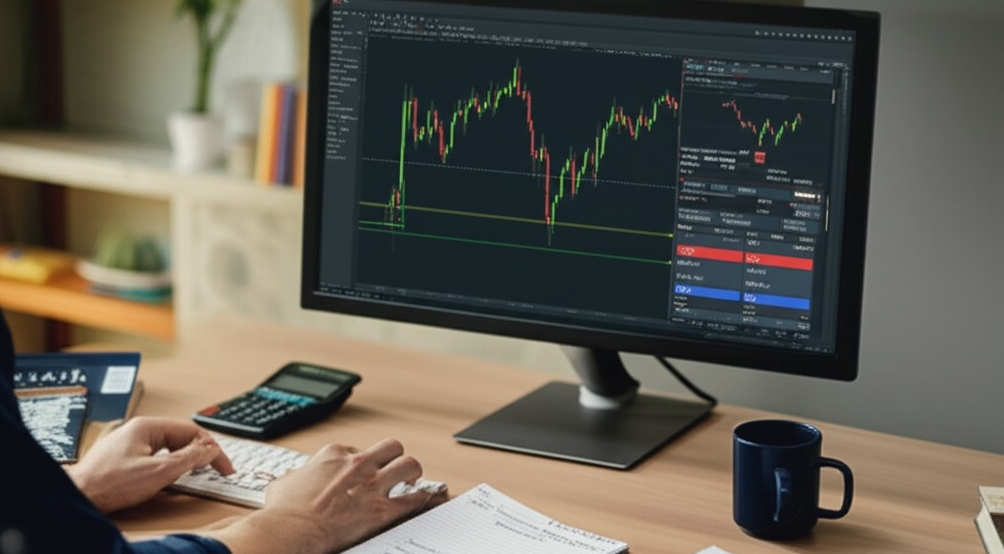
R-multiple and reward-to-risk ratios
Use the R-multiple to measure your risk-reward ratio: how much you stand to make versus what you could lose. A healthy trading strategy often aims for 2:1 or better. Combine this with performance metrics like profit factor and expected value to track how your winning trades stack up against losers. If your profit target is too close to your stop-loss level, it's time to rethink.
Stop-loss below technical structure
This isn’t just about placing a stop—it's about placing a smart stop. Your stop-loss should sit below a key support level, not some random spot. Use technical analysis like trend lines, chart patterns, or market structure to choose a logical exit strategy. Stops placed too tight can get you whipped out; too loose and you're bleeding equity.
Account drawdown tolerance levels
“Drawdowns don’t kill accounts—traders who ignore them do.”
Keep your maximum drawdown in check by knowing your risk tolerance.
Set a firm loss limit—say 10–15%—and pause trading if it’s hit.
This preserves capital and your trading psychology.
Think of it like airbags for your portfolio—things can go wrong, but you won’t crash completely.
Using trailing stops for runners
The trailing stop is your trade’s safety net that moves with price. Here's how some trailing stop methods stack up:
| Method | Works Best In | Trailing Mechanism |
|---|---|---|
| Fixed Point Trail | Low-volatility markets | Moves X points below high |
| ATR-Based Trail | High-volatility moves | Adjusts with market volatility |
| Percent-Based Trail | Trending assets | Trails by % of price |
| Structure-Based Trail | Swing trading setups | Follows support/resistance |
Used right, these help lock in partial profits, keep you in runners, and ride momentum without watching every tick.
When to adjust position mid-trade
Sometimes, mid-trade adjustments are the move. Here’s when to consider it:
News events shake the market
Price hits key profit targets
Volatility changes affect risk
You want to scale in/out for precision
Stop-loss needs modification after market shift
Always reassess based on trade management goals—not emotions.

Final pre-trade checklist
I sat down with veteran futures trader Rebecca Trent, a CMT and risk analyst with two decades under her belt, to talk about the one step traders overlook most: the final check before entering. “Traders tend to get obsessed with entries,” she explained, “but what separates the pros is what they check right before clicking 'buy'.”
Rebecca laid out what she calls her non-negotiables—a mental locker room she runs through before every trade. This checklist is about risk management, mental clarity, and confirming capital allocation matches both market conditions and her trade plan.
Is your position sizing aligned with your total account risk?
Have you locked in your stop loss placement and take profit targets—no maybes?
Is your exit strategy clear in all outcomes, not just the ideal ones?
Do current market conditions still support your thesis, or did news just drop?
Most importantly: is your emotional state neutral, or are you revenge-trading?
“The second I feel hesitation, I do not trade,” Rebecca said. “Discipline is an edge.” According to data from CME Group, traders who pre-define their entry confirmation and exits show up to 40% less variance in drawdowns across volatile weeks.
Tip from Rebecca: “If I cannot explain my trade in one breath, I walk away.”
Let the chart talk—but let your checklist have the final word.
Conclusion
Trading without a checklist is like driving blindfolded—you might get lucky, but odds are you’ll crash. The 7 Step Trading Checklist Before Entering Any Trade gives you structure, clarity, and a shot at staying sane in fast-moving markets.
As trading coach Mark Minervini says, “The market rewards discipline, not guts.”
So next time you're tempted to wing it, pause. Run the list. Make the trade because it makes sense—not because it feels right.
Trade suitability means checking if a trade aligns with your strategy, risk tolerance, and account size. Just because a setup looks good on a chart doesn’t mean it belongs in your portfolio. Think of it as asking: "Does this trade make sense for me?"
Because it affects your ability to get in and out without getting burned. Low liquidity often means:
If you're trading something thin, you’re not just fighting the market—you’re fighting your broker and timing too.
Wider bid-ask spreads
Slippage when entering or exiting
Difficulty scaling positions
Risk of getting stuck in a trade
Look at the bigger picture first—daily or weekly charts tell you the dominant direction. Then zoom in to confirm with price action or momentum indicators like RSI or MACD. You want the trend to be your tailwind, not your headwind.
This can vary by strategy, but typically:
If your signal makes you hesitate—it's probably not strong enough.
A clear price pattern (e.g., breakout, reversal)
Volume confirming the move
Confluence with support/resistance
No major news events near your entry
Use this basic formula:
Position Size = (Account Risk Amount) ÷ (Trade Risk in $ per share or point)For example, if you’re risking $100 and your stop-loss is $2 away, you can buy 50 shares. This keeps your emotions in check.
Volatility is how much price moves. Risk is how much you're exposed to. You can trade volatile stocks safely with tight position sizing—and you can also take on high risk in stable assets if your size is too big. It’s all about balance.
Keep it simple and repeatable. A solid pre-trade checklist might include:
Run through it before every trade—think of it as your mental seatbelt.
Is this trade aligned with my plan?
Is the setup clean and confirmed?
What’s my risk, reward, and size?
Am I trading emotionally right now?