


Table of contents
Dipping your toes into forex? You’re not alone — How to Start Trading Forex is the question buzzing in the minds of side-hustlers and future pros alike. Picture this: a global money market where currencies dance 24 hours a day. Tame it right, and you’ve got a shot at profit even while sipping coffee at 2 a.m.
Legendary trader George Soros once said, “It’s not whether you’re right or wrong, but how much money you make when you’re right and how much you lose when you’re wrong.” That’s your sign: skill beats luck here.
This guide lays it out plain — what forex is, how it ticks, how to pick a legit broker, protect your cash, and hit that “buy” button with confidence. Ready to swap confusion for control? Let’s roll.
What Is Forex Trading
Forex is your pass to the world’s biggest money game. Let’s break it down fast.
Currency exchange and global economics
The heart of Forex is swapping one currency for another — think dollars for euros. This fuels trade, impacts exchange rates, and ties deeply to the global economy. When central banks tweak monetary policy or governments adjust fiscal policy, currencies shift. These moves ripple through GDP, inflation, and everyone’s wallets worldwide.

Who trades forex and why
Retail traders: Home hustlers chasing extra income.
Banks & institutions: Big fish moving billions to manage hedging and arbitrage.
Corporations: Cover exchange rate swings in cross-border deals.
Speculators: Ride volatility for profit — they love a rollercoaster chart.
Daily volume and liquidity explained
Over $7 trillion dances through Forex daily. Crazy, right? This massive volume keeps markets slick with liquidity, tighter bid-ask spreads, and instant trades. For context:
| Asset Type | Avg Daily Volume ($B) | Typical Liquidity |
|---|---|---|
| Forex | 7,500 | Very High |
| Stocks | 500 | Medium |
| Bonds | 900 | High |
Big cash flows = deep order books and smoother trading than most commodities.
How the Forex Market Operates
To truly grasp how the forex market operates, I sat down with Alicia Tran, a senior currency strategist at FXStreet with over fifteen years of guiding both rookie and seasoned traders. Alicia shared insights from real-world accounts that textbooks often skip.
“Picture the forex market as a relay race that never stops,” Alicia said during our chat. “It passes the baton across global time zones — Sydney hands it off to Tokyo, Tokyo passes it to London, then London to New York. This flow keeps the market open twenty-four hours, five days a week.”
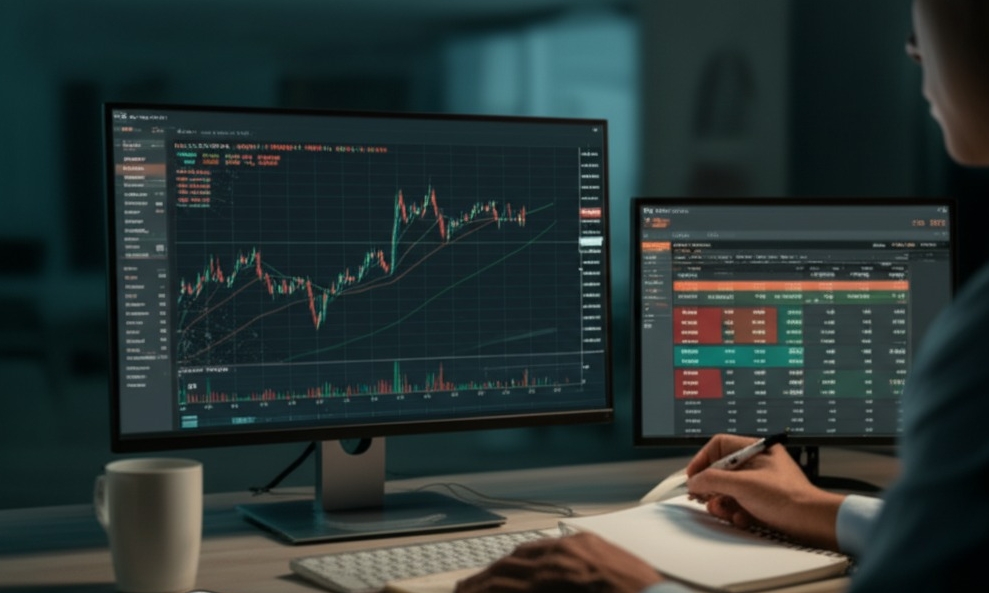
Key elements she emphasized include:
Market Hours: Overlapping sessions, such as London and New York, create peak liquidity and tighter spreads.
Participants: Central banks, commercial banks, corporations hedging currency risk, large funds chasing profit, plus everyday traders adding fuel to the flow.
Liquidity and Spreads: High liquidity during overlaps means spreads — the cost to enter and exit — stay low, saving traders money.
Leverage and Pips: Brokers offer leverage to amplify buying power, but each pip movement can magnify profits or losses fast.
Order Types and Execution: Market orders fill instantly at available prices; limit and stop orders help control entries and exits automatically.
Alicia reminded, “Most blown accounts happen when new traders misuse leverage. Risk small, protect every pip, and sleep better.”
Top brokers back their reputation with tight spreads, regulated licenses, and trading awards. I recommend checking real-time spreads on FXStreet or Investopedia before picking a broker.
Timing your trades within the busiest sessions and using the right order type can mean the difference between steady gains and needless losses. Treat each trade like a business deal — protect capital, know session behavior, and respect the market rhythm.
Key Forex Terms and Tools
Before you get all hyped about profits, nail down these core forex terms and tools. Think of this cluster as your trading dictionary — but way less boring.
What is a pip and a lot
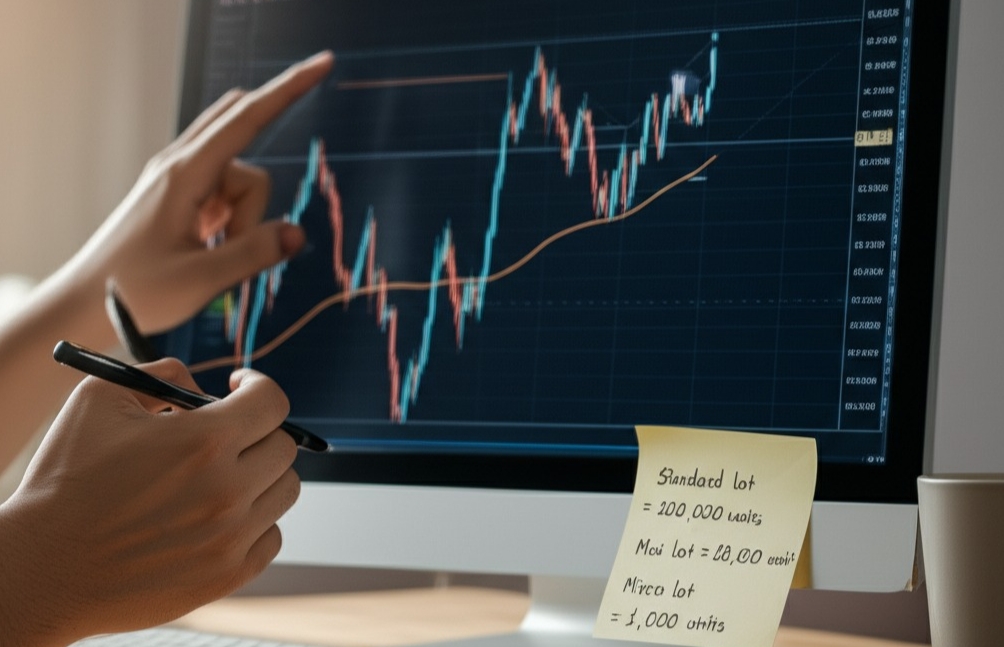
In forex, tiny price moves pack a punch. A pip (point in percentage) is the smallest price change in a currency pair — usually the fourth decimal place. It’s how traders measure gains or losses.
A lot decides how big your trade is:
Standard lot = 100,000 units of base currency
Mini lot = 10,000 units
Micro lot = 1,000 units
For example, trading EUR/USD with a standard lot means each pip move equals $10. So a 20-pip move = $200. Pick lot sizes that match your risk vibe.
Leverage and margin simplified
Leverage is like financial rocket fuel: you borrow funds from your broker to boost trade size with less upfront capital. For instance, 50:1 leverage lets you control $50,000 with just $1,000. Sounds sweet, right? Careful though — more leverage means more exposure.
Your margin is the security deposit. If your trade tanks and your account balance drops below the margin requirement, you get a margin call. That’s your broker yelling, “Add money or we’re closing your trades!” Stay chill by watching your margin level and use sensible leverage.
| Leverage Ratio | Capital Required ($) | Position Size ($) |
|---|---|---|
| 1:1 | 10,000 | 10,000 |
| 10:1 | 1,000 | 10,000 |
| 50:1 | 200 | 10,000 |
Candlestick charts and what they show
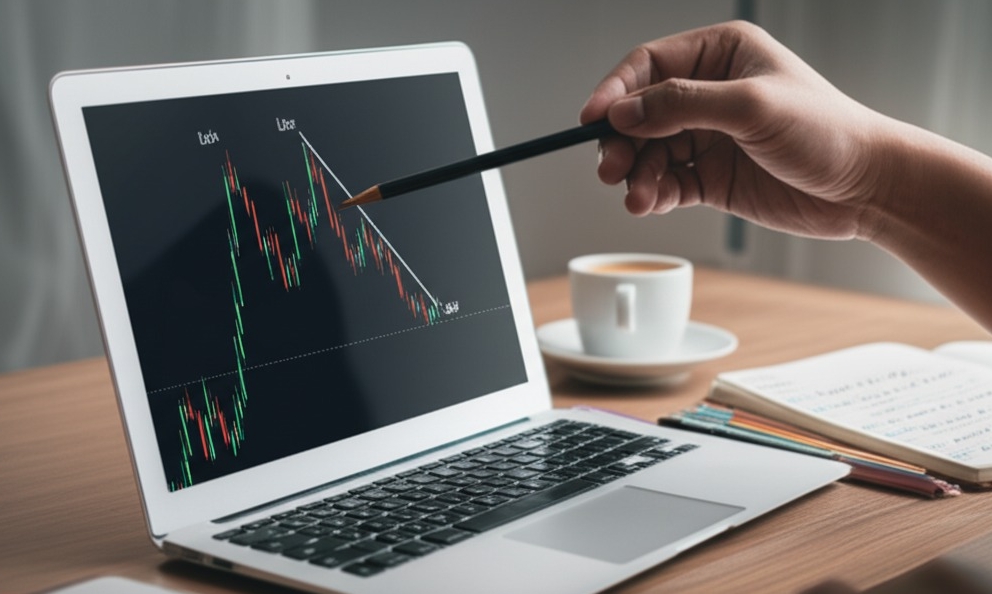
Want to read the market’s mood? Learn candlestick charts. Each candle shows open price, close price, high price, and low price for your time frame.
Body: gap between open and close.
Wick/Shadow: spikes above and below the body.
Bullish candles = buyers in control.
Bearish candles = sellers dominate.
Patterns like “hammer,” “doji,” or “engulfing” signal possible reversals or trends. Spotting these can turn rookie guesses into sharper trades.
Technical vs fundamental analysis tools
Forex traders usually vibe with two toolkits:
Technical analysis: Think price charts, trend lines, support/resistance, and indicators like RSI or MACD. This helps time entries and exits.
Fundamental analysis: Big-picture stuff. Analyzes economic data, news events, interest rates, and financial releases. If a country’s economy is booming, its currency often follows.
Many pros blend both. Fundamentals tell what to trade; technicals help decide when to pull the trigger. Master both, and you’re no longer guessing — you’re trading smart.
Forex Broker Selection
Choosing the right forex broker is like picking a teammate for a high-stakes game—get the wrong one, and you’re already losing before the match starts.
Comparing spreads, fees, and platforms
Not all brokers are created equal—some lure you in with “zero commission,” but charge sky-high spreads or platform fees. To keep your trades profitable, look at the total cost, not just the marketing bait.
Spread: The difference between buy and sell prices—tighter is better.
Fee: Watch for hidden charges per trade or per lot.
Platform: MT4, MT5, cTrader? Each offers different execution speeds, tools, and interfaces.
Broker comparison is smart shopping: weigh cost against speed, stability, and features.
“The best broker isn’t the cheapest—it’s the most transparent,” says AvaTrade analyst Jason F. Blake.
Regulation and broker credibility check
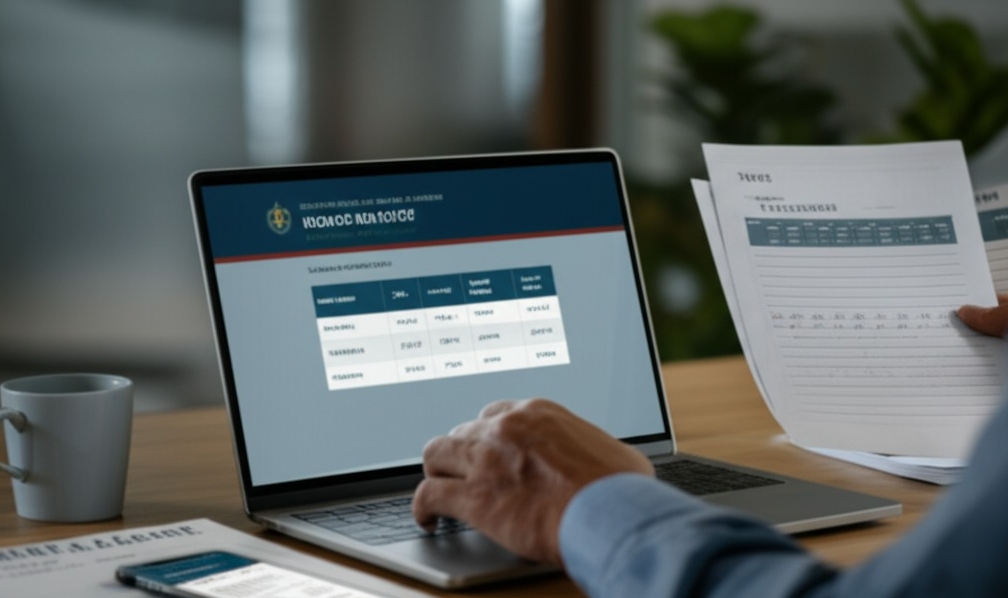
Before you hand over a dime, check your broker’s credentials like you'd check a surgeon’s license. Regulation keeps your funds safe and the company in check.
Look for licenses from top-tier authorities (like FCA, ASIC, or CySEC).
Verify the broker’s regulatory number on the official regulator site.
Check compliance history—any red flags like fines or suspensions?
Trust is everything. An unregulated broker can disappear overnight with your deposit.
| Broker Name | Regulator | License Number | Trust Score (1–10) |
|---|---|---|---|
| IG Markets | FCA (UK) | 195355 | 9.3 |
| Pepperstone | ASIC (AU) | 414530 | 9.0 |
| Exness | CySEC (EU) | 178/12 | 8.5 |
Opening a Trading Account
Kickstart your forex journey by knowing exactly how to open and set up your trading account like a pro.
Account types: standard, micro, and demo
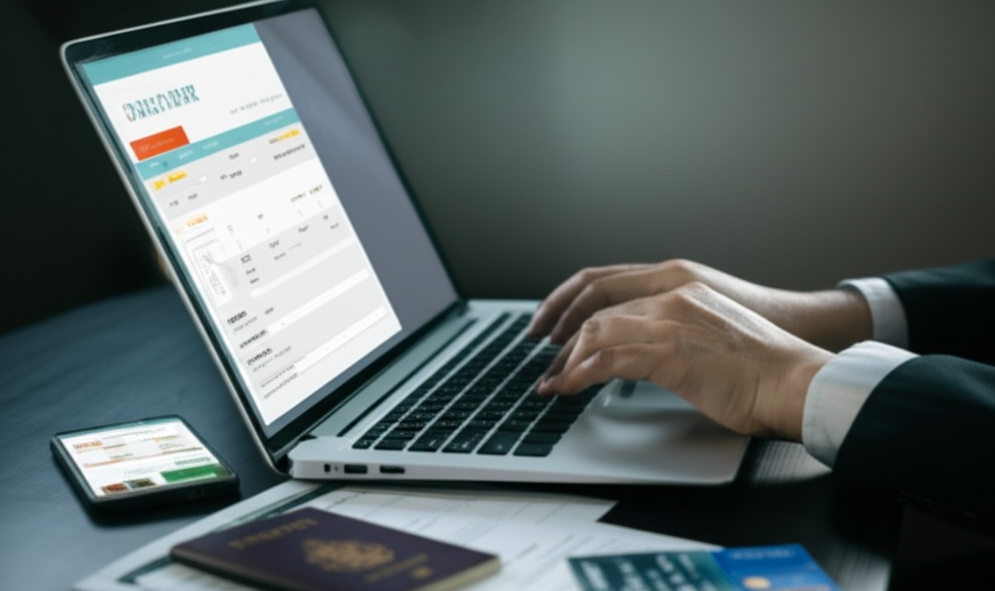
Not all accounts are created equal. Standard accounts suit seasoned traders. Micro accounts let newbies test the waters with smaller capital. Demo accounts? No real money—just pure practice to sharpen your strategy risk-free. Match your client profile and trading level wisely!
Identity verification and compliance steps
Upload valid ID (passport or government card).
Show proof of address (utility bill or bank statement).
Wait for KYC and AML checks—most brokers nail this within 24–48 hours.
How to fund your forex account
Pick your deposit method — bank transfer, card, or e-wallet.
Minimum deposit varies by broker and account type.
Some brokers offer instant deposits; withdrawals can take a few days.
| Payment Method | Average Deposit Time | Typical Fees |
|---|---|---|
| Bank Transfer | 2–5 days | $0–$30 |
| Credit Card | Instant–1 hour | 1%–3% |
| E-Wallet | Instant | Usually free |
Choosing base currency and leverage
Choose your base currency smartly—match it with your local currency to dodge conversion fees. Tweak leverage settings to match your risk appetite: higher leverage means bigger wins and losses. Always keep margin in check!
Platform walkthrough: MT4, MT5, or web
Quick tour:
MT4: Classic, easy for charting and indicators.
MT5: Extra tools and more market options.
Web: No downloads, trade straight from your browser.
As seasoned trader Kathy Lien says, “Master your platform before risking a dollar.”
Forex Trading Plan Basics
A rock-solid trading plan is like your GPS in the wild world of forex — without it, you’re lost fast.
Defining your trading style
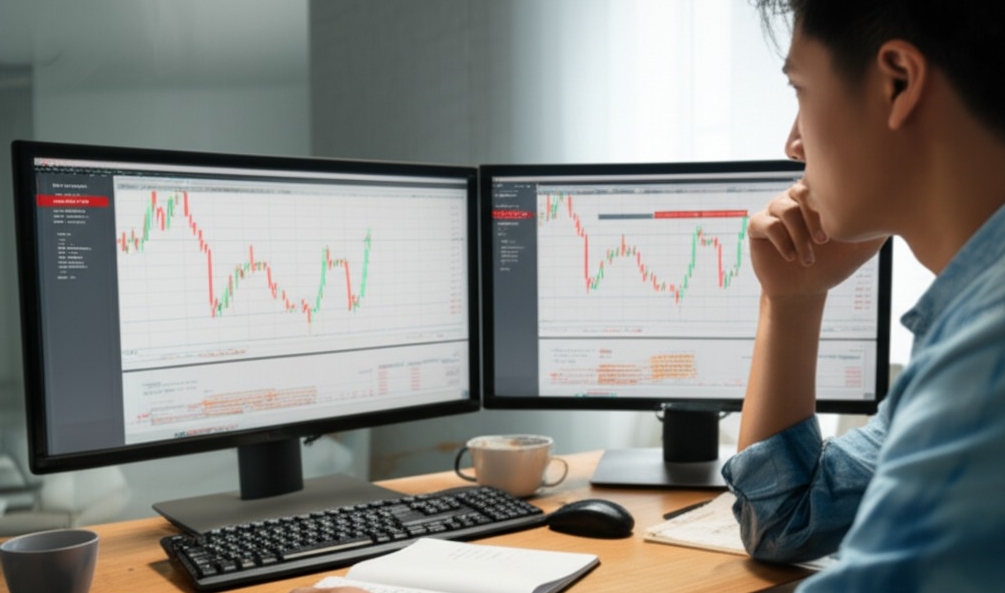
Your trading style is all about matching your life and personality with your strategy. Think about your market focus — do you like major currency pairs or exotic ones? Decide your time horizon: quick day trades or slow-burn swings? Your risk tolerance matters too. Are you a charts junkie using technical analysis, or do you prefer reading economic news for fundamental analysis? Some traders swear by discretionary trading, reacting on the fly; others automate with algorithmic trading. Pick what vibes with your trading personality so your strategy selection feels natural and sustainable.

Setting daily goals and rules
Lock in your daily profit target — know when to quit while ahead.
Define your loss limit and maximum drawdown to keep your account alive on bad days.
Plan your trade frequency and stick to specific market hours that suit your lifestyle.
Write down your exact entry criteria and exit criteria — no winging it!
Fine-tune position sizing and risk per trade so no single slip-up wipes you out.
Stick to your trading plan, and practice discipline and consistency like a pro athlete.
Tracking trades and refining strategies
Keep a trade journal religiously — even the ugly trades. Jot down your win rate, average gain, average loss, and calculate your profit factor to see if your edge is real. The Sharpe ratio shows if your returns are worth the risk. Dive into backtesting to test ideas before risking real dollars. Regular performance reviews help you spot holes and improve your strategy adjustment. It’s a learning curve, but every top trader climbs it one trade at a time.
| Metric | Target Value | Notes |
|---|---|---|
| Win Rate | 50%+ | Higher is better, but quality counts |
| Profit Factor | 1.5+ | Profit must outweigh loss |
| Sharpe Ratio | 1.0+ | Good risk-adjusted return |
As legendary trader Paul Tudor Jones says, “The most important rule of trading is to play great defense, not great offense.” Plan smart, trade smart!
Risk Control Strategies
Forex trading ain’t a gamble when you’ve got solid risk control. This cluster shows how to guard your capital like a pro.
Using stop-loss and take-profit
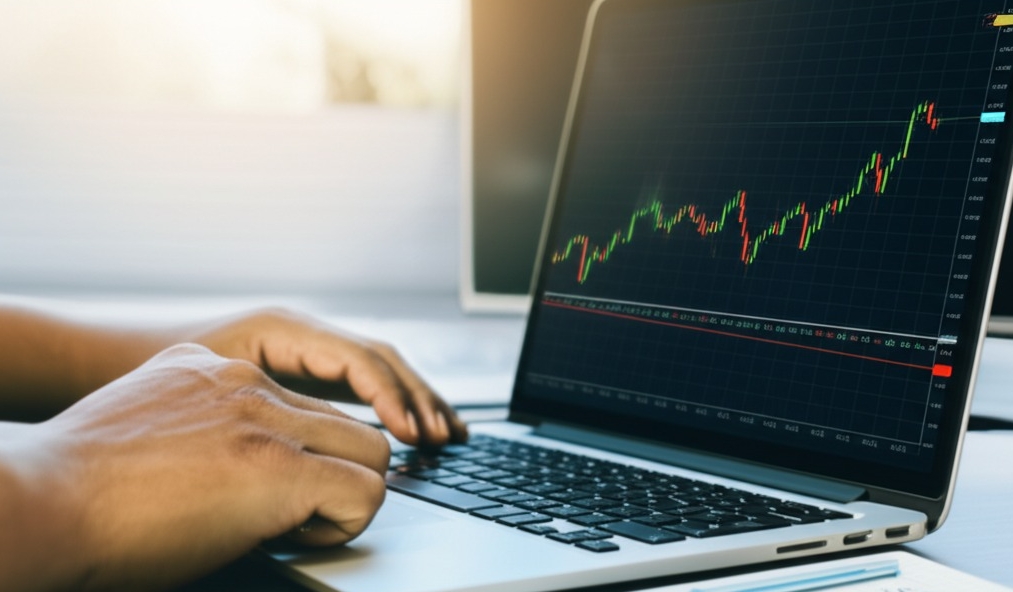
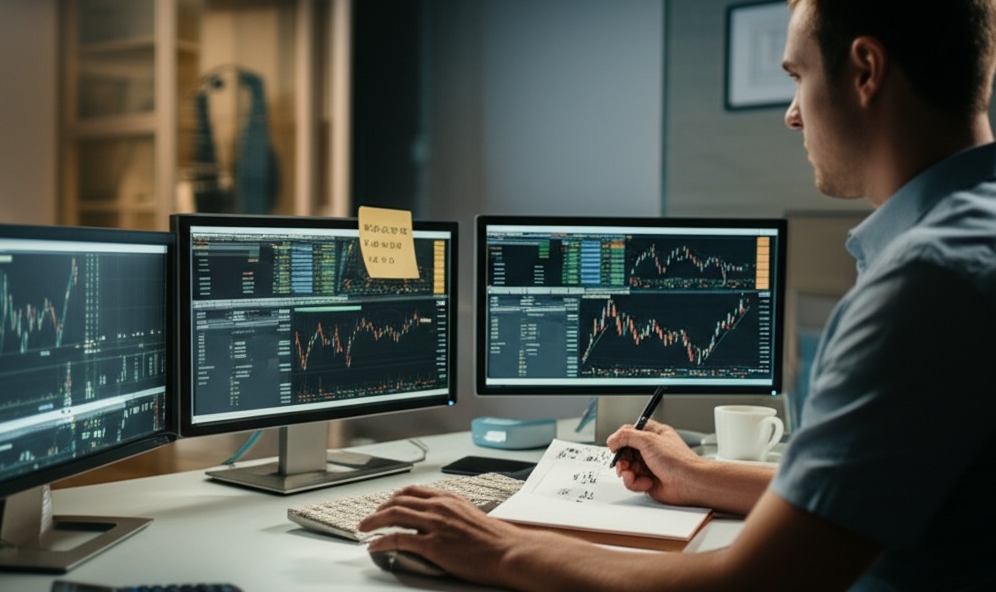
A stop-loss order is like your emergency brake—it automatically shuts down a trade before it spins out of control. Pair that with a take-profit order, and you’ve got an exit strategy with boundaries. These tools let you decide price levels ahead of time, helping avoid emotional trade execution.
A stop-loss limits how much you’re willing to lose.
A take-profit sets your profit target and locks in gains.
Use a trailing stop to follow price trends with built-in safety.
Smart traders always set both—no exceptions.
Managing leverage and drawdown
Overleverage is like flying too close to the sun—it works, until it doesn’t. You’ve got to know how much heat your account can handle before a margin call knocks on the door.
Understand your leverage ratio – Keep it low until you’re consistent.
Know your drawdown – It’s the biggest dip your account takes.
Use tight position sizing – Don’t risk more than 1–2% of equity per trade.
Watch your volatility exposure – Stay chill when the market’s wild.
“Risk comes from not knowing what you’re doing.” – Warren Buffett
How to Place Your First Trade
“Most people freeze right before that first trade,” says Michael Dalton, Chartered Market Technician and long-time forex educator. “They study for weeks, but when it comes time to click that button, they hesitate.” That hesitation is normal. Once you understand the key steps, placing your first forex trade becomes less intimidating and more strategic.
Start by opening your trading platform. Popular platforms like MetaTrader 4 (MT4), MetaTrader 5 (MT5), or TradingView all offer user-friendly dashboards. From here, select the currency pair you want to trade. For beginners, EUR/USD is a common choice due to its high liquidity and tight spreads.
Then comes the critical part: choosing your order type. Each type controls how and when your trade enters the market:
Market order – Executes immediately at the current market price.
Limit order – Executes only when the market reaches your specified entry price.
Stop order – Triggers a buy or sell when the price hits a pre-set point, often used to catch breakouts.
Once the order is selected, determine your position size. Risk management experts, including the CFTC, recommend not risking more than 1% to 2% of your account balance on a single trade. “If you have $5,000 in your account, risking more than $100 on one position is asking for trouble,” Dalton warns.
Add your stop loss to protect against unexpected market reversals, and set a take profit level to secure gains automatically. These tools define your risk-reward ratio and keep emotions out of your trading.
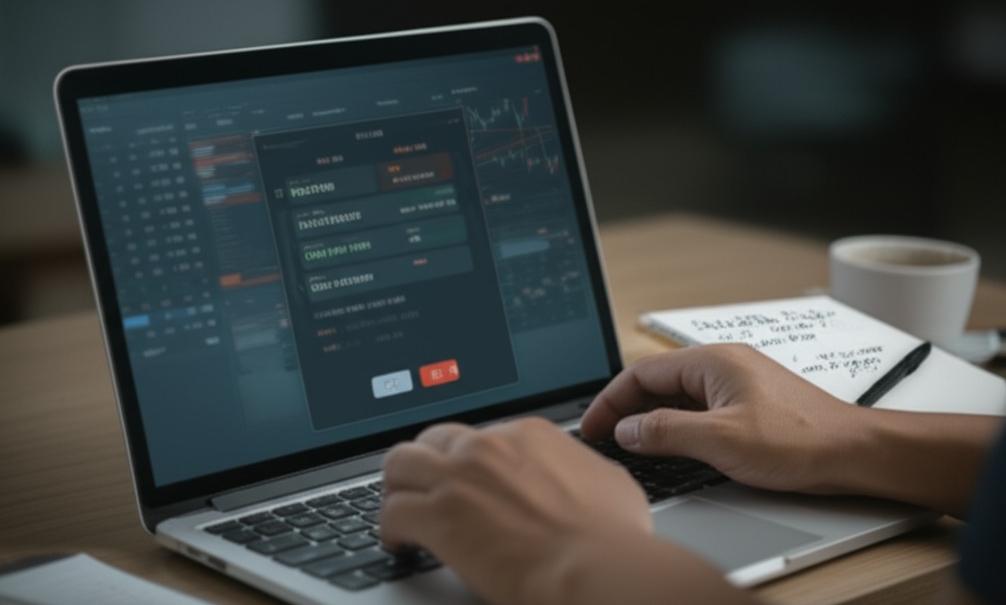
Before executing, double-check everything: position size, direction, stop loss, and take profit levels. When ready, click confirm trade. Your platform will show your live position, and you can monitor it in real time.
Placing a trade is not just about hitting a button. It is about making a calculated decision. Trusted sources like BabyPips and Investopedia offer free trading simulators and step-by-step walkthroughs if you want to practice first.
As Dalton puts it, “Trading without a plan is gambling. Trading with a plan—and sticking to it—is how you grow.”
Conclusion
You’ve just walked through the roadmap to kick off your forex trading journey — from learning the ropes to placing your very first trade. Feels a bit less intimidating now, right?
As Warren Buffett says, “Risk comes from not knowing what you’re doing.” Stick to what you’ve learned, stay sharp, and trade with a cool head.
Now it’s go time: fire up a demo account, test the waters, and let your strategy do the talking. You've got this.
A pip (short for “percentage in point”) measures the smallest price move a currency pair can make. For most pairs, 1 pip = 0.0001 in price. Think of it as the forex version of cents on a dollar — tiny, but they add up fast!
There’s no fixed rule, but many brokers let you open accounts with as little as $50–$100. However, starting with at least $500–$1,000 is more realistic for learning and absorbing small losses without blowing up your balance.
Test strategies with zero risk
Learn your broker’s platform inside out
Build muscle memory before real money is on the line
Leverage lets you control bigger trades with a smaller deposit. For example, 50:1 leverage means a $100 margin lets you trade $5,000 worth of currency. It magnifies gains — and losses. Tread carefully!
Stick to the majors — they’re more stable and have tight spreads:
These pairs are liquid, so your orders fill faster and pricing is clearer.
EUR/USD
GBP/USD
USD/JPY
AUD/USD
A stop-loss automatically closes your trade if the market moves against you by a set amount. It’s your safety net. Good traders always have one — it protects you from ugly surprises while you sleep.
Yes! Forex trading is legal — but make sure your broker is registered with the Commodity Futures Trading Commission (CFTC) and is a member of the National Futures Association (NFA). Compliance matters.
Never trust flashy ads alone — do your homework.
Clear regulation (CFTC, NFA, FCA, etc.)
Transparent fees and tight spreads
Solid customer support
Good reviews from real traders
Possible, yes — common, no. Most traders lose money early on. Consistent profit requires years of practice, a solid plan, iron discipline, and accepting small wins over jackpot dreams. It’s a marathon, not a sprint.