


Table of contents
Part 1 - What Is a Trading Journal and Why Use One?
Part 2 - Core Elements to Record in a Trade
Part 3 - Manual vs. Digital Journals: Which Is Better?
Part 4 - How to Build a Trading Journal from Scratch
Part 5 - Journal Templates and Tools
Part 6 - Trade Review and Pattern Analysis
Ever feel like your trades are a blur—wins, losses, and lessons all jumbled together? You’re not alone. Trading Journal: What it is and How to Create One isn’t just another how-to; it’s your no-fluff guide to tracking trades with intention, so you can stop guessing and start growing.
Think of a trading journal like a fitness tracker for your strategy—logging your moves, mindset, and momentum. “What gets measured gets managed,” as Peter Drucker put it. Most pros swear by it, not because it’s trendy, but because it works.
If your trading feels like throwing darts in the dark, this guide will help you shine a light—step by step.
What Is a Trading Journal and Why Use One
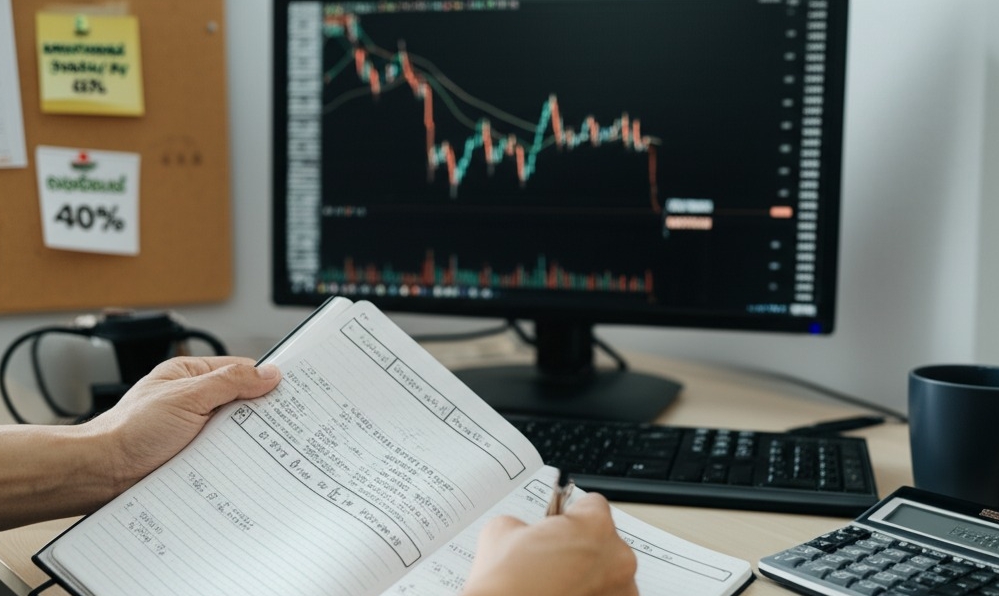
“A trading journal is not just a logbook. It is your mirror,” says Brian Shannon, CMT-certified trader and author of Technical Analysis Using Multiple Timeframes. Every seasoned trader knows that consistent growth comes not from luck, but from disciplined record keeping and honest self-review.
A trading journal, by definition, is a structured log where traders document each trade’s key elements: entry, exit, size, strategy, market context, and emotional state. The purpose? To build a habit of performance tracking and pinpoint what works—or fails—within a strategy.
Professional traders often credit their improvement to these daily notes. One futures trader in Chicago shared that after 60 days of journaling, she cut emotional trades by 40%. That is no accident. Real-time notes highlight repeated mistakes, and strategic analysis turns vague intuition into data-backed decisions.
Top Benefits of Keeping a Trading Journal:
Identifies profitable setups over time
Sharpens risk management through pattern analysis
Tracks emotional triggers that impact results
Builds accountability and structure into a trader’s routine
According to the CFA Institute, traders who log their trades regularly outperform those who do not by a significant margin. When paired with consistency, a journal becomes a personal coach, a therapist, and a roadmap—all in one.
Core Elements to Record in a Trade
If you're not logging the right stuff, your trading journal is just a fancy notepad. Here are the essentials every serious trader should be tracking.
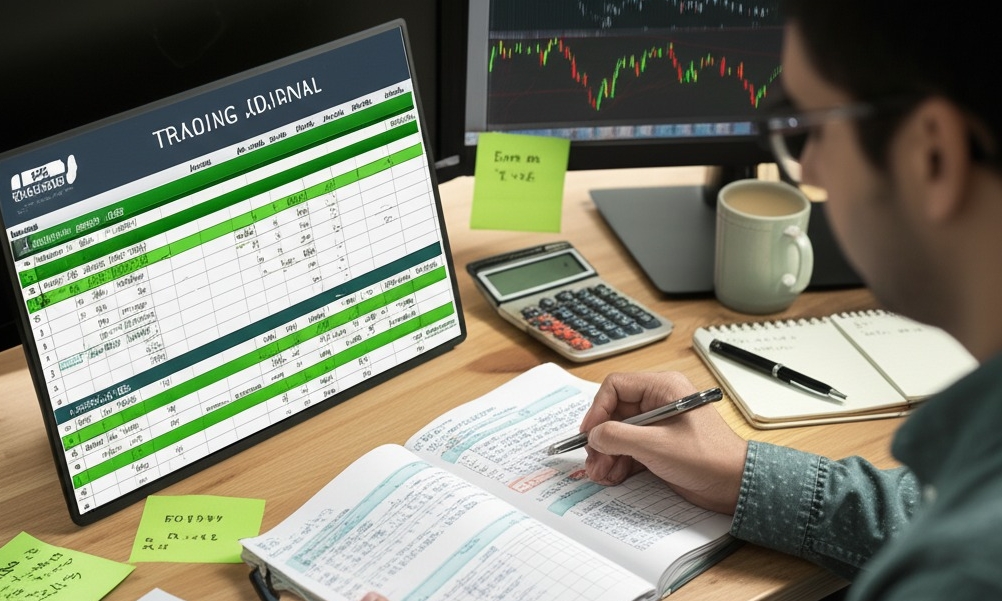
Entry and exit price tracking
Tracking your entry price and exit price over time lets you measure the actual success of your trade execution and refine your investment strategy. Here’s a sample structure many traders use in their journals:
| Trade ID | Entry Price | Exit Price | Order Type | Execution Notes | Market Conditions |
|---|---|---|---|---|---|
| T-045 | 120.50 | 128.00 | Limit | Executed 5 mins after open | Bullish open |
| T-046 | 43.25 | 40.10 | Market | Quick fill, high slippage | Volatile news day |
| T-047 | 88.00 | 91.30 | Limit | Clean breakout catch | Trending uptrend |
This table helps you identify trends in price tracking, execution quality, and whether your transaction decisions align with the market data available at the time. Over time, patterns emerge that expose flaws—or edges—in your portfolio strategy.
Risk-to-reward ratio documentation
Let’s be real—if you’re not recording your risk-to-reward ratio, you’re flying blind. This single ratio frames the whole trade.
Note your stop-loss and take-profit levels before entering.
Calculate your profit potential vs. loss potential (yes, it’s just division).
Use this data for regular strategy assessment—are your high-reward trades actually paying off?
“Without risk management, trading becomes gambling. The reward is irrelevant if the downside wipes you out.” – Brett Steenbarger, Trading Psychologist
Pre-trade and post-trade notes
This is where the magic happens. The numbers tell part of the story—but your trade notes fill in the blanks. Write down what you were thinking before and after the trade. This is where traders catch themselves repeating the same mistake—or discovering a hidden edge.
Pre-trade analysis might include market conditions, entry rationale, and your emotional state
Post-trade review includes what happened, why it worked (or didn’t), and what you’ll do differently
Don't just log what happened—log how it felt. Your brain will thank you later.
Manual vs Digital Journals: Which Is Better
Picking between pen-and-paper or tech-driven journaling? Each style has its perks—and pitfalls. Here’s how to weigh them without overthinking.

Benefits of journaling by hand
Old-school journaling with a notebook and pen isn't just nostalgic—it taps into how your brain works best.
Mindfulness and stress reduction: Writing helps calm trading nerves.
Memory retention: Handwriting improves cognitive recall.
Self-reflection and personal growth: Writing helps identify behavioral triggers.
Creativity and goal setting: Sketch setups, map strategies—freely.
“Manual journaling keeps your head in the game emotionally,” says Steve Burns, founder of New Trader U.
Advantages of automated trade logs
Fast-paced trader? Digital journals are built for speed, precision, and serious analysis.
| Feature | Benefit | Entity Words Used |
|---|---|---|
| Trade sync automation | Real-time logging | Automated tracking, Time saving |
| Strategy performance | Quick backtesting | Performance analysis, Data accuracy |
| Risk and compliance | Instant export & reports | Risk management, Compliance |
| Workflow optimization | Less admin, more insight | Trading efficiency, Error reduction |
Digital logs also let you sort trades by strategy, time of day, even emotional state (if tracked)—ideal for deeper strategy optimization.
How to Build a Trading Journal from Scratch
Starting your own trading journal doesn’t have to feel like rocket science. Here’s how to lay the groundwork, keep it organized, and build momentum from day one.
Choosing a journal format
Picking your format depends on how you think and what keeps you coming back. Some traders swear by slick apps; others stick to a classic Moleskine.
Digital vs physical: Apps like Notion or spreadsheets offer speed and searchability.
Layout options: Use columns, bullet journal styles, or tabbed sections.
Template design: Pre-made templates help you get rolling fast.
Remember: the best format is the one you’ll actually use.
Setting up key tracking categories
Getting your tracking system right is like setting the GPS before a road trip. It saves time, cuts confusion, and gets you where you’re going.
| Category Name | Data Format | Purpose | Example Entry |
|---|---|---|---|
| Entry/Exit Price | Decimal (0.00) | Performance calculation | 145.65 / 150.20 |
| Trade Type | Text (category) | Grouping strategy types | Breakout / Pullback |
| Risk Amount (USD) | Numeric ($ format) | Risk control, position sizing | $250 |
| Win/Loss Outcome | Boolean (W/L) | Hit rate tracking | W |
| Emotional State | Scale (1 to 5) | Mental tracking, discipline review | 3 |
| Notes/Comments | Free text | Trade reasoning, afterthoughts | “Late entry” |
Keep your data classification tight and consistent—it’ll make spotting performance trends way easier when you start reviewing.
Daily and weekly journaling habits
Building habits beats chasing hype. Start small:
Daily entries track your thoughts, trades, and setups
Weekly summaries show your progress (or patterns to fix)
Pro tip: Set a reminder on your phone. Even five minutes a day adds up. Journaling’s like brushing your teeth—it only works if you keep doing it.

Backdating past trades effectively
Don’t skip the old stuff—your past performance is full of clues.
Reconstruct historical trades using broker records or screenshots.
Enter trades in chronological order for clarity.
Skip perfection. You’re building a habit, not an audit.
“If you don’t look back, you’ll repeat the same mess,” says Brian Shannon, author of Technical Analysis Using Multiple Timeframes.
Creating a consistent review routine
Block off a weekly review session—same day, same time.
Identify repeat mistakes and tweak strategies.
Create a visual tag system for performance analysis.
This structured self-assessment helps turn lessons into progress. No review = no growth.
Journal Templates and Tools
Not every trader wants to reinvent the wheel. These journaling tools—spreadsheets, platforms, and printables—make tracking trades faster, smarter, and way less painful.
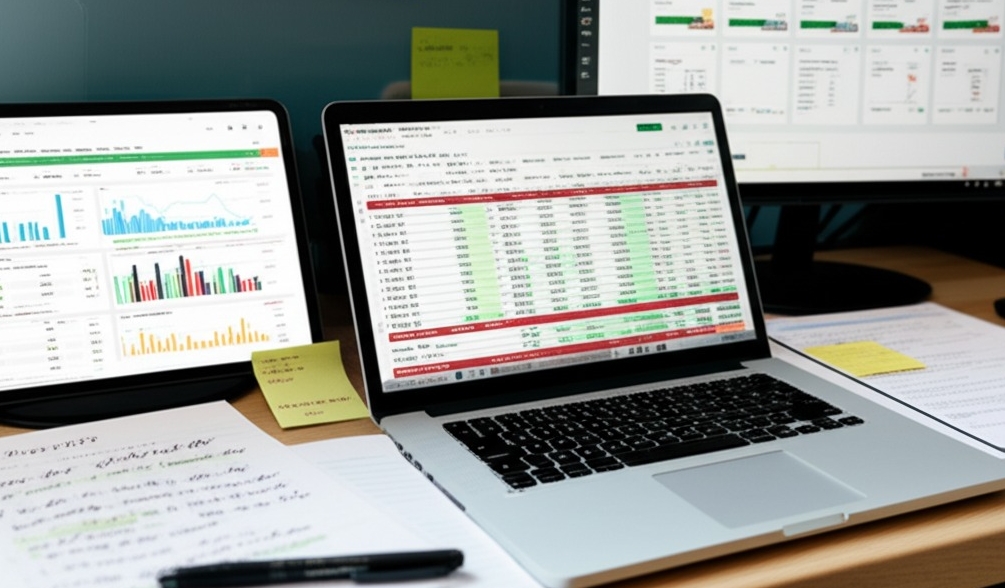
Excel and Google Sheets templates
Spreadsheets are still king for hands-on traders. They give you full control, and when set up right, they feel like your personal trading lab.
| Template Type | Key Features | Best For |
|---|---|---|
| Excel | Pivot tables, macros, advanced formulas | Offline users, large datasets |
| Google Sheets | Cloud sync, collaboration, auto-saving | Mobile access, real-time updates |
| Shared Templates | Pre-built columns, KPI summaries | Beginners needing structure |
With formulas, charts, and conditional formatting, you can track profits, risk ratios, and win rates with zero guesswork.
Notion workspace for trade tracking
Using Notion to track your trades is like building your own trading HQ. It's not just a journal—it’s a customizable workspace with real-time insights.
Set up databases for each trade
Link journal pages to economic events or watchlists
Build a dashboard showing weekly P/L summaries
It’s great for traders who value structure and aesthetics. “A trade logged is a lesson saved,” says fintech designer Rachel Cheng. “Notion helps those lessons stay front and center.”
Third-party apps for day traders
These platforms offer more than just logs—they do the thinking for you.
Edgewonk – Dive deep into performance stats and tag trades by strategy
TraderVue – Auto-import from brokers, compare trade setups
TradeZella – Designed for emotional journaling and self-review
Journalytix – Combines market news with behavioral tracking
Ideal for day traders who want advanced analytics, charting tools, and a faster review process without spreadsheet headaches.
Printable PDF journals for offline use
If screens feel like too much, a PDF trading diary lets you slow down and reconnect with your decision-making.
Downloadable and easy to print
Sections for mood tracking, risk rating, outcome analysis
Great for journaling during travel or off-grid weekends
There’s something grounding about physically writing out your wins, losses, and lessons. It’s old-school, but it works—especially when you need clarity.
Trade Review and Pattern Analysis
Reviewing past trades isn’t busywork—it’s where your real trading edge gets sharpened.

Spotting recurring win/loss patterns
Stop flying blind. Identifying cleaning patterns like repeated losses on Fridays or material degradation after forced trades helps you cut the junk and double down on successful methods.
Filtering high-conviction setups
Proven methods backed by data
Safe techniques you trust
Verified results in similar market conditions
“More setups doesn’t mean better outcomes—better setups do.” — Brett Steenbarger
Tracking trades by strategy type
Don’t just log trades—label them. Knowing your best fabric-specific approaches makes optimization easier.
| Strategy Type | Win Rate | Avg Return (R) | Sample Size |
|---|---|---|---|
| Breakout Pullbacks | 61.3% | 1.8 | 76 |
| Mean Reversion Swings | 47.5% | 1.2 | 53 |
| News-based Scalps | 39.2% | 0.9 | 34 |
Trading Psychology Tracking
“Trading is 80% psychology and 20% strategy,” says Mark Douglas, author of Trading in the Zone. That quote hits home for anyone who has ever felt their heart race before hitting the buy button.
In a recent interview, veteran day trader Lisa Tran shared, “I lost more from fear and greed than from bad setups. Once I started tracking my emotions and mindset after each trade, things changed. I stopped chasing revenge trades and started building confidence.”

Top traders log more than price and volume. They jot down emotions:
Fear before entering a high-risk setup
Greed after a string of wins
Stress from outside distractions
Confidence when following the plan
Tracking these feelings brings self-awareness, which sharpens discipline and builds emotional control—the edge that separates seasoned pros from impulsive rookies.
Journals that include mindset notes help identify patterns. Do losses spike after poor sleep? Are biases clouding judgment during high volatility? This kind of insight is gold.
The CME Group and TraderLion both back this approach, with tools and articles emphasizing mental discipline. A sharp strategy means little if emotions hijack execution.
Traders who monitor their psychology gain clarity—and the stats show they hold onto gains longer.
Automation and Data Visualization Tips
Maximize your journal’s potential with automation and clear visuals that bring your trading data to life—no spreadsheet stress required.
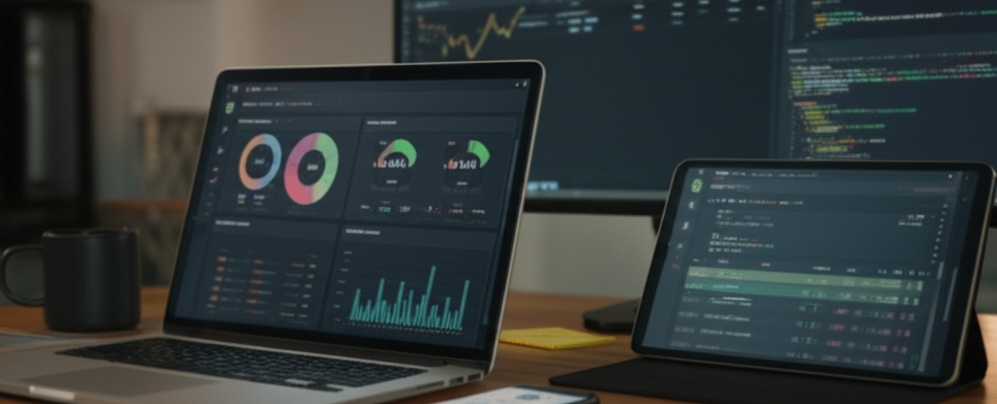
Using APIs to auto-log trades
Want your trades to log themselves while you sleep? APIs make that possible. By connecting broker accounts through a programming interface, you can automate trade logging, pulling in live financial and market data instantly. No more copy-paste madness. With solid automation, your journal updates in real-time—flawless data, zero effort.
Pro tip: Use APIs with platforms like MetaTrader, Interactive Brokers, or Alpaca to sync trades straight into your tracking system.
Creating dashboards with Google Data Studio
Dashboards turn boring numbers into insight-packed visuals. Google Data Studio lets you build interactive reports and real-time data visualizations that make your trading results pop.
| Metric | Description | Format |
|---|---|---|
| Win Rate (%) | Percentage of winning trades | Scientific |
| Avg Risk:Reward | Avg. risk vs reward ratio | Decimal (1.5x) |
| Trade Volume (USD) | Total capital traded | Currency |
Integrating journaling with broker platforms
Tired of juggling between journal and broker? Link them up. Broker platform integration pulls your trade records into your journal automatically for seamless performance tracking. It’s about data synchronization, not duplication. Tools like TradeZella and Edgewonk support direct platform connectivity, giving you one source of truth for all your trade analysis.
Custom indicators for journaling insights
“Your edge is buried in your metrics,” says veteran trader Brian Shannon. Custom indicators let you dig it up. From tracking success by setup type to visualizing time-in-trade, custom-built tools give you deeper journaling insights. Build them around your style—whether it’s breakout setups or mean reversion plays—and optimize strategies with real data, not hunches.
Visualizing performance by market type
Not all markets are created equal. Use performance visualization to break down profitability by asset class—stocks, crypto, forex, or futures.
Compare trade success by market type
Spot trending performance shifts
Use dashboards for fast market analysis
You’ll know where your strategy shines and when to pivot.
Color-coding data for faster reviews
Color-coding isn’t just pretty—it’s powerful. Visual cues help you instantly scan for profit/loss patterns, risk levels, or trade setups.
Green for high-RR wins
Red for over-risked losses
Yellow for trades lacking notes
Your brain processes colors faster than numbers. Use them smartly and speed up your weekly reviews.
Conclusion
Let’s be real—trading without a journal is like driving with your eyes closed. You might get lucky, but you’ll crash sooner or later. A solid trading journal keeps you honest, focused, and constantly learning.
It’s not about being perfect—it’s about spotting what’s working and cutting what’s not. “You can’t improve what you don’t measure,” as Peter Drucker famously said.
Start small. Be consistent. Your future self will thank you when your trades start making sense and your growth stops feeling like guesswork.
It’s like your trading diary—but way smarter. A trading journal is a tool (paper, spreadsheet, or app) where you log all your trades, strategies, thoughts, and outcomes. It helps you spot patterns, avoid repeat mistakes, and grow your edge over time.
Day trading moves fast—sometimes too fast. A journal gives you a pause button. You get to slow down and study what’s actually working and what’s just noise. Without it, you’re flying blind.
Entry and exit points
Size of the trade (lot/shares)
Risk/reward ratio
Market conditions at the time
Emotional state before/during/after
It depends on your style. Some traders like the feel of writing—it slows them down and helps them think. Others prefer apps or spreadsheets for speed and automation. Neither is “better,” just different roads to the same goal: clarity.
Set aside weekly or biweekly time
Look for recurring setups that succeed
Identify emotional triggers behind poor trades
Use data to refine your strategy, not just guesswork
Excel/Google Sheets – Great for custom formulas, filters, and charting
Notion – More visual, ideal for combining trade logs with notes, screenshots, and reflections
Use whatever helps you stick with it—consistency beats fanciness
Yep. Some of the most disciplined traders out there swear by their journals. Even hedge fund managers and prop firm pros use them. It’s not just for beginners—it’s for anyone serious about getting better.