


Table of contents
Five Tips to Get You in the Right Trading Mindset—let’s face it, trading isn’t just about picking the right stock or timing the market perfectly. It’s a mental game. When the market’s up and down, you need a solid mindset to keep you grounded. Without it, emotions like fear and greed can quickly mess with your decisions and your wallet.
A lot of traders stumble not because they don’t have the skills, but because they let emotions take the wheel. A little too much excitement or fear can turn a winning trade into a loss. As the famous trader Peter Lynch once said, “The key to making money in stocks is not to get scared out of them.”
So how do you keep your head in the game? In this article, we’ll break down five tips to help you build the right mindset, stay focused, and keep your trading in check—no matter what the market throws your way.
What Is the Right Trading Mindset?

Trading demands more than charts and fancy tools. Sitting with Mark Douglas, author of Trading in the Zone, revealed a simple truth: traders win not through luck, but through an edge rooted in discipline and patience.
He leaned back and said, “A trader without emotional control stands no chance in chaos.” His words echo across trading floors worldwide.
A solid mindset includes:
Discipline to stick to a plan
Patience to wait for clear signals
Emotional control when losses sting
Risk management to protect capital
Objectivity to judge trades fairly
Confidence built from past wins and losses
Resilience after setbacks
Consistency in execution
Self-awareness to spot bias
Psychological edge sharper than any indicator
Real traders like Paul Tudor Jones preach: protect capital first, profits follow. The right mindset is not for sale. It grows from battle scars, lessons logged, and courage to stay the course. Keep these traits close; markets reward the calm mind.
Building Confidence

Confidence is the trader’s secret sauce. Here’s how to grow it without blowing up your account.
Understanding wins vs. lucky trades
Don’t fool yourself—Trading success comes from Skill and Strategy, not blind Luck.
Analyze Outcomes: Look at Results over a big sample.
Spot the Distinction: Was it your plan or pure Chance?
Evaluate Performance: Consistent wins mean solid Analysis, not random flukes.
“Know what you own and know why you own it.” — Peter Lynch
Practicing with small positions first
Start small, stay sane. Beginners often blow up Capital chasing big scores. Use tiny Positions to test Execution and sharpen your Strategy. Small bets = big lessons without wrecking your Risk Management. Treat each micro trade as a live Practice session—low stress, high Learning.
Creating positive feedback loops
Set realistic Goals.
Celebrate small wins—boosts Motivation.
Reinforce good Behavior—track what works.
Over time, this Psychology trick wires your brain for Consistency and steady Improvement. More Confidence, less second-guessing!
Mastering Discipline
Discipline turns an average trader into a consistent one. Let’s break down two core habits to lock down your trading discipline for good.

Sticking to your stop-loss rules
A stop-loss isn’t just a suggestion—it’s your lifeline. Traders often widen their stop when price creeps close. Big mistake. Once your stop-loss order is set, trust your execution plan. It protects your account from bigger disasters. This rule isn’t up for debate—follow it religiously to keep risk under control.
| Factor | Recommended Action | Example Value |
|---|---|---|
| Max Risk per Trade | 1-2% of capital | 1.5% |
| Exit Price | Predefined | $102.50 |
| Order Type | Automatic limit | Stop-limit |
Stick to these basics, and your discipline muscle grows stronger daily.
Avoiding overtrading during volatility
Markets love testing your patience. Big swings can lure you into clicking “buy” way too often—classic overtrading trap. Seasoned traders know to dial back during crazy volatility.
Keep Frequency in Check: Have a daily trade cap.
Lean on Your Plan: Trust your strategy—don’t improvise new setups on the fly.
Check Your Psychology: Overtrading usually means you’re chasing losses or adrenaline.
Stay chill, protect your capital, and remember: more trades don’t equal more profit—just more mistakes.
Importance of a Trading Plan
A solid trading plan is your GPS in the wild market jungle. It keeps you calm, sharp, and ready for surprises.
Mapping entry and exit points
Pin down your Entry price and Exit price before you jump in. Use Support, Resistance, and Indicators for your Trade setup. A smart Stop loss and Take profit combo keeps your Risk management tight and your Position sizing healthy. Nail your Order execution, and stick to your blueprint.
Planning for both wins and losses
Your Trading plan must expect both sunshine and storms. Do a Risk assessment, fix your Reward/risk ratio, and set a clear Profit target with a strict Loss limit. Always have a Contingency plan—this shields your Capital preservation and gives room for Strategy adjustment when surprises hit.

Setting daily or weekly goals
Define clear Performance metrics
Target a realistic Profit target
Track your Win rate and Trade frequency
Stay on top of Capital growth and Consistency
Keep a tight Trading routine—it fuels Discipline, Milestone tracking, and honest Accountability.
Backtesting strategies with old data
Ever heard “past performance is no guarantee”? Well, it’s still your best cheat sheet. Use Historical data for Strategy validation and Performance analysis. Run Simulation, tweak parameters, and check that Equity curve. A deep Drawdown analysis and Optimization keeps your strategy sharp.
| Strategy | Win Rate (%) | Drawdown (%) |
|---|---|---|
| Trend-follow | 58.2 | 12.5 |
| Mean-revert | 64.7 | 8.9 |
| Breakout scalp | 52.3 | 15.1 |
Journaling trades and reviewing patterns
A Trade journal isn’t just notes—it’s your secret weapon. Log every Trade log, do a thorough Performance review, and spot recurring patterns. Dive into Emotional analysis and mistakes to refine your approach. Good journaling fuels Strategy refinement, a stronger Learning process, and top-notch Trading psychology.
Managing Risk
Risk management isn’t sexy, but blowing up your account sure isn’t either. Smart traders guard their bankroll like a pro guard dog.
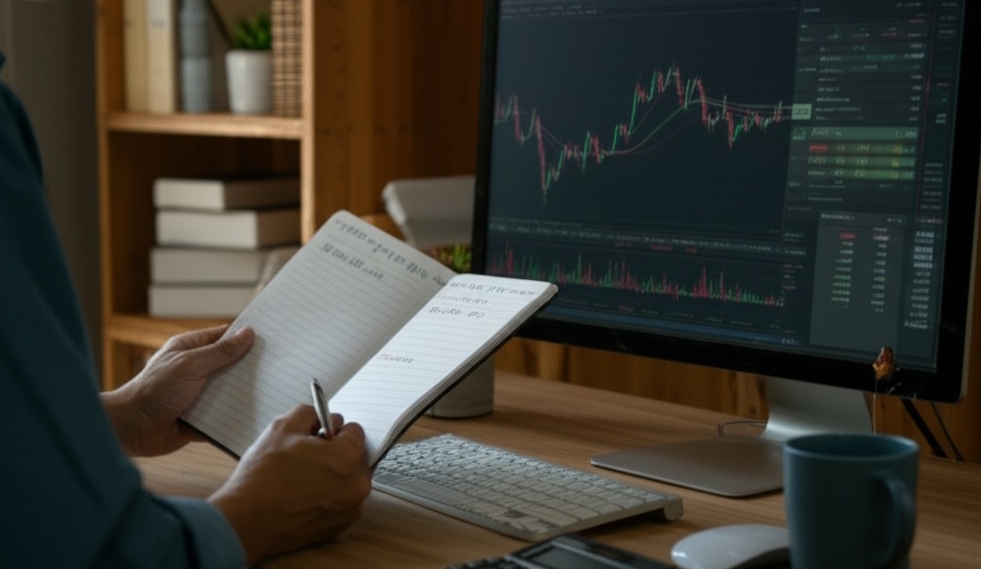
Position sizing for account safety
Proper Position size keeps your Account capital alive when trades turn sour. Use a clear Risk per trade rule—like risking 1% max per position. Adjust your Trade size to match Portfolio risk goals. Big wins are cool, but staying in the game is cooler.
Diversifying across uncorrelated assets
Spread your bets—Diversification smooths bumps.
Pick Uncorrelated assets to lower risk: mix stocks, bonds, maybe some gold.
Good Portfolio diversification helps hedge surprises in different Market sectors.
| Asset Class | Correlation Coefficient | Suggested Allocation |
|---|---|---|
| Equities | 0.8 | 50% |
| Bonds | -0.2 | 30% |
| Commodities | 0.1 | 20% |
Knowing when to sit out
Market conditions too wild? Chill. Stay on the Sidelines.
Hold a Cash position when volatility spikes.
Use sharp Market analysis—if unsure, don’t trade. Sometimes patience avoids a nasty Drawdown.
Like Jesse Livermore said: “There is a time to go long, a time to go short, and a time to go fishing.”
Controlling Emotions
Mastering emotions keeps your trades smart, not sloppy. Tame your fear, FOMO, and that itch for revenge with these real-life fixes.
Recognizing fear before it drives action
Fear is sneaky—it triggers impulses before you blink. Build awareness by spotting early signals: sweaty palms, rapid heartbeat, or hesitation. Write down what scares you most in your trading journal. This self-recognition rewires your mindset, helping you pause before fear hijacks your decision.

Handling FOMO during trending runs
Understand FOMO is your brain tricking you—fear of missing out clouds discipline.
Stick to your strategy, not social media hype.
Patience beats panic: missed this market run? Another opportunity always comes.
Using breathing and reset techniques
When stress hits, breathe deep. A quick breathing technique or mini meditation resets your focus. Try box breathing: inhale 4 counts, hold 4, exhale 4, hold 4. Repeat. Feel your anxiety melt and control return. Stay calm, stay sharp.
Avoiding revenge trades after losses
Lost a trade? Don't chase losses with reckless bets. Revenge trades kill accounts faster than a bad signal. Accept the mistake, revisit your strategy, and breathe. As Paul Tudor Jones says, “Losers average losers.” Patience pays; rage doesn’t.
Learning from Mistakes
In trading, mistakes happen. The key is learning from them without beating yourself up. Let’s dive into two ways you can turn losses into valuable lessons.
Reviewing trades without self-blame
Reflection over regret Instead of criticizing yourself, focus on understanding why a trade didn’t go as planned. A calm review helps clarify your decision-making process and spot areas for improvement. Mindset shift: view mistakes as stepping stones to improvement.
Objective evaluation Use your trading journal to assess the trade objectively. Ask, "Was my strategy sound?" or "Did I follow my plan?" This helps separate emotion from performance and creates opportunities for growth.

Spotting repeat patterns in losses
Identify recurring errors Losses are tough, but they can reveal patterns. Review past trades and look for trends in your mistakes. Do you overtrade in volatile markets? Identifying these errors helps you break bad habits and improve your trading strategy.
Turning patterns into prevention Once you spot a pattern, create a plan to avoid it next time. Maybe it’s tightening your stop-losses or staying out of certain trades. By taking control over repeating mistakes, you're setting yourself up for consistent improvement.
Tip: Learning from past mistakes isn’t about self-blame—it’s about self-improvement.
Is a Growth Mindset Essential?

When it comes to trading, the importance of a growth mindset cannot be overstated. A growth mindset is the belief that skills and intelligence can be developed over time through hard work, learning, and perseverance. This is in contrast to a fixed mindset, which holds that talent and abilities are static and cannot be changed. To truly succeed in trading, one needs to embrace challenges, learn from mistakes, and be willing to put in the effort required to improve.
Top traders like Warren Buffett have long espoused the idea that learning and improvement are the cornerstones of success in any field, including trading. Buffett himself famously stated, "The best investment you can make is in yourself." This mentality aligns perfectly with the growth mindset—the understanding that every failure is an opportunity to learn and improve. For traders, this might mean analyzing a losing trade, learning from it, and moving forward with new insights.
What separates those who succeed from those who fail is not the ability to avoid failure, but the ability to adapt and bounce back. When challenges arise, traders with a growth mindset see them as opportunities to build resilience. They know that consistent effort, learning from setbacks, and practicing adaptability are crucial to skill development in the long run.
Adopting a growth mindset also means you can evolve in how you approach risk. As skill development progresses, so does a trader’s ability to assess risks more accurately, manage them better, and make more informed decisions.
This is why fostering a growth mindset is essential. It allows you to thrive in the face of challenges, tackle setbacks with a positive outlook, and continuously sharpen your skills. When you stop fearing failure and start seeing it as part of the process, you begin to unlock your true potential in trading and beyond.
Conclusion
At the end of the day, trading is just as much about keeping your head in the game as it is about picking the right stock. With the right mindset, you can weather any storm the market throws at you. Remember, confidence and discipline are your best friends. Stick to the plan, manage risks, and don’t let emotions take the wheel. As Warren Buffet says, “The stock market is a device for transferring money from the impatient to the patient.” Now, take these tips and start applying them. You’ve got what it takes—just keep sharpening that mindset.
The right trading mindset is all about staying calm, focused, and disciplined, especially when things get tough. It's about controlling your emotions—like fear, greed, or excitement—and making decisions based on logic, not impulse. A good mindset helps you stick to your trading plan and weather the ups and downs of the market. Think of it like driving a car: you need a steady hand on the wheel even when the road gets bumpy.
Discipline is the backbone of good trading. Without it, you're basically flying blind. When you're disciplined, you follow your strategy, set stop-loss limits, and don’t let your emotions guide you. Sure, it’s easy to chase after the big wins, but true traders know consistency beats excitement every time. Staying disciplined is what separates the pros from the rookies.
Managing risk is crucial in trading, and it all starts with knowing what you're willing to lose. Here’s how to handle it:
These simple habits can help you sleep better at night, knowing you've got your risks under control.
Set stop-loss orders to limit potential losses
Never risk more than 1-2% of your account on any single trade
Diversify your portfolio to spread out the risk
Stay informed about market conditions and adjust accordingly
Emotional control is about keeping your feelings in check when trading. It's easy to get excited when the market is going up, or stressed when it's going down. But giving in to these emotions can lead to poor decisions. The trick? Take a step back, breathe, and make decisions based on your strategy—not on how the market’s making you feel.
Confidence in trading comes from practice, preparation, and learning from past mistakes. Instead of focusing on the outcomes of individual trades, focus on sticking to your plan and strategy. Over time, as you make more decisions based on logic, your confidence will naturally grow. It’s about trusting the process, not just your gut.
Here are a few mistakes that can derail your trading journey:
These are all things you can avoid with a clear mindset and a disciplined approach. It’s all part of the learning process.
Chasing losses, thinking you can "win it back"
Overtrading when you’re emotional
Failing to set realistic goals
Letting excitement or fear take control
A growth mindset is all about believing that your skills can improve over time with effort and learning. In trading, this means seeing every win and loss as an opportunity to learn. If you mess up, don’t beat yourself up—analyze the situation and adjust for next time. The goal is continuous improvement, not perfection.