


Table of contents
Ever noticed your forex profits vanish overnight, like money slipping through a hole in your pocket? Understanding Forex Rollover is your guide to stopping that leak—and maybe even flipping it into passive income. Rollover fees (or swaps) happen when you hold a position past market close, and they’re not just background noise—they can quietly drain your gains or pad your wallet, depending on how you play it.
As trading legend Kathy Lien puts it, “Interest rate differentials can make or break a forex trade.” Knowing how rollovers work gives you a serious edge, especially if you’re eyeing long-term positions or exploring carry trades.
In this guide, you’ll unpack what rollovers are, how fees are calculated, why Wednesdays hit harder, and how to sidestep costly broker traps. Let’s clear the fog, save some cash, and maybe even earn a little extra just by holding the right pair overnight.
What Is a Forex Rollover
Understanding a forex rollover isn’t just for trading pros—this basic concept can make or break your overnight positions.
Definition and real-world analogy
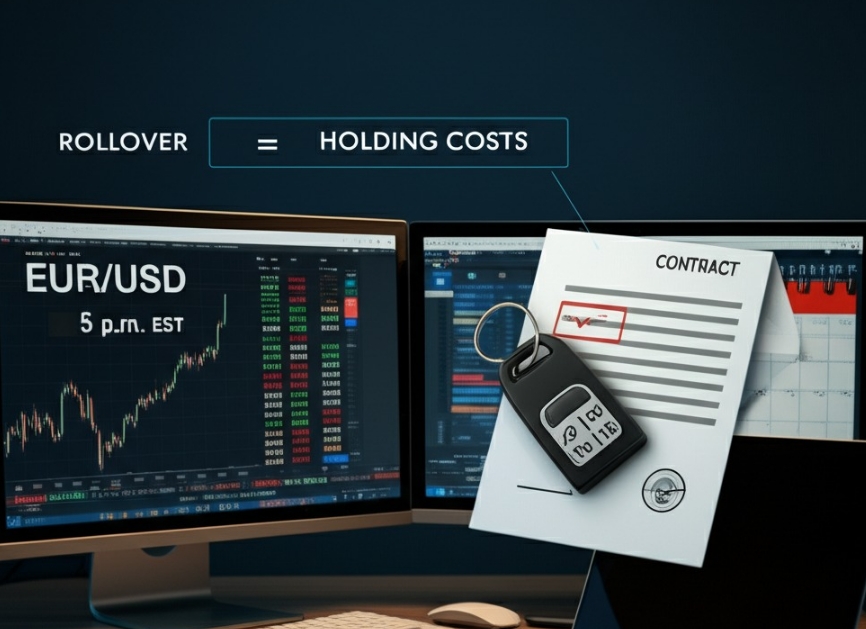
A rollover in forex is when your broker carries your open position into the next trading day—usually at 5 p.m. EST—adding a swap based on interest rate differences.
Think of it like renting a car past the return time. You get charged extra depending on the rules.
“If you don’t know what rollovers are costing you, you’re trading blind.” — Kathy Lien, BKForex
Spot vs. forward settlement dates
Spot date is typically T+2, meaning the trade settles two business days after the transaction.
Forward settlement refers to contracts made today but settled at a future date agreed by both parties.
Rollovers push the value date forward by one day, each day.
| Term Type | Timeframe | Market Use |
|---|---|---|
| Spot Date | T+2 | Standard trades |
| Forward Date | T+N | Hedging/futures |
| Rollover Date | T+1 daily | Daily FX trades |
Why rollovers matter in FX trading
They impact your profits. Holding positions overnight can either earn you money (positive swap) or cost you (negative swap).
Currency pairs have different swap rates. A high-interest pair like AUD/JPY may pay out, while EUR/USD might charge.
Rollovers affect long-term traders. Swing traders must factor rollovers into risk planning.
Tip: Always check your broker’s swap rate schedule before going to bed with a position open!
Daily Rollover Mechanics
Understanding how rollovers work each day gives you a real edge. Let’s break down what’s really happening while the market sleeps.
When rollover happens each day
Daily rollover typically hits at the end of the trading day—usually around 5 PM EST. That’s when the new trading cycle begins, and the rollover gets applied based on swap calculation rules.
Market close triggers the reset.
Market open in the next cycle re-prices the position.
Trades held past this cutoff incur rollover, even if only by a few seconds.
Timing your trades with this window in mind can save—or cost—you.
Time zones and rollover cut-off
This is where it gets messy. Your broker might run on GMT, UTC, or some random server time—and that impacts when your position crosses the rollover deadline.
Know your broker’s time zone (it's usually listed in platform settings).
Convert rollover time into your local hours—don’t get caught by surprise.
Watch for daylight saving time differences between you and the broker server.
"If you miss the cutoff by a minute, you’re still paying for a whole day," warns forex strategist Melissa Lau.
How brokers execute the rollover
Every broker has its own mechanism for applying rollovers. Here’s the basic play-by-play:
Your trading platform hits the cutoff time.
The broker calculates the swap fee based on interest rate differentials.
It then credits or debits your account balance, depending on the currency pair and position direction.
Keep in mind:
Liquidity providers influence the final rate.
Some brokers mark-up the swap without telling you (check their rollover policy).
Impact on open positions overnight
Holding a position overnight? That’s when swap points kick in—and your profit or loss may shift.
You could earn a positive swap (sweet!) or pay a negative swap (not so sweet).
The overnight risk also affects your margin requirement and account equity.
| Currency Pair | Swap Long (USD) | Swap Short (USD) |
|---|---|---|
| EUR/USD | -3.25 | 1.05 |
| USD/JPY | 2.10 | -2.80 |
| AUD/NZD | 0.75 | -0.40 |
Tip: Always check the swap conditions before leaving trades open. It’s not just about the chart anymore—it’s about cost.
Swap Rates Explained
Swap rates are like the hidden heartbeat of overnight forex trades—they determine if you’re earning a little extra or paying through the nose.

What affects swap rate values
Swap rates are influenced by a blend of economic, monetary, and market-driven factors. Here's a quick breakdown of what really moves the needle:
Interest Rates: Central banks like the Fed or ECB set base rates—higher differentials mean larger swap rates.
Yield Curve & Tenor: Longer maturities often imply bigger risk and higher swap premiums.
Market Liquidity: Tight or illiquid markets lead to erratic swap pricing.
Credit Risk: Perceived risk from a counterparty can widen swap spreads.
Inflation & Economic Outlook: These shape expectations about future interest rates.
Benchmark Rates: LIBOR and SOFR changes can ripple through swap calculations.
"Central bank policy is the oxygen for swap markets," says John Brady, Global Head of Interest Rate Strategy at RJO Futures.
Positive vs. negative swaps in practice
Ever held a position overnight and either made a little cash—or got dinged for a weird fee? That’s your swap value in action. Here's how it plays out:
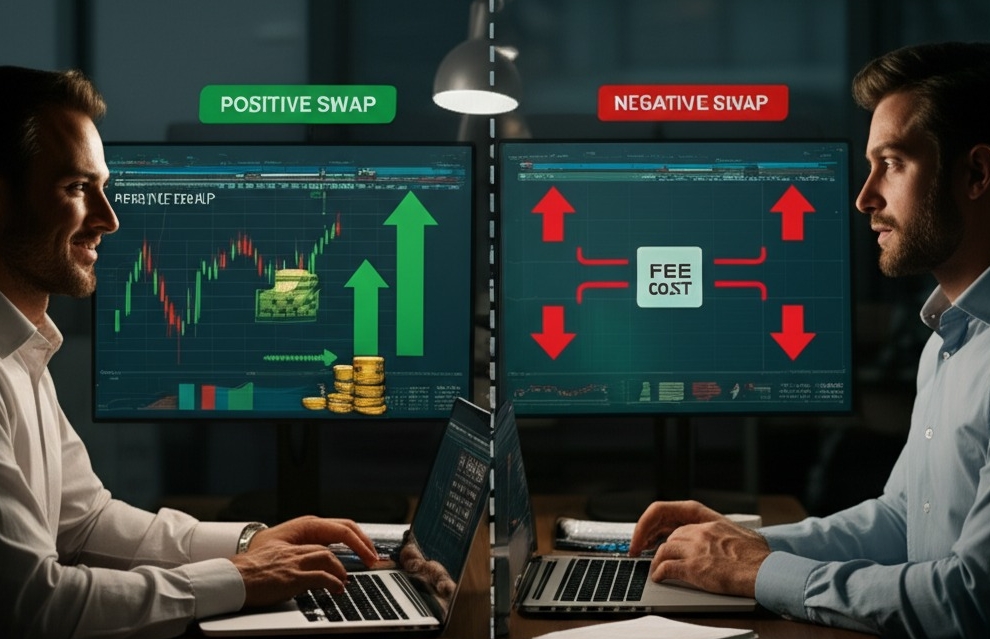
Positive Swaps: When the interest rate on your long position's currency is higher than the short—boom, you earn.
Negative Swaps: Flip that around? Now you’re paying the difference.
Forex traders often use mark-to-market valuation to calculate the exact profit or loss on swaps, especially in high-volume trades. Hedgers focus on cash flow stability, while speculators may ride swap advantages for extra yield.
| Swap Type | Cash Flow Direction | Common Use Case |
|---|---|---|
| Positive Swap | Cash inflow | Carry trade strategy |
| Negative Swap | Cash outflow | Hedged position cost |
Understanding how the floating leg reacts to market conditions versus the fixed leg is key in managing overnight exposure effectively.
How Are Rollover Fees Calculated
Forex rollover fees aren’t random—they’re calculated using a mix of math, market logic, and broker rules. Here’s how these costs hit your account.
Formula for swap rate calculations
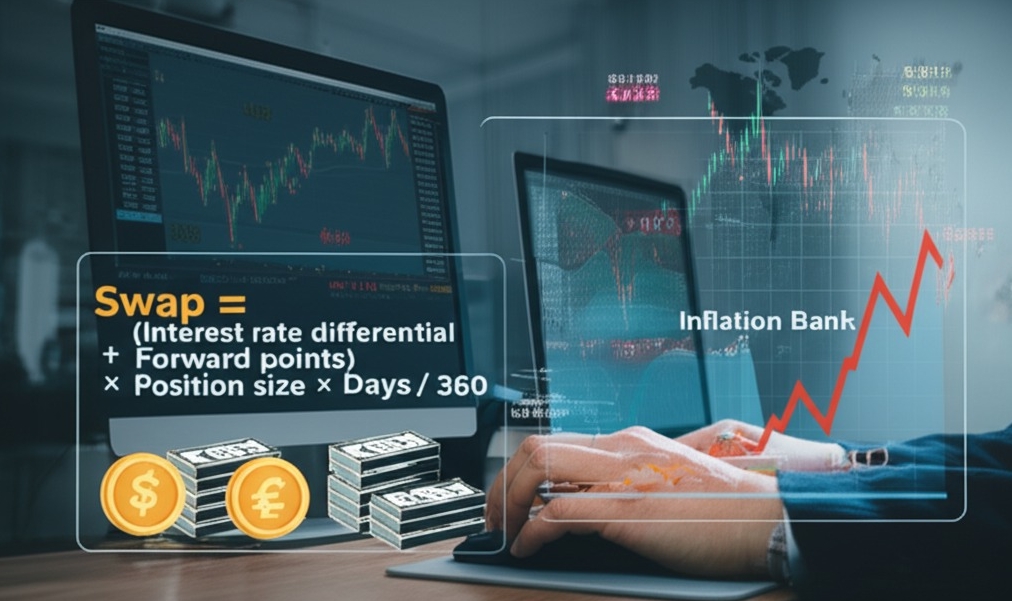
Swap rate calculations rely on this core formula: Swap = (Interest rate differential ± Forward points) × Position size × Days / 360
The interest rate differential between two currencies, plus or minus any forward points, forms the base of the fee. Brokers use interbank rates and sometimes a pricing model shaped by the yield curve or their internal costs. This formula affects your rollover cost every single night.
Lot size and leverage effects
The bigger your position, the louder the rollover fee hits.
Standard lot = $100,000
Mini lot = $10,000
Micro lot = $1,000
Throw in leverage, and your margin requirement shrinks, but your risk exposure doesn’t. You might control $100K with just $1,000, but rollover charges apply to the full value—not just what you put up. That’s how traders can get blindsided.
Currency pair volatility factors
Some pairs bring drama, and drama costs money.
High volatility pairs (like GBP/JPY) can swing swap rates big time
Central bank statements, surprise inflation data, or global news shake up exchange rates
Illiquid pairs during after-hours trading? You bet they’ll spike rollover fees
Volatility doesn't just affect your trading strategy—it can mess with your overnight costs too.
Role of central bank interest rates
“Central banks drive the bus,” says FX strategist James Chen. When the Federal Reserve or ECB shifts policy, it pulls the strings on swap rates.
A rate hike by a central bank increases that currency’s yield
A low-yield currency like JPY becomes expensive to borrow
Pair that with a strong currency like USD, and your rollover fee (or credit) jumps
These policy rate moves ripple into your daily trading costs—so yeah, it pays to listen to Fed speeches.
Weekend rollover adjustments
Here’s the weekend surprise: Friday rollovers charge you three days' worth of swap to cover Saturday and Sunday.
| Currency Pair | Standard Swap (Daily) | Friday Swap (Triple) |
|---|---|---|
| EUR/USD | -$2.50 | -$7.50 |
| AUD/JPY | +$1.75 | +$5.25 |
| GBP/CHF | -$3.10 | -$9.30 |
This three-day swap reflects the banking system’s weekend pause. Your settlement date skips to Monday (or Tuesday on holidays), and your broker adjusts the rollover accordingly. Some broker policies even vary this by region—check your platform settings!
Why Is Wednesday’s Rollover Triple
“When I checked my account Thursday morning, my usual swap fee had tripled overnight. I thought it was a glitch,” recalls Marcus Lee, a seasoned forex day trader from Chicago. His confusion is common among new traders navigating the weekly rollover cycle.
Here is the core: Wednesday’s rollover in the forex market is charged for three trading days instead of one, due to the T+2 settlement convention. This means trades executed on Wednesday are settled two business days later—on Friday. To account for the weekend, where banks and markets are closed, brokers apply a triple swap to cover Friday, Saturday, and Sunday.
T+2 convention: Settlement occurs two days after the transaction date
Weekend rollover: No trading, but interest still accrues
Value date shift: Wednesday’s trade settles on Monday, forcing a charge for three days
Triple swap: Reflects the accumulated interest differential over the weekend
Traders often structure their weekly exposure around this. According to AvaTrade’s risk team, “Many swing traders avoid holding risk through Wednesday rollover due to these exaggerated swap points.” Veteran traders recommend using tools that track swap points ahead of rollover, especially when trading pairs with wide interest rate spreads.

Broker Rollover Policy Differences
Not all brokers play by the same rules when it comes to rollover fees. Let’s break down the hidden costs, smart picks, and what to watch for in broker policies.
Fixed vs. variable rollover fees
Some brokers charge fixed rollover fees, while others use variable swap rates that shift with the market. It’s a finance version of “set price vs. surge pricing.”
Fixed fees stay constant, offering predictability—great if you hold overnight positions regularly.
Variable fees follow interest rate differentials and market conditions, so costs can fluctuate daily.
If you’re scalping or day trading, fixed might save stress. But for swing trades, variable rates may reflect real-time market fairness.
Quick tip: Always check both the base currency and the interest rate spread before deciding.
Comparing swap-free (Islamic) accounts
Swap-free accounts—aka Islamic accounts—are designed to comply with Sharia law, which prohibits Riba (interest).
| Broker Name | Swap-Free Available | Sharia Compliance Claimed |
|---|---|---|
| FXPro | Yes | Yes |
| IC Markets | Yes | Yes |
| OANDA | No | N/A |
These accounts remove overnight interest, but may add admin fees or alter spreads.
Ideal for traders observing Halal finance principles, but make sure it’s truly compliant—not just branded.
Always review account documentation or speak with brokerage reps directly.
Broker transparency and fee reporting
When it comes to broker transparency, not all platforms are crystal clear. Some bury fees in the fine print, others lay them out clean.
Reputable brokers disclose daily swap rates, position-based costs, and historical rollover charges.
A transparent broker shows real-time rollover adjustments on their platform—no guesswork, no nasty surprises.
Look for brokers with regulation from FCA, ASIC, or CySEC—these entities enforce disclosure rules.
“Hidden fees are the termites of trading,” says veteran trader Marcus Lee. “They nibble your gains until there’s nothing left.”
How to Avoid High Rollover Costs
Don’t let overnight fees nibble away your profits—these tactics help you steer clear of high rollover charges without flipping your whole strategy upside down.
Closing positions before rollover time
Cutting losses—or locking in gains—just before the market close can save you from those sneaky rollover fees. If you’re not planning to hold overnight, don’t. Most brokers process rollovers around 5 p.m. EST, so keep an eye on your clock. Avoid leaving open positions hanging past the cutoff—timing here isn’t just money, it’s profit protection.
Choosing low-swap currency pairs
Some forex pairs are naturally lighter on swaps. For example, EUR/USD usually carries lower overnight fees compared to exotic cross pairs like TRY/JPY. Why? Lower interest rate differentials. If you’re swing trading or holding long-term, choosing low-swap currency pairs can mean fewer charges eating into your carry trade.
| Currency Pair | Typical Swap (USD) | Interest Rate Spread |
|---|---|---|
| EUR/USD | 0.50 | Low |
| GBP/JPY | 2.20 | High |
| USD/ZAR | 3.00 | Very High |
Using swap-free accounts smartly
Swap-free (Islamic) accounts remove overnight interest—but nothing’s truly “free.” Brokers often widen the spread or charge flat fees instead. Make sure your broker isn’t making up for it by inflating commissions. Use swap-free accounts only when your overnight holding period is unavoidable and you’ve run the numbers on cost vs. convenience.
“Some brokers quietly move the fee elsewhere. Always read the fine print,” warns FX analyst Mark Bentley.
Day trading vs. swing trading approach
If rollovers keep biting your trades, maybe it’s time to rethink your strategy.
Day trading: You’re in and out the same day—no swap worries.
Swing trading: You ride the trend, but watch that overnight exposure.
Tip: Pair strong technical analysis with a tight stop-loss to avoid costly surprises while holding trades longer.
Monitoring broker fee schedules
Don’t sleep on the fine print. Brokers list their fee schedules, but not always where you’ll find them easily. Look out for:
Swap rate tables updated daily
Spreads during volatile hours
Account-specific commissions
Check weekly. Markets shift, and so do broker policies. Regulated brokers like those under ASIC or FCA tend to post clearer schedules.
Watching out for holiday rollover spikes
Holidays can be brutal for rollover fees. Thin liquidity = wide spreads = higher risk. And here’s the kicker: brokers often roll multiple days into one fee around holidays.
Check the economic calendar for upcoming holidays.
Cut down overnight exposure before the spike.
Watch for central bank events—they sneak in right before long weekends.
Stay sharp, or your P&L might throw a tantrum.

Rollover Strategy in Carry Trades
“Most new traders overlook rollover completely,” says Thomas Velasquez, a former institutional FX strategist at JPMorgan. “Then they wonder why their long-term trades bleed slowly, or spike in value overnight. That is rollover at work.”
The carry trade thrives on interest rate differences. You borrow in a low-yield funding currency and invest in a high-yield target currency, holding the pair overnight to earn positive carry. The rollover fee—or swap—is where that magic happens. If the interest rate on the bought currency exceeds the sold one, traders can collect yield daily.
Pick the right currency pairs: AUD/JPY and NZD/JPY are popular for positive carry.
Watch central bank moves: Rate hikes or dovish pivots can flip a profitable rollover into a cost.
Hold trades with purpose: Short-term trades rarely benefit from rollovers; long-term plays demand careful timing.
Avoid high-volatility events: Rollover yield can be offset by sudden spikes in price.
In 2023, analysts at DailyFX noted that “carry trade setups outperformed momentum strategies during calm market conditions,” reinforcing this approach.
Rollover is not a hidden fee—it is an income stream, if used right. Just ask anyone who held onto a high-yield pair during the last rate tightening cycle.
Conclusion
Let’s be real—rollover fees can feel like the bank’s sneaky way of reaching into your pocket while you sleep. But now you know better. From how they work to how to dodge the worst of ’em, you’ve got the tools to trade smarter.
As forex pro Kathy Lien says, “Interest rate differentials can be your best friend or worst enemy.”
So before leaving a trade overnight, stop and ask yourself: is this rollover helping your account—or quietly draining it?
In forex trading, rollover is what happens when you keep a position open overnight. Instead of settling the trade, your broker pushes it to the next day and applies an interest charge or credit based on the currencies involved. It’s kind of like rolling over a hotel booking—you’re staying longer, so you pay for it (or sometimes get paid for it).
Short answer: they’re often the same thing in trading talk.
A swap is the actual fee or credit you get during the rollover.
A rollover is the act of extending your position to the next day.
Most brokers process the rollover at 5:00 PM EST (New York time), which is considered the end of the trading day in forex. If your position is still open at that time—even for a second—it’s rolled over and the swap kicks in.
Here’s why they don’t all charge the same:
Each broker gets different liquidity pricing from their banks.
Some apply a markup to swap rates, while others don’t.
Time zone and cut-off times can differ slightly.
Transparency varies—some show you the full formula, some don’t.
Yes—this is called a carry trade strategy. You go long on a high-interest-rate currency and short a low-rate one. If the swap is positive, you get paid daily just for holding the trade. It’s like earning interest... but without the savings account.
Technically, forex markets close on weekends—but you’ll still be charged for those days:
Wednesday = triple swap to account for Friday–Sunday
Holidays can cause earlier rollovers or extended charges
Always check your broker’s rollover calendar
It’s easier than most traders think:
Right-click the currency pair in your Market Watch
Select Specification
Look for Swap Long and Swap Short values
Multiply by your lot size to get the daily charge or credit