



You ever hear your cousin brag about trading dollars for euros and making a quick buck before lunch? Turns out, he’s not just lucky—he’s knee-deep in forex. And if you're poking around about “Forex broker India,” you’re probably wondering: is this the real deal or just another online rabbit hole with fancy charts and blinking screens?
Here’s the kicker: daily forex trading volume clocks in at over $7.5 trillion, according to BIS 2022 data . That’s more than the stock market on five cups of espresso. So yeah—it’s big, it’s fast, and yes, folks from Mumbai to Memphis are cashing in… or crashing out without a clue.
Essential Insights: Navigating Forex Broker India
Understanding Forex Trading
Forex trading involves exchanging one currency for another, which is organized into currency pairs like EUR/USD.
Types of Forex Brokers
Choose between ECN brokers, STP brokers, and others, depending on your trading style and needs.
Regulatory Framework
In India, SEBI regulates forex trading, ensuring safety and transparency for traders.
Trading Costs
Familiarize yourself with spreads, commissions, and other trading costs to manage your expenses effectively.
Trading Platforms
Popular platforms like MetaTrader 4 and 5 provide varied tools for both novice and experienced traders.
Risk Management
Effective risk management techniques, including stop-loss and diversification, are vital for successful trading.
Account Features
Look for essential features such as demo accounts, managed accounts, and segregated accounts when selecting a broker.
What Is Forex Trading? Key Concepts Explained in Hindi
Forex ट्रेडिंग की दुनिया में कदम रखने से पहले, कुछ बेसिक कॉन्सेप्ट्स को समझना बेहद जरूरी है। यहां आपको हर जरूरी टॉपिक मिलेगा—बिलकुल आसान भाषा में।
Understanding Currency Pairs in Forex Trading
Currency pairs दो अलग-अलग देशों की मुद्राओं से मिलकर बनते हैं, जैसे EUR/USD या USD/INR।
एक करेंसी खरीदी जाती है और दूसरी बेची जाती है—यही होता है असली गेम।
Major pairs: USD/EUR, GBP/USD; Minor pairs: EUR/JPY, AUD/CAD; Exotic pairs: USD/INR, EUR/TRY
Base currency वह होती है जो पहले आती है, और quote currency दूसरी।
जब आप कहते हो कि "USD/INR बढ़ गया", तो इसका मतलब है कि अब 1 डॉलर खरीदने के लिए ज्यादा रुपये देने पड़ेंगे।

The Major Financial Instruments Traded in Forex Markets
Currencies dominate the Forex market, but वो अकेले नहीं हैं इस शो में:
• Currencies – Core of forex trading; think INR/USD or GBP/EUR • Commodities – Gold, oil जैसी चीजें भी forex platforms पर trade होती हैं • Indices – Global stock indices like Nifty50 or Dow Jones can also be traded • Crypto-assets – Bitcoin और Ethereum अब कई brokers allow करते हैं • Stocks – कुछ platforms allow करते हैं CFD के ज़रिए global stocks पर speculate करना
हर instrument का risk profile अलग होता है—इसलिए सोच समझकर चुनना ज़रूरी होता है।
Overview of Trading Costs: Spreads, Commissions, and More
Costs matter big time! नीचे देखो कैसे खर्चा बनता है:
| Cost Type | Description | Charged By Broker | Varies With Market |
|---|---|---|---|
| Spread | Buy & sell price का difference | ✅ | ✅ |
| Commission | Per trade fixed % या fee | ✅ | ❌ |
| Swap Rate | Overnight position रखने पर charge | ✅ | ✅ |
| Slippage | Fast-moving market में gap | ❌ | ✅ |
इन सबको track करना ज़रूरी है अगर आप किसी अच्छे Forex broker India platform के साथ काम कर रहे हो।
Importance of Regulation in Forex Trading in India
SEBI का रोल यहां बहुत बड़ा होता है। इंडिया में जो भी legit Forex broker India प्लेटफॉर्म्स होते हैं उन्हें SEBI से रजिस्टर होना पड़ता है। इससे ये फायदे होते हैं:
आपके पैसे सुरक्षित रहते हैं
कोई भी shady activity जल्दी पकड़ में आती है
Dispute होने पर legal रास्ता खुला रहता है
Brokers को transparency maintain करनी पड़ती है
अगर कोई broker बिना SEBI लाइसेंस के काम कर रहा हो तो उससे दूर रहो। EasyCashBackFx जैसे verified प्लेटफॉर्म चुनना हमेशा बेहतर होता है—जहां भरोसा खुद बाय डिफॉल्ट आता है।
The Role of a Forex Broker in India
Understanding how a Forex broker operates in India helps traders avoid pitfalls and make smarter choices.
ECN Brokers vs. STP Brokers: What's the Difference?
When picking a Forex broker India, you’ll often hear about ECN and STP models. But what do they actually mean?
• ECN brokers plug your trades straight into the market, matching them with liquidity providers like banks or other traders—no middleman, no delays.
• STP brokers send your orders through various channels to find the best available price, sometimes using internal liquidity pools.
→ Unlike ECNs, STPs might add a small markup on spreads instead of charging direct commissions.
→ If you’re someone who scalps or trades during news events, an ECN model may offer tighter spreads and commissions, but it comes with higher fees.
→ On the flip side, casual traders might prefer STPs for their simplicity and lower minimum deposits.
→ Both types usually provide access to platforms like MT4 or MT5, but execution speed and pricing transparency can vary wildly depending on which route your broker takes.
So when choosing between these two models under a Forex broker India, think about your trading style first—speed, cost, and transparency should guide you more than buzzwords ever could.
How Regulatory Bodies Like SEBI Shape Broker Operations
The Securities and Exchange Board of India (SEBI regulations) plays watchdog for every licensed Forex broker operating legally within Indian borders. Here’s how that looks in practice:
• Licensing & Compliance All legal brokers must register with SEBI to offer services in INR pairs—foreign pairs are still restricted unless routed via international platforms.
• Capital Requirements SEBI mandates minimum capital buffers so brokers stay solvent even during volatile swings—this protects retail investors from sudden shutdowns or fund freezes.
• Client Fund Segregation Traders’ funds must be kept separate from company accounts—so if something goes wrong operationally, your money isn’t used to pay company bills.
• Transaction Transparency Every trade must be logged clearly. This ensures fair dealing and discourages price manipulation or hidden markups on fees or spreads.
• Audit & Reporting Obligations Regular audits keep things clean behind the scenes; brokers can’t just fudge numbers or hide bad trades anymore without getting caught quickly.
Thanks to these rules, choosing an SEBI-regulated Forex broker India gives you a safer playground—even if offshore options seem tempting with higher leverage offers and exotic pairs not available locally.
The Impact of Trading Platforms: MetaTrader 4 vs. MetaTrader 5
Choosing between MT4 and MT5 isn’t just about aesthetics—it changes how you interact with your chosen trading platform, especially when working through a local or global Forex broker India:
Step 1: Understand Your Needs If you're new to trading or only dabble in currency pairs, MT4’s simple interface may suit you better—it’s lightweight and intuitive but still powerful enough for most strategies involving basic indicators and scripts.
Step 2: Consider Analytical Depth MT5 brings more timeframes (21 vs. MT4’s nine), MetaTrader 5 economic calendars built-in, plus depth-of-market tools that appeal to seasoned pros looking for sharper analysis tools beyond just candlesticks and moving averages.
Step 3: Compatibility With Brokers Not all Indian brokers support both platforms equally well; some might offer enhanced features only on one version depending on backend integration with their liquidity providers or order routing systems (ECN/STP brokers)—check before committing!
Step 4: Account Types & Execution Speed MT5 supports hedging and netting systems along with faster execution across multiple asset classes—not just FX—which matters if you're diversifying into commodities or indices too via one account login across instruments offered by your chosen provider (account types, asset range).
Step 5: Automation & Community Tools Both platforms support Expert Advisors (EAs), but MT5 has superior testing environments for algorithmic strategies—especially useful if you rely heavily on automation rather than manual setups daily via mobile apps or desktops alike (customer support India also varies by platform).
At day’s end? Go where comfort meets capability—but always check what version your preferred Forex broker India supports best before diving in headfirst.
How to Choose the Best Forex Broker India
Finding the right trading partner isn’t just about flashy platforms. Here's what really counts when picking a Forex broker India traders can rely on.
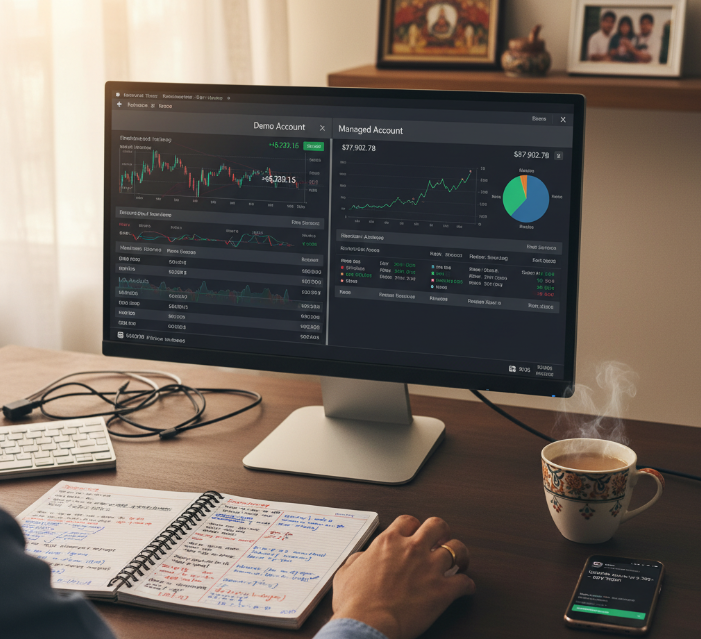
Key Features to Look for: Demo and Managed Accounts
• A solid trading platform should offer a demo account—no risk, all learning. • Managed accounts? Great if you want pros handling your trades while you chill. • Make sure there's flexibility between manual and managed options.
Demo accounts are perfect for beginners to get their feet wet without losing cash.
Managed accounts suit busy folks who want exposure to forex without constant monitoring.
✓ Look for brokers that let you switch between these account types easily.
A good Forex broker India users trust usually offers both features, so you're not boxed into one style of trading.
Deposit and Withdrawal Options: UPI vs. Credit Card Payments
You’ve got two big guns here—UPI and credit cards—and both have perks:
• UPI is lightning fast, widely used across India, and doesn’t slap on extra charges. • Credit cards are convenient but may involve hidden fees or slower processing times.
→ Pro tip: Go with brokers that support both methods seamlessly through their deposit withdrawal methods, giving you more control over your funds.
A reliable Forex broker India traders prefer will clearly outline transaction timelines and costs upfront—no surprises later.
Analyzing Spread Charges and Commission Fees
Here’s where your profits can quietly leak out if you're not careful:
• Tight spreads = lower cost per trade; ideal for scalpers and high-frequency traders. • Fixed vs variable spreads – fixed ones offer predictability, while variable ones may be cheaper during low volatility periods. • Transparent commission fees help avoid unpleasant shocks after trades execute.
Compare at least three brokers' pricing structures side-by-side.
Double-check if commissions apply per trade or per lot.
Ask customer support directly—some hide this info deep in the fine print!
The best Forex brokers India offer clear breakdowns of all costs tied to each trade type, often directly visible inside the platform dashboard.
Understanding Segregated Accounts for Enhanced Security
Segregated accounts mean your money stays separate from the broker’s operating funds—a must-have safety net:
If the broker goes under, your cash doesn’t vanish with it.
It also ensures cleaner audits and better transparency.
Regulators often require this setup as part of basic compliance standards.
In short? If a Forex broker India based doesn't use segregated accounts, walk away fast—it’s just too risky otherwise.
The Significance of FCA Compliance in Choosing a Broker
When a broker is FCA-compliant, it means they’re held to some seriously strict rules:
They must maintain capital reserves.
They’re required to treat client funds responsibly (hello again, segregated accounts).
Dispute resolution processes are standardized—you won’t be left hanging if stuff hits the fan.
→ Only work with brokers who list FCA registration numbers publicly on their site—and verify them!
For those trading from India but choosing international platforms, FCA compliance adds an extra layer of trustworthiness that local regulation might not fully cover yet—a major plus when picking your go-to Forex broker India wide.
Forex Trading Strategies for Beginners in Hindi
शुरुआत में ट्रेडिंग करना थोड़ा डरावना लग सकता है, लेकिन सही रणनीति से आप आत्मविश्वास के साथ आगे बढ़ सकते हैं।
Using Demo Accounts to Practice Trading Strategies
A demo account mimics real trades without risking real money. This is ideal for testing your strategies.
Many top-tier platforms recommended by seasoned traders allow you to open a demo within minutes.
Use it to understand how different currency pairs behave under various market conditions.
? Tip: Try applying both मौलिक विश्लेषण and तकनीकी विश्लेषण while trading on your demo.
Newbies often rush into live markets, but skipping the practice phase can lead to early losses. If you're exploring a new strategy or testing how a specific pair reacts during news releases, the demo setup gives you the perfect sandbox. Especially if you're comparing offers from different providers while searching for the right Forex broker India, this trial mode helps assess platform quality too.
Risk Management Techniques for Effective Trading
Always set a clear स्टॉप लॉस और टेक प्रॉफिट before entering any trade.
Never risk more than 2–3% of your capital on one position—this limits emotional decisions.
Diversify across multiple currency pairs instead of betting everything on one.
According to ESMA, analyses across EU jurisdictions found that 74–89% of retail accounts typically lose money on CFDs—one reason risk management matters from day one.
If you're using a local service provider as your Forex broker India, check whether they offer built-in tools like risk calculators or auto-stop-loss triggers. These features simplify execution and support your long-term survival plan.
Strategies for Trading Currency Pairs Effectively
? Trend Following Stick with the momentum—buy when prices rise steadily and sell when they fall consistently.
? Range Trading Identify horizontal price zones where currencies bounce up and down; buy low, sell high within that range.
? Breakout Strategy Wait for prices to break out from key levels; this often signals strong moves either up or down.
? News-Based Strategy Use economic calendar and react quickly during announcements like interest rate changes or employment data releases.
Each approach has its strengths depending on market volatility and timeframes. For instance, range trading works best in calm markets, while breakout strategies shine during major events. A reliable Forex broker India should provide real-time charts and news feeds so you can act fast when opportunities knock.
Don't forget—your success isn't just about finding the right entry point but also sticking with your overall ट्रेडिंग योजना, adjusting based on what works best over time.
Step-by-Step Guide to Forex Trading for Beginners
A no-nonsense beginner’s guide to getting started with forex — from choosing a broker to making your first trade.
Step 1: Opening an Account with a Forex Broker
Before you even think about placing trades, you’ll need a proper trading account. Here’s what that looks like:
Choose a Forex broker India that's regulated by SEBI or other global authorities.
Look out for low spreads, fast execution, and good customer support when comparing brokers.
Submit KYC documents — PAN card, Aadhaar, and bank proof are usually required.
Decide between a standard or mini account based on your risk appetite.
Test the broker’s platform using a डेमो अकाउंट before committing real money.
Getting these basics right will save you headaches later on when you're knee-deep in charts and trades.
Step 2: Funding Your Trading Account: NetBanking Options
Once your account is live, it's time to fund it. And yes, NetBanking makes life easier — here’s how:
• Most top-tier Forex broker India services accept INR deposits via NetBanking directly. • Check deposit limits; some brokers require ₹5,000 minimum while others go as low as ₹500. • Always double-check if there are hidden fees or conversion charges involved. • Funds typically reflect within minutes — but can take up to two hours during peak times. • Use the same bank account used during KYC verification to avoid delays.
By sticking with verified payment gateways and linking only one bank account, you'll breeze through funding without any drama.
Step 3: Navigating Your Trading Platform: cTrader Basics
If you're using cTrader for the first time, don't sweat it — it's slick once you get the hang of it:
The main dashboard shows market watchlists and live bid/ask prices of various करेंसी पेयर.
Use the chart window to apply technical indicators like RSI or MACD for better insights into price action.
You can switch between line charts, candlesticks, or Heikin Ashi views depending on your strategy.
There’s even a built-in economic calendar that helps track major news events affecting currencies.
Customize hotkeys and layout panels so everything feels intuitive while executing trades quickly.
cTrader might look intimidating at first glance but spend half an hour exploring — it becomes second nature fast.
Step 4: Placing Your First Trade: A Beginner’s Walkthrough
Alright! You’ve got an account and funded it — now let’s place that first trade like a boss:
— Choose your desired करेंसी पेयर, say EUR/USD or USD/INR depending on volatility preference. — Set order type carefully – market order executes instantly; limit order waits till price hits your target. — Define stop-loss and take-profit levels; this is key for proper जोखिम प्रबंधन. — Double-check everything before clicking "Buy" or "Sell". Trust us — fat-finger mistakes are real!
Keep emotions in check during those early trades — use small lot sizes while learning how different factors move prices around you.
And remember — every pro trader once placed their very first trade too!
Take the Next Step (CTA)
If you’re serious about trading long-term (and keeping costs under control), these tools can help you move faster with more clarity:
Explore forex education to build strong fundamentals before risking bigger capital.
Compare brokers using best forex brokers so your platform choice matches your style.
Reduce trading costs with forex rebates and track potential savings using the forex rebate calculator.
If you want structured trade ideas, review forex trading signals (and always test on demo first).
To start earning on every trade, visit forex cashback and see how cashback forex brokers partnerships work.
References
[OTC foreign exchange turnover in April 2022 (BIS) - https://www.bis.org/statistics/rpfx22_fx.htm]
[SEBI Circular (Cross-currency derivatives & INR options) - https://www.sebi.gov.in/legal/circulars/mar-2016/introduction-of-exchange-traded-cross-currency-derivatives-contracts-on-eur-usd-gbp-usd-and-usd-jpy-currency-pairs-and-exchange-traded-option-contracts-on-eur-inr-gbp-inr-and-jpy-inr-currency-pairs_31858.html]
[MetaTrader 4 Trading Platform (MetaQuotes) - https://www.metaquotes.net/en/metatrader4]
[MetaTrader 5 Multi-Asset Platform (MetaQuotes) - https://www.metaquotes.net/en/metatrader5]
[cTrader Platform (Spotware) - https://www.spotware.com/ctrader/]
[NSE Contract Specifications - Futures & Options on INR pairs - https://www.nseindia.com/products-services/currency-derivatives-contract-specification-inr]
[FCA CASS 5.5 (Segregation of client money) - https://handbook.fca.org.uk/handbook/CASS/5/5.html]
[ESMA CFD restrictions notice (Retail accounts losing money 74–89%) - https://www.esma.europa.eu/press-news/esma-news/esma-agrees-prohibit-binary-options-and-restrict-cfds-protect-retail-investors]
FAQ
What does a Forex broker do for traders in India?
A Forex broker connects Indian traders to live global markets, enabling deals across currency pairs and other assets. SEBI-regulated intermediaries maintain transparency and follow RBI guidelines to protect investors. Many brokers provide trading tools such as MetaTrader 4, MetaTrader 5, or cTrader so clients can trade with confidence on reliable digital terminals.
How can I select the best Forex broker India provides?
Choosing goes beyond low costs; it’s about safety and fit:
Verify if the company is SEBI regulated, holds FCA compliance, or operates under a CySEC license.
Review spreads, commission fees, and inactivity fees in detail.
Try a free demo account before risking capital.
Ask whether your balance sits in a segregated account—this small detail shows financial discipline.
Short line of advice: A well-checked background speaks louder than any marketing promise.
Which trading costs should beginners pay attention to?
Every trade has layers of expense that shape profit reality:
Tip: Low spreads sound attractive but watch hidden swap adjustments quietly nibbling at returns.
Why does regulation mean so much in this market?
Regulation keeps hope safe from fraud’s shadow. In India, SEBI ensures order while the RBI defines what currencies can legally pair against INR within limits like USD-INR or EUR-INR contracts. Global brokers showing FCA or ASIC authorization add another layer of reassurance when Indians open offshore accounts through compliant channels.
★ Safety built by rulebooks means your rupees rest under vigilant eyes.
What main features make an account reliable for everyday trading?
Balance simplicity with flexibility through practical options:
Demo account – learn without losing money; ideal warm-up ring before real action.
Islamic account – no swap interest for faith-based principles.
Managed or joint account – teamwork between investor & expert advisor.
Segregated funds – personal protection if a broker faces trouble.
Each feature adds comfort beneath daily volatility when chart candles dance restlessly on MetaTrader 5 or TradingView screens.