


Table of contents
Where to Trade Forex in India? It's a question popping up more than ever these days—especially with so many folks looking to hustle smart, not just hard. Stock markets feel slow? Crypto too risky? Forex feels like that middle ground. But in India, it's not as straightforward as downloading an app and betting on the dollar. One wrong move, and you're stuck with a platform that’s either shady or flat-out illegal.
RBI and SEBI keep a close watch, and rightly so. As SEBI once warned, "Unregulated platforms expose traders to unnecessary risk and legal trouble." So knowing where you can trade forex in India legally isn’t just smart—it’s survival.
This guide breaks it all down: legit platforms, trusted brokers, low-cost apps, and INR vs USD trading headaches. No fluff, just the stuff you need to start trading forex in India the right way.
How to Trade Forex in India Legally?
RBI rules for forex trading
The Reserve Bank of India (RBI) sets clear boundaries when it comes to forex trading by Indian residents. You can’t just log onto any international platform and start trading currency pairs with leverage—it’s not allowed under RBI guidelines. All trades must happen through authorized dealers or brokers registered on Indian exchanges like NSE or BSE.
Indian residents are only permitted to trade currency derivatives like USD/INR or EUR/INR, and only on regulated platforms. You also need to follow LRS (Liberalized Remittance Scheme) caps—up to $250,000 per year, and even then, not for speculative leveraged forex trades.
“The RBI isn’t against forex trading. It’s against illegal forex trading,” says Sanjay P., ex-RBI compliance officer. “Stick to regulated channels, and you’re good.”
SEBI-licensed forex platforms
Want to trade safely and legally? Then use a SEBI-licensed forex platform. The Securities and Exchange Board of India (SEBI) makes sure these brokers stick to the book—protecting your money and your rights. Licensed platforms offer only exchange-based trading, which means you’re buying and selling through recognized Indian exchanges and not in the global OTC market.
These platforms comply with SEBI rules on margin limits, investor disclosures, and trade transparency. No shady business, no offshore wallets.
| Platform | SEBI Reg. No. | Supported Pairs |
|---|---|---|
| Zerodha | INZ000031633 | USD/INR, EUR/INR |
| Angel One | INZ000161534 | GBP/INR, JPY/INR |
| ICICIdirect | INZ000000990 | USD/INR, GBP/INR |
These are accessible via web and mobile, offer real-time INR pair quotes, and integrate well with Indian banks for funding.
FEMA regulations for individuals
The Foreign Exchange Management Act (FEMA) is the legal framework that controls how individuals in India can send or receive money in foreign currencies. If you’re thinking of using international forex brokers, FEMA says—not so fast.
You can remit money abroad under the LRS, but FEMA prohibits using those funds for margin trading or speculative forex. That means platforms like MetaTrader linked to overseas brokers are technically off-limits.
Compliant forex activity includes things like hedging foreign income or trading through Indian exchanges under SEBI’s watch.
You can:
Trade INR-based currency futures/options
Remit money for education, travel, or medical expenses
You can't:
Trade leveraged forex with offshore brokers
Participate in binary or CFD trades abroad
FEMA is strict about reporting and recordkeeping—so if you’re planning any overseas transactions, always ensure documentation is in place.
Top Forex Trading Platforms in India
Features of top forex platforms
Choosing a reliable forex platform in India goes beyond flashy interfaces. What traders need are dependable features that support fast, smart decision-making.
Trading tools & technical indicators: Leading platforms like MetaTrader 4, MetaTrader 5, and cTrader offer a suite of built-in tools—MACD, RSI, Bollinger Bands, and more—that help traders interpret price action and trends.
Charting capabilities: High-level charting lets users analyze historical performance, overlay multiple indicators, and set alerts. Interactive timeframes and customizable layouts are must-haves for active traders.
Order execution & spreads: Low-latency order execution is essential for minimizing slippage. Look for platforms with ECN or STP execution models and tight spreads—even better if commissions are transparent.
Regulation & security features: Platforms operating under SEBI or other Tier-1 regulators (like FCA, ASIC) ensure funds are protected. SSL encryption and two-factor authentication are standard for account security.
Mobile trading & ease of use: For traders who prefer to manage positions on the go, mobile platforms like TradingView or MT4 mobile are a lifesaver. Clean UI and fast load times are key.
Deposit/withdrawal process & customer support: Instant deposits via UPI or net banking, and reliable 24/5 customer support in English or Hindi, can simplify the entire trading journey.
"A good platform doesn’t just execute trades—it simplifies decision-making. That’s the real edge," says Raghav Mishra, a forex mentor based in Mumbai.
Web-based vs desktop trading
Choosing between web-based and desktop forex platforms is a bit like picking between convenience and power. Each offers distinct advantages depending on your trading style and technical needs.
Let’s break down the key differences:
Accessibility: Web-based platforms like WebTrader or browser versions of cTrader are easy to access from any device—no installations needed.
Installation requirements: Desktop apps (like MetaTrader 5) require a setup but offer deeper features and full system integration.
Performance speed: Desktop versions typically run smoother under heavy analysis due to access to local system resources.
Feature set & customization: Advanced scripting, automation (like Expert Advisors), and strategy testing are typically only available on desktop platforms.
Security level: While both types are encrypted, desktop platforms allow more control over network and data privacy.
Offline capability: Desktop platforms allow some offline functions like chart analysis and strategy editing—useful during connectivity drops.
Update frequency & reliability: Web platforms auto-update frequently but may lag with browser performance. Desktop software needs manual updates but is often more stable.
| Platform Type | Customization | Security Level | Offline Use | Ideal For |
|---|---|---|---|---|
| Web-Based | Medium | Medium | No | Casual & mobile traders |
| Desktop-Based | High | High | Yes | Advanced & daily traders |
Whether you want flexibility or full control, pick what fits your trading habits. Don’t just follow the crowd—follow what works for you.
Which App Is Best to Trade Forex in India?
User-friendly forex trading apps
Forex broker apps that prioritize user experience can make or break your trading flow. The best ones come with an intuitive interface, low learning curve, and quick access to essential tools like charts, news, and order placement.
For beginners or casual traders, features like demo accounts and well-organized menus are game changers. These apps make it easy to trade from anywhere, without feeling like you're stuck in a finance textbook.
Dhan App – known for its clean layout and customizable dashboard
ICICI Direct Markets App – good for traditional investors switching to forex
Zerodha Kite – minimalist UI with responsive speed
Seriously, no one wants to trade on a clunky app that freezes mid-order. Go for apps that feel as smooth as scrolling through Reels.
Apps with live INR quotes
Live market data is essential for timing forex trades, especially with volatile pairs like USD/INR or EUR/INR. Apps offering real-time data feeds and live currency quotes help you respond instantly to price moves and execute trades at the best available rates.
| App Name | INR Pairs Supported | Data Refresh Speed |
|---|---|---|
| Zerodha Kite | 7 | Real-time |
| Angel One | 5 | Streaming Quotes |
| Dhan App | 8 | Tick-by-tick Live |
| Fyers Markets | 6 | 1-second refresh |
These apps display live INR exchange rates, including GBP/INR and JPY/INR, which are useful for experienced traders. Just make sure your internet is fast—lag can cost you real money.
Security features in forex apps
No matter how slick an app looks, if it’s not secure, it’s not worth your time. Top-tier forex trading apps in India offer multiple layers of protection, including biometric login, two-factor authentication (2FA), and strong data encryption.
Security isn’t just about login screens—it’s about protecting your funds, personal data, and transaction history from cyber threats.
Look for regulatory compliance (like SEBI or RBI recognition)
Ensure the app uses secure HTTPS protocols
Opt for apps with built-in fraud detection systems
"Data privacy and account protection aren’t optional anymore—they’re expectations." — Rajan Desai, Cybersecurity Analyst, Mumbai
Apps like Dhan, Zerodha, and ICICI Direct have solid reputations for account protection and cyber security, making them reliable choices for both new and pro traders.
App-based charting tools
Today’s trading apps are packed with charting power. You don’t need a laptop to study technical patterns anymore. Most Indian forex apps now include candlestick charts, trend lines, and technical indicators like RSI, MACD, and Bollinger Bands.
TradingView (integrated into apps like Dhan) offers highly customizable charts with dozens of overlays
Fyers delivers historical price data and drawing tools in a mobile-friendly layout
Kite by Zerodha keeps it simple but fast—great for traders who already know what they’re looking for
App-based charting tools let you analyze markets in real time—even during your daily commute. Whether you're scalping intraday or planning swing entries, the right chart tool helps you trade smart, not just fast.
Forex Brokers List in India
When Rajiv Mehta opened his first forex trading account back in 2021, he was excited, nervous, and overwhelmed all at once. “I wanted to get started that same day,” he said, laughing. “Instead, I spent two weeks just figuring out who I could legally trade with.” His story is more common than you might think.
India’s forex trading landscape is shaped entirely by SEBI-regulated brokers who offer access to currency derivatives on recognized exchanges like the NSE and BSE. Retail forex trading in India is not a free-for-all. It is carefully controlled—and for good reason. That is why selecting a broker involves more than checking who is trending on Reddit or advertising on YouTube.
Here is where it starts to get serious.
If you are planning to step into forex trading in India, here is what makes one broker different from another:
Major SEBI-Regulated Forex Brokers
| Broker Name | Trading Platforms | Account Opening | Leverage Offered | INR Currency Pairs | Customer Support |
|---|---|---|---|---|---|
| Zerodha | Kite | 100% Online | As per SEBI cap | USD/INR, EUR/INR | Chat + Tickets |
| ICICI Direct | Trade Racer | Online + Branch | Exchange-based | USD/INR, JPY/INR | Phone + Email |
| Upstox | Pro Web | Quick E-KYC | Standard | USD/INR, GBP/INR | Chat Only |
| Angel One | Angel Broking App | App-based | Fixed Margin | USD/INR | Phone + Chat |
| Motilal Oswal | MO Trader | Assisted Setup | Flexible Tools | All INR pairs | Full Service |
What Should You Look For?
Account Opening Process: Some brokers, like Angel One, offer completely mobile onboarding, even including video KYC. Others, like Motilal Oswal, offer a more assisted, advisor-driven approach that appeals to older or less tech-savvy investors.
Brokerage Fees: “I went with Zerodha because I hate paying per order,” said Sneha, a college student in Pune. She preferred a flat-fee broker with zero hidden charges. On the other hand, professional traders may prefer ICICI Direct for bundled advisory services, even if fees are higher.
Leverage and Margin Requirements: Indian regulation caps retail leverage, especially for currency derivatives. Still, some brokers offer smart tools to manage margin requirements or automatically square off risky positions. This can be a lifesaver in volatile markets.
Available Currency Pairs: Most SEBI brokers only allow INR-based pairs like USD/INR or GBP/INR. Exotic or cross-currency trades (like EUR/USD) are off-limits. This narrows options but also protects newer traders from unnecessary risk.
Customer Support Quality: Not all support is created equal. “Zerodha has a huge community, but I missed talking to someone when my trades got stuck,” said Dev, a trader from Hyderabad. Full-service brokers like Motilal Oswal or ICICI Direct shine here with dedicated phone lines and account managers.
Trust Indicators
SEBI registration numbers are clearly listed on every broker's website. Double-check them.
Look for certifications or industry awards like the “Best Digital Broker” by BSE or NSE.
Confirm their active participation on regulated exchanges (NSE, BSE, MSE).
“The broker you choose is not just a service provider,” Rajiv added. “It is your trading partner—especially when the markets go against you. That is when good support, smart tools, and clean pricing really matter.”
Choosing a forex broker in India is not about hype—it is about finding who will still answer the phone when your position is on the line.
Is Forex Trading With INR Profitable?
INR vs USD forex pairs
Trading the INR/USD currency pair is a common starting point for Indian traders. It’s accessible, regulated, and linked to India’s primary trade currency. But it comes with its quirks.
While INR pairs are available on authorized platforms, they don’t offer the same liquidity or spread competitiveness as major forex pairs like USD/EUR. Lower volatility and wider spreads make scalping or high-frequency trading more challenging.
| Currency Pair | Avg. Spread (pips) | Daily Volatility (%) | Liquidity Rating (1-10) |
|---|---|---|---|
| INR/USD | 2.5 | 0.42 | 6 |
| USD/EUR | 0.9 | 0.64 | 9 |
| GBP/INR | 3.2 | 0.58 | 5 |
Pro tip: If you're swing trading, the INR/USD spot rate can align well with macroeconomic news cycles. However, for intraday traders, tight market hours and less predictable order flow can limit gains.
Factors affecting INR volatility
INR volatility isn’t just some boring number—it’s the pulse of the Indian economy. The strength (or weakness) of the rupee depends on more than just charts. You’ve got to look at what’s cooking underneath:
Inflation: When inflation spikes, INR usually loses value because people expect purchasing power to drop.
Interest rates: RBI decisions have a direct impact—rate hikes often strengthen INR, cuts tend to weaken it.
Trade balance: A heavy import bill, especially for crude oil, drags the INR down. The more India buys vs. sells, the shakier the currency gets.
Foreign investment: When FDI and FII flow in, the rupee firms up. When they flee—like during global sell-offs—it dips fast.
Geopolitical and oil shocks: Wars, sanctions, or even OPEC decisions can toss the rupee around like a paper boat.
"Volatility is a trader’s friend—but only if you understand what’s driving it," says Shweta Arora, currency strategist at FXBay.
So, if you're planning to trade INR pairs, keep your eyes on both local policy and international headlines. Because with INR, sometimes it’s not the numbers—it’s the narrative.
Forex Trading Charges in India
Broker fees breakdown
Understanding broker fees is like decoding fine print—most traders ignore it until they see unexpected deductions in their account.
Brokerage & Commissions: Brokers may charge per-trade commissions, especially in ECN accounts. Others might bake fees into the spread—the gap between buying and selling prices.
Platform & Account Fees: Some brokers charge monthly fees for advanced tools or premium research, and account maintenance fees can show up even when you're not actively trading.
Execution Costs: Fast order execution often comes at a premium, especially during high volatility.
Regulatory & Clearing Fees: Passed on from exchanges or payment processors.
Don’t just look at the low spread. A broker with zero commission might still slap on hidden clearing fees or wide spreads.
TCS and GST on forex gains
This part is a bit dry, but if you don’t want tax trouble—listen up.
TCS (Tax Collected at Source) kicks in when your forex transactions exceed ₹7 lakh annually. Usually, banks or credit card providers deduct 5% right at the source. It’s not a loss—you can claim it while filing returns, but it’s cash locked away.
GST (Goods and Services Tax) applies to currency conversion services. It’s tiered: the more you convert, the more you pay. For example, converting ₹1,00,000 might attract ~₹1,770 in GST.
Income Tax on Forex Gains: If you’re trading regularly, your profits are likely classified under "Business Income" and taxed at slab rates. Occasional traders might fall under "Capital Gains" but that’s rarer.
"Forex is not tax-free income," reminds Neha Rao, a finance lawyer. "Many traders assume casual profits are under the radar. That’s a mistake."
Currency conversion charges
If you’re funding your trading account in INR but trading USD pairs, then welcome to the real hidden cost of forex: currency conversion charges.
| Method | Markup Over Mid-Market Rate | Transparency | Extra Fees |
|---|---|---|---|
| Bank Wire | 1.5%–2.5% | Low | ₹200–₹500 fixed |
| Forex Card | 1.0%–2.0% | Medium | Reload charges |
| Online Wallet | 0.5%–1.5% | High | Conversion fee |
Markup: Most banks apply a markup over the interbank or mid-market rate. This is the difference between the rate they offer and what you see on Google.
Transaction Fees: In addition to markup, you might pay transfer fees, bank charges, or flat conversion fees.
Transparency: Brokers rarely tell you the exact markup—they just show a converted amount. So unless you calculate the rate manually, you’re often in the dark.
Look for brokers or wallets that let you fund in USD directly. It can save you thousands in the long run.
Can Beginners Trade Forex in India?
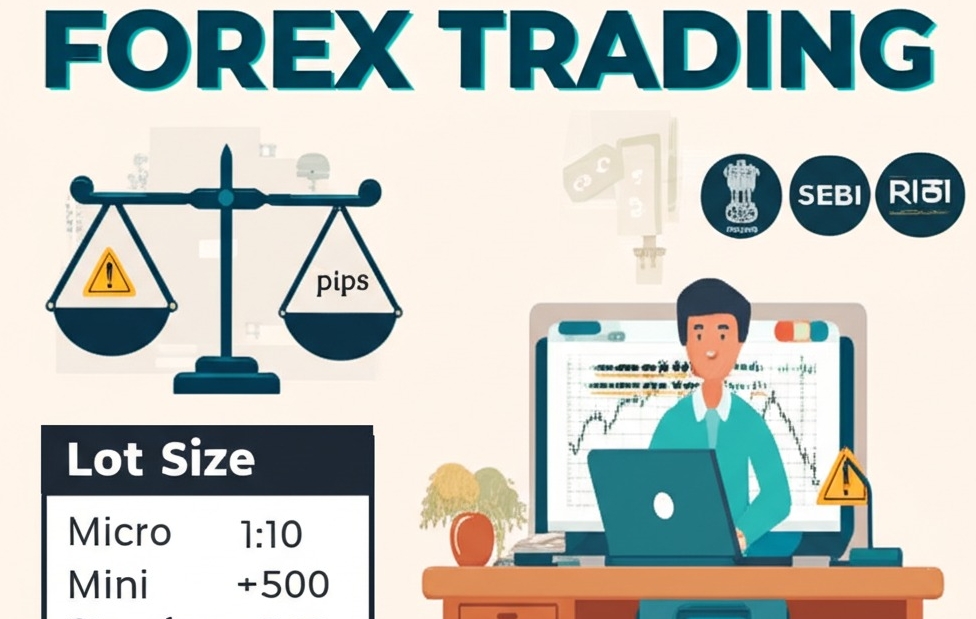
Forex basics for Indian traders
If you're just stepping into forex trading, you’ll run into a few must-know terms. You’ll be dealing with currency pairs like USD/INR, trading based on pips, and choosing your lot size depending on your account size and risk comfort. Leverage sounds cool, but it can magnify losses just as much as profits—use it carefully.
Forex trades operate 24 hours a day from Monday to Friday, and in India, brokers must comply with SEBI and RBI guidelines. That means you can only trade select pairs (like INR crosses) legally with regulated brokers.
| Term | Meaning | Beginner Tip |
|---|---|---|
| Lot Size | Volume of currency units traded | Start with micro-lots to manage risk |
| Pips | Smallest price move in forex | Track how many pips you win/lose |
| Leverage | Borrowed capital for larger trades | Don’t exceed 1:10 until you're confident |
| INR Pair | Currency pair involving Indian Rupee | Stick to INR/USD or INR/EUR initially |
Demo accounts for practice
A demo account is like your forex sandbox. You can trade in real time using virtual money, test out strategies, or just get used to how a trading platform works. Think of it as a trading simulator where mistakes cost you nothing.
Learning how orders work
Practicing risk management
Testing strategies before going live
Getting used to forex lingo without the pressure
If you’re serious about forex, demo trading isn’t just optional—it’s essential. Stay in practice mode until you’ve got a rhythm, and treat it like the real thing. Build a virtual portfolio, track your progress, and don’t rush into live trading just to “feel real.”
Best brokers for beginners
Choosing a Forex broker in India as a beginner? Don't just go with flashy ads—look for brokers that are regulated by SEBI, have low minimum deposit requirements, and offer simple user interfaces.
Regulation – Only use brokers approved by Indian authorities (SEBI or partnered with SEBI-compliant intermediaries).
Low Trading Fees – Look at spreads, not just commissions.
Beginner-Friendly Tools – Like in-app tutorials or copy trading.
Customer Support – Responsive support matters when you get stuck or confused.
Brokers like Zerodha, Upstox, or international platforms partnered with Indian banks often provide basic leverage and simple interfaces, making them good for first-timers.
Common mistakes to avoid
Overtrading – You don’t need to trade every hour. Seriously, chill.
Ignoring Stop-Loss Orders – This is like driving without brakes.
Emotional Trading – Lost a trade? Don’t go chasing it like an ex. Reset.
Misusing Leverage – Using 1:100 leverage as a newbie? Recipe for disaster.
Skipping a Plan – No plan = no direction = guaranteed chaos.
“Trading success is boring—it’s all about discipline and process, not excitement,” says Sneha Kapoor, Forex educator and mentor.
Avoid shortcuts. Track everything. Learn slowly. That’s the secret sauce.
Conclusion
Trading forex in India isn’t some get-rich-quick scheme—it’s more like driving on a highway with rules. You need the right license (read: RBI/SEBI compliance), the right vehicle (platform or app), and a solid idea of the road ahead (costs, currency pairs, risks). For beginners, demo accounts are your test drive—no pressure, no traffic fines.
As the RBI puts it, "Forex transactions must follow guidelines to ensure stability in the financial system." Stick to legal routes, pick a tool that suits your style, and start small. No shortcuts—just smart moves.
You can legally trade forex in India through platforms regulated by SEBI and that offer trading in INR-based currency pairs, such as USD/INR, EUR/INR, GBP/INR, and JPY/INR. International platforms offering non-INR pairs are not permitted under FEMA unless accessed via a licensed foreign remittance channel.
Approved brokers must be registered with SEBI. Popular SEBI-regulated brokers include:
These brokers provide forex trading under regulated Indian exchanges like NSE and BSE.
Zerodha
ICICI Direct
HDFC Securities
Kotak Securities
While MetaTrader platforms are widely popular globally, they are not commonly supported by Indian SEBI-regulated brokers. However, some brokers provide indirect access via APIs or proprietary platforms offering similar tools.
Minimum investment varies by broker and account type. Typically, you can start trading forex in India with as little as ₹2,000 to ₹5,000, especially when using margin. However, higher amounts are recommended for effective risk management.
Forex trading profits are considered either business income or capital gains, depending on trading frequency. Tax treatment includes:
Always consult a tax advisor for case-specific guidance.
15% on short-term capital gains
Applicable slab rate for business income
GST may apply on brokerage fees
TCS for foreign remittances over ₹7 lakh/year
Yes, but beginners should start with a demo account and understand the risks involved. Many Indian platforms offer:
Educational resources and webinars
INR-based pairs that reduce currency conversion risk
Customer support in regional languages
Regulatory protection under Indian law
There’s no single “safest” app, but safety depends on regulation, platform security, and user reputation. Look for:
Apps like Zerodha Kite, ICICI Direct, and HDFC Securities are trusted by Indian traders.
SEBI registration
Two-factor authentication (2FA)
Strong encryption protocols
Real-time compliance alerts