


Table of contents

When it comes to making money from forex trading, most Indians hit a wall of rules before they can even begin. So, the big question is — who regulates forex market in India? If you’ve tried dabbling in currency trading through global apps or heard of folks making money on the side, you’ve probably also heard whispers about RBI crackdowns, FEMA laws, or SEBI alerts. It can feel like trying to drive with one foot on the brake.
Think of India’s forex market like a tightly monitored toll road. The Reserve Bank of India (RBI) and Securities and Exchange Board of India (SEBI) control who’s allowed to drive, what direction you can take, and how far you're allowed to go. “We have to balance investor freedom with financial discipline,” the RBI once said in a circular — and that pretty much sums up their style.
This article clears the fog. You’ll learn who’s calling the shots, what laws keep things ticking, why most retail traders can’t trade freely, and how you can stay on the right side of the law without burning your fingers.
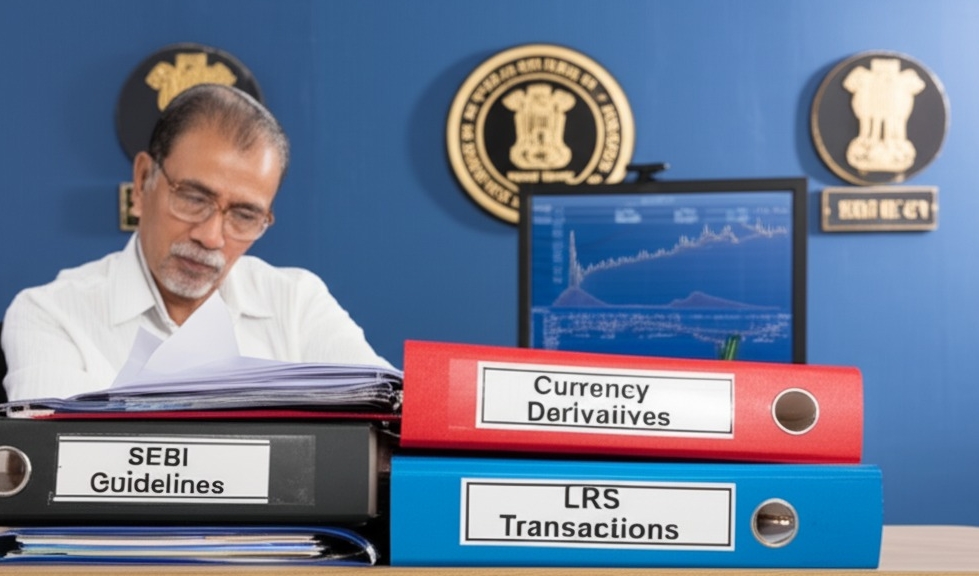
Forex regulation in India
“In our line of work, forex is not just numbers—it is the nation’s financial pulse,” remarked a senior officer from the Reserve Bank of India (RBI) in a closed-door roundtable on capital flows. His sentiment reflects the seriousness with which forex regulation in India is managed. This complex machinery includes not just RBI, but also SEBI, the Directorate of Enforcement (ED), and institutions operating under strict oversight.
Foreign Exchange Management Act (FEMA): A post-1999 shift from control to facilitation of forex dealings.
Authorized Dealers (ADs): Mostly banks, these entities are permitted to transact in foreign exchange under RBI rules.
Liberalised Remittance Scheme (LRS): A route through which residents can legally send up to $250,000 abroad annually.
Currency derivatives: Traded on stock exchanges but only within RBI and SEBI-approved frameworks.
The ED steps in where compliance turns to crime, ensuring FEMA violations do not go unchecked. Meanwhile, RBI manages current account convertibility while still limiting capital account convertibility to safeguard the economy. India's foreign exchange reserves, among the largest globally, are a buffer for stability, not a free pass for unbridled trading.
As SEBI once stated in its 2022 regulatory note, “Retail protection remains paramount when access to cross-border financial markets expands.”
Role of RBI and SEBI
RBI and SEBI play tag-team in keeping India’s forex scene in check. Their roles might overlap but each has a clearly drawn lane.

RBI controls currency movement rules
The Reserve Bank of India (RBI), India’s central bank, sets the rulebook for currency movement.
It governs all foreign exchange inflows and outflows via FEMA regulations.
Cross-border transactions, capital account limits, and remittance ceilings fall under RBI's purview.
RBI’s priority? Keep the rupee steady and prevent currency volatility from burning the economy.
The RBI doesn’t just regulate — it actively filters what’s allowed to move in or out, ensuring India’s external balance doesn’t go haywire.
SEBI monitors forex investment products
It sets trading rules for forex derivatives listed on Indian exchanges like NSE and BSE.
SEBI ensures retail investors only access safe, INR-paired instruments.
Unauthorized platforms? SEBI cracks down hard.
As SEBI’s chairman once said, “Regulation must keep pace with innovation. But never at the cost of investor safety.”
Policy coordination between RBI and SEBI
RBI handles the engine (currency), SEBI manages the passengers (investors).
Policy coordination ensures smooth decisions during market turmoil or rule changes.
They work via inter-agency committees and regular consultations.
Such teamwork has helped India dodge multiple global currency crises — without drama or bailout headlines.
What is FEMA 1999
FEMA replaced the old-school FERA in 1999, changing how India handles forex. Let’s break down what shifted—and what it means today.

FEMA vs FERA: What changed
The Foreign Exchange Management Act (FEMA) replaced the Foreign Exchange Regulation Act (FERA) to make forex laws less rigid. Under FERA, even small violations were treated like criminal offences. FEMA, on the other hand, takes a civil approach to enforcement—no jail time, just penalties.
| Key Difference | FERA (1973) | FEMA (1999) |
|---|---|---|
| Nature of Law | Criminal | Civil |
| Focus | Control | Management |
| Enforcement | ED-led raids | Adjudication via RBI |
This shift brought a more business-friendly vibe to India’s forex ecosystem.
FEMA’s impact on outward remittances
Thanks to FEMA, sending money abroad has become a lot simpler—especially under the Liberalised Remittance Scheme (LRS). Earlier, sending money for studies or investments outside India involved mountains of paperwork and RBI nods.
Indians can remit up to USD 250,000 per year under LRS
Uses include education, travel, gifting, investing abroad
All under FEMA's current account and capital account framework
In short, FEMA made foreign exchange flow like chai at an Indian wedding—less blocked, more free.
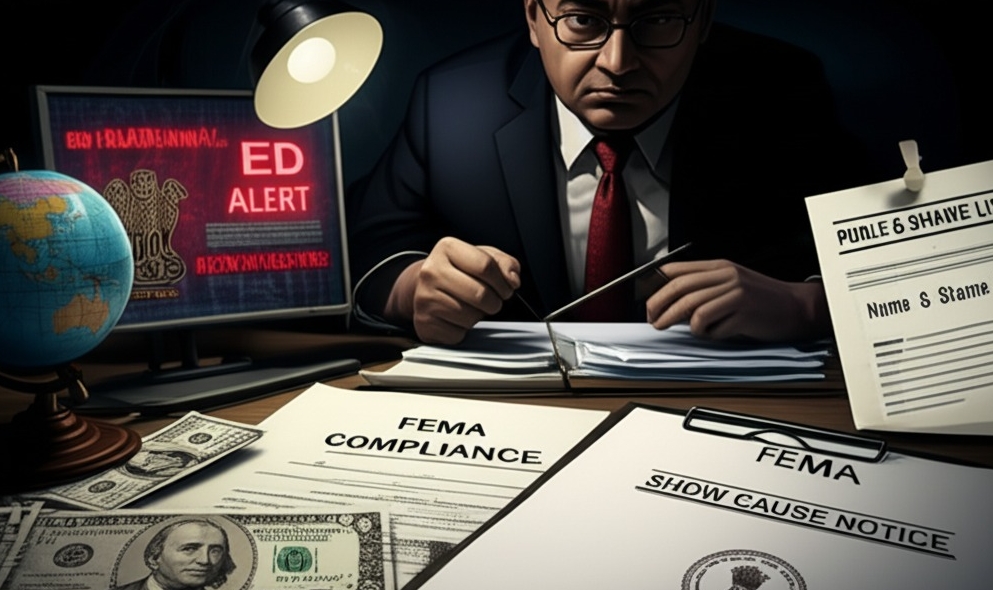
Forex violations under FEMA law
Breaking FEMA rules? You're not getting arrested like in FERA days—but you won’t get away scot-free either.
Sending money without purpose declaration
Trading forex through unauthorized platforms
Holding foreign currency abroad without RBI nod
Consequences:
Fines up to 3 times the amount involved
Adjudication by RBI, enforcement by ED
Name & shame in public RBI reports
"Ignorance of the law is not an excuse," says a former Enforcement Directorate officer. It’s better to play safe with forex.
RBI’s powers under FEMA
The Reserve Bank of India is the ringmaster under FEMA—it authorizes who can trade, remit, or invest in foreign exchange.
RBI sets rules for outward and inward forex transactions
Can compound offences—means settle them with a fee
Grants dealer licenses and oversees their compliance
Coordinates with Enforcement Directorate for violations
Think of RBI as the “bouncer” at India’s forex club—if you're not on the list or playing by the rules, you’re out.

Who are authorized dealers
Not just anyone can deal in forex. The Reserve Bank of India (RBI) keeps a tight watch by licensing only specific types of players—known as Authorised Dealers.
Categories of RBI-licensed dealers
The RBI classifies forex-dealing institutions under clear dealer categories, each with defined roles and limits. Here’s a snapshot of the key types:
| Dealer Category | Example Entities | Primary Function |
|---|---|---|
| AD Category I | Commercial Banks | Full forex services |
| AD Category II | Upgraded FFMCs, NBFCs | Limited forex, remittance services |
| FFMC | Currency exchangers | Retail forex, prepaid travel cards |
AD-I dealers handle the full suite—imports, exports, foreign investments.
AD-II dealers have limited access, mostly handling personal remittances and travel needs.
FFMCs (Full Fledged Money Changers) offer currency exchange but can't process trade-related payments.
RBI regulations ensure these licenses go only to financially sound, compliant institutions.
Banks vs non-banks in forex roles
Banks and non-banks may both enter the forex ring, but their roles differ sharply.
Banks (AD Category I):
Handle end-to-end forex transactions
Provide services for trade, investment, education abroad
Work closely with RBI policy updates
Non-banks (FFMCs, NBFCs, Payment Banks):
Mostly focus on currency exchange and personal remittances
Can’t engage in cross-border trade payments
Operate under tighter licensing norms
In short, if forex is a cricket match, banks are the all-rounders while non-banks play limited overs.
FEDAI and its Function
“FEDAI? That is the silent referee in India’s forex market,” remarked Ramesh Joshi, a retired treasury head at a leading public sector bank. The Foreign Exchange Dealers' Association of India (FEDAI) has been quietly setting the pace since 1958, ensuring every player follows the rulebook without needing a whistle.
Established by the Reserve Bank of India, FEDAI comprises member banks authorized to deal in foreign exchange. It does not just issue guidelines—it shapes market behavior. From standardizing interbank forex quotes to laying down rules for forward cover charges, FEDAI acts like the standards body in a game where precision means profit.
Professionals in the field acknowledge its benchmark setting role. "When FEDAI updates card rates or notifies changes in TT buying/selling rates, the entire market listens," shared Rajat Mehra, a forex consultant and ex-HDFC currency dealer.
Organizing training programs for forex officials across India
Promoting ethical practices among dealers
Releasing circulars that align with evolving RBI policies
Its credibility is supported by its continuous collaboration with the RBI, and its materials often serve as reference manuals for banking professionals preparing for JAIIB and CAIIB certifications.
For Indian forex professionals, FEDAI remains not just relevant—it is regulatory gospel.
Are forex platforms legal in India
Forex apps are everywhere—but are they all legit in India? Let’s clear the air and get to the legal stuff that matters.

Why foreign forex apps are blocked
Many global forex trading apps are blocked or flagged because they bypass FEMA and RBI rules. These apps often let users trade non-INR pairs, which is a direct violation of Indian law.
Cross-border trades through unauthorized platforms? Big no-no.
RBI insists on rupee-paired currencies for retail users.
Most foreign apps aren’t under any Indian regulatory scanner.
“Such platforms expose users to illegal trades and capital loss,” RBI noted in its 2022 alert.
SEBI guidelines for legal platforms
Legal forex trading happens only on regulated exchanges like NSE or BSE.
Only INR-based pairs (e.g., USD/INR, GBP/INR) are permitted.
Platforms must be SEBI-registered with a valid trading license.
So if you're dreaming of trading EUR/USD directly? Sorry, that's not happening unless you're doing it through authorized currency derivatives in India.
Recognized brokers under Indian law
If you're serious about legal forex trading in India, stick to platforms registered with SEBI and operating under Indian financial laws. Here's a look at some recognized brokers:
| Broker Name | Regulatory Body | Permitted Currency Pairs |
|---|---|---|
| Zerodha | SEBI, NSE | USD/INR, EUR/INR, GBP/INR |
| ICICI Direct | SEBI, NSE | INR-paired currencies only |
| HDFC Securities | SEBI, BSE | INR-based forex derivatives |
| Sharekhan | SEBI, NSE | USD/INR, JPY/INR, GBP/INR |
These recognized brokers ensure compliance, investor safety, and legal transparency. Don’t fall for fly-by-night forex apps promising global pairs with no questions asked.
Want to stay out of trouble? Stick with SEBI-registered brokers and trade on legal grounds. Better safe than sorry.
Why is retail forex trading restricted
Retail forex in India is a tightrope walk—and not without reason. Let’s explore why everyday folks can't just jump into currency trading.
Risk control in volatile markets
When markets move like a roller coaster, regulators worry about people losing their shirts—literally. India’s risk management strategy limits forex access to minimize exposure to market risk and volatility.
Volatile times = emotional trading. That’s a red flag for retail investors without solid portfolio management or investment strategy.
The RBI prefers using hedging tools and regulated financial instruments, like INR currency futures, to keep things tidy.
As one market analyst put it: “Unregulated forex trading opens the door to financial chaos. RBI's caution is justified.”
Protecting rupee from speculative trades
The Indian Rupee is more than just a currency—it's a national symbol and an economic pillar. The government protects it from speculative trading like a goalkeeper in a penalty shootout.
Speculation = Instability. Wild forex bets can impact exchange rate stability, forcing the central bank to step in with currency intervention.
Capital controls are used to prevent money from fleeing the country during high-risk trades.
Hedging strategies, not blind bets, are allowed via regulated platforms to maintain currency protection and economic balance.
Can Indians trade global forex legally

Thinking of earning in dollars through global forex? Hang tight. Trading laws in India aren’t as freewheeling as they seem on YouTube.
What the LRS scheme allows
The Liberalised Remittance Scheme (LRS) by RBI allows resident individuals to send up to USD 250,000 per financial year for legitimate overseas uses. These may include education, travel, gifts, or investing abroad—but not speculative forex trading on foreign platforms.
As financial advisor Ritesh Sharma puts it, "LRS is a controlled highway, not an open runway."
You can invest under LRS in:
Foreign stocks and mutual funds
Real estate abroad (with conditions)
Specific business equity deals
However, forex trading via unauthorized brokers is a strict no-no under the LRS framework.
Trading only in INR-paired currencies
To keep things under tight regulation, RBI permits forex trading only in specific INR-paired currencies. These can be traded on SEBI-recognized exchanges under Indian jurisdiction.
| Allowed Currency Pair | Where to Trade | Regulator |
|---|---|---|
| USD/INR | NSE/BSE | RBI + SEBI |
| EUR/INR | NSE/BSE | RBI + SEBI |
| GBP/INR | NSE/BSE | RBI + SEBI |
| JPY/INR | NSE/BSE | RBI + SEBI |
These pairs help you gain exposure to forex while staying compliant with FEMA rules. No wild bets here—just smart, regulated trading.
Why cross-border platforms are banned
Apps like OctaFX, XM, and others are flashy, but they're banned in India. Why? Because:
They operate without RBI or SEBI registration
Most facilitate capital account violations
They enable untracked fund transfers
They can't guarantee investor protection
So if you think you're making quick money on these platforms—RBI might think you're breaking the law. Stick to domestic brokers if you want to sleep easy.
RBI’s view on overseas investment risk
RBI doesn’t hate forex trading—it just hates uncontrolled exposure. The concern is that large, unregulated forex flows can lead to:
Capital flight that harms the economy
High risk of fraud through offshore scams
Regulatory black holes in tracking investments
RBI stated: “Forex trading via unauthorized routes poses systemic risk and undermines monetary policy enforcement.”
That’s why even under LRS, RBI restricts risky investments that aren’t backed by compliance structures or verified platforms.
Conclusion
Forex trading in India isn’t a wild jungle—it’s more like a gated colony with strict watchmen. RBI and SEBI make sure only the right people enter, follow the rules, and don’t mess with the system. If you’re thinking of trading currencies, knowing who’s in charge isn’t just smart—it’s non-negotiable.
As RBI once said, “Unregulated forex activity poses systemic risk to the economy.” That’s not a warning—it’s advice worth gold.
So, don’t blindly jump into global platforms promising big profits. Stick to the legal lanes, understand FEMA, and always double-check your broker. Safe trading beats sorry regret.
FEMA, short for Foreign Exchange Management Act (1999), is the main law that governs everything related to forex in India—how money flows in and out of the country. It replaced the older FERA act and shifted the tone from strict policing to guided management. Basically, FEMA keeps the economy stable while allowing some flexibility in forex dealings.
In most cases, no. These platforms are not approved by RBI or SEBI, and using them could land you in legal trouble. The government blocks many of these apps for a reason—they often let users trade in currency pairs not allowed in India.
As per current regulations, you can only trade currency pairs that involve the Indian Rupee (INR). This includes:
Some exchanges also allow INR-crossed derivatives through recognized exchanges under strict rules.
USD/INR
EUR/INR
GBP/INR
JPY/INR
The Reserve Bank of India (RBI) issues licenses to authorized dealers (ADs). These are usually scheduled banks, like SBI or ICICI, which follow RBI rules for forex transactions. Some financial companies may also be authorized in specific categories.
Not quite.
Forex trading is about speculating on currency price movements, often short-term.
Investing in foreign stocks is typically done through regulated platforms under the Liberalized Remittance Scheme (LRS) and is more long-term. Mixing up the two can be confusing, and they fall under very different sets of rules.
There are a few key reasons:
To protect the Indian Rupee from volatility
To reduce capital flight and money laundering
To avoid citizens getting trapped in unregulated platforms
Because forex trading is highly leveraged and risky
To keep better control over monetary policy and inflation
Violating FEMA can lead to hefty fines, and in some cases, prosecution. If you’ve traded through illegal platforms, you may be asked to pay up to three times the amount involved, along with possible confiscation of your trading profits. Better to be safe and stick to what’s permitted.