


Table of contents
Why Is Forex Trading Illegal in India? It's a question that pops up in every second finance forum and YouTube comment section. You see someone doubling their money trading USD/EUR on an app, and you wonder, “Why not me?” But here's the twist—forex trading the way it's done abroad is mostly a no-go in India. Why? Because of strict RBI rules and FEMA laws that most folks skip reading before diving in.

As RBI once put it: "Trading in foreign exchange other than on permitted exchanges is illegal." That’s not just fine print—it’s a real roadblock that’s caught many unsuspecting traders off guard, sometimes with hefty fines to show for it.
In this guide, you’ll get the full picture—why the ban exists, what’s allowed, what’s not, and how to stay on the right side of the law while still exploring global markets smartly.
Is Forex Trading Legal in India?
The question sounds simple, yet the reality on the ground is layered, confusing, and often misunderstood. Walk into any Indian trading forum, and the debate fires up instantly. “My broker said it’s legal.” “No, RBI strictly bans it!” So what is the truth?
We brought in Arvind Nair, a former compliance officer with a Mumbai-based forex advisory firm, to clarify the real legal boundaries.
“If you're trading on currency derivatives through authorized platforms like NSE or BSE, you're within legal limits,” Arvind began. “The moment you trade in pairs not involving the Indian Rupee, you're stepping into dangerous territory.”
Here's what you need to know:
Foreign exchange trading in India is regulated under the Foreign Exchange Management Act (FEMA).
Only currency pairs involving INR are legal when traded through Indian stock exchanges.
Overseas forex brokers offering high-leverage accounts? Absolutely illegal under RBI norms.
Authorized dealers, typically major banks, are the only entities allowed to conduct forex transactions under Liberalised Remittance Scheme (LRS).
Arvind warned, “Even platforms advertising Non-Deliverable Forwards (NDFs) or high-frequency forex trading can trigger action from the Enforcement Directorate (ED).”
According to SEBI, retail investors must steer clear of any unregulated forex platforms. While the global forex market tempts with 24/5 access and flashy dashboards, Indian law remains clear: if it is not regulated by RBI or SEBI, it is not allowed.
Tip from Arvind: “Stick with SEBI-registered platforms and only INR-based pairs. Anything else can cost you your savings—or worse, your freedom.”
Reasons for Forex Ban in India
Currency volatility control reasons
Managing currency volatility is a key goal of the RBI and India's central banking policy. Wild fluctuations in exchange rates can disrupt trade, spike inflation, and damage investor confidence. To prevent speculative trading from distorting the rupee’s value, the government maintains tight monetary control.
Government intervention comes in to:
Protect the economy from forex shocks
Maintain stable inflation and interest rates
Prevent large-scale capital outflows via uncontrolled trading
Controlling volatility isn’t just about policy—it's about economic survival in a globalized world.

Forex trading and money laundering
Let’s be real—Forex platforms can be a breeding ground for illicit finance. Without tight KYC and AML norms, it's too easy for bad actors to wash dirty money through anonymous currency exchange.
Authorities fear:
Disguised money laundering through overseas forex accounts
Suspicious activity going unreported by unregulated brokers
Weak compliance checks with foreign entities
“Forex markets, when unregulated, become easy pipelines for financial crime,” says a former SEBI compliance officer. Hence, tighter forex laws are a no-brainer.
Impact on India’s capital flow
Unregulated forex trading impacts India’s capital flow by making FDI and portfolio investment patterns less predictable. It opens the door for unrestricted currency movement, potentially affecting the rupee's strength and overall economic growth.
| Capital Component | Risk Impact | Regulatory Concern |
|---|---|---|
| FDI | Medium | Regulatory Evasion |
| Portfolio Flow | High | Volatile Outflows |
| Currency Reserves | High | Exchange Instability |
To preserve financial market stability, the RBI prefers centralized, policy-driven control over foreign exchange transactions.
What Are RBI Rules on Forex Trading?
Allowed currency pairs in India
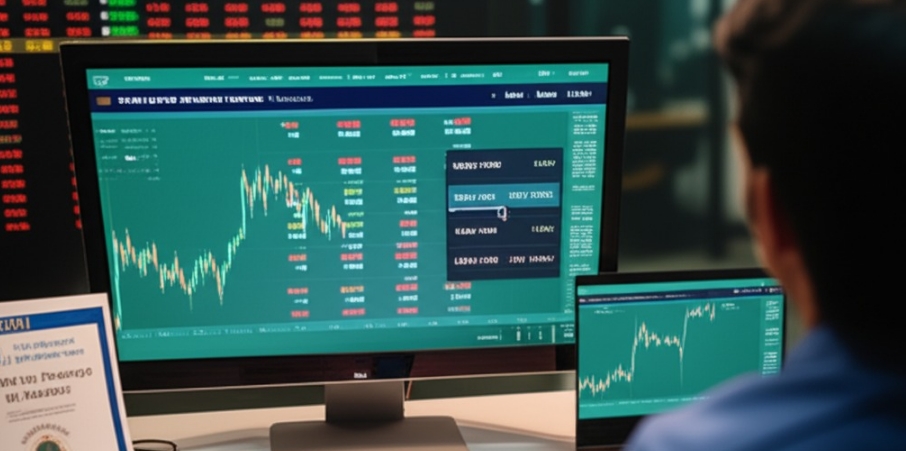
Forex trading in India is tightly regulated by the Reserve Bank of India (RBI), and only specific currency pairs involving the Indian Rupee (INR) are allowed for trading on recognized exchanges like NSE and BSE.
Approved INR pairs include:
INR/USD (US Dollar)
INR/EUR (Euro)
INR/GBP (British Pound)
INR/JPY (Japanese Yen)
Trades must be executed through Authorized Dealer banks or currency trading platforms regulated by SEBI. Exotic or cross-currency trading (e.g., USD/GBP) is generally prohibited unless done via currency derivatives under strict compliance.
Here’s a snapshot:
| Currency Pair | Base Currency | Status |
|---|---|---|
| USD/INR | US Dollar | Permitted |
| EUR/INR | Euro | Permitted |
| GBP/JPY | British Pound | Not Allowed |
This restriction helps the RBI monitor capital flow, avoid currency speculation, and maintain macroeconomic stability.
Role of FEMA in forex control
The Foreign Exchange Management Act (FEMA) is India’s primary law governing forex trading. It ensures foreign exchange reserves are used wisely and prevents currency convertibility abuse.
FEMA divides forex activity into two tracks:
Current account transactions – Like travel and tuition, mostly allowed with minimal oversight.
Capital account transactions – Like investments or loans abroad, need RBI approval.
Under Liberalised Remittance Scheme (LRS), individuals can send up to $250,000 per year abroad, but using it for margin trading or speculative forex is strictly banned.
“FEMA isn’t just red tape,” says a senior RBI official. “It’s our firewall against financial chaos.”
The Enforcement Directorate investigates any foreign exchange violations, reinforcing FEMA’s authority in India’s forex ecosystem.
Penalties for Illegal Forex Trading in India
Fines for illegal forex trades
Unauthorized forex trading under the Foreign Exchange Management Act (FEMA) attracts steep fines and penalties. Individuals caught making currency violations—especially involving cross-border transactions—can face fines up to ₹10,000 per day until compliance is restored.
These penalties often escalate when money laundering or unauthorized transactions are detected by the Enforcement Directorate (ED). In severe cases, the Reserve Bank of India (RBI) may initiate prosecution for recurring or intentional financial crime.
| Type of Violation | Regulatory Body | Maximum Fine (INR) |
|---|---|---|
| Unauthorized forex trade | RBI | ₹10,000 per day |
| Suspicious fund transfers | ED | Up to ₹50 lakh + jail |
| Unlicensed trading platforms | RBI | ₹2–5 lakh per violation |
Bank account monitoring in forex cases
Banks now keep a hawk’s eye on suspicious transactions. Thanks to KYC and AML protocols, even one dodgy international payment can raise red flags.
Did you know? Financial institutions use forensic accounting to trace unauthorized forex movements. Once a red flag is raised, your bank account may be frozen during investigation.
If you're messing around with shady forex apps, don't be surprised when your banker suddenly gets nosy. The RBI and ED regularly share intelligence to tighten regulatory compliance across the system.
Legal cases involving forex violations
Some forex violations have made headlines. Take the 2022 case of a Mumbai trader fined under FEMA for using an offshore broker—it ended in a ₹25 lakh penalty and court-mandated education in forex compliance.
These legal cases show how seriously Indian courts take currency control laws. Litigations often involve multiple charges, from illegal remittance to breaching SEBI investment norms.
First, court proceedings are triggered by ED’s findings.
Then, charges under FEMA or even PMLA (Prevention of Money Laundering Act) may be filed.
Lastly, guilty parties often face hefty fines, asset seizures, or jail time.
Role of ED and RBI in enforcement
“The RBI sets the rules, but it’s the ED that enforces the punch,” says compliance expert R. Mehra.
The Reserve Bank of India lays down the legal framework, including which currency pairs are tradable. But when rules are broken, it’s the Enforcement Directorate that steps in.
The RBI issues circulars and bans shady platforms.
The ED investigates and prosecutes financial crimes, especially those linked to money laundering or illicit forex flows.
In joint operations, they coordinate with financial institutions and even international watchdogs.
Can Indians Use International Forex Brokers?
Risks of using foreign platforms
Foreign platforms often look attractive—flashy interfaces, wide currency pairs, and lower fees. But here's the kicker: you’re on your own if things go south.
Legal compliance: Most foreign forex brokers are not regulated by Indian authorities like SEBI. This means you’re stepping outside India's legal safety net.
Data security and privacy: Your personal data might be stored in countries with weak data protection laws, putting you at higher risk of cybersecurity breaches.
Jurisdiction and scams: If you’re scammed, your chances of legal recourse are slim to none. International jurisdiction complicates any form of consumer protection.
“Using an unregulated broker overseas is like sending your money to a stranger—you might get it back,” says Rajesh Mahajan, cybersecurity expert.
How brokers bypass Indian laws
Some foreign brokers find clever (and sketchy) ways to sneak around Indian rules:
Offshore accounts & shell companies: Brokers may set up operations in tax havens with lax oversight, hiding real ownership and dodging scrutiny.
Misleading marketing: Many platforms advertise themselves as “India-friendly” while cleverly skipping SEBI registration.
Tech loopholes: They mask IP addresses or use mirror websites to appear local but remain untraceable to Indian regulators.
Indian enforcement agencies are cracking down, but these brokers thrive in legal grey zones. Always double-check the SEBI status of any broker before investing.
Legal Forex Trading Options in India

Trading on NSE and BSE platforms
The National Stock Exchange of India (NSE) and the Bombay Stock Exchange (BSE) allow legal forex trading through derivative products like currency futures and options. These are strictly regulated by the Securities and Exchange Board of India (SEBI), ensuring trader protection and transparency.
You can trade instruments like USD/INR or EUR/INR futures.
A Demat account and a trading account with a registered brokerage are required.
Contracts are standardized, and leverage is limited to manage risk effectively.
These platforms also support trading in commodities, stocks, and bonds, making them multi-asset environments for Indian retail investors.
Using SEBI-regulated forex brokers
Look—if you’re going to trade forex in India, you must stick to brokers registered with SEBI. These brokers are legally bound to offer only INR-based currency pairs like USD/INR, EUR/INR, etc.
These brokers follow strict compliance and risk management guidelines.
You’ll get full transparency on spreads, leverage, and contract terms.
Avoid platforms offering EUR/USD or GBP/JPY—they’re illegal for Indian residents under FEMA.
"Regulated brokers reduce the chances of scam and legal trouble," says Amit Desai, senior analyst at ForexIndia.
Understanding INR-based forex pairs
Trading forex in India revolves around INR-based pairs. These include USD/INR, EUR/INR, GBP/INR, and JPY/INR. Here's a quick comparison:
| Currency Pair | Avg Daily Volume (INR) | Typical Spread |
|---|---|---|
| USD/INR | 12,500,000,000 | 0.25 |
| EUR/INR | 3,100,000,000 | 0.40 |
| JPY/INR | 1,600,000,000 | 0.45 |
Bid price, ask price, and spread are key metrics to watch. These influence your actual profit or loss in each trade. Stick with INR pairs to stay compliant and avoid RBI heat.
Conclusion: Play It Smart with Forex in India
Jumping into forex trading without knowing the rules is like driving on the wrong side of the road—you might get far, but when you crash, it hits hard. In India, forex isn’t a free-for-all; RBI’s got strict traffic signals in place. Stick to legal pairs and SEBI-approved brokers if you don’t want a legal headache later.
As RBI once said, “The Indian rupee is not a freely convertible currency.” That’s your cue to trade wisely, not wildly.
Forex trading is not entirely illegal in India—it is highly regulated. The Indian government restricts trading in currency pairs that do not involve the Indian Rupee (INR) to prevent excessive capital outflow and reduce exposure to volatile foreign markets. Trading through unauthorized foreign brokers is illegal.
Only INR-based pairs are legally allowed for retail trading:
These must be traded through SEBI-registered platforms like NSE or BSE.
USD/INR
EUR/INR
GBP/INR
JPY/INR
No, using international apps like OctaFX is not permitted for Indian residents. These platforms are not registered with Indian regulators like SEBI or RBI, making them illegal for retail forex transactions.
Trading illegally in forex markets can lead to serious consequences:
Fines under FEMA (Foreign Exchange Management Act)
Seizure of funds involved in unauthorized transactions
In extreme cases, imprisonment
Legal brokers must be registered with SEBI and operate under Indian regulations. Examples include:
These brokers only allow trading in INR-based pairs.
Zerodha
ICICI Direct
HDFC Securities
To stay compliant:
Use SEBI-registered platforms
Trade only in INR currency pairs
Avoid foreign-based apps not approved by RBI or SEBI
NRIs (Non-Resident Indians) can participate in forex trading in India under strict conditions. They must follow FEMA guidelines and may be limited to specific routes approved by RBI. However, many prefer to trade from their resident country due to fewer restrictions.