


If your company sends crores abroad every year, icici forex rates aren’t just a number on a website – they decide whether your margin shrinks quietly month after month.
Every 10–20 paise worse on a million-dollar payment is ₹2–4 lakh gone. Over dozens of deals a year, that’s real money: it’s extra interest, lost discount, or an entire hire.
What makes it tricky is that ICICI doesn’t give the same rate to everyone. Corporates with clean paperwork, predictable flows and active dealing behaviour routinely get better pricing than one-off or “panic mode” users.
This 2026 guide breaks down, step by step, how wholesale ICICI forex pricing actually works – so your finance team can defend the bottom line instead of just “taking the bank’s word for it”.
Why ICICI Bank’s forex rate feels different from the website “card rate”
Most finance teams compare today’s USD to INR with yesterday’s closing, glance at a public card rate, then call the branch and hope for something “a bit better”.
Behind that simple phone call, a lot is moving:
Interbank Spot rate on USDINR / EURINR / GBPINR (the live market rate)
ICICI’s spread over that interbank rate (what they earn)
Any conversion charges, TT fee, SWIFT fee
Whether you’re using a Spot deal, Forward contract, Option, or Swap
How clean your documentation is, and how fast they can book and report the trade
Two companies with the same invoice amount and same date can end up with very different effective rates, just because one has a tighter dealing process and better relationship positioning.
“Most firms know the headline rate, very few know their real all-in rate after spreads, brokerage and sloppy timing.”
— Senior easycashbackfx FX engineering lead.
This guide keeps things straight: how ICICI prices wholesale forex and what levers you control as a corporate to shave off those extra paise – without breaking FEMA or annoying your relationship team.
1. Wholesale icici forex rates for USD to INR and EUR to INR
Spot Interbank Rate vs Corporate TT rate
For big tickets (say USD 100,000+):
The Interbank Spot rate is what ICICI’s treasury desk sees on their Reuters / Eikon screens.
Your corporate TT (Telegraphic Transfer) rate is that spot rate ± a spread.
That spread is where your negotiation, risk profile and relationship show up.
If USDINR spot is 83.20:
A very strong corporate client might get something like 83.24–83.26 for a clean spot outward remittance.
A small, one-off client with messy documentation might be pushed to 83.50 or worse “for safety”.
What drives the ICICI spread on the same day?
Ticket size
Smaller tickets (< USD 10k) usually get a wider spread – bank admin costs are proportionally higher.
Larger tickets (USD 100k+, million-dollar flows) can justify 3–8 paisa tighter pricing if you ask.Currency pair liquidity
USD to INR is the most liquid; spreads will be tight.
EUR to INR, GBP to INR, JPY to INR – slightly wider.
Exotic pairs (ZAR, RUB, MXN) – much wider, especially in Indian hours.Client profile and turnover
If your company deals every week, hedges sensibly, and pays on time, the dealer knows they’ll earn volume over time.
If you only show up at year-end in a panic, you’ll get “what’s available” rather than best-effort pricing.Documentation risk and compliance headaches
Confusing purpose codes, missing invoices, or LRS/ODI ambiguity make banks nervous.
The dealer builds in extra spread “just in case compliance pushes back”.Time of the day
10:00–15:00 IST is usually the best window – interbank is liquid, overseas desks are active.
Late evening or illiquid windows often widen spreads by 5–10 paise without you realising.Use of Forward or Options
Plain vanilla spot deals get clean pricing.
Forward contracts or structured products add credit risk, so the bank prices more carefully.
The first control you have is: don’t accept a “take it or leave it” rate. Know roughly what interbank is for your pair, and what realistic spread a company your size should expect.
.png "Interbank Spot vs Corporate TT Rate (Core Explainer).png")
2. Live ICICI forex rates: how branches, relationship managers and dealers quote
Why the branch rate and dealer rate differ
A lot of corporates call the nearby branch, get a rate, and assume that’s “ICICI’s rate”.
In reality:
Branches usually show a card rate or a system-driven rate with a standard spread added.
Treasury dealers can tighten that, especially for repeat clients with clean paperwork.
Relationship Managers (RMs) sit in the middle, trying to meet targets while not upsetting compliance.
Typical flow in many companies:
Accounts team calls branch → branch reads a system rate.
Someone says “thoda aur better chahiye” → RM calls dealer.
Dealer checks:
Ticket size
Client profile and history
Today’s volatility
Internal P&L
Dealer suggests a tighter rate → RM passes it back.
If your company always accepts the first branch quote without involving treasury, you are almost always overpaying.
Simple escalation ladder for better rates
Set a policy something like:
Below USD 10k equivalent: accept branch or RM quote if within X paise of previous week average.
USD 10k – 100k: always loop in RM and ask for treasury desk pricing.
Above USD 100k: insist on live dealing with the treasury dealer (or at least a written quote with interbank reference and spread disclosed).
Just adding this simple policy and logging every rate versus RBI reference can easily save several lakh a year.
3. How global markets and RBI moves shape ICICI forex rates
Federal Reserve Policy, LIBOR, SOFR and USD to INR volatility
The FOMC pretty much sets the vibe for USD to INR. When US interest rate expectations change, the dollar index (DXY) moves and ICICI’s internal funding cost changes too.
Hawkish Fed (more hikes): Dollar strengthens, USD to INR tends to move up.
Dovish Fed (rate cuts / pauses): Dollar weakens, USD to INR often softens.
ICICI’s treasury watches:
US 10-year yield
SOFR / LIBOR equivalents
DXY index
RBI policy stance
On days with a key Fed announcement or high-impact US data (CPI, NFP), the bank may:
Quote wider spreads
Offer shorter-term forwards
Be conservative on optionality for mid-sized corporates
How RBI intervention and Forex Reserves impact ICICI pricing
RBI intervenes in the market via:
Spot USDINR buying/selling
Forex swaps
Changing systemic liquidity
When RBI is clearly leaning on the rupee (through spot and swaps), ICICI’s treasury sees:
Tighter or looser liquidity in USD funding.
Change in forward premiums.
Signals about RBI’s comfort band for USDINR.
Bigger Forex Reserves act like a safety net, calming nerves when markets get jumpy.
On days when RBI is actively in the market, treasury desks may tighten or widen spreads depending on whether they can easily square positions or not.
4. Using Forwards, Options and Swaps to improve ICICI forex rates
When a Forward contract makes more sense than spot
If you have:
Fixed USD/GBP/EUR payments in 1–12 months
Razor-thin margins that can’t take a shock move
Clear PO / contract in hand
A Forward contract with ICICI can:
Lock your rate for future dates
Remove mark-to-market shocks from your project costing
Strengthen your negotiation position with suppliers
However:
Forward premiums in India reflect interest rate differentials and RBI expectations.
Taking large forwards without underlying exposure can trigger FEMA and risk scrutiny.
Options for asymmetric risk (cap your loss, keep upside)
If your management prefers not to lock the rate completely, but still wants protection:
Plain vanilla call options on USDINR or EURINR can cap worst-case costs.
Zero-cost structures may combine options to reduce upfront premium, but you must understand the payoff diagrams.
Banks often bundle options and forwards into structured solutions; always insist on:
Clear worst-case, best-case, and most-likely scenarios
Maximum mark-to-market loss in stress tests
Using simple currency swaps for long-term loans
For long-tenor foreign currency loans:
An external commercial borrowing (ECB) in USD can be swapped into INR using a Currency swap.
That allows you to enjoy lower USD interest rates while fixing INR repayments.
In practice:
Your relationship team works with ICICI’s treasury and risk desk.
They design a swap structure that matches your loan tenor and cash flows.
For many mid-market companies, even a plain forward plus loan re-pricing can be enough; but if your exposures are large, ask your RM for a detailed term sheet comparing:
INR loan at MCLR + spread
USD loan with currency swap overlay
Blended cost after all fees.
5. Exchange Rate Volatility, Pip Value and Margin Call in corporate hedging
Even though companies don’t “day trade” forex, volatility matters a lot when:
You keep long USD receivables with no hedge
You take forwards or options and watch mark-to-market swings
You book ECB loans and swap them into INR
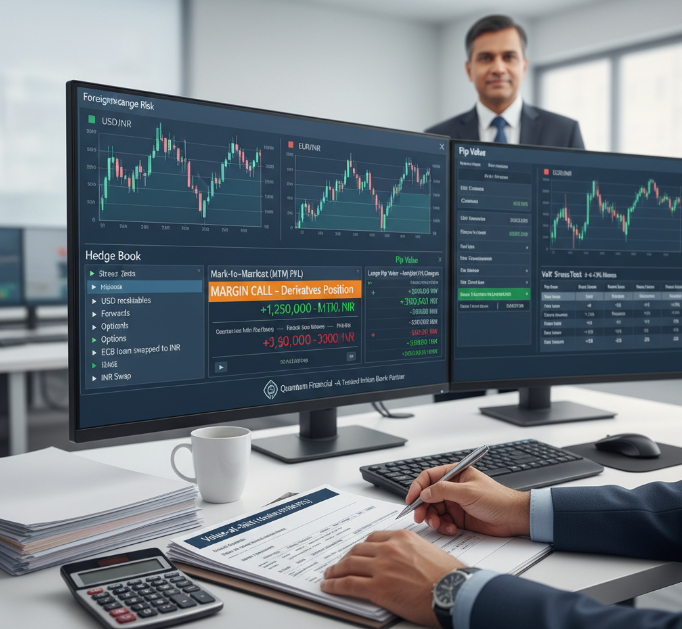
Bigger Pip Value on your ticket magnifies every tiny move, so Mark-to-Market swings can trigger Margin Call notices and upset your Risk Management comfort zone on Derivative positions.
Always ask ICICI for:
Value-at-Risk (VaR) style scenarios on your hedge book
Stress tests for 2–5% moves in the underlying currency pair
Visibility on collateral and margin requirements as rates move
This lets your CFO sleep better, and prevents surprise cash crunches.
6. KYC Documentation checklist for Foreign Investment and FCNR Account opening
Clean documentation is a massively underrated weapon in getting better forex rates.
When your KYC and deal paperwork are always in order, the RM and dealer:
Spend less time chasing clarifications
Face less pushback from compliance
Are more comfortable tightening spreads for you
Typical documents that influence ICICI forex handling for investments
For Outward FDI / ODI or foreign investments:
Board Resolution approving the investment
Shareholder Agreements or term sheets
Valuation reports if equity is involved
Past remittance history under ODI
Auditor certificates where mandated
For FCNR Account related flows:
Proof of NRI status
Passport, Visa, Overseas address
Details of source of funds
Linked NRE/NRO account details where applicable
This simple prep helps the relationship manager breeze through compliance, which, in turn, builds trust and makes your team look like folks who know their forex game.
7. Board resolutions and signatory lists for RFC Account and Currency Swaps
When you manage multiple products (loans, swaps, RFC and FCNR accounts) with ICICI:
Board resolutions can become outdated or incomplete.
Signatory lists might not reflect who actually signs FX deals day to day.
This leads to:
Delays at the worst possible time (when rates are moving and you want to lock quickly).
Extra documentation requests for every deal.
Dealers marking your account as “operationally slow”, which shows up in pricing behaviour.
Clean paperwork for Board Resolution and the Signatory List keeps life simple when you run an RFC Account or plan a Currency Swap.
Simple internal audit once a year
At least once a year:
Re-check Board resolutions for:
Up-to-date company name and CIN
Updated authorised signatories
Mention of derivative usage (for swaps/forwards/options)
Update signatory lists and specimen signatures with ICICI
Align internal delegation of authority (DOA) with what the bank has on file
This small governance effort signals seriousness to the bank and indirectly supports better risk-adjusted pricing.
8. Choosing SWIFT Messaging, Telegraphic Transfer or Demand Draft for payments
When you send money abroad via ICICI, you’re typically choosing between:
SWIFT MT103 telegraphic transfers
Foreign currency demand drafts
Sometimes local clearing arrangements (for certain corridors)
Each comes with its own:
Charge structure
Turnaround time
Traceability
Risk of beneficiary bank charges
For large corporate flows:
SWIFT MT103 TT is usually the cleanest, especially when speed and traceability matter.
Demand drafts may be cheaper but risk postal delays and are rarely used for modern supply chains.
Discuss with ICICI:
Corridor-wise typical turnaround
All-in charges (ICICI + correspondent + beneficiary bank)
How they handle reparations in case of value date delays.

9. RBI LRS / FEMA compliance and how it affects your ICICI forex rate
Why the bank is obsessed with purpose codes and LRS tracking
Under the Liberalised Remittance Scheme, resident individuals can remit up to USD 250,000 per financial year for permitted current and capital account transactions.
ICICI has to ensure:
You don’t breach the LRS limit.
Each transaction has a proper purpose code.
The source of funds and beneficiary purpose are consistent.
If your paperwork is unclear, the bank carries extra regulatory risk, so:
They may delay deal booking.
They may refuse to tighten spreads until things are clarified.
In worst cases, they may decline the transaction.
Aligning Purpose Code and Form A2 with FEMA Guidelines for remittances
For smooth ICICI forex handling:
Align LRS usage, TCS, Form A2 and correct purpose codes so the Relationship manager doesn’t pad rates “for safety”.
Get Form A2 and the Declaration Form filled cleanly before you ping your Authorized Dealer.
Match each deal to the right Purpose Code, for example an S0023 Code for certain trade flows.
Keep copies of invoices, agreements, and auditor notes organised so queries can be answered in minutes, not days.
When ICICI sees your deals are always clean and auditable, they have less reason to “price in” future compliance headaches into your spread.
10. Bulk educational remittances and ICICI’s special desks
If your company:
Sponsors employee overseas education
Has group companies paying global university partners
Runs scholarship or learning programs abroad
ICICI often routes such flows through:
Dedicated education remittance desks
Pre-approved university lists
Special corridors with known requirements
To get better pricing and smoother processing:
Register commonly used universities and counterparties in advance.
Align LRS usage, TCS, Form A2 and purpose codes with your internal HR and finance policy.
Maintain a central tracker of who has used how much of their LRS limit in the current financial year.
The more predictably your flows behave, the more ICICI can pre-plan their own funding, which feeds back into better corporate rates.

11. Corporate case-study: how a mid-size company improved ICICI forex rates
“We thought we were getting decent pricing because our RM was always ‘trying his best’. Once we logged every deal versus interbank and RBI reference, it turned out we were 10–18 paise off on big-ticket days.”
— Guest voice: Arjun Menon, Treasury Manager, easycashbackfx
Context:
Annual outward remittances ~ USD 15 million (suppliers, SaaS contracts, royalties).
Multiple currencies: USD, EUR, GBP.
Ad-hoc dealing, no clear policy.
Problems found:
No fixed dealing window – some big deals were pushed through in illiquid hours.
Poor documentation – frequent last-minute queries on purpose codes and LRS usage.
No comparison log – nobody tracked spreads versus interbank or RBI reference.
What they changed:
Set a strict dealing window: 10:00–15:00 IST, except emergencies.
Built an internal dashboard logging:
Interbank spot at deal time
ICICI quoted rate
All-in spread after charges
Cleaned up documentation:
Pre-approved purpose codes
Standard templates for Form A2 and declarations
Structured a basic hedging policy:
50–70% of large predictable flows covered via forwards.
Result over 6–9 months:
Average spread compressed by 6–12 paise on large deals.
Reduced last-minute “panic” premiums.
Better relationship standing with ICICI treasury – easier to negotiate when genuinely needed.
12. Practical tweaks to squeeze better rates from ICICI without damaging the relationship
1) Know your reference rate before calling
Before you call:
Check:
Live interbank reference from a reliable platform.
RBI reference rate for previous day for a rough sense check.
Decide your walk-away spread (for example, no more than 8–10 paise on large USD flows).
Then, when you get a quote, you’re responding from knowledge, not just emotion.
2) Use dealing windows when interbank is liquid
For active currency pairs like USD to INR or EUR to INR, liquidity is deep only in certain hours; odd timings mean fatter spreads.
A simple internal rule:
Tell your team: priority booking from 10:00–15:00 IST for major Currency pairs like USD to INR, GBP to INR, EUR to INR.
Avoid large deals around:
Big global data releases
RBI policy announcements
Major geopolitical events
3) Bundle flows smartly but don’t go overboard
Bundling many small invoices into a single USD 100k+ ticket can get better pricing.
But:
Don’t delay critical supplier payments just to “undo” a paise or two.
Space out deals enough to avoid timing risk.
4) Ask for product mixes that lower total cost of risk
With your RM and dealer, explore:
For long-term USD to INR loans, explore a Currency swap so Borrowing cost and FX risk both get embedded in one Derivative ticket rather than multiple rollovers.
Use partial forwards so you’re not over-hedged if business volumes shrink.
Compare all-in cost of hedged foreign borrowing versus plain INR loans.
5) Reward transparency and consistency
Tell ICICI upfront:
You will benchmark their quotes against RBI reference and a neutral interbank source.
You appreciate tight, transparent spreads – and will concentrate flows with them if they can maintain that over time.
Ask for separate slabs for Spot Contract deals, Forward Contract deals, and other hedging products so that a disciplined dealing pattern gets rewarded with visibly slimmer spreads and clearer brokerage.
13. Simple daily timing playbook for ICICI forex rates
You don’t need a Bloomberg terminal to be a bit more scientific.
Just 2–3 quick checks on your terminal or Money2World dashboard:
See if USD to INR, GBP to INR, EUR to INR are calm or spiky.
Watch if INR is moving with other EM currencies or diverging.
Note whether RBI has just held a policy meeting or made a surprise move.
Short rules of thumb:
If markets are calm and your documents are ready, push for tighter spreads.
If volatility is high, protect the downside first, then debate paise.
Build a 3–6 month history of spreads to know what’s “fair” for your company profile.
14. Multi-currency Card, Travel Card and Forex Prepaid Card for employee Personal Travel
If your employees travel often:
Don’t let them buy random airport cash every time.
Use:
Multi-currency prepaid cards
Travel cards
Pre-loaded Forex cards
Short trip, low spend? A Reloadable Wallet on a Travel Card is easy to control.
Long international projects with repeated visits? A well-managed Forex Prepaid Card pool gives more control over:
FX rate at which funds are loaded.
Visibility of expenses.
Consolidated forex negotiation.
Corporate discipline on personal travel FX can easily save 1–3% per ticket versus unstructured retail behaviour.
15. Using ICICI’s digital platforms without overpaying
ICICI pushes:
Internet banking screens
iMobile Pay app
Portals like Money2World
Automated rate alerts
These are great for speed and convenience, but:
The rate shown on a screen is not always the best possible wholesale rate for your specific deal size and relationship.
Practical way to mix digital and dealer calls:
Use digital platforms for:
Smaller recurring flows
Urgent low-value payments
Tracking historical rates
Use dealer/RM for:
Big tickets
Structuring forwards/swaps
Negotiating once macros are clear
Q: How do you mix digital platforms like Money2World with classic dealer calling?
“For standard Remittance flows, our ops team initiates via Money2World, but we still call treasury for large or time-sensitive tickets and get them to align the rate before final pricing. Digital is for speed; human link is for price.”
16. Red flags that you’re overpaying on ICICI forex without noticing
You might be leaving money on the table if:
No one in your finance team knows the average spread you’ve paid in the last 3 months.
Rates always get booked at random times of day, often near cut-off.
Documentation is always being “rushed” or reconstructed at the last minute.
There is no written FX risk management policy.
You never benchmark ICICI’s quotes against:
A neutral interbank data point
A simple internal log of past spread behaviour
Fixing just these basics can give you more leverage in every ICICI rate discussion, without needing to threaten to shift banks every quarter.
17. Summary: turning ICICI from a “price taker” to a forex partner
Getting the best forex rates in ICICI Bank in 2026 is less about one magical trick and more about:
Understanding how the bank’s treasury and spreads actually work.
Cleaning up documentation, resolutions and signatories.
Timing flows with interbank liquidity and big macro days.
Using forwards, options and swaps only where they genuinely reduce total risk.
Keeping a practical log of interbank vs ICICI rates so you know your real spread.
For a corporate treasurer or founder, getting the best deal is not about abusing the RM with “XYZ bank quoted better”. It’s about showing you understand how markets, liquidity, and risk work – and that you’ll reward tight, transparent pricing with long-term business.
Once you do that, the conversation shifts:
From “Sir/Madam, this is the rate system is showing.”
To “Here is where interbank is, here is our spread for your profile, and here is how we can structure this so your overall cost is lower.”
That shift turns ICICI from a one-off counter into a long-term FX partner.
Next step is simple: map big-ticket flows like outward remittances, ECB hedging, and recurring vendor payments, clean your paperwork, then start logging every ICICI deal versus interbank.
Once your numbers tell the story, better forex deals follow – and you go into the next ICICI rate discussion with calm, clear numbers in hand.
References
ICICI Bank – Currency Exchange Rates (Money2India) - https://www.icici.bank.in/nri-banking/money-transfer/money-transfer-rates
ICICI Bank – Money2World Outward Remittance - https://www.icici.bank.in/nri-banking/money-transfer/outward-remittance
ICICI Bank – Forex Card Rates - https://www.icici.bank.in/corporate/global-markets/forex/forex-card-rate
ICICI Bank – What is an FCNR Account? - https://www.icici.bank.in/nri-banking/nriedge/nri-articles/what-is-an-fcnr-account
Reserve Bank of India – FAQs on Liberalised Remittance Scheme (LRS) - https://www.rbi.org.in/Commonman/English/Scripts/FAQs.aspx?Id=1834
Reserve Bank of India – Form A2 - https://www.rbi.org.in/upload/ECM/pdfs/a2.pdf
Reserve Bank of India – Foreign Currency Accounts by Resident Individuals - https://www.rbi.org.in/commonman/English/scripts/FAQs.aspx?Id=357
HDFC Bank – List of Purpose Codes for Outward Remittance - https://www.hdfcbank.com
FXCM – How is the Value of a Pip Determined? - https://www.fxcm.com/markets/insights/how-is-the-value-of-a-pip-determined/
FOREX.com – Margin Call in Trading - https://www.forex.com/en/news-and-analysis/margin-call/
Investopedia – Currency Swaps - https://www.investopedia.com/terms/c/currencyswap.asp
FAQ
What does “best icici forex rates” really mean for my company?
For a business, “best” means money actually saved, not just a good-looking quote.
Tighter Bid-Ask Spread on USD to INR and EUR to INR
Right use of Spot Contract or Forward Contract
Lower brokerage on Outward Remittance and Import Bill Payment
Clean Settlement Date with no surprise charges
How are icici forex rates different for USD to INR and EUR to INR?
ICICI pricing changes by currency pair and ticket size. USD to INR often has tighter spreads than EUR to INR or GBP to INR, depending on liquidity, Interbank Rate movement, and deal volume.
How do macro indicators affect icici forex rates during 2026?
Daily rates behave like a mood swing of the market.
Repo Rate and Consumer Price Index set the base tone
Crude Oil Price and Trade Balance push INR sentiment
Federal Reserve Policy, SOFR, and Treasury Yields shake USD to INR
Higher Exchange Rate Volatility widens spreads
How can we cut spreads and brokerage in icici forex rates?
Ask for a full breakup, not just the final number. Compare Spot Contract and Forward Contract quotes, negotiate brokerage on volume, and benchmark against Interbank Rate before confirming large Outward Remittance deals.
What checklist should a treasury team follow for the best ICICI forex deal?
A simple routine avoids panic calls later.
KYC Documentation and AML Standards ready
Correct Purpose Code and Form A2 filed
Clear channel choice: branch, dealer, or SWIFT Messaging
Basic hedge plan using Forward Contract and Hedge Ratio
What documents are needed to start large-value forex with ICICI?
Most companies need KYC Documentation, board resolution, authorised signatories, financials, and purpose proofs. FEMA Guidelines apply for Education Remittance, Medical Treatment Transfer, Foreign Investment, FCNR Account, and RFC Account.
Which ICICI forex instruments suit business hedging needs?
Choice depends on cash flow pressure.
Spot Contract for immediate USD to INR needs
Forward Contract for fixed invoices
Currency Swaps for longer exposure
Multi-currency Card or Travel Card for staff travel
Do channel choices change icici forex rates for corporate deals?
Yes. Branch, dealer desk, or portal can show different effective costs. Compare Bid-Ask Spread, Telegraphic Transfer fees, and Nostro Reconciliation impact, not just the displayed icici forex rates.
How do market metrics turn icici forex rates into actual cost?
The screen rate is only the surface.
Bid-Ask Spread on pairs like AED to INR or JPY to INR
Revaluation and Real Effective Exchange Rate impact
Margin Call rules on hedged trades
Final cost after brokerage and taxes
How should our finance team coordinate internally to catch good ICICI rates?
Set clear approval limits, pre-map currency pairs like USD to INR, fix cut-off times, and use alerts. This keeps Import Bill Payment and Outward Remittance bookings calm, not rushed.