


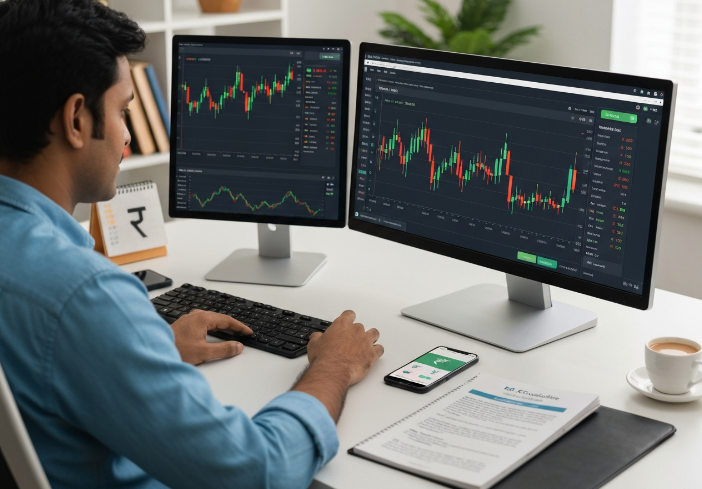
You ever notice how the value of the dollar seems to wiggle every time you blink? One moment your friend abroad says something is “so cheap in rupees,” and the next, it's daylight robbery. Welcome to the wild ride of the foreign exchange (forex) market—and more specifically, the Indian forex market—where currency values tango daily and fortunes can shift with a whisper from Wall Street or a sneeze in Singapore.
Most folks think forex trading is just for suits sitting behind six monitors, chugging espresso and yelling “Buy!” and “Sell!” every three seconds. But in reality, the forex market is a global arena where banks, corporations, governments, and yes, regular people like you and me can participate—if we know what we’re doing.
Still, this ain’t Monopoly money we’re talking about. Forex trading can be an exciting way to grow your wealth, but it’s also risky—especially if you jump in without understanding the rules of the game. And in India, those rules are extra important thanks to strict regulations from RBI, SEBI, and FEMA. So, before you start dreaming about turning ₹5,000 into a Lambo, let's walk through what forex trading really is, how it works in India, and what you should know if you’re serious about getting into this game without losing your shirt.
Key Insights for Navigating the Indian Forex Market
Understanding Currency Pairs: Forex trading involves currency pairs like USD/INR, EUR/INR, and GBP/INR, where the first currency is the base and the second is the quote currency.
Choosing the Right Broker: Select between SEBI-registered brokers or authorized dealer banks, considering their services and fees.
Economic Indicators: Key indicators such as GDP Growth Rate, Inflation Rate, and Interest Rates play a critical role in influencing currency values and market trends.
Market Sentiment: Be aware of market sentiment; bullish trends indicate rising prices, while bearish trends signal declining prices.
Trading Strategies: Understand different strategies like Day Trading and Swing Trading, each requiring unique skills and risk tolerance.
Risk Management: Employ techniques like Stop-Loss and Take-Profit orders to manage risks and ensure a balanced trading approach.
What Is Forex Trading? Overview of Indian Forex Market
A quick peek into how currency trading works, especially in the Indian forex market, and what shapes its moves.
Understanding Currency Pairs: USD/INR, EUR/INR, and more
Currency pair trading is always done in twos. You’re buying one currency while selling another.
In USD/INR, the USD is the base currency, and INR is the quote currency.
The exchange rate tells you how much of the quote you need to get one unit of base.
Most traded pairs in India:
USD/INR
EUR/INR
GBP/INR
JPY/INR
Types of pairs:
Major: Include USD (like USD/EUR)
Crosses: Don’t involve USD
Exotics: Involve emerging market currencies like INR
Why Currencies Fluctuate: Basic Rupee Dynamics
The rupee doesn’t just move randomly. It responds to:
Interest rate changes by RBI
Inflation levels in India vs. other countries
Global risk sentiment – when global investors are scared, they often move money out of emerging markets
Trade balances – whether India is importing more than it exports
When foreign investors pour money into Indian markets (stocks, bonds, startups), demand for INR goes up—often strengthening the rupee.

Legal vs. Illegal Forex Trading in India
Now, here’s where things get serious. The Indian government is very strict about how you can trade forex.
What’s Legal?
INR-based pairs on recognized exchanges:
USD/INR
EUR/INR
GBP/INR
JPY/INR
NSE (National Stock Exchange)
BSE (Bombay Stock Exchange)
MSE (Metropolitan Stock Exchange)
You can trade forex legally in India through currency derivatives (futures and options) on exchanges like:
You’re allowed to trade pairs like:
SEBI-registered brokers:
You must go through a broker registered with SEBI.
These brokers follow Indian regulations and report to Indian authorities.
Purpose of trading:
Officially, forex derivatives in India are meant for hedging, not pure speculation—but in practice, many retail traders do speculate.
What’s Illegal?
If you’re:
Using an international forex broker that’s not authorized in India
Trading in pairs like EUR/USD, GBP/USD, or XAU/USD (gold) directly as spot forex from India
Sending money abroad under false pretexts to fund trading accounts
…then you’re likely violating FEMA (Foreign Exchange Management Act) rules.
Violations can lead to:
Heavy fines
Account freezes
Legal trouble under RBI and ED (Enforcement Directorate) actions
In other words: Don’t mess with unregulated offshore platforms just because they promise 500x leverage and quick riches.
How Forex Trading Works in Practice (Indian Context)
The Flow of a Forex Trade in India
Let’s say you expect USD/INR to fall because you think the rupee will strengthen.
Here’s how a basic trade goes:
You open a trading account with a SEBI registered broker.
You deposit INR from your bank account.
On the broker’s platform, you choose a USD/INR futures contract.
You sell the contract (shorting USD/INR) if you think the rupee will rise.
If USD/INR actually falls, you profit from the difference when you close the position.
This is all done in derivative form—you’re not actually taking delivery of dollars, just speculating on the price.
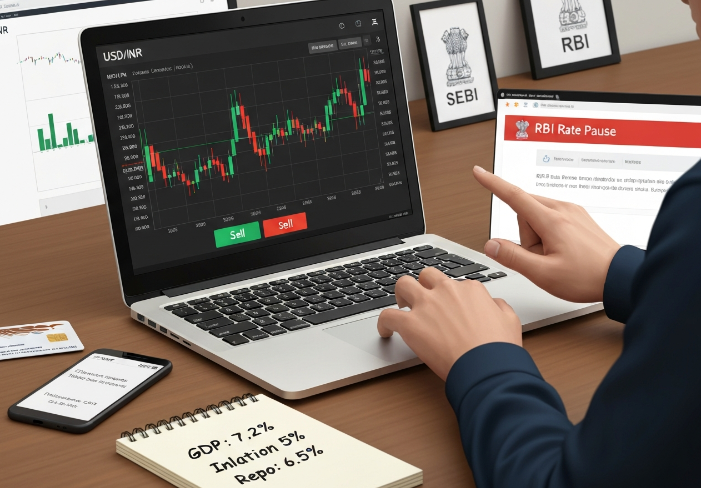
The Role of Forex Brokers: SEBI Registered vs. Authorized Dealer Banks
• You’ve got two main options when trading forex in India:
Go with a SEBI registered forex broker
Or use an Authorized Dealer Bank
• Here’s what they offer:
| Type | Regulatory Body | Access to Global Pairs | Platform Features |
|---|---|---|---|
| SEBI Registered Broker | SEBI | Limited* | Charts, tools |
| Authorized Dealer Bank | RBI | Mostly INR pairs | Basic interfaces |
(*Note: Retail traders can only trade certain pairs legally per RBI norms.)
Why it matters:
A legit broker keeps your money safer.
Compliance with RBI regulations ensures fair play.
Watch for:
Hidden fees
High spreads
Dodgy levels of offered leverage
EasyCashBackFx makes it easier by connecting you only with vetted, regulated brokers who follow all rules under Indian law—no shady business.
Key Economic Indicators Influencing Forex: GDP Growth Rate & Inflation Rate
When you're watching the rupee dance against other currencies, it's not random—it reacts to real-world numbers.
Big ones to track:
• India's quarterly GDP growth rate
• The inflation rate
• Repo rate decisions by RBI (interest rates)
Why these matter:
• Higher GDP = stronger rupee vibes
• Rising inflation = weaker purchasing power
• Interest hikes = foreign money inflow → rupee strengthens
Don't ignore global cues either—US Fed policy affects dollar flows into emerging markets like India big time.
The Reserve Bank’s last report from April 2024 showed that inflation cooled down to 5%, prompting speculation about a pause in hikes—which pushed INR slightly higher against USD that week.
Market Sentiment Explained: Bullish vs. Bearish Trends
Market sentiment is basically how everyone’s feeling about the economy and markets.
Bullish sentiment = traders expect prices to rise
Bearish sentiment = traders expect prices to fall
In forex:
If people believe India’s economy will outperform, more funds may flow into INR assets → bullish INR.
If global risk goes up (wars, oil spikes), investors may run to USD as a safe haven → rupee weakens.
Sentiment often moves faster than official data, so traders track:
News headlines
Social media chatter
Institutional research
Central bank speeches
Essential Trading Strategies for Beginners: Day Trading vs. Swing Trading
Choosing a strategy matters as much as choosing a broker. Two popular styles:
| Strategy | Timeframe | Style | Risk Level |
|---|---|---|---|
| Day Trading | Minutes–Hours | High-frequency charts | High |
| Swing Trading | Days–Weeks | Catch medium-term trends | Medium |
Day Trading in Forex (Short-term Scalps & Intraday Moves)
Focuses on small intraday price moves.
Requires:
Strong chart-reading skills
Fast decision-making
Ability to handle rapid wins and losses
Best done during:
High liquidity hours (like overlap of European and US sessions)
Not ideal if:
You have a full-time job with no screen time during market hours.
Swing Trading in Forex (Holding for Days or Weeks)
Focuses on bigger price swings.
Requires:
Patience to hold trades.
Comfort with overnight risk.
Great for:
People who can’t sit in front of charts all day.
Common tools:
Support & resistance
Moving averages
Chart patterns like flags, triangles, and channels
Risk Management Techniques: Utilizing Stop-Loss and Take-Profit Orders
“Regulators in the US and EU report that roughly 70–80% of retail CFD and forex traders lose money—most often because of poor risk control, not bad predictions.”
▪ Use a stop-loss order to set your pain threshold before entering a trade—it shuts down losses automatically when things go south.
▪ A solid take-profit order, meanwhile, helps you walk away when your target's hit without second-guessing.
▪ Smart traders also manage their exposure through proper position sizing, avoiding over-leveraging, and never risking all their capital on a single trade—especially when dealing with high-risk instruments involving high leverage ratios.
◉ Don’t forget the golden rule—the ideal trade should maintain at least a 1:2 risk-to-reward ratio.
How Leverage and Margin Work in Forex Trading
Leverage lets you control a large position with a smaller amount of capital, but it also magnifies risk.
Example:
With 20x leverage, ₹10,000 margin lets you control a ₹2,00,000 position.
A 1% move against you means a ₹2,000 loss—20% of your margin.
In India:
Regulators often limit leverage on currency derivatives to keep risk moderate.
Your broker will show:
Required margin
Available free margin
Margin level warning before a margin call
Treat leverage like a sharp knife—useful in skilled hands, dangerous in reckless ones.
Pros and Cons of Forex Trading in India
Pros
Highly liquid market
Low starting capital requirement
Can profit in both rising and falling markets
Tight regulation adds safety when using proper channels
Cons
Strict Indian rules on which pairs and platforms you can use
High risk if you misuse leverage
Emotional stress and psychological pressure
Many online scams targeting Indian traders using “forex” as a buzzword
Common Myths About Forex Trading in India
“Forex trading is illegal in India.”
Not exactly. Forex trading is legal if:You use INR-based pairs
You trade via recognized Indian exchanges
You go through SEBI-registered brokers or Authorized Dealer Banks
“You need huge money to start.”
Even small accounts under ₹10,000 can be used to learn, as long as you manage risk.“One magic strategy works forever.”
Markets evolve. Successful traders adapt.“Forex is fast, guaranteed money.”
It’s more like running a small business: risk, planning, and discipline matter.
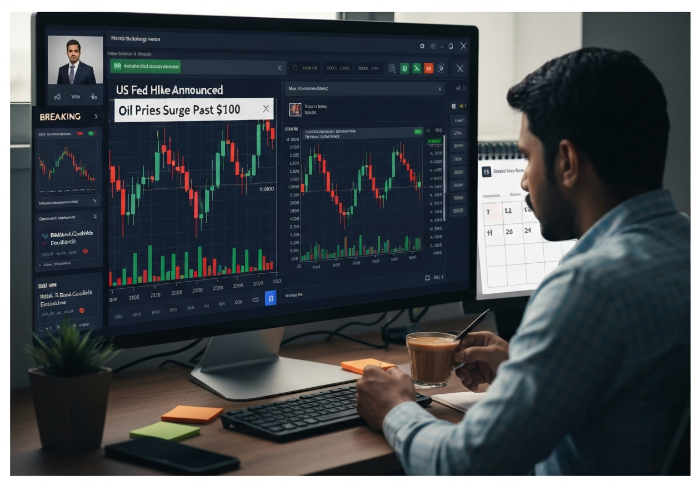
How Global Events Affect the Indian Forex Market
✦ Major events that can shake up the Indian forex market:
US Federal Reserve rate decisions
Crude oil price spikes (India imports a lot of oil)
Geopolitical tensions (wars, sanctions)
Global risk-on or risk-off phases in markets
✦ Keep an eye on major events like RBI announcements—they often shake up the entire forex scene overnight.
✦ The Indian forex market has seen increasing participation from retail traders, especially after the pandemic, especially those experimenting with shorter timeframes.
Trading Strategies: Are All Forex Techniques Equal?
Not even close. Every strategy has its own vibe—and success depends on how well it matches your lifestyle, risk tolerance, and personality.
? Short-Term Tactics
• Scalping – Ultra-fast trades aiming for tiny profits, repeated throughout the day; not ideal for beginners due to high stress and execution demands.
• Day Trading – Opening and closing trades within the same day; needs intense focus and time during market hours.
? Medium-Term Approaches
• Swing trading – Holding trades for days or weeks; ideal for those who can’t monitor charts all day.
• Position trading – Long-term trades based on macroeconomic trends and fundamentals.
? Analytical Frameworks
• Technical analysis – Relies heavily on price charts, indicators, and patterns to make decisions.
• Fundamental analysis – Driven by economic news, interest rates, GDP data, and geopolitical developments.
? Advanced Methods
• Algorithmic trading – Automated systems that execute trades based on pre-set rules.
No matter which method you pick, solid execution hinges on discipline, realistic expectations, and adapting to the evolving conditions in the Indian forex market dynamics.
References
RBI FAQs: Miscellaneous Forex Facilities & Authorised Dealers - https://www.rbi.org.in/commonman/english/scripts/FAQs.aspx?Id=829
Is Forex Trading Legal in India? Rules, Restrictions, and What’s Allowed – 5paisa - https://www.5paisa.com/blog/is-forex-trading-legal-in-india-rules-restrictions-and-what-allowed
Monthly Policy Review – April 2024 – PRS Legislative Research - https://prsindia.org/policy/monthly-policy-review/april-2024
Why Do Most Retail Traders Fail, and What Can I Do to Improve My Chances of Success? – FXStreet - https://www.fxstreet.com/education/why-do-most-retail-traders-fail-and-what-can-i-do-to-improve-my-chances-of-success-202503311406
FAQ
How does the Indian forex market work and which currencies are most traded?
The Indian forex market runs through regulated exchanges (like NSE and BSE) under RBI’s framework, using SEBI-registered brokers and Authorized Dealer (AD) banks for all trades.
The most commonly traded INR pairs are USD/INR, EUR/INR, GBP/INR, JPY/INR, and AUD/INR, with USD/INR usually seeing the highest liquidity.
Key drivers of price movement include GDP growth, interest rate changes, inflation data, and overall bullish or bearish sentiment in global markets.
Exchange rates are constantly shifting—some traders see opportunity in these swings, while others focus on strict risk control to manage the volatility.
What’s the right way to begin trading forex legally in India?
Open a trading account only with a SEBI-registered broker or an RBI Authorized Dealer bank. This ensures your trades are within Indian regulations.
Trade only permitted INR-based currency pairs on recognised exchanges (for example USD/INR, EUR/INR, GBP/INR, JPY/INR) rather than unregulated offshore platforms.
Start with small position sizes and use demo or practice environments if offered, so you can learn order placement, margin, and risk management before scaling up.
Spend time learning to read candlestick charts and basic indicators so price action looks like structured information, not chaos.
Which trading styles fit beginners in the Indian forex market?
Beginners can experiment with different styles, but longer holding periods are usually easier to manage at first:
| Trading Strategy | Average Holding Period | Useful Indicators | Typical Goal |
|---|---|---|---|
| Day Trading | Hours to same day | RSI, Moving Averages | Capture quick intraday bursts |
| Swing Trading | 2–7 days | Bollinger Bands, Fibonacci Retracement | Ride short-term trends |
| Positional Trading | Weeks to months | MACD + Fundamental data (GDP, rates) | Follow broader directional moves |
Many beginners feel more comfortable starting with swing trading, then gradually exploring faster styles like intraday breakouts or scalping once they’re confident with entries and exits.
Why do stop-loss orders matter so much for USD/INR volatility control?
USD/INR can move sharply during events like RBI policy announcements, unexpected inflation data, or global risk-on/risk-off shifts—small moves in pips can translate into large P&L swings with leverage.
Placing a stop-loss order near logical support or resistance levels helps cap downside if the market suddenly moves against your position.
Pair your stop-loss with a take-profit order so you lock in gains when price stretches into key zones—often confirmed by RSI showing overbought or oversold conditions reverting.
Consistent use of stop-losses isn’t just a tactic; it’s risk discipline that keeps one bad trade from wiping out weeks of progress.